Understand what causes carbon monoxide detectors to go off and how to respond

That sudden, relentless beep from your carbon monoxide detector is designed to jolt you into action, and for a very good reason. Think of it as your home's first line of defence against an invisible threat, signalling either a genuine carbon monoxide leak or a much more common false alarm.
Knowing how to tell the difference is the first step to keeping everyone in your Eastbourne home safe.
Decoding the Beep: What It Means When Your CO Alarm Sounds
Your carbon monoxide (CO) alarm is a silent guardian, standing watch 24/7. Most of the time, it’s just there, but when it starts making a noise, it’s trying to pass on a critical message. The key is learning its language. Is it a full-blown, non-stop alarm, or is it just an occasional chirp?
This simple decision tree shows the two main paths your alarm's signal can take.
As the flowchart shows, every single beep forces you to answer a crucial question: is this a real danger, or is it just a technical fault? The only safe approach is to treat every alarm as a genuine emergency until you know for sure.
To help you quickly assess the situation, here’s a breakdown of the most common triggers.
CO Alarm Triggers at a Glance
Potential Cause | Type of Alarm | Immediate Action |
|---|---|---|
Faulty Boiler or Appliance | Continuous, loud, repeating beeps (often 4 beeps, pause, repeat) | Emergency: Evacuate immediately, call 999, then a Gas Safe engineer. |
Blocked Flue or Chimney | Continuous, loud, repeating beeps | Emergency: Evacuate immediately, call 999, then a Gas Safe engineer. |
Low Battery | Single, intermittent chirp (every 30-60 seconds) | Non-emergency: Replace the batteries as soon as possible. |
End of Life | Multiple chirps in a row (often 5 chirps every minute) | Non-emergency: The unit needs replacing. Buy a new detector. |
Sensor Fault/Contamination | Single, intermittent chirp or continuous alarm | Non-emergency: Reset the alarm. If it persists, it may need replacing. |
This table gives you a quick reference, but let's dive into what these scenarios really mean for your home.
Real Dangers Versus Common Nuisances
A continuous, loud series of beeps often signals the presence of dangerous CO gas. This is typically caused by a faulty fuel-burning appliance like your boiler, gas fire, or cooker. This is a true emergency that requires you to act fast. Here in Eastbourne, the team at Harrlie Plumbing and Heating has seen cases where a blocked flue in an older Victorian terrace or a cracked heat exchanger in a modern home has led to a serious, life-threatening leak.
On the other hand, a single, spaced-out chirp is usually your detector's way of asking for a bit of help. It’s not an emergency, but it needs attention. It could mean:
A low battery: This is the most frequent reason for those annoying intermittent chirps. A simple battery change will usually fix it.
End of life: Most CO detectors have a lifespan of 5-10 years. They're designed to let you know when it’s time for a replacement.
A sensor fault: Things like dust from renovations, high humidity from a nearby shower, or even chemical fumes from cleaning products can temporarily interfere with the sensor.
The most important takeaway is this: Never assume it’s a false alarm. Always act as if the danger is real until a professional, like a Gas Safe registered engineer from Harrlie Plumbing and Heating, can confirm the source and make sure your home is safe. Your family's well-being depends on it.
Spotting a Genuine Carbon Monoxide Danger in Your Home
When that alarm starts screaming—a loud, non-stop series of beeps—it's not a drill. It’s a very real signal that carbon monoxide could be present in your home. Almost always, the culprits are the everyday fuel-burning appliances we depend on, like our boilers, gas fires, and water heaters.
Think of your boiler's combustion process like a well-oiled machine. It pulls in fuel and air, burns it cleanly, and pushes the harmless exhaust fumes safely outside through a flue. But when something throws that process off balance, the machine starts to sputter, producing deadly carbon monoxide instead.
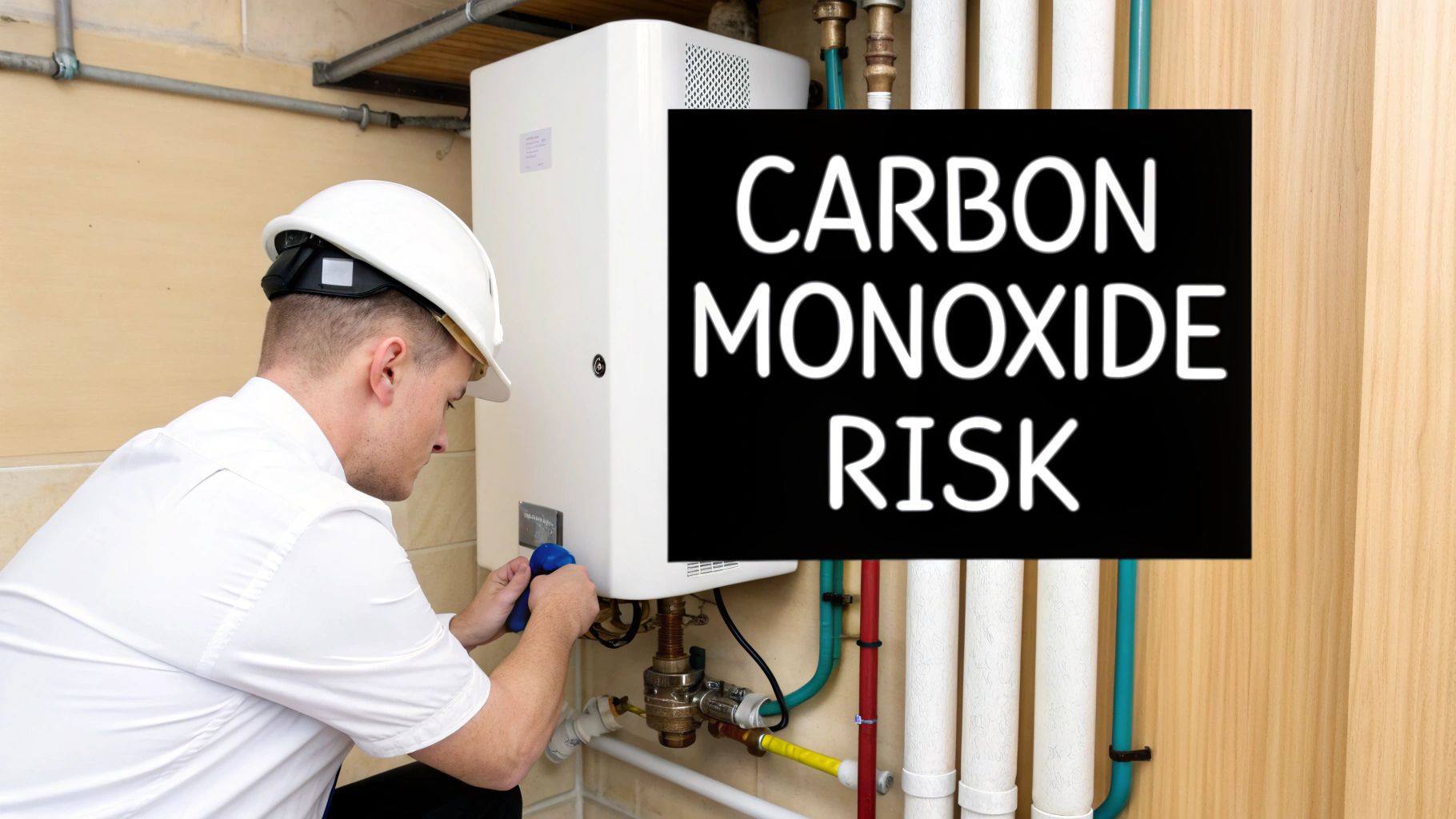
This dangerous malfunction is called incomplete combustion, and it's the number one reason a CO detector will sound a genuine alarm. It doesn't just happen out of the blue; there's always a cause.
Common Culprits Behind a CO Leak
Appliances that seem to be working perfectly fine can be hiding serious, invisible faults. In our experience working across Eastbourne and the surrounding areas, we usually trace a CO leak back to one of these common issues:
Faulty or Poorly Maintained Appliances: Over time, parts inside a boiler can wear out or crack. A tiny fracture in a heat exchanger, for example, is all it takes for CO gas to leak into your home's air supply instead of being safely vented outside.
Blocked Flues or Chimneys: This is a surprisingly frequent problem, especially in coastal towns like Eastbourne where seagulls nesting in chimneys can cause a complete blockage. Soot, leaves, and other debris can also obstruct the flue, forcing toxic gases back into the room.
Poor Ventilation: Rooms that are too well-sealed, especially those with older appliances, can become starved of the oxygen needed for a clean burn. This lack of air forces the appliance to produce CO.
Incorrect Installation: If an appliance wasn't fitted by a certified professional, it might have had ventilation or connection faults from the very beginning, creating a hidden and constant danger. For a deeper dive on this crucial component, check out our guide on what is a boiler flue and why it matters.
These issues make it crystal clear that simply reacting to an alarm is only half the battle. Preventing it from ever going off in the first place should be the real goal.
The single most effective way to prevent these silent dangers is through proactive, professional maintenance. An annual boiler service isn't just a recommendation—it's your best defence against a potential tragedy.
The Critical Role of Professional Servicing
During a professional service, a Gas Safe registered engineer does much more than a quick look-over. At Harrlie Plumbing and Heating, our certified engineers perform a meticulous inspection of every part of your system. We clean burners, check the entire flue path for blockages, and run tests to detect any sign of incomplete combustion.
This annual check-up is designed to spot small problems long before they can escalate into life-threatening emergencies. For more comprehensive insights, this guide on Carbon Monoxide Awareness is an excellent resource. By making sure your appliances are running safely and efficiently, you’re doing more than just maintaining your heating—you’re protecting your family.
Troubleshooting Common False Alarm Triggers
While a full-blown alarm always demands an immediate, serious response, not every beep from your CO detector means you need to evacuate. Often, your device is just trying to tell you something non-urgent, and learning to speak its language can save you a whole lot of panic.
Think of it like being a detective in your own home. The clues are in the sounds and the situation, helping you figure out if you're facing a genuine threat or just a simple technical hiccup.
Many common household activities can actually trick a CO alarm’s sensitive sensor into sounding off. These triggers don’t involve carbon monoxide at all but can create conditions that confuse the device, leading to what we call a false alarm.
Environmental Causes of False Alarms
Sometimes, the culprit isn't your boiler but the air right around the detector. These units are incredibly sensitive, and certain conditions can cause a temporary misreading.
Common environmental triggers include:
High Humidity and Steam: Placing a detector too close to a bathroom is a classic mistake. A long, hot shower can release enough steam to set off the alarm. We see this a lot in smaller Eastbourne flats where bathrooms are right next to living areas.
Aerosol Sprays: Hairspray, deodorant, air fresheners, and even some cleaning products release chemical propellants that can easily trigger a nearby detector.
Cooking Fumes: Smoke or even just high humidity from cooking, especially if you don't have great ventilation, can also cause a false alarm.
If an alarm goes off during one of these activities, the first step is to ventilate the room by opening a few windows. If the beeping stops, you’ve likely found your non-emergency cause. If it carries on, you must treat it as a real event.
Understanding Chirps for Batteries and End-of-Life
By far, the most frequent reason for confusion is misinterpreting the distinct chirping sounds that signal a problem with the unit itself. These aren't emergency warnings; they're vital maintenance alerts you can't ignore.
A single, spaced-out chirp every 30-60 seconds is the universal signal for a low battery. It's the most common reason for a detector to make noise and just needs a quick battery change.
On the other hand, a series of chirps—often five in a row every minute—means the detector has reached its end-of-life. The entire unit has to be replaced. Most CO alarms have a lifespan of 5 to 10 years, and this warning is built-in to ensure you stay protected.
In the UK, a staggering 26% of all carbon monoxide safety call-outs attended by gas engineers are actually false alarms caused by battery faults or detector failures. For landlords managing properties in Eastbourne or Bexhill, UK regulations since October 2022 mandate CO alarms in any room with a fuel-burning appliance; faulty ones must be replaced promptly. You can learn more about the impact of alarm failures from SGN's findings.
Confidently identifying these chirps can prevent the stress and expense of an emergency call-out when all you really need is a new battery. If you've changed the batteries and reset the unit but the chirping won't stop, it’s time to call a professional. Get in touch with us at Harrlie Plumbing and Heating to install a new, compliant detector and give you peace of mind that your system is safe.
How Dust and Debris Can Trigger Your Alarm
Beyond steam or a dying battery, one of the most common culprits for a carbon monoxide detector going off unexpectedly is something most of us wouldn't even think about: dust. It sounds harmless enough, but to your alarm’s highly sensitive sensor, a cloud of fine particles can be just as confusing as chemical fumes.
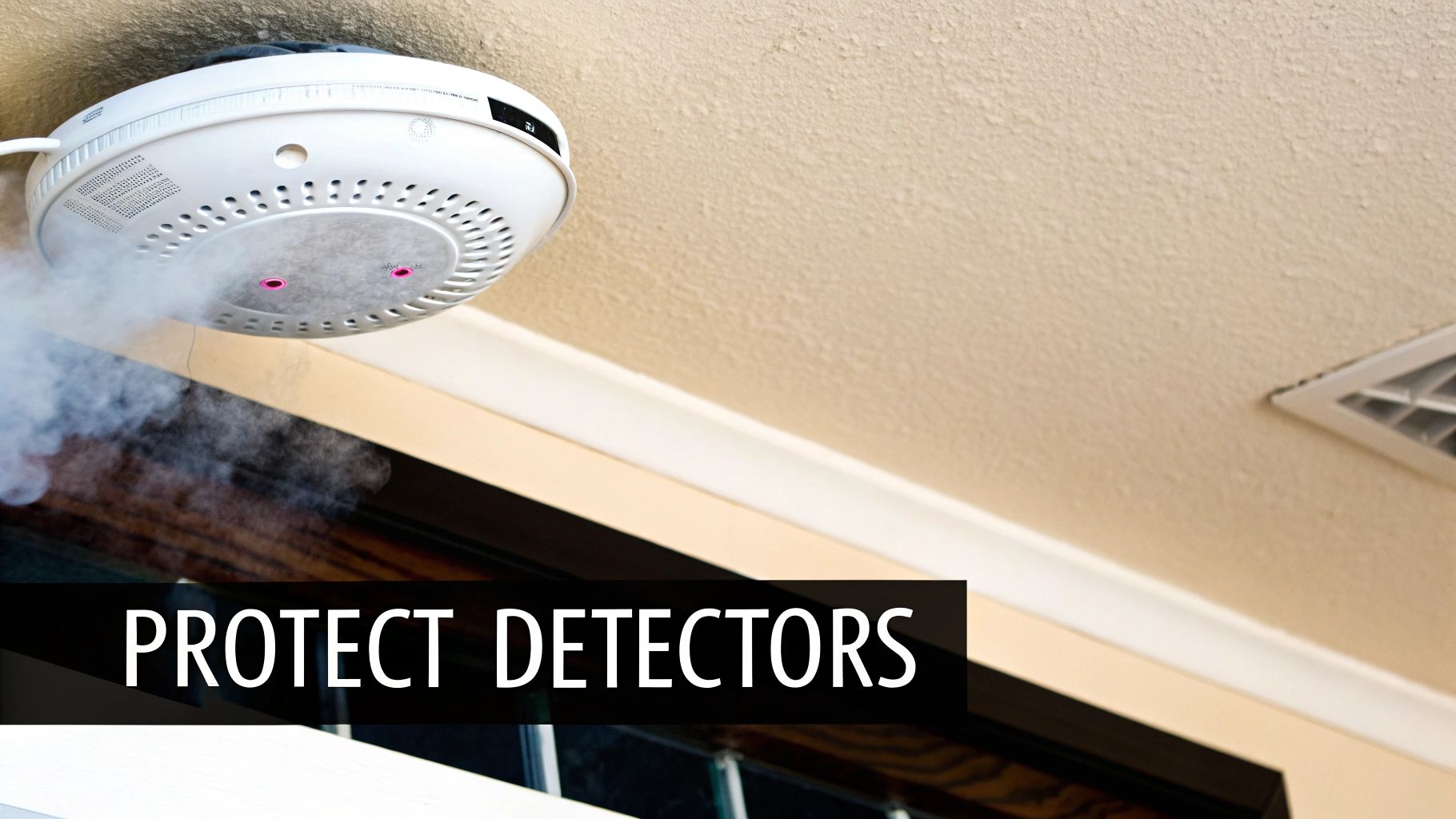
This is especially true during any kind of home improvement project. Just think about that fine, powdery dust that gets everywhere when you’re sanding drywall, cutting tiles, or having a wall plastered. These airborne particles can easily find their way into the detector's vents, settling on the sensor and stopping it from working correctly. Your alarm then interprets this blockage as a fault—or worse, a potential threat—and triggers that piercing, unwanted siren.
Renovations and Remodelling: A Prime Time for False Alarms
Imagine you’re finally getting that beautiful new wet room installed in your Eastbourne home by a professional team like Harrlie Plumbing and Heating. The work involves cutting tiles and drilling into plasterboard—activities that kick up a serious amount of dust. If a nearby CO detector isn't properly covered, the sudden influx of debris can easily set it off, causing a confusing and stressful interruption right in the middle of the work.
Professional teams know all about this risk and usually take steps to prevent it, like sealing off the work area with plastic sheeting to contain the mess. But it’s a crucial thing to remember during any DIY project, too. Dust from building works is responsible for a surprising 20% of false alarms in UK businesses, a statistic that really shows how easily this can happen in our homes during renovations. With around 40 people dying from accidental CO poisoning each year in England and Wales, knowing how to tell a real threat from a renovation-related false alarm is vital. If you want to understand the bigger picture, you can read more about the costs to the UK economy.
During any home renovation, no matter how small, it's wise to temporarily cover your CO detectors with a dust cover or plastic bag. Just remember to remove it as soon as the work is finished for the day to ensure your protection is never compromised.
Simple Tips to Prevent Dust-Related Alarms
Protecting your detectors from dust is straightforward and can save you the headache of a false alarm. Keeping your home in the Eastbourne area safe during renovations just takes a little forward planning.
Here are a few practical steps you can take:
Cover Your Detectors: Before any dusty work begins, pop a dust cover, a shower cap, or even a plastic bag secured with a rubber band over your CO and smoke alarms.
Remove Covers Daily: This is critical. Make sure you uncover the alarms at the end of each workday so they can do their job and protect you overnight.
Clean Up After the Project: Once the renovation is complete and the dust has settled, give the outside vents of your detectors a gentle vacuum using a soft brush attachment. This will clear out any lingering particles that could cause trouble later on.
By following these simple steps, you can make sure your project goes smoothly without the disruption of false emergencies, letting you keep your focus on creating your beautiful new space.
Your Step-by-Step Emergency Action Plan
When a carbon monoxide alarm starts shrieking with that continuous, loud beep, the moments that follow are critical. Having a clear, rehearsed plan is your greatest asset in a high-stress situation, taking the guesswork out of it when every single second counts. Your immediate priority isn't to figure out what causes carbon monoxide detectors to go off, but to get everyone to safety.
Treat every full alarm as a real emergency until a professional tells you otherwise. This simple, step-by-step checklist is designed to get you and your family through the process safely.

Immediate Evacuation Steps
Ventilate Immediately: Without slowing down your escape, throw open any nearby doors and windows to start airing out your home. Don't waste time going room to room; just open the ones directly on your path out.
Evacuate Everyone: This is your number one job. Get every single person and pet out of the building right now. Don’t stop to grab personal items or try to find where the alarm is coming from.
Turn Off Appliances If Safe: If your fuel-burning appliances (like your boiler or a gas fire) are right by your exit and you can switch them off quickly and safely, do it. If not, don’t even think about going back inside.
Call for Emergency Help: Once you're safely outside and a good distance away from the building, call the National Gas Emergency Service on 0800 111 999. They are the correct first responders for any suspected gas or CO leak.
Stay Outside: Do not go back into the building for any reason until the emergency services have given the all-clear and declared it safe.
Your only job during a CO emergency is to get out. Investigating the source of the leak is the responsibility of trained professionals with the right equipment. Your safety, and that of your family, is paramount.
Once the emergency service has dealt with the immediate danger, you'll need to get to the root of the problem and fix it for good. For homeowners in Eastbourne and the surrounding areas, the Harrlie Plumbing and Heating rapid response team is ready to help. Our Gas Safe registered engineers can professionally pinpoint the fault, carry out the necessary repairs, and make sure your home is safe once more.
Taking the time to understand the immediate safety steps in more detail can better prepare you for this scenario. And it's not just about CO; it's vital to have an emergency plan for general gas safety, as laid out in this comprehensive gas oven safety guide.
Proactive Maintenance to Prevent Future Alarms
The absolute best way to handle a carbon monoxide alarm is to make sure it never has a genuine reason to go off in the first place. Shifting your mindset from reacting to problems to proactively preventing them is the real secret to long-term home safety. It all comes down to looking after your appliances and the detectors themselves.
Regular, professional servicing of any appliance that burns fuel is the cornerstone of prevention. For homeowners in and around Eastbourne, this is where having a trusted local team like Harrlie Plumbing and Heating makes all the difference. An annual boiler service is so much more than a quick once-over; it's a deep dive into the safety and efficiency of your boiler, gas fire, and other systems.
Our Gas Safe registered engineers are trained to meticulously inspect for the very faults that cause CO alarms to trigger. We're talking about things like hairline cracks in heat exchangers, partially blocked flues, or incorrect burner pressure—issues you'd never spot yourself. Catching these problems early is what keeps your family safe.
Your Homeowner Maintenance Checklist
Alongside professional servicing, there’s a simple routine you can follow to keep your detectors in top shape. Think of this as your personal safety checklist to ensure your first line of defence is always ready to go.
Test It Monthly: Just press the 'test' button on each detector once a month. It’s a two-second job that confirms the battery and the alarm itself are working correctly.
Keep It Clean: Dust and cobwebs can cause chaos. Gently vacuum the vents of your detector every few months with a soft brush attachment. This simple step stops debris from clogging the sensor and causing a false alarm.
Mark Your Calendar: Alarms don't last forever. Take a moment to find the manufacturer’s replacement date printed on the unit. Most need replacing every 5-10 years. An out-of-date alarm is just a piece of plastic on the ceiling—it's completely unreliable.
Peace of mind doesn't just come from having an alarm; it comes from knowing your entire heating system is safe and well-maintained. When it comes to gas safety, prevention is always better than cure.
By combining these diligent homeowner checks with an annual professional service, you create a robust safety net for your home. To get a better idea of just how thorough these checks are, you can learn more about what a Gas Safety Check from Harrlie Plumbing and Heating involves. This proactive approach transforms your home from a place that simply reacts to danger into one that actively prevents it.
Got Questions About Your CO Detector?
We've walked through the common reasons a carbon monoxide alarm might start beeping, but you probably still have a few questions. Below are some quick, no-nonsense answers to the things we’re asked most often by homeowners across Eastbourne.
How Long Does a CO Detector Last?
Most carbon monoxide alarms are designed to work reliably for 5 to 10 years. Think of it like a smoke alarm – they have a definite expiry date.
You should always check the manufacturer’s instructions, but many newer models will give you a specific end-of-life warning chirp to let you know it’s time for a replacement. As part of our annual boiler service, the team at Harrlie Plumbing and Heating can check your alarms and install new ones that meet current UK safety standards (BS 50291-1:2018), so you know you’re fully protected.
Where’s the Best Place to Put a CO Alarm?
For the best protection, you should have a detector in every room with a fuel-burning appliance, like your boiler, gas fire, or log burner. It’s also a great idea to have one near your main sleeping areas.
Position them on a wall at roughly head height – not on the ceiling. They should be about 1-3 metres away from the appliance itself. Try to avoid putting them right above a radiator or in very humid spots like a bathroom, as this can throw off their readings.
Can My Gas Hob Set Off the CO Alarm?
Absolutely. Any gas appliance, including your oven or hob, has the potential to produce carbon monoxide if it’s faulty or isn't burning its fuel properly. This could be down to something as simple as a blocked burner or a poor initial installation.
This is exactly why it’s so important to have a Gas Safe registered engineer check all of your gas appliances once a year, not just the boiler. Our team at Harrlie Plumbing and Heating provides these thorough safety checks for homes across Eastbourne and the surrounding areas.
Your family's safety is our top priority. If you have any worries about your CO detector or want to book a professional gas safety check, you can trust Harrlie Plumbing and Heating. Contact us today for reliable, local service.

Comments