Carbon monoxide alarms going off: Immediate safety steps and what to do now

That high-pitched, relentless chirp of a carbon monoxide alarm is a sound that cuts right through the quiet of your home. It's designed to be jarring for a very good reason: it’s a signal to act, not to investigate. Your absolute first priority is getting everyone—and that includes your pets—out of the house and into fresh air straight away. Don't waste a single second trying to find the source.
What To Do The Moment Your CO Alarm Sounds
It’s easy to feel a surge of panic when that alarm starts screaming, but having a clear plan is your best defence. Carbon monoxide is the silent threat we all hear about—invisible, odourless, and incredibly dangerous. Staying calm and following a few critical steps can make all the difference.
Picture this: it’s 2 AM in a terraced house in the Meads, Eastbourne. The alarm wakes the family. The first thought might be to go check the boiler, but that's a mistake. The only correct response is to wake the kids, grab the dog, and get everyone outside immediately. This is the single most important thing you can do.
Your Immediate Evacuation Plan
When you hear that alarm, your only job is getting to fresh air. Forget about grabbing your phone or wallet. Just get out.
If you can do it quickly on your way out without slowing down your exit, throw open some windows and doors. This starts the ventilation process, helping to clear out any CO gas and making it safer for the emergency services when they arrive. Think of it as giving the gas an escape route.
Once you’re all outside and a safe distance from your home, do a quick headcount. Make sure everyone is accounted for. It's vital that no one goes back inside for any reason until a qualified professional has given the all-clear. The alarm might stop, but that doesn't mean the danger has passed.
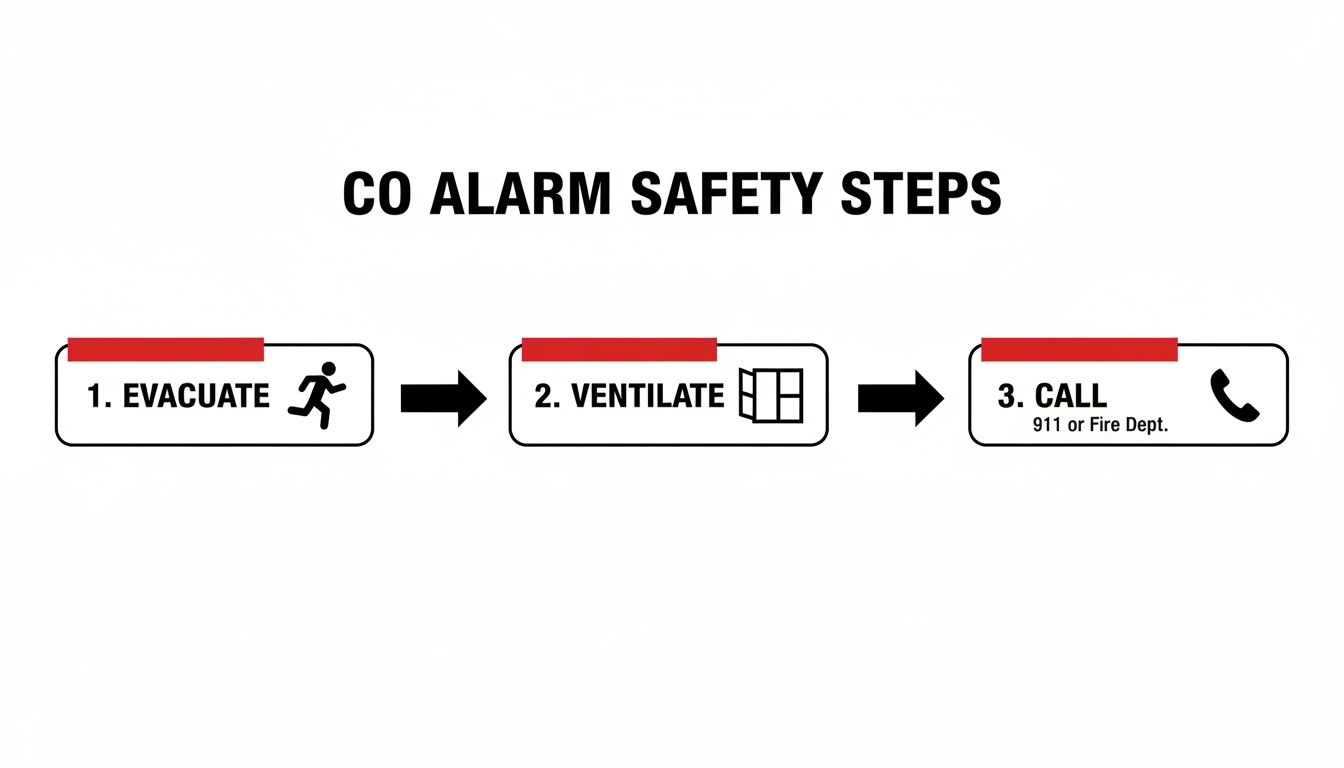
This process is simple but non-negotiable. Get out, ventilate if you can, and call for help from a safe place.
Knowing Who to Call and When
Now that you’re safely outside, it’s time to get the professionals involved. Your very first call should be to the National Gas Emergency Service on 0800 111 999. It's a free, 24-hour service, and they'll send an engineer to investigate and make sure the property is safe.
Here's a quick rundown of what to do next to stay organised and get help fast.
Immediate CO Alarm Emergency Plan
Action | Reason | Who to Call & What to Say |
|---|---|---|
Evacuate Immediately | Your personal safety is the top priority. CO gas is life-threatening. | National Gas Emergency Service: 0800 111 999. Tell them your CO alarm is going off, give your full address, and confirm everyone is outside. |
Ventilate (If Possible) | Helps disperse the CO gas, making the area safer for emergency crews. | N/A |
Check for Symptoms | Headaches, dizziness, nausea, and confusion are all signs of CO poisoning. | If anyone feels unwell, call 999 for an ambulance immediately. Report the symptoms clearly. |
Stay Out | The danger may still be present even if the alarm stops. | Wait for the gas engineer or fire service to declare it safe to re-enter. |
Following these steps ensures you're covering all bases—securing the property and getting medical help if needed.
If anyone in your home is showing symptoms like headaches, dizziness, nausea, or shortness of breath, you must also call 999 for an ambulance right away. Don’t delay. CO poisoning is a medical emergency that needs immediate attention.
It's vital to understand the distinction: the Gas Emergency Service secures the property from the immediate gas-related danger, while NHS paramedics handle the medical emergency. Both are critical calls to make in a potential CO poisoning event.
After the emergency services have been and (hopefully) given the all-clear, you still need to find out what caused the alarm in the first place. This is where a professional, Gas Safe registered engineer comes in. The team here at Harrlie Plumbing and Heating can carry out a thorough inspection of your boiler, gas fire, and other appliances to pinpoint the source of the problem. We’ll carry out the necessary repairs to make sure your home is truly safe for the long term. Sometimes, what seems like a CO issue might be related to other gas problems. To get a better sense of the differences, you might find it helpful to read our guide explaining the signs of a gas leak in your home.
What's Causing Your Carbon Monoxide Alarm to Go Off?
Once you and your family are safely outside, the initial panic starts to fade, and a big question takes its place: what just happened? Figuring out why your carbon monoxide alarm is going off is the next crucial step. That piercing sound could be a genuine, life-threatening emergency, or it might be something less sinister. Knowing the difference is key to what you do next.
It's a sobering reality that CO incidents are becoming more common. For instance, recent data shows that London Fire Brigade callouts for carbon monoxide incidents have more than doubled in just a few years, jumping by an incredible 109%. This trend highlights a growing risk in homes, and you can read the full details in the London Fire Brigade's official report. While that data is for London, it reflects a wider national concern that certainly affects us here in Eastbourne too.
Genuine Carbon Monoxide Leaks
The most serious reason for an alarm is an actual leak of carbon monoxide gas. This happens when fuel-burning appliances don't burn their fuel completely or aren't venting fumes properly.
In our experience at Harrlie Plumbing and Heating, we see this a lot in older properties, like some of the beautiful but ageing Victorian terraces around Eastbourne's town centre. These homes often have older boilers or chimneys that need diligent, regular maintenance to stay safe.
Common sources of genuine CO leaks include:
Faulty Boilers: A poorly maintained or malfunctioning boiler is the number one culprit we encounter. Problems with the burner or heat exchanger can lead to incomplete combustion, producing dangerous levels of CO.
Blocked Chimneys and Flues: It’s amazing what can block a flue. We’ve seen everything from birds’ nests and fallen debris to collapsed brickwork blocking the escape route for harmful gases. This forces toxic fumes right back into your home.
Poor Ventilation: Modern homes are well-insulated, but this can be a double-edged sword. If fuel-burning appliances are starved of oxygen, they can start producing CO. Cracks in flue pipes or improperly installed appliances are also major causes.
A genuine CO leak is not something you can diagnose yourself. If your alarm has sounded and you've evacuated, you must wait for a Gas Safe registered engineer from a trusted local firm like Harrlie Plumbing and Heating to investigate and give the all-clear before going back inside.
Non-Emergency Alarm Triggers
However, not every screaming alarm means your house is filling with poisonous gas. It’s important to recognise other sounds and situations that can set off your detector, as this will help you explain what's happening to the professionals you call.
Sometimes, your carbon monoxide alarm going off isn’t an emergency signal but more of a maintenance request. These units are smart bits of kit with their own lifespan and needs.
Here are a few common reasons for a false alarm or a different kind of warning chirp:
Low Battery Chirp: Most alarms will emit a single, intermittent chirp every minute or so when the batteries are running low. This is a very different sound from the loud, continuous four-beep alarm that signals a CO detection. It's just the device telling you it needs new batteries to keep protecting you.
End-of-Life Warning: CO detectors don't last forever. Most have a lifespan of 7 to 10 years. When they reach the end of their service life, they'll often produce a specific chirping pattern to let you know it's time for a replacement. Have a look at the back of the unit for a manufacturing or expiry date.
Environmental Factors: Occasionally, other fumes or particles in the air can trigger a sensitive CO detector. We once had a call-out to a perfectly safe property in Bexhill where the alarm was going off intermittently. After a full check of their boiler, our Harrlie Plumbing and Heating engineer discovered the cause was paint fumes from the neighbour's decorating project wafting through an open window. Strong cleaning chemicals, airborne dust from DIY, or even steam from a nearby bathroom can sometimes cause a false alarm.
Understanding these distinctions helps you provide better information when you call for help. But whether it's a real leak or just a device issue, getting an expert diagnosis from a company like Harrlie Plumbing and Heating is the only way to be certain your home is safe.
Calling Emergency Services vs A Gas Safe Engineer
The piercing sound of a carbon monoxide alarm is enough to make anyone’s heart race. In that moment of panic, it's easy to feel overwhelmed, but knowing exactly who to call—and when—is absolutely crucial. It’s not just about silencing the noise; it's about a clear sequence of actions that keeps everyone safe.
The decision is actually simpler than you might think. It all boils down to one critical question: is anyone feeling unwell? Your answer dictates everything that happens next.
Prioritising Health And Making The First Call
If anyone in your household is feeling even slightly off, your first and only call should be to 999 for an ambulance. No hesitation.
Carbon monoxide poisoning is tricky because its symptoms often masquerade as a common illness like the flu. Be on the lookout for:
Tension-style headaches
Dizziness or feeling light-headed
Nausea and vomiting
Sudden confusion or drowsiness
Breathlessness
These are tell-tale signs that CO has entered the bloodstream, and getting immediate medical help is the top priority.
However, if everyone has evacuated the property and feels perfectly fine, the situation shifts from a medical emergency to a property one. In this scenario, your first call is to the National Gas Emergency Service on 0800 111 999. Their job is to get to you quickly, assess the immediate risk, and make the area safe.
The Role Of The National Gas Emergency Service
Think of the National Gas Emergency Service as the first responders for your home's gas supply. They aren’t there to diagnose a faulty boiler or pinpoint the exact cause. Their sole mission is to deal with the immediate danger.
They will usually isolate the gas supply, carry out tests for gas in the atmosphere, and ventilate the property. Once they give the all-clear, their part is done. But here’s the bit people often miss: they haven’t solved the root problem. They've only contained the emergency. That's where your second call comes in.
After the National Gas Emergency Service has attended and deemed the property safe from an immediate, ongoing leak, you are left with an appliance that is potentially faulty and dangerous to use. This is the moment you need a Gas Safe registered engineer.
When To Call A Gas Safe Engineer Like Harrlie
A Gas Safe registered engineer, like our team here at Harrlie Plumbing and Heating, is your essential second call. Once the emergency service has left, we come in to play detective. Our job is to carry out a full investigation and discover why your carbon monoxide alarm went off in the first place.
We don’t just turn everything back on. We meticulously inspect your gas appliances—the boiler, gas fire, cooker—to identify the source of the CO. This could be anything from a tiny crack in your boiler's heat exchanger to a blocked flue preventing harmful fumes from escaping properly.
We see this all the time in Eastbourne. A landlord in Hastings gets a frantic call from their tenants about a CO alarm. The tenants do the right thing: get out, call the gas emergency service. The property is made safe, the gas is capped off, and then the landlord calls us at Harrlie Plumbing and Heating. We then perform a thorough inspection, much like what's detailed in a comprehensive gas safety check, to ensure every part of the system is safe before anyone moves back in.
Getting this right is vital. Tragically, UK government statistics show that deaths from accidental carbon monoxide poisoning are on the rise, with an average of 53 people dying annually and fatalities increasing by 39% from 2022 to 2023. These aren't just numbers; they're a stark reminder of why professional diagnosis is non-negotiable. If your alarm signals a potential gas leak, understanding the right steps to take is paramount, and a good emergency gas line repair safety guide can offer crucial instructions.
So, just remember the order: health comes first (999 if anyone is unwell), then property safety (National Gas Emergency Service), and finally, professional diagnosis and repair (Harrlie Plumbing and Heating).
Taking a Proactive Approach to Prevent Future Alarms
The best way to handle a carbon monoxide alarm is to ensure it never has a reason to go off in the first place. Knowing what to do in an emergency is crucial, of course, but prevention is your strongest defence against the silent threat of CO. It’s all about getting ahead of the problem with routine care for your fuel-burning appliances.
Think of it like an MOT for your car; you wouldn't wait for the brakes to fail before getting them checked. The same idea applies to your boiler, gas fire, and cooker. Regular, professional maintenance isn’t just about keeping things running efficiently—it's about spotting and fixing small faults before they can turn into a catastrophe. That’s why a scheduled annual service is one of the most important dates on your calendar.
The Critical Role of the Annual Boiler Service
Your boiler is easily the hardest-working appliance in your home, especially during those chilly Eastbourne winters. An annual service from a Gas Safe registered engineer is the single most effective thing you can do to prevent CO production. During this check-up, a professional isn't just giving it a quick once-over; they're carrying out a series of essential safety and performance tests.
Here at Harrlie Plumbing and Heating, our engineers perform a thorough inspection. This includes checking the burner pressure, making sure the flue is clear and venting properly, and testing for any hint of incomplete combustion. We find that tiny issues, like a partially blocked injector or a hairline crack in a heat exchanger, are often the root cause of CO leaks. Catching these early stops a small problem from becoming a life-threatening emergency.
An annual service also makes sure your boiler is running efficiently, which can save you a tidy sum on your energy bills. It’s a win-win for your safety and your wallet.
We often see older boilers in properties around the Sovereign Harbour area of Eastbourne that are still functional but haven't been serviced in years. A proactive service call from Harrlie Plumbing and Heating can identify age-related wear and tear before it becomes a hazard, giving homeowners complete peace of mind.
Beyond the Boiler: Other Appliances Matter Too
While the boiler is the usual suspect in many CO incidents, it’s certainly not the only potential source. Any appliance that burns fuel—gas, oil, wood, or coal—needs the same level of professional attention.
You should think about getting regular checks for:
Gas Hobs and Ovens: Over time, burners can get clogged or misaligned, leading to yellow or orange flames—a clear sign of incomplete combustion and potential CO production.
Gas Fires: These are fantastic for a cosy evening, but a faulty fire can be incredibly dangerous. Debris falling down the chimney or issues with the pilot light can cause serious problems.
Wood-Burning Stoves: A build-up of soot and creosote in the flue is a major fire hazard and can also block the escape route for carbon monoxide.
Including every fuel-burning appliance in your annual safety check provides a complete safety net for your home.
Keeping Chimneys and Flues Unobstructed
It's a part of home maintenance that’s easy to forget because it’s out of sight, but the importance of a clear chimney and flue simply can't be overstated. Your flue is the exhaust pipe for your home; if it gets blocked, those toxic gases have nowhere to go but back inside.
We’ve seen it all in Eastbourne homes—from birds’ nests built during the spring to leaves and debris blown in by coastal storms. In older terraced houses, crumbling brickwork can also create blockages. That's why a professional chimney sweep is so important, especially if you have an open fire or wood-burning stove.
A simple visual check can sometimes reveal issues. Look for signs like:
Soot stains on the wall around your fireplace or appliance.
Smoke blowing back into the room when a fire is lit.
A noticeable lack of an updraft in the chimney.
These are red flags that demand an immediate professional inspection. Never assume a flue is clear just because you haven't used the appliance in a while.
Getting Alarm Placement and Testing Right
Finally, your CO alarms are your last line of defence. Just having them isn’t enough; they must be correctly placed and regularly tested to be effective. An alarm in the wrong spot is almost as bad as not having one at all.
For maximum protection, follow these simple rules from the experts:
Install an alarm in every room with a fuel-burning appliance. This includes the kitchen, living room (if you have a gas fire), and the utility room.
Place alarms at head height—either on a wall or a shelf. CO is slightly lighter than air and mixes with warm, rising air, so placing detectors at this level ensures the quickest detection.
Test your alarms weekly. Just press the 'test' button to ensure the battery and the sensor are working correctly. It takes five seconds but could save your life.
Replace alarms every 7-10 years. Check the expiry date on the back of the unit and replace it on time. The sensors lose their sensitivity over the years.
By combining professional maintenance from a trusted local company like Harrlie Plumbing and Heating with these simple at-home checks, you can create a safe environment and prevent your carbon monoxide alarms from ever going off for the wrong reasons.
Your Local Gas Safety Partner In Eastbourne
This guide is all about giving you peace of mind, and that’s really our core mission at Harrlie Plumbing & Heating. We see ourselves as more than just a service provider; we're your local, dedicated safety partners for homeowners and landlords across Eastbourne, Hastings, and Bexhill. We know that when an alarm goes off, you need more than a quick fix—you need reassurance and rapid, reliable help from someone you can trust.
When you're facing a potential gas emergency, every second counts. That's why we offer a one-hour emergency response time, meaning a qualified expert is on their way quickly to get things sorted and make your home safe again.
Your First Call For Prevention And Repair
Of course, the best way to deal with an emergency is to prevent it from happening in the first place. Our Gas Safe registered engineers are here to provide the boiler servicing and safety inspections needed to keep your home safe from carbon monoxide risks.
We have years of hands-on experience with the specific heating systems and property types you find around here, from modern flats in Eastbourne Marina to older terraced houses in Bexhill. That deep local knowledge means we can diagnose issues efficiently and get the job done right.
Our entire approach is built on transparent, reliable service—a promise backed by our consistent five-star Google reviews from your neighbours. We believe in clear communication and honest work, making sure you understand exactly what’s needed to secure your home.
We always encourage homeowners to save our number for those unexpected moments. More importantly, book an annual service to stop an emergency from ever happening. A simple yearly check from Harrlie Plumbing and Heating is truly the best investment you can make in your family's safety.
Ready When You Need Us Most
Dealing with a faulty boiler or a potential gas leak is incredibly stressful. Having a trusted local expert on your side makes all the difference in the world. Whether it's a routine check-up or you need an emergency heating engineer in Eastbourne, our team is ready to respond.
We’ve built our reputation on being there for our community, offering solutions that don't just work, but provide lasting security. Your safety is our absolute priority, and we’re dedicated to ensuring every home we visit is safe, warm, and compliant with all gas safety regulations. From a quick question about an alarm to a full system check after an incident, you can count on Harrlie Plumbing & Heating.
Common Carbon Monoxide Alarm Questions Answered
When your CO alarm starts blaring, it’s easy to feel a surge of panic, even with a plan in place. As local Eastbourne engineers, we’ve heard just about every question you can imagine from homeowners and landlords. Getting straight, simple answers is the key to handling a stressful moment with confidence.
Here, we’re going to run through the most common questions we get asked day in, day out. Our goal is to clear up any confusion so you know exactly what your alarm is trying to tell you and what to do about it.
How Do I Properly Test My CO Alarm?
Testing your CO alarm is a quick job, but it’s one of the most important habits you can get into. You should be testing it once a week—just press and hold the 'test' button. You’ll hear a loud series of beeps, which confirms the battery and the sensor are working as they should.
It's important to remember this is a functionality check, not a test for actual CO gas in the air. A working alarm is your first line of defence, so making this five-second check part of your weekly routine is a brilliant way to stay protected. For more on this, you might want to read up on how to test for carbon monoxide in your home.
My Alarm Is Chirping Not Screaming What's The Difference?
This is a really critical distinction, and one that causes a lot of confusion. The noise your alarm makes is a code, telling you exactly what’s wrong. Knowing the difference stops you from panicking unnecessarily but also ensures you don't ignore a real warning.
A full, loud alarm (usually four loud beeps, a pause, then another four beeps) means dangerous levels of carbon monoxide have been detected. This is an emergency, and you need to follow your evacuation plan immediately.
A single, intermittent chirp (typically every 30-60 seconds) is a maintenance alert. It’s the alarm's way of telling you its battery is getting low or that it's reached its end-of-life date (most alarms last 7-10 years) and needs replacing.
Think of it like this: a scream is an emergency, but a chirp is a request. A chirping alarm isn't an immediate danger, but you must sort it out quickly by changing the batteries or the whole unit to make sure you’re still protected. We at Harrlie Plumbing and Heating always remind our Eastbourne clients of this difference during service visits.
Could My Neighbour's Faulty Boiler Affect My Home?
Yes, this is a very real risk and something we see happen. It's a particular concern in terraced or semi-detached homes, which are common across Eastbourne and Bexhill. Carbon monoxide is a gas; it can easily seep through small cracks in brickwork, shared vents, or even drift through open windows.
If your neighbour has a faulty boiler or a blocked flue, the CO it produces can absolutely travel into your property. We've attended call-outs in Eastbourne where the source of the CO was indeed next door. So, if your alarm goes off but you can't find any source in your own home, it’s vital that the gas emergency service also checks the properties next door. Your safety could genuinely depend on your neighbour’s appliance maintenance.
What Are My Legal Duties As A Landlord In East Sussex?
If you’re a landlord, you have clear legal responsibilities to keep your tenants safe from carbon monoxide. The regulations are not optional, and you must:
Have a working carbon monoxide alarm in any room with a fixed combustion appliance. This includes boilers, gas fires, and even wood burners.
Check that all alarms are working correctly on the first day a new tenancy begins.
Arrange for an annual gas safety check on all gas appliances and flues, which must be done by a Gas Safe registered engineer.
At Harrlie Plumbing and Heating, we work with dozens of landlords across East Sussex, helping them stay compliant and keep their properties safe. We can handle your annual gas safety checks and advise on the correct placement and number of alarms needed, giving both you and your tenants total peace of mind.
For professional advice, emergency call-outs, or to book your annual gas safety check in Eastbourne, trust the experts. Contact Harrlie Plumbing and Heating today for reliable service you can count on. Visit us at https://www.harrlieplumbing.co.uk.

Comments