Gas Safety Check What Do They Do Explained

Think of a gas safety check as a comprehensive MOT for all the gas appliances, pipes, and flues in your home. A certified engineer carries out a series of inspections to ensure everything is operating safely, which is vital for preventing gas leaks and the deadly risk of carbon monoxide poisoning. It’s an essential annual health check for your home.
Demystifying The Gas Safety Inspection
Ever wondered what a Gas Safe engineer actually does when they visit your home? It’s much more than just a quick glance at your boiler. You can think of it as a detailed investigation, where our engineers at Harrlie Plumbing and Heating act like safety detectives, piecing together clues to confirm your Eastbourne home is completely safe. This systematic process is designed for one purpose: your complete peace of mind.
The check has several key objectives. These include verifying that the gas pressure is correct, checking that your appliances are burning gas properly, and making sure any harmful fumes are being safely vented outside. It’s a crucial service, especially given the variety of properties we see across Eastbourne, from old Victorian terraces in the Meads to modern flats down at the Sovereign Harbour.
The Core Components of a Check
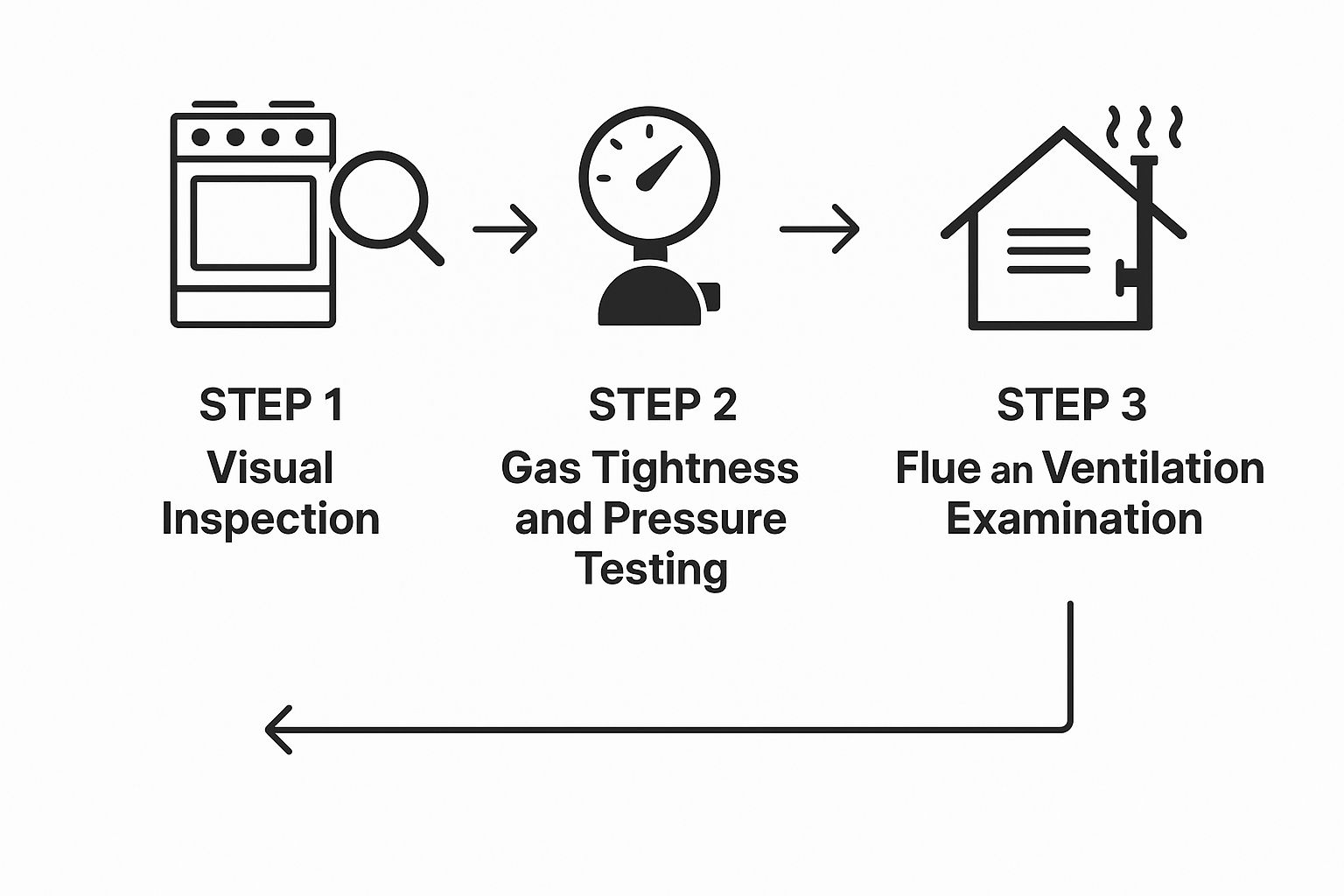
The whole procedure is a detailed technical process. A Gas Safe registered engineer will visually examine all gas appliances, check the gas rates and burner pressures, and conduct a tightness test at the meter to check for leaks. They’ll also analyse flue gases and inspect all safety devices to ensure they’re working as they should. The boiler flue is also inspected, sometimes right up into the loft, to make sure nothing is blocked or corroded. For a deeper dive into what’s involved, you can learn more about the technical requirements of a gas safety check.
This infographic breaks down the fundamental stages of the inspection.
To make it even clearer, here’s a quick rundown of what an engineer looks for during each key stage of the inspection. This table gives you a snapshot of the main checkpoints they cover.
Key Stages of a Gas Safety Check at a Glance
Inspection Area | What the Engineer Checks For |
|---|---|
Visual Appliance Check | Correct installation, proper ventilation, and any signs of physical damage or corrosion. |
Gas Pressure & Rate | Ensures the appliance is receiving the right amount of gas to operate efficiently and safely. |
Flue & Chimney System | Checks for blockages, corrosion, or damage to ensure dangerous fumes are being safely removed from your home. |
Safety Devices | Tests devices designed to shut the appliance down in case of a fault, like flame failure devices. |
Gas Tightness Test | A crucial test performed at the gas meter to detect any leaks anywhere in the pipework system. |
Burner & Combustion | Makes sure the gas is burning correctly with a stable, blue flame, preventing the production of carbon monoxide. |
Ventilation Assessment | Confirms there is an adequate air supply for the appliance to burn gas safely and for occupants to breathe. |
Final Documentation | Issues a Gas Safety Record (CP12) detailing all checks performed and noting any defects or required remedial actions. |
As you can see, the process flows logically from a visual survey to functional testing and finally to an assessment of the exhaust systems. It’s a thorough approach designed to cover every single aspect of gas safety in your property.
The Gas Safety Inspection Process Step by Step
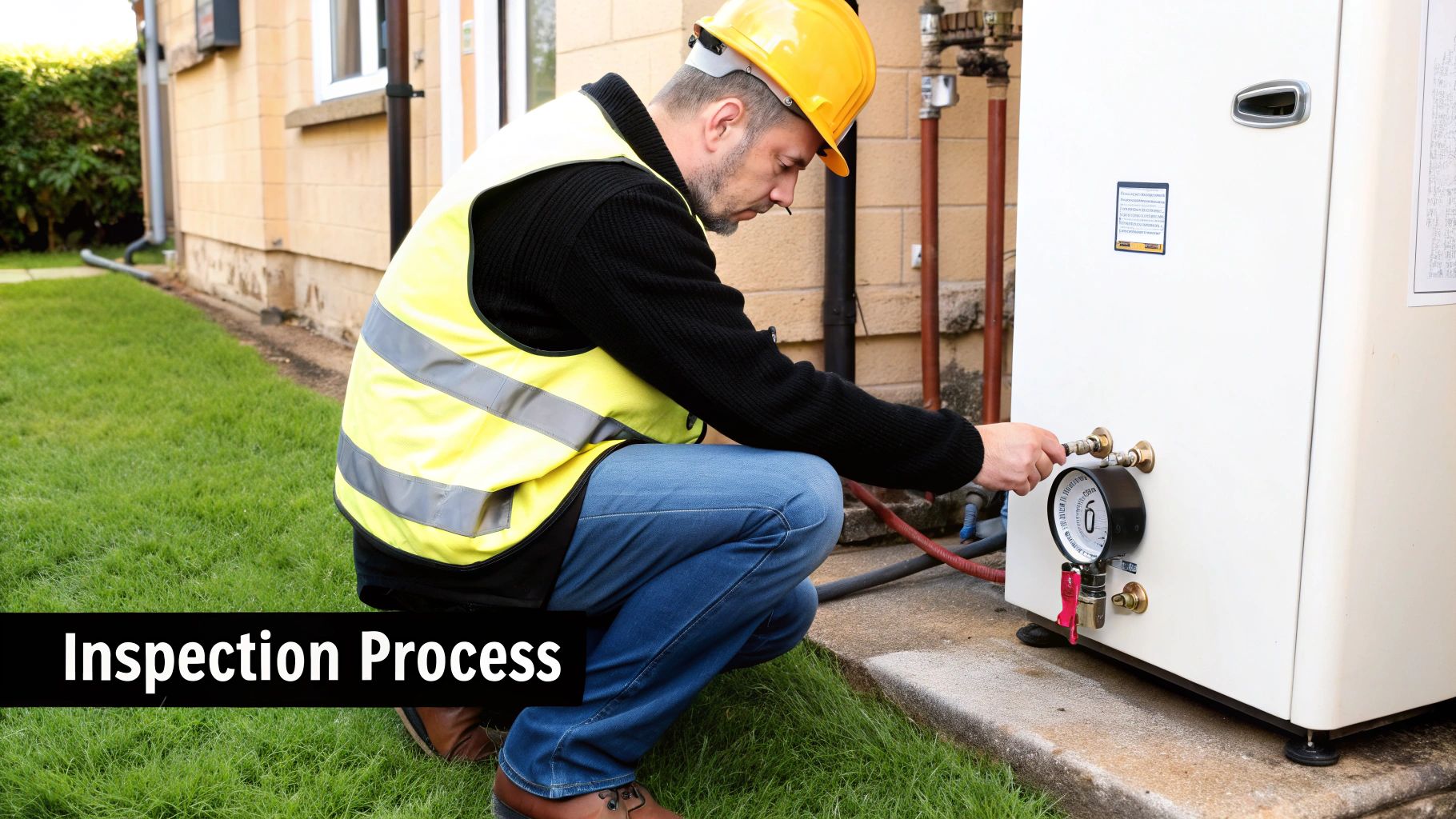
So, what exactly happens when one of our Harrlie Plumbing and Heating engineers turns up at your Eastbourne property? A proper gas safety check is a meticulous, step-by-step audit of your entire system. It’s far more than a quick, superficial look.
Let's walk you through the process from start to finish. This way, you’ll know precisely what we're doing to ensure your home is safe. The whole thing kicks off the moment we walk through your door, when our engineer will introduce themselves and show you their Gas Safe ID card. That card is your immediate peace of mind that a qualified professional is on the job.
The Initial Visual Survey
First up, we carry out a visual survey of all your gas appliances and their pipework. This involves checking that every appliance—whether it's a boiler, gas hob, or fire—is installed correctly and situated in a suitable spot.
We’re looking for any obvious signs of distress like scorch marks, soot stains, or physical damage. For example, in many of the beautiful older terraced houses in Eastbourne's Old Town, pipework might have been fiddled with over the decades. A trained eye from Harrlie Plumbing and Heating can spot installations that might not meet today's safety standards.
The Critical Gas Tightness Test
Next comes one of the most vital parts of the inspection: the gas tightness test. This isn’t just about checking the appliances; it’s a full test of your entire gas pipework system, right from the meter onwards.
Our engineer connects a pressure gauge to a test point on your gas meter. By pressurising the system and watching the gauge for a set amount of time, we can detect even the tiniest, most elusive gas leak. If the pressure drops, it tells us gas is escaping somewhere, even if you can't smell a thing. This single test is fundamental to preventing the risk of a gas explosion.
Checking Burner Pressure and Combustion
Once we’ve confirmed the pipework is sound, we move on to the appliances themselves. We check the operating pressure at each appliance to make sure it’s getting the correct amount of gas. If the pressure is too high or too low, the appliance won’t burn the gas efficiently and could start producing dangerous levels of carbon monoxide.
We also have a good look at the combustion. A healthy gas flame should be crisp and blue. A lazy, yellow, or orange flame is a big red flag that the gas isn't burning properly, and it's a visual clue that something needs immediate attention.
Flue and Ventilation Inspection
Proper ventilation is completely non-negotiable when it comes to gas safety. Our engineer will meticulously inspect the flue—the pipe that carries exhaust gases away—to ensure it's intact, clear of any blockages, and safely removing fumes from your property.
A blocked or damaged flue is one of the most common causes of carbon monoxide poisoning. We pay special attention to this, especially in Eastbourne's coastal environment where salt air can accelerate corrosion on external flue terminals.
We also check that there’s enough ventilation in the room where the appliance is. Gas appliances need a steady supply of air to burn correctly; without it, they can become starved of oxygen and start churning out lethal carbon monoxide.
Testing the Safety Devices
Finally, every modern gas appliance is fitted with safety devices, and testing them is the last line of defence. For instance, a flame failure device is designed to automatically shut off the gas supply if the flame ever goes out. We deliberately and safely test this function to confirm it works instantly, protecting you from a potential gas build-up.
For a detailed breakdown of how long this all takes, you can read our guide on how long a gas safety check takes. This entire sequence ensures we’ve completed a thorough safety audit of your entire system.
Understanding Your Legal Gas Safety Duties
Navigating the rules around gas safety can feel complicated, but they're in place for one simple reason: to protect lives. Your legal duties change quite a bit depending on whether you're a homeowner or a landlord, so it’s vital to know which responsibilities fall on your shoulders.
For landlords in Eastbourne and right across the UK, the rules are strict and there’s no wiggle room.
Landlord Gas Safety Obligations
The Gas Safety (Installation and Use) Regulations 1998 is the key piece of legislation here. It legally requires you to make sure all gas appliances, flues, and pipework you supply for your tenants are safe. This isn't just a one-off task; it's an ongoing commitment.
This legal duty boils down to three key actions:
Maintenance: You must keep all gas pipework, appliances, and flues in a safe condition.
Annual Checks: A Gas Safe registered engineer has to perform a safety check on every gas appliance and flue at least once every 12 months.
Record Keeping: You must give a copy of the Gas Safety Record (often called a CP12 certificate) to your current tenants within 28 days of the check and to new tenants before they move in.
At Harrlie Plumbing and Heating, we help countless Eastbourne landlords, from those with single flats in Hampden Park to those with multiple properties across town, stay on top of these duties with our annual reminder service. It’s a simple way to ensure you never miss a deadline and always remain compliant. For a complete overview, you can explore our detailed guide on the landlord gas safety certificate and boiler service.
Beyond your specific gas responsibilities, it's also smart for hosts to be aware of broader safety guidelines. You can find some great tips on how to keep your Airbnb rental safe for your guests.
Homeowner Gas Safety Responsibilities
If you own your home, the legal picture is different. No law forces you to get an annual gas safety check. However, that doesn’t make it any less important. Think of it like your car’s MOT—while it’s not legally mandated for your personal "roadworthiness," ignoring it exposes you to serious, preventable risks.
An annual gas safety check is a fundamental part of responsible homeownership. It's the single most effective action you can take to protect your family from the silent dangers of gas leaks and carbon monoxide poisoning.
Alarmingly, recent research revealed that as many as one in five UK homeowners (22%) have never had a gas safety check. That means millions of properties could have hidden dangers lurking in their systems. Whether you’re a landlord or a homeowner, understanding what a gas safety check actually does is the first step towards a safer home.
How to Read Your Gas Safety Record
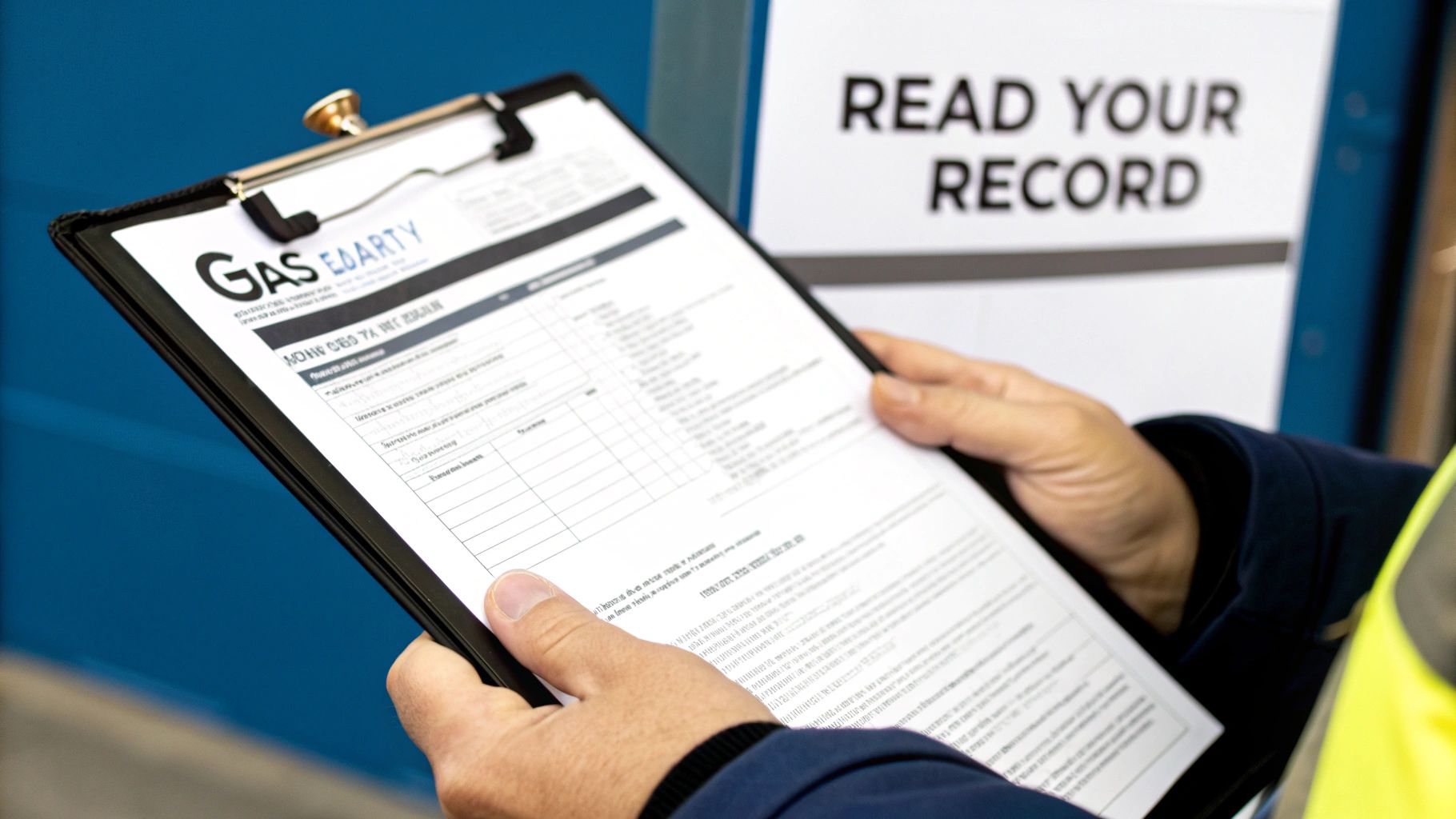
After your gas safety check is complete, the engineer will hand you a really important piece of paper: the Gas Safety Record. You might hear it called a CP12, and at first glance, it can look a bit technical. But getting to grips with it is the key to understanding the health of your gas system.
Think of it as a report card for your home’s gas appliances. It gives you a detailed snapshot of everything the engineer looked at and any actions they took. Let’s break down what you’ll find on a typical record, like one our Harrlie Plumbing and Heating team would issue at a property in Eastbourne.
Key Information at the Top
The first part of the form is all about the essential details. This is where you can quickly verify that the inspection is legitimate and for the right property.
Engineer’s Details: You should see the engineer’s name and their unique Gas Safe registration number. This is your proof that they are legally qualified to do the work.
Property Address: The address where the check was carried out, for instance, a flat on Seaside Road in Eastbourne.
Date of Inspection: This is crucial for landlords, as it helps them keep track of their annual renewal date.
Landlord and Tenant Information: The names and addresses of the landlord (or homeowner) and the tenant.
This top section is your proof that a qualified professional has performed the necessary checks on the right date and at the right property. It’s the foundation of the whole document.
Appliance and Safety Check Details
The main body of the record is where you get to the real results. Each gas appliance in your home will be listed separately, with its own set of checks and outcomes.
You’ll see the location and type of each appliance (e.g., "Kitchen - Gas Hob" or "Utility Room - Combi Boiler"). Next to each, the engineer will have ticked off the specific tests they ran, like checking the operating pressure, ensuring correct combustion, and inspecting the flue.
The most important part of this section is the ‘Safety Action Taken’ or ‘Remedial Action’ box. If an engineer from Harrlie Plumbing and Heating finds an issue in your Eastbourne home, this is where they will clearly state what was found and what was done to make it safe.
Understanding the Fault Classifications
If an appliance has failed any part of the check, the engineer will use specific codes to classify how dangerous it is. For your own safety, understanding these is non-negotiable.
Immediately Dangerous (ID): This is the most serious. It means the appliance poses an immediate threat to life and must be disconnected straight away. The engineer is legally required to do this.
At Risk (AR): This means the appliance has one or more recognised faults and could become dangerous. The engineer will strongly advise you not to use it and will disconnect it with your permission.
These classifications give a clear, standard way to communicate risk. They don't just tell you that something is wrong; they tell you exactly how serious the problem is, empowering you to take immediate and informed action to keep your home safe.
Why You Must Hire a Gas Safe Registered Engineer
When it comes to gas, there are absolutely no shortcuts. In the UK, the law is crystal clear: anyone who works on your gas appliances must be on the Gas Safe Register. This isn't just bureaucratic red tape; it's a fundamental safety measure designed to protect you and your family.
The Gas Safe Register is the one and only official list of engineers legally allowed to touch gas systems in homes and businesses across the country. Think of it like the DVLA for gas engineers—it’s the official proof that they have the right skills, training, and qualifications to do the job safely and correctly. An unregistered person doing gas work isn't just breaking the law; they are putting lives in danger.
Verifying an Engineer's Credentials
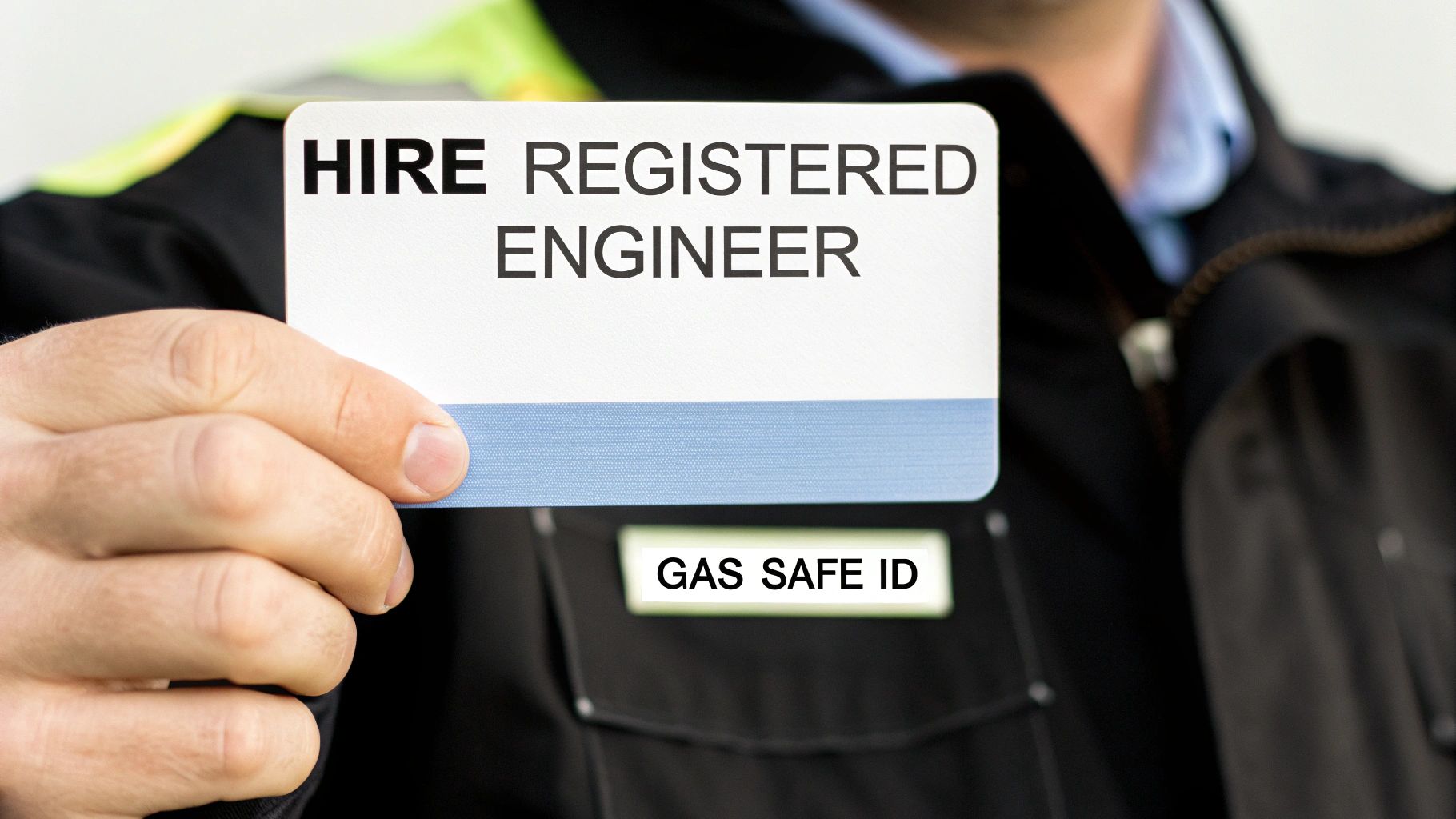
Before any work starts, you should always confirm your engineer is registered. It’s a simple check that brings immediate peace of mind. That’s why every engineer from Harrlie Plumbing and Heating will proudly show you their Gas Safe ID card on every job in Eastbourne, giving you the assurance that your home is in safe hands from the get-go.
You can verify an engineer’s credentials in a couple of very straightforward ways:
Check Their ID Card: Every registered engineer carries a photo ID card. Take a moment to check the photo matches the person, look at the expiry date, and note the unique 7-digit licence number. Most importantly, flip the card over to see exactly which types of gas work they are qualified to carry out.
Use the Online Register: You can also hop onto the official Gas Safe Register website and search for the engineer or business by name or location. This gives you instant, digital confirmation of their status.
This entire process takes less than a minute, but it's an invaluable step.
Trusting your gas appliances to an unqualified person is like letting an unlicensed driver take your family on the motorway. The risks are simply too high, which is why the Gas Safe Register exists to protect you.
Ultimately, hiring a Gas Safe registered engineer isn't just about ticking a legal box. It's about accountability. It's about entrusting your family's safety to a proven, qualified professional who understands the immense responsibility they hold. When it comes to your home's gas system, it’s the most important decision you can make. To learn more about the paperwork you'll receive after a check, have a look at our guide on how to get a gas safety certificate in the UK.
Common Questions About Gas Safety Checks
Even after walking through the process, it’s completely normal to have a few questions lingering. We get asked a lot of the same things by homeowners across Eastbourne, so we've put together some quick, practical answers to help you feel confident about your gas safety.
How Long Does a Gas Safety Check Usually Take?
This is probably the most common question we hear, and the honest answer is: it depends on your property. For a typical Eastbourne home with a boiler and a gas hob, a thorough check usually takes between 30 and 60 minutes. This gives our engineers enough time to run all the necessary tests properly, without cutting corners.
Of course, if you have other gas appliances like a fire or a water heater, it’ll naturally take a bit longer. If we spot something that needs a closer look or requires immediate attention, we’ll take the extra time needed to be certain. An engineer from Harrlie Plumbing and Heating will always give you a time estimate when they arrive and keep you in the loop.
Is a Gas Safety Check the Same as a Boiler Service?
That’s a great question, and the simple answer is no. They’re two very different jobs, though both are equally important for your home.
Think of it like this: a gas safety check is like your car’s MOT. Its main purpose is to inspect the system and confirm everything is safe and legally compliant. It’s a snapshot of your system's safety on that specific day.
A boiler service, on the other hand, is more like getting your car serviced. It involves cleaning key components, making fine-tuned adjustments to boost efficiency, and carrying out preventative maintenance to help the appliance last longer. While a service always includes safety checks, a safety check on its own doesn't include the detailed maintenance and cleaning of a full service.
For landlords, the annual gas safety check is the absolute legal minimum. But for the best performance, efficiency, and longevity of your boiler, we at Harrlie Plumbing and Heating always recommend a full annual service.
What Happens if an Appliance Fails the Check?
If one of your appliances is found to be unsafe during an inspection, our engineer has to classify the fault based on how serious it is. This is a crucial part of the process because it dictates what happens next.
Immediately Dangerous (ID): If an appliance gets an 'ID' classification, it means it poses a direct and immediate danger to life. In this situation, our engineer is legally required to disconnect it on the spot to make it safe.
At Risk (AR): An 'AR' classification means the appliance has one or more known faults and could become dangerous if you keep using it. We will strongly advise you to stop using it and will disconnect it with your permission.
In either scenario, our engineer will clearly explain the problem, show you the issue if possible, and outline exactly what needs to be done. We’ll then provide a transparent, no-obligation quote for any repairs needed to get your system back to being safe and fully operational.
How Often Do Homeowners Need a Gas Safety Check?
While it’s a strict legal requirement for landlords to get a check every 12 months, the safety advice for homeowners is exactly the same. All gas appliances should be checked annually by a Gas Safe registered engineer.
Over time, parts can wear out, seals can fail, and flues can become partially blocked. An annual check is the best and only way to catch these potential issues early, ensuring your home and family in Eastbourne stay safe, year after year.
For trusted, Gas Safe registered engineers who can handle your annual safety checks, boiler services, and any necessary repairs with expertise and transparency, look no further than Harrlie Plumbing and Heating. We are dedicated to keeping Eastbourne homes safe. Contact us today for a free quote or to book your appointment at https://www.harrlieplumbing.co.uk.

Comments