How to Stop a Pipe Leak Practical Fixes and Pro Advice

That heart-sinking moment you spot a puddle on the floor or a dark stain spreading across the ceiling is something no homeowner in Eastbourne wants to experience. When you're faced with a burst or dripping pipe, it’s easy to feel a surge of panic. But what you do in those first few minutes is absolutely critical.
Your first response shouldn't be about fixing the leak itself. It's all about damage control. The goal is to contain the situation quickly and safely to prevent a minor drip from turning into a major disaster.
Your First 3 Steps When You Find a Leaking Pipe
Before you even think about tools or repairs, you need to stop the flow of water and eliminate any immediate hazards. This simple, methodical approach will make the entire situation more manageable.
Just follow this sequence: shut off the water, drain what's left in the pipes, and kill the power if there's any risk.
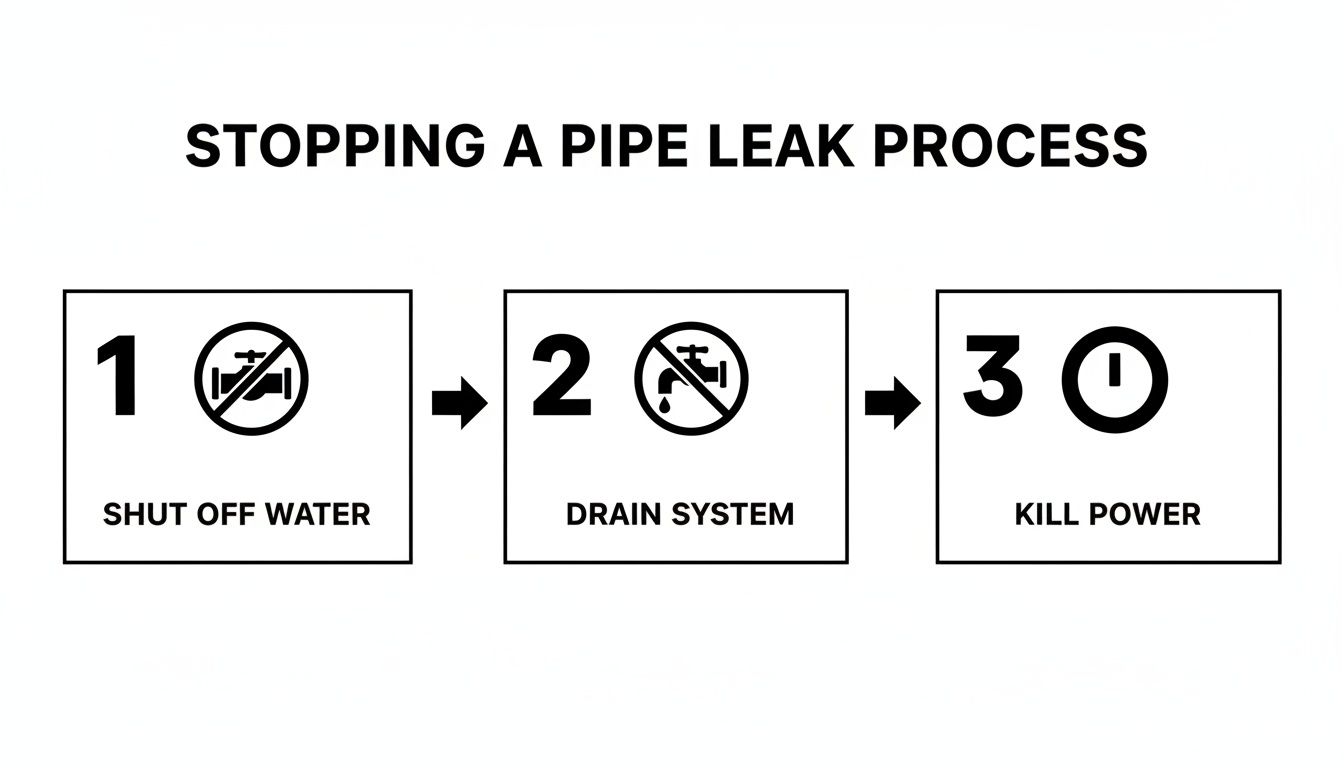
This process turns panic into a clear, actionable plan. Let’s break it down.
Find and Shut Off Your Main Stopcock
Every drop of water entering your property is controlled by one valve: the main stopcock. Closing this is the single most important action you can take. Turn it clockwise until it stops.
In many Eastbourne homes, particularly older Victorian and Edwardian properties in areas like Old Town, you’ll often find it tucked away under the kitchen sink. For newer houses, perhaps in Sovereign Harbour, check utility rooms, downstairs toilets, or even the garage. If it hasn't been turned in years, it might be stiff. Try to close it by hand first—never force it with a heavy tool, as you risk breaking the valve and making things much worse.
If you’re struggling to locate yours, our guide on how to turn off your water main offers more detailed instructions.
Drain the System and Isolate Electrical Risks
Even with the stopcock closed, there's still water sitting in the pipes. To get it out, you need to relieve the pressure. Go around your home and open all the cold taps, starting from the ground floor and working your way up to the highest point. This will drain the system and should slow the leak to a manageable drip, or stop it entirely.
Next, address the biggest danger: electricity. Water and electricity are a lethal mix. If the leak is anywhere near sockets, light fittings, or your fuse box, shut off the power immediately at your main consumer unit. It’s a simple flick of a switch that could prevent a short circuit, a fire, or a serious electric shock.
Key Takeaway: A leaking pipe is a genuine emergency. Acting quickly in the first few minutes is vital for protecting your property and ensuring everyone’s safety. This is your priority before you even think about attempting a repair or calling for professional help.
The urgency of these situations is reflected across the UK. According to Checkatrade data, of the 1.8 million yearly searches for plumbers, a staggering 115,000 are for emergencies. It’s a clear sign of how often homeowners in Eastbourne and beyond are caught out by burst pipes. A rapid response from a service like Harrlie Plumbing and Heating in these moments can be the difference between a small clean-up and thousands of pounds in water damage.
Temporary Fixes to Control the Leak Now
Right, the water is off and the immediate panic is over. Now your focus can shift to a reliable temporary fix. This isn't about finding a permanent solution just yet; it's about buying yourself some valuable time and stopping any more damage while you figure out your next move. Think of these DIY techniques as your first line of defence.
Imagine discovering a persistent drip from an old copper pipe under the sink in a classic Victorian terrace in Eastbourne's Old Town. The pipe is tucked away in an awkward spot, making a full repair a real headache. This is exactly the kind of scenario where a temporary fix proves its worth, containing the problem until a professional from Harrlie Plumbing and Heating can sort it out for good.
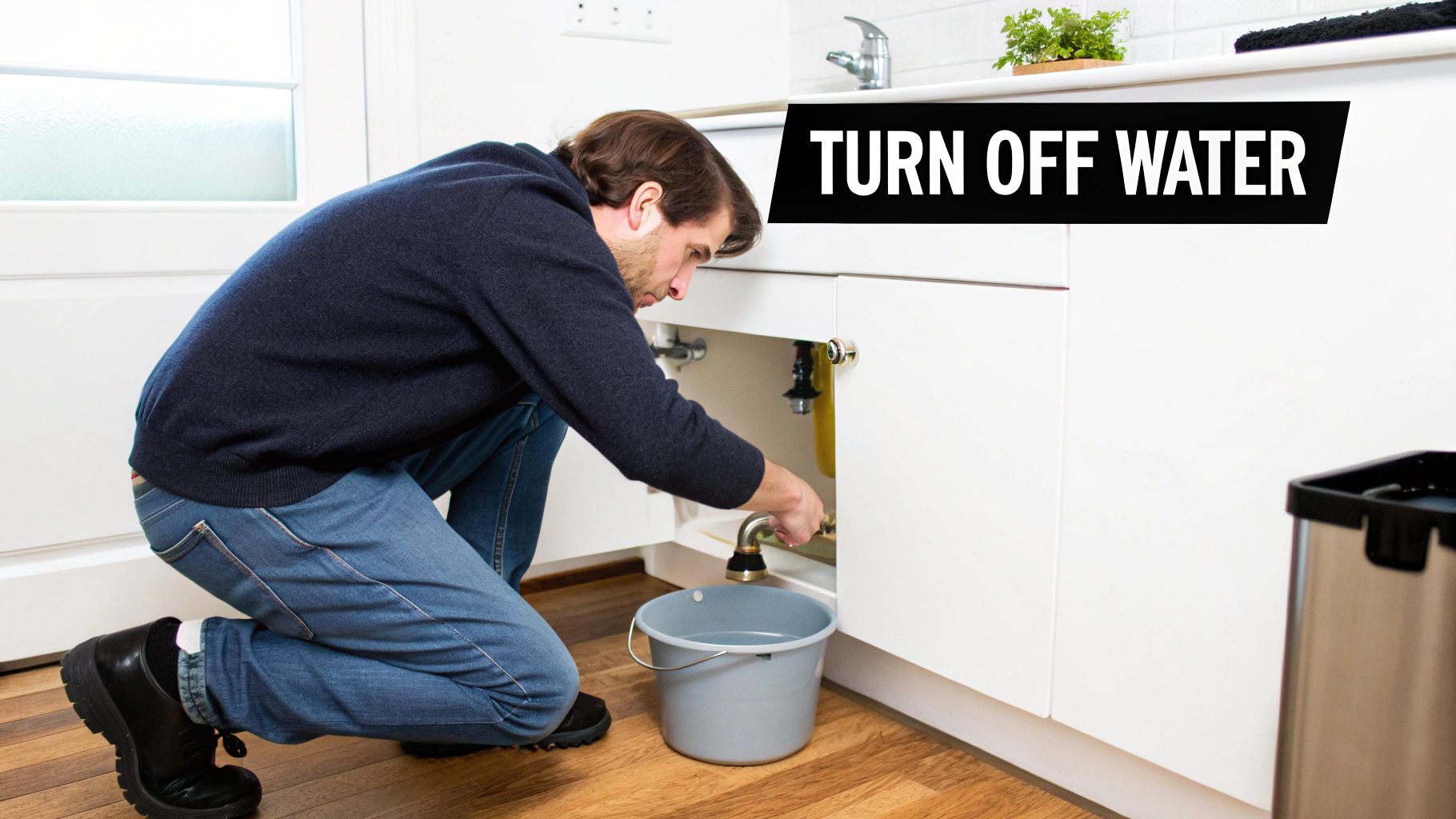
Using a Pipe Clamp for Pinhole Leaks
For those tiny, weeping holes on a straight section of pipe, a pipe clamp is often the most secure and straightforward option you can find. It’s a simple metal device with a rubber gasket inside. When you tighten it around the pipe, it creates a strong mechanical seal right over the leak.
To use one, you just place the rubber pad directly over the pinhole and secure the two halves of the clamp around the pipe. Tighten the screws evenly, a little at a time on each side, until the dripping stops completely. This method offers a surprisingly robust hold that can often last for weeks if needed.
Applying Self-Fusing Silicone Tape
But what if the leak is on a joint or an awkward bend? This is where self-fusing silicone tape really shines. It's not like your standard duct tape. This stuff bonds to itself under tension, creating a seamless, waterproof barrier that moulds to any shape.
Start by stretching the tape to about twice its length and wrap it tightly over the leaky area, overlapping each layer by about half. The more you stretch it as you wrap, the stronger the seal becomes. A good, tight wrap can withstand significant water pressure, making it an incredibly versatile tool for any emergency kit.
Pro Tip: Before you apply any tape or putty, give the pipe a quick wipe with a dry cloth and then scuff the surface with a bit of sandpaper. Even a little bit of preparation helps the repair material grip the pipe far more effectively, giving you a much better seal.
Creating a Hard Patch with Epoxy Putty
For small cracks or leaks in really irregular spots, epoxy putty is an excellent choice. This stuff is a two-part compound that you knead together, which activates a chemical reaction. It transforms from a soft, mouldable putty into a rock-hard, waterproof patch.
Just cut off a piece, knead it until the colour is completely uniform, and then press it firmly into and around the crack. You’ll need to hold it in place for a few minutes while it starts to cure. Once set, it forms an incredibly durable seal that can stop a leak dead in its tracks. For other fixes, particularly on plastic pipes, you can find more tips in our guide on how to repair a leak in a PVC pipe with our easy DIY guide.
Choosing Your Temporary Pipe Leak Fix
Not sure which temporary fix is right for your situation? Each method has its strengths. This table breaks down the best use for each, how tricky they are to apply, and how long you can expect them to hold.
Repair Method | Best For | Difficulty Level | Typical Lifespan |
|---|---|---|---|
Pipe Clamp | Pinhole leaks on straight, accessible pipes | Easy | Weeks to Months |
Self-Fusing Silicone Tape | Leaks on joints, bends, and awkward angles | Easy to Moderate | Days to Weeks |
Epoxy Putty | Small cracks and irregularly shaped holes | Moderate | Weeks to Months |
Remember, these are all stop-gap measures. They give you the breathing room to get a proper, permanent repair sorted without the rush and stress of an active leak.
Understanding Why Your Pipe Sprung a Leak in the First Place
Getting a leak stopped is one thing, but making sure another one doesn't pop up next week is the real goal. A temporary patch gives you that immediate sigh of relief, but figuring out why the pipe failed is how you move from constantly fighting fires to smart, proactive home maintenance. Once you know the root cause, you can protect your entire plumbing system for the long haul.
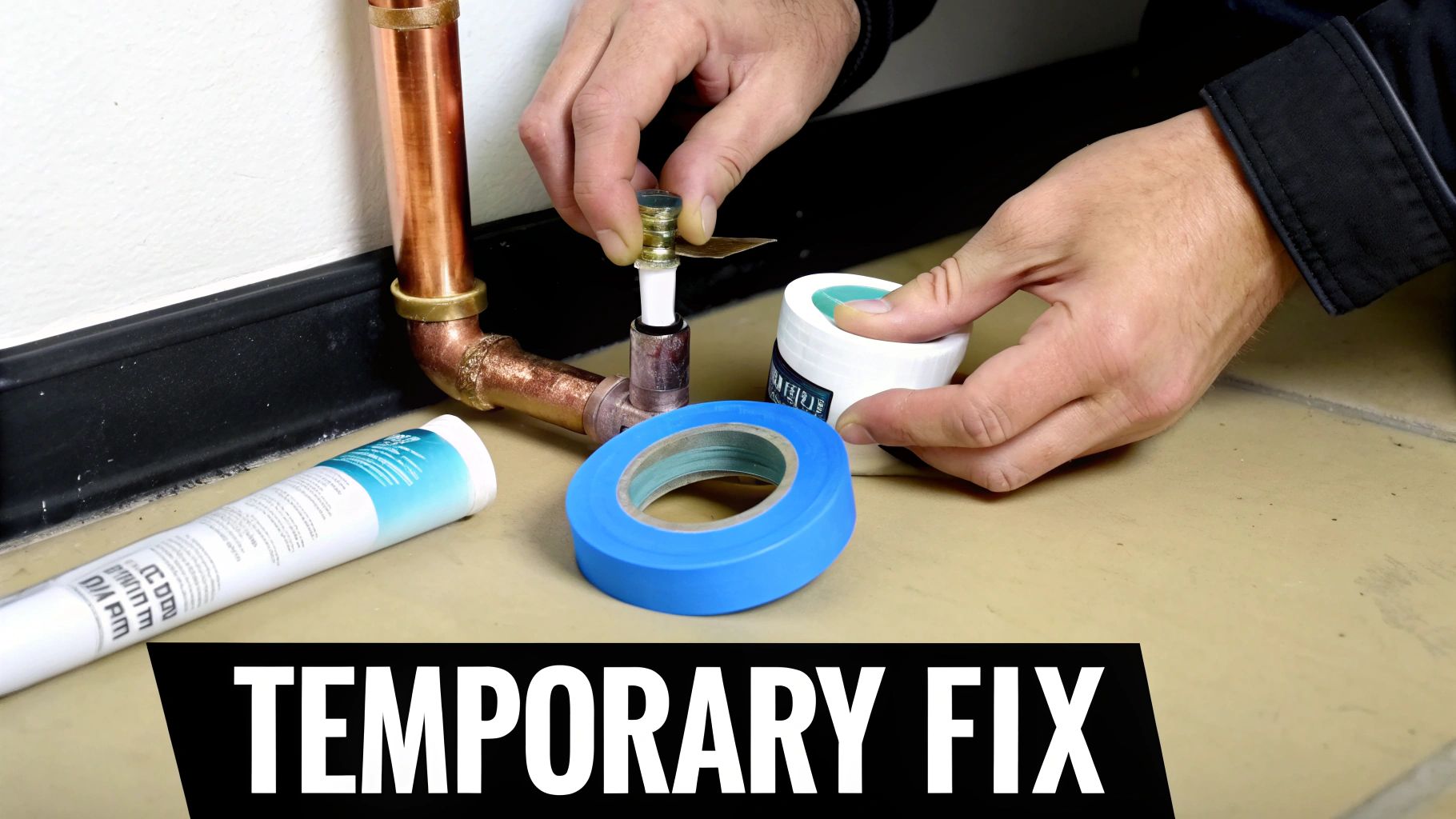
Here in Eastbourne, we see a lot of beautiful period properties, and with that charm comes older plumbing systems that have their own set of quirks. By getting to know the usual suspects, you can spot the early warning signs and avoid a repeat performance. Let's walk through the most common culprits we at Harrlie Plumbing and Heating deal with day in and day out.
The Slow Creep of Corrosion
In many of Eastbourne's older homes, copper pipes have been doing their job for decades. Over time, though, a sneaky process called pitting corrosion can take hold. This is where tiny, localised pits form on the inside of the pipe, almost like microscopic rust spots, slowly eating away at the metal until a pinhole leak appears. It’s so subtle you'd never know it was happening until you see that first tell-tale drip.
This kind of corrosion is often sped up by things like the specific chemistry of our local water or any sediment that's built up inside. A pipe clamp will absolutely fix the immediate problem, but it’s a warning sign that the rest of that pipe run could be just as thin. While we focus on home plumbing, some of the diagnostic principles are universal; for example, specialists use similar fault-finding logic in complex systems when applying hydraulic cylinder repair techniques.
The Strain of High Water Pressure
Your home's plumbing is only designed to handle so much pressure. If the mains pressure coming into your property is too high, it puts a constant, immense strain on every single pipe, joint, and fitting in the house. It’s a silent stress test that, over time, can weaken connections and lead to sudden bursts or those annoying, persistent drips.
We often find that homes at the bottom of a hill, say in areas like Meads, can experience higher-than-average water pressure. A simple fix we often recommend at Harrlie Plumbing and Heating is installing a pressure-reducing valve. It's a one-time job that acts as a bodyguard for your entire system.
Key Insight: A small, consistent drip might seem like nothing, but it’s often the check-engine light for your plumbing. It could be pointing to system-wide corrosion or dangerously high pressure. Ignoring it is just hoping the problem goes away, but in our experience at Harrlie Plumbing and Heating, it only ever gets worse.
The Impact of Blockages and Freezing
Finally, there are two other big troublemakers: blockages and frozen pipes. Clogged drains, especially in kitchens where grease, fat, and food waste can build up, create pressure points. Water backs up, and it will always find the path of least resistance—which is often a weak point in your pipework.
Then there's winter. When water freezes inside a pipe, it expands with incredible force, easily enough to split a copper or plastic pipe right open. The scary part is you often won’t know it’s happened until everything thaws out and water starts gushing. This is why we at Harrlie Plumbing and Heating always say insulating any exposed pipework isn't just a good idea; it's essential prevention, especially in those chilly Eastbourne winters.
When a DIY Fix Is Not Enough
That moment when you tighten a pipe clamp and the drip finally stops is a huge win. You’ve tackled the immediate crisis, stopped the water in its tracks, and bought yourself some valuable breathing room. But it's crucial to see these DIY fixes for what they are: temporary solutions. Think of them as first aid for your plumbing—they stop the bleeding, but they don't heal the underlying wound.
Sooner or later, that patch is going to need a permanent, professional repair.
Knowing when to hang up your DIY hat and call in an expert is a key skill for any homeowner. It’s what separates a minor inconvenience from a full-blown disaster. Some jobs, like soldering a new piece of copper pipe or replacing a critical valve, demand specialised tools and a level of experience you just can’t get from a quick online tutorial. Applying some silicone tape is one thing; cutting, fitting, and sealing a new pipe section so it holds solid for the next twenty years is another thing entirely.
Red Flags You Cannot Ignore
Some leaks are more than just a drip. They're warning signs that demand immediate, professional help. Attempting a DIY fix in these situations isn't just a waste of time—it can be downright dangerous. If you spot any of these red flags, your very next move should be to pick up the phone and call a team like ours at Harrlie Plumbing and Heating.
Leaks Near Electricals: Water dripping anywhere near a fuse box, plug socket, or any electrical appliance is a serious hazard. Shut off the power immediately and step away. This is a job for a qualified professional who understands how to manage both the plumbing and the electrical risks safely.
Major Water Damage: Are you seeing a sagging ceiling, warped floorboards, or dark, spreading stains on your walls? These are all signs that the leak has been going on for some time. A professional is needed not just to fix the pipe but also to assess any potential structural damage to your home.
A DIY Fix That Fails: If your patch just won’t hold or the leak keeps coming back, it’s a clear signal that the problem is bigger than you thought. It could be caused by excessive water pressure or widespread corrosion that a simple patch was never going to solve.
Expert Insight: When it comes to any leak connected to your boiler or central heating system, the law is non-negotiable. Only a Gas Safe registered engineer can legally work on it. This isn't just a guideline; it's a critical safety rule designed to protect your family from the very real dangers of carbon monoxide poisoning.
The Peace of Mind of a Professional Repair
Ultimately, calling a professional from a team like Harrlie Plumbing and Heating brings one thing above all else: security. The UK's plumbing and heating installation sector is a massive £24.3 billion industry for a reason—homeowners understand the value of a guaranteed, professional job. That’s why knowing how to find a good plumber in Eastbourne is such an important skill.
A certified plumber doesn't just bring the right tools; they bring the diagnostic expertise to figure out the root cause of the leak, making sure it’s fixed for good. For those complex jobs in Eastbourne and the surrounding areas, that professional touch is what keeps your home safe, secure, and leak-free. You can learn more about the UK's thriving plumbing industry to see just how vital this expertise is.
Get Your Emergency Plumbing Toolkit Ready
That sinking feeling when you spot a leak can quickly turn into full-blown panic. But what if you could turn that disaster into a manageable hiccup? Having the right tools on hand means you can take control, stop the immediate damage, and buy yourself precious time while you wait for one of our Harrlie Plumbing and Heating experts to arrive. Think of it as your own ‘Pipe Leak Kit’—a small box of essentials that could honestly save you thousands.
Putting this kit together isn't a massive project or a huge expense. You can find everything you need at local Eastbourne hardware shops like Wickes over on Lottbridge Drove or any of the smaller independent spots. The trick is to have it all before the emergency strikes.
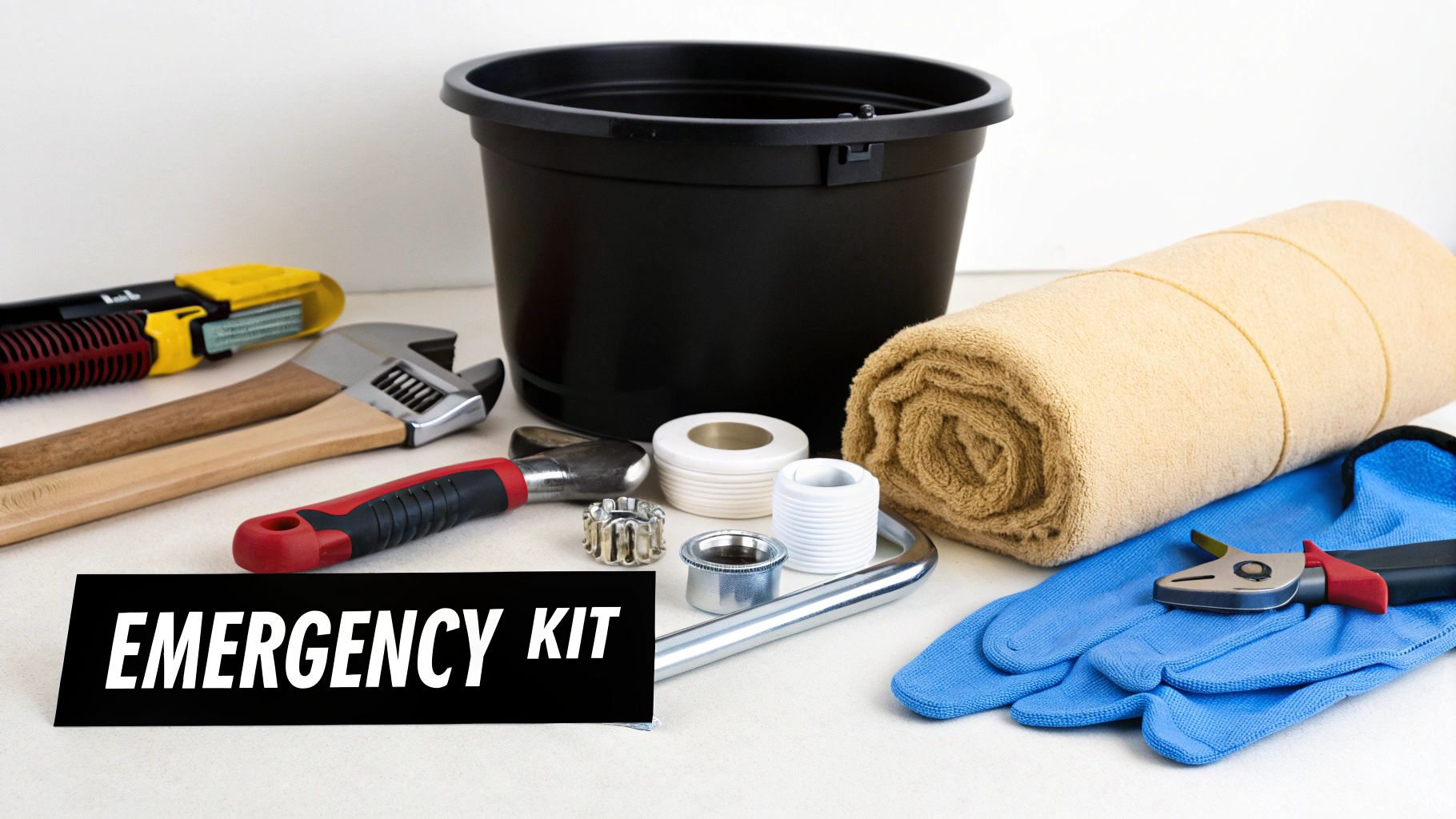
Your Must-Have Leak-Stopping Supplies
Your toolkit should have a few core items, and each one has a specific job to do. Forget about gaffer tape; you need materials designed to handle water under pressure.
An Adjustable Pipe Wrench: This is your go-to for carefully tightening loose fittings or just holding a pipe steady while you work on it.
A Bucket and Old Towels: Simple, yes, but absolutely vital for catching drips and protecting your floors, cabinets, and belongings from water damage.
A Pipe Clamp: This is the real deal for temporary fixes. It creates a strong mechanical seal over a pinhole leak that tape could never match.
Epoxy Putty: A brilliant mouldable compound that hardens into a rock-solid, waterproof patch. It's perfect for small cracks or those really awkward spots where tape won't stick.
Self-Fusing Silicone Tape: This clever tape doesn't stick to the pipe—it bonds to itself, creating a completely watertight wrap. It’s fantastic for sealing leaks on joints and bends.
Having these tools ready means you're not scrambling when water is spraying everywhere. You can confidently pop on a temporary fix, knowing it will hold properly.
Pro Tip: Keep your emergency toolkit somewhere obvious and easy to get to, like under the kitchen sink or in the utility cupboard. The last thing you want is a frantic search for your supplies when every second counts.
The great thing for homeowners is that sourcing these quality materials is straightforward. The UK’s plumbing and heating merchant sector is incredibly robust, which ensures professionals like us at Harrlie Plumbing and Heating always have access to the best parts for the job. Recent industry data shows that despite some monthly wobbles, overall sales at specialist merchants have seen a steady increase. This underlying strength in the supply chain means that whether it's a simple pipe clamp for your kit or a complex valve for a major repair, the components are always available, allowing for fast, efficient service right across Eastbourne. You can read more about the plumbing supply market trends to get a better sense of this stability.
Your Leaky Pipe Questions Answered
When you spot a leak, it’s natural for your mind to start racing with questions. To give you some peace of mind, we’ve put together straightforward answers to the queries we hear most often from homeowners around Eastbourne.
How Much Does It Cost to Fix a Leaking Pipe in the UK?
The final bill for a leaky pipe can vary quite a bit, mostly depending on where it is and how tricky it is to get to. For a straightforward, easily accessible leak—like the classic drip under the kitchen sink—you’re likely looking at somewhere between £80 and £150 for a professional call-out.
But if that pesky pipe is tucked away behind a wall or hidden under the floorboards, the job gets a lot more involved. Accessing the pipe and then making good afterwards takes more time and labour, which could push the cost up to £300-£500 or even more. At Harrlie Plumbing and Heating, we believe in total transparency. You’ll always get a clear, upfront quote from us before any work begins, so there are no nasty surprises.
Can I Claim for a Water Leak on My Home Insurance?
This is a great question. Most standard home insurance policies will cover the damage caused by what they call an 'escape of water'. This means they’ll usually help pay for the ruined carpets, damaged furniture, or the cost of replastering a water-stained ceiling.
What they don't typically cover is the cost of repairing the pipe itself. However, many policies do include 'trace and access' cover, which pays for the work involved in finding the leak’s source. It’s absolutely vital to dig out your policy documents and check the specifics. Always take plenty of photos of the damage before you make a claim.
Key Takeaway: A temporary fix with epoxy putty or a clamp is strictly a short-term measure. While a well-applied clamp might hold for weeks, it’s not a permanent solution. These repairs are designed to stop immediate damage while you arrange for a professional plumber.
How Long Do Temporary Pipe Repairs Last?
Think of temporary fixes as first aid for your plumbing—they’re designed to stop the bleeding, not to heal the wound. While they are incredibly useful for getting a leak under control and preventing further water damage, they are never a "set it and forget it" solution.
A repair made with epoxy putty or self-fusing tape might hold for a few weeks, or sometimes even months on a low-pressure pipe. But its lifespan is unpredictable. It all depends on the water pressure, the temperature of the pipe, and the size of the original hole. We always recommend scheduling a proper, professional repair as soon as the immediate crisis is over to avoid the temporary fix failing when you least expect it.
Is a Small Drip from a Pipe a Serious Problem?
In a word: yes. It’s so easy to dismiss a tiny, slow drip as something you’ll get to later, but that constant moisture is a silent destroyer. Over time, it can lead to serious problems like wood rot, unsightly mould growth, and even structural damage to your home’s framework. If you want to learn more, you can explore this useful guide on common plumbing problems and solutions.
Trust us, it's always cheaper to tackle a small leak right away. A quick call to Harrlie Plumbing and Heating can get that minor drip sorted before it turns into a major, expensive headache for your Eastbourne home.
Don't let a pipe leak disrupt your life. For fast, reliable, and professional repairs across Eastbourne and the surrounding areas, contact Harrlie Plumbing and Heating. Visit our website or call us today for your free, no-obligation quote.

Comments