How to Stop Toilet Overflow Fast a UK Homeowner's Guide

That rising water level in the toilet bowl is a sight that strikes fear into the heart of any homeowner. It’s a moment of pure panic, but the key is to act fast, not to freak out. Your immediate goal is simple: stop more water from entering the bowl. Getting this right in the first 60 seconds can be the difference between a small mop-up and a serious water damage claim, something we at Harrlie Plumbing and Heating see all too often in Eastbourne properties.
Your Immediate Action Plan for a Toilet Overflow
When water is threatening to spill over, instinct might tell you to flush again, hoping it clears. Don’t. That’s the worst thing you can do. Instead, stay calm and focus on cutting off the water supply. It’s the single most important step to regain control.
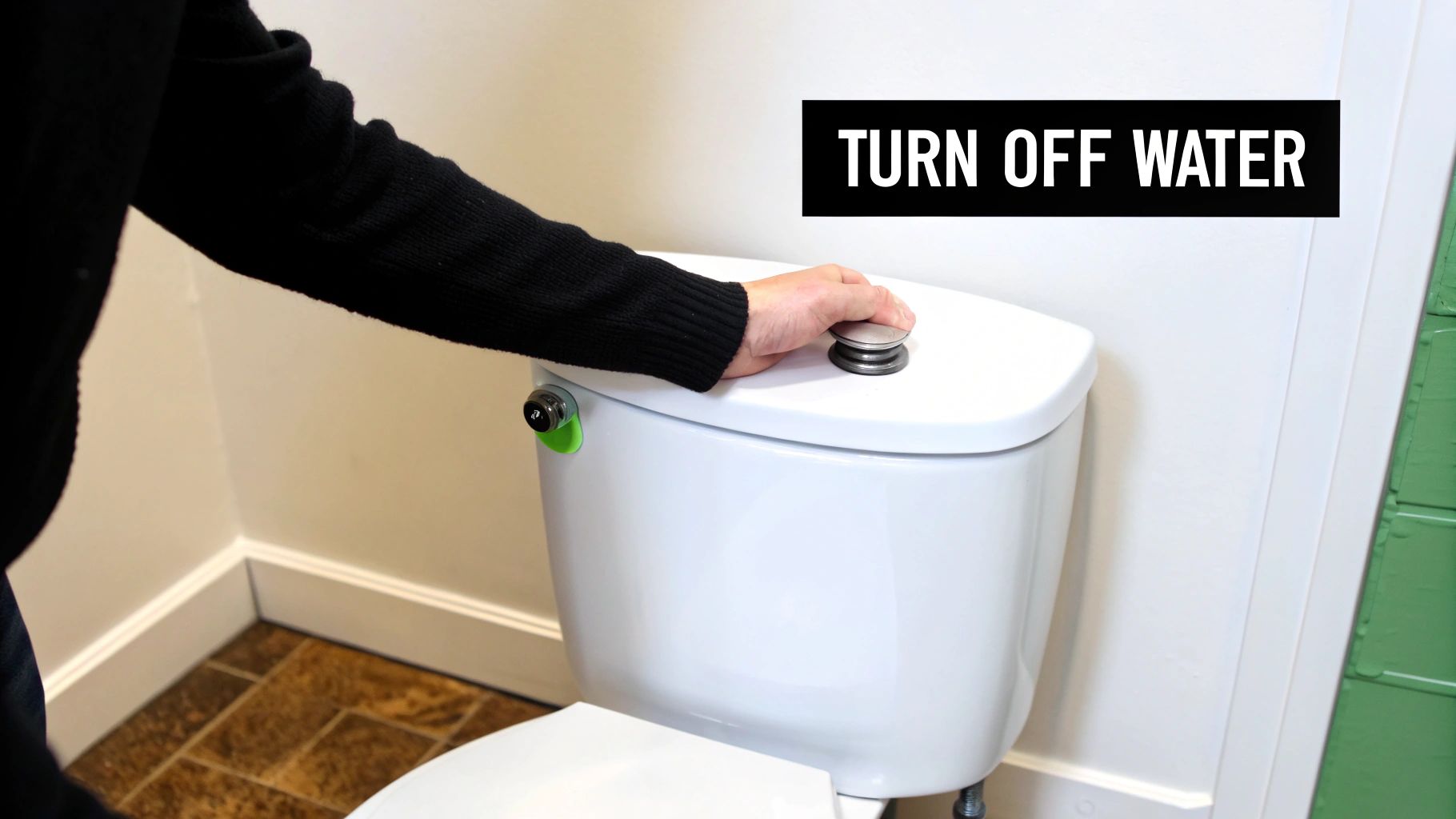
Here's a quick-reference guide to walk you through the immediate actions needed to stop a toilet from overflowing and prevent any further water damage.
Emergency Steps to Stop a Toilet Overflow
Action | How to Do It | Why It Works |
|---|---|---|
Stop the Flush | Reach inside the cistern (tank) and press down on the flapper to seal the flush valve. | This immediately stops water from flowing from the cistern into the already full bowl. |
Shut Off the Isolation Valve | Find the small valve on the pipe coming out of the wall behind or beside the toilet. Turn it clockwise until it's tight. | This cuts off the direct water supply to the toilet, stopping the cistern from refilling. |
Lift the Float | If the isolation valve is stuck, take the lid off the cistern and manually lift the float ball or float cup to the top. | This tricks the fill valve into thinking the cistern is full, so it stops letting in new water. |
These steps buy you crucial time to figure out what's gone wrong without the threat of a flood.
First, Cut Off the Water Supply
Your best friend in this situation is the toilet’s isolation valve. Look for a small tap on the pipe connecting the wall to your toilet cistern. It usually has a small, silver, oval-shaped handle or sometimes just a slot for a flat-head screwdriver. Turn it clockwise as far as it will go.
If you can't find it, or it’s seized up and won't turn, you'll need to shut off your home's main water supply. If you're not sure where your main stopcock is, our essential homeowner guide shows you exactly what to do. Just last week, we talked an Eastbourne homeowner through this over the phone, preventing a disaster while a Harrlie Plumbing and Heating engineer was on the way.
Then, Manually Stop the Cistern Refilling
With the water supply shut off, you need to stop the water already in the cistern from emptying into the bowl.
Carefully take the heavy ceramic lid off the cistern and set it down somewhere it won't break.
Look inside and you’ll spot the float mechanism—it'll either be a classic ball on an arm or a more modern vertical float cup.
Simply pull this float up towards the top of the cistern. This manually shuts the fill valve, stopping any lingering water from flowing in.
Once the immediate threat of a flood is over, your focus needs to shift to the cleanup. In the damp coastal climate we have here in Eastbourne, it's vital to know how to quickly dry a wet carpet and prevent mould before it takes hold and causes bigger problems.
Finding the Culprit: Common Causes of a Toilet Overflow
With the water safely shut off and the immediate crisis averted, it's time to put on your detective hat. Getting to the bottom of why your toilet overflowed is the only way to stop it from happening again. Most of the time, the cause is surprisingly simple.
The most common offender is a straightforward blockage, usually in the toilet's U-bend or the pipework just beyond it. This is almost always caused by flushing something that has no business being in there. Think wads of toilet paper, kitchen roll, or—the number one culprit we see at Harrlie Plumbing and Heating—wet wipes. Even the ones that claim to be 'flushable' simply don't break down like loo roll and can form a stubborn dam in no time.
Every now and then, a curious child might have flushed a small toy, creating an instant blockage. We were once called to a home in the Sovereign Harbour area of Eastbourne to retrieve a small plastic boat from a toilet bend! If you think a foreign object is jammed in there, whatever you do, don't keep flushing. You'll only make things worse.
Beyond a Simple Clog
If the plunger isn't shifting anything or the bowl looks clear, the problem might be lurking inside the cistern. Over time, the internal mechanics can wear out, get stuck, or fail completely. We see this a lot in the beautiful older properties around Eastbourne, where hard water from the chalky South Downs causes limescale to build up on moving parts.
Here are the usual suspects when it comes to mechanical failure:
A Faulty Fill Valve: This is the part that tells the cistern to refill after you flush. If it gets stuck or breaks, it won't sense when the tank is full. The result? A continuous, slow overflow down the internal overflow pipe and straight into the bowl.
A Worn-out Flapper or Seal: The flapper is the rubber seal at the bottom of the cistern. If it becomes warped, brittle, or degraded, it can't create a tight seal. This allows water to constantly trickle into the bowl, which in turn can trigger the fill valve to run non-stop.
It's crucial to clear any blockages promptly. Shockingly, official reports show that a staggering 80% of UK household overflows stem from flushed wipes and fats creating sewer backups. Read more about these findings from the Environment Agency to understand the wider impact.
Figuring out if you're dealing with a physical blockage or a mechanical fault is the next step. If you're not sure what's causing the trouble, our homeowner's guide to common plumbing problems can offer more detailed insights. A simple clog is often a straightforward DIY fix, but a failing part might need a professional from a team like ours at Harrlie Plumbing and Heating to replace it correctly and safely.
Practical DIY Fixes for Minor Toilet Troubles
Once you’ve stopped the immediate overflow and have a rough idea of the cause, you might be able to tackle the problem yourself with a few basic tools. Before getting your hands dirty, always lay down old towels to protect your floor and pull on a pair of rubber gloves. Safety first is the golden rule for any plumbing job, big or small.
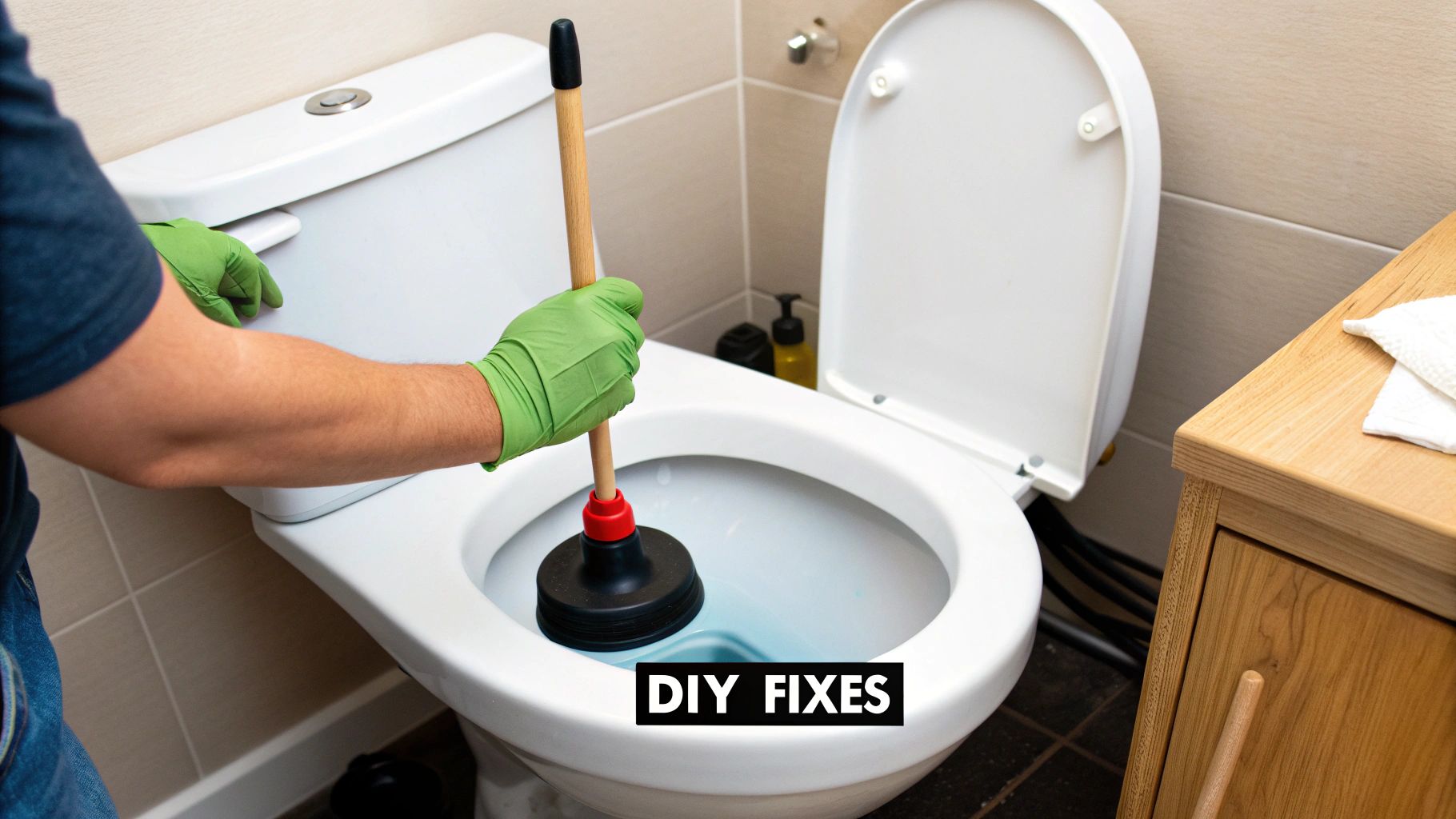
For a straightforward clog, your first line of defence is a good old-fashioned plunger. The secret to effective plunging isn't brute force; it’s all about creating a perfect seal over the toilet bowl's opening. Push down firmly but slowly to expel the air, then pull up sharply to create that all-important suction. This back-and-forth pressure is usually enough to dislodge whatever is causing the jam.
If a few good plunges don’t do the trick, it’s time to bring out the toilet auger, often called a plumbing snake. This flexible tool is designed to navigate the toilet's tricky U-bend, allowing you to break up or retrieve more stubborn clogs that a plunger simply can't reach.
Adjusting Your Cistern's Components
Sometimes, the problem isn’t a blockage at all, but a simple mechanical fault inside the cistern. One of the most common issues we see at Harrlie Plumbing and Heating is a misadjusted float arm, which makes the toilet run continuously and can easily lead to an overflow.
You can often fix this by gently bending the float arm down a little (on older ball-style floats) or by adjusting the screw on a more modern float cup. The goal is to make the fill valve shut off sooner, preventing the water level from creeping up too high.
A client in Eastbourne's Old Town recently saved themselves an emergency call-out fee with our guidance. Over the phone, our Harrlie Plumbing and Heating team walked them through simply checking and reseating the flapper seal at the bottom of the cistern, which had become slightly dislodged and was causing a constant trickle.
Another quick check is the flapper itself. If this rubber seal looks warped or isn’t sitting quite right, water will constantly leak from the cistern into the bowl. Just giving it a little jiggle or a wipe-down is sometimes enough to fix the seal. Of course, if your toilet then won't flush at all after your adjustments, you might be dealing with a different problem. For more specific advice on that, you can check out our guide on how to fix a toilet that won't flush.
Long-Term Prevention: Keeping Your Drains Healthy
Let's be honest, the best way to handle a toilet overflow is to make sure it never happens in the first place. A little proactive care and some smart habits are your best defence against the chaos and mess of a backup. It really all starts with being mindful of what’s going down the drain.
The golden rule here is to only ever flush the '3 Ps'—pee, poo, and paper. Anything else, from cotton buds and dental floss to kitchen roll, can easily snag and start building up a blockage.
But the biggest enemy of the UK’s sewer systems? Those so-called 'flushable' wipes. They're a massive contributor to the pressure on our local infrastructure, like the network managed by Southern Water here in Eastbourne.
It's a shocking statistic, but these wipes are notoriously responsible for an astonishing 90% of UK blockages. Considering the historical strain on our wastewater systems, which have seen record sewage discharge hours, avoiding these products is one of the most impactful things a homeowner can do. You can explore more data on UK river pollution and its causes.
Simple Drain Maintenance Routines
Keeping your pipes clear doesn't mean you have to reach for harsh, corrosive chemicals. A simple and effective monthly routine can prevent that slow build-up of sludge and grime that eventually leads to a serious clog.
Baking Soda and Vinegar: Start by pouring a cup of baking soda down the toilet bowl, then slowly follow it with two cups of white vinegar.
Let It Work: Let the fizzing mixture do its thing for at least 30 minutes, or even up to an hour. It’s great for dissolving gunk and limescale.
Flush with Hot Water: To finish, pour a kettle of hot (but not boiling) water down the drain to wash everything away.
This simple trick keeps your drains flowing freely and is much kinder to your pipes than many of the chemical cleaners you’ll find on the shelf.
When to Get a Professional Inspection
For older homes, especially those in leafy Eastbourne neighbourhoods with mature trees like Meads or Ratton, a hidden threat could be lurking underground. Tree roots are naturally drawn to the moisture in sewer pipes and can silently work their way inside, causing major blockages that seem to come out of nowhere.
If you’re dealing with recurring drain issues, a professional CCTV drain survey from a team like Harrlie Plumbing and Heating is invaluable. We can pinpoint hidden problems like root intrusion before they cause a disastrous backup, saving you from a much bigger, messier, and more expensive emergency down the line.
There's a time and a place for a good old DIY fix, but knowing when a problem is bigger than your plunger is absolutely crucial. Pushing a simple tool too far can quickly turn a small nuisance into a significant, costly disaster. It’s all about recognising those tell-tale signs that point to something more serious lurking in your pipes.
If you've plunged and plunged with absolutely no luck, it’s time to stop. Clogs that just won't budge or keep coming back are a clear signal that the real issue is much further down the line—far beyond the reach of a standard household plunger.
Telltale Signs of a Deeper Problem
Keep a close eye (and ear) on how the rest of your plumbing system is behaving. These are classic red flags that the blockage isn’t just in your toilet:
Gurgling Drains: Do you hear strange gurgling sounds from your shower or sink drains when you flush the toilet? That’s often trapped air trying to escape past a blockage, a classic symptom of a main drain problem.
Water at the Base: Seeing water seeping out from around the bottom of your toilet whenever you flush is a major warning. It could just be a failed wax seal, but it can also be caused by intense pressure from a severe clog pushing water out wherever it can.
Multiple Fixtures Affected: If more than one toilet is backing up, or if your sinks are draining like treacle, the problem is almost certainly in your main sewer line.
For our customers in Eastbourne and across East Sussex, these symptoms mean it’s time to call in the experts. At Harrlie Plumbing and Heating, our team is available 24/7 for emergencies, because we know these problems don't stick to a 9-to-5 schedule.
If you suspect a main drain blockage, your best bet is to call a qualified plumbing professional. Our engineers use high-pressure water jetters and advanced diagnostic tools to clear stubborn blockages a simple snake could never reach, giving you a proper, long-lasting solution.
Answering Your Toilet Overflow Questions
To round things off, let's go through a couple of common questions we hear all the time from homeowners in Eastbourne when they're staring down a troublesome toilet. Having the right answers can give you the confidence to tackle things properly.
Can a Toilet Overflow on Its Own?
It certainly can, and it's a scenario that often catches people by surprise. A toilet can absolutely overflow without anyone even flushing it. This is usually down to a faulty fill valve inside the cistern.
If that valve stops doing its job and fails to shut off, water just keeps pouring into the tank. Eventually, it has nowhere to go but down the internal overflow pipe and straight into the bowl, which will inevitably lead to a spill.
Is It Safe to Use Chemical Drain Cleaners?
Honestly, we really advise against reaching for those harsh chemical drain cleaners. They can be incredibly corrosive and cause serious damage to older pipework, not to mention the harm they do to the environment.
More often than not, they just aren't powerful enough to shift the stubborn blockages we see from things like wet wipes. A good old-fashioned plunger or a toilet auger is a much safer and more effective first port of call.
A bit of preventative thinking goes a long way. Adopting the simple '3Ps' rule (only ever flushing pee, poo, and paper) is a brilliant strategy for stopping overflows before they start. It's been shown to cut blockages by a staggering 70%. You can discover more insights about UK water quality.
If you're ever in doubt, or if you're dealing with a problem that just keeps coming back, don't hesitate to get a professional in. For reliable, 24/7 service in Eastbourne and the surrounding areas, give Harrlie Plumbing and Heating a call for a fast, effective solution. Find us at https://www.harrlieplumbing.co.uk.

Comments