A Homeowner's Guide to Problems with Plumbing

From a tiny drip that keeps you up at night to a full-blown burst pipe, plumbing problems come in all shapes and sizes. The most common culprits we at Harrlie Plumbing and Heating see are blocked drains, persistent leaks, low water pressure, and unexpected boiler failures. Getting to the root of these issues quickly is key to stopping them from causing serious damage to your property.
How to Identify Common Problems with Plumbing
Plumbing issues have a nasty habit of starting small before spiralling into stressful, expensive emergencies. Think of this guide as your first-response checklist for the plumbing headaches that homeowners in Eastbourne run into most often, covering everything from the subtle hints to the all-out disasters.
Knowing the tell-tale signs is half the battle. Many properties in Eastbourne, especially the older Victorian and Edwardian houses, have their own quirks and vulnerabilities. For instance, our notoriously hard water is a nightmare for limescale buildup, which is a leading cause of boiler trouble and disappointing water pressure from taps and showers. You can find out more in our detailed article about common plumbing issues in older Eastbourne properties.
Recognising the Early Warning Signs
Catching a problem early can save you a world of hassle and a fair bit of money. Instead of waiting for things to go wrong, keep an eye (and an ear) out for these early clues:
Unusual Noises: Hear gurgling from your drains? Banging sounds from pipes (often called 'water hammer')? A faint whistling from the boiler? These are all signs of underlying trouble, like blockages or pressure imbalances. For example, a gurgling sink in a Meads-area home might signal a blockage forming from grease build-up.
Foul Odours: A persistent musty smell or the unmistakable scent of sewage from your drains is a clear red flag. It usually points to a nasty blockage or a problem with the U-bend under your sink.
Visible Water Damage: Be on the lookout for damp patches on walls or ceilings, paint that’s starting to peel, or flooring that’s warping. These are often the first visible signs of a hidden leak that needs immediate attention.
Slow Draining Water: If the water in your sink, bath, or shower is taking its sweet time to disappear, you’re looking at the classic symptom of a partial blockage building up in your pipes.
This simple visual guide can help you figure out if you're dealing with a leak or a blockage.
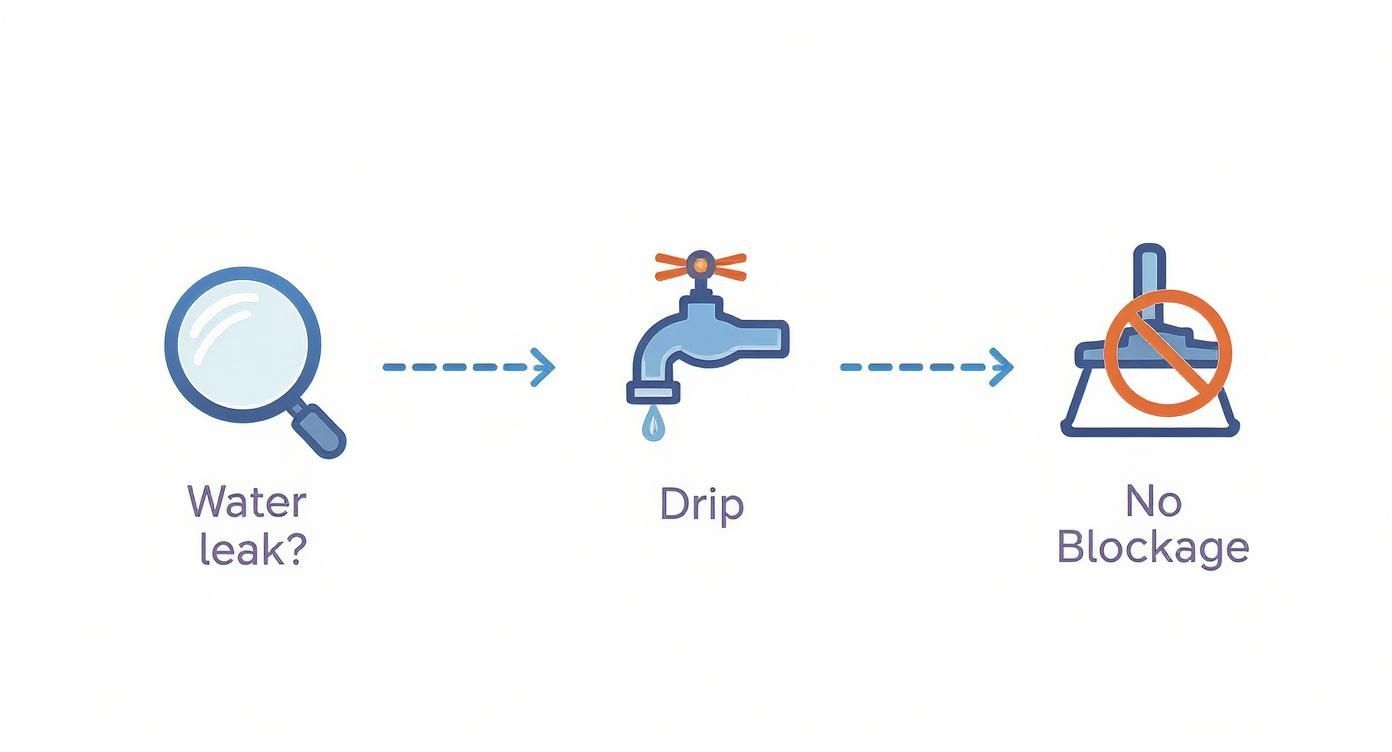
It's a straightforward way to diagnose the situation, guiding you from that first "something's not right" moment to identifying one of the two most common plumbing faults.
To help you quickly assess what might be going on, we've put together a handy summary table.
Quick Guide to Common Plumbing Problems and Their Symptoms
This table breaks down the most frequent plumbing issues we see in Eastbourne, what to look for, and how urgently you should act.
Plumbing Problem | Common Symptoms | Urgency Level | Initial Action |
|---|---|---|---|
Blocked Drains | Slow draining water, gurgling sounds, foul smells. | Medium | Try a plunger or a natural drain cleaner. |
Leaking Taps/Pipes | Dripping sounds, damp spots, higher water bills. | Medium to High | Turn off the local water supply and place a bucket. |
Burst Pipes | Sudden gushing water, no water from taps, damp walls. | EMERGENCY | Shut off the main water supply immediately. |
Running Toilet | Hissing sound from cistern, toilet refills randomly. | Low to Medium | Check the flapper and fill valve inside the cistern. |
Low Water Pressure | Weak flow from taps and showerheads. | Low | Clean tap aerators and showerheads first. |
Boiler Issues | No heating/hot water, strange noises, error codes. | High | Check the boiler pressure and reset if safe. |
This should give you a good starting point for identifying the problem and taking the right first steps.
When Symptoms Point to a Bigger Issue
Sometimes, a seemingly minor issue is actually a symptom of something much more serious. That dripping tap might just be a worn washer, but if you have consistently low water pressure all over the house, it could signal a hidden leak in the main supply pipe coming into your home.
A single dripping tap can waste more than 15,000 litres of water a year – that’s enough to fill over 200 baths! Not only does this drive up your water bill, but it can also cause serious damp and mould problems if you leave it.
Learning to spot these patterns is crucial. If you’ve tried the simple fixes and the problem just won’t go away, it's a strong sign you need an expert to take a look. At Harrlie Plumbing and Heating, we specialise in digging deep to find the real source of these tricky issues, making sure you get a permanent fix, not just a temporary patch-up. In the sections that follow, we'll dive into each of these problems in more detail.
Spotting and Stopping Leaks Fast
That little drip... drip... drip... from a tap can feel like a minor background noise in a busy house. It's easy to tune out, but that sound is often the first, quiet warning of a much bigger problem brewing just out of sight. Leaks, no matter how small they start, are hands down one of the most destructive issues your home can face.
The real danger is what you can't see. While a dripping tap is obvious, a slow leak from a pipe hidden behind a wall or tucked away under the floorboards can go unnoticed for weeks, even months. All that time, water is quietly seeping into your home's structure, soaking into timber, plasterboard, and insulation.
From a Drip to a Disaster
This constant dampness is the perfect breeding ground for toxic black mould, a serious health hazard. It also eats away at the structural integrity of your home, leading to rotting floor joists and crumbling plaster. Before you know it, you're looking at hugely expensive and disruptive repairs. Just imagine a tiny leak in an upstairs bathroom in a terraced house in Old Town slowly working its way down until a damp patch appears on your living room ceiling. By the time you spot it, the damage is already done.
Here in Eastbourne, we see this all the time. Many of our beautiful older homes have pipework that has definitely seen better days. These aged pipes are especially vulnerable to big temperature swings. A sudden cold snap can freeze the water inside, causing it to expand and put immense pressure on the pipe until it cracks or bursts, unleashing a flood. At Harrlie Plumbing and Heating, we've witnessed first-hand how a tiny, ignored leak can spiral into thousands of pounds worth of water damage.
This isn't just a local problem; it's a national one. Due to ageing infrastructure, water companies across England lose an average of 101.68 litres of water per property every single day from leaks. It really puts into perspective how widespread the issue of deteriorating pipework is. You can read more about these findings on water resources performance.
Spotting the Early Warning Signs
Your best defence is being proactive. You don't need to be a plumbing expert to know when something's wrong. By keeping an eye out for a few key signs, you can catch a leak long before it becomes a catastrophe.
Here’s what you should be looking for:
Unexpectedly High Water Bills: Has your bill shot up for no apparent reason? That's a classic red flag for a hidden leak somewhere in your system.
Musty Odours: A persistent damp, musty smell—especially in cupboards, under sinks, or in cellars—is a tell-tale sign of hidden moisture and potential mould.
Visible Damp Patches: Be on the lookout for discolouration, peeling paint, or damp spots on walls, ceilings, and floors. These are clear evidence that water is getting where it shouldn't.
The Sound of Running Water: If you can hear water running when all the taps and appliances are switched off, you almost certainly have a leak.
A Spinning Water Meter: Here’s a simple test. Take a reading from your water meter, then make sure no one uses any water for an hour. Check it again. If the reading has changed, water is escaping somewhere.
Recognising these signals gives you the power to act fast. Even issues with appliances can teach you a thing or two about leak detection; for instance, understanding why a water cooler might be leaking shares similar principles with other plumbing systems in your home.
If you spot any of these signs, don't put it off. For more detailed advice on tracking down the source, have a look at our guide on how to find a water leak in your home with easy DIY tips. While you might be able to handle a minor fix yourself, hidden or persistent leaks need a professional eye. Calling an expert from Harrlie Plumbing and Heating will get you a quick, accurate diagnosis and repair, protecting your Eastbourne property from the costly consequences of water damage.
How to Handle Blocked Drains and Toilets
There are few plumbing headaches as instantly frustrating as a blocked drain or a toilet that just won’t flush. That sinking feeling you get as the water level creeps upwards is something we can all relate to. It’s not just a small inconvenience; a serious blockage can bring your entire kitchen or bathroom to a grinding halt.
Most blockages don’t just happen overnight; they’re the result of a slow, gradual build-up. In the kitchen sink, the usual suspects are fats, oils, and grease from cooking. They go down the drain as liquids but quickly cool and solidify inside your pipes, acting like glue for stray food particles. In Eastbourne bathrooms, we often find a stubborn mix of hair, soap scum, and mineral deposits from hard water teaming up to create tough clogs in showers and basins.
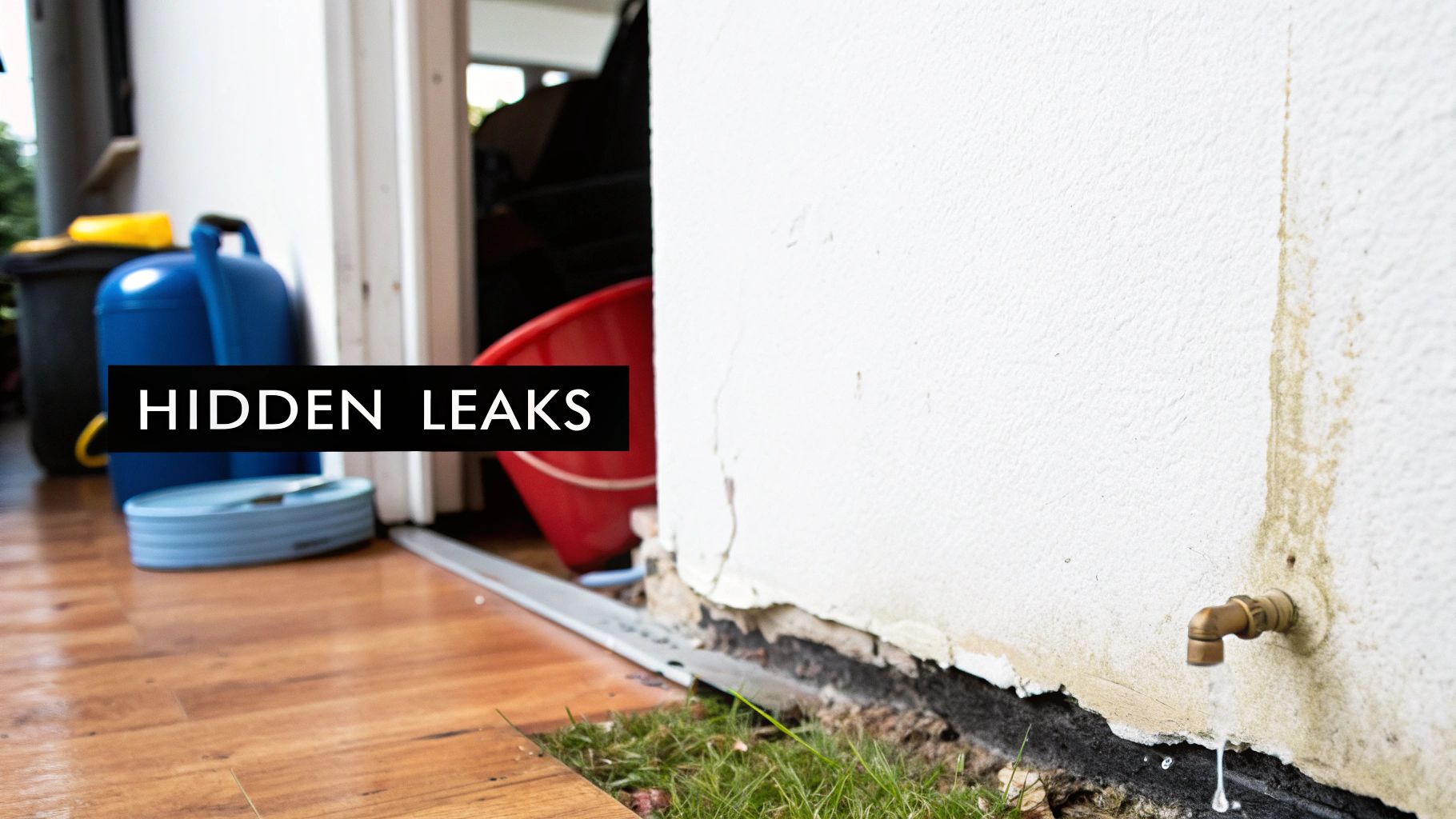
Toilets, on the other hand, tend to have a different arch-nemesis. The single biggest issue we see at Harrlie Plumbing and Heating is people flushing things that should never go down the loo. Items like wet wipes (even the ones that claim to be 'flushable'), cotton buds, and sanitary products simply don't break down like toilet paper, and they’re a guaranteed recipe for a blockage.
Safe DIY Steps for Minor Blockages
Before you panic and call for backup, there are a few safe and surprisingly effective tricks you can try on minor clogs. These methods can often shift the blockage without resorting to harsh chemical drain cleaners, which can actually damage your pipework over time.
For a Blocked Sink or Shower:
Boiling Water: For a greasy kitchen sink blockage, carefully pouring a full kettle of boiling water down the plughole can sometimes be enough to melt the gunk and get things moving. Just be a bit careful if you have older plastic pipes.
Baking Soda & Vinegar: It’s a classic for a reason. Tip about half a cup of baking soda into the drain, followed by the same amount of white vinegar. Let the fizzing concoction work its magic for at least an hour, then flush it all through with hot water.
The Plunger: This is all about technique. Make sure there’s enough water in the sink to cover the rubber cup of the plunger, get a tight seal over the drain, and then give it several sharp, firm pumps. The pressure you create can be enough to dislodge the obstruction.
For a Blocked Toilet:
A toilet plunger (the kind with a smaller flange that fits into the U-bend) is your best friend here. Get a good seal and plunge vigorously. If it still won't flush properly after a few good tries, it’s wise to stop. Pushing it too far could lead to a very unpleasant overflow.
For a more detailed walkthrough, have a look at our guide on how to fix a toilet that won’t flush.
When a Blockage Signals a Deeper Problem
While these DIY fixes are fantastic for a one-off clog, they're not a permanent solution if the problem keeps coming back. If you find yourself reaching for the plunger every few months for the same drain, it’s a big red flag that there’s a more serious, underlying issue.
A persistent blockage isn't just a nuisance; it could be a warning. Constant backups place your pipes under pressure, risking cracks and leaks in parts of the system you can't see.
These recurring problems might point to a massive build-up much further down the pipeline, or even damage to the main drainpipe outside your house. In some of Eastbourne's older properties, it’s not uncommon to find issues like collapsed pipes or invasive tree roots causing the real trouble. For instance, we've dealt with root ingress in drains in the leafy areas of Willingdon, which required specialist equipment to resolve.
The UK's ageing drainage infrastructure is a real concern. Did you know that leaking or defective drains are responsible for 18% of all subsidence-related insurance claims? That's a huge headache for homeowners. With over 5.76 million properties across the UK at risk, what looks like a simple blocked drain could be the first sign of a problem that threatens the very foundations of your home.
This is where you need a professional. At Harrlie Plumbing and Heating, we use specialist diagnostic equipment to find the true root cause of persistent blockages, so we can give you a proper, lasting fix instead of just a temporary patch-up. Don't let a recurring clog turn into a structural nightmare; give us a call and let's get it sorted for good.
Troubleshooting Low Water Pressure and Boiler Issues
There are few things more frustrating than a shower that can only muster a pathetic trickle, or a boiler that decides to pack it in during a cold snap. These sorts of problems can bring your whole day to a screeching halt. For homeowners in Eastbourne, low water pressure and boiler faults can sometimes be linked, but understanding what’s going on is the first step to getting things sorted.
Low water pressure, in particular, can feel like a real mystery. Is it just one tap misbehaving, or has the whole house lost its oomph?
If it's just your kitchen tap that's underperforming, the culprit is often surprisingly simple: a clogged aerator. That's the little mesh filter screwed onto the end of the spout. Give it a gentle unscrew, clean out any gunk, and you might just have your pressure back.
But what if every tap and shower is suffering? That points to a bigger issue. It could be something as simple as a partially closed stopcock (your home's main water valve), or even a problem with the mains supply in your street. Here in Eastbourne, it can also be a tell-tale sign of a hidden leak somewhere in your pipework.
A Quick Checklist For Low Water Pressure
Before you pick up the phone, a few quick checks can save you a lot of hassle and help pinpoint the problem.
Check All Taps: First things first, confirm if the weak flow is just in one spot or if it’s a house-wide issue. This is your most important clue.
Ask Your Neighbours: A quick chat over the fence can be incredibly revealing. If they’re having the same problem, it’s almost certainly an issue with the local water main.
Inspect Your Stopcock: Find your main stopcock – it’s usually hiding under the kitchen sink or in a utility cupboard. Make sure it’s turned fully open (anti-clockwise). It’s not uncommon for them to get knocked accidentally.
Look for Leaks: Go and look at your water meter. If it’s still ticking over when every tap in the house is off, you’ve almost certainly got a leak that needs a professional’s touch.
When it comes to your boiler or central heating, please don't be tempted to open up the casing or mess with any gas fittings. Gas appliances are strictly for certified Gas Safe engineers. It's a matter of safety and legality – not a DIY project.
Common Boiler Faults And What They Mean
Your boiler is the heart of your home, and when it’s not happy, it usually lets you know. In a hard water area like Eastbourne, one of the most common problems with plumbing we see at Harrlie Plumbing and Heating is a buildup of limescale.
This often leads to a strange rumbling or banging noise, a phenomenon known as ‘kettling’. It’s literally the sound of water being flash-boiled by hotspots on a limescale-caked heat exchanger. While it’s not an immediate danger, it’s a clear signal your boiler is struggling, wasting energy, and on its way to a breakdown if left untreated.
Other frequent boiler faults include:
A Pilot Light That Keeps Going Out: A classic issue with older boilers. This could be down to a faulty thermocouple or even just a draught.
Radiators with Cold Spots: If your radiators are warm at the bottom but cold at the top, they probably just need bleeding to release trapped air. But if they’re cold at the bottom and warm at the top, that suggests a buildup of sludge that requires a professional system flush.
Loss of Pressure: Your boiler needs to maintain a stable pressure to work properly (usually shown on a gauge on the front). If you find yourself constantly topping it up, there’s likely a leak somewhere in the heating system.
While bleeding radiators is a job most people can handle, things like kettling, pilot light failures, or persistent pressure loss really do need an expert eye. For any boiler trouble, your first and only call should be to a certified professional. The team at Harrlie Plumbing and Heating are Gas Safe registered and ready to get your heating and hot water back on track, safely and efficiently.
Knowing When to Call a Professional Plumber
A bit of DIY spirit is a fantastic thing for any homeowner, but when it comes to plumbing, knowing your limits is everything. Some jobs are genuinely simple fixes, but many plumbing problems are just symptoms of a much deeper issue. Mishandle those, and you could be looking at catastrophic damage.
The real skill isn't just knowing how to use a wrench; it's knowing when to leave it in the toolbox.
Figuring out what’s a minor annoyance versus a full-blown emergency is the first step. For those moments that demand immediate professional attention, like a major leak or a burst pipe, understanding how to get help with emergency maintenance problems is critical. These aren't situations for hesitation; they need a swift, expert response.
Red Flags That Demand an Expert Eye
Certain plumbing scenarios should never, ever be treated as DIY projects. These are the bright, flashing warning signs that it’s time to put down the tools and pick up the phone to a professional like Harrlie Plumbing & Heating.
Here are the absolute non-negotiables:
Burst Pipes: This is a top-tier emergency, no question. If a pipe has burst, your only job is to shut off the main water supply to your property and call for immediate help. Water can cause immense structural damage in a matter of minutes.
Sewage Backups: If wastewater is coming back up through your drains, showers, or toilets, this isn't just a blockage—it's a serious health hazard. This requires specialist equipment and knowledge to resolve safely.
No Water at All: Your taps have run completely dry, and you’ve already checked the neighbours aren't having the same problem? This could point to a major leak or a blockage in your main supply line.
Any Issue with a Gas Boiler: If you smell gas, see strange error codes, or your boiler is failing to provide heat or hot water, you must call a Gas Safe registered engineer. It is illegal and incredibly dangerous for anyone who isn't qualified to work on a gas appliance.
Recurring problems are your plumbing system’s cry for help. A drain that clogs every month or boiler pressure that constantly needs topping up isn't bad luck—it's a symptom of an underlying fault that a quick fix will never solve.
DIY Fix vs. Professional Call Out
It can be tough to decide when to roll up your sleeves and when to call for backup. This quick-reference table should help you make the right call, keeping you and your home safe.
Plumbing Issue | Safe DIY Action | When to Call a Professional Immediately |
|---|---|---|
Dripping Tap | Try tightening the packing nut or replacing the washer. | If the drip just won't stop or the tap body is cracked. |
Slow Draining Sink | Use a plunger or a natural baking soda and vinegar mix. | If the blockage keeps coming back or affects multiple drains. |
Toilet Not Flushing | Check the cistern's internal parts for obvious faults. | If the toilet is overflowing or completely blocked. |
Radiator Cold Spots | Bleed the radiator to release any trapped air. | If radiators are cold at the bottom (sludge) or the boiler is losing pressure. |
Ultimately, if a simple fix doesn't work or you feel out of your depth, that's your cue. A professional can diagnose the root cause and prevent a small headache from turning into a huge expense.
Why Choosing a Qualified Professional Matters
Finding a reliable plumber is more important now than ever. The plumbing industry in the UK is currently facing a significant skills shortage. According to a recent survey, a staggering 67% of plumbing and heating businesses reported a low availability of skilled labour.
This makes it even more critical to choose a trusted, qualified professional to handle your problems with plumbing, as the pool of experienced experts is shrinking. When you call Harrlie Plumbing & Heating in Eastbourne, you're not just getting a repair; you're getting peace of mind. We are committed to clear communication, providing transparent quotes before any work begins, so you’re never left with unexpected costs.
What to Expect From an Emergency Call Out
When you're faced with a plumbing emergency, you need a service that is fast, clear, and effective. At Harrlie Plumbing & Heating, our process is designed to resolve your issue with minimal stress.
We’ll talk you through immediate safety steps over the phone, like how to shut off your water, and we always aim to be at your Eastbourne property as quickly as possible.
Simple Maintenance to Prevent Plumbing Disasters
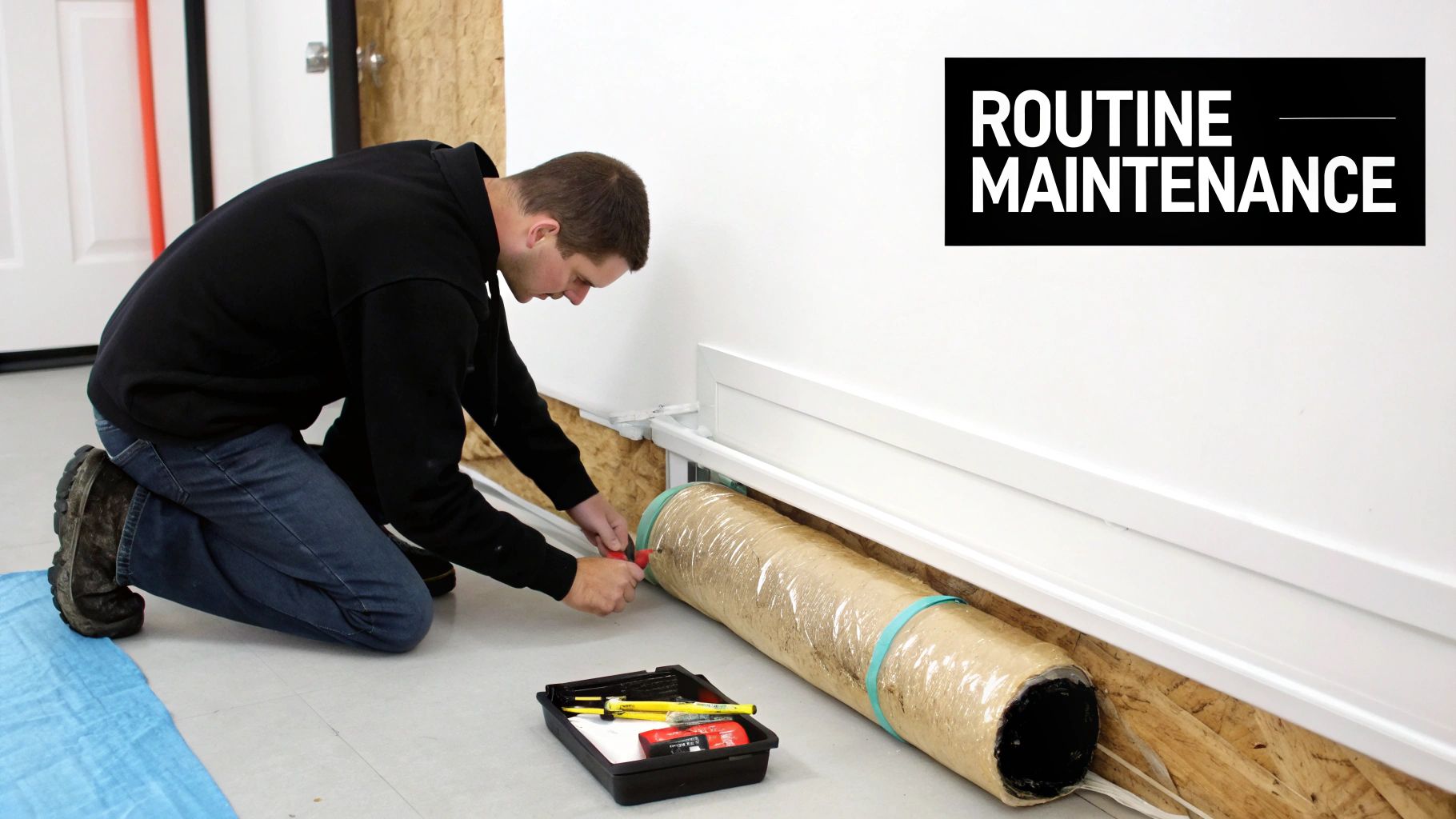
Let's be honest, the best way to deal with a plumbing problem is to make sure it never happens in the first place. A little bit of proactive care really does go a long way, saving you the headache and the unexpected expense of an emergency call-out. For homeowners here in Eastbourne, a few simple, regular checks can make a massive difference in keeping your whole system running smoothly.
Think of it as a seasonal MOT for your home’s pipework. By catching the small stuff early, you stop it from snowballing into a full-blown disaster. It’s the smartest way to extend the life of your plumbing and, frankly, to give yourself some much-needed peace of mind.
Your Seasonal Plumbing Checklist
Following a simple checklist through the year is a brilliant way to spot potential trouble before it escalates. It’s a straightforward habit that protects your property and keeps you from having to make that frantic emergency call.
Here’s a practical guide we recommend for Eastbourne homeowners:
Autumn Prep: As the leaves start to fall, it’s time to think about the colder weather. Get out there and clear your gutters and drains of leaves and debris. This stops blockages that can lead to overflows and damp problems. It's also the perfect time to get your boiler serviced by a pro like Harrlie Plumbing and Heating to make sure it’s ready to handle the winter.
Winter Protection: Before the first proper frost hits, make sure you insulate any exposed outdoor pipes and taps. A frozen pipe can burst and cause catastrophic damage, but a simple foam lagging sleeve is a cheap and incredibly effective fix. Don’t skip this one!
Spring Clean: Take a look at the hoses on your washing machine and dishwasher. You're searching for any bulges, cracks, or general wear and tear – these are classic failure points that cause some of the worst leaks. It's also a good time to descale your tap aerators and showerheads to get the flow back to what it should be.
Summer Checks: Get into the habit of regularly cleaning out the stoppers in your sinks and showers. All that hair and soap scum builds up faster than you think, and clearing it out is the easiest way to prevent a stubborn clog and keep your drains flowing freely.
Partnering with a trusted local plumber for an annual check-up is one of the smartest investments a homeowner can make. At Harrlie Plumbing and Heating, we can spot subtle signs of wear and tear that might otherwise go unnoticed until it's too late.
Tackling Eastbourne's Hard Water
Living in Eastbourne means you’re dealing with hard water. It's packed with minerals like calcium and magnesium, and while it's perfectly safe to drink, those minerals leave behind limescale deposits that can really hammer your plumbing system. Limescale is a leading cause of boiler inefficiency, sad-looking trickles from your taps, and even component failure in your appliances.
To fight back, regularly use a kettle-safe descaler on your showerheads and the ends of your taps. For the bigger picture – your boiler and central heating system – a professional chemical flush or having a magnetic filter installed during your annual service from Harrlie Plumbing and Heating can make a world of difference. It doesn't just prevent damage; it helps your system run more efficiently, which you'll notice on your energy bills.
By getting into these simple habits and teaming up with us for your annual service, you can be confident that your plumbing will stay in top-notch condition all year round.
Your Plumbing Questions, Answered
We get a lot of questions from homeowners across Eastbourne about their plumbing. Here are a few of the most common ones we hear, with some straight-talking advice from our team.
How Much Does an Emergency Plumber Cost in Eastbourne?
This is a big one, and the honest answer is: it varies. The cost of an emergency call-out really depends on the time of day and how complex the job is. The most important thing, though, isn't a fixed price—it's transparency.
At Harrlie Plumbing and Heating, we make a point of giving you a clear, upfront quote before we even pick up a tool. That way, you know exactly what to expect. No hidden fees, no nasty surprises.
Are Chemical Drain Cleaners Safe to Use?
We strongly advise you to step away from the harsh chemical cleaners. Many properties in Eastbourne have older pipework, and these corrosive chemicals can do some serious damage. In fact, relying on DIY chemicals is one of the most frequent problems with plumbing we see turn a small issue into a costly one.
More often than not, these products just provide a temporary fix while a bigger blockage builds up further down the line. A professional drain clearing service from Harrlie Plumbing and Heating is a much safer, more effective, and lasting solution.
Why Is My Boiler Making a Loud Banging Noise?
That alarming sound is often something called 'kettling'. It's usually caused by a build-up of limescale on the boiler's heat exchanger, which is a very common issue in hard water areas like ours. That noise is the sound of your boiler struggling and working inefficiently.
While it’s not an immediate danger, it’s a clear signal that your boiler is under strain and could be heading for a breakdown. The best thing to do is book a service with a Gas Safe registered engineer from Harrlie Plumbing and Heating. We can inspect the system and give it a proper flush to prevent a much bigger problem down the road.
For any plumbing issues you're facing, big or small, you can count on the expert team at Harrlie Plumbing and Heating. Don't let a minor annoyance spiral into a major headache; contact us today for a free, no-obligation quote.

Comments