How to Read Your Water Meter: Quick Guide for Eastbourne Homes

Keeping a close eye on your water meter is one of the simplest, smartest checks you can do for your home. It’s a bit like a health check for your plumbing – a quick glance can help you track your usage, spot expensive leaks, and get a real handle on your bills.
By comparing your readings with what's considered average, you can quickly tell if your household is using more water than it should. For example, if your bill suddenly jumps despite your habits staying the same, that's often the very first sign that a small drip has started somewhere, long before it turns into a major headache for your Eastbourne property.
Why Reading Your Water Meter Is a Smart Move
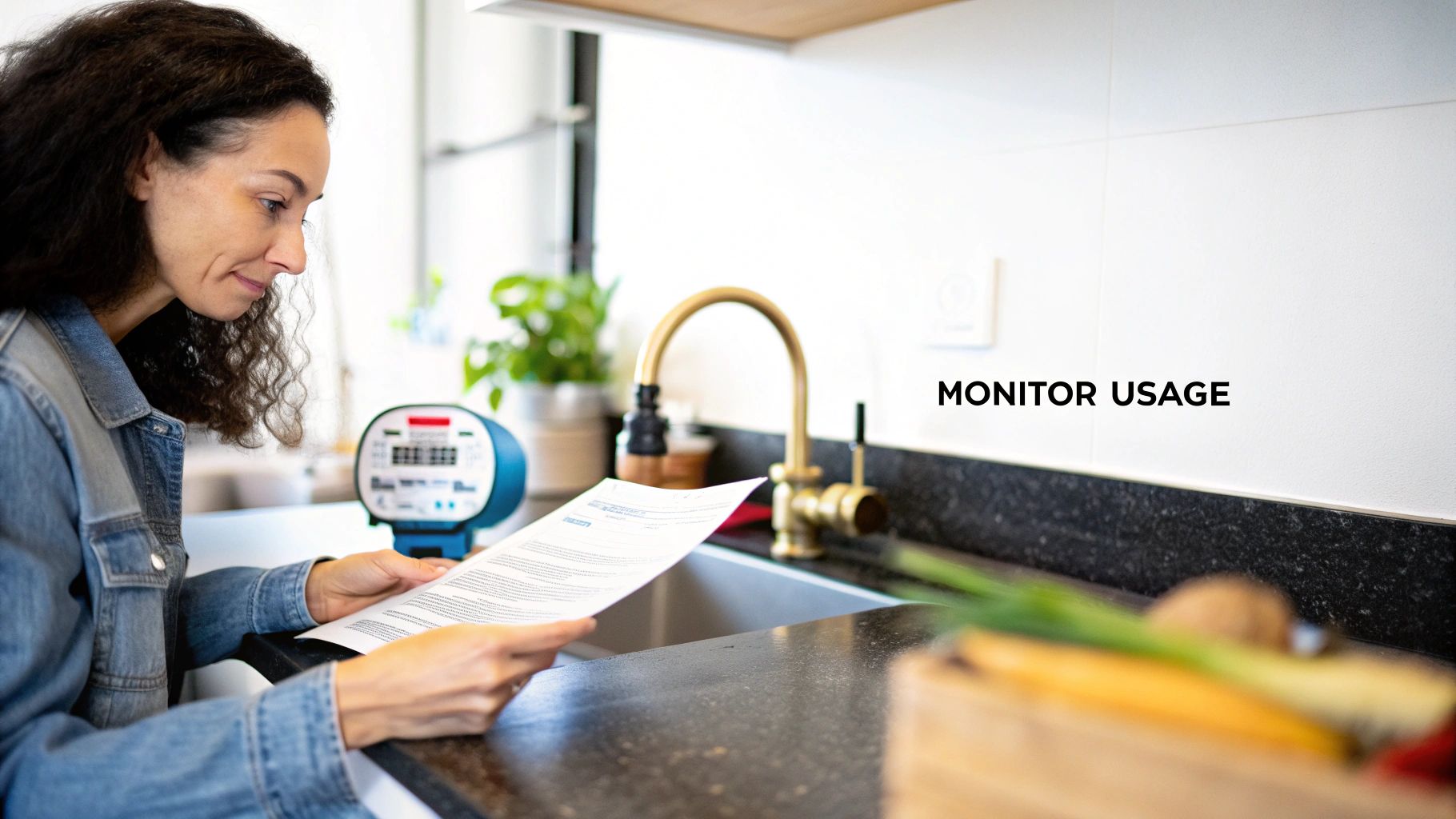
Most of us only spare a thought for our water meter when a surprisingly high bill lands on the doormat. But if you treat your meter as a diagnostic tool, you’ll be way ahead of the game. A quick look can reveal hidden problems long before you see damp patches on your walls or, worse, damage to your home's foundations.
For anyone living in Eastbourne, keeping tabs on water consumption is particularly important. A sudden spike in your meter reading isn't just about a bigger bill from Southern Water; it's often the clearest sign of a hidden leak. These sneaky leaks can waste thousands of litres of water, silently pushing up your costs and potentially causing serious structural issues. Here at Harrlie Plumbing and Heating, we’ve seen first-hand how a simple meter check can save a homeowner hundreds of pounds.
Understanding Your Consumption
Knowing how to read your meter puts you in control of your household spending. It gives you a clear picture of how much water your family is actually using day-to-day. This kind of information is gold for spotting patterns and making smart changes to cut down on consumption and save a bit of money. For instance, you might notice a jump in usage when watering your garden during a dry Eastbourne summer or when you've had guests over for the weekend.
By actively monitoring your meter, you transform from a passive bill-payer into a proactive manager of your home's resources. It's a simple step that provides valuable insight into your daily habits and their financial impact.
A big part of understanding your usage is knowing how it stacks up against the average. The average person in England uses around 136.5 litres of water per day. This figure, which you can find more about over on GOV.UK, is a brilliant benchmark. If your household's usage is consistently way above that, it’s a big red flag that you might have a hidden leak—a common problem we’re often called out to diagnose and fix here at Harrlie Plumbing & Heating across Eastbourne and the surrounding areas.
When a High Reading Signals a Problem
If your meter readings are creeping up despite your best efforts to be careful with water, it’s a strong sign that something’s leaking. While some drips are obvious, many happen out of sight in walls or underground. That's when you need an expert eye. A sudden jump in your reading could point to:
A faulty toilet cistern that’s constantly, and quietly, refilling.
A dripping tap or showerhead, which can waste hundreds of litres a week.
An underground leak in the supply pipe running from the street to your home, a common issue in some of Eastbourne's older properties.
Here at Harrlie Plumbing & Heating, we've seen countless cases across Eastbourne where a homeowner’s sharp eye on their meter helped us catch a serious issue early. If you’ve noticed an unexplained increase in your water usage, don't just ignore it. Give us a call, and we can help figure out what’s going on, whether it's a simple fix or something that needs a bit more investigation. Sometimes, high readings can also be linked to other issues like pressure problems, which you can learn more about in our guide on how to test water pressure in your home.
Right then, let's get you reading that water meter. First things first, you actually have to find the thing. In most Eastbourne homes, it’s a pretty straightforward job, but some of the older properties can turn it into a bit of a treasure hunt. No worries, though – we'll walk you through the usual hiding spots.
Your first port of call should be under the kitchen sink, often tucked away right at the back of the cupboard. If it’s not there, have a look in the utility room or a downstairs cloakroom. You're looking for where the main water supply pipe enters your house; the meter will usually be close by. Can't spot it inside? Time to head outdoors.
Common Outdoor Locations
Most water meters are housed outside in a small box set into the pavement or your front garden, typically near the boundary of your property. These are usually small plastic or metal boxes, flush with the ground, often with a lid marked 'W' or 'Water'.
You might need a flat-head screwdriver to gently prise the lid open. A word of warning: be a bit careful when you lift it. Spiders and other critters love making these boxes their home! Once it’s open, you’ll likely find a foam or plastic frost pad covering the meter face, which you can just lift out of the way.
Our Top Tip: If you live in a terraced house or a flat, particularly in areas like Old Town Eastbourne, take a moment to double-check the meter number. It needs to match the serial number printed on your Southern Water bill. It's a surprisingly common mix-up to start reading your neighbour's meter, and that can cause all sorts of confusion down the line. We've seen it happen!
Analogue vs Digital Meters
Once you've got eyes on your meter, you'll see it’s either an older analogue model or a newer digital one. Knowing which type you're dealing with is the key to getting an accurate reading. Here’s how you can tell them apart at a glance:
Analogue Meters: These look a bit like a car's odometer or have a series of little clock-like dials. They’ll have a row of numbers, usually on black and red backgrounds.
Digital Meters: Much more modern and straightforward. These have an LCD screen that just displays the reading as a simple line of numbers.
Figuring out which one you have is the first real step. With analogue meters, you have to pay close attention to the colours of the numbers, whereas digital meters are far more direct. If you’re still struggling to find your meter or you’re just not sure what you’re looking at, don't sweat it. Give a professional a call. Here at Harrlie Plumbing & Heating, we’ve seen every type of installation across Eastbourne and can quickly help you figure it out.
Right then, you've found your water meter. The next job is figuring out what all those numbers mean. It might look a bit intimidating at first glance, but it's actually pretty simple once you know what you’re looking at. Honestly, this is a skill every homeowner should have – it puts you in control of your water usage and helps you spot problems before they turn into expensive headaches.
The way you read it depends on whether you have an older analogue meter or one of the newer digital types. Let's walk through both, so you can feel confident jotting down your usage for your supplier, like Southern Water here in Eastbourne.
Decoding Analogue Meters
Analogue meters are still the most common type you'll come across in Eastbourne homes. They have a display that looks a bit like an old car's odometer, with a row of numbers that slowly tick over as water flows through.
You'll see two sets of numbers, usually on different coloured backgrounds – typically black (or sometimes white) and red. This is the most important detail to get right when you learn how to read your water meter accurately.
Black Numbers: These are the big ones. They count the full cubic metres (m³) of water you've used. To put that in perspective, one cubic metre is the same as 1,000 litres. This is the number your water company uses for your bill, so it's the one you need to pay attention to.
Red Numbers: These dials show the smaller units, like individual litres or fractions of a cubic metre. While they're fantastic for checking if you've got a tiny leak, you can completely ignore them for billing purposes.
So, for example, if the black numbers show and the red numbers are on , your official reading is simply 254 cubic metres. You just disregard the red numbers when you report your usage to Southern Water.
Before you can even get to reading it, you need to find the thing. This next diagram points out the usual hiding spots.
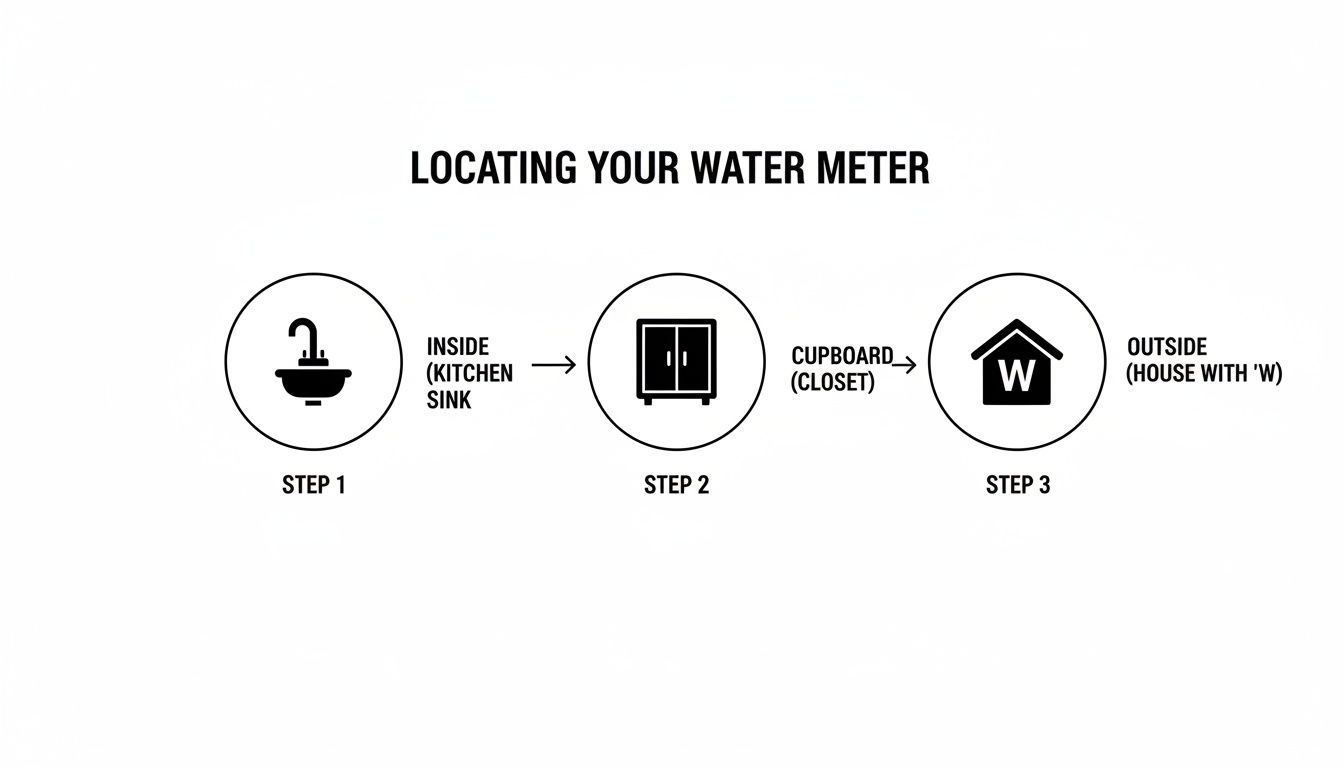
This visual guide keeps it simple, showing that your meter is almost always tucked away inside under a sink, in a cupboard, or just outside near your property boundary.
Reading Modern Digital Meters
If you're in a newer property or your meter has been upgraded recently, you'll likely have a digital display. These are a doddle to read because they just show the numbers clearly on an LCD screen.
The reading is usually shown in cubic metres and often has "m³" next to it to make it obvious. There are no different coloured dials to worry about; you just write down the exact number you see on the screen.
A common call we get at Harrlie Plumbing and Heating is from homeowners whose digital meter screen is blank. More often than not, you just need to press a small button on the meter itself to wake it up and display the reading.
Whatever type of meter you have, the real secret is consistency. Try to take your reading around the same time each month. Doing this gives you a much clearer picture of your household's regular consumption and makes it incredibly easy to spot an unexpected spike that might point to a leak. If you see a sudden, unexplained jump in your numbers, it might be time to do some investigating or give us a call at Harrlie Plumbing and Heating.
The Shift to Smart Meters in Eastbourne
The way we manage water in our homes is changing, and the humble water meter is finally getting a much-needed upgrade. Right across the South East, traditional analogue and digital meters are steadily being replaced by smart meters, a move that gives Eastbourne residents far more control over their consumption and bills.
This shift isn't just about making life easier; it's a huge step towards using water more efficiently nationwide. Smart water meters are at the heart of a national strategy, with water companies in England investing a massive £1.7 billion to install another 10 million of them between 2025 and 2030.
For homeowners in areas covered by Southern Water, which already has an 84.1% meter penetration, the chances of getting a smart meter upgrade are pretty high. You can find out more about this important initiative and its impact on water efficiency in the UK.
The Advantages of Going Smart
So, what does this actually mean for you day-to-day? A smart meter completely removes the guesswork from understanding your water usage. Instead of you having to get on your hands and knees to take a reading, the meter automatically sends your consumption data directly to your water supplier.
This brings some serious benefits:
Real-Time Data: You can see exactly how much water you're using and when, usually through an online portal or a mobile app. It's a fantastic way to pinpoint which habits or appliances are the biggest culprits.
Accurate Billing: Your bills are always based on what you’ve actually used. That means an end to those frustrating estimated bills that could be way higher than what you really owe.
Instant Leak Alerts: This is a game-changer. Smart meters can detect continuous water flow—a classic sign of a leak—and send an alert straight to your phone or email.
This technology empowers you to act fast. A simple notification about unusual activity could be the first warning of a leaking toilet cistern or a damaged pipe, long before you spot any damp patches or physical damage.
From Smart Alert to Smart Solution
While a smart meter is brilliant at flagging a problem, it can't tell you where the leak is or how to fix it. An alert for 'continuous flow' is your cue to take action, but the real diagnostic and repair work still needs a professional eye.
A smart meter acts as your home’s early warning system. It tells you that you have a problem, but you still need a trusted expert to pinpoint what and where the problem is.
This is exactly where Harrlie Plumbing & Heating comes in. The moment your smart meter sends an alert, our team can be on hand to investigate. We use specialist equipment to find the source of the leak, whether it's a faulty tap, a hidden issue under the floorboards of your Old Town property, or a problem with the supply pipe in your garden.
Think of us as the essential partner who translates your smart meter’s data into a fast, effective, and lasting solution, protecting your home and stopping your bills from spiralling out of control.
Turn Your Meter Reading into Action
So, you’ve got the hang of reading your water meter. That’s a great start, but those numbers are more than just a figure for your next bill. They’re actually a powerful home maintenance tool, giving you the ability to spot hidden problems before they get a chance to cause serious damage. This is where you can turn a simple reading into decisive action.
The most valuable thing you can do with this new skill is a simple leak detection test. It doesn’t require any special tools and only takes about an hour of your time, but it can save you hundreds of pounds on wasted water and potential repairs down the line.
The One-Hour Leak Detection Test
Think of this test as your first line of defence against hidden water leaks. It’s incredibly straightforward, and it's something we recommend every Eastbourne homeowner does a couple of times a year.
Here’s how you do it:
Shut Off All Water: First things first, make sure every tap, appliance, and water-using device in your home is completely off. Don’t forget about the washing machine, dishwasher, or any garden hoses.
Take an Initial Reading: Head out to your meter and carefully jot down the exact numbers. Make sure to include the red dials or digits if you have them.
Wait and Watch: Now for the easy part. For the next 60 minutes, make sure nobody in the house uses any water. No flushing toilets, no washing hands—nothing at all.
Take a Final Reading: After an hour has passed, go back and check the meter again.
If the numbers have moved even slightly, you've got a leak somewhere in your system. A slow-moving dial points to a small drip, while a bigger change suggests a more significant issue.
Identifying that a leak exists is the critical first step. The next is finding its source. While some leaks are obvious, many are hidden from view and require a professional touch to locate without causing unnecessary disruption to your home.
Common Culprits We Find in Eastbourne Homes
At Harrlie Plumbing & Heating, we've diagnosed countless leaks across Eastbourne, from modern flats near the marina to older terraced houses in Meads. More often than not, this simple test flags issues you would never spot otherwise.
Some of the most frequent sources of hidden leaks we come across are:
Faulty Toilet Cisterns: A worn-out flapper valve is a classic. It can cause a toilet to run silently, constantly refilling the cistern and wasting thousands of litres a year.
Slow-Dripping Taps: It might not seem like much, but even a minor drip from a kitchen tap or showerhead adds up significantly over time.
Underground Pipe Issues: The supply pipe running from your property boundary to your house can corrode or crack. This leads to a hidden underground leak that only a rising meter reading will reveal.
If your water meter readings indicate unusually high usage, it could signal a hidden leak, and you might need to consult professional leak detection services to pinpoint the exact location. Once you know you have a leak but can't find it, you may need to shut off your water supply to prevent further waste. For guidance on this crucial step, check out our guide on how to turn off your water main: https://www.harrlieplumbing.co.uk/post/how-to-turn-off-water-main-essential-homeowner-guide.
Don't hesitate to give us a call. Our team is equipped to find and fix leaks fast, protecting your home and helping you get your water consumption back under control.
Common Questions About Reading Water Meters
Even once you get the hang of reading your water meter, a few questions nearly always crop up. Here at Harrlie Plumbing & Heating, we've heard them all from folks across Eastbourne. To wrap things up, let's go through some of the most common queries we get, so you can feel completely confident managing your water usage.
What Should I Do If My Meter Is Damaged or Unreadable?
Found your meter’s glass fogged up with condensation, caked in dirt, or the plastic lid cracked? Your first port of call should be your water supplier. For most of us here in Eastbourne, that’s Southern Water. They own the meter, so it’s their job to maintain it. They’ll send someone out to clean, repair, or replace it at no charge to you.
Whatever you do, don't try to fix it yourself—you could easily make things worse.
Now, if you spot damp patches or drips coming from the actual pipework connected to the meter, that's a different story. Those pipes are your responsibility. That’s the perfect time to give a professional plumber like Harrlie Plumbing & Heating a call to check your supply line for leaks.
How Often Should I Check My Water Meter?
Your water company might only ask for a reading every six months, but we always suggest a monthly check-in. Seriously, making this a regular habit is the single best way to catch an unusual spike in your water use, which is almost always the first sign of a hidden leak. We advise all our Eastbourne clients to pop a reminder in their calendar.
Taking monthly readings means your bills are based on what you actually use, not estimates that could have you overpaying for months. It turns a chore into a proactive bit of home maintenance.
This simple routine helps you get a feel for your household's normal water patterns, making any sudden changes stick out like a sore thumb.
My Meter Reading Seems Too High—What Now?
First off, don't panic. The initial step is to run that simple one-hour leak detection test we mentioned earlier. Switch off all your taps and water-using appliances, take a reading, then wait an hour and check it again. If those numbers have gone up, you’ve definitely got a leak somewhere.
Often, the culprits are things you can spot yourself, like a toilet that won’t stop running or a dripping kitchen tap. But if you can't find an obvious source, the leak might be hidden away in a wall or under the floor.
That's when it's time to bring in the experts. At Harrlie Plumbing & Heating, we use specialist diagnostic tools to pinpoint hidden leaks without having to cause a lot of disruption. If you're worried about a leak, our guide on how to find a water leak in your home has some great first steps you can take.
Who Is Responsible for Which Pipes?
This is a really important one to understand. Your water supplier is responsible for the big water main out in the street and the "communication pipe" that runs from the main to your property’s boundary. This includes the water meter itself.
Everything from that boundary point inwards—the supply pipe running into your house and all the plumbing inside—is your responsibility as the homeowner. This is why if a leak is found on your side of the meter, it’s up to you to hire a qualified plumber like us at Harrlie Plumbing and Heating to handle the repair work.
If you've noticed a sudden jump in your meter reading or suspect a hidden leak in your Eastbourne home, don't wait for a small issue to become a big, expensive problem. Contact Harrlie Plumbing and Heating today for a fast, professional assessment. Visit us at https://www.harrlieplumbing.co.uk to book a call-out and protect your home.

Comments