Burst Water Pipe in House: Quick Steps to Minimize Damage
- Luke Yeates
- Jan 29
- 14 min read

When you hear that dreaded sound—rushing water where it shouldn't be—you're officially in the middle of a burst water pipe emergency. Those first five minutes are absolutely critical. What you do right now can be the difference between a bit of a cleanup and thousands of pounds worth of catastrophic damage.
Forget about fixing the pipe for a moment. Your only goals are to stop the water and make the area safe.
Your First Five Minutes: A Burst Pipe Action Plan
Panic is a natural reaction, but a clear head and a fast response will save your home and your wallet. At Harrlie Plumbing and Heating, we've seen it all across Eastbourne. A homeowner in the Meads area hesitated for just a few minutes, and the weight of the water brought the kitchen ceiling down. Compare that to a client in Langney who acted immediately—they ended up with just a small patch of damp wall to repair. The difference was speed.
This is the non-negotiable, three-step safety sequence you need to follow.
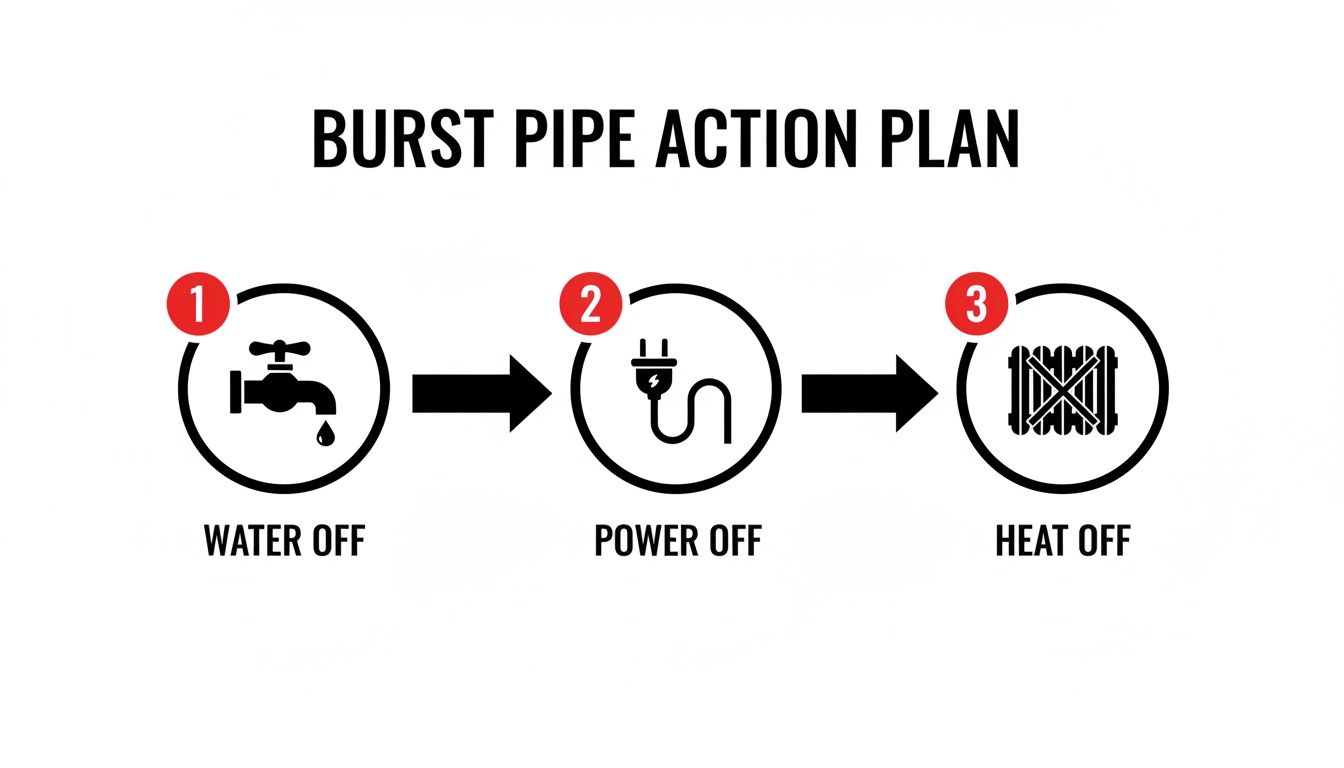
Stick to this order precisely. It’s designed to prevent the risk of electric shock and protect your boiler from serious damage.
To help you react quickly under pressure, here's a quick reference table outlining those crucial first steps.
Immediate Actions For A Burst Pipe
Action | Why It Is Critical | Eastbourne-Specific Tip |
|---|---|---|
Shut Off the Main Stopcock | This is the only way to stop more water from flooding your property. | In older Victorian and Edwardian homes in areas like Old Town, check behind kickboards in the kitchen or in a small cupboard under the stairs. |
Switch Off Mains Electricity | Water and electricity are a deadly mix. This eliminates the immediate risk of electric shock or fire. | If your consumer unit (fuse box) is in a damp cellar or garage, proceed with extreme caution. Don't stand in water to turn it off. |
Turn Off Central Heating | This prevents your boiler from trying to heat an empty system, which can cause it to burn out or seriously malfunction. | This includes shutting down the boiler itself and any separate immersion heaters, which are common in many local properties. |
Following these three steps methodically will contain the emergency and give you the breathing room to figure out what to do next.
Stop The Water At The Source
First things first: shut off your home's main water supply. You’ll do this by finding the main stopcock (also called a stop valve) and turning it clockwise until it's tight. This single action stops every drop of mains water from entering your house.
Of course, you have to find it first. In our experience with Eastbourne properties, it's usually hiding in one of these spots:
Underneath the kitchen sink is the most common place.
Tucked away in a downstairs cloakroom or a utility cupboard.
Inside an attached garage, often on the wall closest to the house.
For some terraced houses in areas like Roselands, it might even be outside under a small plastic or metal cover on the pavement.
Here’s a bit of advice from us at Harrlie Plumbing and Heating: find your stopcock before you ever need it. Make a point to locate it this weekend, and give it a gentle turn and then turn it back. If it's seized shut or you can't find it at all, that’s a problem you want us to solve on a quiet Tuesday, not during a midnight flood.
Isolate Your Electrics And Heating
With the water flow stopped, your next job is to eliminate the electrical hazard. Go straight to your consumer unit (or fuse box) and switch off the main power. This is non-negotiable if there's any water near light fittings, sockets, or appliances.
Finally, turn off your central heating system. For most people, this just means switching off the boiler. If you have an older, conventional system with a hot water tank, make sure you also shut off the immersion heater. This vital step prevents the system from firing up without any water to heat, a mistake that can lead to a very expensive boiler repair. We see boiler damage all the time that could have been completely avoided just by flicking a switch.
Knowing how to shut everything down is one of the most powerful skills a homeowner can have. If you're unsure where your main valve is, you can learn more about turning off your water main in our article.
Containing The Damage While You Wait For Help
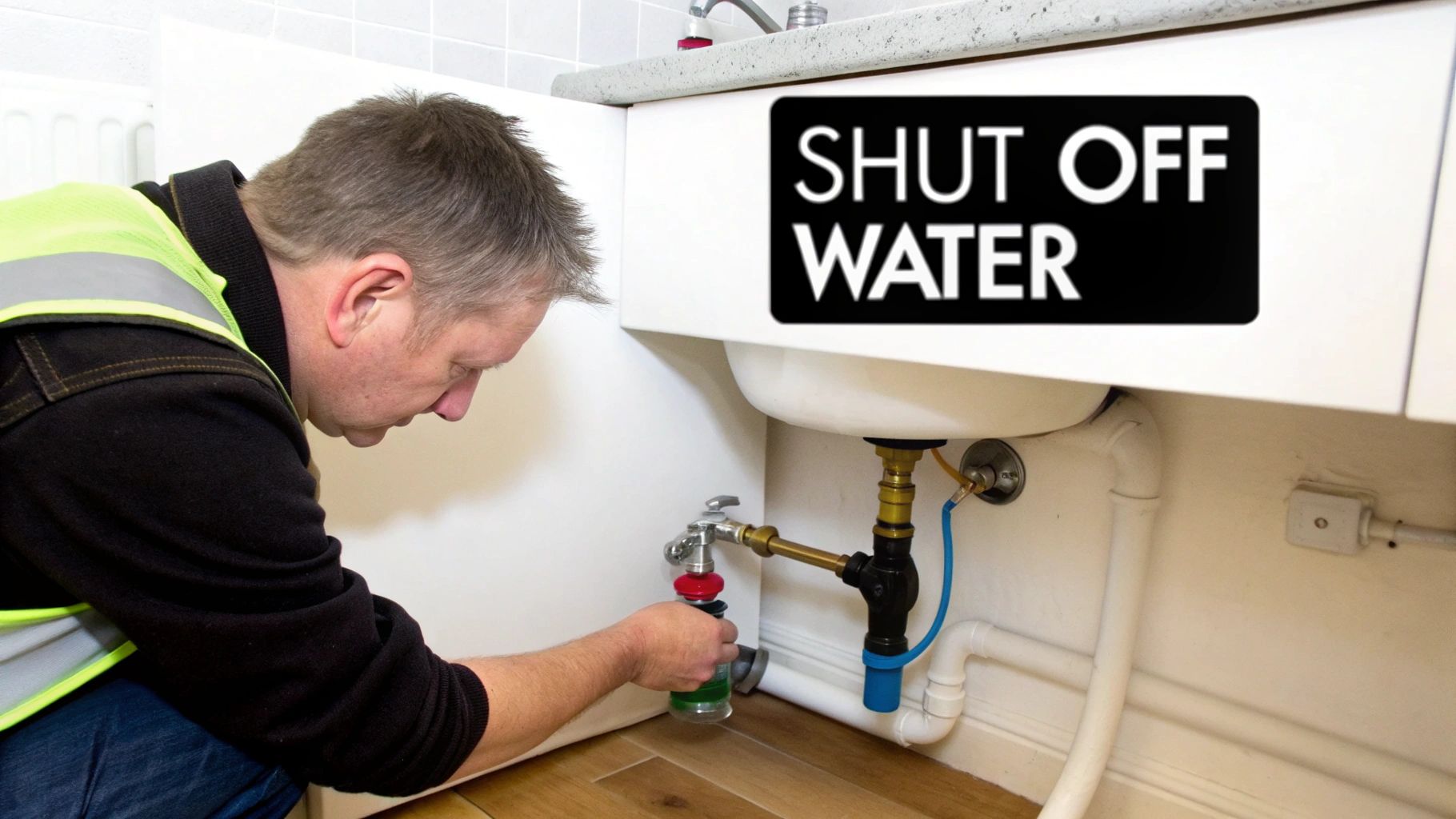
With the water and power safely off, you should feel the initial panic start to ease. Your next job is all about damage control. What you do in this "waiting period" can genuinely make a huge difference to the final repair bill and how smoothly everything goes from here. It’s about taking back a bit of control.
Your first move should be a quick, careful look at the area affected by the burst water pipe in your house. Try to pinpoint where the water is actually coming from. Is it a slow, steady drip from a joint under the sink, or is it a more serious split in a pipe running along the wall? Having a clear idea of the source helps a professional, like one of our team at Harrlie Plumbing and Heating, enormously when you call.
Simple Steps to Mitigate Damage
Once you've got a handle on the situation, you can take some immediate steps to stop the water from spreading. This isn't about trying to fix the pipe yourself; it's purely about containment.
Move Valuables: Get furniture, rugs, electronics, and any sentimental items out of the way immediately. Water can cause irreversible damage in just a few minutes.
Set Up Buckets: Grab buckets, pots, pans—anything waterproof—and place them directly under drips to catch as much water as you can.
Use Towels and Mops: Use old towels to build makeshift dams to keep water from seeping into other rooms. Start mopping up any standing water on hard floors like laminate or tiles.
We had a callout to a historic property in Eastbourne's Old Town recently where a pipe had let go. The homeowner acted fast, moving an antique sideboard and using towels to protect the original floorboards. Their quick thinking saved those priceless items from being ruined while they waited for our team to arrive.
Applying a Temporary Fix
For a slow leak that seems manageable, a temporary patch can provide some welcome relief. Sometimes a C-clamp with a small block of wood and a piece of rubber can seal a pinhole leak. You could also try wrapping the split with heavy-duty waterproof tape or a proper pipe repair clamp to contain the drip for a short while.
Remember, these are strictly temporary measures. They're designed to hold for a few hours at most and are absolutely not a substitute for a professional repair by a certified plumber. An improper fix can fail without warning and cause a second flood.
After getting the water flow under control, tackling the soaked areas is critical to prevent bigger problems down the line; it's worth learning how to dry wet carpet fast and prevent mould.
Document Everything For Insurance
Finally, and this is crucial, grab your phone and start documenting everything. This part is non-negotiable if you plan on making an insurance claim.
Take clear photos and videos of the burst pipe, the water flow itself (if you can do it safely before shutting the water off), and all the resulting damage. Get pictures of soaked carpets, damaged walls, ruined furniture, and anything else the water has touched. This evidence will be invaluable when you speak to your insurer, helping to ensure you get the compensation you're entitled to. It transforms a chaotic scene into a clear, documented record of what happened.
Understanding Why Pipes Burst In Eastbourne Homes
To stop a disaster from happening again, you first need to understand what causes a burst water pipe in house emergency in the first place. A burst pipe might feel sudden and totally random, but it's usually just the final, dramatic stage of a problem that's been quietly developing for some time.
Here in Eastbourne, the team at Harrlie Plumbing and Heating sees a few common culprits pop up again and again. Our unique coastal environment and the wonderful mix of old and new properties across the town can unfortunately make these issues worse.
The Impact of Cold Snaps and Freezing
Without a doubt, freezing temperatures are the number one cause of burst pipes. When the water inside a pipe freezes solid, it expands with incredible force. This creates immense pressure that can split even the strongest metal pipe wide open.
The winter of 2022-2023 was a harsh reminder of this. Across the UK, insurance claims for burst pipes shot up by a staggering 75%. Many households were trying to manage soaring energy costs by keeping their heating off, which left their plumbing vulnerable. Things really came to a head in December 2022 during a severe 'deep freeze,' leading to almost 2,000 burst pipe claims in that month alone. You can read more about the impact of the deep freeze on UK homes.
Living in Eastbourne, this risk is especially high for any pipework tucked away in unheated areas like lofts, garages, or running along external walls that get battered by those cold coastal winds. We’ve put together some detailed advice on this in our guide on how to prevent frozen pipes with essential tips in Eastbourne.
Corrosion and Ageing Pipework
Plenty of lovely homes in Eastbourne, particularly in areas like Old Town or Meads, still have their original galvanised iron or copper pipework. After decades of service, these materials inevitably start to corrode and weaken from the inside out.
At Harrlie Plumbing and Heating, we often see this problem accelerated in properties closer to the seafront. That salty sea air can speed up the corrosion process on any exposed pipes, making them brittle and much more likely to fail under pressure. A small patch of rust on the outside can be a big warning sign of a much weaker pipe wall on the inside.
A sudden change in water pressure, or even a minor knock, can be the final straw for a pipe that has been slowly corroding for years. This is why seemingly random bursts often happen on pipes that haven't been touched.
High Water Pressure and Accidental Damage
Your home’s water pressure should be steady and consistent. If it’s too high, it puts a constant strain on your entire plumbing system—from the joints and fittings to the pipes themselves. Over time, this stress can cause a weak point to finally give way.
And finally, never underestimate the risk of simple accidents. We’ve been called out to plenty of emergencies caused by a misplaced nail from hanging a picture or a DIY job gone wrong. A recent callout in Hampden Park involved exactly that - a homeowner drilling to put up a shelf, straight into a central heating pipe. Drilling into a wall without knowing exactly what's behind it is one of the quickest ways to cause an instant flood.
When a Quick Patch Just Won't Cut It
Getting some waterproof tape on a weeping pipe might feel like a win, and for a few hours, it is. But it’s crucial to see that patch for what it is: a temporary truce in an ongoing battle, not a peace treaty. Trying to get by with a DIY fix on a burst water pipe in house is a real gamble. These makeshift repairs have a nasty habit of failing without any warning, often leading to a second flood that's far more destructive than the first.
A proper, professional repair is about so much more than just plugging a visible hole. It’s about getting to the root of the problem. Why did the pipe fail in the first place? Was it corrosion from years of use? A sudden spike in water pressure? Or is it a symptom of a much bigger issue lurking within your plumbing system? Without an expert diagnosis, you’re just waiting for the next disaster to happen.
The Hidden Dangers of an Improper Repair
An improperly repaired pipe is like a ticking time bomb hidden in your walls. We’ve seen it happen. I remember a callout to a home in the Sovereign Harbour area of Eastbourne where the owner had slapped a clamp on a leaky copper pipe. It seemed to do the trick for about a week. But all that pressure had to go somewhere, and it simply found the next weakest spot, blowing out a much larger split further down the line while they were out at work. The damage was immense.
Relying on a DIY patch can go wrong in several ways:
Sudden, Catastrophic Failure: Temporary fixes just aren't built to handle the constant pressure changes in your home’s plumbing. They are almost guaranteed to fail, and usually at the worst possible moment.
Trouble with Your Insurance: Most home insurance policies are pretty clear—repairs must be carried out by a certified professional. If your DIY job fails and causes a flood, you could find your claim is instantly invalidated.
Falling Foul of Regulations: The UK has strict water regulations for a reason. A professional repair ensures your plumbing is safe and compliant, protecting both your property and your family’s health.
What to Expect When You Call for Help
When you call Harrlie Plumbing and Heating, our first and only priority is to get your home back to normal as safely and quickly as we can. Our emergency team provides a rapid response across Eastbourne, and we always aim to be with you as soon as humanly possible.
We don't just patch the leak; we carry out a full diagnostic to find the exact cause of the burst. We’ll give you a clear, jargon-free explanation of what’s happened and an upfront quote before we even pick up a tool. No nasty surprises, just honest, professional work.
The financial fallout from a burst pipe can be staggering. By 2023, the average insurance claim for water damage from a burst pipe had rocketed to over £17,000, with some repairs taking months to complete. Learn more about the rising costs of burst pipe claims.
Hiring a certified, insured plumber isn’t just about fixing a leak. It’s an investment in your property's future. It gives you the peace of mind that the job has been done right, meets all legal standards, and won’t come back to haunt you. For a more detailed breakdown of what goes into a professional repair, check out our guide on UK burst pipe repair costs.
Staying Ahead of Disaster: Proactive Maintenance to Prevent Burst Pipes
The absolute best way to handle the chaos of a burst pipe is to make sure it never happens in the first place. When you shift from reactive panic to proactive prevention, you save yourself a world of stress, money, and disruption. A simple, manageable maintenance routine really is your strongest defence against water damage.
For homeowners here in Eastbourne, this means being ready for everything from a sudden South Coast cold snap to the gradual wear and tear on your plumbing. Taking small, consistent steps throughout the year is the key to protecting your property and giving yourself lasting peace of mind.
Insulate Your Vulnerable Pipes
Freezing water is, without a doubt, the number one cause of burst pipes. As water turns to ice, it expands with enough force to split solid metal. The most vulnerable spots in your home are always the unheated ones.
Pay close attention to any pipework running through:
Lofts and attics: These spaces get bitterly cold, making pipes that run to water tanks prime candidates for freezing solid.
Garages: Whether it's attached or separate, a garage offers very little protection when the temperature plummets.
Against external walls: Any pipes on walls exposed to those biting coastal winds are at significant risk.
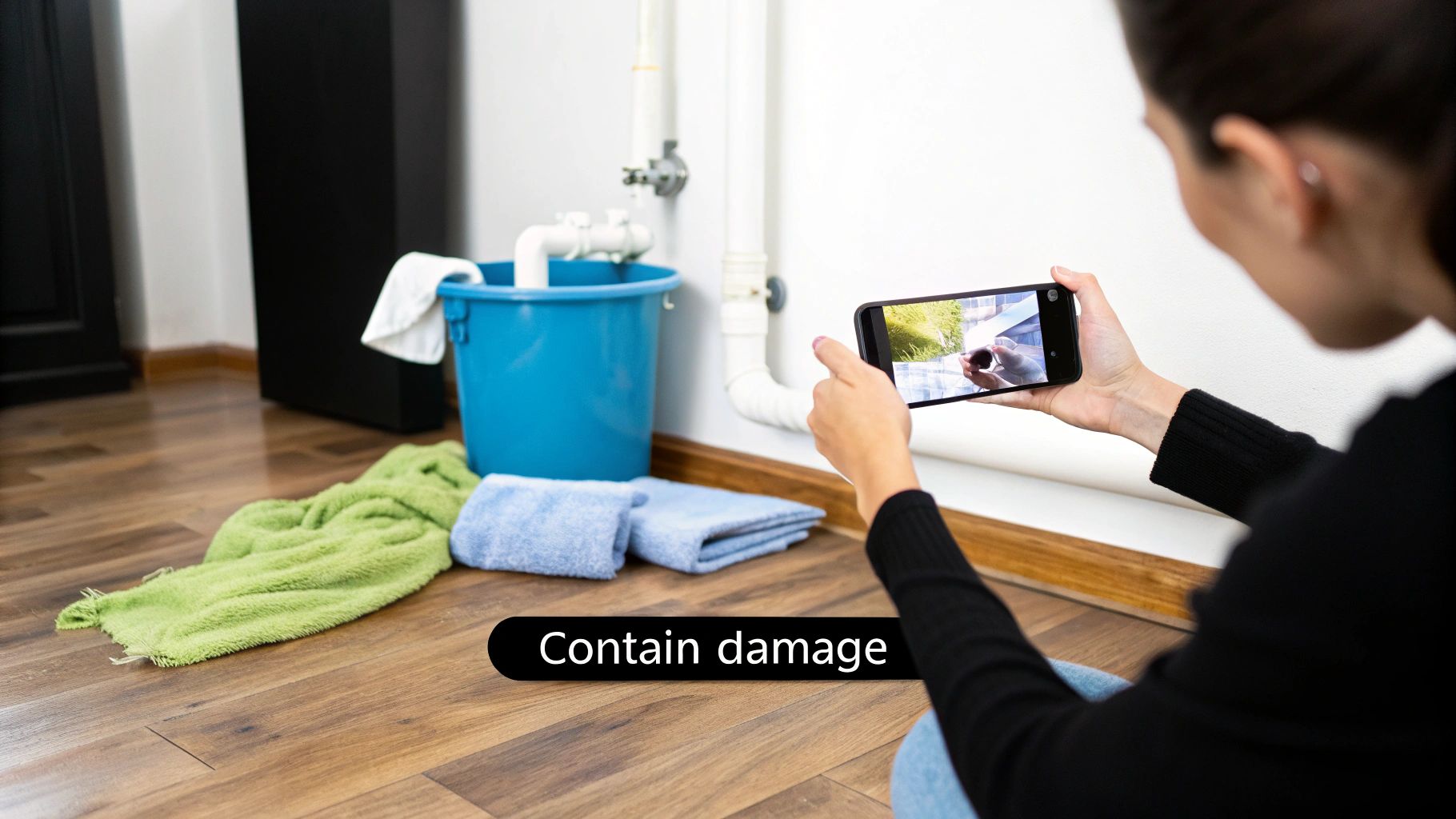
Inexpensive foam pipe insulation, often called lagging, is your best friend here. You can pick it up at any local DIY shop. Just cut it to size, wrap it around any exposed pipes, and you're done. It's a tiny job that offers enormous protection.
"We often see the worst damage from pipes that homeowners didn't even realise were vulnerable. A poorly insulated pipe in a loft can cause a ceiling to collapse. A bit of foam lagging is one of the cheapest and most effective insurance policies you can buy for your home." - The Harrlie Plumbing and Heating Team
Keep an Eye on Things with Seasonal Checks and Boiler Servicing
Your plumbing and heating system works hard all year round, so a little bit of attention can go a long way. Before winter really sets in, take a walk around and fix any dripping taps. That constant drip isn't just wasting water; it signals a potential weak point in your system that could fail completely under pressure.
An annual boiler service from a Gas Safe registered engineer, like our team at Harrlie Plumbing and Heating, is also non-negotiable. We don’t just look at the boiler itself; we assess the overall health of your entire heating system, from pressure levels to radiator performance, spotting potential issues long before they become emergencies.
The scale of water loss from leaks is a massive national issue. Across the UK’s water networks, about one-fifth of all water is lost this way. Closer to home, Southern Water repaired over 20,000 leaks on its network and nearly 3,500 on customer pipes in a single year, which shows just how constant the battle is. If you're curious about the bigger picture, you can explore the findings from Ofwat on national leakage efforts.
Protect Your Plumbing When You Go on Holiday
If you’re heading away during the colder months, the last thing you want is to come home to a disaster. A few simple steps can make all the difference.
Leave the heating on low. Don't turn it off completely. Set your thermostat to a constant, low temperature—something around 13°C is perfect. This keeps the air in your home just above freezing and ensures a small amount of water is always circulating through the pipes.
Open up your cabinets. Leave the doors to kitchen and bathroom cabinets under the sinks open. This small trick allows the warmer air from the rest of the house to circulate around the pipework that’s usually hidden away in the cold.
Consider a full drain-down. If you’re going to be away for a longer period, the most foolproof option is to shut your water off at the stopcock and drain the entire system. Just turn on all the taps (hot and cold) until they run completely dry.
Got Questions About Burst Pipes? We’ve Got Answers
When you're staring at a torrent of water pouring through your ceiling, it's completely normal for your mind to race with questions. As plumbers in Eastbourne, the team at Harrlie Plumbing and Heating has pretty much heard and seen it all. Here are the answers to the queries that pop up most often when homeowners are facing a burst water pipe in house.
Where on Earth is My Main Water Stopcock?
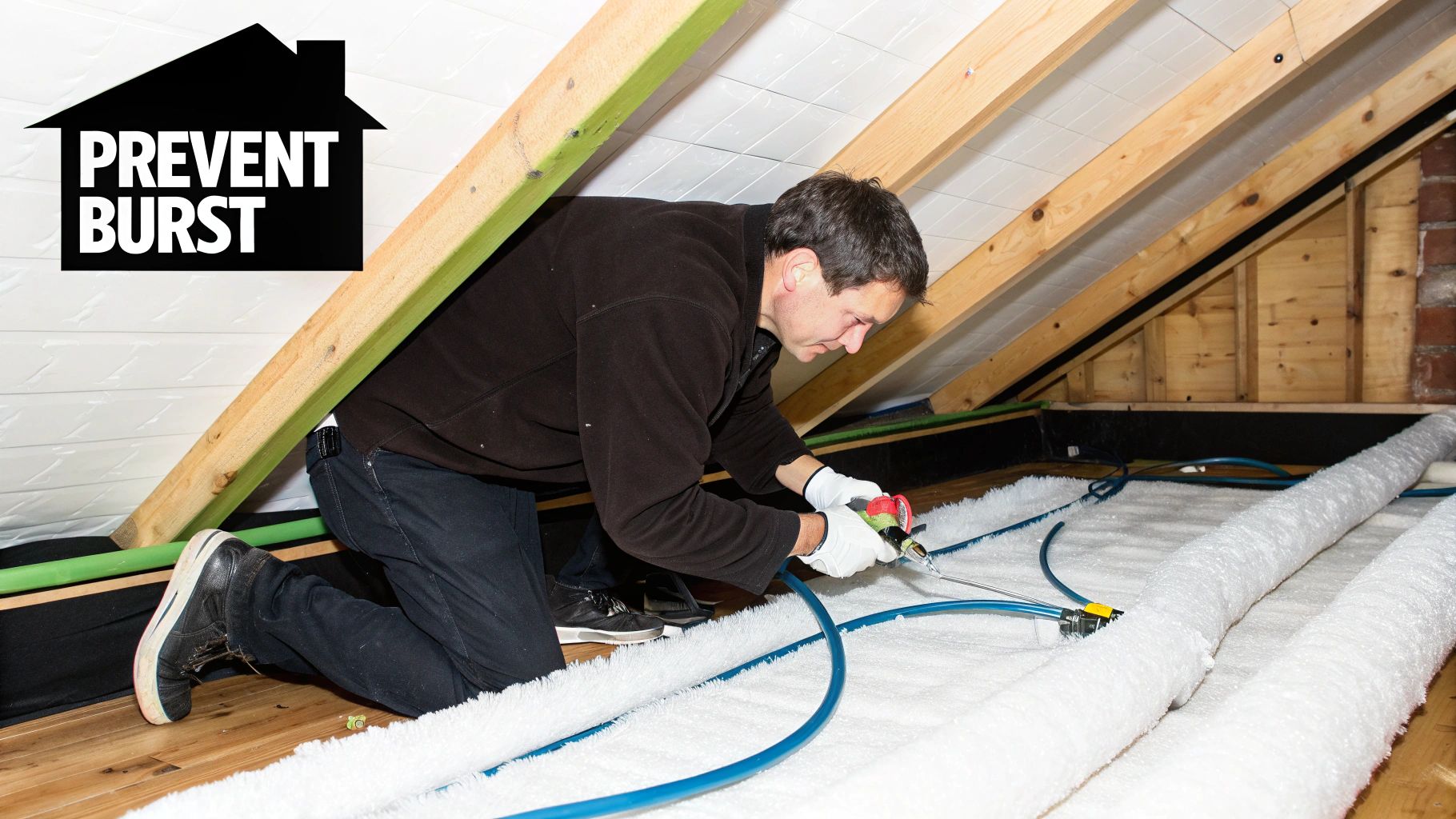
That little valve, often called a stopcock, is your first line of defence—it shuts off the water supply to your entire home. The tricky part is knowing where to find it before you desperately need it.
It's usually located right where the main water pipe enters your property. Check these common hiding spots first:
Under the kitchen sink (this is the most likely culprit).
Tucked away in a downstairs loo or a utility cupboard.
In an attached garage, typically on the wall that connects to the house.
If you live in one of Eastbourne’s gorgeous older Victorian or Edwardian properties, it might be outside under a small metal or plastic cover in your front garden or on the pavement. Honestly, the best advice we can give is to find yours now.
When you do, turn it fully clockwise to shut off the water. If it’s a bit stiff, a dry cloth can give you the grip you need, but never try to force it with a wrench or pliers. If it won’t budge or you’re completely stumped, give us a ring. Our engineers are familiar with the quirks of local house layouts.
Will My Home Insurance Actually Cover This Mess?
In most cases, yes. The majority of standard UK home insurance policies cover what they call "escape of water," which is exactly what a burst pipe is. This coverage is designed to pay for the cost of repairing the damage the water caused to your home’s structure (think soggy plasterboard and warped floors) and your belongings.
But, and this is a big but, you need to read the small print. Your policy almost certainly won't cover the cost of repairing the pipe itself. That's usually seen as a home maintenance issue. You’ll also have an excess to pay before the insurance kicks in.
My top tip? Call your insurer the moment it's safe to do so. Before you start any major clean-up, document everything. Take photos and videos of the damage from every angle. If you have records of regular maintenance, like an annual boiler service from us at Harrlie Plumbing and Heating, that can really help your case.
Navigating the financial side can be a headache. For a deeper dive into the claims process, especially if you're hitting roadblocks, you can find some excellent burst water pipe damage claim help.
How Can I Stop My Pipes Bursting When I Go on Holiday?
Heading off for a winter break is fantastic, but leaving your home empty during a cold snap is asking for trouble. An unoccupied, unheated house is the perfect breeding ground for frozen, burst pipes.
Your best bet is to leave the central heating ticking over on a low, constant setting. Something around 12-14°C is usually enough to keep the internal temperature safely above freezing and keep water gently circulating. It's also a good idea to open the loft hatch slightly; this allows some warmer air to rise and protect any pipes or tanks stashed up there.
If you’re going to be away for a longer period, the only truly foolproof method is to shut the water off at the stopcock and drain the entire system down. It’s simple: just open every tap in the house—hot and cold—and let them run until they stop dripping. This removes every drop of water that could potentially freeze, giving you total peace of mind while you're sipping a drink on the beach.
Whether you’re in the middle of a burst pipe nightmare or just want to get ahead of any potential problems, Harrlie Plumbing and Heating is here to help. Our certified engineers offer a fast, reliable service across Eastbourne and the surrounding areas. Contact us today at https://www.harrlieplumbing.co.uk for a free quote and some professional, no-nonsense advice.

Comments