How to Stop Toilet Leaking A Practical Guide for Homeowners

That persistent hissing noise coming from your bathroom isn't just a minor irritation—it's the sound of money literally going down the drain. To stop a toilet leaking, you first have to play detective and identify the source. It's often a worn-out flapper in the cistern or a dodgy seal at the base. Once you've found the culprit, you can replace the specific part causing all the trouble. Many of these small leaks are well within the scope of a keen DIYer, but understanding the true cost might just give you the push you need to get it sorted sooner rather than later.
The Hidden Costs of a Leaking Toilet
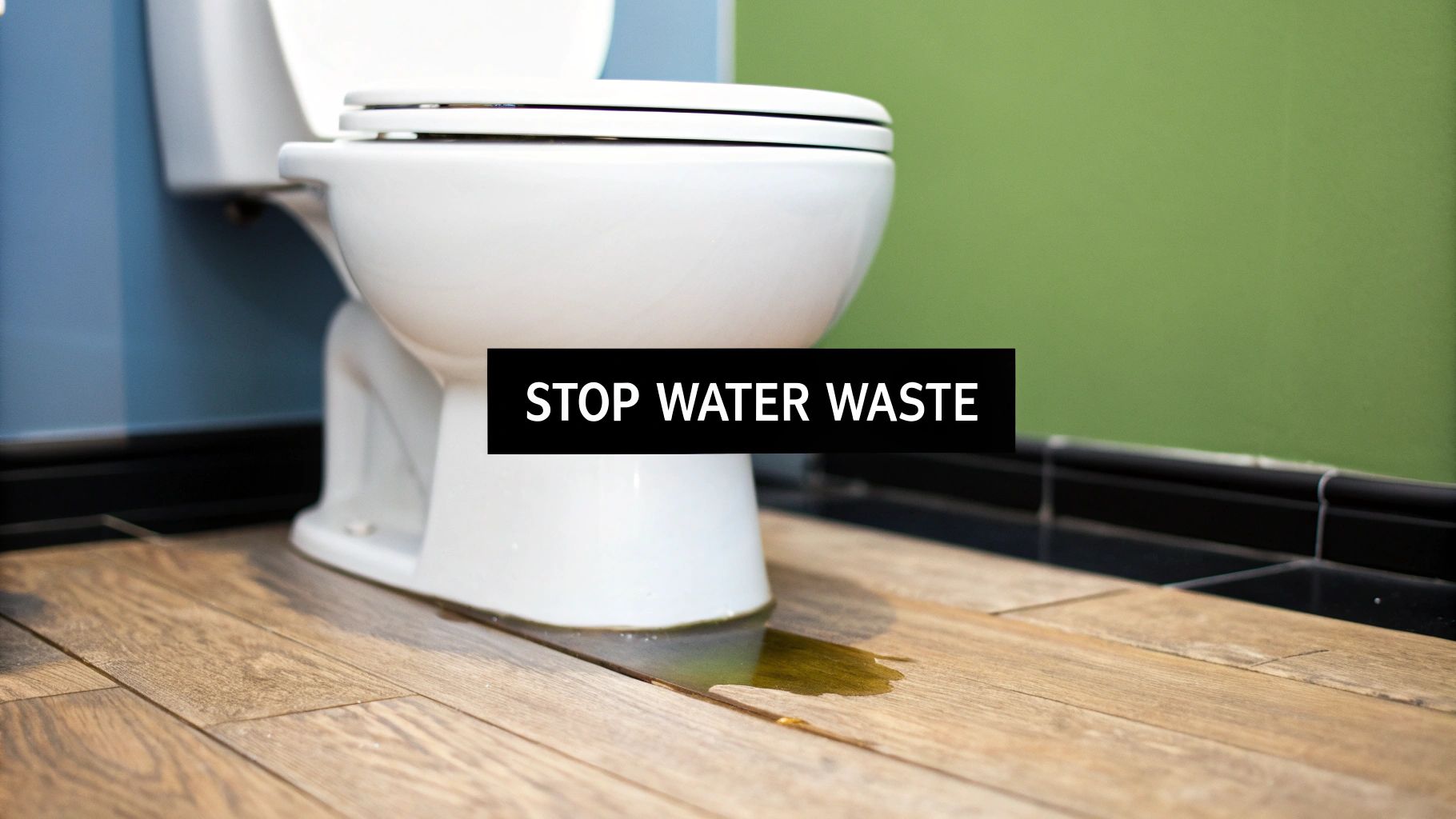
It’s easy to underestimate how much a small, seemingly harmless toilet leak can drive up your water bills and, worse, cause serious damage to your property. It’s a quiet problem that often flies under the radar until an eye-watering utility bill lands on your doormat or you spot the tell-tale signs of water damage.
The Financial Drain of a Silent Leak
That constant drip or the occasional 'ghost flush' where the cistern refills all by itself might not seem like a big deal, but the wasted water really adds up. Think about this for a moment: in the UK, a shocking 8% of all toilets are silently leaking. This wastes up to 400 litres of water per toilet every single day. For homeowners in Eastbourne and the surrounding areas like Hastings and Bexhill, this isn't just an environmental issue—it hits you squarely in the wallet, potentially adding an extra £100 to your annual water bills.
Beyond the wasted water, a leak can cause significant structural headaches. A slow leak from the base of the toilet can rot the floorboards, damage the ceiling in the room below, and create the perfect damp conditions for mould to thrive. Suddenly, a small plumbing fix has spiralled into a major repair job, which could even affect your building insurance if the problem has been ignored for too long.
Modern Toilets Are Not Immune
There's a common belief that it's only old, tired toilets that spring a leak. From our experience here at Harrlie Plumbing and Heating, we often find that modern dual-flush systems in Eastbourne homes are surprisingly frequent offenders.
The complex mechanisms that give you a half or full flush can be quite delicate. Over time, the seals can wear down or shift out of place, leading to a constant, almost undetectable trickle of water from the cistern straight into the bowl.
This kind of 'internal' leak is particularly sneaky because you won't see any puddles on the floor. The only clues are that quiet hiss and a water bill that's higher than usual.
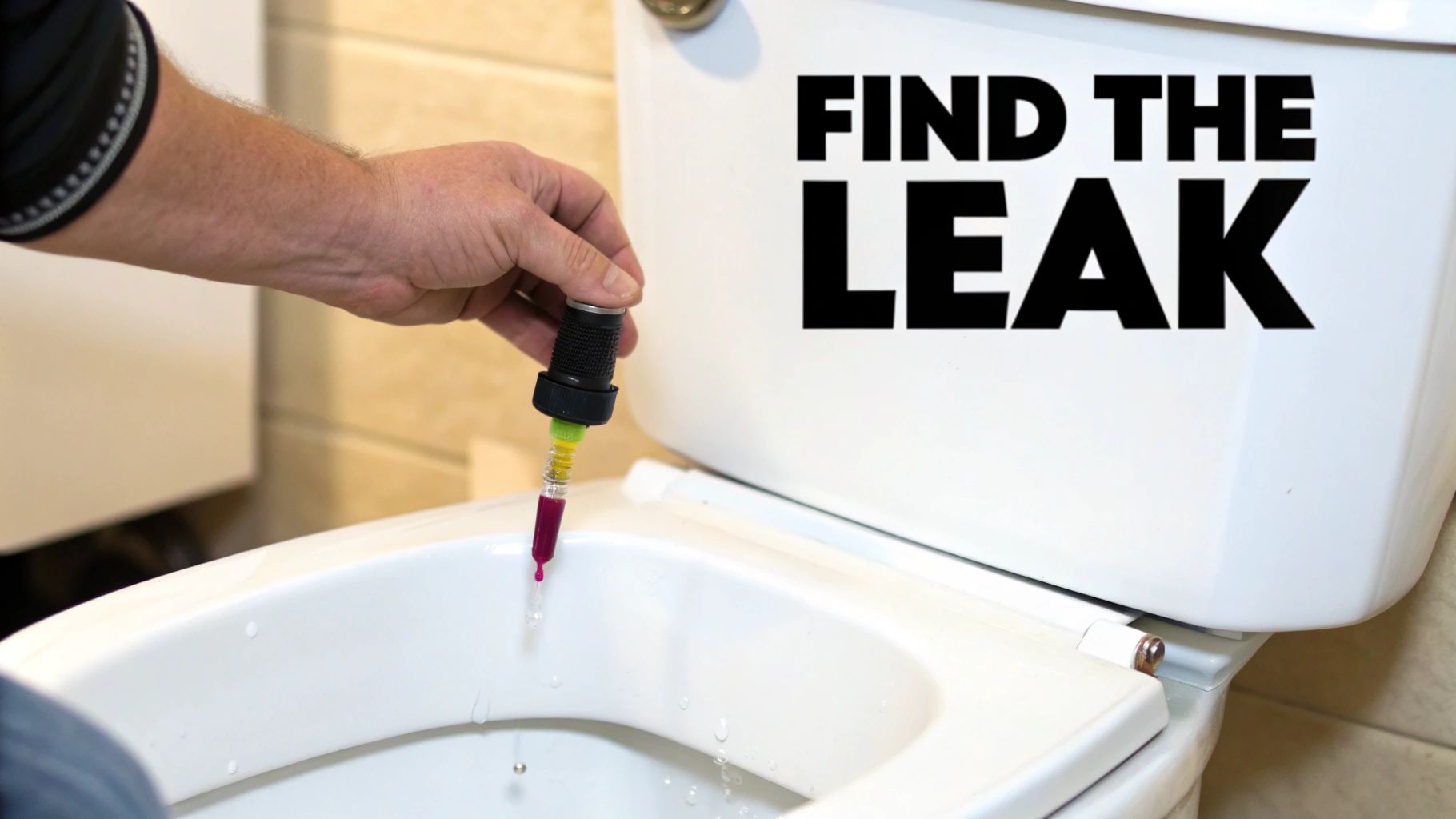
Luckily, there’s a quick test you can do right now. Pop a few drops of food colouring into the cistern and leave it for 15-20 minutes without flushing. If you see any of that colour seeping into the toilet bowl, you’ve got yourself a silent leak. Finding the problem is the first step, and it should motivate you to either grab your tools or give a professional like Harrlie Plumbing and Heating a call for a fast, reliable fix.
Finding the Source of the Leak
Before you can even think about picking up a spanner, you need to become a bit of a leak detective. A puddle on the floor might seem obvious, but its origin isn't always straightforward. Honestly, correctly diagnosing the source is half the battle won.
Most toilet leaks can be traced back to one of three culprits. Getting to know them will help you focus your investigation and figure out how to stop your toilet from leaking for good.
The Cistern: This is the tank where all the internal flushing parts live. Leaks here are often the 'silent' type, trickling water directly into the bowl without anyone noticing.
The Toilet Base: This is where the toilet meets the floor. A leak here is a big deal, often pointing to a failed wax seal that can cause serious damage to your flooring if left alone.
The Water Supply Line: This is the flexible hose or solid pipe that connects your toilet to the water supply in the wall.
To make things easier, I've put together a quick reference table. Use it to match the signs you're seeing with the most likely cause.
Matching Leak Symptoms to Their Likely Causes
Symptom You See or Hear | Most Likely Cause | Where to Check First |
|---|---|---|
Toilet runs constantly or refills on its own ("ghost flushing") | Internal cistern leak | Flapper or flush valve seal inside the cistern |
Puddle of clean water around the toilet base | Faulty wax seal or loose bolts | The join between the toilet bowl and the floor |
Dampness or drips on the pipe behind the toilet | Loose or perished supply line connection | The nuts connecting the hose to the wall and cistern |
This table should give you a solid starting point for your investigation.
Checking for a Cistern Leak
Did you know that 80% of leaks we find in customers' properties are caused by toilets? It's true. These silent leakers can squander up to 440 litres of water a day—that’s double what the average person uses. You can learn more about the impact of household water waste from United Utilities.
This is where the classic food colouring trick comes in. It’s a simple yet incredibly effective test we often recommend to homeowners in Eastbourne.
Lift the cistern lid and add a few drops of dark food colouring into the water. The key is to then leave it alone—make sure no one uses the toilet for about 20-30 minutes. When you come back, take a look at the water in the bowl. If any colour has seeped through, you've got a classic internal leak, most likely from a worn-out flapper or a faulty flush valve seal.
Investigating the Toilet Base
A puddle of water that stubbornly reappears at the base of your toilet is a clear red flag. This isn't just an annoyance; it’s a sign that the watertight seal between the toilet and the waste pipe has failed.
Start by thoroughly drying the area around the base with an old towel. Then, place some dry kitchen roll on the floor, right up against the toilet. Flush the toilet a few times and watch closely. If the kitchen roll starts to get wet, you've confirmed the leak is coming from the base.
A leak at the base often gets worse when someone is sitting on the toilet, as the extra weight can break the failing seal even more. This type of leak requires immediate attention to prevent rot and serious damage to your subfloor.
For more general advice on identifying water issues, check out our guide on how to find water leaks in your home.
Inspecting the Water Supply
Finally, take a close look at the water supply connection. This is the small pipe or hose running from the wall to the bottom of the cistern.
Carefully run your fingers along the pipe and around the nuts at both ends. Any dampness, even a tiny bead of water, points to a problem. Sometimes, the issue is as simple as a loose connection that needs a gentle tighten with a spanner. Other times, the washer inside the connection has perished and needs replacing—a very common issue we see in Eastbourne homes, especially with older plumbing fixtures.
Your Guide to Fixing Common Toilet Leaks
Right, you’ve figured out where the water is coming from, so it’s time to get hands-on. The good news is that many common toilet leaks are surprisingly manageable with a bit of patience and the right approach. Let's walk through the fixes for the three main culprits we see in Eastbourne homes, so you know exactly how to stop that toilet from leaking.
Before you touch a single tool, though, your first move is always the same: turn off the water supply. Look for a small handle or a screw-slot valve on the pipe coming out of the wall behind your toilet. Turn it clockwise until it stops. With the water off, flush the toilet to empty the cistern and bowl.
Replacing the Flush Valve or Flapper
That constant, annoying trickle of water from the cistern into the bowl? That's almost always a worn-out flapper or a failing flush valve seal. In my experience, this is the single most common leak we get called out for at Harrlie Plumbing and Heating. A simple bit of degraded rubber is all it takes to waste hundreds of litres of water.
The flapper is that rubber plug at the bottom of the cistern that lifts when you flush. Swapping it out is often a quick win. Just unhook the old one from the overflow pipe and detach its chain from the flush arm. When you clip the new one in, check the chain length. You want about half an inch of slack. If it's too tight, it will hold the flapper slightly open, and your leak will be right back where it started.
If a new flapper doesn’t sort it, the issue is likely the flush valve seal itself. This repair is a bit more involved as you'll need to unscrew the entire flush mechanism from the cistern, but it's still a very achievable DIY job for a Saturday morning.
Tightening or Replacing the Water Supply Hose
If you're seeing dampness around the flexible pipe connecting the wall to your cistern, you've found another frequent problem. The connections here can work themselves loose over time, or the rubber washers inside can perish and fail.
First, try a gentle tighten. Grab an adjustable spanner and give the nuts at both ends of the hose a slight turn—about a quarter-turn should be plenty.
Harrlie Plumbing and Heating Pro Tip: Whatever you do, don't overtighten these connections. It’s a classic mistake that can crack the porcelain cistern or strip the plastic threads, turning a minor drip into a major disaster. The golden rule is hand-tight plus a quarter-turn with a spanner. No more.
If tightening doesn’t stop the drip, you'll need to replace either the washer inside the connection or the entire hose. This is a simple job of unscrewing the old hose and fitting a new one. I'd recommend getting a flexible, braided steel hose—they’re far more durable and much easier to install than the old rigid ones.
Tackling a Leak at the Toilet Base
A puddle forming around the base of your toilet is a sign of a failed wax seal. This is the most serious of the common leaks because it involves wastewater and can do real damage to your flooring if left unattended. While it’s a bigger job, replacing the wax ring is definitely doable.
You’ll need to completely disconnect the toilet and lift it off the floor. This involves a few key steps:
Unscrew the water supply line from the cistern.
Undo the nuts from the bolts holding the toilet to the floor.
Carefully lift the entire toilet unit up and set it aside on some old towels or cardboard.
With the toilet out of the way, you can scrape off the old, messy wax ring, clean the area thoroughly, and press a new wax ring firmly into place. Then it's just a case of carefully putting the toilet back, making sure it’s level and doesn't rock before you tighten the bolts back down.
Fixing a constantly running toilet often follows the same steps as fixing an internal cistern leak. If you want a more detailed breakdown, you can learn more about how to fix a running toilet in our homeowner's guide. Taking the time to get these repairs right not only saves water but protects your home from costly damage down the line.
When to Call a Professional Plumber
While sorting out a leak yourself can feel like a win, it's just as important to know when to put the tools down. Some toilet troubles are more than just a simple part swap—they’re red flags for bigger issues where one wrong move could turn a drip into a disaster.
Recognising when you're out of your depth is the key to protecting your home. If you've tried the usual fixes and that leak just won't quit, it's probably time to call in a pro. A stubborn, recurring leak often means the real cause is hidden and needs a trained eye to spot.
Signs You Need Expert Help
Sometimes, the problem is too serious to ignore. Don't hesitate to pick up the phone if you come across any of these issues:
Visible Cracks: A hairline crack in the porcelain of the bowl or cistern might seem small, but it's a major structural failure waiting to happen. It can't be patched up; the whole toilet needs replacing to prevent a catastrophic flood.
Widespread Water Damage: Have you spotted water stains spreading across the floor, damp patches on the ceiling below, or a soft, spongy feeling to the floorboards around the toilet? The leak has likely been going on for a while and already caused damage that needs a professional to assess and repair properly.
A Wobbly Toilet That Won't Tighten: If you've tightened the bolts at the base and the toilet still rocks, you're probably looking at a damaged subfloor or a broken flange—that's the fitting connecting the toilet to the waste pipe. This is a complex job that means lifting the toilet and likely repairing the floor structure itself.
This simple flowchart breaks down the basic approach for any leak repair, from shutting off the water to making sure your fix has actually worked.
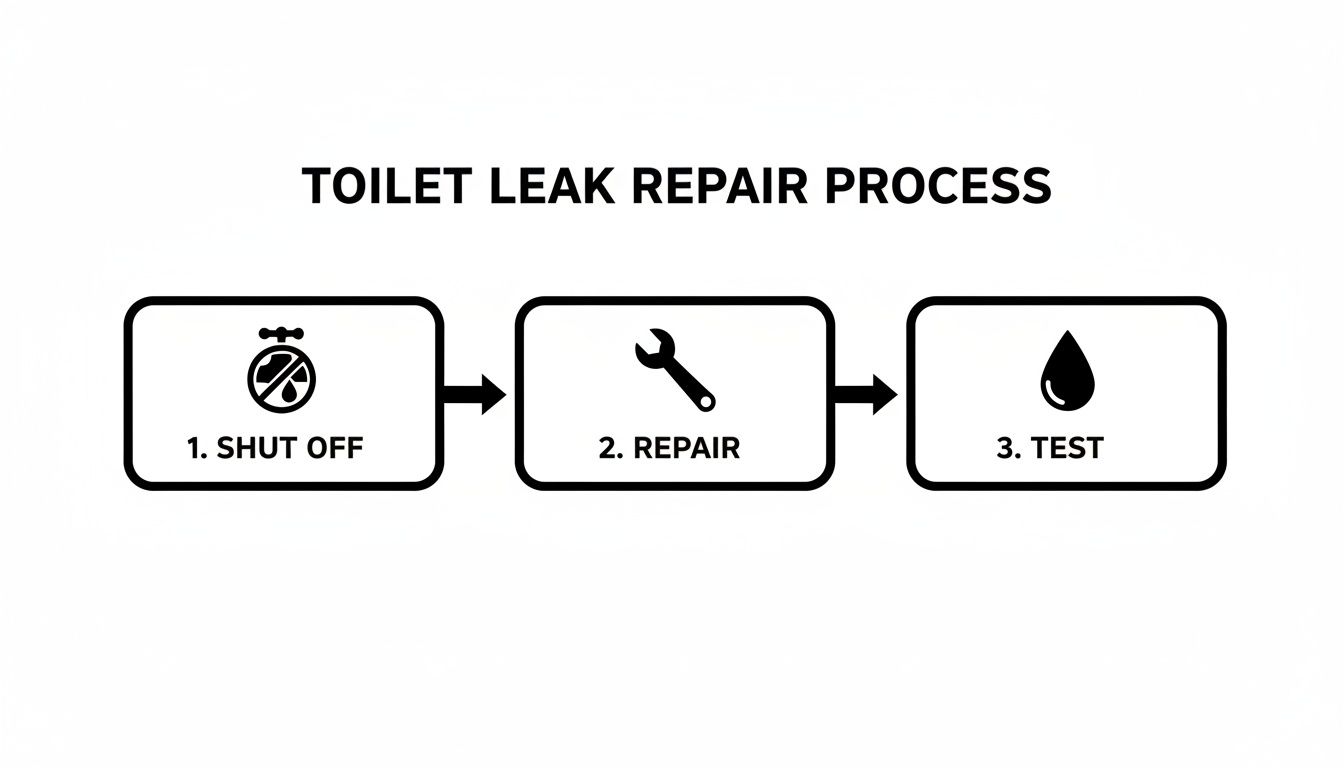
As you can see, every repair has to start safely by isolating the water supply and end with a thorough check to ensure the problem is truly solved.
The Value of a Professional Diagnosis
Leaks aren't just a headache for homeowners; they're a huge problem for businesses too. A surprising 29% of UK businesses suffer from leaky loos, which can waste around 400 litres of water every single day. Since 2019, over 20% of firms have dealt with water issues, and 16% even had to pause operations because of leaks. Yet only 21% actually have an emergency plan in place. You can read more about these findings on the scale of unseen water leaks.
At Harrlie Plumbing and Heating, we often find that what seems like a simple toilet leak in an Eastbourne home is actually a symptom of a bigger issue, like incorrect pipe pressure or a partial blockage further down the line. A professional diagnosis ensures we fix the root cause, not just the symptom.
Trying to tackle a complex repair without the right experience can make things worse, fast. We have the specialised tools and know-how to get the job done right the first time, giving you complete peace of mind. If you find yourself in a tricky situation, our guide on how to find a good plumber in Eastbourne can help you make the right choice.
Preventing Future Leaks with Smart Maintenance
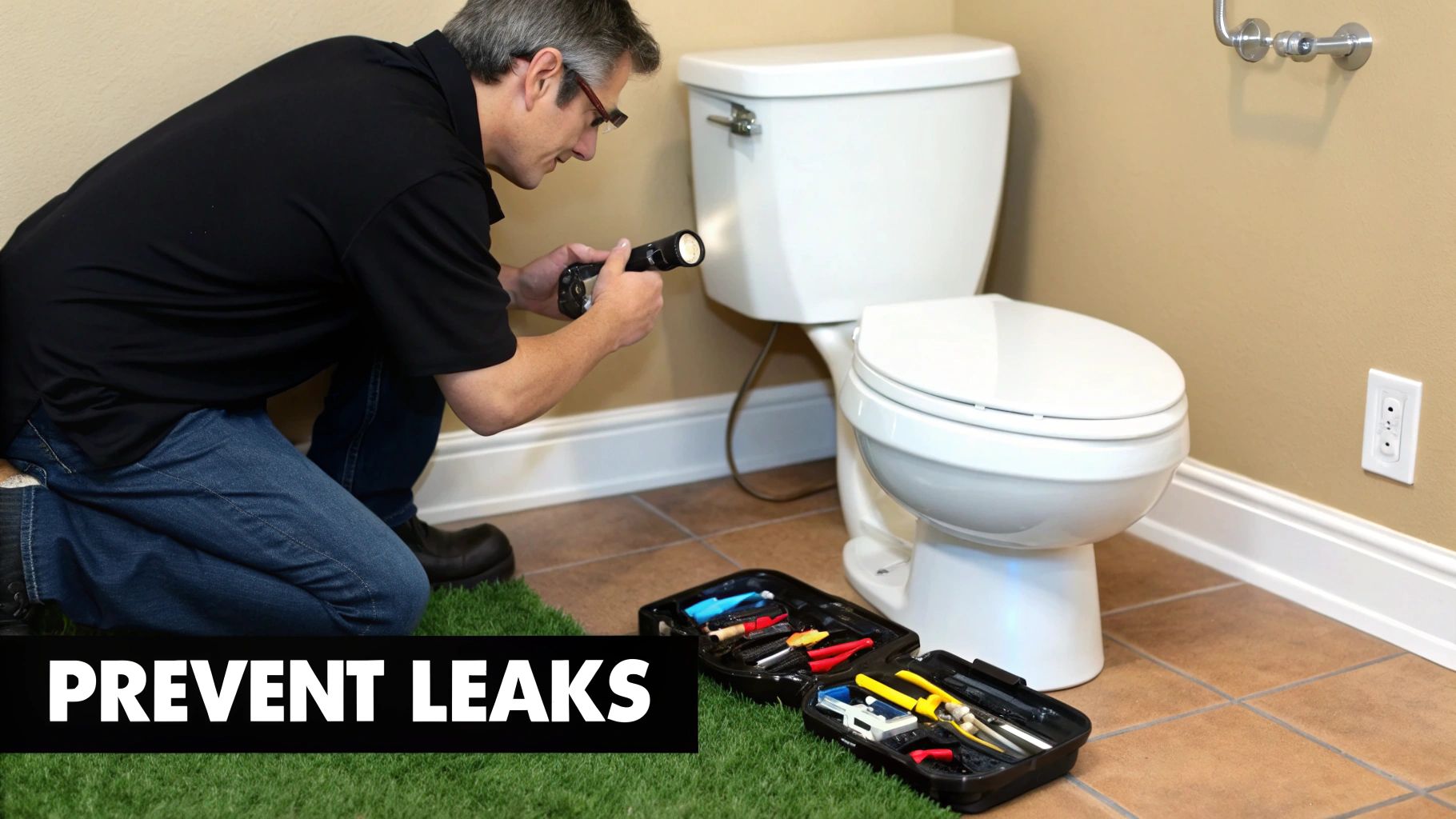
Fixing a leak is a great feeling, but you know what’s even better? Stopping the next one before it even starts. A bit of proactive maintenance is the smartest way to prevent a toilet from leaking in the first place, saving you a world of future stress and unexpected bills.
These habits don’t have to be complicated or time-consuming. In fact, a few simple, regular checks can make all the difference, and they're something any homeowner in Eastbourne can easily manage. Think of it as a small investment of your time to protect your property from water damage and help conserve water here in our East Sussex community.
Simple Checks Any Homeowner Can Do
Your first line of defence is a quick inspection routine. Just twice a year, take five minutes to run through these checks:
A Peek Inside the Cistern: Lift the lid and take a look at the components. Keep an eye out for obvious signs of wear and tear, like a flapper that looks discoloured or any metal parts showing corrosion.
The Kitchen Roll Test: Grab a dry piece of kitchen roll and wipe it around the water supply connection and the bolts at the toilet's base. If it picks up any moisture at all, it's a sign that something needs a closer look.
Even general bathroom upkeep helps. Following a good bathroom deep cleaning checklist forces you to get up close and personal with your fixtures, making it much easier to spot the subtle, early signs of moisture or damage.
At Harrlie Plumbing and Heating, we always tell our clients that a quick visual check is one of the most powerful tools a homeowner has. Catching a perishing washer or a stiff flapper early can turn a potential emergency call-out into a simple, low-cost parts replacement.
The Long-Term Benefits of an Upgrade
If you find yourself constantly fiddling with an older toilet, it might be time to think about an upgrade. I know there's an initial cost, but the long-term benefits really do stack up. Modern, water-efficient toilets use far less water with every flush, which can lead to some welcome savings on your utility bills.
On top of that, new toilets are built with modern, more reliable components that are simply less likely to fail. That means fewer headaches and a much lower risk of leaks. For many of the older properties we see in the Eastbourne area, upgrading an old, troublesome toilet is one of the smartest investments you can make for both your wallet and your peace of mind.
Got a Question About Your Leaking Toilet?
Over the years, our team at Harrlie Plumbing and Heating has heard just about every question you can imagine from homeowners in and around Eastbourne. When it comes to a leaking toilet, it’s not just about the repair itself; it’s about understanding the costs, the risks, and making the right call for your home.
Here are a few of the most common queries we get.
What’s the Real Cost to Fix a Leaking Toilet in the UK?
This really depends on what’s causing the leak. A simple fix you can do yourself, like swapping out a worn-out flapper valve, is a cheap and cheerful job. The part itself usually costs less than £15.
However, if it's time to call in a professional, a straightforward repair in the Eastbourne area will typically be somewhere in the ballpark of £75 to £150. For bigger jobs, like replacing a failed wax ring at the base of the toilet or fitting a whole new loo, you’ll be looking at a higher cost. We always make sure to give you a clear, no-obligation quote upfront, so there are no nasty surprises.
Can a Tiny Toilet Leak Really Cause Much Damage?
Absolutely, and it’s a mistake to underestimate it. A slow, persistent leak might seem harmless, but it's often the most destructive. Water seeping from the base can quietly rot the subfloor and joists, eventually damaging the ceiling in the room below. It also creates the perfect damp conditions for mould to thrive, which is the last thing you want in your home.
Even a silent internal leak—the kind that just runs from the tank into the bowl—can make a shocking difference to your water bills over time. It's always best to tackle any leak, no matter how small, before it spirals into a much bigger and more expensive headache.
Should I Bother Repairing My Old Toilet or Just Replace It?
This is a great question and one we help homeowners with all the time. If you have a relatively new toilet with a minor, cheap-to-fix problem, a repair is almost always the most sensible route.
But if you're constantly fighting with an old, inefficient toilet that needs one fix after another, it's probably time to think about a replacement. Investing in a modern, dual-flush model is a smart move for the long run. Not only will you save money on your water bills, but you'll have peace of mind knowing it’s far less likely to cause you problems. Our team can take a look at your specific situation and give you honest advice on which option makes the most sense for you financially.
If you’ve had a go at a DIY fix and the drip is still driving you mad, don't let it turn into a full-blown disaster. The friendly, expert team at Harrlie Plumbing and Heating is ready to help homeowners across Eastbourne and the surrounding areas. For a fast, reliable, and professional solution, just visit our website at https://www.harrlieplumbing.co.uk.

Comments