How to Fix Running Toilet: A Homeowner's Quick Guide

That constant hissing sound coming from your bathroom? It’s more than just a minor annoyance—it’s the sound of your money literally going down the drain. Many homeowners don't realise just how much of a problem it is, but a running toilet is one of the most common and wasteful plumbing issues you can have.
Fixing it is often surprisingly simple. It usually comes down to a small adjustment to the flapper chain, making sure the fill valve is set correctly, or replacing a worn-out flapper seal inside the cistern. These little components are almost always the culprits behind that costly, non-stop hiss.
The True Cost of a Running Toilet in Your Home
For those of us living in Eastbourne and across Sussex, where water conservation is becoming more important, the cost of a running toilet hits on two fronts. First, there's the direct impact on your wallet. A single toilet left to run can waste a staggering amount of water, which you'll definitely notice on your next Southern Water bill.
Financial and Environmental Impact
Beyond your bank account, there’s the environmental side of things. In a water-conscious region like ours, every drop counts. A continuously running toilet is a major source of water waste in any household, putting an unnecessary strain on our local resources.
Just think about it:
Significant Water Loss: A faulty toilet can waste hundreds of litres of water every single day.
Inflated Utility Bills: All that wasted water translates directly into a higher bill each quarter. It's not unheard of for it to add hundreds of pounds to your costs over a year.
Environmental Strain: Here in Sussex, conserving water is vital for protecting our local environment and ensuring a stable supply for the whole community.
A Common but Costly Problem
Running toilets are a surprisingly common headache for homeowners in the UK. According to water industry data, a continuously running loo can waste up to 200,000 litres per year. At average UK water rates, that could add over £880 in unnecessary costs to your annual household bill.
Here in the Eastbourne area, where we sometimes face Southern Water restrictions, this problem feels even more significant. A customer in the Meads area of Eastbourne recently called us at Harrlie Plumbing and Heating, shocked by a bill that had nearly doubled; a constantly running toilet was the simple, silent culprit. Statistics show that domestic leaks, with faulty toilets being a primary offender, account for 20-30% of total household water loss in South East England.
A running toilet is more than an inconvenience; it's a constant leak that silently inflates your bills. Tackling it promptly is one of the smartest and most cost-effective home maintenance tasks you can undertake.
Whether you feel confident enough for a simple DIY fix or prefer a quick, professional solution, addressing the problem is essential. A quick call to a local expert like Harrlie Plumbing & Heating can sort the issue out efficiently, saving you from future stress and expense. Understanding that urgency is the first step towards a quieter bathroom and a healthier bank account.
Your Guide to Diagnosing the Problem
Before you can fix that running toilet, you need to play detective for a few minutes. Pinpointing the exact cause is the most important step, but thankfully, it’s usually easier than you might think. You won’t need a garage full of tools either—just a keen eye and a bit of curiosity.
First things first, let's make sure our inspection is safe and mess-free. Look for the small valve on the wall or floor behind your toilet; this is your isolation valve, or stopcock. Turn it clockwise until it stops to shut off the water supply to the cistern. Now you're in control. Flush the toilet once to drain the tank, which will make your inspection much cleaner.
Performing the Simple Food Colouring Test
One of the oldest tricks in the book is also one of the most effective for catching a slow, silent leak. This is brilliant if you can't actually hear the toilet running but your water bill is suspiciously high.
Here’s how to do it:
Carefully take off the cistern lid and set it somewhere safe—they’re heavier than they look and can easily chip.
Add a few drops of food colouring to the water inside the cistern. Don't flush!
Now, just leave it alone for about 15-20 minutes.
Come back and check the water in the toilet bowl. If you see any coloured water, you’ve confirmed a leak from the cistern into the bowl. This almost always points to a worn-out flapper or a faulty syphon diaphragm.
This simple test takes all the guesswork out of it. We’ve seen countless homes in Eastbourne, from Sovereign Harbour to Old Town, where homeowners were unsure if they had a problem until this quick check revealed a constant, silent leak that was costing them money every single day.
This little problem might seem trivial, but it quickly escalates from a minor annoyance to a serious drain on your finances.
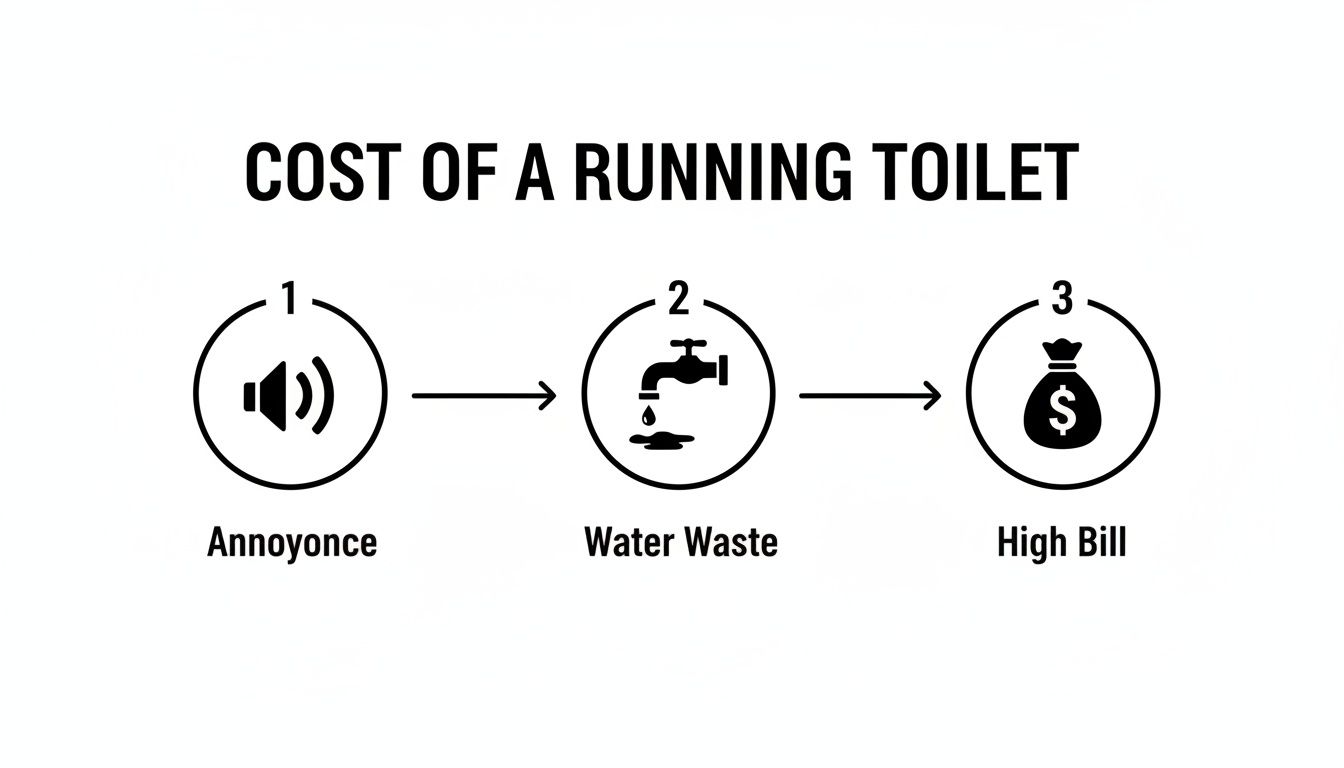
As the image shows, ignoring that sound leads directly to water waste and an inflated bill, which is why a quick diagnosis is so important.
Visually Inspecting the Cistern Components
With the water off and the cistern mostly empty, you can now have a proper look at the key components inside. You’re looking for obvious signs of wear, damage, or anything that just looks out of place. The main culprits are almost always one of three parts.
To help you figure out what’s going on, we’ve put together a quick checklist. Use it to match the symptoms inside your cistern with the most likely cause and the tools you'll need for the fix.
Quick Diagnostic Checklist for Your Running Toilet
Symptom | Likely Cause | Required Tools for Fix |
|---|---|---|
Water slowly trickles into the bowl (confirmed by dye test). | Faulty Flapper/Syphon Diaphragm: The rubber seal is likely warped, cracked, or degraded. | New flapper/diaphragm, sponge, old towel. |
Cistern fills, stops, then starts again after a few minutes (ghost flushing). | Faulty Flapper/Syphon Diaphragm: A slow leak is causing the cistern to refill itself intermittently. | New flapper/diaphragm, sponge, old towel. |
Water level is too high and spills into the overflow pipe. | Incorrect Float Height/Faulty Fill Valve: The float isn’t shutting off the water at the right level. | Screwdriver or adjustable pliers (for float adjustment), new fill valve if needed. |
Cistern doesn't stop filling at all. | Stuck or Damaged Fill Valve/Float: The float mechanism is caught or the fill valve is broken. | Screwdriver or adjustable pliers, potentially a new fill valve. |
Chain to the flush handle is tangled, too tight, or too loose. | Incorrect Chain Length: The chain is holding the flapper partially open or preventing it from sealing. | Pliers to adjust the chain link. |
This table should give you a good idea of where to start. Once you’ve identified the likely suspect, you’ll be ready to move on to the repair.
The flapper (or syphon diaphragm in some UK toilets) is that rubber seal at the bottom of the cistern. Is it warped, cracked, or covered in limescale? The hard water we have here in Eastbourne is notorious for causing these seals to degrade, preventing a proper seal. Also, check the chain connecting it to the flush handle—if it’s too tight, it could be holding the flapper open just enough to cause a leak.
Next, have a look at the fill valve. That’s the tall mechanism responsible for refilling the tank. Is the float (either a ball on an arm or a cup that moves up the fill valve) getting stuck? If the water level is constantly spilling into the central overflow pipe, it’s a sure sign the fill valve isn’t shutting off when it should.
Pro Tip: Your cistern's water level should sit about an inch below the top of the overflow pipe. If it's higher, that's a clear sign your fill valve or float needs adjusting.
Finally, give everything a gentle nudge. If parts feel brittle or crumble in your hand, they’re long past their prime and due for replacement. By matching what you see with our diagnostic table, you should have a clear plan of action. And if you’re ever unsure, the team at Harrlie Plumbing & Heating is always ready to offer advice or a helping hand.
Fixing The Most Common Running Toilet Issues
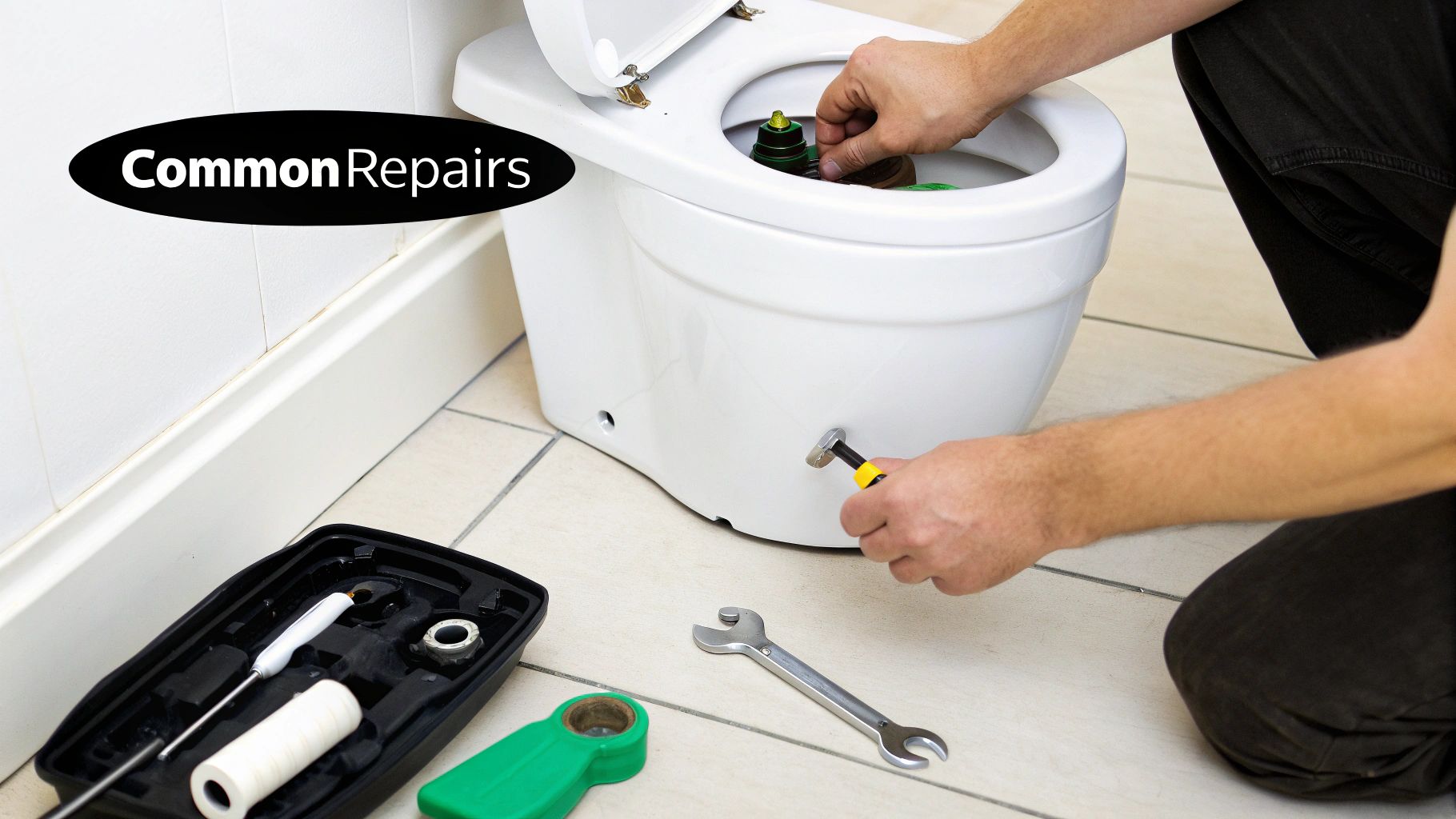
Alright, you've played detective and have a solid lead on what's causing the phantom flushing. Now it's time to get your hands dirty. Most running toilet issues boil down to one of three culprits, and the great news is that you can often sort them out yourself in less than an hour.
With the water supply turned off, let's dive in. Just remember, a bit of patience goes a long way. These internal parts are mostly plastic and rubber, so there’s no need for brute force. Gentle adjustments are usually all it takes to get everything humming along nicely again.
Tackling a Faulty Flapper or Syphon Diaphragm
If your food colouring test turned the bowl into a colourful swirl, this is almost certainly your problem. The flapper (or the syphon diaphragm in many UK toilets) is the rubber seal at the bottom of the cistern. It’s the number one failure point we see. Over time, it can warp, crack, or just get brittle, stopping it from creating that crucial watertight seal.
First thing’s first, have a look at the chain connecting the flapper to the flush handle. If it’s too tight, it will hold the flapper slightly ajar, causing a constant trickle. Too loose or tangled, and it might not lift properly or could get caught underneath, preventing it from sealing. A good rule of thumb is to aim for about half an inch of slack in the chain.
Chain looking okay? Then the flapper itself is the likely suspect. You can grab a replacement from any DIY shop for just a few quid. To swap it out, simply unhook the old one from the overflow pipe, lift it out, and clip the new one in its place. Honestly, this entire process usually takes no more than 10 minutes.
A Note on Eastbourne's Hard Water: Here in Eastbourne, the team at Harrlie Plumbing and Heating constantly sees how hard water causes mineral buildup on flappers. This limescale can make the rubber stiff and prevent a proper seal. When you replace your flapper, give the valve seat it rests on a quick wipe to remove any gritty deposits.
Adjusting or Cleaning the Fill Valve
If you noticed the water level is too high and spilling into the overflow pipe, then your attention should shift to the fill valve. That's the tall column that refills the cistern after you flush. It has a float that rises with the water and shuts off the valve at a predetermined level.
More often than not, the fix is a simple adjustment. Most modern fill valves have an adjustment screw or a clip you can move to change the float's height. Lowering the float causes the water to shut off earlier, bringing the water level to about an inch below the top of the overflow pipe, which is right where you want it.
In a hard water area like ours, the fill valve can also get clogged with limescale, causing it to stick or fail to shut off completely. Giving it a clean is pretty straightforward:
With the water off, give the toilet a flush to empty the cistern.
Carefully remove the fill valve cap (it usually just twists off).
Turn the water back on for a few seconds to flush out any debris. Make sure to place a cup over the top to avoid getting a surprise spray!
Clean any visible grime from the cap and then pop it back on.
This simple bit of maintenance can solve a surprising number of running toilet problems and should only take about 20 minutes.
Correcting the Overflow Pipe and Float Level
The overflow pipe is your toilet’s last line of defence against a flood, but if water is constantly running into it, you're just pouring money down the drain. As we touched on, this is almost always down to an incorrectly set float. The float—whether it’s a traditional ball on an arm or a modern float cup—is what tells the fill valve when to stop filling.
For older ball-style floats, you can gently bend the metal arm downwards to lower the final water level. For the newer cup-style floats, you'll typically find a plastic screw or a clip to adjust. Your goal is always the same: make sure the water stops filling about an inch below the top of the overflow pipe.
Getting this level right is key to an efficient flush that doesn’t waste water. If you’ve tried all these fixes and the toilet is still running, or if you're battling other issues like a toilet that won't flush at all, you might be looking at a more complex problem. For those situations, you can check out our guide on how to fix a toilet that won't flush for more advanced tips.
And of course, if you’re ever in doubt, a quick call to the Harrlie Plumbing & Heating team is all it takes for a fast, reliable solution.
Advanced Troubleshooting for Persistent Leaks
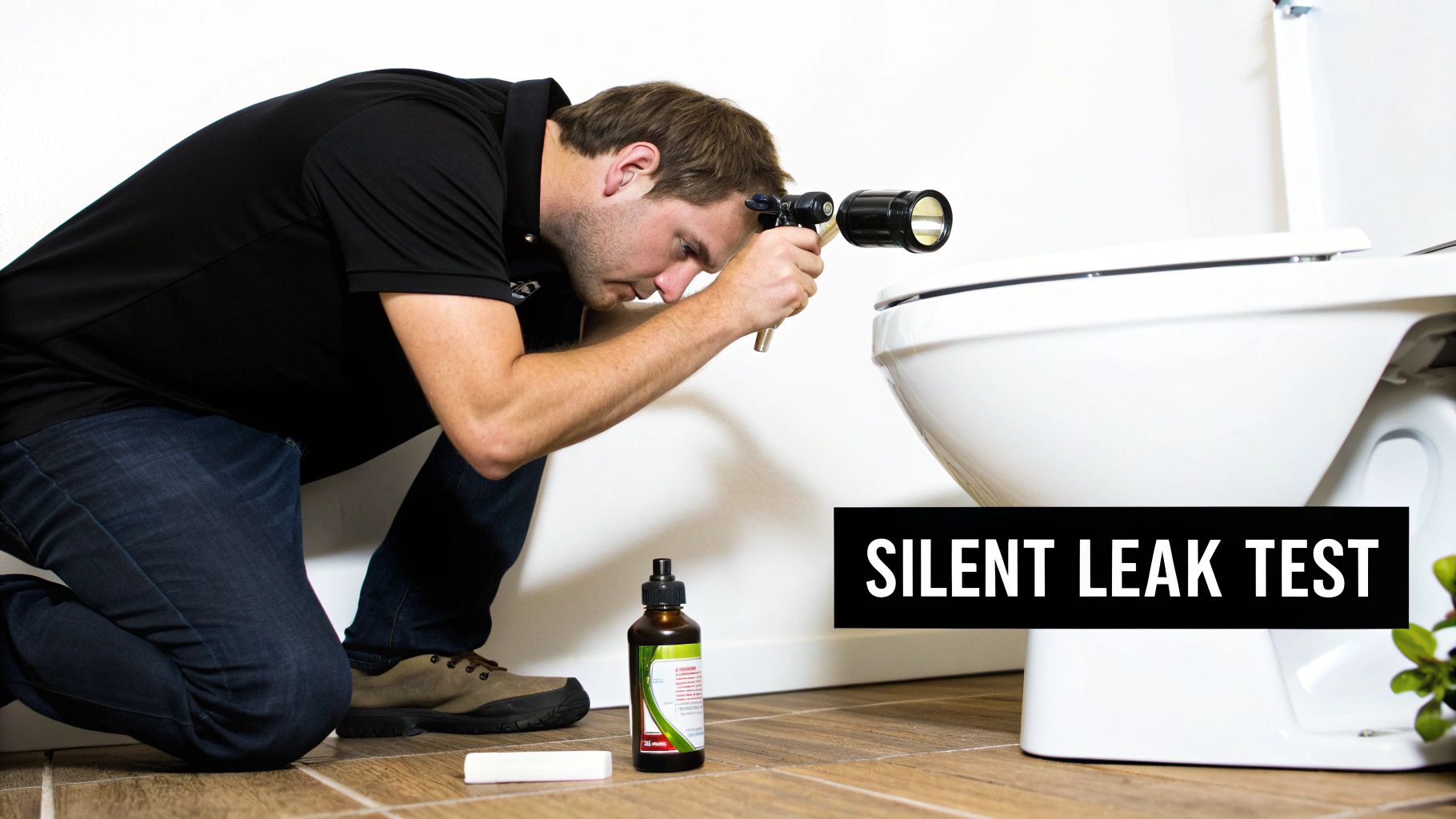
Sometimes, despite your best efforts, the usual suspects just aren't to blame. You’ve tweaked the chain, checked the flapper, and set the water level, but that frustrating hiss just won't quit. When the common fixes don't work, it’s time to dig a little deeper into some of the less obvious problems.
These stubborn leaks are often much sneakier. For instance, a slow, silent leak might not show up immediately with the food colouring test. If you suspect a really minor leak, try leaving the dye in the cistern for a few hours—or even overnight—before checking the bowl again.
Dealing With a Waterlogged Float
One issue our Harrlie Plumbing and Heating engineers often come across in older homes around Eastbourne, particularly in areas like Hampden Park with its classic housing stock, is a waterlogged float. This applies specifically to the older style of toilet that has a large plastic ball float on a metal arm. Over many years, these hollow floats can develop tiny cracks, allowing water to gradually seep inside.
As it fills with water, the float gets heavier and doesn't rise as high as it should. This means it can't push the fill valve shut completely, leading to a constant, slow trickle of water into the cistern. The fix is simple: if you take the float off and hear water sloshing around inside, it's time for a new one. A replacement float is inexpensive and easy to screw onto the existing arm.
When the Fill Valve Fails Completely
While a good clean or a minor adjustment often sorts out a fill valve, sometimes the mechanism itself has simply had enough. The internal seals can perish, or the shut-off mechanism can break entirely. This is a common issue that goes beyond a simple DIY tweak and is a key reason people call in a professional.
So, how can you tell if the fill valve is the culprit?
Water keeps running even after you've manually lifted the float arm to its highest position.
You notice a change in the sound of the refill, like sputtering or an inconsistent flow.
There are visible cracks or broken plastic components on the valve itself.
Replacing a fill valve is a more involved task, but it's definitely within the reach of a confident DIYer. It involves completely draining the cistern and unscrewing the old valve from underneath. Just be sure to have an old towel handy to catch any drips.
These advanced steps can help you finally conquer those persistent issues. However, a running toilet can sometimes be a symptom of a larger problem, like a blockage that’s causing an overflow. If you suspect this might be the case, you can learn more from our detailed guide on how to stop a toilet from overflowing fast.
Of course, if you're ever in doubt, the team at Harrlie Plumbing & Heating is just a call away to get it sorted properly.
When to Put Down the Wrench and Call a Professional
There’s a real sense of satisfaction in fixing a running toilet yourself, but some situations are a clear signal that it's time to step back. Pushing on with complex repairs without the right experience can quickly turn a minor headache into a major disaster, putting your home at risk of serious water damage. Knowing when to call for backup is just as important as knowing how to tackle the job yourself.
A big red flag is a leak that just won't quit. If you’ve replaced the flapper, fiddled with the fill valve, and the cistern still hisses or refills constantly, you could be facing a much deeper issue. For instance, a hairline crack in the porcelain cistern can be almost invisible but is enough to cause a persistent, slow leak. Our team at Harrlie Plumbing and Heating recently attended a job in Polegate where what looked like a simple running toilet was actually the first sign of a failing cistern that needed urgent replacement.
Recognising the Warning Signs
Certain symptoms should have you reaching for the phone, not the wrench. These are the tell-tale signs that the problem has moved beyond a simple component swap and into more technical territory.
Here are the scenarios where you should put the tools down:
Persistent Leaks After Multiple Fixes: You've tried everything in the book, but the problem is still there. This almost always points to a hidden cause that needs an expert eye to diagnose.
A Visible Crack in the Cistern or Bowl: A cracked toilet is a ticking time bomb. It needs to be assessed by a professional immediately to prevent a catastrophic leak and the resulting water damage.
Problems with the Water Supply Pipe: If you suspect the issue is with the main water pipe connected to the toilet, don't attempt to fix it yourself. Tampering with this can lead to serious flooding. If you need to shut off your water, check out our guide on how to turn off your water main.
Trusting Your Local Eastbourne Experts
Did you know that in the UK, faulty running toilets contribute significantly to the 1.5 billion litres of water wasted from leaks every single day? Toilets alone are responsible for 25% of that waste in households. In water-stressed areas like Eastbourne, this can add up to annual losses of £250-£400 per home.
This is a story we see all the time. At Harrlie Plumbing & Heating, we find that 40% of our callouts for properties in the Eastbourne area are for running toilets, which are often a quick and simple fix for a trained professional.
When you're facing a stubborn plumbing issue, getting it fixed right the first time saves you money and stress. A professional diagnosis from a trusted local plumber is invaluable.
For residents in Eastbourne, Hastings, and Bexhill, the Harrlie Plumbing & Heating team is your reliable solution. We offer clear, transparent pricing and the expertise to ensure the job is done correctly, preventing future headaches. If the issue just won't go away or seems too complex for a DIY fix, it's always wise to get professional help. For those seeking expert assistance in other regions, you might look into trusted plumbing services like Bell Plumbing Tauranga, which offers a variety of plumbing solutions.
Common Questions About Toilet Repairs in Eastbourne
As plumbers in Eastbourne, we get asked a lot about fixing running toilets. It's one of those household annoyances that everyone wants sorted out quickly. Here are a few of the most common questions we hear from local homeowners, along with some straight-talking answers.
How Much Does It Cost To Fix a Running Toilet?
The cost really depends on whether you fancy a bit of DIY or prefer to call in a professional to handle it for you.
DIY Repair: If you're dealing with a simple fix like a worn-out syphon diaphragm or a faulty flapper, you can pick one up from a local hardware shop for around £5-£15. A whole new fill valve mechanism is a bit more, usually between £15-£30.
Professional Repair: Getting an expert from Harrlie Plumbing and Heating ensures the job is done right, first time. For a standard repair like a fill valve or syphon replacement in the Eastbourne area, you can expect to pay between £80-£150. This price covers the part and our labour, giving you complete peace of mind.
Why Is Hard Water in Eastbourne Such a Problem for Toilets?
Here in Sussex, our water is notoriously hard. That means it’s packed with minerals like calcium and magnesium. While it’s fine to drink, it’s not so kind to our plumbing systems.
Over time, these minerals form a chalky residue called limescale. This build-up is the number one enemy of your toilet's internal parts. Limescale can make rubber seals and flappers go stiff and brittle, so they can't create a proper seal anymore. It also clogs up the delicate moving parts inside the fill valve, causing it to stick. As local Eastbourne plumbers, Harrlie Plumbing and Heating can confirm that limescale is behind the majority of toilet issues we see.
How Quickly Can a Professional Get It Fixed?
Nobody wants to listen to a running toilet for days on end. For a common issue, a skilled plumber from our team at Harrlie Plumbing & Heating can usually diagnose and fix the problem in under an hour. We keep our vans stocked with the most common replacement parts, so we can almost always sort it out on the first visit.
Should I Repair or Replace My Old Toilet?
This is a great question, especially if your toilet has seen better days. A constantly running loo can be the perfect nudge to think about an upgrade.
Consider this: if your toilet was installed before 2001, it’s probably using a massive 13 litres of water with every single flush. Modern dual-flush toilets, on the other hand, use as little as 4-6 litres. Think of the savings on your Southern Water bill.
While buying a new toilet is a bigger upfront cost, the long-term water savings and improved performance often make it a very smart investment, particularly if you find yourself paying for repairs more and more often. We at Harrlie Plumbing and Heating often advise customers in Eastbourne that a new, efficient toilet can pay for itself in water savings over just a few years.
If you’ve given the DIY approach a go and you're still stuck, or you’d just rather an expert took a look, Harrlie Plumbing and Heating is ready to help. Get in touch for a fast, reliable, and professional fix anywhere in the Eastbourne area. You can find out more about our services at https://www.harrlieplumbing.co.uk.

Comments