How to Prevent Frozen Pipes: Essential Tips in Eastbourne

Waking up to a flooded kitchen is a nightmare scenario for any homeowner. The most effective way to keep your pipes from freezing is a proactive approach—a smart mix of insulating vulnerable pipework, keeping your home consistently warm, and knowing exactly where your main water stopcock is.
This guide shares our practical, hands-on advice from Harrlie Plumbing and Heating to help you secure your Eastbourne home before the first frost arrives.
The Real Risk of Frozen Pipes in Eastbourne
In coastal towns like Eastbourne, where the sea breeze can make temperatures plummet unexpectedly, frozen pipes are a serious threat, not a distant what-if. The consequences go far beyond a simple plumbing repair. A single burst pipe can unleash gallons of water in minutes, causing catastrophic damage to floors, ceilings, furniture, and treasured belongings.
At Harrlie Plumbing and Heating, we’ve seen the aftermath first-hand. We've attended emergency call-outs across Eastbourne, from historic homes in Old Town with their unique plumbing layouts to modern flats near the seafront where exposed balcony pipes are a weak point. A cold snap can quickly turn into a major home disaster. The repair bills can easily spiral into thousands of pounds, not to mention the stress and upheaval of living in a water-damaged property.
Why Proactive Measures Are So Important
Many homeowners underestimate the risk until it’s far too late. It’s not just older properties with obviously exposed pipework that are vulnerable; even modern homes have weak spots. Think about unheated areas like lofts, garages, utility rooms, or even pipes running along external walls. A sudden drop in temperature is all it takes for the water inside to freeze, expand, and exert immense pressure, eventually leading to a rupture.
The real danger isn't the ice itself, but the incredible pressure it builds inside the pipe. This pressure is what causes the pipe to burst, often in a section you can't even see. That can lead to hidden leaks that cause extensive, slow-burn damage over time.
This isn’t just a local concern; it’s a significant national problem. A 2023 study by Aviva revealed that a staggering 6% of Britons have suffered damage from burst pipes due to freezing temperatures. Despite this, a worrying 24% of people don't plan to insulate their pipes for winter, leaving their homes dangerously exposed.
More Than Just a Burst Pipe
A frozen pipe can have a domino effect on your entire plumbing system. For instance, have you noticed your water pressure dropping? It could be an early sign of a blockage caused by ice forming inside the pipes.
Understanding how different plumbing issues connect is key to maintaining a healthy system. If you're already dealing with pressure issues, it’s something you’ll want to investigate before winter sets in. You can check out our guide on how we help homeowners solve Eastbourne water pressure problems.
Taking action now is the smartest investment you can make in your property's safety this winter. To help you get started, here's a quick plan focusing on the most critical tasks.
Winter Pipe Prevention Quick-Start Plan
This table summarises the most vital actions you can take right now to dramatically lower your risk of frozen pipes.
Preventative Action | Why It's Critical | Harrlie's Pro Tip |
|---|---|---|
Locate Your Stopcock | In an emergency, you need to shut off the water fast to minimise damage. Every second counts. | Find it, label it clearly, and test it once a year to make sure it isn't seized up. A quick turn on and off is all it takes. |
Insulate Exposed Pipes | Pipes in unheated areas (lofts, garages, basements) are most at risk. Insulation acts like a winter coat. | Use foam pipe lagging from any DIY shop. It's cheap, easy to fit, and incredibly effective. Don't forget to insulate outdoor taps too. |
Maintain Consistent Heat | Sudden temperature drops are the main culprit. Keeping the heating on a low, constant setting prevents freezing. | Set your thermostat to a minimum of 12-13°C, even when you're away. The small cost is nothing compared to a burst pipe repair bill. |
Focusing on these three areas provides a strong first line of defence. By being proactive, you're not just preventing a plumbing issue; you're protecting your home and your peace of mind.
Protecting Your Internal Pipework
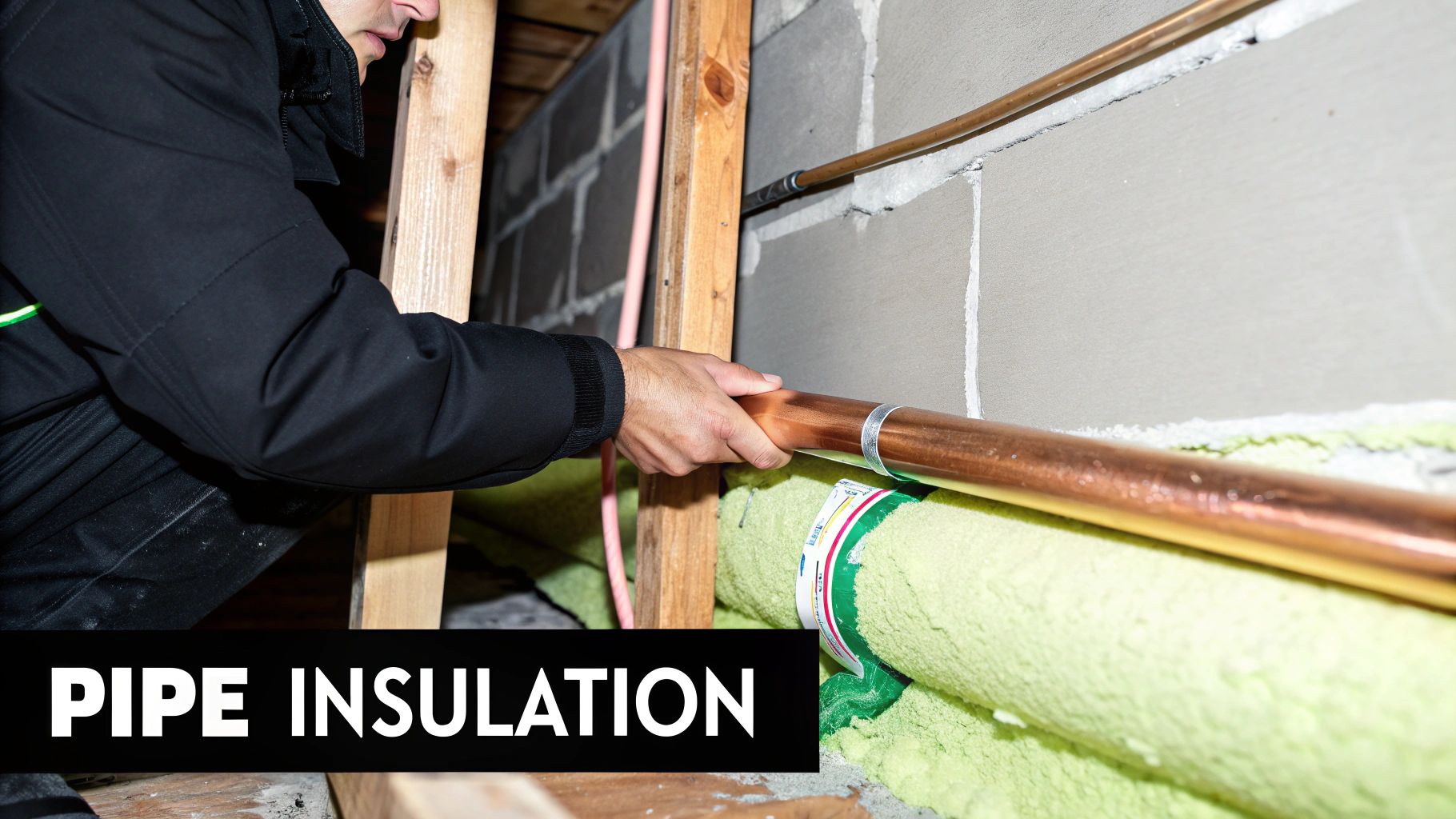
When you think about how to prevent frozen pipes, it’s usually the plumbing you don't see every day that poses the biggest threat. We're talking about the pipes tucked away in chilly, unheated spots like lofts, basements, and garages. These areas are the weak links in your home’s plumbing system, especially with the many varied property styles we see across Eastbourne.
The most effective and straightforward first line of defence is good old-fashioned insulation. Wrapping your pipes with purpose-made foam lagging is a simple, low-cost job that genuinely makes a world of difference. Think of it as a winter coat for your pipework; it helps retain the warmth from the water inside and shields it from the biting cold air.
Insulating Pipes for Maximum Effect
When you pop down to the DIY shop for pipe insulation, you'll see it comes in different thicknesses and for various pipe diameters. Getting a snug fit here is non-negotiable. Any gaps between the insulation and the pipe will let cold air creep in, completely defeating the purpose.
To get a professional-level finish, here’s what to focus on:
Measure First: Before you leave the house, measure the diameter of your copper or plastic pipes. The most common sizes you’ll encounter are 15mm and 22mm.
Choose Quality Lagging: Don't just reach for the cheapest option on the shelf. Look for thicker-walled foam, as it provides far better thermal protection.
Secure the Joints: Use strong duct tape or cable ties to tightly seal the seams and any joints where you’ve cut the foam to navigate around bends. This ensures a continuous, unbroken barrier against the cold.
This task is absolutely essential, particularly if you live in an older property. Many of the beautiful period homes in Eastbourne have unique plumbing layouts that simply weren't designed with modern insulation in mind. You can find out more about the specific challenges and fixes in our article on common plumbing issues in older Eastbourne properties.
Simple Habits That Make a Big Difference
Beyond physical insulation, a few small changes to your daily routine during a cold snap can give your internal pipework a fighting chance. It's all about letting the warmth of your home reach those vulnerable, out-of-the-way places.
On particularly frigid nights, try opening the loft hatch just a crack. This allows warmer air from the house to circulate into the roof space, which can be enough to raise the ambient temperature around your pipes by a few critical degrees. The same logic applies to any pipework hidden away in cabinets.
A simple yet powerful tip from the Harrlie Plumbing and Heating team: Keep the cabinet doors under your kitchen and bathroom sinks open during a cold spell. This allows the warm air from your home to circulate around the pipework, preventing it from freezing.
Another vital step is to hunt down and seal any draughty gaps where pipes enter your home from the outside—often found lurking behind washing machines or under kitchen units. A small, concentrated blast of cold air is all it takes to freeze a short section of pipe. Use expanding foam or a flexible sealant to plug these gaps for good.
Securing Your Outdoor Taps and Pipes
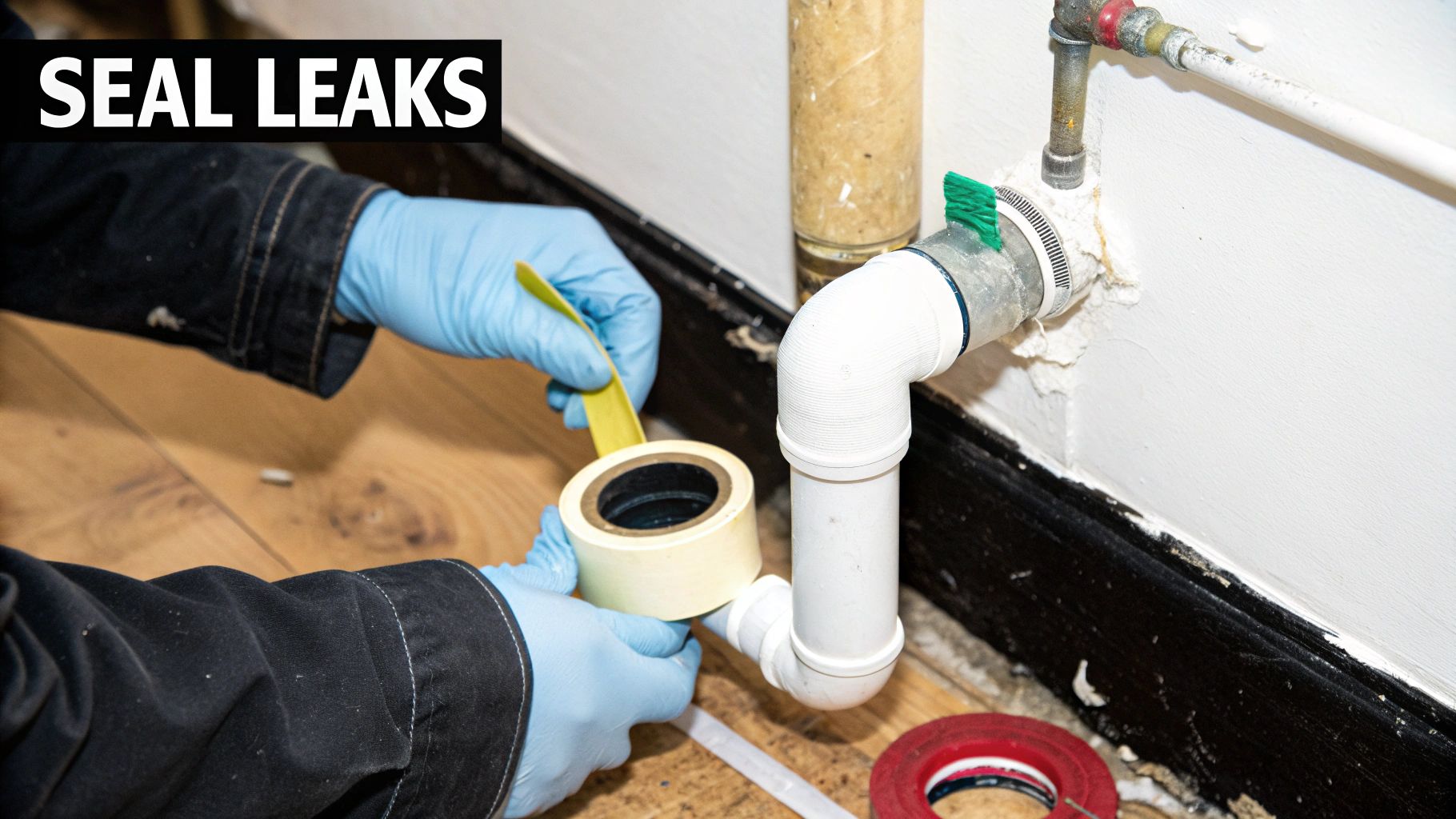
While we often worry about the pipes inside our homes, it’s usually the humble garden tap that becomes the epicentre of a winter plumbing disaster. Your external pipework is completely exposed to the elements, making it a prime suspect for freezing. Protecting these outdoor fixtures is a non-negotiable step if you want to avoid a frozen pipe catastrophe.
The good news is that securing your garden tap is a quick and simple job. The most critical first step is to disconnect any garden hoses. A hose left attached is a guaranteed recipe for trouble, as it traps water inside the tap and pipe, leaving no room for expansion when it inevitably freezes solid.
Once the hose is off, turn the tap on fully to let any leftover water drain out. It's shocking how even a small amount of trapped water can expand with enough force to crack the metal body of the tap or the copper pipe supplying it.
Your First Line of Defence: The Tap Cover
After draining the tap, the next job is to fit a protective cover. You can find inexpensive insulated tap covers at any DIY store in Eastbourne. These simple "jackets" slip right over the tap and are secured with a drawstring, creating a barrier that shields it from biting winds and frosty nights.
We recently had an emergency call-out to a home in the Roselands area of Eastbourne where a garden tap had frozen solid and split, causing a significant leak once it thawed. The homeowner was staring down a repair bill of several hundred pounds.
A simple £5 insulated tap cover would have prevented the entire situation. It’s a story we at Harrlie Plumbing and Heating see play out every single winter—a tiny investment that saves a huge amount of money and stress.
This isn't just bad luck; it’s about physics and the British weather. Extensive research on UK water pipe failures shows a direct and significant link between falling temperatures and rising pipe failure rates, regardless of the pipe's age or material. The data, covering nearly 30,000 incidents, confirms that the coldest days cause the most damage as freezing ground shifts and compresses vulnerable pipework. You can read more about how temperature impacts pipe integrity in the full research on PMC.
For More Complex Outdoor Plumbing
Some Eastbourne homes have more than just a single tap outside. You might have pipework running to a garage, an outbuilding, or an irrigation system. In these situations, a simple tap cover just won't cut it.
For this kind of exposed pipework, professionally installed heat tape (also known as heat trace cable) is the best solution. This is an electrical cable that runs alongside the pipe and is usually controlled by a thermostat. It automatically provides just enough warmth to keep the water flowing when the temperature plummets below freezing.
While it's a more involved solution, it offers total peace of mind for vulnerable external plumbing. If you're unsure whether your home needs it, our team at Harrlie Plumbing and Heating can provide an assessment and help you find the right fix.
Your Pre-Holiday Winter Checklist
Heading off for a winter holiday should be all about excitement, not dread. But leaving your home empty during a cold spell requires a solid game plan. The last thing anyone wants is a frantic call from a neighbour interrupting their break, especially here in Eastbourne where a sudden temperature drop and that biting coastal wind can put an empty property at risk.
We’ve seen the worst-case scenario firsthand. At Harrlie Plumbing and Heating, we got a call from a family whose holiday was tragically cut short. They were in the Meads area of Eastbourne when a neighbour spotted water pouring from their front door. They’d turned their heating completely off to save a bit of money, but a pipe in the loft froze solid and burst, causing thousands of pounds of damage. The whole catastrophe could have been avoided with a few simple checks.
Never Turn Your Heating Off Completely
The single biggest mistake homeowners make is switching off the heating entirely before going away. I get it—it seems like a sensible way to trim the energy bills. But doing so leaves your entire plumbing system completely defenceless against the cold. Your house doesn’t need to be toasty, just consistently above freezing.
A constant, low background heat is the most reliable way to prevent frozen pipes while you're away. We always advise clients to set their thermostat to a minimum of 13°C. This small cost is an insurance policy against the immense expense and stress of a burst pipe.
This steady, low temperature makes sure that even the coldest corners of your home—like lofts, basements, or garages—stay just warm enough to keep the water in your pipes from turning to ice.
Your Ultimate Failsafe: The Main Stopcock
Even with the heating ticking over, there’s one move that offers total peace of mind: shutting off your main water supply. Think about it—if no new water can get into your home’s plumbing, a pipe simply can't cause a flood, even if it does freeze and crack.
Knowing where your internal stopcock is located is a crucial piece of home maintenance. It’s usually tucked away under the kitchen sink, but I’ve also found them in downstairs toilets, utility rooms, or airing cupboards.
Before you lock up and leave, run through this quick routine:
Find the Stopcock: First, locate the main water shut-off valve inside your property.
Turn It Off: Give the valve a firm turn clockwise until it’s fully closed.
Drain the System: Finally, open the taps at the lowest and highest points of your house (a kitchen tap and an upstairs bathroom tap work well) to let any remaining water drain out.
This simple process takes five minutes, tops, but it could save you from the utter devastation of returning to a water-damaged home. If you're not sure where your stopcock is, or if you find it’s seized up and won’t turn, the team at [Harrlie Plumbing and Heating](https://www.harrlieplumbing.co.uk/) can help locate and service it during any routine visit.
Responding to a Frozen Pipe Emergency
The first sign of a frozen pipe is often deceptively simple: you turn on a tap and get nothing more than a faint trickle, or perhaps nothing at all. If this happens during a cold snap, you should assume a pipe is frozen and act immediately, before it has the chance to burst.
Your first move, always, is to find and turn off your main water stopcock. This is your single most important action. Shutting off the water supply prevents a potential flood if the pipe is already cracked or decides to burst while you're thawing it. With the water off, open the affected tap. This simple step helps relieve any pressure building up inside the system from the ice blockage.
Safely Thawing the Pipe
With the water supply safely cut off, you can start the thawing process. The golden rule here is gentle, gradual heat. The safest and most effective tool for this job is a standard hairdryer on a low setting.
Start at the end of the pipe closest to the tap and slowly work your way back towards the frozen blockage. Keep the hairdryer moving back and forth. This method encourages the ice to melt and drain away harmlessly through the open tap.
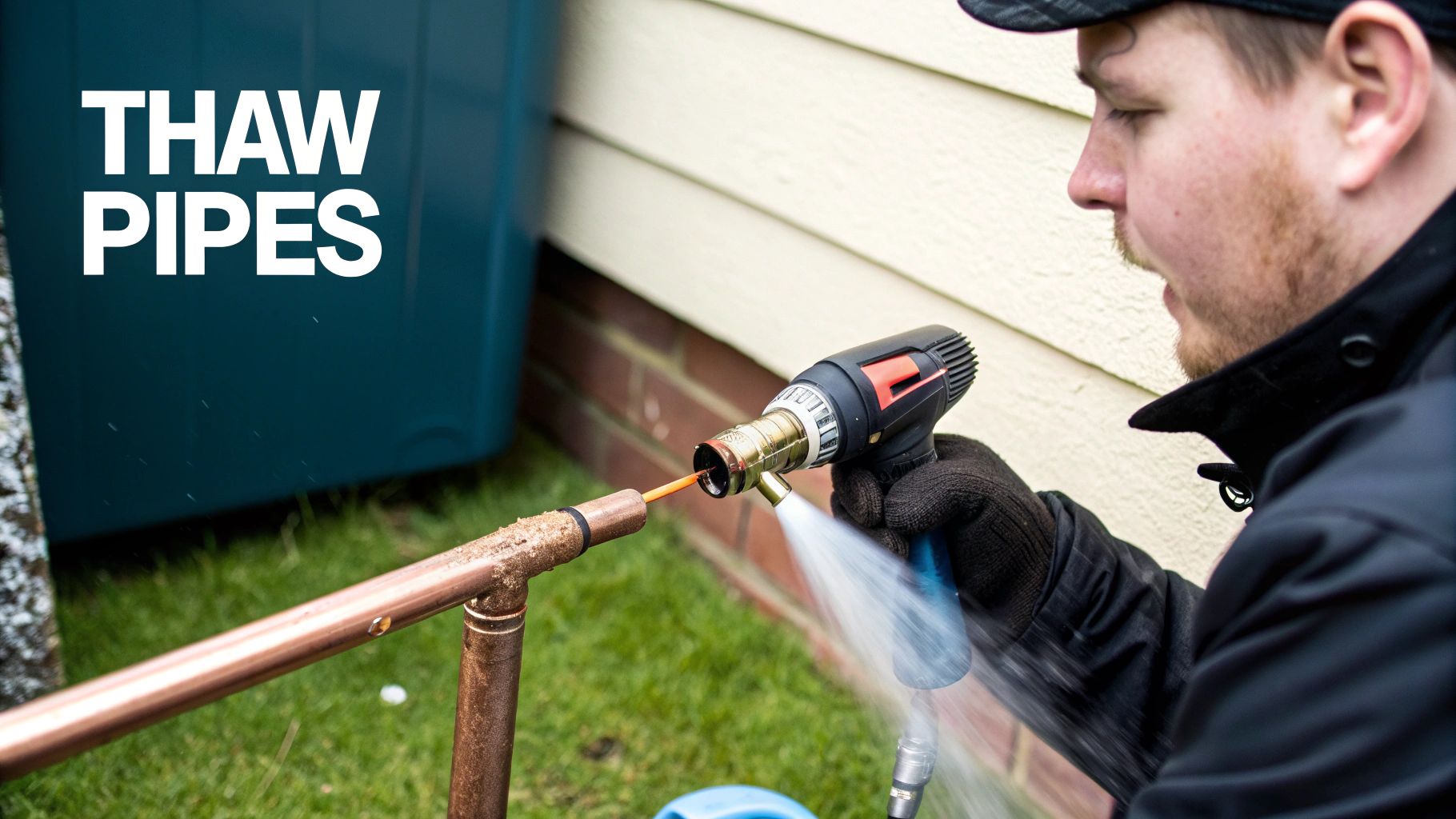
Never, under any circumstances, use a blowtorch, heat gun, or any kind of open flame. The intense, direct heat can cause the water inside to boil, creating immense steam pressure that will rupture the pipe in an instant. It also poses a serious fire risk—a common and tragic outcome we at Harrlie Plumbing and Heating have seen ruin homes.
While you might be tempted to handle it yourself, it's worth remembering the bigger picture. The UK’s water infrastructure faces ongoing challenges, with over 44,000 pipe repairs carried out in England and Wales in 2023-2024 alone. That’s more than 100 burst pipes every single day. This data, available in reports like the one from UK pipe leakage and burst rates at Datatecnics.com, really underscores how vulnerable our pipes can be, especially older ones.
The visual guide below breaks down the essential preventative steps to help you avoid this emergency in the first place.
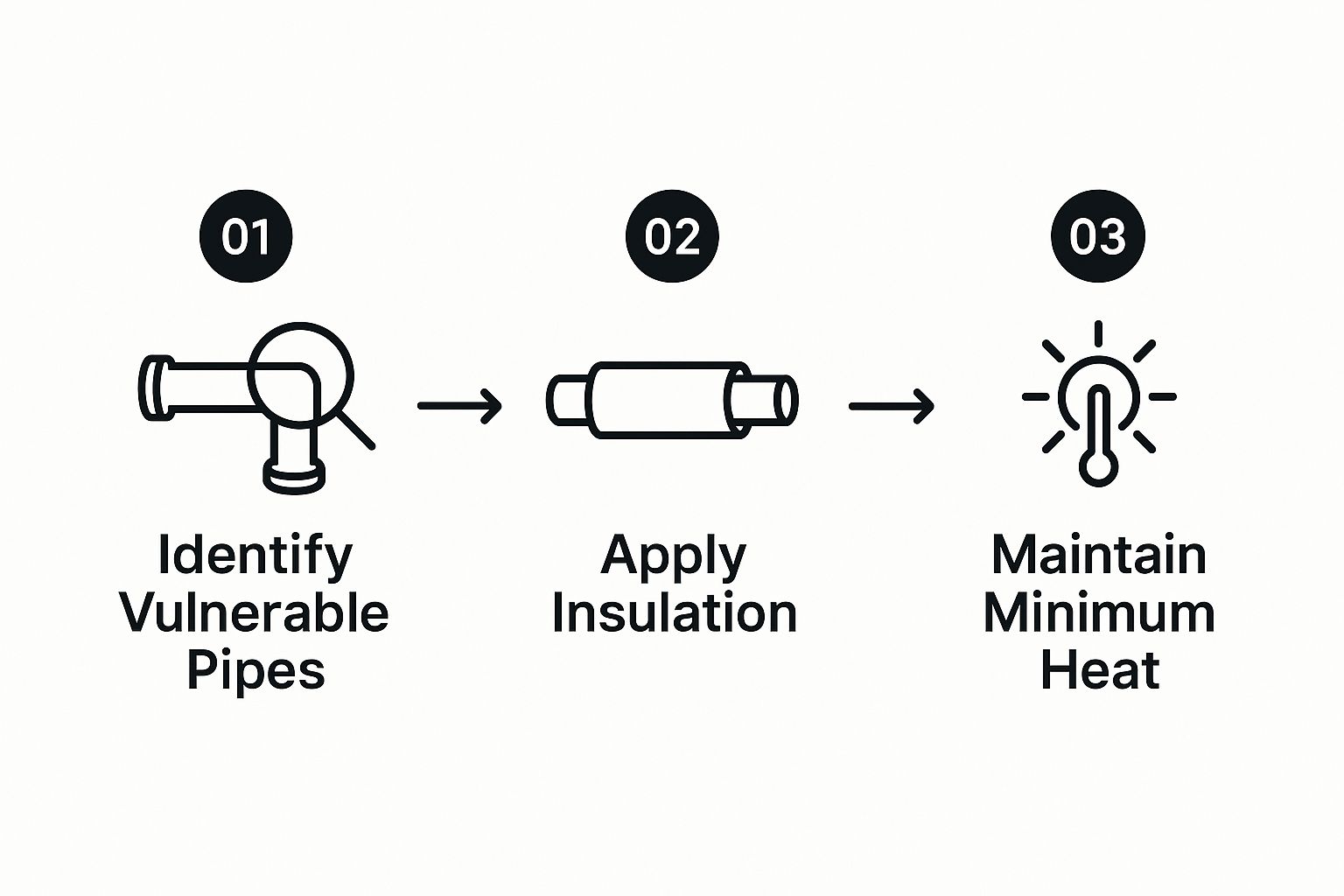
As you can see, a simple, three-pronged approach—identifying vulnerable pipes, insulating them properly, and maintaining consistent heat—is the key to prevention.
Discovering a frozen pipe is a stressful moment, and it's easy to panic. To help you stay calm and act correctly, here’s a quick action plan outlining what to do and what to avoid.
Frozen Pipe Emergency Action Plan
Action To Take | What You Must Avoid | Why It's Important |
|---|---|---|
Shut off the main stopcock immediately. | Don't ignore the problem, hoping it will thaw on its own. | This prevents catastrophic water damage if the pipe bursts. |
Open the tap connected to the frozen pipe. | Don't try to force water through by repeatedly turning taps on and off. | This relieves pressure inside the pipe and gives the melting ice somewhere to go. |
Use gentle heat, like a hairdryer on a low setting. | Never use a blowtorch, heat gun, or open flame. | Intense heat can cause the pipe to burst from steam pressure and creates a severe fire hazard. |
Start thawing from the tap end and work towards the blockage. | Don't start thawing in the middle of the frozen section. | This ensures the melting ice has a clear path to drain away, preventing further pressure build-up. |
Inspect for damage as the pipe thaws. | Don't assume the pipe is fine once water starts flowing again. | A small crack can quickly turn into a major leak once the pressure returns. |
Following these steps methodically can turn a potential disaster into a manageable situation.
When to Call the Professionals
As you thaw the pipe, keep a close eye on it. If you spot any signs of damage—like a split, a bulge, or even a tiny hairline crack—stop what you're doing immediately. This is a clear signal the pipe has been compromised and will leak as soon as the ice melts completely.
This is the moment you need to call a professional. At Harrlie Plumbing and Heating, we offer a rapid one-hour response in Eastbourne for exactly these kinds of emergencies. A quick, professional repair can mean the difference between a small, manageable fix and a major home disaster. Don’t take the risk; acting correctly can save you a world of stress and expense.
Long-Term Solutions and Professional Advice
While quick fixes and emergency repairs are essential, the real goal is to make your home a place where frozen pipes are a thing of the past. To truly get ahead of the problem, you need to look beyond temporary measures and consider permanent, long-term solutions that bring genuine peace of mind when the temperature plummets in Eastbourne.
This is where calling in a professional really pays off. A pre-winter inspection from a qualified heating engineer can uncover hidden weak spots you’d likely never find on your own. It's these vulnerabilities that often turn into a catastrophe during the first proper frost of the season.
Upgrading for a Worry-Free Winter
During a professional assessment, an engineer might spot issues that simple insulation can’t fix. For example, some older homes, particularly in areas like Old Town, have convoluted pipework running through poorly protected external walls or exposed in draughty cellars.
In situations like these, more permanent solutions are often the best bet:
Rerouting Pipework: Sometimes, the most effective solution is to move the vulnerable pipe entirely. A professional can reroute it through a warmer, internal part of the house, taking it completely out of harm's way.
Upgrading Pipe Materials: While any pipe can freeze, older iron or lead pipes are especially prone to bursting. Modernising your system with resilient copper or high-quality plastic pipes adds another crucial layer of protection.
Investing in a professional assessment is about switching from a reactive panic to a proactive plan. It's the difference between frantically trying to thaw a pipe in an emergency and sleeping soundly, knowing your home is properly protected all winter.
Your Local Eastbourne Experts
At Harrlie Plumbing and Heating, our aim is to provide lasting solutions, not just quick patches. We’ve seen firsthand how a small investment in a professional assessment can prevent thousands of pounds in damage and untold stress for homeowners across Eastbourne and the surrounding areas.
We believe that preventing frozen pipes starts with truly understanding your home’s unique plumbing layout. And finding the right professional is a vital part of that process. For more guidance, have a look at our essential tips for finding the right plumber or heating engineer in Eastbourne.
Don’t wait for the frost to bite. Contact Harrlie Plumbing and Heating today for a comprehensive pre-winter check. We'll help make sure your home is secure, your pipes are protected, and your winter is completely worry-free.
Your Questions Answered: Frozen Pipes
Even with the best preparation, it's natural to have a few lingering questions. We get calls about these all the time from homeowners across Eastbourne, so let’s tackle some of the most common ones head-on.
Is Letting a Tap Drip Enough to Prevent Freezing?
Letting a tap drip can offer a tiny bit of help in a real pinch, but it’s more of a last-ditch effort than a reliable prevention strategy. Think of it this way: the constant movement can help relieve some of the immense pressure building up inside the pipe, but it does very little to stop the water from actually getting cold enough to freeze.
At Harrlie Plumbing and Heating, we always tell our Eastbourne clients that the only real, long-term solution is proper insulation on all your at-risk pipework. This tackles the problem at its source, which is what you want.
Are Plastic Pipes Safe From Freezing?
This is a very common and dangerous myth. While it’s true that plastic pipes have a bit more give than copper, they absolutely can and do freeze. Water turns to ice at the same temperature no matter what it’s inside, and the expansion is powerful enough to easily crack plastic.
Any water pipe located in an unheated space—be it a loft, garage, or cellar—needs to be properly insulated for winter, regardless of whether it's made of copper or plastic. Don’t assume you’re safe just because your pipes aren’t metal.
Where Do I Find My Main Water Stopcock?
Knowing where your main stopcock is located is absolutely crucial in an emergency. More often than not, you'll find it tucked away under the kitchen sink. However, in some Eastbourne homes, it might be in a utility room, a downstairs loo, or even down in a cellar. You're looking for a small, tap-like handle or sometimes a lever on the main water pipe coming into your property.
It's vital that everyone in your household knows where it is and how to turn it clockwise to shut off the water. If you’ve hunted around and still can't find yours, the Harrlie Plumbing and Heating team can locate and label it for you during any visit.
Is Professional Pipe Insulation Expensive?
Getting your pipes professionally insulated is honestly one of the most cost-effective maintenance jobs you can do for your home. The materials themselves are inexpensive, and for an experienced plumber, it's a straightforward job.
When you weigh that small, one-off investment against the thousands of pounds in water damage repairs a single burst pipe can cause, the choice is pretty clear. We can give you a transparent, no-obligation quote based on your home’s specific layout, so you know exactly what’s needed to get the best protection without any surprises.
If you still have questions or just want a professional to pop round and make sure your home is truly ready for winter, don't hesitate to reach out. The team at Harrlie Plumbing and Heating is here to help keep your Eastbourne home safe and warm. Get your free quote today by visiting https://www.harrlieplumbing.co.uk.

Comments