How to Increase Your Water Pressure A Practical Guide

That frustrating trickle from your tap isn't just a minor inconvenience; it's often the first sign that your plumbing system needs a bit of attention. Before you can think about how to increase your water pressure, you need to play detective and figure out what’s causing the problem. The fix could be as simple as cleaning a tap, or it might point to a deeper issue with your mains supply or internal pipework.
Getting to the Bottom of Your Home's Water Pressure Problems
Low water pressure is a common complaint for homeowners, especially here in Eastbourne where we have a fantastic mix of older Victorian houses and more modern properties. That slow-filling kettle or weak, disappointing shower can be caused by anything from a minor blockage to a much bigger problem buried in your plumbing. The first real step toward getting that powerful flow back is understanding what’s causing the disruption.
Sometimes, the problem isn't even inside your home. It could originate from the local water mains, managed by Southern Water. We at Harrlie Plumbing and Heating often get calls from residents in the Meads or Old Town areas of Eastbourne, only to discover that planned maintenance or a hidden leak in the local network is affecting the entire street.
The Usual Suspects Behind Low Pressure
More often than not, though, the issue is located somewhere on your property. The potential causes are surprisingly varied and often depend on the age and style of your home.
Blocked Taps or Showerheads: Limescale is the persistent enemy of plumbing across East Sussex. Over time, these chalky mineral deposits build up inside your fixtures, creating a physical barrier that literally chokes the water flow.
Hidden Leaks: You'd be surprised how much pressure can be lost from even a tiny, unseen leak. A slow drip under a floorboard or behind a wall can lead to a significant and constant drop in pressure throughout your home.
Corroded Pipework: Older Eastbourne homes, particularly those with their original galvanised steel pipes, are prone to internal corrosion. This rust build-up narrows the pipes over the years, strangling the water flow to a trickle.
Faulty Valves: It could be something as simple as your main stopcock not being fully open. Alternatively, a pressure-reducing valve (PRV) could be malfunctioning, creating a bottleneck for your entire water supply.
At Harrlie Plumbing & Heating, we've seen it all. A weak shower isn't just about a less enjoyable morning; it's a symptom. Knowing how to diagnose whether it's a five-minute fix or a sign of ageing pipes is crucial for finding a lasting solution. For a deeper dive into the root causes, check out our guide on what causes low water pressure in UK homes. It'll help you figure out when you can tackle it yourself and when it’s time to call in an expert.
Pinpointing the Source of Low Water Pressure
Before you can figure out how to boost your water pressure, you need to put on your detective hat. Jumping to conclusions is an easy way to waste time and money, so the first step is always the simplest: look next door.
A quick chat with your neighbours can tell you a lot. If everyone on your street is dealing with the same dribble from the shower, the problem is almost certainly external. This usually points to an issue with the local Southern Water mains supply—it could be routine maintenance, a burst pipe, or wider network problems affecting your part of Eastbourne.
But if your neighbours’ taps are flowing freely, the investigation turns back to your own property. It's time to start looking at the plumbing within your four walls.
Is It a Mains Issue or a Home Issue?
Your main goal right now is to figure out if the problem is coming from the street or from inside your house. We at Harrlie Plumbing and Heating get a lot of callouts to older Eastbourne properties, from Willingdon to the town centre, where the culprit is old, corroded pipework. The galvanised steel pipes popular in Victorian and Edwardian homes can rust from the inside out over decades, slowly strangling the water flow.
This kind of gradual decline is very different from a sudden drop in pressure, which might signal a hidden leak or a faulty valve. One of the first things we at Harrlie Plumbing and Heating always tell people to check is their internal stopcock. It's usually under the kitchen sink or in a downstairs loo. You'd be surprised how often it gets partially closed during some other work and is simply never fully opened again.
To help you get a clearer picture of whether you're dealing with a slow trickle or a slow fill, this decision tree can guide your first checks.
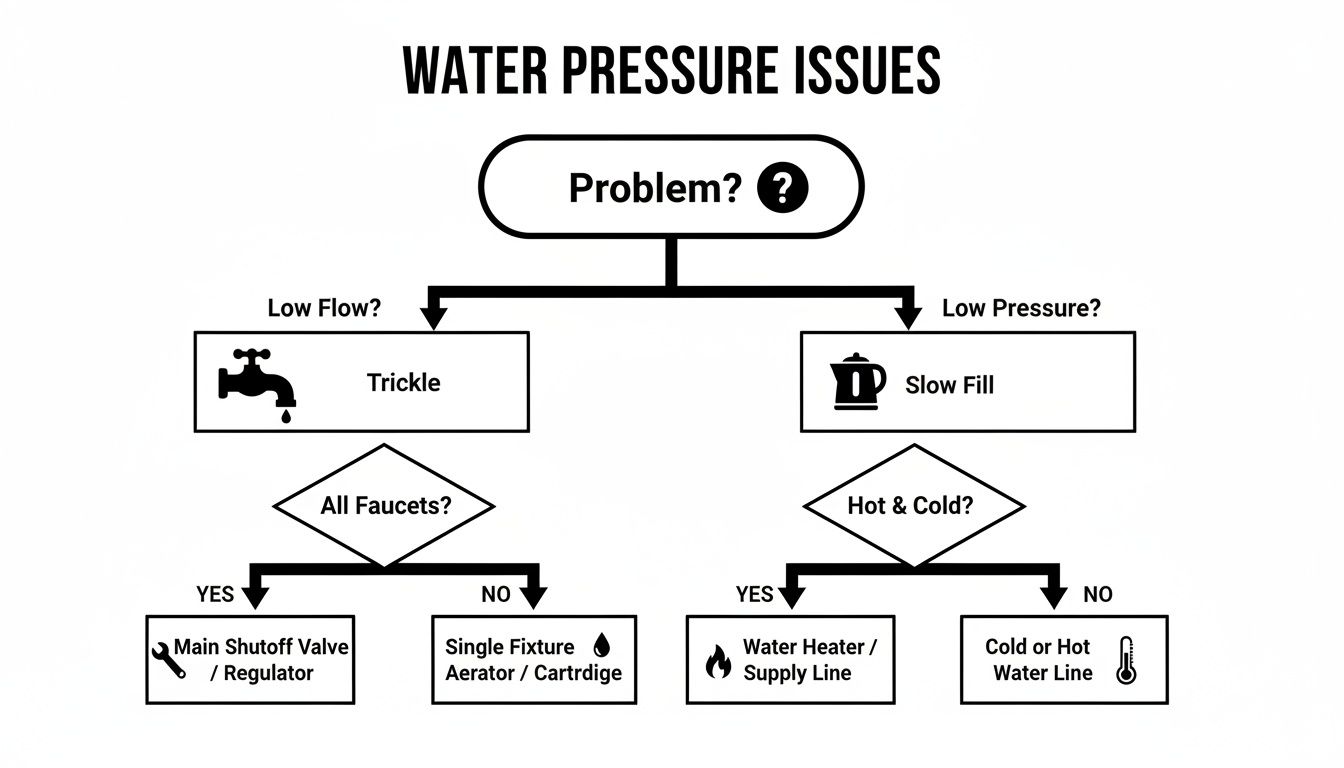
As the flowchart shows, if every tap in the house is weak, you're likely looking at a mains supply or stopcock issue. If it’s just one tap acting up, it’s probably a localised blockage.
Before you pick up the phone to a plumber, running through a few simple checks can often point you directly to the source of the problem. This quick table helps you match common symptoms to their likely causes.
DIY Water Pressure Troubleshooting Checklist
Symptom | Possible Cause | Simple Check |
|---|---|---|
All taps are weak, neighbours are fine | Internal stopcock not fully open | Find your main stopcock and turn it fully anti-clockwise. |
One specific tap has low pressure | Aerator or tap filter is blocked | Unscrew the very end of the tap spout and clean out any grit. |
Pressure is weak only at the shower | Showerhead is clogged with limescale | Unscrew the showerhead and soak it in descaling solution or vinegar. |
Pressure is fine downstairs, weak upstairs | Gravity/height issue in the system | This often requires a professional solution, like a booster pump. |
Pressure suddenly dropped everywhere | A possible leak on your property | Check your water meter with everything off (see below). |
This checklist isn't exhaustive, but it covers the most frequent issues we see in Eastbourne homes. If you've tried these and are still stumped, it’s time to dig a little deeper.
Quantifying the Problem with a Simple Test
You don't need any fancy gear to get a proper read on your water flow. A quick DIY test will give you a concrete number, which is a massive help when you're trying to diagnose the issue.
All you need is a one-litre measuring jug and a stopwatch (your phone is perfect). Pop the jug under your kitchen tap, turn the cold water on full blast, and time how long it takes to fill up.
Good flow rate: Filling the jug in 6 seconds or less is what you’re aiming for. This works out to 10 litres per minute or more, which is generally considered fine.
Poor flow rate: If it takes longer than 6 seconds, your flow rate is officially low, and it's time to investigate further.
This little test gives you a baseline. If you think the problem is all over the house, you can repeat it at different taps to see if the flow is consistently bad or just isolated to one or two spots. For more detailed instructions, have a look at our guide on how to test water pressure in your home.
The Hidden Impact of Leaks
A major—and often invisible—cause of low pressure is a leak, either somewhere in the local water network or on your own property. Here in the UK, especially in areas like Eastbourne served by Southern Water, leaky pipes are a huge factor. According to official data, Southern Water reported an average leakage of 36.1 litres per person per day. That means thousands of litres are lost daily from ageing infrastructure, which directly impacts the pressure reaching your home. You can read the full government analysis of the water industry's performance here.
Think of it this way: even a tiny, persistent leak is like having a tap running 24/7, constantly draining pressure from your system. A quick look at your water meter is the best way to spot a hidden leak on your property.
Here's how to check. First, make sure every tap, toilet, and water-using appliance in your house is turned off. Then, head outside and find your water meter. If that little dial is still spinning, even slowly, it's a dead giveaway that water is escaping somewhere on your property. This is your cue to call in a professional from Harrlie Plumbing and Heating to trace and fix the leak before it causes more serious damage.
Simple DIY Fixes to Improve Water Flow
Before you start worrying about a major plumbing overhaul, it’s worth remembering that the most common culprits behind poor water flow are often the simplest to fix. You might be surprised by how a few minutes of effort can dramatically improve that disappointing trickle from your shower or tap.
These are the kinds of quick wins we at Harrlie Plumbing & Heating often suggest homeowners try first. They don’t cost much and can make a world of difference.
Our primary foe for plumbing here in East Sussex is, without a doubt, hard water. The local supply is rich in minerals like calcium and magnesium which, while harmless to us, leave behind a chalky residue known as limescale. Over time, this builds up inside your pipes and fixtures, creating a bottleneck that really slows things down.
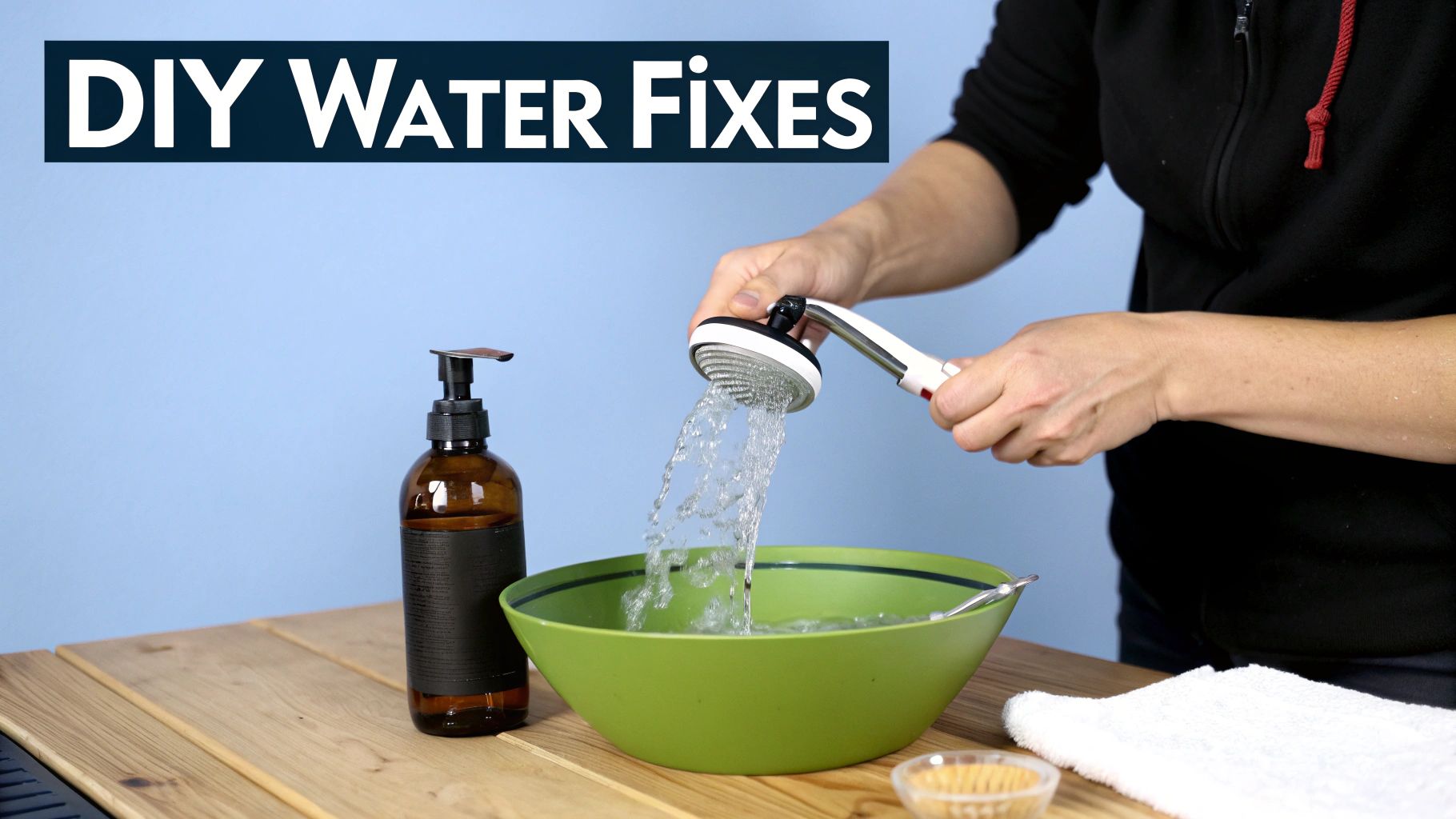
Tackle Limescale in Your Taps and Showerheads
The most frequent victims of limescale are your showerheads and tap aerators—those little mesh-covered tips on your spouts. The tiny holes in these parts are easily blocked, turning what should be a powerful spray into a weak, uneven dribble. Thankfully, the solution is simple and costs next to nothing.
For your taps, just unscrew the aerator at the end of the spout. You might need to wrap a cloth around it and use pliers to avoid scratches. You'll likely find it clogged with white, chalky debris. A quick scrub with an old toothbrush under a running tap might be all it needs.
Your showerhead requires a similar approach. If you can unscrew it, brilliant. If not, don't worry, you can still treat it in place.
For removable parts: Submerge the showerhead and tap aerators in a bowl of white vinegar. Leave them to soak for a few hours, or ideally overnight.
For fixed showerheads: Fill a plastic bag with white vinegar and secure it over the showerhead with a rubber band. Make sure the clogged nozzles are fully submerged and let it sit for several hours.
The acetic acid in the vinegar works wonders, dissolving the mineral deposits. After a good soak, give everything a scrub with an old toothbrush to dislodge any stubborn bits, rinse thoroughly, and put it all back together. You should see an immediate improvement.
Check Your Combi Boiler Pressure
Is the low pressure mainly affecting your hot water? Or are your radiators struggling to heat up? If so, your combi boiler's pressure gauge is the next place to look. Modern combi boilers rely on a sealed, pressurised loop of water to heat your home and provide hot water on demand.
Over time, this system can naturally lose a tiny bit of pressure. A significant drop, however, could point to a leak somewhere in your central heating system. Most combi boilers should have a pressure reading of between 1 and 1.5 bar when the heating is off.
Checking your boiler's pressure gauge is a simple but vital step. If the needle has dropped into the red zone (usually below 1 bar), topping it up can often restore your hot water pressure and heating efficiency.
Look for a small, flexible hose underneath your boiler—this is the filling loop. Following your manufacturer's instructions carefully, you can use the attached valves to slowly let more water into the system until the gauge returns to the green zone. If you're not confident doing this, or if the pressure keeps dropping, it’s a sign of an underlying issue that needs a professional eye. The Gas Safe registered engineers at Harrlie Plumbing & Heating can safely diagnose and fix any boiler-related pressure problems for you.
Hunt for Obvious Leaks
While a hidden leak needs a professional plumber to track down, you can often spot the more obvious culprits yourself. A small but constant drip can have a surprisingly big impact on your overall system pressure.
Grab a torch and have a good look in these common spots:
Under the kitchen and bathroom sinks
Around the base of your toilets
Behind your washing machine and dishwasher
Check the pipework leading to and from your radiators for any signs of moisture
If you find a damp patch or a slow drip, you've likely found a source of your pressure loss. Even a minor leak is worth fixing promptly, not just to increase your water pressure but also to prevent water damage and wasted money on your bills.
When Your Plumbing System Is the Real Problem
So, you’ve cleaned the showerhead, checked the boiler is happy, and you’re still left with a disappointing dribble. If the quick fixes haven’t worked, it’s a strong sign the problem runs deeper than anything you can sort with a bit of elbow grease. This is a situation we see all the time, especially in Eastbourne’s beautiful but older properties.
Many of these homes, from the grand Victorian terraces in Meads to the charming cottages in Old Town, were built with plumbing that’s now well past its prime. Galvanized steel or even lead pipes were the standard for decades, but time hasn’t been kind. Inside, these pipes corrode and build up with limescale, creating a rough, narrow passage that chokes the water flow.
It’s like comparing a clean, new motorway to a bumpy, single-track lane that's been slowly closing in over the years. No matter how much water is trying to get through, the constricted pipework creates a permanent bottleneck.
The Role of a Pressure Reducing Valve
Another frequent offender we at Harrlie Plumbing & Heating encounter is a faulty Pressure Reducing Valve (PRV). This is a bell-shaped device, usually found right where the mains water pipe enters your home. Its job is to tame the high pressure coming in from the street, regulating it to a safe, steady level for your internal plumbing and appliances.
A healthy PRV is brilliant, but when it fails, it can cause persistent low pressure across your entire house. These valves can get stuck partly closed, clogged with grit, or just wear out. When that happens, they effectively throttle your water supply right at the source.
Think of a PRV like a gatekeeper for your home’s water. When it’s working correctly, it lets just the right amount of traffic through. But when it gets stuck, it creates a traffic jam, and only a trickle can get past. This isn't a DIY fix; adjusting or replacing a PRV requires specialist tools and knowledge to avoid causing leaks or damaging your system.
Often, a hidden culprit behind dwindling water pressure is clogged drains within your home's plumbing system. Debris and buildup can create blockages that affect flow dynamics throughout the pipe network. Learning how to prevent clogged drains is a crucial, preventative step for maintaining optimal water flow and avoiding more serious plumbing interventions down the line.
Why DIY Is a Risky Gamble
Trying to tackle issues like corroded pipes or a failing PRV yourself is a huge risk. Without professional diagnostic gear, you’re just guessing what the problem is. Attempting to repair or replace these parts without the right expertise can quickly spiral into bigger, more expensive problems like burst pipes and serious water damage.
Here’s why it's so important to call in a certified plumber:
Accurate Diagnosis: A professional can perform pressure tests at multiple points in your system to pinpoint the exact location and cause of the pressure drop.
Correct Parts and Tools: We have access to the right components and specialised tools needed to replace old pipe sections or faulty valves correctly and safely.
Compliance with Regulations: All plumbing work has to stick to UK water regulations. A certified plumber makes sure the job is done to standard, protecting your home and your water supply.
The UK's ageing plumbing infrastructure is already a known factor in slashing water pressure. Historical data shows relentless pipe wear, and in our region, Southern Water has recorded as many as 40.3 bursts per 1,000 km of mains due to ground movement and pipe fatigue. This external pressure on the system makes it even more important that your internal plumbing is in top condition. Dive into the full details by reading the complete leakage routemap from Water UK.
The Harrlie Plumbing and Heating Solution
When you suspect a deeper issue is sabotaging your efforts to increase your water pressure, it's time to call for professional backup. Our team at Harrlie Plumbing & Heating has extensive experience diagnosing and resolving these exact problems in properties across Eastbourne, Bexhill, and Hastings.
We don’t just fix the symptom; we get to the root cause. Whether that means replacing a section of ancient, corroded pipework with modern copper or plastic, or correctly installing and calibrating a new Pressure Reducing Valve, we provide solutions that last. We’ll assess your system thoroughly, give you a clear, honest explanation of the problem, and provide a transparent quote for the work required. Restoring strong, reliable water pressure often starts with addressing these hidden plumbing system faults.
Professional Solutions for Boosting Water Pressure
When you’ve cleaned the taps and checked for leaks but the shower still feels like a drizzle, it’s time to call in the big guns. For homes wrestling with chronically low pressure from the mains, or plumbing systems that just can’t keep up, a professional booster system is the definitive answer. This isn't just about a better shower; it's about making your entire home's water system work as it should.
Living with weak water pressure can be a daily battle, especially in a busy family home in Eastbourne where the morning rush can push a feeble system to its breaking point. This is where dedicated hardware, fitted by a certified plumber from a trusted local company like Harrlie Plumbing and Heating, makes a world of difference. The two main options are water pressure booster pumps and accumulator tanks, each suited to different scenarios.
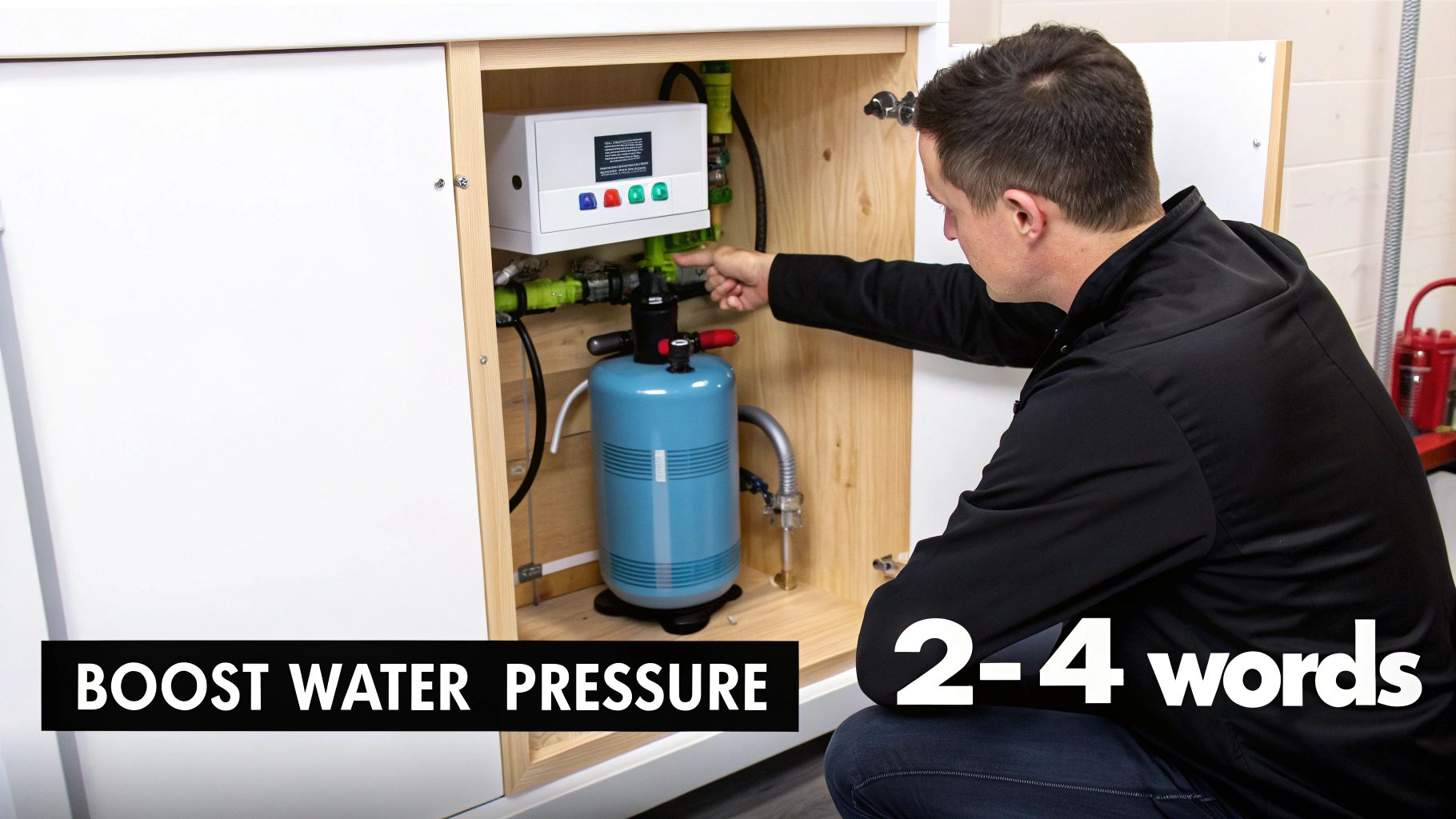
Getting to Grips with Booster Pumps
A water pressure booster pump is a powered device we install on your incoming mains pipe. Think of it like a powerful fan for your water, actively pulling it in and pushing it through your home’s pipework at a much higher pressure. The result is a consistent, house-wide lift, giving you a strong flow to every tap and appliance.
This is the perfect fix for properties where the incoming pressure from Southern Water is just plain inadequate. For example, a house at the top of a hill in the Meads area of Eastbourne might always struggle with low static pressure that no amount of pipe cleaning will ever solve. A booster pump tackles this head-on by creating its own pressure.
A word of caution: fitting a booster pump is not a DIY job. It needs to be carefully integrated into your plumbing and electrical systems, and it must comply with UK water regulations to prevent serious issues like backflow. The team at Harrlie Plumbing & Heating are experts in choosing and fitting the right pump for your home’s specific demands.
The Role of Accumulator Tanks
An accumulator tank takes a slightly different approach. Instead of running constantly, it stores a volume of mains water inside a pressurised vessel. When you turn on a tap, this stored water is instantly released at high pressure, giving the mains flow a powerful assist. This makes it ideal for handling high demand during peak times.
Picture a hectic family morning in a Bexhill home: someone’s in the shower, the washing machine is running, and you’re trying to fill the kettle. An accumulator tank ensures the shower doesn’t drop to a pathetic trickle by providing that crucial buffer of high-pressure water when several taps are open at once.
Booster Pumps: Your go-to for consistently low mains pressure, providing a constant lift across the board.
Accumulator Tanks: Excellent for homes where the flow is okay but can’t handle peaks in demand.
For anyone looking into more advanced setups, it's worth knowing how a variable speed drive (VSD) can make a booster pump more efficient. These clever devices adjust the pump’s speed based on how much water you’re using, saving energy and reducing wear and tear.
Why Professional Installation is a Must
Choosing and installing these systems is a job for an expert. Water regulations are incredibly strict, and a botched installation can cause major headaches. That’s why homeowners across Eastbourne, Hastings, and Bexhill trust us at Harrlie Plumbing & Heating. We properly assess your home’s unique setup, from incoming pressure to your family’s usage patterns, to recommend and install the perfect system.
It's also interesting to note how water metering has impacted network pressure. In Southern Water's region, which covers Eastbourne, metering penetration is 88%—the highest in the UK. This helps curb excessive use, as metered homes tend to use up to 30% less water. This means the network pressure is better preserved for everyone, and advanced systems like pumps and tanks can work even more effectively.
If your main concern is shower performance, you might want to check out our guide on getting a power shower from a combi boiler, which dives into some closely related solutions.
Your Water Pressure Questions Answered
Even after a bit of troubleshooting, it’s completely normal to have some lingering questions. As Eastbourne’s local plumbing experts, we get asked these all the time at Harrlie Plumbing & Heating. Here are some straightforward answers to the most common queries we hear from homeowners across East Sussex.
Why Did My Water Pressure Suddenly Drop?
A sudden nosedive in your water pressure usually points to a single, specific event. It’s a classic "what just happened?" moment. More often than not, the culprit is a partially closed stopcock or isolation valve, maybe bumped accidentally during another job around the house. The other prime suspect is a new, significant leak that's just sprung somewhere on your property.
Your first move should be to check all your stop valves are fully open. After that, do a quick leak check at your water meter—if the dial is spinning when every tap is off, you’ve got a leak. If your neighbours are also complaining, it’s probably an issue with the Southern Water mains, maybe due to emergency works.
For any sudden drop without an obvious cause, it's wise to give us a call at Harrlie Plumbing and Heating. It could be a sign of a burst pipe that needs immediate attention.
Can a New Boiler Affect Water Pressure?
Absolutely. The type of boiler you have is directly linked to your hot water pressure, and a new installation can change everything. For instance, if you switch from an old gravity-fed system (with a cold water tank in the loft) to a modern combi boiler, your hot water pressure suddenly becomes entirely dependent on the mains supply coming into your home.
If your mains pressure is already a bit weak, a new combi boiler might feel underwhelming because it just can’t deliver the powerful flow it's designed for. This is precisely why our Gas Safe registered engineers at Harrlie Plumbing & Heating always carry out a thorough pressure and flow rate assessment before recommending or installing a new boiler in an Eastbourne home. It’s the only way to ensure the model we fit is perfectly matched to your property's capabilities.
A new boiler should be an upgrade to your home, not a new source of frustration. Making sure your mains pressure can support a combi system is one of the most critical pre-installation checks we perform.
What Is the Cost to Increase Water Pressure?
The cost to sort out your water pressure can vary hugely. It could be a few pounds for a DIY fix or a more significant investment for a professional solution. Here’s a rough idea of what to expect:
DIY Fixes: Descaling a clogged showerhead or tap aerator might only cost you a bottle of vinegar. Simple and effective.
Minor Repairs: Replacing a faulty pressure-reducing valve (PRV) is a common professional job. You can typically expect this to cost between £150 and £300, including the new part and labour.
Major Installations: Installing a water pressure booster pump is the most effective solution but also the biggest investment. Costs can range from £500 to over £1,500, depending on the pump's power and how complex the installation is.
At Harrlie Plumbing & Heating, we believe in being completely upfront. We provide detailed, no-obligation quotes for all work in the Eastbourne area, so you know exactly what’s involved and can choose the right option for your budget.
Will a Water Softener Reduce My Water Pressure?
A correctly sized and professionally installed water softener shouldn’t cause any noticeable drop in your water pressure. These systems are designed to fit seamlessly into your plumbing. However, problems can crop up if the unit is too small for your home's water usage or isn't maintained correctly—a real risk in a hard water area like Eastbourne.
Limescale and sediment can clog an undersized or neglected softener, creating a bottleneck that chokes your water flow. It's vital to choose a quality unit with a high flow rate and have it fitted by a professional. If you notice a pressure drop right after a softener is installed, that’s a clear sign the unit might be blocked, incorrectly sized, or faulty. Our team can help you select and install a softener that protects your appliances from limescale without strangling your water flow.
If you're tired of dealing with weak showers and taps that take forever to fill, it's time for a professional solution. The team at Harrlie Plumbing and Heating has the expertise to find the root cause of your low water pressure and provide a fix that lasts.
Don't put up with poor water flow any longer—visit us at https://www.harrlieplumbing.co.uk to book your no-obligation consultation today.

Comments