Your Emergency Action Plan for a Burst Pipe House in Eastbourne
- Luke Yeates
- Feb 2
- 14 min read

A burst pipe is one of those home emergencies that gets your heart racing, but what you do in the first few minutes can make all the difference. The absolute priorities are to stop the water flow and shut down the power to prevent any electrical hazards. Taking charge right away is the key to containing the damage before a professional plumber from a team like Harrlie Plumbing and Heating even gets to your door.
Your First 15 Minutes After a Pipe Bursts
That sound of rushing water where it shouldn’t be is a moment of pure panic for any homeowner. Whether it’s a sudden geyser erupting under the sink in your Willingdon home or a sinister damp patch spreading across the ceiling of your Old Town flat, a burst pipe demands quick, calm action—not hesitation.
Those first few moments are absolutely critical. They decide whether you're dealing with a manageable plumbing issue or a full-blown structural and financial disaster. Acting fast can literally save you thousands in repair costs.
This is your three-step game plan for the first 15 minutes. It’s a simple process designed to help you secure your home and minimise the chaos.
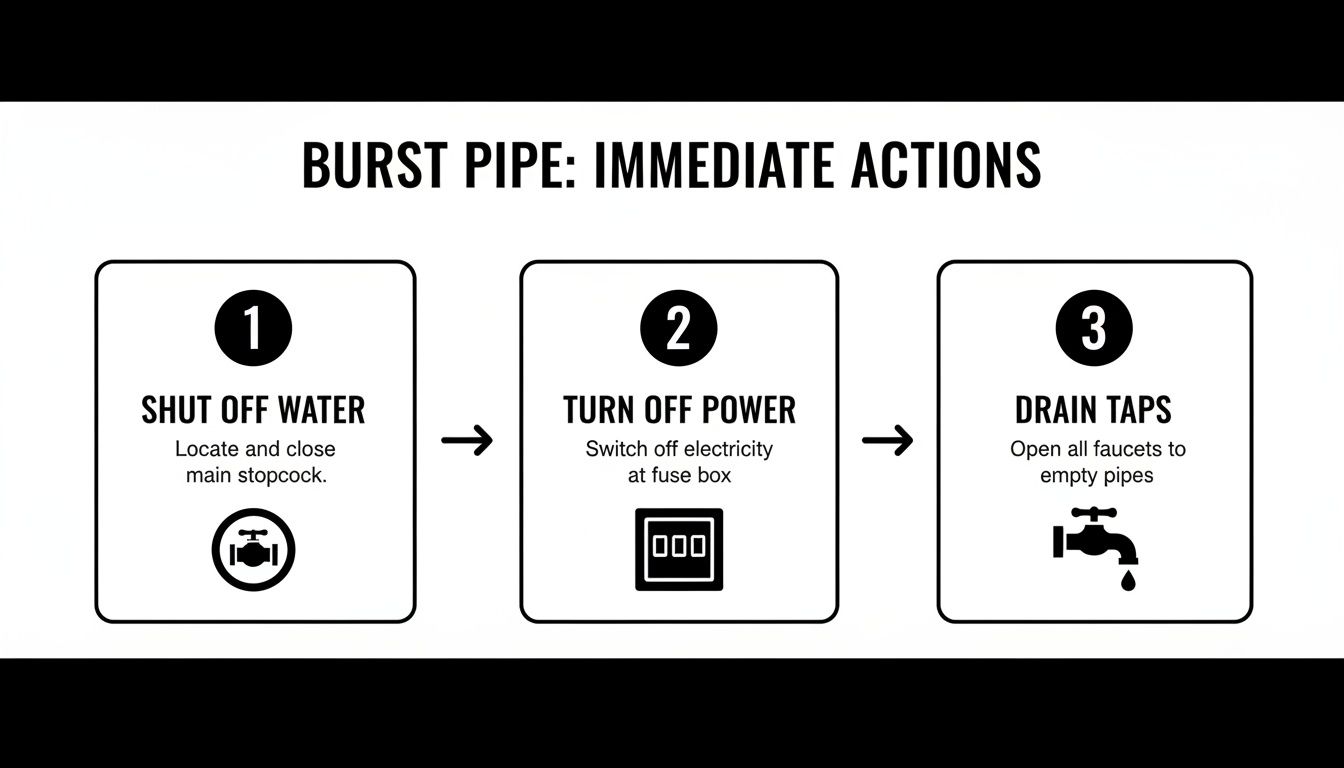
Following this sequence—water first, then power, then drain—is the safest and most effective way to get the situation under control while you wait for help.
Find and Shut Off the Main Water Supply
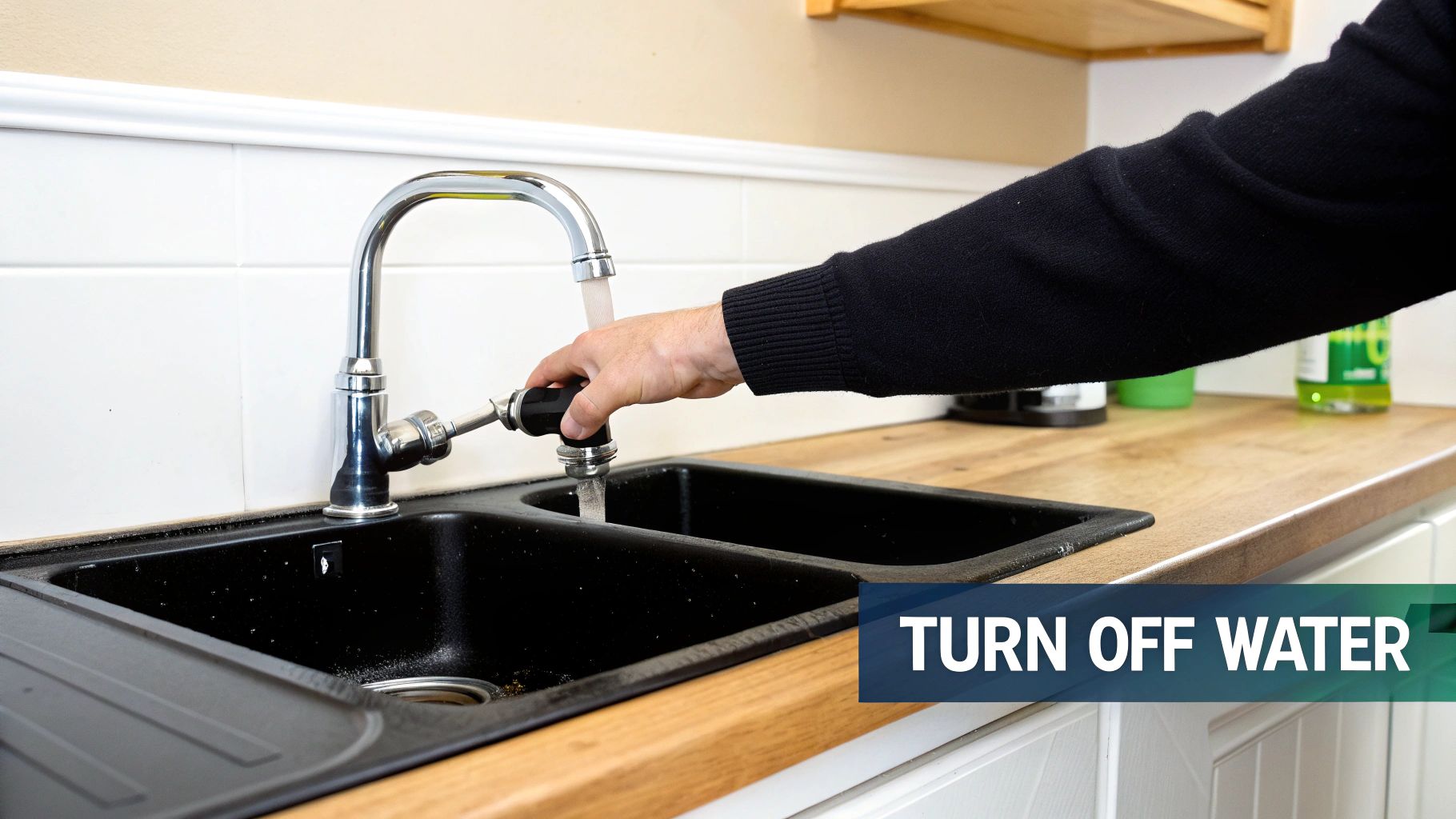
First things first: find your main stopcock and turn it off. This single valve controls the entire water supply to your property. Shutting it stops the flood at its source, which is your number one priority.
In many Eastbourne homes, especially older terraced houses in areas like Old Town, you'll often find the stopcock tucked away under the kitchen sink. But don't be surprised if it’s hiding in a utility cupboard, a downstairs cloakroom, or even the garage. If you can't find it inside, check for a small metal or plastic cover on the pavement outside your house—some properties have an external one there.
Pro Tip: Once you find the stopcock, turn it clockwise (think "righty-tighty") until you can't turn it anymore. It might be stiff if it hasn’t been moved in years, but it’s vital to get it fully closed.
Turn Off the Electricity
Water and electricity are a lethal mix. As soon as water starts pooling or spraying, it can find its way into electrical sockets, appliances, and wiring. This creates a serious risk of electric shock or even fire.
Your next move is to go straight to your consumer unit (what most people call a fuse box) and switch off the main power. This one action protects you and your family from a far bigger danger than the water itself.
Open Taps to Drain the System
With the water and power safely off, it's time to relieve the pressure in the pipes. Go around the house and open all the cold water taps in the kitchen, bathrooms, and any utility rooms.
This lets the water still trapped in the plumbing system drain out through the taps instead of pouring from the burst pipe. It's a simple step that helps reduce the total amount of water that escapes and causes damage. Don't forget to flush all your toilets, too, as this will help empty their cisterns.
If you need a bit more guidance on these steps, check out our detailed guide on how to turn off your main water supply.
For a quick reference, here's a checklist to keep handy. It breaks down what to do and why it’s so important in the heat of the moment.
Burst Pipe Emergency Checklist
Action Step | Why It's Critical | Eastbourne Homeowner Tip |
|---|---|---|
Shut Off Main Water | This immediately stops more water from flooding your home and causing further damage. | In Victorian or Edwardian homes, check cellars or under the stairs if it's not under the sink. |
Turn Off Electricity | Prevents the risk of electric shock or fire if water comes into contact with wiring or appliances. | Your consumer unit is usually near the front door, in a hallway, or in a utility cupboard. |
Drain All Cold Taps | Releases remaining water and pressure from the system, diverting it away from the burst pipe. | Remember to flush the toilets as well—it helps empty the system faster. |
Call a Professional | An expert can safely and correctly repair the pipe, preventing future issues. | Have a local plumber's number, like Harrlie Plumbing and Heating (01323 459 248), saved in your phone. |
Once you've completed these steps, you've successfully managed the immediate crisis. You can finally take a breath and call for professional help. By taking these actions, you ensure that when a team like Harrlie Plumbing and Heating arrives at your Eastbourne home, the situation is contained, safe, and ready for an expert repair.
Containing Water and Preventing Further Damage
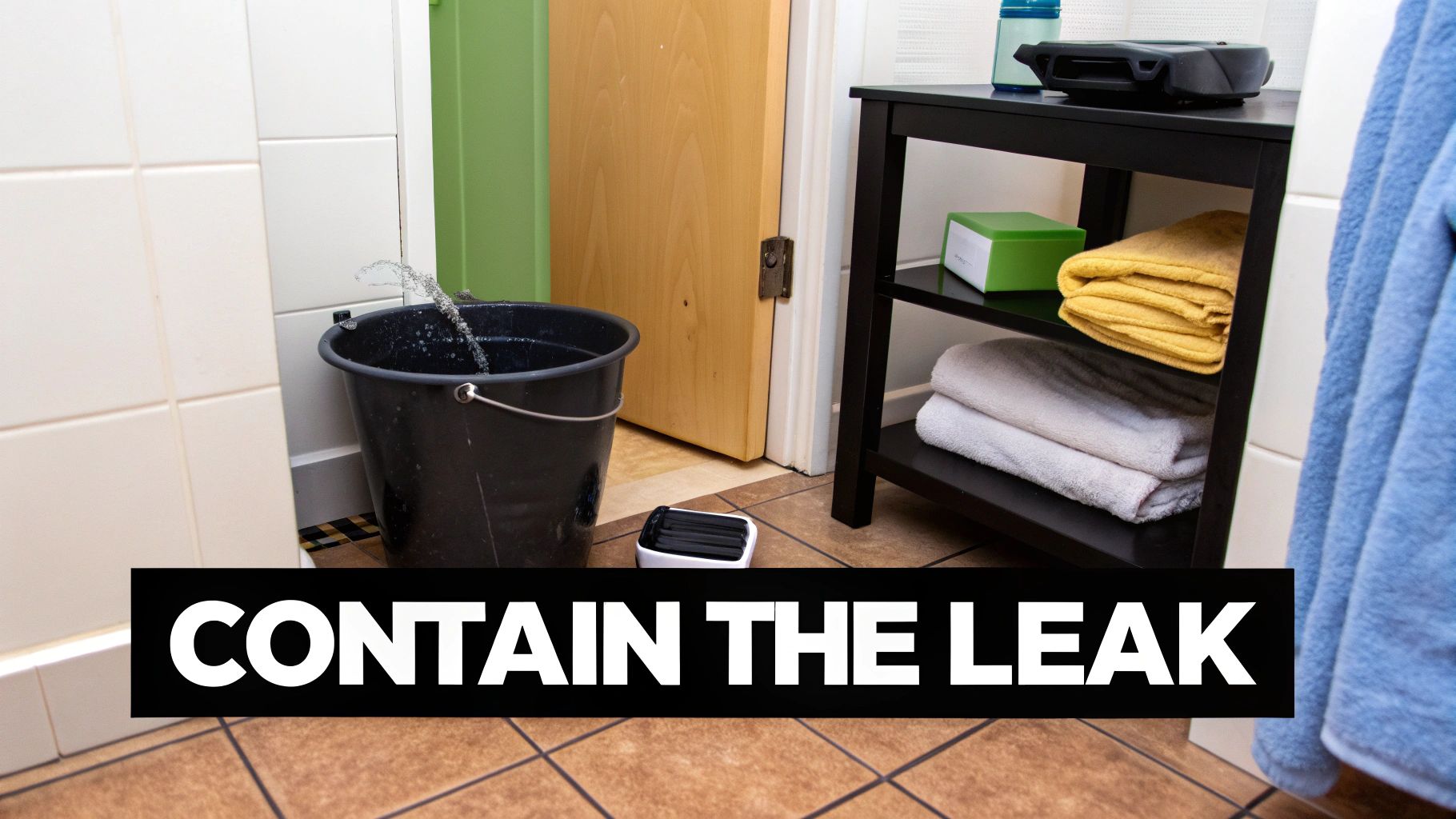
With the water and electricity safely off, your next priority is damage control. The water that’s already escaped is now the biggest threat, and what you do in the next hour can make a huge difference, preventing a manageable problem from spiralling into a full-blown disaster. It’s all about being methodical.
Grab any buckets, pans, or waterproof tubs you can find and place them directly under drips to catch as much water as you can. For water that's already spreading across the floor, use old towels, blankets, or even duvets to build makeshift dams. Your immediate aim is to stop the water from creeping into other, unaffected parts of your home.
Prioritise and Protect Your Valuables
Water damage escalates incredibly quickly. You need to act fast to get your most valuable and sentimental items out of the firing line. Don’t try to save everything at once; focus on what matters most first.
Electronics First: Before you do anything else, unplug and move TVs, computers, speakers, and any other electricals to a high, dry spot.
Furniture: Lift smaller pieces of furniture onto plastic sheets or even wooden blocks if you can. For bigger items like sofas, your main goal is to pull them away from any wet walls or floors.
Documents and Photos: Gather up important paperwork, photo albums, and anything else that's irreplaceable and get them to a safe, dry room.
Imagine a pipe bursting under your bathroom sink in a Meads area home. That water can easily seep through the floorboards in minutes, causing the plaster on the living room ceiling below to bulge and eventually collapse. This is exactly why quick action is so critical. Once the flow is stopped and you've got things contained, you need to understand how to mitigate the damage, which includes things like restoring water-damaged wood floors after spills or flooding.
Considering a Temporary Fix
It can be really tempting to try and patch the pipe yourself. While some DIY solutions might seem like a good idea at the time, you have to be extremely careful. Products like pipe repair tape or clamps are available, but they are strictly temporary measures.
A pipe clamp might stop a small drip, but it was never designed to hold back the full pressure of your mains water for long. These are stop-gap fixes, intended only to manage the situation while you wait for a professional to arrive.
Relying on a temporary patch for a burst pipe house emergency is a massive gamble. If that DIY repair fails, you could be facing a second, much worse flood. The smartest and safest course of action is to contain the water as best you can and get an expert on the phone. A certified engineer from a trusted local firm like Harrlie Plumbing and Heating will have the proper tools and experience to carry out a permanent, reliable repair, making sure the problem is sorted correctly and safely.
Calling an Emergency Plumber in Eastbourne
While your quick thinking and temporary fixes are crucial first steps, a burst pipe house emergency is one of those jobs that absolutely needs a professional. Trying to carry out a full repair yourself isn't just risky—it can easily turn a manageable problem into a major catastrophe. Once you've got the immediate situation under control, it's time to call in a certified, experienced emergency plumber for a permanent, safe solution.
Choosing a local Eastbourne plumber is about more than just convenience; it's about speed and specialist knowledge. A local firm like Harrlie Plumbing and Heating knows the unique plumbing quirks found in Eastbourne properties, from the classic Victorian terraces in the town centre to the more modern builds out in Sovereign Harbour. This local insight means we can diagnose the issue faster and get the repairs done more efficiently.
Peace of mind in a crisis comes from knowing that help is not just on the way, but that it's coming from someone who knows your area and can get to you quickly. A rapid response can be the difference between a simple repair and a major restoration project.
When you make that urgent phone call, being ready with the right information helps us help you. The more detail you can give, the better prepared our team will be when they arrive at your door.
What to Say When You Call
Time is of the essence, so having a few key details ready will make the whole process much smoother. Before you dial, take a deep breath and quickly gather the following information. This helps ensure our team at Harrlie Plumbing and Heating can dispatch an engineer who is fully equipped for your specific situation.
A clear, simple summary of what’s happening allows us to grasp the urgency and bring the right tools for the job.
Here’s what to have ready:
Your Full Address and Postcode: This is essential for getting an engineer to you as quickly as possible. For example, "I'm at 123 Seaside Road, BN21..."
The Location of the Leak: Be as specific as you can. Is it gushing from under the kitchen sink, dripping through the ceiling, or hidden behind a wall?
The Extent of the Damage: Briefly explain what you're seeing. Is it a slow drip or a powerful spray? Crucially, mention if water is anywhere near electrics.
Your Contact Number: Make sure we can call you back with an ETA or if we need more details.
Having this information on hand makes the initial call far more effective. It allows us to give you a more accurate response time and means we’ll arrive with all the necessary gear, from pipe cutters to the right replacement fittings. For a bit more on what to expect when you call, you might find it useful to read our guide on how to get an emergency plumber in Eastbourne fast.
Putting your trust in a local expert with transparent pricing takes the stress of hidden costs out of an already difficult situation. When you're dealing with a burst pipe, what you need is a reliable professional who can restore your home’s plumbing and your peace of mind.
Documenting Everything for Your Insurance Claim
Once you’ve handled the immediate chaos of a burst pipe house emergency, your thoughts will naturally turn to the aftermath—recovery and insurance. Tackling a claim can feel like a mountain to climb, but having thorough documentation is the single best tool you have for a smooth and fair process.
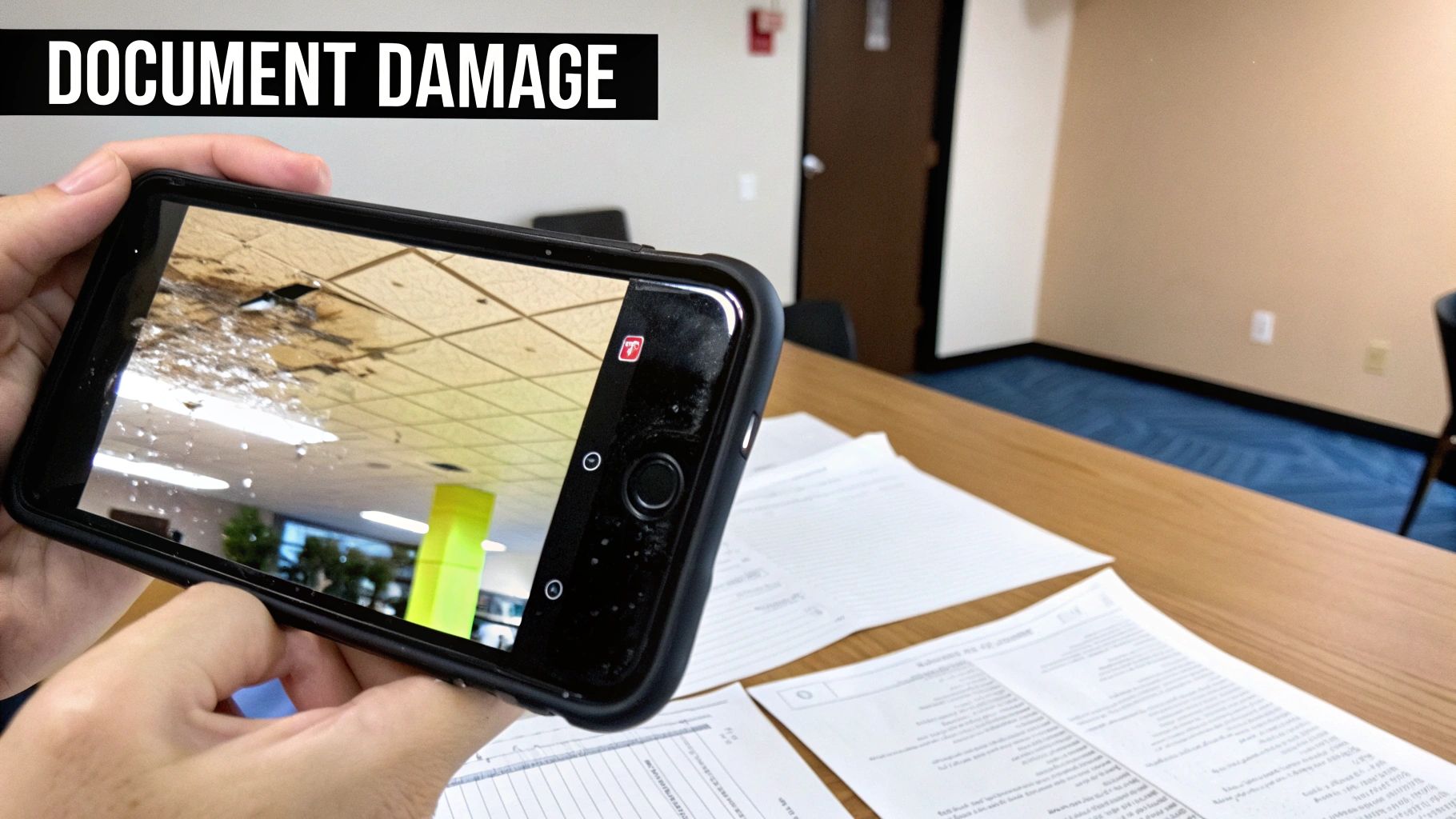
Before you start any major cleanup, grab your phone. Take photos and videos of absolutely everything. You need to capture the source of the leak, the waterlogged carpets, the stained walls, and any furniture or belongings that have been damaged. Try to think like an insurer would: you’re creating a clear, undeniable visual record of the damage at its worst.
This evidence is priceless. According to data from Direct Line, the average repair cost for a burst pipe in a UK home is a jaw-dropping £9,300. With thousands of pipes bursting every year, comprehensive documentation isn't just a good idea—it's essential for getting your money back.
Creating a Clear Record of Events
Beyond photos and videos, it’s smart to keep a written log. This doesn’t need to be an essay; a simple note on your phone or a few lines in a notebook is perfect. The goal is to build a clear timeline that backs up your claim.
Make sure your record includes these key details:
Date and Time of Discovery: Pinpoint exactly when you first noticed the leak.
Actions Taken: Jot down the steps you followed, like shutting off the water main and the electricity.
Professional Contact: Note the time you called for help. For instance, log when you contacted Harrlie Plumbing and Heating for an emergency repair in Eastbourne.
Damage Inventory: Make a list of everything that's been damaged, from structural things like flooring to personal items.
To get this inventory right, A Practical Guide to Home Inventory for Insurance is a fantastic resource. It shows you how to systematically catalogue your losses, which is a massive help for your insurer.
Keep Every Single Receipt
Finally, hold onto every single piece of paper related to the incident. This means receipts for any materials you bought for a temporary fix and, most importantly, the detailed invoice from your plumber.
An itemised invoice from a professional firm like Harrlie Plumbing and Heating is crucial. It separates the cost of the emergency repair from any subsequent work, providing the clear, professional documentation your insurance company requires to process your claim efficiently.
Without this paperwork, you'll find it incredibly difficult to get reimbursed for your expenses. You can also get a better idea of what to expect by checking out our UK burst pipe repair cost guide. A little bit of organisation right from the start will make a huge difference in the long run.
How to Prevent Future Burst Pipes
Once the immediate crisis of a burst pipe is over and the repairs are complete, the last thing you want is a repeat performance. Proactive maintenance is your best defence against another burst pipe house emergency, especially given the unpredictable coastal weather we get in Eastbourne.
Taking a few simple preventative steps now can save you an incredible amount of stress and expense down the line. It's all about shifting from reactive panic to a state of prepared calm, knowing you've done everything possible to protect your property.
Insulate Your Vulnerable Pipes
Freezing is, by far, the biggest culprit behind burst pipes in winter. When water turns to ice, it expands with unbelievable force, putting immense pressure on the pipe until it cracks or splits clean open. The most vulnerable pipes are always the ones located in the unheated areas of your home.
Think about the pipework running through your loft, garage, or even an exposed crawl space under a period property in the Roselands area. These spots get just as cold as the outside air, making them prime candidates for freezing.
Pipe Lagging: The easiest and most effective solution is pipe insulation, often called lagging. This inexpensive foam tubing is simple to install – just cut it to size and wrap it around any exposed copper or plastic pipes.
Loft and Garage Focus: Pay special attention to any water pipes in your loft that are exposed above the insulation line. Likewise, pipes running along the external walls of your garage are highly susceptible to freezing and need protection.
Maintain a Consistent Temperature
During a cold snap, it can be tempting to turn the heating off completely when you go out to save a bit of money. This can be a false economy, though, as a cold house is a perfect recipe for frozen pipes.
Instead, set your thermostat to maintain a low but consistent temperature, even when you're not at home. A setting of around 13-15°C is usually enough to keep the ambient temperature just high enough to stop the water in your pipes from freezing solid. This simple action provides a crucial safety net during those bitter Eastbourne winter nights.
Expert Tip: If you're going away for an extended period during winter, it's wise to shut off your main water supply and drain the system completely. This eliminates any risk of a burst pipe while your house is empty. If you're unsure how to do this, the team at Harrlie Plumbing and Heating can always advise.
Know Your Stopcock and Schedule Inspections
We can't stress this enough: knowing the exact location of your main stopcock is essential. If you struggled to find it during your recent emergency, make it your mission to locate it now. Show every member of your household where it is and make sure it can be turned easily.
Beyond your own checks, an annual plumbing inspection is a smart investment. A professional can spot issues you might miss, like corroded pipe sections, failing joints, or inadequate insulation that could lead to another disaster. At Harrlie Plumbing and Heating, our engineers can perform a thorough check-up, giving you a clear picture of your system's health.
The scale of water waste from leaks is staggering. Research from the House of Commons Library shows that 3 billion litres of water are wasted daily in England and Wales just from leaky pipes. This highlights the pressure on our ageing infrastructure and reinforces why proactive checks are so important. You can read the full research on daily water wastage here.
Scheduling an annual inspection with our team provides invaluable peace of mind, ensuring your home is protected long before the next cold spell arrives.
Your Burst Pipe Questions Answered
After the initial panic of a burst pipe in your house subsides, it's completely normal for questions to start bubbling up. To give you some clarity and peace of mind, we’ve put together answers to the most common queries we get from homeowners here in Eastbourne.
Can I Claim for a Burst Pipe on My Home Insurance?
Yes, more often than not, your home insurance will cover the consequential damage caused by a burst pipe. This is the stuff that gets ruined by the water—think soaked carpets, damaged plasterboard, or warped wooden floors.
What’s crucial to understand, though, is that the policy usually covers the resulting damage, not always the cost of fixing the pipe itself. It's always best to dig out your policy documents and double-check the fine print. To make life easier for our Eastbourne clients, our team at Harrlie Plumbing and Heating provides detailed, itemised invoices that clearly separate the repair costs from the damage restoration, which really helps smooth out the claims process.
How Long Does It Take to Fix a Burst Pipe?
This really depends on where the troublesome pipe is located. If we’re talking about an easily accessible pipe, say, under the kitchen sink, a professional plumber can often have it sorted in just an hour or two.
The job gets a lot more involved if the burst pipe is hidden away inside a wall, buried under floorboards, or encased in concrete. These repairs naturally take longer because there’s more work involved in getting to the pipe and then making good the area afterwards. When our engineers from Harrlie Plumbing and Heating arrive, we’ll always give you a clear, honest assessment of the job and a realistic timeline for the full repair.
Key Takeaway: The complexity of the repair all comes down to access. An exposed pipe is usually a quick job, but a hidden one requires more time for both the plumbing fix and the restoration that follows.
What Are the Warning Signs of a Hidden Water Leak?
A dramatic burst isn't always the first sign of trouble. Pipes often develop a slow, sneaky leak long before they fail completely. If you can spot these subtle clues early, you might just prevent a much bigger disaster down the line.
Keep an eye out for these common red flags in your home:
A sudden, unexplained jump in your water bill.
Damp, discoloured, or soft patches appearing on walls, ceilings, or floors.
A persistent musty or damp smell you just can't seem to trace.
Hearing the faint sound of running or dripping water when all the taps are off.
A noticeable drop in water pressure from your taps or in the shower.
If you spot any of these signs in your Eastbourne home, it’s a good idea to call in a professional for leak detection. Finding and fixing a small problem early is always better than dealing with the chaos of a full-blown burst pipe.
Is It Safe to Stay in My House After a Pipe Bursts?
Your safety is always, always the top priority. If the water has reached any electrical sockets, your consumer unit (fuse box), or if you can see significant structural damage like a severely sagging ceiling, you need to get everyone out of the property immediately and call for emergency help.
For a smaller, contained leak where you’ve safely switched off the electricity, it’s likely fine to stay in an unaffected part of your home. But if you have any doubt at all about your safety, it's far better to err on the side of caution. Wait for a professional from a company like Harrlie Plumbing and Heating to arrive and give you the all-clear.
If you're dealing with a plumbing emergency or want to book a preventative inspection to safeguard your home, please don't hesitate. Contact the trusted local experts at Harrlie Plumbing and Heating for a rapid, reliable, and professional service. Visit our website to get your free quote today.

Comments