What Is a Sealed Heating System and How Does It Work?
- Luke Yeates
- Jan 17
- 12 min read

Let's get straight to it. A sealed heating system is basically a modern, self-contained central heating setup that works under pressure. Think of it a bit like a bicycle tyre—it needs to be at just the right pressure to do its job properly. Unlike the older systems you might have seen with big water tanks tucked away in the loft, a sealed system is a completely closed loop.
Your Guide to Modern Sealed Heating Systems
This clever design heats and circulates the same water over and over again, which is why it’s now the go-to choice for most new and updated homes across Eastbourne and Sussex. It’s simply more efficient, compact, and responsive than the old ways of doing things. For local homeowners, getting to grips with how this system works is the first step towards a warmer, more cost-effective home—and it's a transition our team at Harrlie Plumbing and Heating helps with every single day.
The move towards sealed heating systems in the UK really marks a big shift in home heating. For decades, open-vented systems were the norm, but sealed systems offer a more consistent and reliable way to keep your home warm by operating under constant pressure. Their popularity has soared over the last twenty years as we've all become more focused on energy efficiency.
Key Characteristics of a Sealed System
So, what actually makes a sealed system different? It really comes down to how it handles the water and pressure in your central heating.
No Loft Tanks: The first thing you'd notice is the lack of big feed and expansion tanks in the loft. This instantly frees up a huge amount of valuable space, perfect for storage or even a loft conversion. For many of our clients in the terraced houses around Old Town, Eastbourne, this is the main driver for an upgrade.
Pressurised Circuit: The system is filled and pressurised straight from your mains water using a special connection called a filling loop. When it's cold, the pressure should typically sit somewhere between 1 to 1.5 bar.
Built-in Safety: A few crucial components, like an expansion vessel and a pressure relief valve, are built right in. These work together to manage any pressure changes safely and automatically, so you don't have to worry.
A sealed system offers a more direct and efficient way to heat your home. By eliminating the reliance on gravity and open tanks, it provides stronger water pressure and faster heat-up times for your radiators and hot water.
To properly appreciate what makes these systems the preferred choice today, it helps to know a bit about the various types of heating systems out there. This context really clarifies why the sealed system has become the gold standard for modern living.
To really get your head around what a sealed heating system is, it helps to pop the bonnet and get familiar with the parts working together to keep your house warm. Knowing what’s what demystifies the whole process and helps you understand what our Harrlie Plumbing and Heating engineers are looking at during an annual service in your Eastbourne home.
Each part has a specific, vital job. From creating the heat in the first place to managing pressure, these components operate in a finely tuned balance to give you reliable warmth and hot water.
The Heart of the Operation: The Boiler
The boiler is the engine room of your central heating. Whether it’s a combi, system, or regular boiler, its main job is to heat the water that circulates through your radiators and flows to your taps. It's the starting point for all the warmth in your home.
This is why choosing the right boiler and keeping it in good nick is so important. Beyond the familiar gas boiler, it's also worth knowing about other technologies like modern heat pump systems, which offer very different and efficient ways to heat your property.
Managing Pressure and Expansion
In a sealed system, water expands when you heat it—it’s just physics. This is where a couple of crucial components come into play to safely manage the pressure that builds up as a result.
Expansion Vessel: This is a small tank, usually red or grey, tucked away inside or near your boiler. It contains a clever rubber diaphragm separating the system's water from a cushion of pressurised air. As the water heats up and expands, the vessel absorbs the extra volume, stopping the system's pressure from climbing to dangerous levels.
Pressure Gauge: Think of this as the dashboard for your heating system. It’s a visible dial showing you the internal water pressure. When the system is cold, the needle should ideally sit somewhere between 1 and 1.5 bar. If it drops below 1 bar, your boiler might cut out.
You can think of the expansion vessel as a safety cushion for your heating system. It’s a simple but brilliant piece of engineering that protects the entire circuit from the natural forces of thermal expansion.
Topping Up and Staying Safe
Keeping the pressure at the right level is essential for your sealed system to work properly. This is handled by a couple of other key parts.
The filling loop is a small, flexible hose, usually with a valve at each end. It’s used to temporarily connect your heating system to the mains water supply, allowing you to top up the pressure if it gets too low. For many homeowners in Eastbourne, this is the one part they might have to use themselves between services.
Finally, the Pressure Relief Valve (PRV) is a critical safety device. If the system pressure ever gets too high—maybe because of a faulty expansion vessel or overfilling—the PRV automatically opens to vent the excess pressure. It's there to protect your boiler and pipework from damage. You can find out more about this vital component in our guide on what a pressure relief valve is and why it matters.
Sealed Systems vs Open Vented Systems
Choosing a heating system can feel a bit like navigating a maze, but the decision between a sealed and an open-vented system really boils down to a few key differences. These differences, however, can have a massive impact on your home and daily life. The main distinction is in their design: one is a modern, pressurised circuit, while the other is an older, gravity-fed design that's open to the atmosphere.
For many homeowners here in Eastbourne, practical needs often drive the choice. We often see families in terraced houses in the Old Town area who want to convert their lofts into a new bedroom. This is only really practical if they switch from an old open-vented system, with its bulky loft tanks, to a compact and efficient sealed system. That one change reclaims an entire room and brings the property bang up to date.
At Harrlie Plumbing and Heating, this is a scenario we encounter all the time. Homeowners aren't just upgrading their heating; they're investing in their home's future, adding both function and value.
Key Differences in Design and Operation
The most striking difference is the lack of a feed and expansion tank in the loft. If you have a sealed system, you won't find one. Open-vented systems absolutely need this tank to feed water into the system using gravity and to give the water somewhere to expand into when it heats up.
Sealed systems, on the other hand, handle all this internally with a clever component called an expansion vessel, creating a completely closed loop.
This closed-loop design means the system operates under pressure, which is topped up directly from the mains water via a filling loop whenever needed. An open-vented system, being open to the air, just sits at normal atmospheric pressure. This single difference affects everything from the power of your shower to the system's long-term health and efficiency.
The diagram below shows the core components that make a sealed system so self-contained and effective.
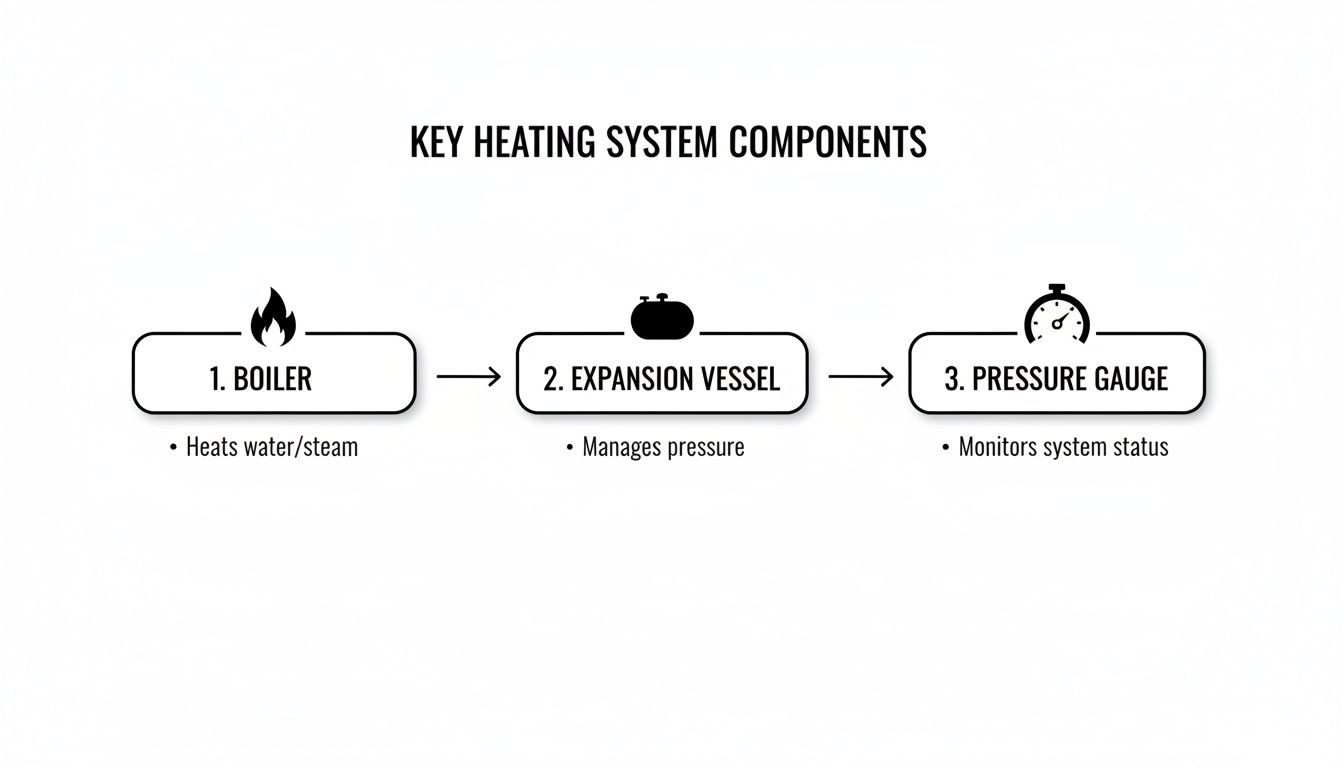
As you can see, the boiler, expansion vessel, and pressure gauge all work together to create a compact, modern heating circuit that doesn't need any external tanks taking up space.
A Direct Comparison
To make the choice crystal clear, let's put the two systems head-to-head. Seeing the pros and cons side-by-side helps explain why sealed systems have become the go-to standard for most new installations and upgrades.
Sealed vs Open Vented Heating Systems At a Glance
The table below breaks down the crucial differences between sealed and open vented systems, comparing everything from space requirements to overall efficiency.
Feature | Sealed Heating System | Open Vented Heating System |
|---|---|---|
Space Required | Minimal. All components are usually contained within or near the boiler, freeing up loft space. | Significant. Requires large water tanks in the loft, taking up valuable storage or conversion space. |
Water Pressure | Stronger. Pressure comes directly from the mains, improving shower and tap performance. | Weaker. Relies on gravity, so pressure is often lower, especially in upstairs bathrooms. |
Efficiency | Higher. The sealed circuit is less prone to corrosion from air ingress, improving efficiency and lifespan. | Lower. The open tank can introduce oxygen into the water, leading to radiator sludge and reduced efficiency. |
Installation | Flexible. The boiler can be sited almost anywhere in the home, offering more installation options. | Restricted. The boiler must be located below the loft tanks, limiting its placement. |
This comparison highlights why sealed systems are overwhelmingly preferred in modern homes. They simply offer better performance and more flexibility.
The switch to a sealed system is often about more than just heating. It’s about gaining better showers, reclaiming an entire room in your loft, and reducing the long-term risk of leaks from old, corrosion-prone loft tanks.
While open-vented systems have certainly served homes well for decades, the sealed system offers superior performance, efficiency, and flexibility for modern living. To get into the nitty-gritty of how pressure works in these setups, feel free to explore our detailed guide on what is a pressurised heating system.
The Real-World Benefits for Your Home
So, what does all this technical talk actually mean for your day-to-day life? Moving to a sealed heating system brings some genuinely noticeable advantages you’ll feel in your home and see on your bills. It’s no surprise they’ve become the go-to for modern properties, from seafront apartments in Eastbourne to family homes dotted across the surrounding villages.
The biggest win is, without a doubt, improved energy efficiency. A sealed system is a completely closed loop. It heats up much faster and holds onto its warmth far better than an old open-vented system, which is constantly exposed to the cold air in your loft. This isn't just a small improvement; it translates directly into lower energy bills, month after month.
This financial saving becomes even more pronounced when you factor in modern boiler technology. Since condensing boilers became mandatory for all new installations back in 2005, pairing one with a sealed system is now the gold standard. For an average household, this powerful combination can slash annual heating costs by a hefty 15-20% compared to older, less efficient setups. You can discover more insights about the history of condensing boilers and their impact on UK homes.
For many of our clients at Harrlie Plumbing & Heating, the decision is simple. The long-term energy savings from a sealed system essentially pay for the upgrade over time, making it a wise financial investment for any property owner.
More Than Just Lower Bills
While saving money is a huge plus, the perks of a sealed system go well beyond your bank balance. They can fundamentally change the comfort and practicality of your home.
One of the most immediate changes is the sheer amount of space you get back. By getting rid of the bulky feed and expansion tanks from your loft, you suddenly unlock a significant area. This is a complete game-changer for homeowners in Eastbourne wanting to carve out a home office, squeeze in an extra bedroom, or simply reclaim some valuable storage space.
Quieter, Safer and More Reliable
A sealed system also brings a welcome dose of peace and quiet, both literally and in terms of your peace of mind.
Reduced Noise: Because the system is pressurised, it doesn't need water to be gravity-fed from a noisy, clanking tank that’s constantly refilling. The result is a heating system that operates with a much quieter hum.
Lower Risk of Leaks: Those old loft tanks can be a ticking time bomb. They're vulnerable to rust, frost damage in winter, and leaks that can cause devastating water damage to the ceilings below. Taking them out of the equation removes that risk entirely.
Improved System Health: The sealed circuit is a closed environment, which stops oxygen from getting into the pipework. This dramatically cuts down on the internal corrosion that creates sludge and rust, keeping your radiators heating evenly and extending the lifespan of your whole central heating system.
For homeowners, this all adds up to fewer worries and a heating experience you can actually rely on. It’s this transformation to a modern, efficient, and dependable home that we at Harrlie Plumbing and Heating proudly deliver across Eastbourne and the surrounding areas.
Troubleshooting Common Issues with Your System
Even the most dependable sealed heating system can run into the odd hiccup. But if you know what to look for, you can often spot the early warning signs, saving yourself a bit of stress and money. Many common faults give off clear clues long before they become a major headache.
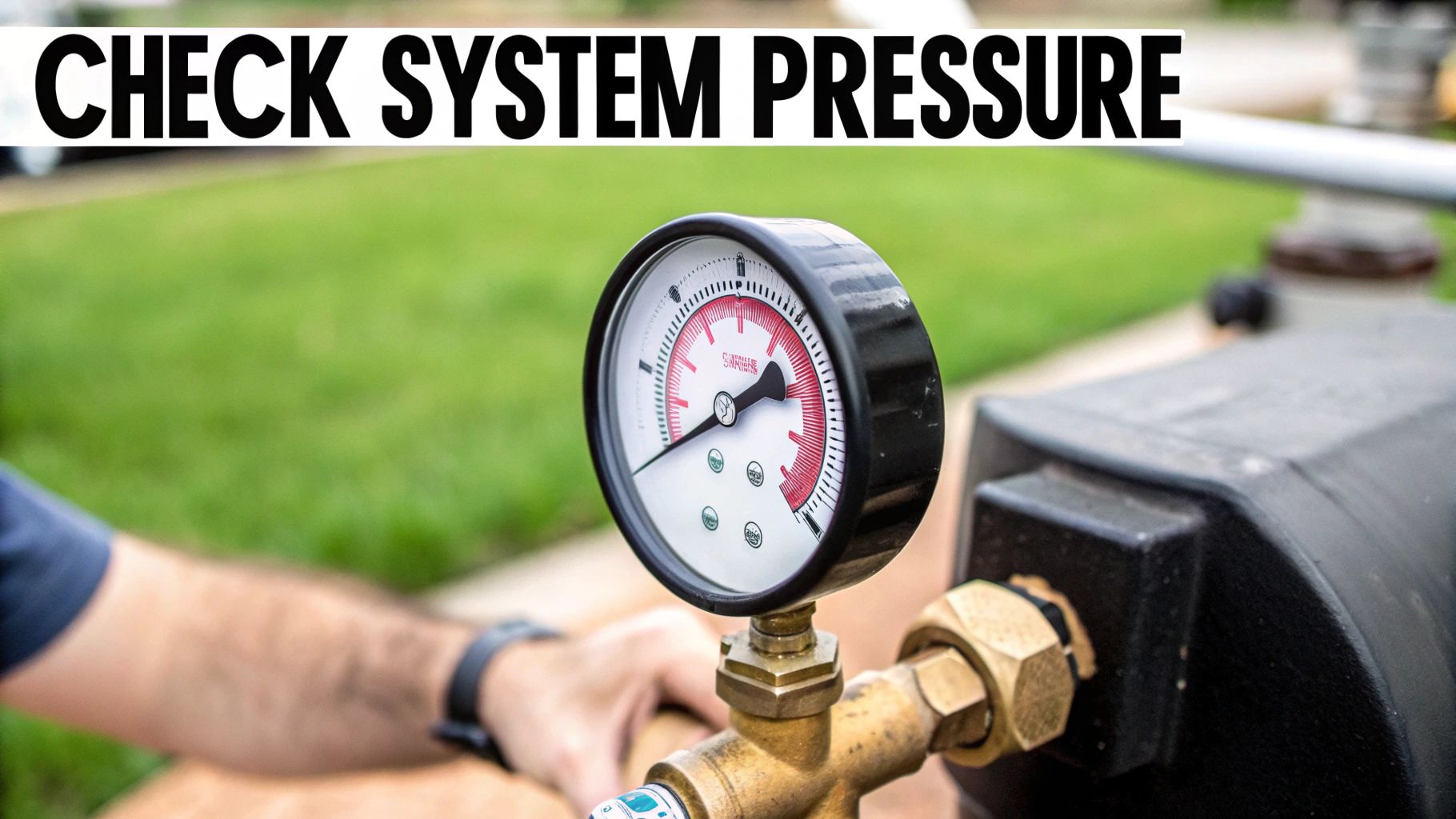
Without a doubt, the most frequent issue homeowners face is a drop in system pressure. If your boiler has suddenly stopped working or your radiators just aren't getting properly hot, low pressure is the first thing you should check.
Understanding Low System Pressure
Your first port of call is always the pressure gauge, which is usually on the front of your boiler. When the heating is off and the system is completely cold, the needle should be sitting somewhere between 1 and 1.5 bar. If it’s dropped down into the red zone—that's typically below 0.5 bar—the boiler’s built-in safety features will kick in and stop it from firing up. This is a clever design that prevents damage to the internal components.
It's fairly normal for the pressure to drop ever so slightly over many months, but if you notice a sudden drop or you're having to top it up regularly, it’s a sign that something isn't right.
The usual suspects include:
Air in the system: Trapped air in your radiators is a classic cause. As you bleed the air out, the overall system pressure will fall.
A hidden leak: Even a tiny, pinhole leak somewhere in the pipework can lead to a slow and steady pressure drop over weeks or months.
A faulty part: Components like the expansion vessel or the Pressure Relief Valve (PRV) can fail, causing the system to lose pressure.
If you find the pressure is constantly dropping, it’s always best to get a professional opinion. We dive much deeper into this in our guide on what causes a boiler to lose pressure.
Other Telltale Noises and Signs
Pressure isn’t the only thing to keep an eye on. Your system can give you other clues that it needs attention, and strange noises are often one of the most obvious indicators.
A loud banging, rumbling, or whistling sound coming from your boiler is a serious warning sign. This is often called 'kettling', and it's usually caused by a build-up of limescale or sludge on the boiler's heat exchanger. This build-up restricts the flow of water, causing it to boil and turn to steam far too aggressively. This is something we often see in the hard water areas of Eastbourne and East Sussex.
If you hear kettling, you need to turn the heating system off straight away and call a Gas Safe registered engineer. Ignoring it can cause serious, and very expensive, damage to your boiler.
If you've already tried the basic fixes like bleeding your radiators and topping up the pressure with the filling loop but the problem is still there, it's time to call in the experts. For homeowners in Eastbourne, a constantly dropping pressure gauge or strange noises from the boiler are clear signals to get in touch with Harrlie Plumbing and Heating. Our engineers can get to the root of the problem and make sure your sealed heating system is running safely and efficiently again.
Still Got Questions? Your Sealed System FAQs Answered
Making the switch to a new heating system is a big decision, and it’s natural to have a few questions. To help you get a clearer picture, we’ve put together answers to some of the most common queries we hear from homeowners in and around Eastbourne.
Let's dive into the practical side of things, from maintenance and costs to how these systems perform in older homes.
Key Questions Answered
How Often Does a Sealed Heating System Need Servicing?Just like any modern boiler, a sealed heating system needs an annual service from a Gas Safe registered engineer. This isn't just a recommendation; it's essential for keeping your system safe, running efficiently, and making sure your manufacturer's warranty stays valid.
During a service, one of our engineers at Harrlie Plumbing and Heating will check the system pressure, test the expansion vessel, and make sure every safety component is working exactly as it should. Think of it as an MOT for your heating – it’s the best way to catch small issues before they become big, expensive headaches.
Is Installing a Sealed System an Expensive Project?The cost really depends on what you're starting with. If you're swapping out an old combi boiler for a new one, it's a relatively straightforward and affordable job. The bigger project is converting from an old open-vented system, as that involves removing the tanks from the loft and adapting the pipework.
While the upfront cost for a conversion is higher, the long-term energy savings and boost to your property's value often make it a very smart investment. The best approach is always to get a detailed, no-obligation quote from a local Eastbourne specialist like Harrlie Plumbing and Heating to see exactly what the costs would be for your home.
Investing in a sealed system isn't just a heating upgrade; it's a home improvement that pays you back over time through lower bills and increased property value.
Can I Install a Sealed System in an Older House?Absolutely. We often retrofit sealed systems into older properties, and it's a fantastic upgrade. Before starting, a qualified engineer will need to assess your existing radiators and pipework to make sure they can handle the pressure of a modern system. In most cases, they're perfectly fine.
This is a brilliant way to bring modern heating efficiency to a beautiful period property in areas like Meads or Old Town in Eastbourne, all while freeing up that valuable loft space for storage or even a conversion.
Ready to modernise your home's heating with a reliable, efficient sealed system? The expert team at Harrlie Plumbing and Heating is here to help. For a free, no-obligation quote and professional advice tailored to your Eastbourne property, visit us at https://www.harrlieplumbing.co.uk.

Comments