What Is a Pressure Relief Valve and Why Does It Matter?

A pressure relief valve, often just called a PRV, is one of those small, unassuming parts of your heating system that you probably never think about. But it’s a critical safety device, designed to automatically release excess pressure from your boiler or hot water system before it becomes a serious problem.
Think of it like the little valve on a pressure cooker or the whistle on a kettle. It’s a simple, mechanical guardian that prevents a dangerous build-up of pressure, protecting your home from burst pipes and catastrophic system failures.
Your Home’s Silent Safety Guardian
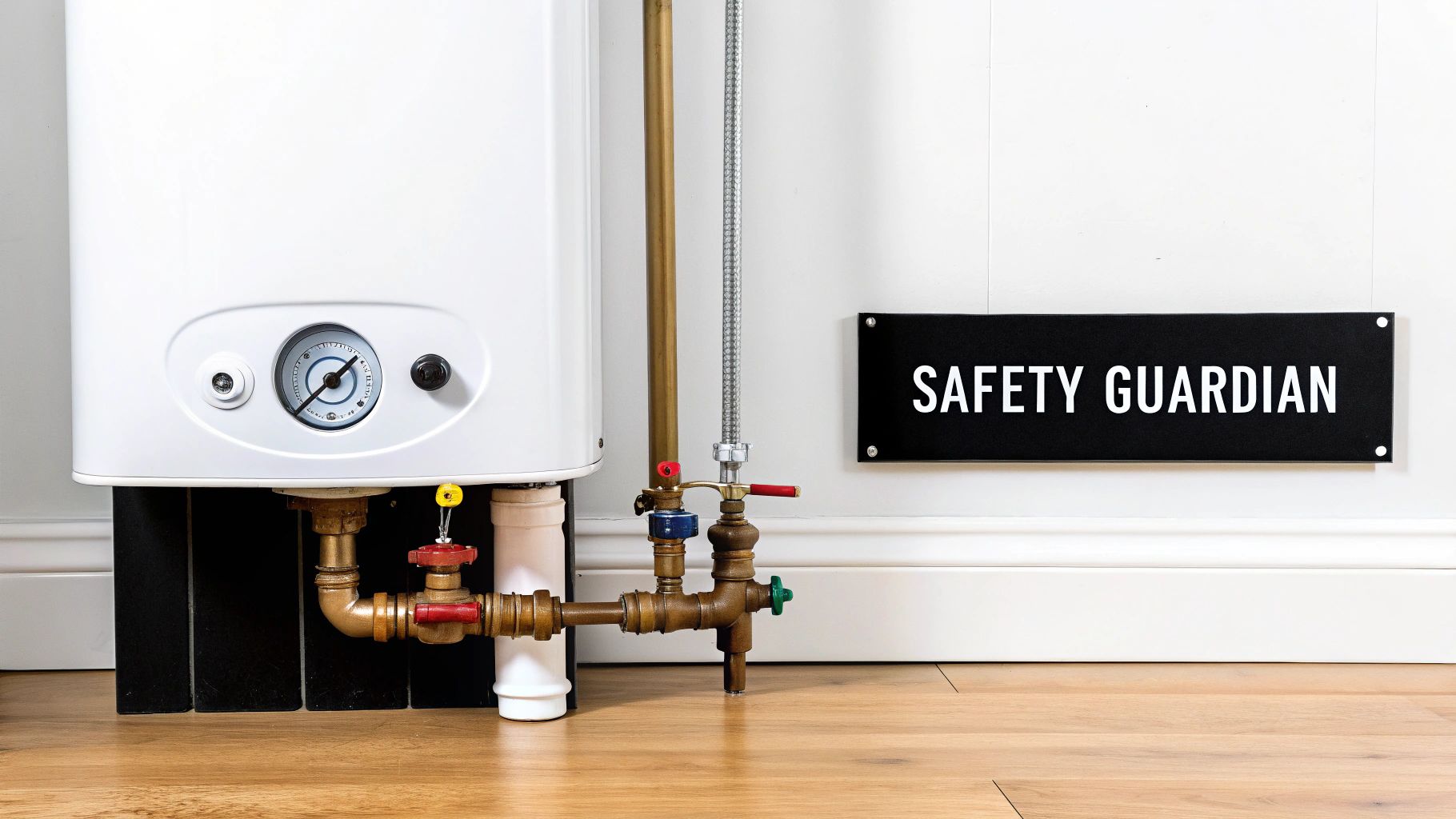
At its heart, what a pressure relief valve does is quite straightforward. It constantly monitors the pressure inside a sealed system, like your central heating boiler or an unvented hot water cylinder. This simple device is your home's frontline defence against the very real dangers of over-pressurisation.
Here at Harrlie Plumbing and Heating, we see them as the unsung heroes of a safe home. For homeowners in Eastbourne, where hard water can sometimes put extra strain on heating components, having a fully functional PRV isn’t just a good idea—it’s non-negotiable.
To help you understand its role at a glance, here’s a quick summary.
Pressure Relief Valve at a Glance
Component | Primary Function | Common UK Locations | Risk Without It |
|---|---|---|---|
Pressure Relief Valve (PRV) | To automatically and safely vent excess pressure from a sealed system. | On a boiler (often near the bottom), or on the top of an unvented hot water cylinder. | Damaged components, burst pipes, water damage, or even a system rupture. |
This little valve is a fundamental part of keeping your system operating within its safe design limits.
Why Is Excess Pressure a Problem?
It all comes down to basic physics. When you heat water, it expands. In a sealed system like a modern boiler, there’s nowhere for that expanding water to go, so the internal pressure starts to climb. Without a way to manage this, the pressure could build to a dangerous level, leading to several serious risks:
Damaged Components: The immense force can crack or even rupture expensive parts like the boiler's heat exchanger or the hot water cylinder itself.
Burst Pipes: Weak points in your pipework can give way, causing significant water damage to your property.
Catastrophic Failure: In the most extreme (though rare) cases, an unvented hot water cylinder could rupture with explosive force.
The PRV acts as a simple but effective failsafe. It’s engineered to open at a pre-set pressure limit, venting water safely outside through a discharge pipe. This isn’t the only type of pressure safety device you might find; for other systems, it's worth knowing about LPG cylinder regulators and Over Pressure Shut Off (OPSO) devices as well.
A functioning PRV isn't just another component; it's a fundamental safety requirement. It provides peace of mind by ensuring your heating system operates within its safe design limits, protecting both your property and your family.
Understanding How Your Pressure Relief Valve Works
At its heart, the mechanism inside a pressure relief valve is beautifully simple yet incredibly reliable. It’s a purely mechanical device, meaning it doesn't rely on electricity or fancy sensors, which is exactly what makes it such a robust guardian for your home's heating system.
Inside the valve, a precisely calibrated spring holds a piston or a seal firmly shut. This spring is specifically engineered to handle the normal day-to-day operating pressure of your boiler or hot water cylinder, keeping everything tightly sealed and running as it should.
But when the pressure inside the system starts to climb and goes beyond a specific, preset safety limit—often 3 bar for a domestic boiler—it creates enough force to overcome the spring's resistance. This excess pressure shoves the seal open, creating a temporary escape route.
The Automatic Release and Reset Cycle
This action allows a controlled burst of water to be discharged safely outside your property through a small copper pipe, usually found pointing downwards on an external wall. You’ve probably seen one on your own Eastbourne home without realising what it was. This release immediately brings the system pressure back down to a safe level.
Once the pressure drops, the spring’s tension is strong enough again to overpower the water pressure. It snaps the seal shut automatically, re-securing the system and stopping the water from escaping. This whole cycle happens in a matter of seconds, often without you even noticing it.
Imagine your boiler over-pressurising on a cold Eastbourne morning. That sudden dripping you might hear from the pipe outside isn't a fault—it's the valve doing its job perfectly, preventing a much bigger problem.
This automatic function is what makes the pressure relief valve such a critical failsafe. It’s designed to work all on its own to protect your system from dangerous conditions.
What This Means for Your Pressurised System
This entire process is fundamental to the safety of modern heating setups. Most homes these days have sealed, pressurised systems where water pressure has to be carefully managed. If you're interested, you can learn more about what a pressurised heating system is in our clear guide.
While a PRV activating is a sign it's working properly, if it starts happening frequently, it often points to an underlying issue. This could be a problem with the expansion vessel or another component causing the pressure to spike too often. In these situations, the valve is doing its job, but it's also sending a clear signal that your system needs a professional health check from a Harrlie Plumbing and Heating engineer to find the real root cause.
Comparing The Different Types of Relief Valves In UK Homes
Not all safety valves are created equal, even if they look similar. While they all share the fundamental goal of preventing dangerous over-pressurisation in your heating and plumbing, the specific type installed depends entirely on the appliance it’s protecting. In UK homes, you'll generally come across two main kinds.
Knowing the difference is key to understanding the protection your system has. For most gas boilers, a standard Pressure Relief Valve (PRV) does the job. Its purpose is simple and focused: it reacts only to water pressure. If the pressure inside your boiler creeps above its safe operating limit (usually around 3 bar), the valve snaps open to bleed off the excess.
However, unvented hot water cylinders, which are increasingly common in homes across Eastbourne and Bexhill, need something a bit more sophisticated.
The Critical Role of Temperature and Pressure Valves
A standard PRV just isn't enough for an unvented hot water cylinder. These systems store huge volumes of hot water under mains pressure, which introduces a different kind of risk. If a thermostat fails and the water keeps heating, it could get close to boiling point while still trapped in the sealed cylinder. That creates the potential for a catastrophic failure.
To prevent this, unvented cylinders are fitted with a Temperature & Pressure (T&P) Relief Valve. This clever device has two distinct triggers:
It opens if the pressure surges past the safety limit (often set higher, around 6-7 bar).
It also opens if the water temperature climbs to a dangerously high level (typically 90-95°C).
This dual-action feature is a non-negotiable safety measure. Think of a family home in the Old Town area of Eastbourne with an unvented cylinder – that T&P valve is providing essential protection against both pressure spikes and a faulty thermostat, something a standard PRV simply can't do.
To help you see the difference at a glance, here’s a quick comparison of the valves you'll find in most residential settings.
Comparing Common Residential Relief Valves
Valve Type | Primary Trigger | Commonly Found On | Purpose |
|---|---|---|---|
Pressure Relief Valve (PRV) | Water Pressure | Combi Boilers, System Boilers | To release excess pressure from the heating circuit. |
Temperature & Pressure (T&P) Valve | Water Pressure & Temperature | Unvented Hot Water Cylinders | To prevent dangerous pressure and temperature build-up. |
As you can see, while they both relieve pressure, the T&P valve offers that crucial second layer of protection against overheating, which is vital for stored hot water systems.
When we at Harrlie Plumbing and Heating service an unvented hot water cylinder, checking the T&P valve is our top priority. It's the single most important safety component on that appliance, and making sure it works perfectly is absolutely essential for your home’s safety.
This simple diagram shows the basic function of how any relief valve responds when things go wrong.
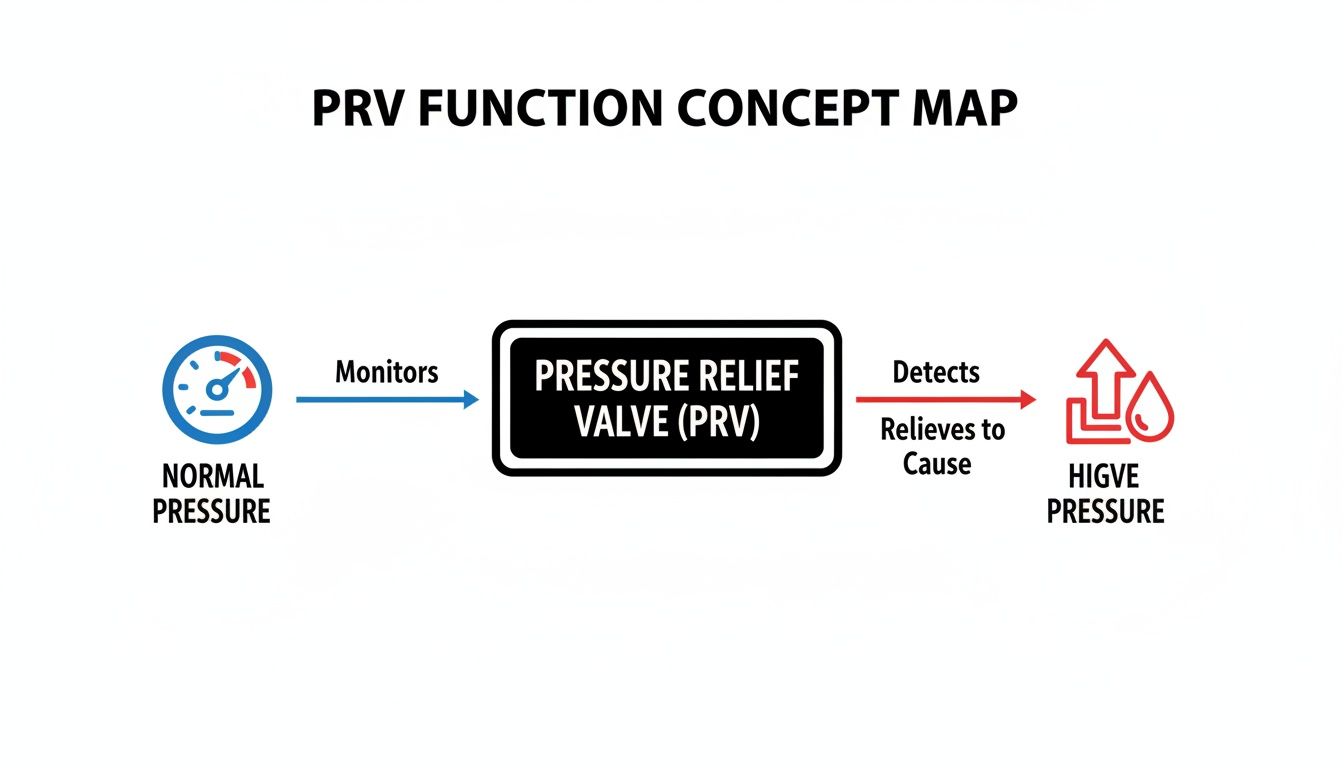
The visual flow makes it clear: when high pressure is detected, the valve opens to bring the system back to normal. For a T&P valve, an extra trigger—dangerously high temperature—would set off the exact same safety release, giving you that vital second line of defence.
Recognizing the Warning Signs of a Failing Valve
A faulty pressure relief valve can be a quiet threat lurking in your utility cupboard. While these devices are built for reliability, they don't last forever, and knowing the warning signs of failure is absolutely crucial for your home's safety. Spotting a problem early can prevent costly damage and keep your system running as it should.
The most obvious red flag is a constant, steady drip from the external discharge pipe. It's normal for the valve to release a bit of water now and then—that’s just it doing its job. But a persistent leak often means the internal spring or seal has weakened and can no longer hold back the pressure. That’s your cue to call in a professional.

Common Symptoms to Look Out For
Beyond that constant drip, there are a few other visual clues that your pressure relief valve is on its way out. It’s a good habit to give the valve a quick look over every so often, especially if your boiler has a few years on it.
Visible Corrosion: Keep an eye out for obvious rust or a crusty, greenish-white buildup around the valve body. This is a major warning sign.
Heavy Mineral Deposits: In hard water areas like Eastbourne, limescale can build up inside the valve, causing its components to seize up. This can stop it from opening or closing properly.
Water Weeping from the Valve: If you see moisture or drips coming directly from the valve body itself (not the discharge pipe), it points to a cracked housing or a failing internal seal.
Imagine a landlord in an Eastbourne apartment who spots a persistent damp patch on the wall near their boiler. This could easily be traced back to a PRV that's slowly weeping. Ignoring these symptoms can lead to wasted water, property damage, or worse, a dangerously over-pressurised system. Sometimes, a dripping PRV is actually a symptom of another problem causing your boiler to lose pressure; you can explore what causes a boiler to lose pressure in our homeowner guide.
A failing pressure relief valve isn't just an inconvenience—it's a critical safety failure. A valve that cannot open under pressure is a serious hazard, while one that cannot close properly wastes water and energy, increasing your utility bills.
The Importance of Professional Inspection
For rental properties, the stakes are even higher, as regular safety checks are a legal requirement, not just good practice. Here in coastal towns like Eastbourne, the salty air can lead to 25% higher corrosion rates, making robust components like stainless-steel valves a must for long-term durability—something we at Harrlie Plumbing and Heating often recommend.
With proper maintenance, a valve's lifespan can be extended from just 5 years to over 15 years, which significantly cuts down on replacement costs over time. If you spot any of these warning signs, the only safe thing to do is call a certified Gas Safe engineer. A professional from Harrlie Plumbing and Heating can quickly diagnose the issue and determine if the valve needs a simple clean or a full replacement, ensuring your home in Eastbourne remains safe and sound.
How to Safely Test Your Valve and When to Call an Expert
A bit of proactive maintenance can stop a small niggle from turning into a major headache, giving you valuable peace of mind. For homeowners, there's a simple check you can perform on your pressure relief valve to make sure it hasn’t seized up over time. It just involves carefully and briefly lifting the test lever or twisting the cap on the valve.
When you do this, you should see a healthy gush of hot water coming out of the external discharge pipe. Just as important, though, is that the flow stops cleanly and immediately the moment you let go. This quick test confirms the valve's mechanism isn't stuck solid.
However, a word of caution is crucial here. If your valve looks old, is showing signs of heavy corrosion, or has a serious buildup of limescale—a common issue for homes in Eastbourne—it’s best to leave it well alone. Forcing a fragile or seized valve can actually cause it to start leaking permanently, and you’ll have created a whole new problem for yourself.
The Limits of DIY and the Need for Professional Checks
While this quick test can be reassuring, it is absolutely no substitute for a professional service. A simple lever test doesn't confirm the valve is opening at the correct pressure, which is its single most critical safety function. This is why getting the professionals in is so important for the safety of your Eastbourne home.
A DIY test only checks if the valve can move freely. It doesn't verify the calibration or internal condition. Only a certified engineer can properly assess its operational safety and reliability.
During an annual boiler service, one of the crucial steps our Gas Safe engineers at Harrlie Plumbing and Heating take is a comprehensive check of all safety devices, including the pressure relief valve. We make sure it operates precisely within UK safety standards. If you want to understand the full scope of what's involved, check out our guide on how to service a boiler for Eastbourne homeowners.
When to Call Harrlie Plumbing and Heating
Knowing when to pick up the phone is key. You should contact a professional immediately if:
Your test reveals the valve continues to leak or drip after being operated.
You are unsure or uncomfortable performing the test yourself.
The valve appears heavily corroded or looks like it hasn't been touched in years.
The UK pressure relief valve market is growing steadily, partly because safety regulations are becoming more stringent. For instance, unvented cylinders, common in Bexhill properties, now require valves that can handle 6-10 bar to prevent bursts, which affect 8% of older UK properties each year. British manufacturers are also focusing on corrosion-resistant designs—vital for coastal Eastbourne where salt air can accelerate wear by as much as 20%. You can learn more about these market trends and safety standards.
If you have any doubts at all, don't hesitate. At Harrlie Plumbing and Heating, our rapid one-hour emergency response in the Eastbourne area is here to help, ensuring any potential issue is resolved safely and swiftly.
Navigating UK Safety Regulations for Pressure Systems
When it comes to your pressure relief valve, getting a certified professional involved isn't just a good idea—in the UK, it's often the law. These small but mighty devices are governed by strict regulations designed to keep homeowners safe from the very real dangers of system failure.
For homes with unvented hot water cylinders, which are a common sight in modern Eastbourne properties, the Pressure Systems Safety Regulations 2000 (PSSR) are especially critical. This legislation is clear: any pressurised system must be installed correctly, maintained properly, and checked periodically by a 'competent person'. It’s a role our Gas Safe registered engineers at Harrlie Plumbing and Heating are fully qualified to handle, making sure your system is both safe and compliant.
Your Assurance of Quality and Safety
When a new valve is installed, always look for the UKCA mark (or the older CE mark). Think of this as a seal of approval. It’s your guarantee that the part has been manufactured to meet the UK’s demanding safety and quality standards, giving you vital peace of mind.
There’s a crucial reason this legal framework exists. In the UK, pressure relief valves are classed as critical safety devices under the PSSR, specifically to prevent catastrophic failures. Any system running at a pressure above 0.5 bar must have safety features like a relief valve installed and regularly examined. A faulty valve on an unvented hot water cylinder could lead to a dangerous explosion, but proper, PSSR-compliant installation has helped reduce these incidents in homes by 40% over the last ten years. You can read more about the official safety regulations on the UK government website.
For landlords and homeowners across Eastbourne, professional installation isn't just about safety. It’s a legal necessity that ensures your property insurance remains valid and you are fully compliant with UK law.
Ultimately, these regulations highlight why professional oversight is completely non-negotiable. Trying a DIY replacement or simply ignoring maintenance can lead to serious legal and financial trouble. By entrusting this job to a certified expert from Harrlie Plumbing and Heating, you can rest easy knowing your system is safe, efficient, and fully compliant.
Your Local Experts for Pressure Relief Valve Services
If this guide has taught you anything, it's that your pressure relief valve is an absolutely vital piece of safety equipment. It’s not something you can afford to ignore. Keeping an eye on it is crucial, and the moment you spot a sign of trouble, it’s time to call in a professional.
For homeowners and landlords across Eastbourne, Hastings, and Bexhill, finding a reliable expert can sometimes feel like a tough ask. It's often helpful to understand how HVAC contractors find work, as this can give you a better idea of who the trusted, in-demand local specialists are.
Your Trusted Eastbourne Solution
At Harrlie Plumbing and Heating, we’ve built our name on being the go-to team for plumbing and heating issues right here in our community. Our reputation is everything to us, founded on solid work, honest pricing, and a genuine commitment to keeping local homes safe.
We know that a sudden plumbing or heating problem is the last thing you need. That's why our Gas Safe certified engineers are on hand seven days a week, ready to get things sorted quickly and professionally.
A dripping valve or a worrying pressure gauge isn't just a small annoyance. Think of it as your heating system sending up a flare, signalling that it needs expert attention. Acting fast stops a minor hiccup from turning into a costly, and potentially dangerous, disaster.
Our promise to you is straightforward:
Rapid Response: We offer a one-hour emergency response across the Eastbourne area.
Transparent Pricing: You’ll get a clear, upfront quote with our Best Price Guarantee. No surprises.
Certified Expertise: For your complete peace of mind, all our engineers are fully qualified and Gas Safe registered.
Don't let a small drip escalate into a major headache that puts your property at risk. A faulty pressure relief valve is a gamble you just can't afford to take.
Ensure your home is safe and your heating system runs as it should. Contact Harrlie Plumbing and Heating today to book an annual boiler service or to get a free, no-obligation quote for a valve inspection or replacement. You can find us at https://www.harrlieplumbing.co.uk.

Comments