What is a radiator valve? A Simple Guide to Types, Problems and Savings
- Luke Yeates
- Jan 1
- 11 min read

Ever wondered what that little dial on the side of your radiator actually does? You’re not alone. That small, often overlooked component is a radiator valve, and it's essentially the control knob for each radiator in your home. Think of it as a tap for your heating, letting you manage how much hot water flows in and, consequently, how warm the room gets.
Your Radiator Valve Explained Simply
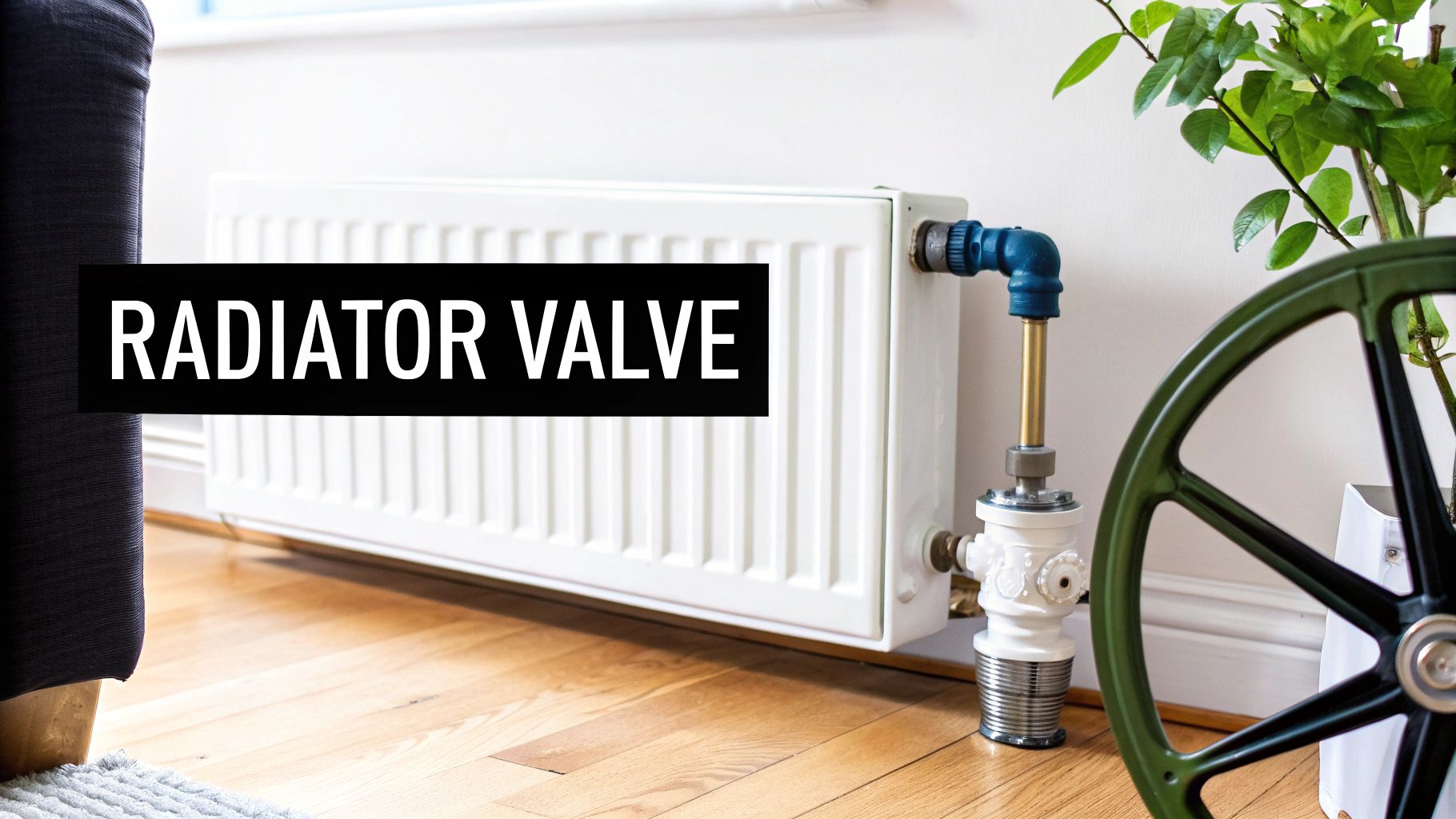
A radiator valve is a small but mighty piece of kit in your home’s heating system. It’s the gatekeeper, controlling the flow of hot water from your boiler into your radiator to regulate the room's temperature. With central heating being a standard feature in over 80% of UK households, these valves are absolutely essential for balancing comfort with efficiency.
This guide will walk you through everything you need to know, from the different types you’ll encounter to some simple troubleshooting tips. Here at Harrlie Plumbing and Heating, we’ve seen it all in homes across Eastbourne. We know firsthand how a little bit of knowledge about these valves can lead to some surprisingly big savings on your energy bills.
To give you a quick overview, here's a simple breakdown of what these valves are responsible for in your heating system.
Radiator Valve Key Functions at a Glance
Function | Description | Benefit for Your Home |
|---|---|---|
Temperature Control | Adjusts the flow of hot water into a single radiator. | Lets you set different temperatures in each room, so you're not wasting heat in unused spaces like the spare bedroom. |
System Balancing | Works with the second valve (the lockshield) to ensure even heat distribution across all radiators. | Prevents some radiators from being scorching hot while others (usually the ones furthest from the boiler) are lukewarm. |
Isolation | Allows a single radiator to be turned off and drained without shutting down the entire heating system. | Incredibly useful for decorating a room in your Eastbourne home, or for repairs or replacing a radiator without a massive plumbing job. |
Essentially, these valves put the control right where you need it, helping your system run smoothly and efficiently.
The Core Purpose of a Radiator Valve
At its heart, a radiator valve gives you granular control over individual radiators. Instead of heating your entire house to one single temperature set by the main thermostat, you can customise the heat room by room. This is a game-changer in the UK’s varied housing stock, from old Victorian terraces in Old Town, Eastbourne, to modern flats down by the marina.
Here’s what that means in practice:
Zoned Temperature Control: You can set different temperatures for each room. Turn the radiator down in the spare room you never use, but keep the living room nice and toasty. It's a simple way to stop paying to heat empty spaces.
System Balancing: One of the two valves on your radiator is called a lockshield valve. This is the one our engineers at Harrlie Plumbing and Heating adjust to 'balance' the whole system. It ensures that radiators far away from the boiler get just as much hot water as the ones right next to it.
Getting to grips with how these small parts work is the first step towards properly managing the different central heating system types for Eastbourne homes.
Decoding The Different Types Of Radiator Valves
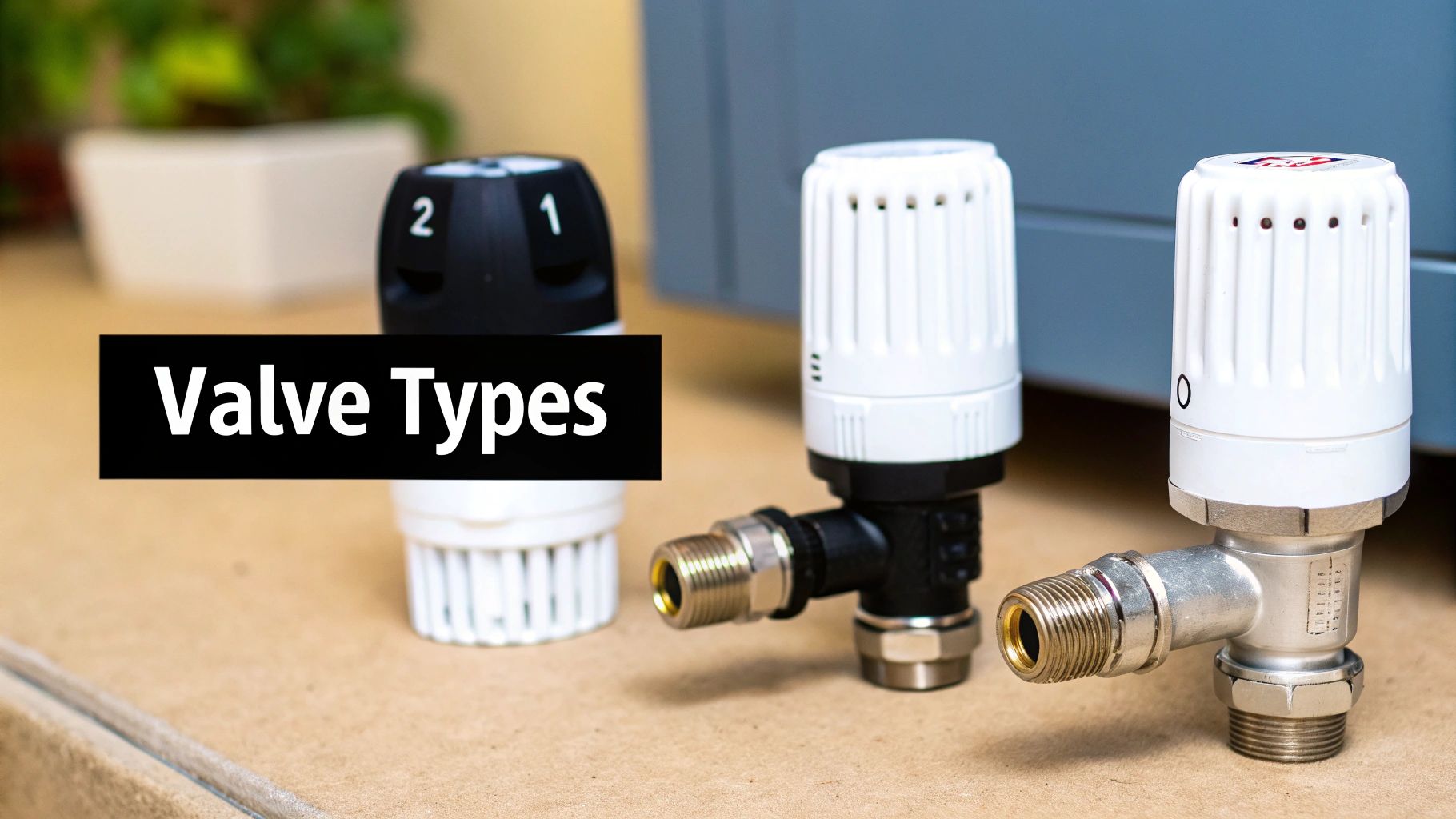
Not all radiator valves are created equal. If you take a walk through your home, you’ll probably notice the valves on different radiators look and behave differently. Getting to grips with these variations is the key to mastering your home’s comfort levels and keeping your energy use in check.
Every radiator actually has two valves. One is the control valve, which is the one you adjust. The other is the lockshield valve, a 'set and forget' component that our engineers at Harrlie Plumbing and Heating use to balance the entire system. By tweaking how much water leaves the radiator, the lockshield ensures every room heats up evenly, stopping the radiators closest to the boiler from hogging all the heat.
Manual Valves: The Simple On Or Off
The most basic type you'll come across is the manual radiator valve. It works just like a tap for a sink—you turn it on to let hot water flow in or turn it completely off to stop it. There are no clever in-between settings that react to the room’s temperature.
Manual valves are simple, dependable, and often found in older properties across Eastbourne, or in rooms where pinpoint temperature control isn't a huge deal, like hallways. Their biggest drawback is inefficiency. If you forget to turn them down, they'll just keep pumping out heat, which isn't great for your energy bills.
Thermostatic Radiator Valves: The Smart Adjuster
A huge step up from manual valves is the Thermostatic Radiator Valve, or TRV as it's commonly known. This is the clever one. A TRV has a built-in sensor, usually containing wax or liquid, that expands or contracts based on how warm the room is.
Think about a sunny, south-facing living room in an Eastbourne home. As the sun streams in and warms up the space, a TRV automatically senses the temperature rise. It then reduces the hot water flowing into the radiator to stop the room from getting stuffy. This self-regulating action keeps the temperature consistent and can save you a surprising amount on your heating bills. Our team at Harrlie Plumbing and Heating often recommend TRVs as a first step to improving energy efficiency.
This smart function makes TRVs perfect for living rooms and bedrooms, where maintaining a steady, comfortable temperature is a top priority.
Identifying Your Valve Shape
Beyond how they work, valves also come in different shapes to match your pipework. Getting this right is crucial for a tidy and effective installation—it’s a common question we at Harrlie Plumbing and Heating help Eastbourne homeowners with every day.
Angled Valves: These are the most common you’ll see in the UK, creating a 90-degree bend. They’re used when your central heating pipes come out of the wall or up from the floor to meet the radiator inlet.
Straight Valves: Just as the name suggests, these are used when pipes run straight along the wall or floor into the radiator, with no bend needed.
Corner Valves: A stylish and practical choice for tight spots. The valve head faces inwards, parallel to the wall, so it doesn't stick out and get knocked.
Knowing the difference between these types is the first step in understanding what a radiator valve is and how to get the most from your central heating system.
Why TRVs Are A Smart Upgrade For Your Home
If you're still using old-school manual valves, swapping them out for modern Thermostatic Radiator Valves (TRVs) is one of the smartest, most cost-effective moves you can make. It’s about moving beyond a simple on/off switch to intelligent, room-by-room temperature control that genuinely lowers your energy bills and makes your home far more comfortable.
The real magic of TRVs is how they create 'zoned heating' without needing a complicated and expensive system overhaul. You can finally set different temperatures across your home—keeping the living room cosy while a spare bedroom stays just ticking over. It’s a simple change that stops you from pouring money into heating empty spaces.
Real Savings And Improved Comfort
The difference TRVs make is something you'll notice almost immediately, both in comfort and on your bills. In fact, UK energy data suggests that a typical household can slash heating costs by up to 20% just by installing and using these valves properly. They work by preventing rooms from overheating, automatically adjusting to changes in temperature – like when the sun streams through a south-facing window in an Eastbourne home on the coast.
For small businesses or landlords in Eastbourne, this level of efficiency is a game-changer. Our own data at Harrlie Plumbing and Heating shows that faulty valves can be behind as many as 25% of heating callouts. Upgrading to TRVs can deliver 20% energy savings without the hassle of ripping out the entire system. Just recently, our team fitted wireless TRVs across a landlord's five-property portfolio in the Meads area of Eastbourne, linking them to Hive for app control. The result? A collective 18% drop in their energy bills.
By automatically reducing heat when a room is warm enough, a TRV acts as a silent energy saver. It stops your boiler from working harder than it needs to, directly reducing fuel consumption and extending the life of your heating system.
Taking Control With Smart TRVs
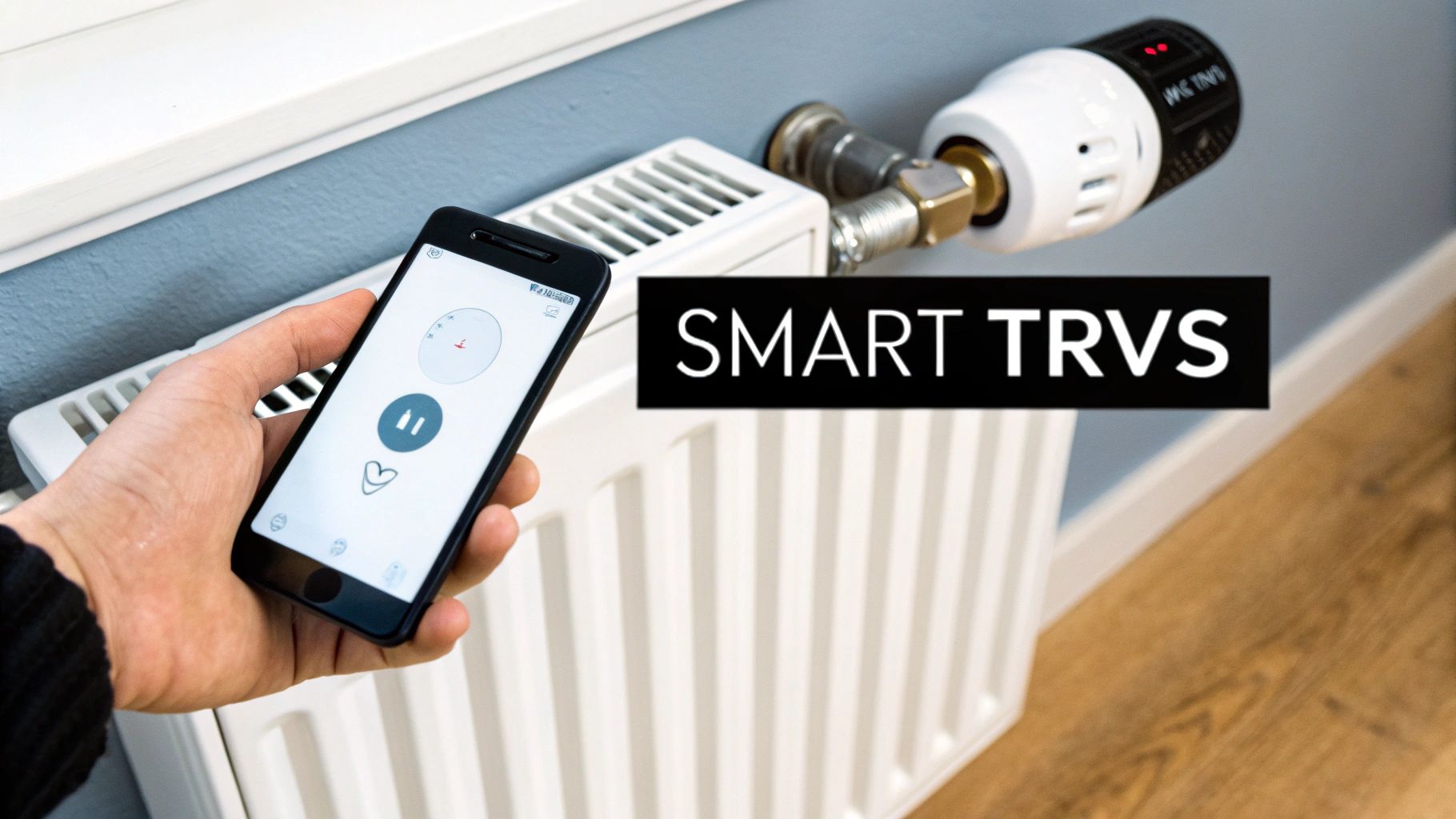
Want to take things a step further? Smart TRVs are the next evolution. These clever devices connect to your home Wi-Fi, giving you complete control over every single radiator right from a smartphone app. You can set up detailed heating schedules for each room, tweak temperatures when you’re out and about, and even link them up with voice assistants like Alexa. Many models also have open-window detection, which automatically shuts off the radiator if it senses a sudden drop in temperature, preventing heat from escaping outside.
Smart TRVs offer the ultimate in convenience and energy management, turning a standard heating system into a responsive, highly efficient one. While TRVs are a fantastic way to manage heating, looking at wider general energy efficiency tips can help you reduce even more of your household expenses. If you're ready to make the switch, have a look at our guide on how to install thermostatic radiator valves.
Spotting Common Radiator Valve Problems
When one of your radiators starts playing up, the valve is often the first place to look. Learning to spot the tell-tale signs of a fault is the first step. It helps you get to grips with what’s going on in your heating system, so you know whether you can try a simple fix yourself or if it’s time to call in the professionals at Harrlie Plumbing and Heating.
Is one radiator stubbornly cold while the rest of the house is toasty warm? Have you noticed a small but persistent puddle forming on the floor right under the valve? These are classic symptoms that point directly to a problem with the valve itself. Strange hissing, banging, or gurgling sounds are also big clues that something is amiss, often caused by trapped air or water not flowing as it should.
Common Issues And Their Causes
Many valve problems have pretty straightforward causes, especially in the hard water areas we often see around Eastbourne. Figuring out the root of the issue is half the battle.
Here are a few of the most frequent scenarios our engineers at Harrlie Plumbing & Heating come across:
A Stuck or Seized Valve: You go to turn the valve head and find it’s completely solid—it just won't budge. This is usually down to a seized internal pin, which gets stuck with limescale build-up from Eastbourne's hard water, especially over the summer when the heating’s been off for months.
Persistent Leaks: That constant drip-drip-drip from the valve body or where it connects to the pipe is a sure sign of a perished internal seal (often called an O-ring). It might seem small, but ignoring it can lead to proper water damage over time.
Radiator Not Heating Properly: If a radiator stays cold even when the valve is wide open, the internal pin is probably stuck in the "closed" position. This physically stops hot water from getting into the radiator.
It's a story we hear all the time in Eastbourne homes: the radiator in the spare room was working perfectly last winter, but now it’s stone-cold. Nine times out of ten, the pin inside the TRV has simply seized up from sitting idle. This stops the valve from opening and effectively locks that radiator out of the heating circuit.
Recognising these signs shifts you from worrying about a broken heating system to confidently identifying a specific, manageable problem. While a leak always needs a professional eye, a stuck pin might just be something you can sort out yourself.
Right, you’ve figured out something’s not quite right with one of your radiator valves. The temptation to have a go yourself is strong, and sometimes, that’s exactly the right move. A stuck pin on a TRV, for instance, is a classic DIY fix that can save you a call-out fee with just a little gentle persuasion.
But it’s absolutely crucial to know when to put the tools down and pick up the phone. A sticky pin is one thing; a leaking valve is a completely different beast. Even a slow, steady drip can cause an astonishing amount of damage to your floors, ceilings, and woodwork over time – it’s a situation we at Harrlie Plumbing and Heating see all too often in homes around Eastbourne.
Knowing When You Need A Professional
Any sign of water weeping from the valve body itself or the nuts connecting it to the pipes is your cue to call in an expert. Don’t delay. Replacing a valve isn't a simple swap. It means draining down either the whole heating system or at least part of it, which can get very messy, very quickly if you don't know what you're doing. It’s a job best left to the certified engineers at Harrlie Plumbing and Heating.
To make things a bit clearer, here’s a quick decision tree to help you figure out what to do when your radiator starts playing up.
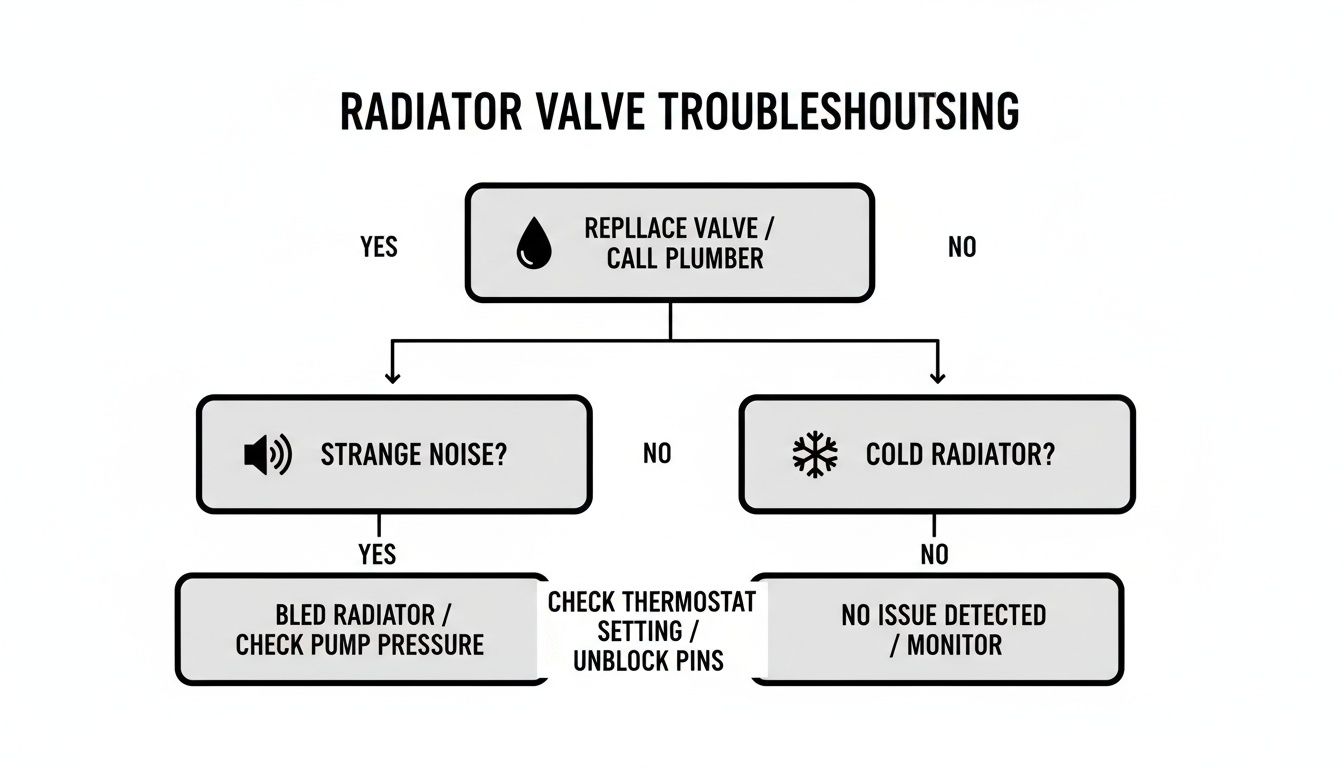
As you can see, a cold radiator might just need bleeding (a simple fix), but leaks and strange noises are often symptoms of a deeper problem that needs a professional eye. If the issue points to a wider system failure, you might even need professional boiler repair and replacement services to get things running properly again.
For any job involving draining the system, rebalancing, or replacing a valve, you really do need an expert. If you refill the system incorrectly, you can introduce airlocks, which will cause a whole new set of headaches.
Here at Harrlie Plumbing & Heating, our Gas Safe registered team has the experience and the right kit to sort these problems out properly. We can handle everything from swapping out a single faulty valve to rebalancing your entire system to make sure it’s running as safely and efficiently as possible.
If you just have a cold spot at the top of a radiator, it probably only needs bleeding. You can learn how to do that safely in our complete homeowner guide on how to bleed radiators. For anything more serious, just give us a call.
Radiator Valve FAQs Answered
To wrap things up, let's tackle a few of the most common questions our team at Harrlie Plumbing & Heating hears from homeowners across Eastbourne. We get these calls all the time, so you're not alone in wondering!
What Number Should My Thermostatic Radiator Valve Be Set To?
There’s no magic number here, as it all comes down to personal comfort. A TRV setting is designed to achieve a certain room temperature, not to control your boiler's overall output.
A great starting point for an average Eastbourne home is usually level 3, which typically corresponds to a comfortable 20°C. From there, you can nudge it up or down until the room feels just right for you. Just remember, cranking it up to 5 won't make the room heat up any faster—it just tells the valve to aim for a much warmer final temperature before it shuts off.
Can I Replace A Radiator Valve Myself?
While it might seem like a straightforward job for a seasoned DIYer, we at Harrlie Plumbing and Heating really advise against it. Replacing a valve properly involves draining down your entire central heating system, a task that can get messy and complicated very quickly if you haven't done it before.
A small mistake during installation can easily lead to serious leaks, causing lasting water damage to your floors and ceilings. It can also introduce stubborn airlocks into the system that are a real headache to remove. For a professional, leak-free finish that gives you peace of mind, it’s always best to call in an expert.
Why Is My Radiator Still Hot When The TRV Is Turned To Zero?
This is a classic symptom of a stuck internal pin, something we see a lot in Eastbourne due to the hard water. Inside the valve, there's a small pin that should push down to stop the flow of hot water when you turn the dial to zero. Over time, this pin can get stuck in the 'open' position, letting hot water through regardless of the setting.
In other cases, the valve head itself might be broken or wasn't fitted correctly in the first place. A heating engineer from Harrlie Plumbing and Heating can quickly figure out if the pin just needs to be freed up or if the whole valve needs replacing.
Whether you're dealing with a faulty valve or you're ready to upgrade your heating system for better control and efficiency, the certified team at Harrlie Plumbing and Heating is here to help. Get in touch today for expert advice and a free, no-obligation quote for our services across Eastbourne and the surrounding areas.

Comments