How to Choose Bathroom Tiles A Practical Guide

Choosing the right bathroom tiles is about finding that sweet spot where your personal style meets the practical demands of your household. It’s about more than just picking a pretty pattern; it's about matching materials like durable porcelain to the way you actually live. Getting this right means your choice won't just look beautiful on day one, but will stand up to daily life for years to come, whether you're in a busy family home in Langney or a quiet seaside flat in Eastbourne.
Matching Your Tiles to Your Bathroom Lifestyle
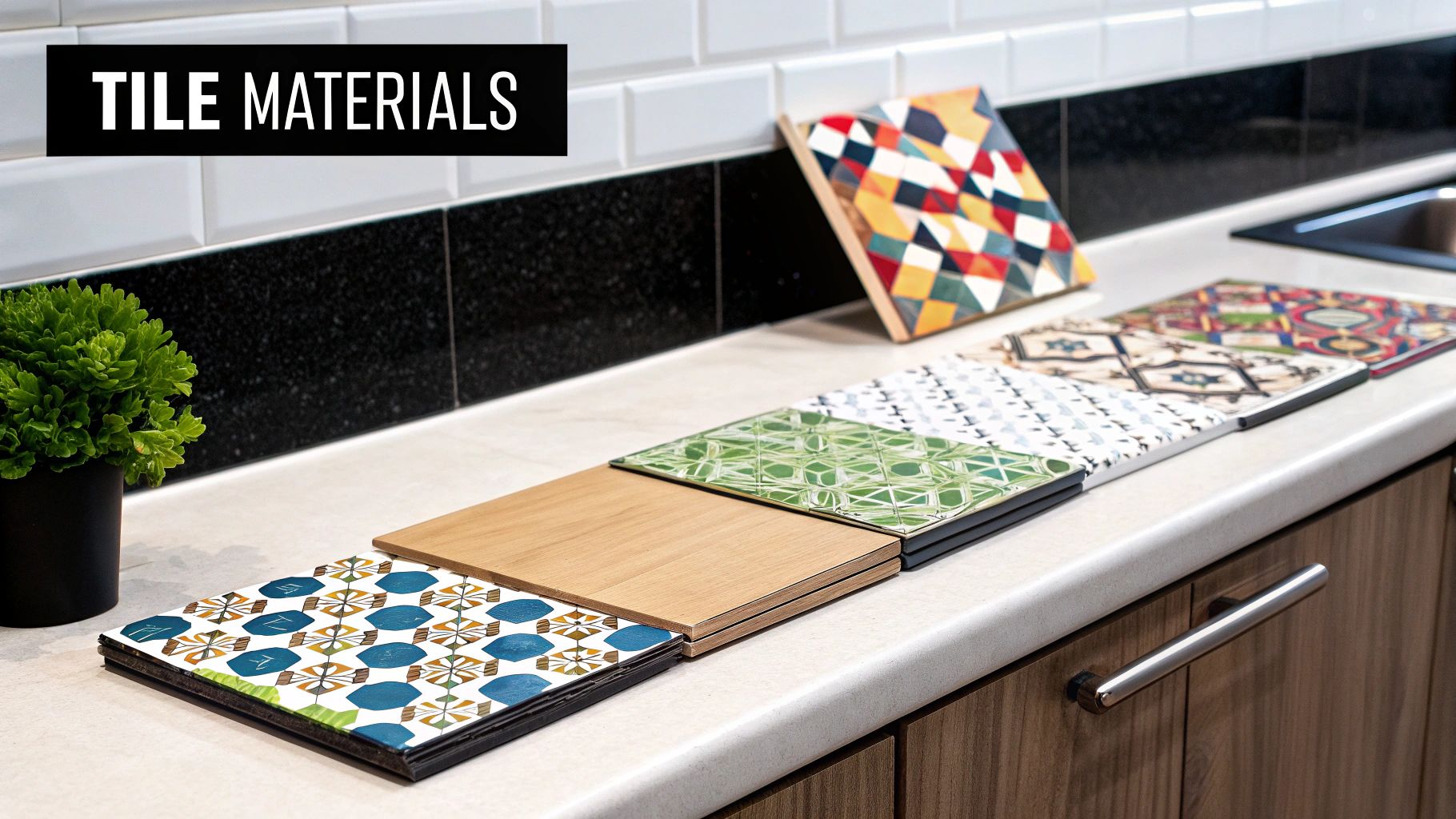
Before you fall in love with a particular design, take a moment to think about who uses the bathroom and how often. A high-traffic family bathroom has very different needs than a guest ensuite that’s only used occasionally. A busy Eastbourne home with children splashing about at bathtime, for instance, is going to need a floor tile that’s tough, waterproof, and slip-resistant. At Harrlie Plumbing and Heating, we've seen this scenario countless times in family homes from Hampden Park to Old Town.
This practical-first approach is reflected across the UK. The floor and wall tiles market is valued at around £537 million, and it's no surprise that ceramic and porcelain tiles dominate, making up about 78% of that share. Porcelain is a particularly popular choice for bathrooms, prized for its exceptional durability and low water absorption rate, making it perfect for wet environments.
Quick Guide to Bathroom Tile Materials
To help you get started, here's a quick rundown of the most common tile materials. Think of it as a cheat sheet to narrow down your options based on what matters most for your space.
Material Type | Best For | Key Benefit | Consideration |
|---|---|---|---|
Porcelain | High-traffic floors, wet rooms | Extremely durable, low water absorption | Can be harder to cut and install |
Ceramic | Walls, low-traffic floors | Wide variety of colours and styles, budget-friendly | Less durable than porcelain, more porous |
Natural Stone | Luxury ensuites, feature walls | Unique, high-end aesthetic | Requires regular sealing and maintenance |
Glass | Splashbacks, accent walls | Luminous, light-reflecting qualities | Can be slippery underfoot, chips can be sharp |
Vinyl | Budget renovations, family bathrooms | Warm underfoot, excellent slip resistance | Can be damaged by sharp objects |
This table should give you a solid starting point, but always dig a little deeper into the specific product you’re considering before making a final decision.
Aligning Tiles with Daily Use
Your daily routine really should be the main driver behind your tile selection. A bathroom that doubles as your personal home spa might be the perfect place for elegant (but higher-maintenance) natural stone. On the other hand, a downstairs loo that sees constant traffic, like those in many Eastbourne townhouses, needs something hard-wearing and incredibly easy to clean.
At Harrlie Plumbing and Heating, we always advise our Eastbourne clients to put function first. A beautiful tile that can't handle the reality of daily life will quickly lose its charm. The best choice is one that looks fantastic while effortlessly meeting your household’s needs.
Think about these real-world scenarios:
The Busy Family Hub: This space cries out for durable, non-slip flooring and wall tiles that are a breeze to wipe down.
The Peaceful Ensuite: Here, aesthetics can take centre stage, opening the door to more delicate materials or intricate finishes.
The Modern Wet Room: Requires tiles with top-notch water resistance and a suitable non-slip rating to ensure safety is paramount, a popular choice in new builds around Sovereign Harbour.
Thinking through these points is a fundamental step in any successful project. For more guidance on those crucial initial stages, check out our guide to planning the perfect bathroom renovation in Eastbourne.
Choosing the Right Tile Material for Your Home
When you’re learning how to choose bathroom tiles, picking the right material is easily the most important decision you'll make. For most UK bathrooms, porcelain and ceramic are the go-to options, but knowing the small differences between them is key to a choice that lasts. It all boils down to two things: density and water absorption.
Porcelain tiles are fired at much higher temperatures, making them denser and tougher than ceramic. This process gives them a water absorption rate of less than 0.5%, which is incredibly low. For a busy family bathroom floor in an Eastbourne home, that makes porcelain the clear winner. It's built to handle heavy foot traffic and constant splashing without breaking a sweat. The Harrlie Plumbing and Heating team almost always recommends porcelain for floors for this very reason.
Ceramic tiles, on the other hand, are a bit more porous. They’re absolutely fine for walls or floors in low-traffic areas like a guest loo, but they aren't quite as robust under pressure. Still, their popularity is undeniable. In fact, the UK ceramic tiles market is projected to grow steadily, largely thanks to a boom in home improvements. You can read the full research about UK ceramic tile market growth to see the trends for yourself.
Exploring Beyond Ceramic and Porcelain
While ceramic and porcelain are dependable workhorses, other materials can bring a completely different look to your bathroom—as long as you understand their unique needs.
Natural Stone (Marble, Travertine, Slate): There’s nothing quite like natural stone for pure elegance. Each tile is completely unique, giving your space a high-end feel you can't replicate. The catch? It's porous. It needs regular sealing to stop it from staining or suffering water damage, which is a big deal here, especially with Eastbourne's coastal humidity.
Glass Tiles: Want to make a small bathroom feel brighter and bigger? Glass tiles are your best friend. They are perfect for a luminous feature wall or a shimmering splashback because they reflect light beautifully. Just remember to keep them off the floor, as they can be slippery and are more prone to chipping.
At Harrlie Plumbing and Heating, we’ve installed countless bathrooms across Eastbourne. We’ve seen first-hand how porcelain stands up to the demands of a wet room, while a well-sealed slate feature wall can create a stunning, spa-like retreat. Your choice should balance beauty with long-term performance.
Ultimately, the best material really depends on where the tile is going and how much maintenance you're willing to do. For a floor that needs to be tough and waterproof, porcelain is a safe bet. For a decorative wall where you want to inject some personality, you have much more creative freedom to explore materials like glass or natural stone.
How Tile Size and Finish Transform Your Space
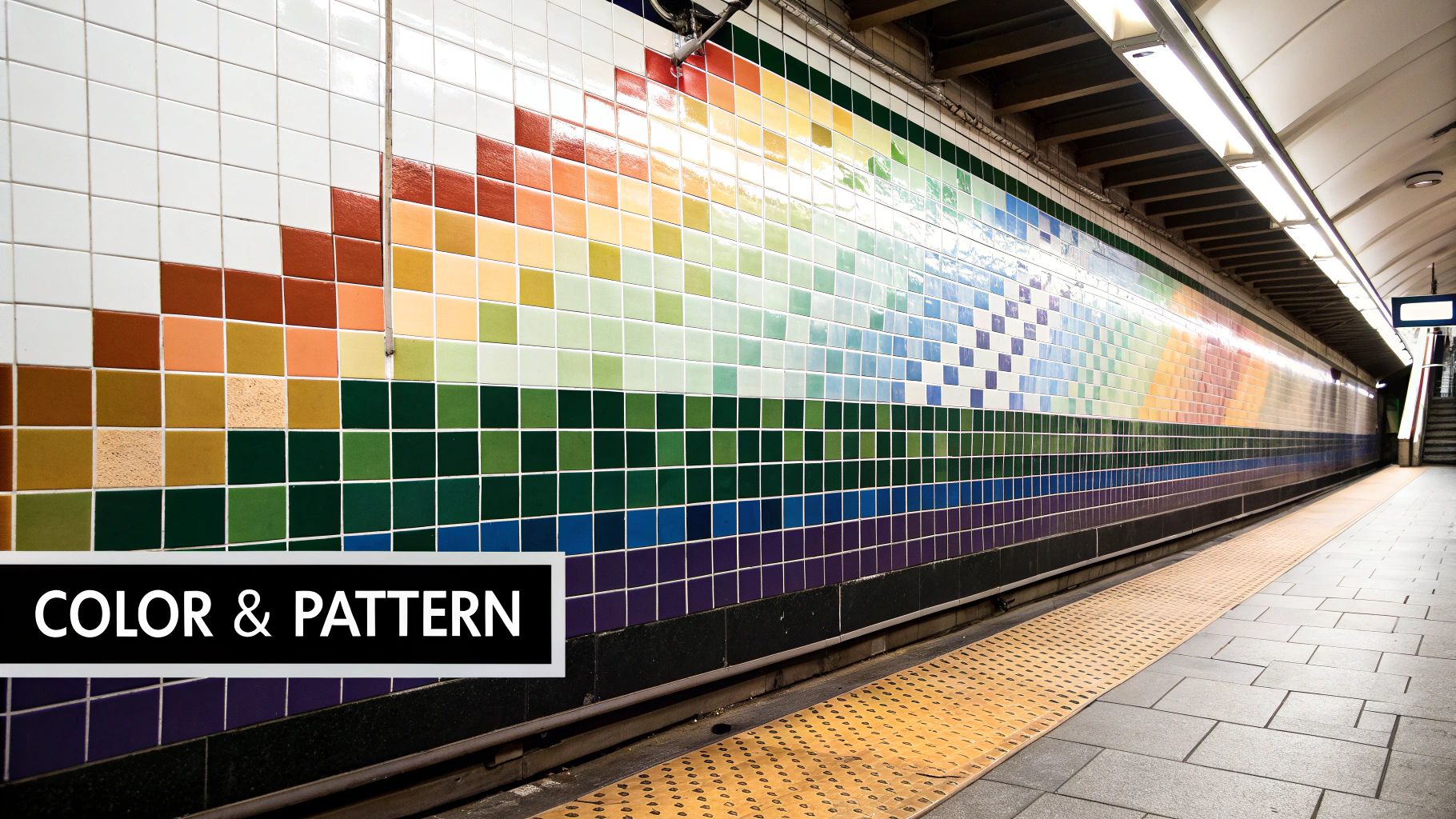
The size and finish of your tiles are two of the most powerful design tools you have. They can completely change how a room feels. When people ask us how to choose bathroom tiles, many don't realise just how much these two details can make a space feel bigger, cosier, brighter, or more practical.
The "large vs. small tile" debate is a classic one, and for good reason. For the many compact bathrooms we see in Eastbourne’s terraced houses, large-format tiles are a brilliant choice.
Using bigger tiles with very thin grout lines creates a seamless, uncluttered surface. It’s a bit of a visual trick that makes the room feel far more expansive and open. It’s not just about looks, either—fewer grout lines mean less scrubbing. That’s a practical win for any busy household.
That’s not to say small tiles don’t have their place. Mosaic tiles, for example, are perfect for creating a stunning feature wall behind a basin or inside a shower niche. The sheer number of grout lines also provides excellent grip, making them a safe and stylish option for shower floors.
Matching Tile Finish to Function
Beyond the size, the tile’s finish has a huge impact on both safety and style. It’s a detail we at Harrlie Plumbing and Heating always make a point to discuss with our clients right at the design stage.
Gloss Finish: These tiles reflect a ton of light, which is fantastic for brightening up a dark bathroom and giving it a sleek, polished look. The major downside? They become extremely slippery when wet, which is a real safety risk on floors.
Matte Finish: With their modern, non-reflective surface, matte tiles are excellent at hiding water spots and smudges. More importantly, their texture provides much better grip, making them a far safer choice for bathroom flooring.
Satin Finish: A satin finish is the perfect middle ground. It has a soft, subtle sheen that’s less reflective than gloss but is generally easier to clean than a completely flat matte surface.
We recently completed a bathroom installation in the Meads area of Eastbourne where we used large-format matte tiles on the floor for that feeling of space and safety. We then paired them with glossy mosaics in the shower niche to create a light-reflecting accent. This combination delivers on both practicality and visual flair.
Choosing the right combination ensures your bathroom isn't just beautiful, but also perfectly suited to how you’ll actually use it every day.
Understanding Tile Safety and Durability Ratings
When you’re learning how to choose bathroom tiles, it’s easy to get swept up in colours and styles. But the real secret to a bathroom that lasts and keeps your family safe lies in the technical specs. In a wet environment, two ratings are absolutely crucial: slip resistance and durability.
Getting these right isn't just a recommendation; it's essential. For any bathroom floor, we look for a slip resistance rating of R10 or higher. This is a non-negotiable, especially in a busy family bathroom in Eastbourne where you might have young kids or older relatives. An R9 tile might look lovely, but it’s just not safe enough for a floor that’s going to get wet. Simple as that.
Decoding Durability with PEI Ratings
Next up is the PEI (Porcelain Enamel Institute) rating, which tells you how much wear and tear a tile's glaze can handle. It’s a straightforward 1-to-5 scale, and it makes a huge difference.
PEI 1: Strictly for walls. Don't even think about putting it on the floor.
PEI 2: Okay for walls or floors with very light foot traffic, like a small ensuite.
PEI 3: The sweet spot. Perfect for any residential floor.
PEI 4: Even tougher. Strong enough for homes and even some light commercial use.
For your main bathroom floor, you should never go below a PEI 3 rating. Trust me, using a PEI 1 wall tile on the floor is just asking for cracks and chips down the line. At Harrlie Plumbing and Heating, our professional team makes sure every part of your project meets the highest safety standards, and that always starts with picking the right materials from the get-go. You can find out more about our meticulous approach in our guide to bathroom fitting in Eastbourne.
To make things a bit clearer, here's a quick reference table.
Decoding PEI and Slip Resistance Ratings
Rating | What It Means | Recommended Bathroom Use |
|---|---|---|
PEI 1-2 | Low scratch and chip resistance | Walls only (or very low-traffic floors for PEI 2) |
PEI 3 | Moderate resistance, suitable for normal foot traffic | All residential bathroom floors |
R9 | Low slip resistance | Walls or dry areas only |
R10+ | Good slip resistance, suitable for wet areas | All bathroom floors, especially showers and wet rooms |
Think of this table as your cheat sheet when you're in the tile shop. It cuts through the jargon and helps you make a smart, safe choice for your home.
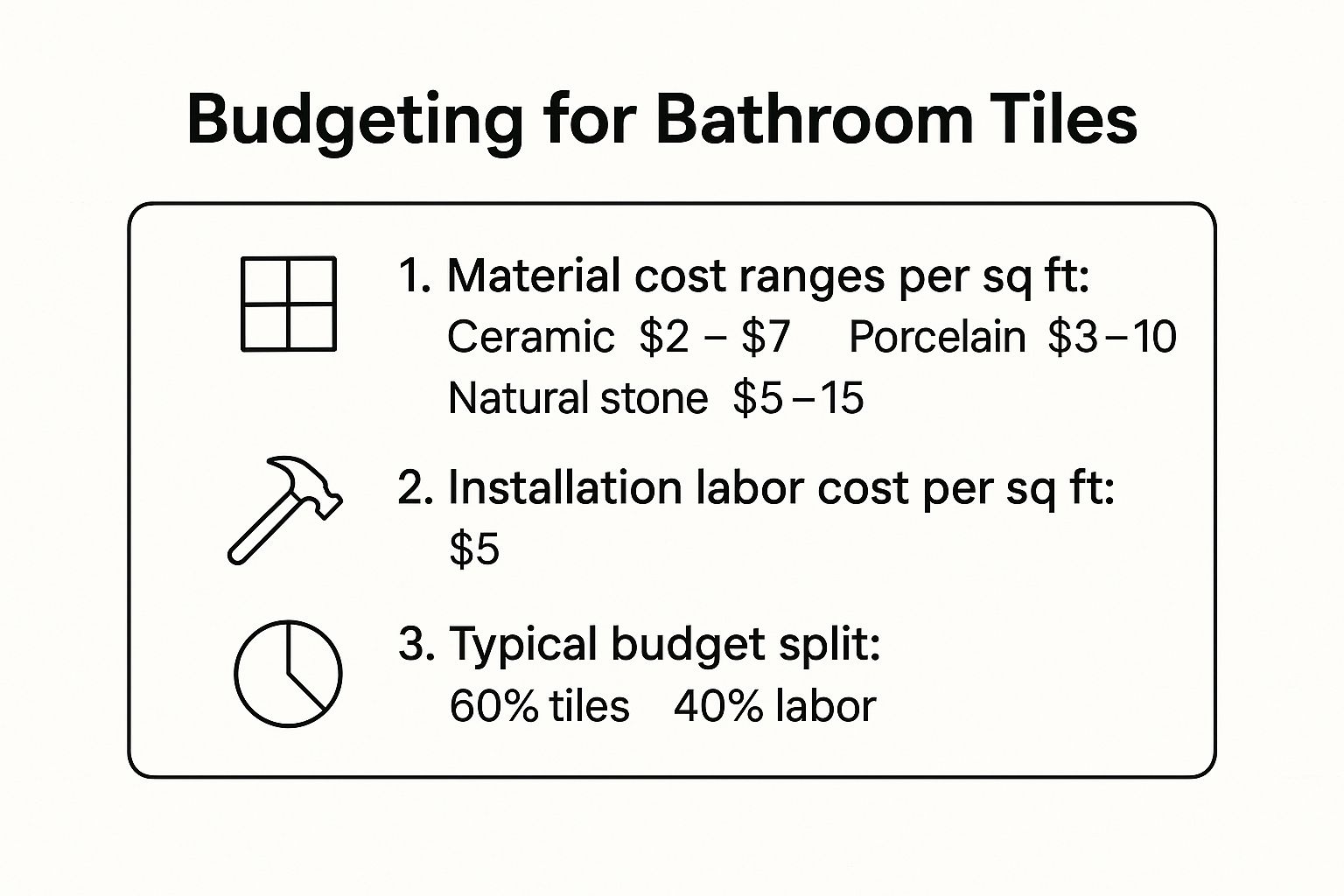
As you can see, labour is a big chunk of the budget. That’s why choosing durable, correctly-rated tiles from day one isn't just a good idea—it's a smart investment that saves you from costly repairs later on.
Budgeting for Your Tile Project
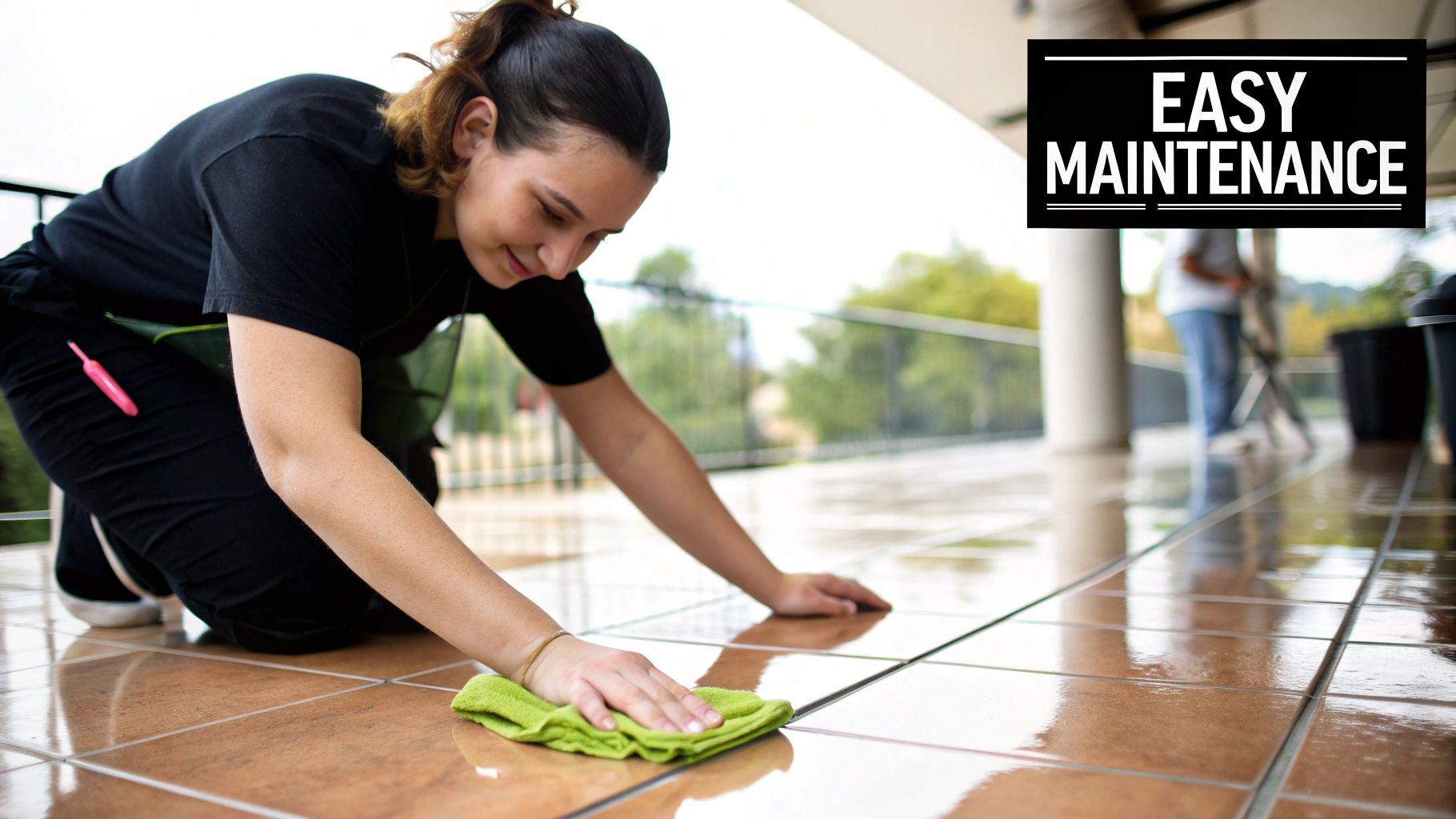
Let’s talk numbers. A successful bathroom renovation hinges on a clear, realistic budget from the very beginning. When you're figuring out how to choose the right tiles, it's easy to focus on the price per square metre, but the real cost is a mix of materials, supplies, and professional labour.
The tiles themselves are, of course, the main event. You'll find that porcelain typically costs more than standard ceramic, but that's because it’s denser and built to last. Natural stone is another step up, representing a more significant investment. This upfront cost reflects long-term value, a trend we're seeing across the UK as residential renovations continue to drive demand in the tile market. You can discover more insights about the UK ceramic tiles market if you're curious about the economic side of things.
Uncovering Hidden Costs
It's the bits and pieces beyond the tiles that really bring the project together, and they're crucial for a finish that lasts. Think of these as the "hidden costs" that you absolutely need to factor in.
Adhesives and Grout: The right adhesive is essential, and it depends entirely on the type of tile you've chosen.
Sealants: If you’ve fallen for natural stone or certain porous tiles, they’ll need a good sealant to protect them from water damage.
Labour: Getting a professional tiler in is a major part of the budget, and honestly, it's money well spent.
Investing in a professional installation from a trusted local company is the best way to prevent costly repairs down the line. A rushed or poorly laid tile job can lead to leaks, cracked tiles, and water damage—headaches no Eastbourne homeowner wants to face.
At Harrlie Plumbing and Heating, we make sure our quotes are detailed and transparent, covering every part of the job so there are no surprises. This financial clarity is key to a stress-free renovation and is a big part of maximizing your home value in Eastbourne with kitchen and bathroom upgrades. Believe me, getting it right the first time is always the most cost-effective solution in the long run.
Common Questions About Choosing Bathroom Tiles
As you get closer to finalising your plans, a few common questions always seem to pop up. Answering these is often the last step in feeling truly confident about your choice of bathroom tiles. We hear these questions all the time from homeowners across Eastbourne, so here are some quick, practical answers.
Can I Use the Same Tiles on Walls and Floors?
Absolutely, but there's one crucial rule to follow. You can almost always use a floor tile on the wall, but you should never use a wall-only tile on the floor. It’s a simple matter of durability—floor tiles are built tough to withstand foot traffic, whereas wall tiles are often thinner and will almost certainly crack under that kind of pressure.
Using the same tile for both is actually a brilliant way to create a seamless, modern look. We find it works especially well in smaller bathrooms, as it can make the space feel much larger and more cohesive. Our Harrlie Plumbing and Heating team recently did this in a compact Victorian bathroom in Eastbourne's Old Town, and the result was stunning.
How Do I Choose the Right Grout Colour?
The grout colour you pick can completely change the final look of your bathroom, so it really depends on the effect you're going for.
Contrasting Grout: A dark grout paired with light tiles, for instance, makes each individual tile pop. This creates a bold, graphic effect that really highlights the pattern you’ve chosen.
Matching Grout: Using a grout colour that blends in with your tile creates a much more uniform, subtle appearance. This approach makes a wall or floor feel like a single, continuous surface, which is another great trick for making a space feel bigger.
For a busy family bathroom floor in an Eastbourne property, we often suggest a slightly darker grout. It’s a practical choice that’s much better at hiding the inevitable daily dirt and grime than a brilliant white.
How Many Extra Tiles Should I Buy?
This is a step people often forget, but it's so important. We always recommend buying 10-15% extra tiles for any project. This little surplus covers any tiles that might get chipped or broken during cutting and installation, and it also leaves you with spares for future repairs. Trying to find an exact match for a specific tile batch years down the line can be next to impossible, so having those extras stashed away is a smart move that our team at Harrlie Plumbing and Heating always advises.
Ready to start your bathroom transformation? For expert advice and a flawless, professional installation, contact Harrlie Plumbing and Heating. Visit us at https://www.harrlieplumbing.co.uk to get your free quote today.

Comments