Improving hot water pressure: Simple DIY Fixes for Your Home
- Luke Yeates
- Feb 1
- 13 min read

That sinking feeling when you turn on the shower, only to be met with a pathetic trickle, is something we see all too often in Eastbourne homes. Before you can even think about fixing it, you need to understand what’s actually going on. Is it genuinely low pressure, or is the flow just weak?
It’s an important distinction. Think of water pressure as the force that shoves water through your pipes. Flow rate, on the other hand, is the amount of water that actually makes it out of the tap. You could have fantastic pressure coming into your home, but if a pipe is half-blocked with limescale, the flow will be dreadful. We often explain this to clients in areas like Old Town, Eastbourne, where older pipework can cause this exact issue.
Understanding Low Hot Water Pressure in Your Home
Once you know what you’re looking for, you can start hunting down the cause.
Common Culprits in Eastbourne Homes
Working in properties all over Eastbourne, from the lovely period homes in Meads to the terraced houses in Roselands, our team at Harrlie Plumbing and Heating tends to find the same few issues crop up time and time again.
Limescale Buildup: It’s no secret that Eastbourne is a hard water area, and limescale is our constant foe. Over the years, it builds up a solid crust inside pipes and boiler components, gradually narrowing the space for water to pass through and strangling the flow.
Partially Closed Valves: You’d be surprised how often this is the culprit. A stopcock or an isolation valve that hasn't been fully opened after a previous job can easily be overlooked, but it will definitely restrict your water flow. It’s a simple check, but one that’s frequently missed.
Aging Heating Systems: An older gravity-fed system or a boiler that’s seen better days might just not have the oomph to push hot water effectively, especially if you’re trying to get it up to a shower on the top floor of a Victorian house in Upperton.
Sometimes, a sudden drop in pressure isn’t down to your system at all. It can point to a bigger issue with the local supply network outside your property boundary, which will have a knock-on effect on your home.
This isn’t just guesswork. UK water industry data shows huge differences in water leakage from region to region. Here in Eastbourne, we’re served by South East Water, which reports a leakage rate of 45.0 litres per person every day—that’s a fair bit higher than the national average of 43.0 litres. It just goes to show how factors outside your control can affect the baseline pressure you receive. If you're interested, you can dive into the full water resources performance analysis on the official government website.
Getting these fundamentals right is the first step. For a broader overview of pressure problems in general, have a look at our guide on what causes low water pressure in UK homes.
Practical DIY Checks You Can Perform Today
Before you start worrying about a big repair bill, let's run through a few simple checks you can do right now. More often than not, the culprit behind poor hot water pressure is something surprisingly small that you can sort out in minutes, with no special tools needed.
Tackling these first could save you a lot of hassle and the cost of a call-out. In fact, these are the very first things our own engineers at Harrlie Plumbing & Heating look at when they arrive at a home in Eastbourne.
Inspect Your Main Stopcock
Your first port of call should always be the main stopcock. This is the valve that controls every drop of water coming into your property. If it isn't fully open, it'll restrict everything—hot and cold.
It’s not uncommon to find that another tradesperson has partially closed it and forgotten to open it back up fully. To check yours, find the valve (it's usually under the kitchen sink or in a utility room) and make sure it’s turned completely anti-clockwise. A stiff valve might need a gentle but firm hand to get it all the way open.
Clean Your Taps and Showerhead
This is a massive issue in and around Eastbourne. Our notoriously hard water leads to limescale build-up, which just loves to clog up the tiny holes in your tap aerators and showerheads. This blockage acts like a dam, strangling the water flow even when your system pressure is perfectly fine.
You can usually unscrew these parts by hand. Just pop them in a bowl with a mixture of white vinegar and water for an hour or so. Afterwards, give them a good scrub with an old toothbrush to get rid of any stubborn bits, rinse, and reattach them. You'll be amazed at the difference it can make.
To help you figure out what's going on, this chart breaks down the most common causes of low hot water pressure.
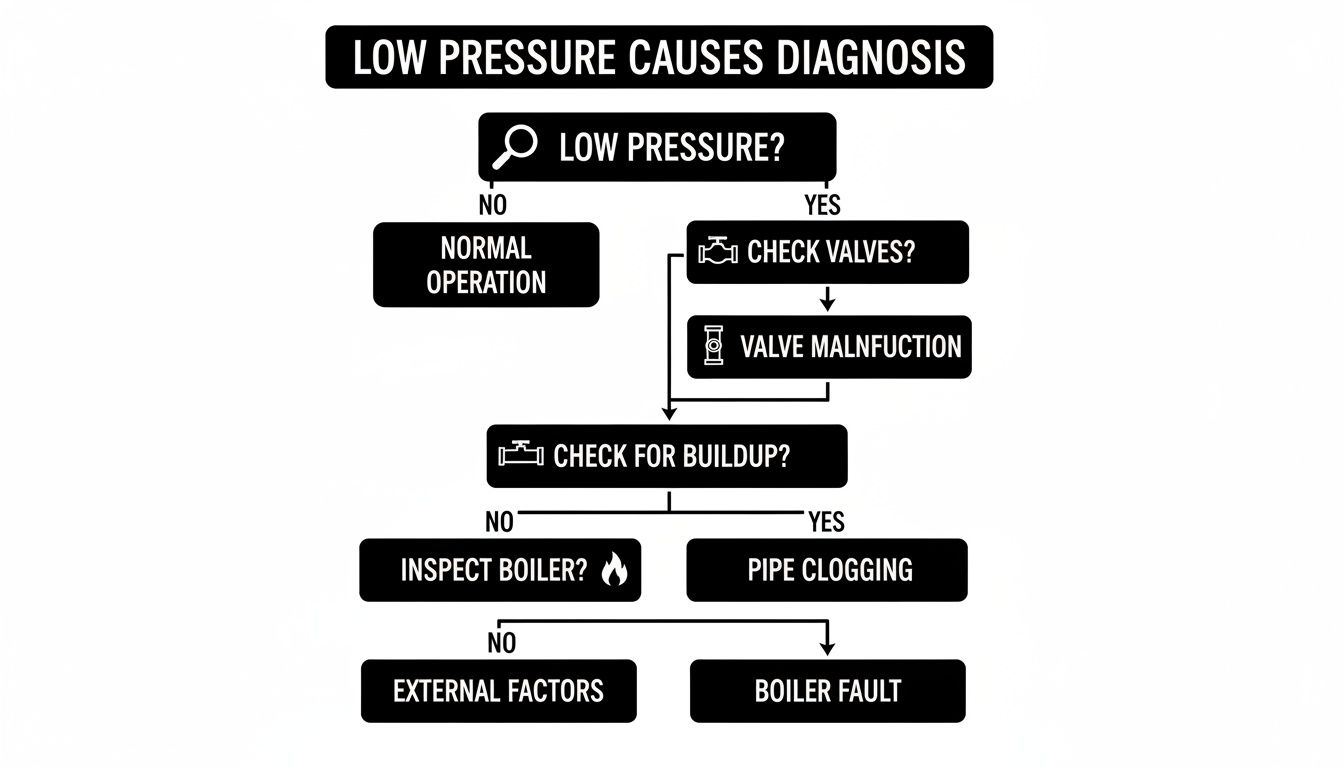
As you can see, the problem usually falls into one of three camps: your valves, limescale build-up, or the boiler system itself. Knowing which path to follow helps narrow things down considerably.
A quick tip from the field: If the low pressure is only at one or two taps, the problem is almost certainly a local blockage, like a clogged aerator. If every tap in the house is suffering, the issue is further back in your system. This is a key diagnostic step our Harrlie Plumbing and Heating engineers use on arrival.
Quick DIY Pressure Checks vs Professional Diagnostics
It's helpful to know which issues you can safely investigate yourself and when it's time to bring in the professionals. This table breaks it down.
Symptom | Potential DIY Check | When to Call Harrlie Plumbing & Heating |
|---|---|---|
Weak flow at one tap | Unscrew and clean the tap aerator for limescale. | If cleaning doesn't help, there might be a fault with the tap itself. |
Poor shower pressure | Descale the showerhead by soaking it in vinegar. | If the pressure is still low, the issue could be with the shower valve or pump. |
All taps have low pressure | Check that the main stopcock is fully open. | If the stopcock is open, it points to a wider system issue needing diagnosis. |
No hot water at all | Check your boiler's pressure gauge and look for error codes. | Don't attempt internal boiler repairs. Call us for a Gas Safe engineer. |
Gurgling pipes | Bleed your radiators to release any trapped air. | If noise persists, it could be a blockage or a pump issue. |
These simple DIY checks empower you to rule out the most common culprits. However, for anything involving your boiler's internal workings or wider system faults, it's always best to rely on a certified expert.
If you've cleaned your fixtures and confirmed the stopcock is fully open but the trickle continues, you've successfully narrowed down the search. For those who want to dig a little deeper, our guide on how to test water pressure in your home offers a few more advanced steps you can take.
A Closer Look at Your Boiler and Hot Water System
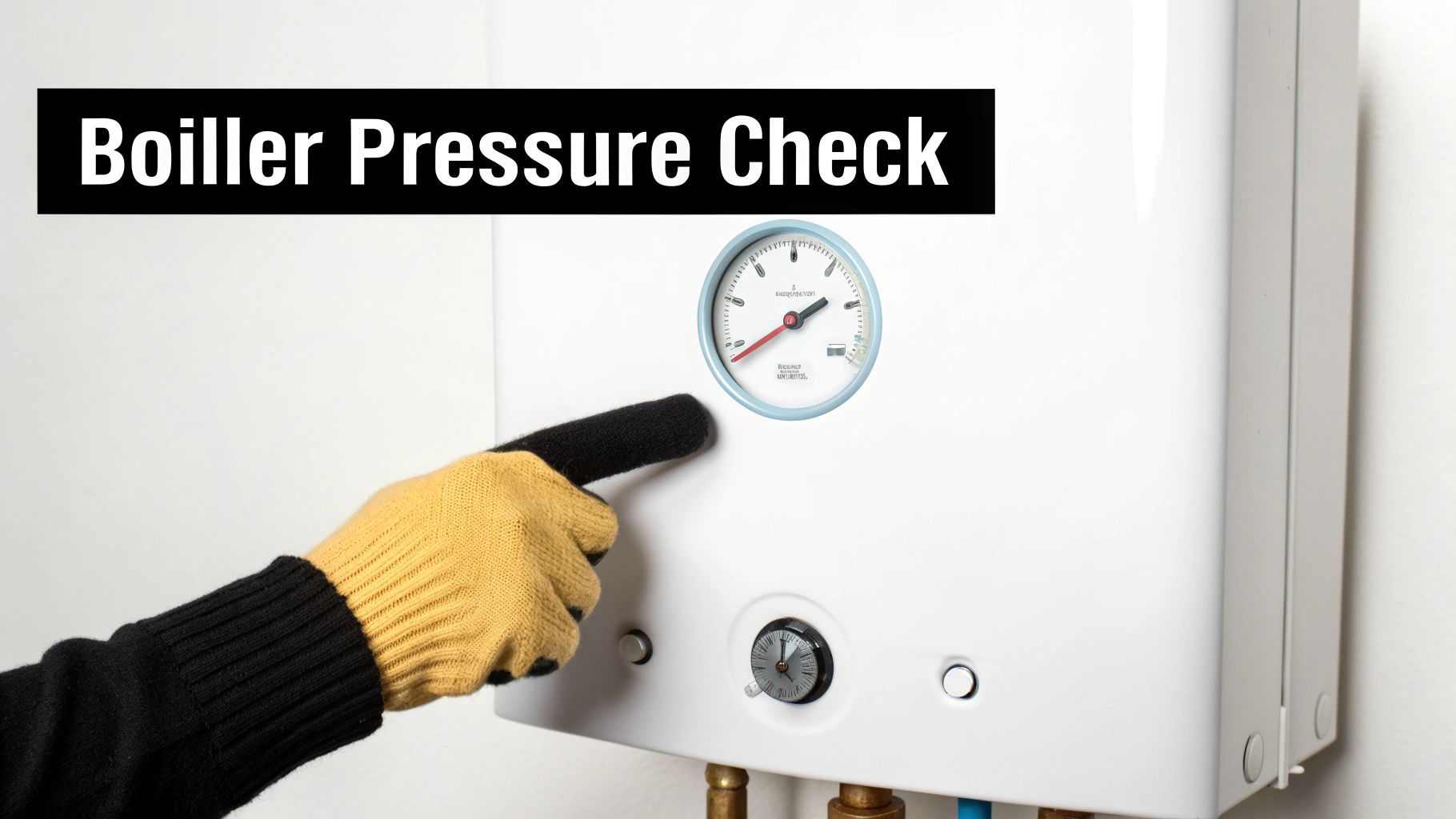
If you’ve tried the simple fixes and your hot water is still just a trickle, it’s time to head to the engine room of your home: your boiler and hot water system.
The type of system you have is easily the biggest factor affecting your hot water pressure. A modern combi boiler works very differently to an older gravity-fed setup with a tank in the loft, so understanding what you're working with is the key to a proper diagnosis. In our experience across Eastbourne, Hastings, and Bexhill, a huge number of pressure problems start right here.
The Role of Your Combi Boiler
Combination boilers, or ‘combis’, are a popular choice in modern homes for a reason—they heat water directly from the mains as you need it. This means your hot water pressure should be nearly as good as your cold, making them brilliant for powerful showers.
The catch? They’re very sensitive to the pressure inside the central heating system.
Have a look for a small pressure gauge on the front of your boiler, usually marked in ‘bar’. When the heating is off, the needle should be sitting somewhere between 1 and 1.5 bar. If it drops below this (often into a red zone on the dial), the boiler might shut itself down as a safety measure, leaving you with no hot water at all. This is one of the most frequent call-outs we at Harrlie Plumbing and Heating receive in Eastbourne during the colder months.
To get a better handle on these systems, have a look at our guide on what a combi boiler system is.
If you spot that the boiler pressure is low, you can often top it up yourself using the filling loop—it's a small, flexible hose, usually underneath the boiler. Just be sure to check your boiler’s manual first, as the exact process can differ between models.
Navigating Systems with Hot Water Cylinders
If you have a hot water cylinder, typically tucked away in an airing cupboard, you’ll have either a ‘system’ boiler or a ‘regular’ (gravity-fed) one. These systems work by storing a large tank of hot water, ready for when you turn on a tap.
Gravity-Fed Systems: Very common in older Eastbourne properties, these systems have a cold water tank up in the loft. The water pressure is generated by nothing more than gravity, so the height difference between the tank and your taps dictates the flow. This is the classic reason for weak showers upstairs.
Unvented Cylinders: These are the modern, high-performance alternative. They are fed directly from the mains and deliver fantastic hot water pressure. However, things like faulty pressure-reducing valves or airlocks can cause problems.
An airlock is a real headache for cylinder systems. It's essentially a trapped bubble of air in the pipework that acts like a blockage, reducing the flow of hot water to your taps or even stopping it completely. Keeping on top of maintenance is the best way to avoid these issues; a good guide to servicing your hot water tank can help you keep everything running as it should.
Knowing how much hot water your household gets through is also useful. Government research found that the average UK home uses around 90 litres of hot water a day, typically heated to 55°C. That adds up to about 4 kWh of energy every single day just for hot water, which really shows why having an efficient, well-maintained system is so important.
If you’re not sure what kind of system you have, or you don’t feel comfortable making these checks yourself, it’s always best to call in a professional. Here at Harrlie Plumbing and Heating, our Gas Safe registered engineers can quickly get to the bottom of any issue, making sure your system is running safely and effectively.
Long-Term Solutions for Boosting Hot Water Pressure
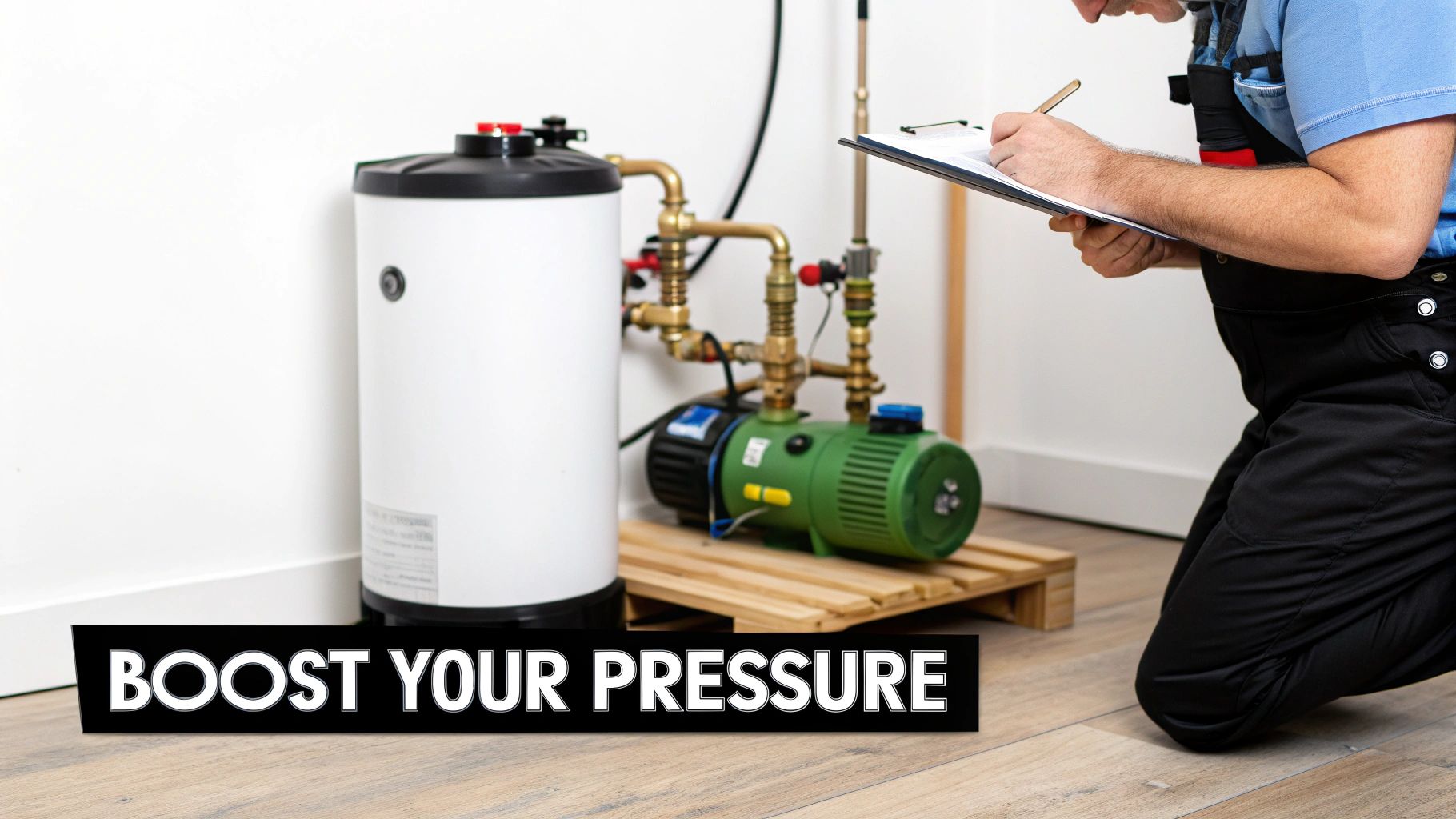
So, you've cleaned out your taps and confirmed the boiler is working as it should, but your hot water still feels more like a dribble than a downpour. When the simple fixes don't cut it, it’s time to consider a more permanent upgrade.
These long-term solutions are designed to deliver a powerful, reliable hot water supply, finally transforming your daily routine. These aren't quick DIY jobs; they are professional installations that get right to the heart of the pressure problem. Here at Harrlie Plumbing and Heating, we carry out these kinds of upgrades all the time in Eastbourne properties where the original plumbing just can't keep up with modern life.
Installing a Hot Water Booster Pump
A booster pump is a fantastic fix for homes where the plumbing itself is sound, but the incoming pressure is just too weak. It's an electrically powered pump that gives your hot water the extra push it needs to reach every tap and shower with proper force.
Imagine you live in a townhouse in the Meads area of Eastbourne, and the top-floor shower has always been disappointingly weak. A booster pump, installed directly onto the hot water pipe, can target this exact issue. You'll get that powerful shower you've been dreaming of without needing to rip out the entire system.
Booster pumps are a great choice for:
Homes with low mains water pressure that affects the whole property.
Older gravity-fed systems that struggle to get decent pressure to upstairs bathrooms.
Properties where a full system overhaul isn't practical or in the budget right now.
Upgrading to an Unvented Cylinder
For many older homes in Eastbourne, the best way to solve low hot water pressure for good is to move away from an old-fashioned gravity-fed system entirely. Upgrading to a modern unvented hot water cylinder is a genuine game-changer. These cylinders are connected directly to your cold water mains, storing hot water under the same high pressure.
What does that mean for you? It means your hot water pressure will be just as strong as your cold supply. The difference is immediate and dramatic, giving you powerful showers and baths that fill in no time. We recently helped a client in a Victorian property near Gildredge Park whose gravity-fed system just wasn’t coping. The new unvented cylinder we installed has completely transformed their home's water performance.
An unvented cylinder installation is a significant project that must be carried out by a qualified engineer with a G3 Unvented Hot Water Systems certificate. This is a legal requirement to ensure the system is installed safely.
Replacing Restrictive Old Pipework
Sometimes, the problem isn't the boiler or the cylinder—it's the pipes themselves. Over decades, the original pipework in a house can become a major bottleneck for your water flow.
Older homes often used narrower pipes (sometimes as small as 15mm), which simply can't handle the volume of water modern life demands. Factor in years of internal limescale buildup, and you've got a perfect recipe for poor pressure. Replacing key sections of this old, narrow pipework with wider 22mm pipes can open up the system significantly, allowing for much better flow. Beyond these quick fixes, deeper insights into how to improve water pressure can provide lasting results by addressing these foundational issues.
Choosing the right long-term solution really depends on your home's specific setup and your budget. The team at Harrlie Plumbing and Heating can assess your system and give you clear, honest advice on the best way forward to improve your hot water pressure for good.
Knowing When to Call a Professional Plumber
While tackling simple DIY checks is a great first step, there are definitely times when putting down the tools and picking up the phone is the safest and smartest move. Certain symptoms are clear red flags that point to a deeper issue—one that needs the eyes and hands of a certified professional.
Attempting to fix complex plumbing or gas-related problems yourself isn't just tricky; it can be downright dangerous. Pressurised hot water systems and gas appliances demand respect and a huge amount of know-how. One small mistake can lead to serious leaks, thousands of pounds in property damage, or worse. This is where you need to stop troubleshooting and call for backup.
Clear Signs You Need an Expert
If you're experiencing any of the following, it’s time for a professional diagnosis. Don’t hesitate, because ignoring these signs can quickly turn a small problem into a major, costly repair. A sudden, dramatic drop in pressure across all your hot taps, for example, suggests a significant failure somewhere in the system that needs immediate attention.
Another serious warning sign is any evidence of a leak. Keep an eye out for:
Damp patches appearing on walls or ceilings, especially near the boiler or hot water cylinder.
A visible drip or pool of water around the base of your boiler or tank.
A persistent musty smell that you can't trace to any other source.
These symptoms could point to a leaking pipe or a failing component within your heating system. We’ve seen this countless times in older Eastbourne properties where pipework has corroded over the years. A swift response from a professional is absolutely essential to prevent extensive water damage.
If you hear your boiler making unusual noises—like banging, whistling, or gurgling—it's basically crying for help. These sounds can signal anything from trapped air and limescale buildup on the heat exchanger to a failing pump. Never ignore a noisy boiler.
Your Safety Is the Priority
Ultimately, if you've run through the DIY checks and the problem is still there, or if you feel even slightly unsure about what you're doing, that’s your cue. It’s time to call in the professionals.
This is especially true for anything related to gas appliances. By law, only a Gas Safe registered engineer can work on a boiler. For homeowners across Eastbourne, the rapid-response service from Harrlie Plumbing and Heating ensures that a qualified expert can be with you quickly to diagnose the fault safely and efficiently, getting your hot water flowing again without putting you or your family at risk.
Your Hot Water Pressure Questions Answered
To wrap things up, here are a few of the most common questions our team at Harrlie Plumbing and Heating hears from residents all over Eastbourne. These quick-fire answers should help you understand your system a little better and figure out your next steps.
Why Is Only My Hot Water Pressure Low But the Cold Is Fine?
This is a classic plumbing puzzle, and it almost always points to a problem inside your heating system, not an issue with the mains supply coming into your property. When the cold water runs perfectly but the hot is just a trickle, the culprit is something that only affects the hot water's journey to your tap.
Here in Eastbourne, with our hard water, we see this a lot. The most common causes are:
Limescale Buildup: Mineral deposits can clog up hot water pipes or, more specifically, the heat exchanger inside your boiler. It acts just like a bottleneck, restricting the flow.
Airlocks: In a hot water cylinder system, trapped air bubbles can effectively block the pipe, stopping water from flowing freely through it.
Valve Issues: It's surprisingly common to find a partially closed isolation valve on the hot water line, maybe near the cylinder or boiler, which will directly throttle its flow rate.
Our engineers have specific diagnostic tests to pinpoint the exact blockage and get it cleared out for you.
Can a New Boiler Improve My Hot Water Pressure?
It certainly can, but it’s not always a guaranteed fix on its own. The biggest improvement comes when you upgrade from an old, low-pressure gravity-fed system (the type with tanks in the loft) to a modern combi boiler or a system boiler paired with an unvented cylinder. This move fundamentally changes how your home gets hot water, switching it over to the high-pressure mains supply.
However, if your underlying problem is severely scaled-up pipework or a really poor mains supply coming into the house in the first place, a new boiler won't be able to overcome those limitations entirely. It's a key part of the solution, but not always the whole story.
Is It Expensive to Install a Water Pressure Booster Pump?
The cost can vary quite a bit. It really depends on the type of pump your system needs and how complex the installation work is. While it's certainly an investment, it's often a much more affordable route than taking on a massive project like replacing all your home's pipework.
At Harrlie Plumbing and Heating, we believe in being completely transparent. We’ll always provide a clear, no-obligation quote that details all the costs upfront, so you can make an informed decision without any nasty surprises.
If you're tired of dealing with weak showers and slow-filling baths, it's time to get a professional opinion. Contact Harrlie Plumbing and Heating today for expert advice and a free quote on the best way to boost your hot water pressure for good. Visit us at https://www.harrlieplumbing.co.uk.

Comments