Gas Safety Check Do They Check Radiators? Eastbourne Homeowner's Guide
- Luke Yeates
- Jan 18
- 12 min read

It's a question we get asked all the time by homeowners in Eastbourne: when a Gas Safe engineer comes for a safety check, do they actually look at the radiators?
The short answer is yes, but it’s not the deep-dive service you might be thinking of. Think of it as a crucial safety snapshot rather than a full health check-up for your heating system. The engineer's main goal is to spot any obvious faults with the radiators that could impact the safe running of your gas boiler.
So, Do Gas Safety Checks Cover Radiators?
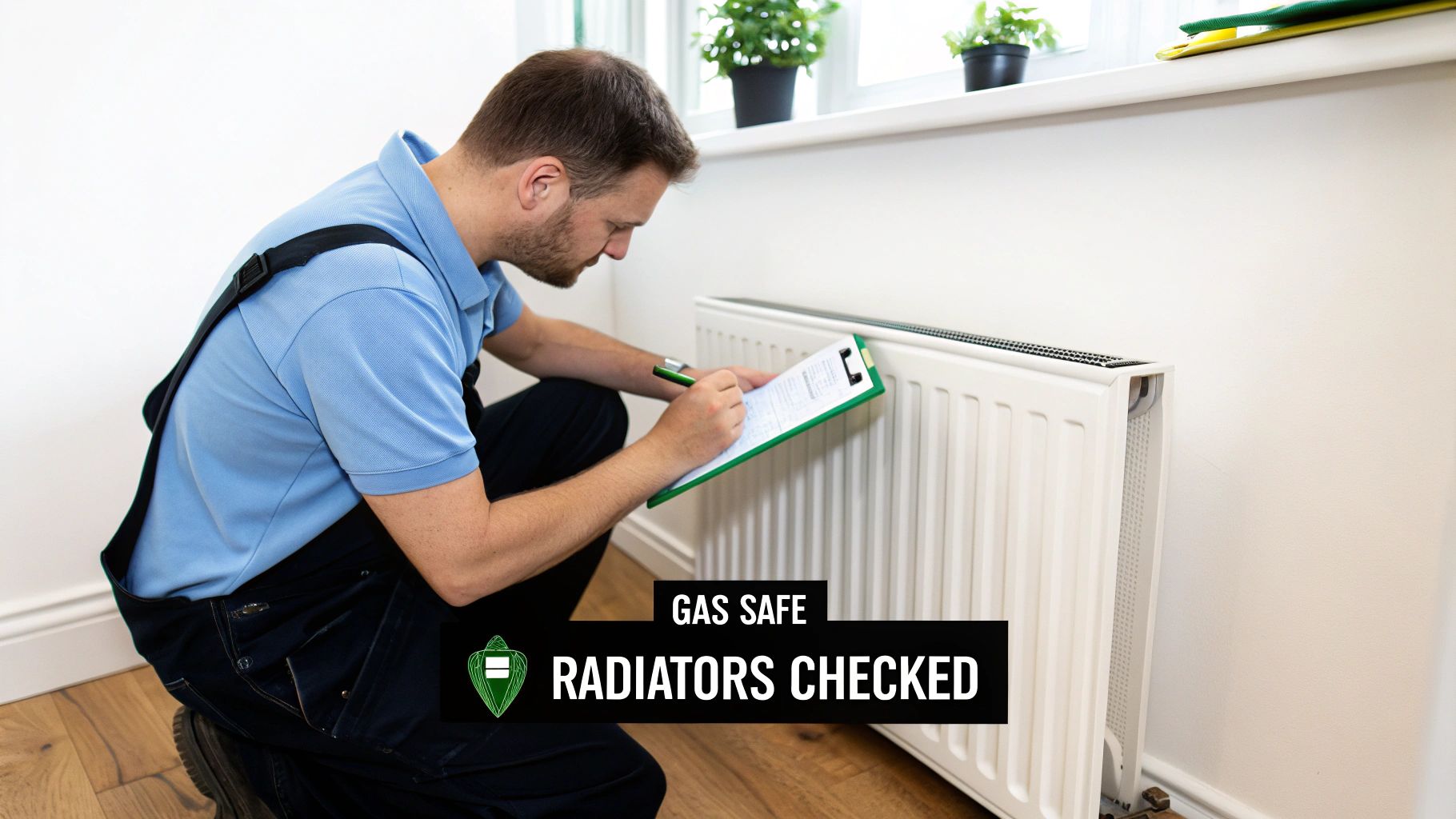
When you book a gas safety check, it’s important to understand what it’s really for. The inspection is a legal requirement focused on making sure your gas appliances and flues aren't posing a risk, like a dangerous carbon monoxide leak. Because your radiators are connected to the boiler, they get a visual once-over as part of this wider assessment.
The engineer is hunting for immediate safety concerns. A significant leak from a radiator valve, for example, could cause the boiler's pressure to drop. This can lead to a system failure or, worse, unsafe operation. It's all connected.
A Gas Safe engineer is trained to see the heating system as a whole. A problem with a radiator can be a symptom of a bigger issue with the boiler, so a quick visual check is an essential part of the process.
For homeowners and landlords in Eastbourne, having a qualified professional you can trust is key. At Harrlie Plumbing and Heating, our certified Gas Safe engineers carry out these inspections with meticulous care. We make sure every visible part of your heating system, from the boiler right down to the radiator pipes, is sound and operating safely, giving you complete peace of mind.
Gas Safety Check vs Radiator Service A Quick Comparison
To clear up any confusion, it helps to see the tasks side-by-side. The table below shows what a Gas Safe engineer looks for during a safety check versus what’s included in a dedicated radiator service. This should help you manage your expectations and know when your system might need more detailed attention.
Task | Included in Gas Safety Check? | Included in a Full Radiator Service? |
|---|---|---|
Visual inspection for leaks | Yes | Yes |
Checking visible pipework for corrosion | Yes | Yes |
Testing system pressure | Yes | Yes |
Bleeding air from radiators | No | Yes |
Balancing the system for even heat | No | Yes |
Replacing faulty valves (TRVs/lockshields) | No | Yes |
Powerflushing to remove sludge | No | Yes |
As you can see, the safety check is all about spotting clear and present dangers. For fine-tuning performance, like bleeding or balancing, a proper heating service is what you need.
Understanding the Real Purpose of a Gas Safety Check
To get why radiators only get a quick look during a gas safety check, we first need to be clear on what the check is actually for. At its heart, this inspection is all about safety, not performance.
Think of it like a car's MOT. The test makes sure your car is safe to be on the road, but it doesn't promise the engine is tuned for maximum power or fuel efficiency. A gas safety check—often called a CP12 certificate for landlords—works the same way. Its mission is to confirm your gas appliances, flues, and pipework won't cause harm through gas leaks or carbon monoxide poisoning. It’s a crucial, legally required inspection designed to stop invisible dangers in their tracks.
This is exactly why your radiators, while part of the heating system, just get a visual once-over rather than a full-blown service.
Safety First, Always
The engineer’s number one goal is to spot immediate hazards. When one of our Harrlie Plumbing & Heating engineers walks into a home in Eastbourne, their training kicks in, focusing their attention on red flags that could put you and your property at risk.
This proactive approach is essential, especially when you look at the stats. It's shocking, but research shows that one in five homeowners in the UK has never had their gas appliances checked. Here in South East England, the situation is even more concerning: 1 in 4 homes inspected were found to have unsafe gas appliances. That potentially affects around 745,800 properties, showing a dangerous level of complacency.
A gas safety check isn't about making your home warmer; it's about making it safer. The engineer's focus is squarely on preventing catastrophic failures like gas leaks or carbon monoxide exposure, which is why the gas-burning appliance is the star of the show.
The entire process is built to catch these high-stakes problems. For a more detailed, step-by-step look at what our engineers inspect, you can read our complete Eastbourne guide on what a gas safety check involves. It helps clarify why every action, including the brief check of your radiators, is a deliberate part of a much bigger safety protocol.
What Our Engineers Actually Look For on Your Radiators
When one of our Gas Safe engineers glances at your radiators during a safety check, it’s far more than a quick look. It's a trained, methodical visual health check, designed to spot specific red flags that could point to a much deeper problem within your central heating system. The focus here is purely on safety and the overall health of the system.
Ultimately, the goal is to find anything that could compromise the safe running of your boiler. This isn't about checking if your radiators are getting hot enough; it’s about making sure they aren't creating a hazard.
Key Visual Checkpoints
So, what does this brief inspection actually involve? An engineer is trained to spot a few key signs that tell a story about your heating system. They’re hunting for issues that, if ignored, could lead to boiler failure or an unsafe situation down the line.
Here’s what our engineers at Harrlie Plumbing & Heating zero in on during a visit:
Visible Leaks: We carefully inspect the radiator valves—both the Thermostatic Radiator Valve (TRV) and the lockshield valve—and all the connecting pipework for any signs of weeping, dampness, or active dripping.
Serious Corrosion: Advanced rust or flaking paint on the radiator itself isn't just a cosmetic issue. It can signal a long-term internal problem or an external leak that's gone unnoticed for ages.
Secure Mounting: We'll give the radiator a quick check to ensure it’s securely fixed to the wall. A loose radiator is a physical risk, but it can also put immense strain on the pipework, eventually causing a leak.
Even a seemingly minor issue, like a slow drip from a valve, is a big deal to us. This constant loss of water forces the boiler's pressure to drop. Modern boilers have a safety feature that shuts the system down if the pressure gets too low, which protects the appliance but leaves you in the cold.
The table below breaks down exactly what our engineers look for during this visual inspection.
Radiator Safety Inspection Checklist
Inspection Point | What the Engineer Looks For | Why It Matters for Gas Safety |
|---|---|---|
Valves (TRV & Lockshield) | Signs of weeping, active drips, or dampness around the valve body and connections. | A leak causes system pressure to drop, which can lead to a boiler lockout, preventing it from operating safely. |
Pipework Connections | Water stains on the floor, wall, or pipe itself. Evidence of slow leaks at the joints. | Similar to valve leaks, leaking pipework compromises system pressure and can lead to boiler failure. |
Radiator Body | Excessive rust, corrosion, or pinhole leaks. Obvious signs of physical damage. | Severe corrosion can indicate internal system decay, which affects the entire heating loop connected to the boiler. |
Wall Mountings | Checks if brackets are secure and the radiator is stable on the wall. | A loose radiator can strain pipe connections, causing a sudden and significant leak that rapidly drains the system. |
This quick check is a vital part of ensuring your entire system, anchored by the gas boiler, is in good working order.
A Real-World Eastbourne Example
Picture this: one of our engineers is at a gas safety check in a lovely property in Eastbourne's Old Town. While doing their visual checks, they spot a small, tell-tale damp patch on the carpet just beneath a radiator valve in the living room. It's the classic sign of a weeping valve.
Even a tiny, slow leak is a red flag. It tells the engineer that the heating system is losing pressure. This directly impacts the boiler's ability to operate safely and must be addressed.
They’d immediately point this out to the homeowner, explaining that while the leak is small, it's actively undermining the safety of their gas boiler by causing persistent pressure loss. In that moment, a simple observation becomes a crucial part of the overall gas safety picture, preventing a potential system shutdown.
While fixing the leak isn't covered by the safety check itself, identifying it is a critical step. Sometimes these issues are simple fixes, but if you're finding cold spots on your radiators, it might be a different problem entirely. You can find out more in our complete homeowner guide on how to bleed radiators.
Gas Safety Check vs a Full Central Heating Service
It’s easy to get a gas safety check and a full central heating service mixed up. They sound similar, but they serve completely different purposes for your home's heating system. Think of them as two distinct appointments, each with its own specific mission.
A gas safety check is a legal requirement for landlords and highly recommended for all homeowners. Its sole focus is safety—preventing immediate danger from your gas appliances. A full central heating service, on the other hand, is all about optimising your system for performance, boosting efficiency, and making sure it lasts for years to come.
During a full service, for example, an engineer will get hands-on with tasks like bleeding radiators to get rid of trapped air or balancing the system so every room heats up evenly. These aren't just minor tweaks; they make your home more comfortable and can genuinely lower your energy bills.
This flowchart breaks down the key safety points an engineer looks for on your radiators during a gas inspection.As you can see, spotting obvious leaks, corrosion, or wobbly fittings is central to the visual safety assessment.
Safety vs Performance
While a gas safety check isn't a deep dive into radiator maintenance, it absolutely includes a visual inspection of them as part of the wider system check. This is especially critical here in South East England, where an estimated 745,800 homes have unsafe gas appliances—the highest rate in the UK. During the check, the engineer is focused on flue gases and burner pressures, not hands-on radiator repairs.
"A gas safety check ensures your system won't harm you. A central heating service ensures it won't let you down. Both are crucial for a safe and efficient home."
At Harrlie Plumbing & Heating, we're here to be your complete heating partner in the Eastbourne area. We provide both the essential CP12 safety certificates and the in-depth servicing you need to head off expensive breakdowns before they happen.
If your radiators have cold spots or your system is full of sludge, a standard service might not be enough. Find out how we can restore your heating's health by reading our guide on what a powerflush is and why your home needs one.
Signs Your Radiators Need More Than a Quick Look
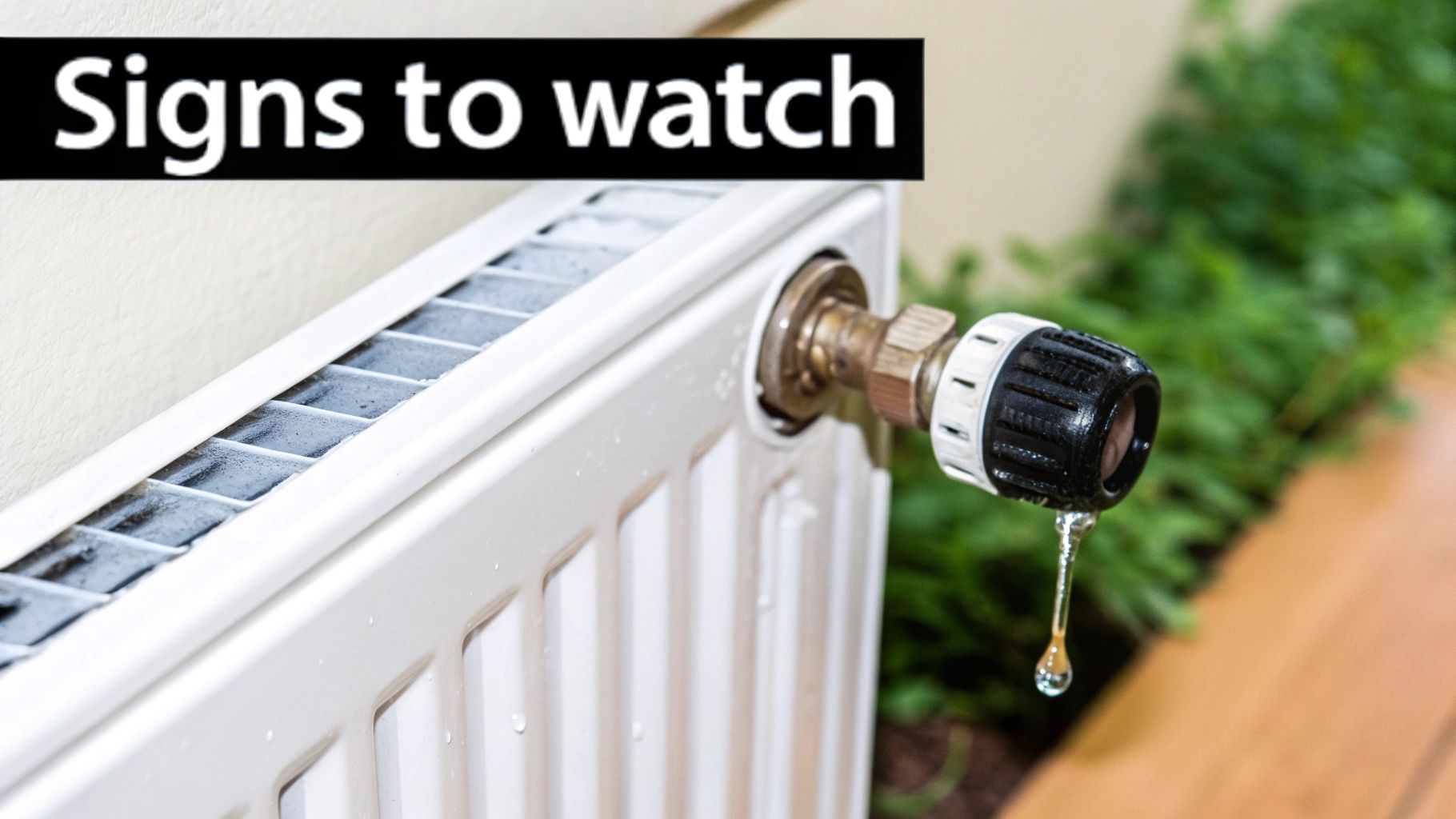
While a gas safety check is brilliant for confirming your system isn't an immediate danger, your radiators often whisper—or shout—that they need a bit more TLC. Ignoring these signals is a fast track to poor efficiency, sky-high energy bills, and eventual breakdowns. It’s how a small niggle turns into a major headache.
Think of your heating system as a network; a problem in one spot can easily throw the whole house out of whack. Knowing what to look and listen for empowers you to get things sorted before they escalate. These symptoms fall outside the strict scope of a safety inspection, but they're absolutely vital for keeping your home warm and comfortable.
It's important to remember that while not the main event, radiators are looked over as part of the visual check during a UK gas safety inspection. And for good reason. Faults can point to bigger problems, and the stats highlight just how urgent this is. Here in South East England, an alarming 1 in every 4 homes inspected had unsafe gas appliances. Many UK homes are at risk of failing their certificate simply due to overlooked heating components. You can learn more about how radiator checks fit into overall gas safety from recent industry insights.
Common Radiator Warning Signs
If you spot any of the following issues around your Eastbourne property, it's a clear signal that your radiators need a professional eye, like the team here at Harrlie Plumbing & Heating.
Cold Spots: Is the top of your radiator stone cold while the bottom is warm? That’s the classic sign of trapped air. The radiator needs bleeding to let hot water circulate properly again.
Uneven Heating: Are some rooms feeling tropical while others are like a walk-in fridge? This points to an unbalanced system, where hot water is playing favourites and rushing to certain radiators first.
Strange Noises: Gurgling, banging, or kettling sounds from your radiators or pipes are definitely not normal. These noises often mean you’ve got trapped air, low water pressure, or a nasty build-up of sludge.
Slow Warm-Up Times: Does it feel like your house takes forever to get cosy? This usually indicates poor circulation, most likely caused by thick, black sludge clogging up the pipes and radiators. A system powerflush is often the best medicine for this.
Think of these signs as your heating system's cry for help. Addressing them quickly not only gets you feeling comfortable again but also boosts energy efficiency and can even extend the life of your boiler.
Don't wait for a small annoyance to snowball into a complete system failure. If any of these symptoms sound familiar, it’s time to call in the experts.
Your Partner for Gas Safety in Eastbourne
So, when you ask, "does a gas safety check include radiators?" the simple answer is yes and no. The bigger picture, though, is what really matters for the health of your home. The key takeaway is this: your Gas Safe engineer will absolutely give your radiators a visual once-over, but this is a safety check, not a full-blown maintenance service. It's there to protect, not to perfect.
This distinction is precisely why you should always hire a Gas Safe registered engineer. Whether it's for the landlord certificate the law requires or just for your own peace of mind, only a qualified professional can guarantee your gas appliances are running safely. This is about protecting your family or tenants from dangers you can't see.
Your Trusted Local Experts
For homeowners and landlords across Eastbourne, Harrlie Plumbing & Heating is your reliable, qualified, and local choice for gas safety. Our team knows the unique needs of properties in our community, from cosy coastal bungalows to traditional terraced houses. We’re committed to giving you a transparent, thorough, and professional service, every single time.
As a local business, we also know how important it is for people to find us when they need help. For anyone interested in how plumbing businesses like ours connect with the community online, this comprehensive guide on SEO for plumbing companies is a fascinating read.
When it comes to gas, there are no shortcuts. Entrusting your home to a certified, local engineer isn't just a good idea—it's the only safe option.
Whether you need to book your annual gas safety check or you’re after a full central heating service to get your radiators firing on all cylinders, our team is ready to help. We combine meticulous safety inspections with expert maintenance, making sure your home is both safe and wonderfully warm.
Take the next step with confidence. Get in touch with Harrlie Plumbing & Heating today to schedule your appointment and let our experts provide the professional, friendly service you deserve.
Still Have Questions? Let’s Clear Things Up
It’s completely normal to have a few questions about what a gas safety check actually covers, especially when it comes to your radiators. Here are some of the most common queries we get from homeowners in and around Eastbourne.
Will the Engineer Bleed My Radiators During the Check?
No, bleeding radiators isn’t part of a standard gas safety inspection. Getting trapped air out of your system is all about improving its performance and keeping you warm, which falls under maintenance rather than safety.
However, bleeding your radiators is a key part of a full central heating service, which the team at Harrlie Plumbing and Heating is always happy to help with.
What Happens If a Leak is Found on My Radiator?
If the engineer spots a leak that could affect the boiler’s safe operation—say, it's causing a major drop in system pressure—they may have to classify the appliance as 'At Risk'. In serious cases, they might even need to shut the system down until a repair is carried out.
For smaller drips and weeps, they'll always give you clear advice on the best way to sort it out.
Your safety is always the top priority. A Gas Safe engineer will take the time to explain exactly what they’ve found, making sure you understand any potential risks, no matter how small a leak might seem.
Is a Gas Safety Certificate the Same as a Boiler Service?
That’s a great question, and the answer is no—they are two very different things. Think of a gas safety certificate (also known as a CP12) as an MOT for your gas appliances; it’s an official record confirming everything was safe to use at that moment in time.
A boiler service, on the other hand, is more like a deep clean and tune-up. It involves cleaning out components and making adjustments to boost efficiency, which helps your boiler run better and last longer. For total peace of mind, many Eastbourne homeowners choose to book both at the same time.
For a safe, warm, and efficient home, you need experts you can rely on. Whether it’s time for your annual gas safety check, a full heating service, or you’ve got a leak that needs sorting, contact Harrlie Plumbing and Heating today for a free, no-obligation quote. https://www.harrlieplumbing.co.uk

Comments