Your Emergency Burst Pipe Fix Guide for Eastbourne Homes
- Luke Yeates
- Dec 23, 2025
- 13 min read

When you're dealing with a burst pipe fix, the first 15 minutes are absolutely critical. Acting calmly and quickly can be the difference between a small puddle and a catastrophic flood. Your priorities are simple: shut off the water, kill the power and heating if necessary, and then get a professional on the phone. Taking charge of the situation fast will save you a massive amount of mess and money.
What To Do Immediately When a Pipe Bursts
That sickening sound of rushing water is a homeowner’s worst nightmare. A burst pipe can escalate in seconds, causing thousands of pounds in damage. It’s not just a hypothetical, either. Recent figures from Zurich UK showed that burst pipe claims shot up by 75% last winter alone. The average cost for water escape damage? A staggering £12,791. You can dig into the specifics in their 2023 report. These numbers prove just how vulnerable UK homes, especially here in Eastbourne, are to a sudden cold snap.
Your first moves need to be swift and decisive to protect your property. The goal is to stop the water at its source and make the area safe.
Locate and Turn Off Your Main Stopcock
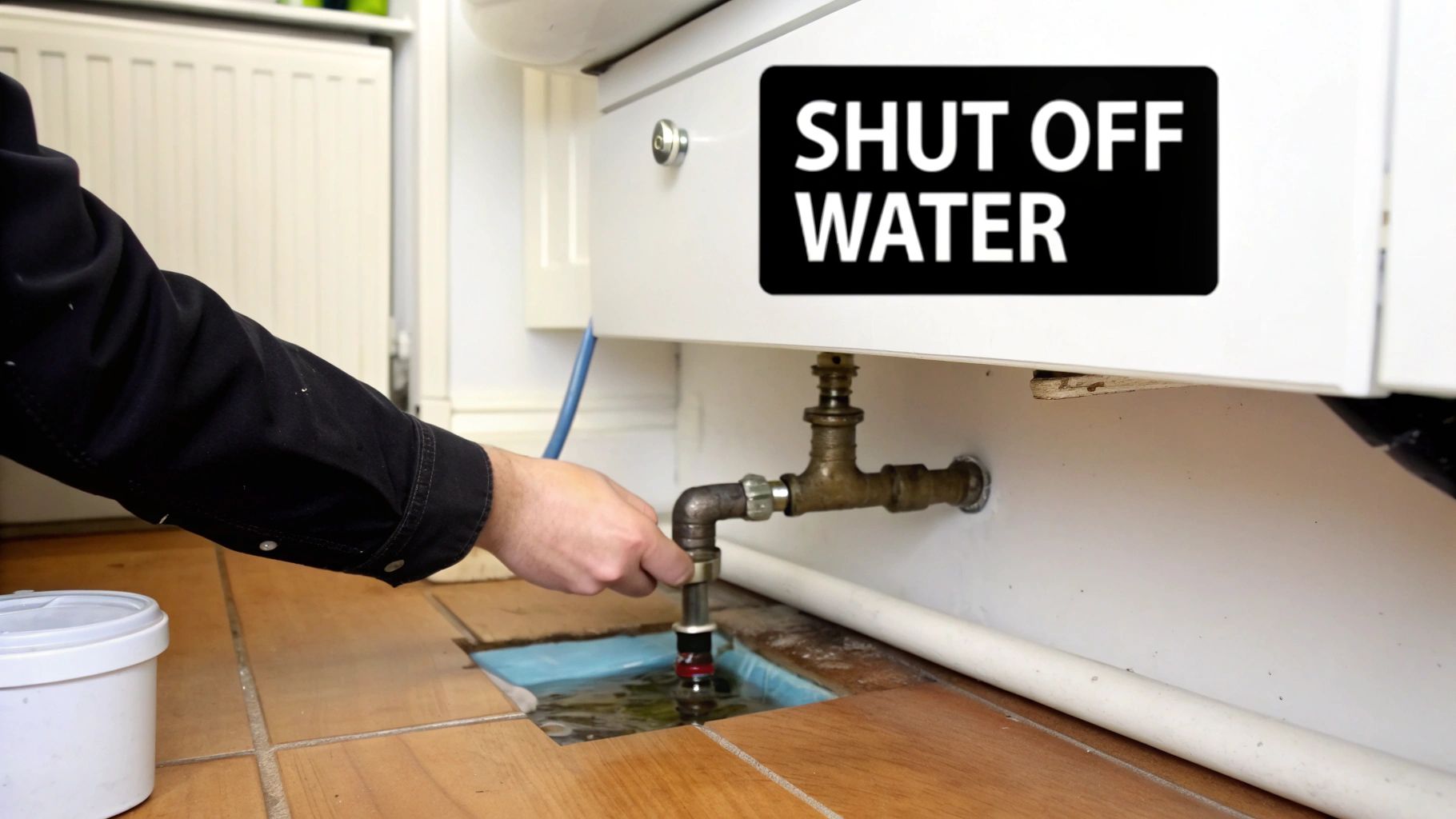
This is the most important thing you can do. You need to shut off the main water supply to your home. This is controlled by a valve called a stopcock, which stops all water from entering your property. Finding it can be a bit of a treasure hunt depending on your home's age and style.
If you're in a classic Victorian terrace in the Meads, for example, it's often tucked away under the kitchen sink. For those living in the newer flats down at Sovereign Harbour, it’s more likely to be in a utility or airing cupboard.
Not sure where yours is? It's much better to find out now than during a flood. Our handy guide on how to turn off your water main can walk you through it. Once you find the stopcock, turn the tap or lever clockwise as far as it will go. This will cut the flow and stop the immediate flooding.
Pro Tip from Harrlie Plumbing and Heating: Once you've located your stopcock, give it a gentle turn once or twice a year. This stops it from seizing up. Trust me, the last thing you want in an emergency is to discover your stopcock is stuck solid. We've seen this happen in many Eastbourne homes and it turns a manageable situation into a major panic.
Shut Down Heating and Electrics
With the water off, the next job is to make the area safe by dealing with the heating and electrical systems.
Turn Off Your Central Heating: Switch off your boiler and any immersion heaters you have. This stops the system from trying to pull in more water and prevents it from potentially overheating now that its water supply is cut off.
Switch Off the Electrics: If water is leaking anywhere near sockets, appliances, or your main fuse box, shut off the mains electricity immediately. Water and electricity are a lethal mix, and this step is crucial for preventing electrocution or an electrical fire.
This simple graphic breaks down those three critical first steps.
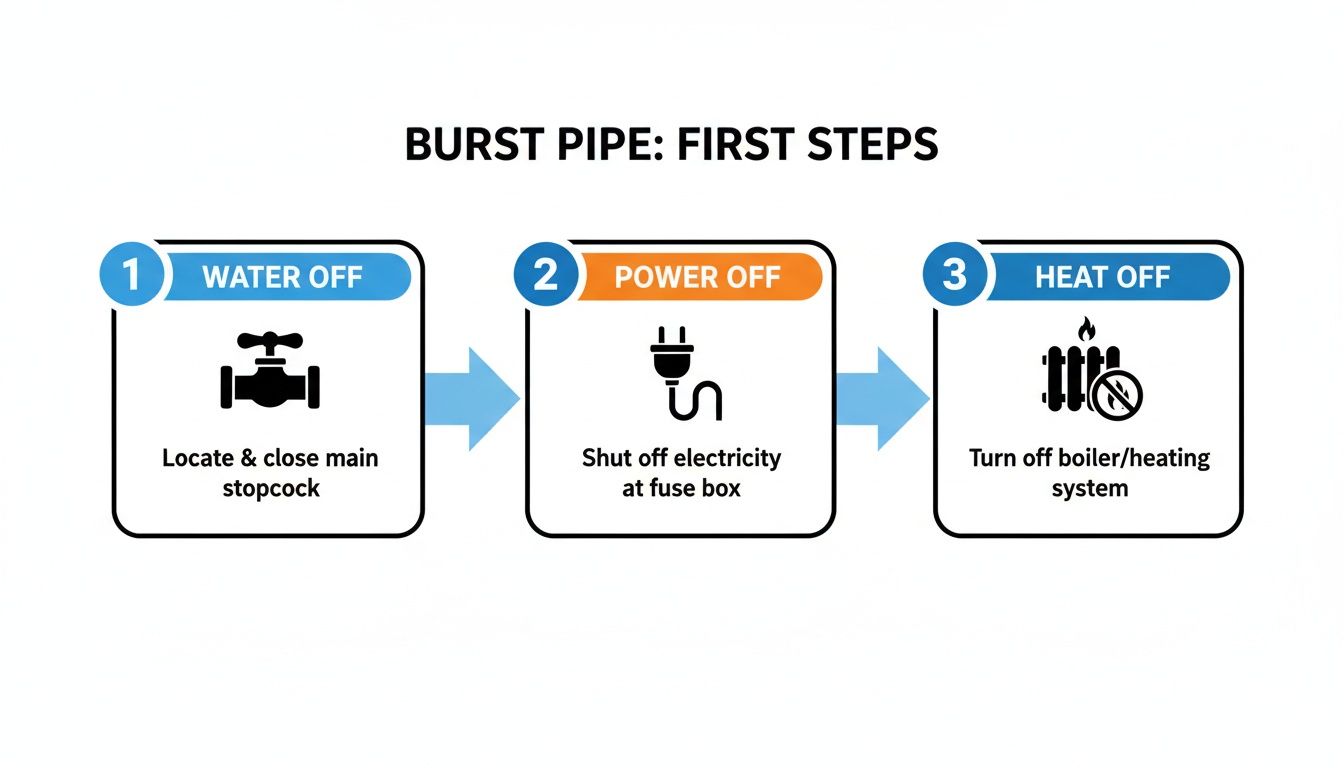
Following this sequence—Water, Power, Heat—is the smartest way to secure your home and keep the damage to a minimum while you wait for professional help to arrive.
Right, with the main water supply shut off, the immediate panic is over. You've bought yourself some crucial time to get the situation under control and stop any more damage from happening. The next job is a temporary burst pipe fix to handle any leftover water while you wait for professional help, like our team at Harrlie Plumbing and Heating.
This isn't about finding a forever solution; it's pure damage control. The aim here is to create a solid patch that can hold things together for a few hours.
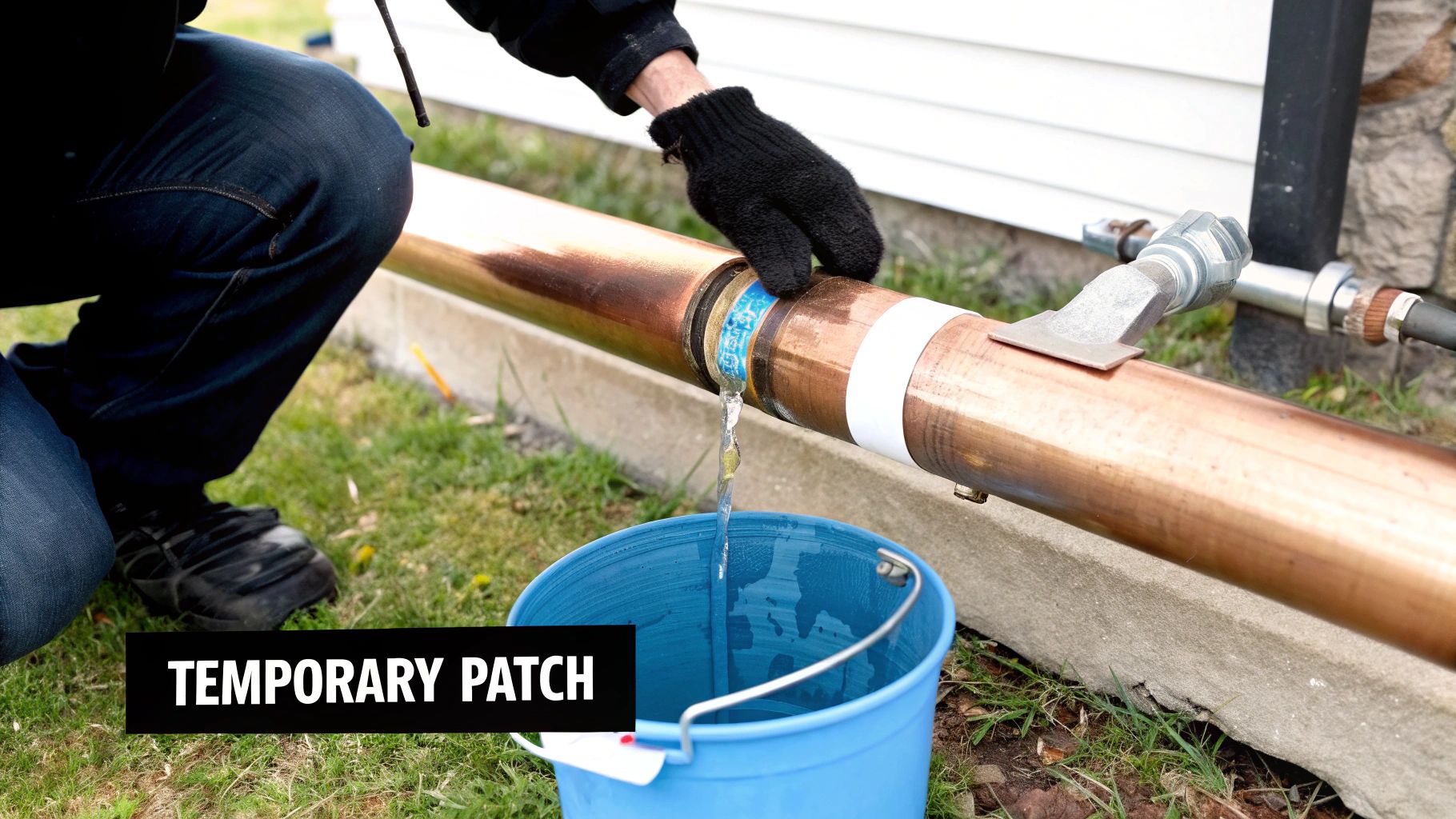
Before you start anything, get the area around the pipe as dry as you possibly can. Grab some old towels and give the pipe's surface a thorough wipe-down. Any moisture left behind will stop your repair materials from getting a good grip and creating a strong seal. It’s also a good idea to stick a bucket directly underneath to catch any last drips.
Choosing Your Temporary Repair Method
Picking the right material for the job is vital. To help you decide, here’s a quick look at your options.
Repair Method | Best For | Ease of Use | Where to Buy in Eastbourne |
|---|---|---|---|
Self-Fusing Silicone Tape | Pinhole leaks, small hairline cracks | Very easy | B&Q, Wickes, local hardware shops |
Pipe Clamp/Repair Sleeve | Larger splits and bigger cracks | Moderately easy | Screwfix, Toolstation, plumbing suppliers |
Epoxy Putty | Small to medium-sized holes, awkward joints | Easy | Most DIY and hardware stores |
Rubber and Hose Clamps | A DIY alternative for straight pipe sections | Moderately easy | B&Q, Wickes (buy parts separately) |
Each method has its place, but for most small household leaks, silicone tape is a fantastic, reliable choice. It stretches and bonds to itself, creating a tight, waterproof compression seal as you wrap it around the pipe.
If you're dealing with a more dramatic split, a pipe clamp is a more robust option. It’s basically a rubber gasket and a metal sleeve that bolts tightly around the pipe, putting direct pressure on the break to stop the water.
A Word of Warning: Whatever you do, steer clear of standard duct tape. It might seem like an obvious quick fix, but it's just not designed to handle water pressure. It will almost certainly fail, leaving you right back where you started.
Having a strong multi-purpose product like CT1 Sealant Adhesive in your toolkit can also be invaluable for containing a leak quickly. No matter which method you go with, the key is to make sure the patch extends well beyond the damaged area on both sides.
Applying the Patch Correctly
Once you’ve got your materials, the application itself is pretty straightforward, but you need to be careful to get it right.
For Silicone Tape: Start wrapping about two inches before the leak. Pull the tape taut as you go, overlapping each layer by at least half its width. Keep wrapping until you’re two inches past the leak. It’s the tension that creates the seal, so don’t be afraid to pull it tight.
For a Pipe Clamp: Place the rubber pad so it’s centred directly over the burst. Fit the metal housing over the top and tighten the screws evenly. It's best to alternate between them to ensure you're applying uniform pressure across the damaged section.
This temporary measure is a crucial stopgap, turning a potential disaster into a much more manageable problem. Once your temporary fix is secure, your next call should be to a professional plumber. A patch is just that—a patch. It's no substitute for a proper, permanent repair from an experienced team like us at Harrlie Plumbing and Heating.
Taking Stock of the Damage and Planning a Permanent Fix
Okay, so you’ve managed to get a temporary patch on the pipe. That’s a huge relief, and it’s stopped the immediate crisis, but let’s be clear: it’s a stopgap, not a permanent burst pipe fix. Now’s the moment to take a deep breath, properly assess the situation, and start planning for a real repair that will stand the test of time.
Your first job is a thorough visual inspection. Start at the source of the leak and work your way outwards. Here in Eastbourne, we see water damage show up in very predictable ways depending on the house. A burst pipe in a loft conversion in the Roselands area, for example, often leads to tell-tale stained or sagging plasterboard on the ceiling below. For ground-floor flats around Langney, it’s usually soaked carpets and warped skirting boards that give the game away.
Identifying the Full Extent of Water Damage
You need to look for more than just obvious puddles. Get your phone out and take photos of everything you find—this will be absolutely crucial for any insurance claim you make later on. Keep an eye out for:
Discolouration: Check walls, ceilings, and floors for any dark patches or water stains.
Structural Changes: Look for bulging plasterboard, peeling paint or wallpaper, and buckling floorboards.
Musty Odours: That damp, earthy smell is a big red flag. It means water has soaked deep into materials, and mould could be starting to grow.
These aren't just cosmetic issues; they can pose a serious financial and structural risk to your home. Burst pipes cause unbelievable chaos, racking up nearly £50 million in damage across the UK each year. It’s a sobering thought that over a third of affected homes end up with ceiling damage, while many others are left with ruined floors or even dangerous electrical problems.
If you’re facing the aftermath and need to file a claim, it’s well worth the time to master the home insurance claims process with this excellent resource. It can make a stressful situation a lot more manageable.
Understanding Your Permanent Repair Options
Once you’ve got a handle on the damage, it’s time to call in a professional. When we get a call at Harrlie Plumbing and Heating, our first job isn’t just to fix the pipe, but to figure out why it burst in the first place. Was it simple corrosion on old copper pipes, which we see a lot in Old Town properties? Or was it something else, like excessively high water pressure?
A proper, permanent repair is much more than just another patch. Depending on what we find, we might recommend one of several reliable solutions:
Pipe Section Replacement: This is the most common fix. We cut out the damaged section of pipe entirely and replace it with a new piece of copper or modern plastic pipe, which is then securely soldered or joined.
Compression Fittings: For pipes that are easy to get to, these mechanical connectors are fantastic. They create a strong, watertight seal without needing a blowtorch, making them a very quick and reliable repair method.
Full Pipe Rerouting: In some severe cases, or if the burst pipe is buried in an incredibly awkward spot, it sometimes makes more sense to reroute the pipe altogether to a safer, more accessible location. This helps prevent the same thing from happening again.
Knowing a bit about these options helps you have a more informed chat with your plumber. A professional assessment from our team at Harrlie Plumbing and Heating won't just give you a lasting fix; it will address the root cause of the problem, giving you total peace of mind.
Why and When To Call an Eastbourne Plumber
A temporary patch is a brilliant first move in an emergency, but it's crucial to understand its limitations. Knowing when to switch from DIY damage control to calling in a professional is the single most important part of successfully dealing with a burst pipe.
Frankly, some situations are just too risky or complex for a temporary fix.
Certain scenarios are non-negotiable and demand immediate expert help. If you can’t get the water shut off because the main stopcock is seized or you simply can't find it, you need to call a plumber right away. Every second the water keeps flowing, the damage gets worse.
The same urgency applies when water is anywhere near electrical fittings, plug sockets, or your fuse box. Water and electricity are a dangerous mix, creating a serious risk of fire or electrocution. This is a job strictly for professionals who know how to make the area safe before starting any plumbing work.
When a Professional Fix Is a Must
Beyond those immediate dangers, other signs will tell you that a DIY patch just won’t cut it. A professional plumber isn't just there to fix the break; their job is to figure out the underlying cause and make sure it doesn’t happen again.
You should always call for help when:
The Pipe Is Hidden: If the burst pipe is lurking inside a wall, ceiling, or under the floorboards, you need a professional. Opening up these structures without the right tools and know-how can cause serious structural damage.
You Suspect Widespread Issues: Living in an older Eastbourne property with original pipework? A single burst might be a warning sign that other sections are weak and ready to fail. A professional can assess the health of your entire system.
The Temporary Fix Fails: If your pipe clamp or repair tape isn’t holding, don't just keep trying to reapply it. It’s a clear signal that the water pressure or the size of the break is too much for a simple patch.
At Harrlie Plumbing and Heating, we've seen countless temporary fixes over the years. While they are a great first step, a professional repair is the only way to get a guaranteed, long-term solution and complete peace of mind.
Choosing a local Eastbourne team like ours means you get experts who understand the unique plumbing challenges in the area, from coastal corrosion to the quirks of older properties. A professional not only provides a permanent fix but also correctly diagnoses the root cause to prevent it from happening again.
When you're facing an emergency, it helps to know who to call. You can find more guidance in our article about how to find a 24-hour plumber in Eastbourne.
How To Prevent Pipes From Bursting in the Future
The best way to deal with a burst pipe is to make sure it never happens in the first place. Honestly, shifting from that frantic, reactive mindset to a proactive one will save you thousands of pounds in potential damages and a whole lot of stress. A few simple, year-round maintenance habits are all it takes to protect your Eastbourne home.
This isn't just a problem for individual homes; it’s a nationwide issue. UK water companies are in a constant battle with leaks, losing about a fifth of their total supply. While they've got advanced tech for mains repairs, the core principle for homeowners is exactly the same: proactive maintenance. With nearly 3 billion litres of water lost daily across the UK, taking a few small steps is your best defence against becoming another statistic.
Insulate Your Vulnerable Pipes
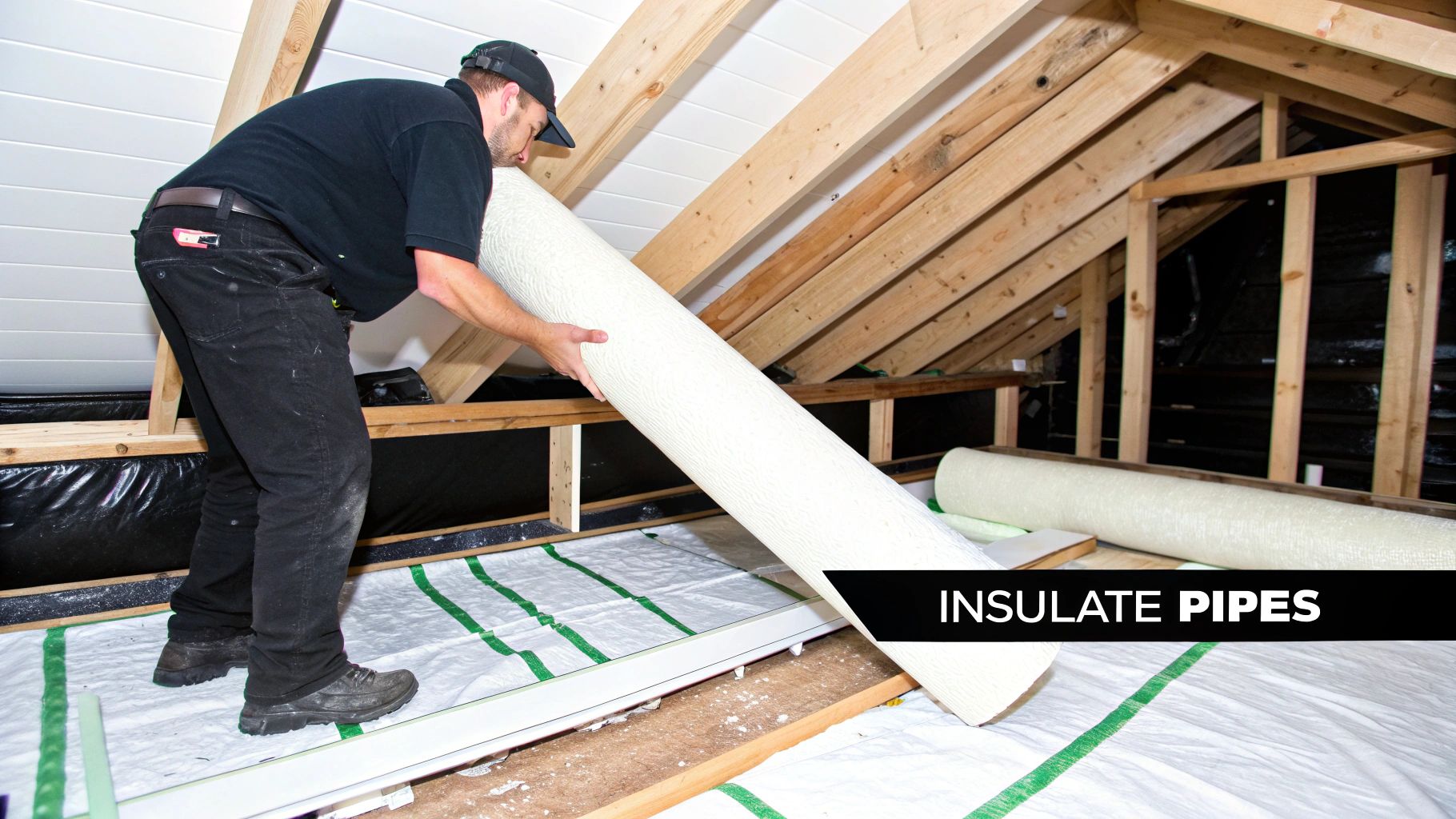
One of the biggest culprits behind burst pipes is freezing, especially in the unheated corners of your property. We see it all the time—exposed pipework in lofts, garages, or basements is incredibly vulnerable during an East Sussex cold snap. This is where proper pipe insulation, often called lagging, becomes essential.
Lagging is just simple foam tubing that slips right over your pipes, acting like a warm coat. It's cheap to buy from local places like B&Q and ridiculously easy to install yourself. Make a point to cover any pipes that run against external walls or are in particularly draughty spots, as these are at the highest risk of freezing solid. For a more detailed walkthrough, you can check out our guide on how to prevent frozen pipes in Eastbourne.
Harrlie Plumbing and Heating Tip: Don't forget about your outdoor taps. When winter rolls around, disconnect your garden hose and pop an insulating tap cover over it. It's a tiny step that stops ice from forming and backing up into the pipework inside your home.
Smart Habits for Colder Months
Your daily routines during winter can also make a huge difference. Keeping a consistent, low level of heat running through your home is far more effective than just blasting the heating for an hour here and there.
Here are a few practical tips we always share with our clients:
Going on Holiday? If you're heading away during the winter, never turn your heating off completely. Just set the thermostat to a low but constant temperature, somewhere around 12-14°C. This keeps just enough warmth circulating to stop the pipes from hitting freezing point.
Open Interior Doors: On really bitter nights, particularly in older Eastbourne properties with known cold spots, leave the kitchen and bathroom cabinet doors open. It seems odd, but it allows the warmer air from the room to circulate around the pipework hidden inside.
Fix Drips Promptly: That annoying dripping tap becomes a real threat in winter. It's a prime freezing point. A constant trickle of water can easily freeze, creating a blockage that builds pressure and leads to a burst pipe.
Schedule a Professional Plumbing Health Check
Ultimately, the best prevention strategy is to get a professional eye on your system. An annual plumbing health check from a trusted local team like Harrlie Plumbing and Heating can spot weaknesses before they turn into emergencies. We can identify early signs of corrosion, check that your water pressure isn't too high, and make sure your stopcock is working as it should. It turns pipe maintenance from a guessing game into a reliable plan for protecting your property.
Frequently Asked Questions About Burst Pipes
When a pipe bursts, the sudden chaos can leave you with a lot of questions. We get calls about this all the time, so we’ve put together the most common queries we hear from Eastbourne residents to give you clear, straightforward answers and a bit of peace of mind.
How Much Does an Emergency Burst Pipe Fix Cost in Eastbourne?
This is usually the first question people ask, and the honest answer is: it varies. The final cost of an emergency burst pipe fix really depends on a few things, like the time of day, how tricky the pipe is to get to, and just how bad the damage is. You should always expect an emergency call-out fee to cover the immediate, out-of-hours response.
Here at Harrlie Plumbing and Heating, we believe in being completely upfront with our pricing before we even pick up a tool. For a simple repair on an exposed pipe, you might be looking at a few hundred pounds. However, a much more complex job—say, a pipe hidden deep inside a wall in an older Old Town property—will naturally cost more because it involves more labour, materials, and potentially some plasterwork afterwards.
Can I Claim a Burst Pipe on My Home Insurance?
In most situations, the answer is yes. The vast majority of standard UK home insurance policies provide cover for what they call "escape of water," which is the industry term for damage caused by burst pipes. It's one of the most common claims they handle.
What's important to realise, though, is what's actually covered. Your policy will typically pay for the consequential damage—that's things like replacing a soaked carpet or replastering a water-stained ceiling. The policy often won't cover the cost of the actual plumbing repair to the pipe itself.
Our best advice is to always check your specific policy wording. Make sure you take plenty of photos of the damage for your claim and hang on to all receipts from any emergency work. Good documentation makes the whole claims process go much more smoothly.
How Do I Find My Main Water Stopcock?
Knowing where your stopcock is before an emergency is one of the most important bits of homeowner knowledge you can have. In most Eastbourne homes, particularly older ones, the main stopcock is found under the kitchen sink, right where the mains water pipe comes into the house.
If you can't see it there, have a look in other logical spots:
In a downstairs loo or cloakroom
Tucked away in a utility room or boiler cupboard
Inside an attached garage
Sometimes, it’s outside in a small box under a cover near your property boundary
It usually looks like a small brass tap with a T-bar handle or, in more modern homes, a simple lever. We can't stress this enough: find it now and give it a gentle turn back and forth every six months. This quick check stops it from seizing up, ensuring it will work when you need it most.
Is a Leaking Pipe the Same as a Burst Pipe?
While they both involve water going where it shouldn't, a leak and a burst are very different beasts, especially when it comes to urgency. A leak is often a slow, nagging drip from a joint or a tiny crack. It causes damage gradually, and your first clue might be a persistent damp patch or a musty smell.
A burst pipe is a different story entirely. It's a sudden, catastrophic failure of the pipe, releasing a huge amount of water very quickly. It's an immediate emergency. While any leak needs sorting out, a burst pipe demands instant action—shutting off the water supply is the absolute first priority to prevent serious flooding.
If you're dealing with a plumbing emergency or just want the reassurance that comes from a professional check-up, please don't hesitate to get in touch. For a reliable, local, and transparent service for any burst pipe fix in Eastbourne, contact Harrlie Plumbing and Heating today.
Find out more at https://www.harrlieplumbing.co.uk.

Comments