What Is a Water Hammer and How to Silence Noisy Pipes for Good
- Luke Yeates
- Dec 19, 2025
- 12 min read

That sudden, loud bang you hear coming from your pipes isn’t a ghost in the machine—it has a name: water hammer.
Imagine the water flowing through your plumbing is like a fast-moving train. When you abruptly turn off a tap, or an appliance like your washing machine suddenly shuts off its intake, it's like a solid steel wall instantly appearing on the tracks. The water has nowhere to go. It crashes to a halt, and all that forward momentum has to go somewhere. The result? A powerful shockwave, known as hydraulic shock, that reverberates back through your pipes, causing that alarming noise.
Understanding That Alarming Bang in Your Pipes
If you've ever been startled by a deep, hollow bang from inside your walls moments after the dishwasher stops filling, you’ve experienced water hammer firsthand. It's a surprisingly common plumbing issue that, while alarming, has a straightforward physical explanation. The noise you're hearing is the sound of a pressure surge violently hitting the inside of your pipework.
This hydraulic shock happens any time the flow of water is stopped in its tracks. Modern appliances are often the main culprits because they use solenoid valves, which snap shut almost instantly. That kinetic energy from the moving water gets converted into a high-pressure wave that travels backwards through your entire plumbing system at incredible speed.
Common Signs of Water Hammer
Across Eastbourne, from the lovely Victorian terraces in the Old Town to the modern flats near the Sovereign Harbour, the symptoms are almost always the same. Learning to recognise them is the first step toward fixing the problem for good.
Loud Banging or Knocking: This is the most obvious sign. It usually happens the moment a tap is turned off quickly or an appliance finishes a cycle.
Vibrating Pipes: You might feel or hear the pipes shuddering inside the walls, particularly after a toilet cistern has finished refilling.
Shaking Gauges: If you have a visible pressure gauge on your boiler or water system, you may notice the needle jump erratically when the noise occurs.
At Harrlie Plumbing and Heating, we often find that the initial shock of hearing a water hammer is what prompts Eastbourne residents to call us. It’s not just a noise; it’s a clear signal that your plumbing is under significant stress.
Understanding what water hammer is helps you realise it's more than a simple annoyance. Those powerful shockwaves place immense strain on pipe joints, valves, and fittings. Over time, this can lead to weakened connections and, eventually, costly leaks. That’s why getting to the bottom of the cause is crucial for the long-term health of your home’s plumbing.
Decoding the Causes of Your Noisy Pipes
So, you know what water hammer is, but that's only half the mystery. The real question is: why is it happening in your house? While the immediate trigger is always water flow stopping on a sixpence, a few underlying culprits are usually to blame for setting the stage.
The most common offenders we see in modern plumbing are appliances fitted with solenoid valves. Think of your washing machine or dishwasher. These use electrically controlled valves that snap shut almost instantly. It's incredibly efficient, but that abrupt stop is the perfect recipe for a powerful hydraulic shockwave, turning a peaceful kitchen into the source of a startling BANG.
Beyond Modern Appliances
It's not always the new appliance's fault, though. Several other conditions can make the problem much, much worse. Here at Harrlie Plumbing and Heating, we've seen just about every variation across Eastbourne's diverse properties.
Here are a few of the usual suspects:
High Water Pressure: If your home's water pressure is cranked up too high, the water itself is moving with much greater force. When that flow slams to a halt, the resulting shockwave is far more violent. Some parts of Eastbourne just naturally have higher municipal water pressure, making this a frequent issue. If you’re not sure about your own home, you might find some useful tips on how to fix water pressure in your Eastbourne home.
Loose or Poorly Secured Pipes: Over time, the clips and brackets holding your pipes in place can work themselves loose or even fail completely. We see this a lot in older Victorian or Edwardian houses where the original pipework has settled over the decades. When a pressure surge hits these unsecured pipes, they're free to vibrate and slam against joists, floorboards, or walls, which massively amplifies the noise.
Failing Air Chambers: Many older plumbing systems were built with something called air chambers – basically, vertical, air-filled pipes installed near taps. They’re designed to act as little cushions, absorbing the shock of stopping water. The trouble is, they can become waterlogged over the years, losing their cushioning effect and letting the water hammer right through.
A classic scenario we encounter is in a modern flat near Sovereign Harbour. A new, high-efficiency washing machine gets installed, and suddenly the owner is reporting loud banging noises. The issue isn't a fault with the machine itself; it's the combination of its fast-acting valve and the building's existing high water pressure creating the perfect storm for water hammer.
Common Water Hammer Triggers in Your Home
Figuring out the true source is the first step towards a lasting solution. This table should help you pinpoint the likely cause based on where and when you're hearing that tell-tale banging in your Eastbourne property.
The Noise or Symptom | Most Common Cause | Where It Typically Happens |
|---|---|---|
A single, loud BANG when a machine finishes filling. | Solenoid valve on a modern appliance. | Near the washing machine, dishwasher, or even a smart fridge. |
A series of shuddering or vibrating noises. | Loose or unsecured pipes. | Inside walls, under floorboards, or in the ceiling. |
A sharp knock when you turn a tap off quickly. | Failing air chamber or high pressure. | Close to the sink, basin, or bath where the tap is located. |
A generalised banging from multiple locations. | High overall water pressure. | Can occur anywhere in the house, often inconsistently. |
Conversely, in a period home over in the Meads, the root cause might be completely different. The original pipework, which has served the house faithfully for a century, may have simply worked itself loose. In that case, the solution isn't just about managing pressure but physically re-securing the plumbing to stop it from moving. Getting the diagnosis right is everything.
The Hidden Force Behind the Shockwave
To really get to the bottom of water hammer, we need to look at the powerful physics at play. Don't worry, though—you won't need a textbook. The key culprit is something called kinetic energy. Just imagine the water flowing through your pipes isn't simply a liquid but a heavy freight train with serious momentum.
Now, picture what happens when a valve slams shut. That moving water, along with all its energy, is brought to an instant, jarring halt. That energy can't just vanish; it has to go somewhere. It immediately converts into an intense pressure surge that rockets back through the pipework at the speed of sound, creating the shockwave you hear as a loud bang.
This pressure spike can be enormous, often reaching several times your system's normal operating pressure. For a split second, the force inside your pipes becomes dangerously high, which is why that noise is a symptom of something much more serious.
A Problem Centuries in the Making
This isn't a new issue unique to modern homes. The phenomenon, known as hydraulic shock, has been a headache for UK engineers for centuries, affecting everything from massive Victorian water mains to the domestic plumbing inside a typical Eastbourne terraced house.
In fact, historical accounts show that water hammer has been a recognised problem since at least the 18th century. By the mid-20th century, technical reports were treating it as a serious design hazard, highlighting how repeated pressure spikes cause chronic damage to joints and supports over time. You can discover more about the history of hydraulic shock and its long-term impact on UK infrastructure.
This decision tree helps visualise the common causes of water hammer, guiding you from that initial startling sound to its likely source.
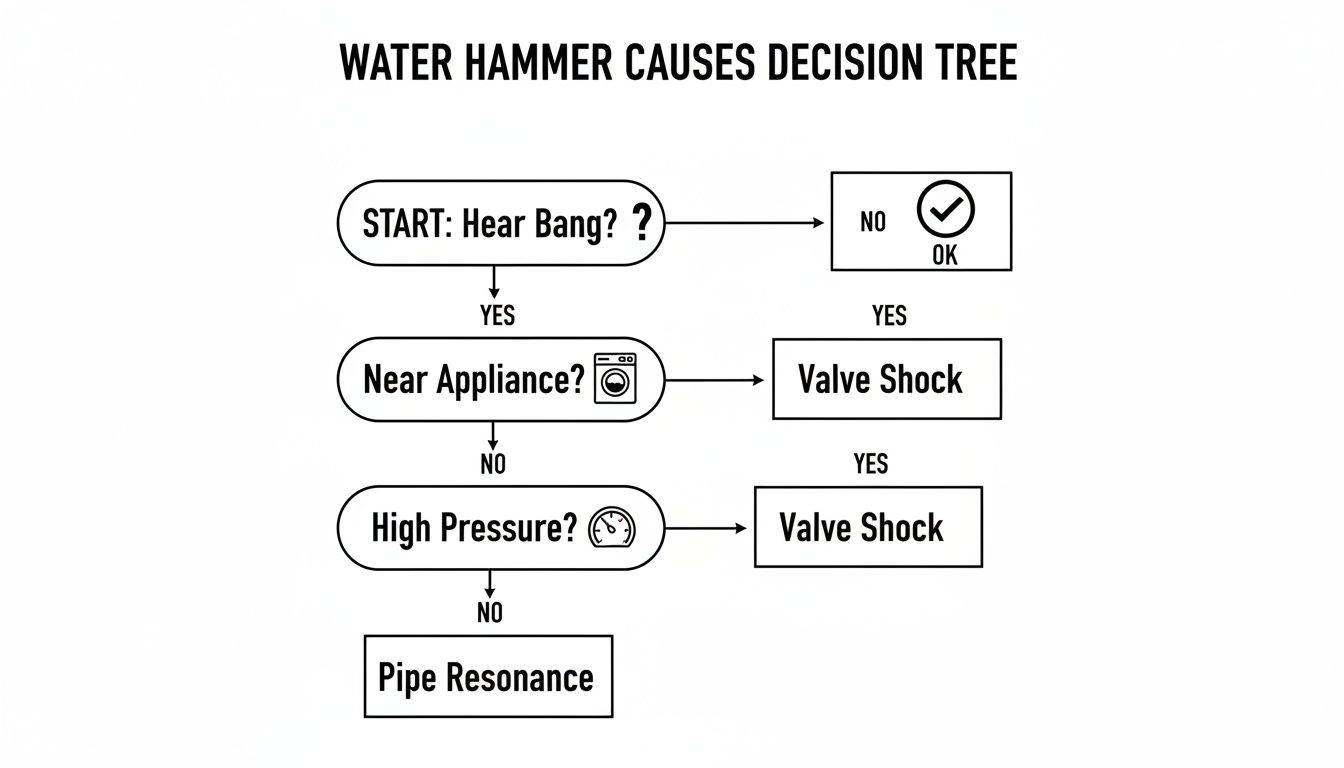
As the flowchart shows, while the bang is the first clue, its location—whether it's near a specific appliance or a more general noise—is crucial for diagnosing the root cause. At Harrlie Plumbing and Heating, our first step is always to pinpoint this source, as it determines the most effective and lasting solution. Understanding this hidden force is the first step toward appreciating why it needs to be properly addressed.
The Real Damage Water Hammer Can Cause
That loud, jarring bang you hear isn't just an irritating noise; it’s a powerful warning sign. Each time it happens, a violent pressure surge is slamming through your home’s entire plumbing network, putting immense stress on every pipe, joint, and fitting. Ignoring this symptom is a costly gamble that can lead to far more serious problems than just a bit of noise.
Over time, these repeated shockwaves act like a tiny hammer, relentlessly striking your plumbing from the inside. This constant battery can slowly but surely weaken pipe joints and loosen fittings, leading to persistent, hard-to-find drips behind walls or under floorboards. Think of the potential damage a slow, undetected leak could cause in a beautiful flat in the Meads area of Eastbourne, all originating from what seemed like a minor nuisance.
From Annoyance to Emergency
The damage isn't limited to the pipes themselves. The delicate internal valves inside your expensive appliances—like washing machines, dishwashers, and even modern boilers—are not designed to withstand such violent pressure spikes. This can lead to premature failure and costly repairs or replacements.
However, the most catastrophic outcome is a burst pipe. The constant stress from water hammer can fatigue the pipe material to its breaking point. This is especially true for older copper or iron pipework common in many Eastbourne properties. What was once a simple noise can escalate into a full-blown flood, causing extensive water damage to your home’s structure, furnishings, and electrics. Learning the first steps to take if you experience a burst pipe in your house can help minimize water damage while you wait for professional help.
At Harrlie Plumbing and Heating, we often explain to clients that fixing water hammer is an investment in prevention. A controlled, planned repair is always far cheaper and less stressful than an emergency call-out for a burst pipe and the subsequent water damage restoration.
The Financial Consequences of Inaction
The science backs up the risk. Water hammer creates transient pressure spikes that can far exceed your system's normal operating pressures. UK engineering guidance clearly shows that these uncontrolled surges lead to fatigue failures, joint leaks, and pipe bursts.
These outcomes have resulted in significant remedial costs in UK industrial projects, sometimes reaching tens of thousands of pounds per installation. For homeowners, while the scale is smaller, the financial principle is the same: preventing the problem is always more cost-effective than dealing with the aftermath. You can read more about these engineering findings to understand the forces at play. Addressing what is a water hammer proactively protects both your plumbing and your wallet.
How to Fix Water Hammer and Restore Quiet
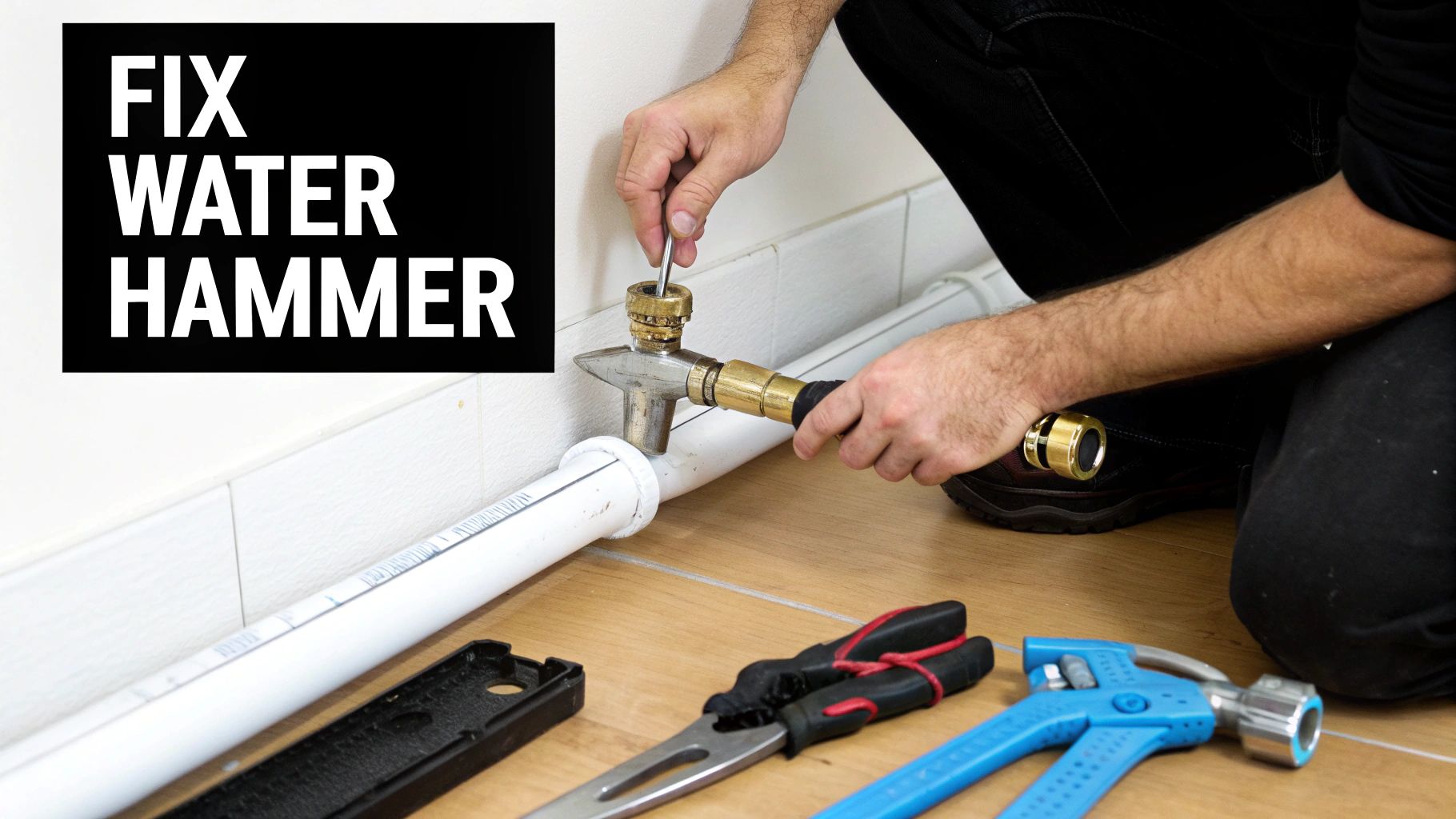
Hearing that relentless banging in your pipes is certainly frustrating, but the good news is you don’t have to live with it. There’s a clear action plan to restore peace and quiet, and the right approach all comes down to what’s causing the racket in the first place.
We can split the solutions into two camps: simple DIY checks you can tackle yourself, and permanent fixes that are best left to a professional.
Simple DIY Checks You Can Perform
Before you pick up the phone, there are a couple of safe and straightforward checks you can do. These methods often resolve issues caused by loose pipes or waterlogged air chambers, which are common culprits behind water hammer, especially in older Eastbourne homes.
Secure Loose Pipework: Take a careful look at any visible pipework—under sinks, in cupboards, or in the loft. If you find pipes that are loose or vibrating, you can secure them with new pipe clips or brackets. This simple action can stop them from banging against walls or joists when water rushes through.
Recharge Your Air Chambers: If your home's plumbing is on the older side, it might have air chambers that have slowly filled with water. To fix this, you’ll first need to shut off your home's main water supply. Our guide on how to turn off your water main walks you through the essential steps. With the water off, open all the taps in your home at the highest and lowest points to completely drain the system. This allows air back into the chambers, restoring their cushioning effect.
"A well-secured pipe is a quiet pipe. We often find that half the battle against water hammer is simply ensuring the plumbing can't move when the pressure surge hits."
When to Call in the Professionals
If those DIY steps don’t solve the problem, or if the banging is severe and frequent, it’s time for a permanent, professional solution. This is where getting help from expert plumbing companies like Harrlie Plumbing and Heating can make all the difference, as they have the tools and experience to tackle more complex issues head-on.
A qualified engineer from Harrlie Plumbing and Heating can implement solutions that require technical skill and specialised equipment.
Installing Water Hammer Arrestors: This is the most common and effective fix in our toolbox. An arrestor is a small device containing an air-filled chamber or a spring-loaded piston that absorbs the hydraulic shockwave right at the source. We typically install these near problematic appliances like washing machines or dishwashers.
Adjusting the Pressure-Reducing Valve (PRV): If your entire house suffers from high water pressure, we can adjust your existing PRV or install a new one at the main supply point. Lowering the pressure system-wide reduces the force of the water, calming the entire network of pipes.
Replacing Outdated Components: In some cases, old, failing valves or worn-out sections of pipework are the root cause. We can trace the problem to these components and replace them, ensuring your plumbing operates smoothly and safely for years to come.
Modern plumbing engineering uses clever strategies to manage these forces, from slow-closing valves to precisely placed arrestors. Our experience shows that a professional assessment and installation not only fixes the noise but also significantly cuts down on the risk of future repair costs. For Eastbourne residents, calling Harrlie Plumbing and Heating is the safest and surest path to a lasting fix.
Your Eastbourne Water Hammer Questions Answered
We’ve covered what water hammer is, the science behind it, and how to get it sorted. But you probably still have a few questions. Here, we'll tackle some of the most common queries our team at Harrlie Plumbing and Heating hears from homeowners right here in Eastbourne.
Is Water Hammer a Plumbing Emergency?
A single, mysterious bang probably isn't a crisis. But if that hammering sound becomes a regular occurrence, you should treat it as an urgent warning sign from your plumbing. It’s a clear signal that your pipes are taking a serious, repeated beating.
This constant stress can lead to weakened joints, annoying drips, and, in a worst-case scenario, a burst pipe and some serious water damage. For anyone in Eastbourne living in an older property with original pipework, it’s particularly wise to get it looked at sooner rather than later. If the noise suddenly gets much louder or you spot a damp patch, don't hesitate—call a professional like Harrlie Plumbing and Heating immediately.
How Much Does It Cost to Fix Water Hammer?
Honestly, the cost to fix water hammer really depends on what’s causing it. A simple DIY job, like adding a few clips to secure some rattling pipes you can easily get to, might only set you back a few quid for the materials.
For professional fixes, the costs will vary a bit more:
Single Arrestor Installation: Getting a plumber to fit a single water hammer arrestor near a troublesome appliance usually costs between £100 and £250.
PRV Adjustment or Installation: If the issue is high water pressure across your whole system, then adjusting or fitting a new pressure-reducing valve (PRV) is a more involved job, and the cost will reflect that.
Complex Jobs: If we need to fit multiple arrestors or get to pipes hidden behind a wall, the price will naturally go up to cover the extra labour involved.
At Harrlie Plumbing and Heating, we believe in being completely upfront. We’ll always give our Eastbourne clients a clear, detailed quote after we’ve properly diagnosed the root cause of the problem in your home. No surprises.
Can My New Washing Machine Cause Water Hammer?
Yes, absolutely. In fact, it's one of the most common reasons we get called out. Modern washing machines and dishwashers are designed for high efficiency, which means they have solenoid valves that snap shut in an instant.
It’s this sudden stop that sends that powerful shockwave crashing through your pipes. If your old machine was quiet as a mouse but the new one sounds like a drum solo, it’s almost certainly down to these fast-closing valves. Popping a dedicated water hammer arrestor on the water lines for the new appliance is usually the quickest and most effective fix.
We see this a lot in the newer builds around Eastbourne. The plumbing is modern, but it just wasn't designed to cope with the aggressive valve closures of the latest high-efficiency appliances. It’s a classic case of new tech meeting an unprepared system.
Why Should I Hire a Local Eastbourne Plumber?
When you're dealing with something like water hammer, choosing a local plumber gives you a real advantage. A company like Harrlie Plumbing and Heating knows the housing stock in Eastbourne inside and out.
We understand the unique plumbing quirks you find in everything from the Victorian terraces in the town centre to the modern estates on the outskirts. We’re familiar with the local water pressure patterns and are fully up-to-date on all the relevant building codes. Plus, being local means we can get to you much faster in an emergency. You’re not just hiring a random contractor; you're getting a local team that’s part of the community and committed to providing reliable, lasting solutions for your home.
If you're fed up with the constant banging and worried about what it's doing to your pipes, don't just ignore it. Contact Harrlie Plumbing and Heating today for a professional diagnosis and a permanent solution to your water hammer problem. Visit us at https://www.harrlieplumbing.co.uk to book your appointment.

Comments