Burst Pipe in House: Quick Steps to Minimize Water Damage

That gut-wrenching moment you see water spreading across your floor or dripping through the ceiling is pure panic. A burst pipe is one of a homeowner's worst nightmares, but what you do in the first few minutes can make a world of difference.
Getting it wrong can lead to thousands of pounds in damage. A calm, methodical approach, on the other hand, can save your property and your sanity. We’ll walk you through the critical first steps to take to get the situation under control.
Your Immediate Action Plan for a Burst Pipe
Find and Shut Off the Main Water Supply
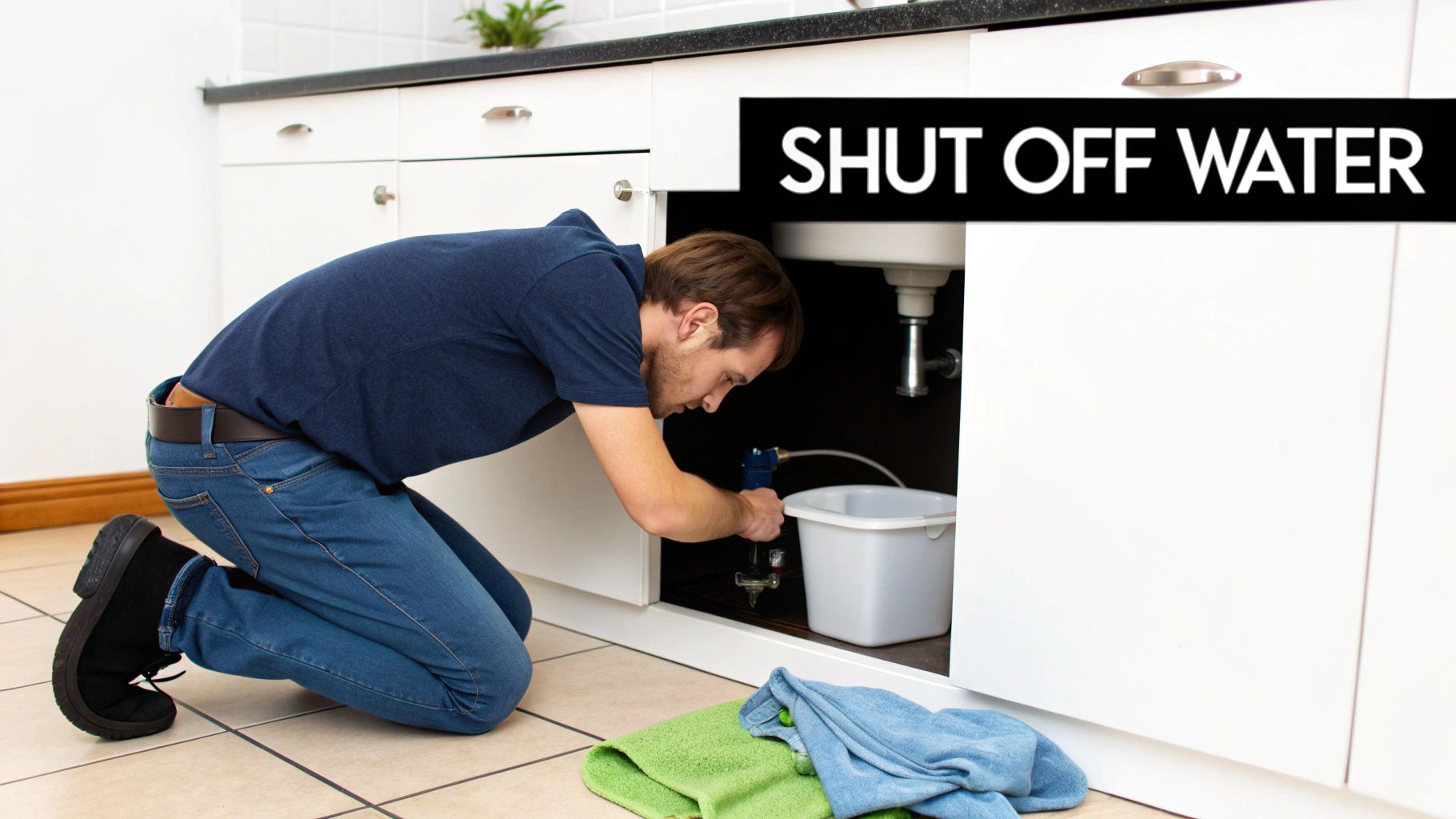
Before you do anything else, you must stop more water from flooding your home. This means finding your main stopcock and turning it off, fast.
In many Eastbourne homes, especially the older terraced houses in areas like Roselands or the semi-detached properties in Old Town that we at Harrlie Plumbing and Heating visit so often, you'll likely find it under the kitchen sink. But don't stop looking there. It could also be tucked away in a downstairs loo, a utility cupboard, or even the garage. Look for a small tap-like handle and turn it clockwise until it's completely tight.
Can't find it inside? Don't waste precious time searching. Some stopcocks, particularly in newer builds around Sovereign Harbour, are located outside, often under a small metal or plastic cover set into the pavement or your driveway.
Pro Tip: Every single homeowner should know where their main stopcock is before an emergency strikes. Seriously, take five minutes right now to find it. Give it a gentle turn to make sure it isn't seized up. Knowing its location can be the single most important factor in preventing catastrophic water damage.
For a more detailed walkthrough, our guide on how to turn off your water main has specific tips for different property types you might find in the local Eastbourne area.
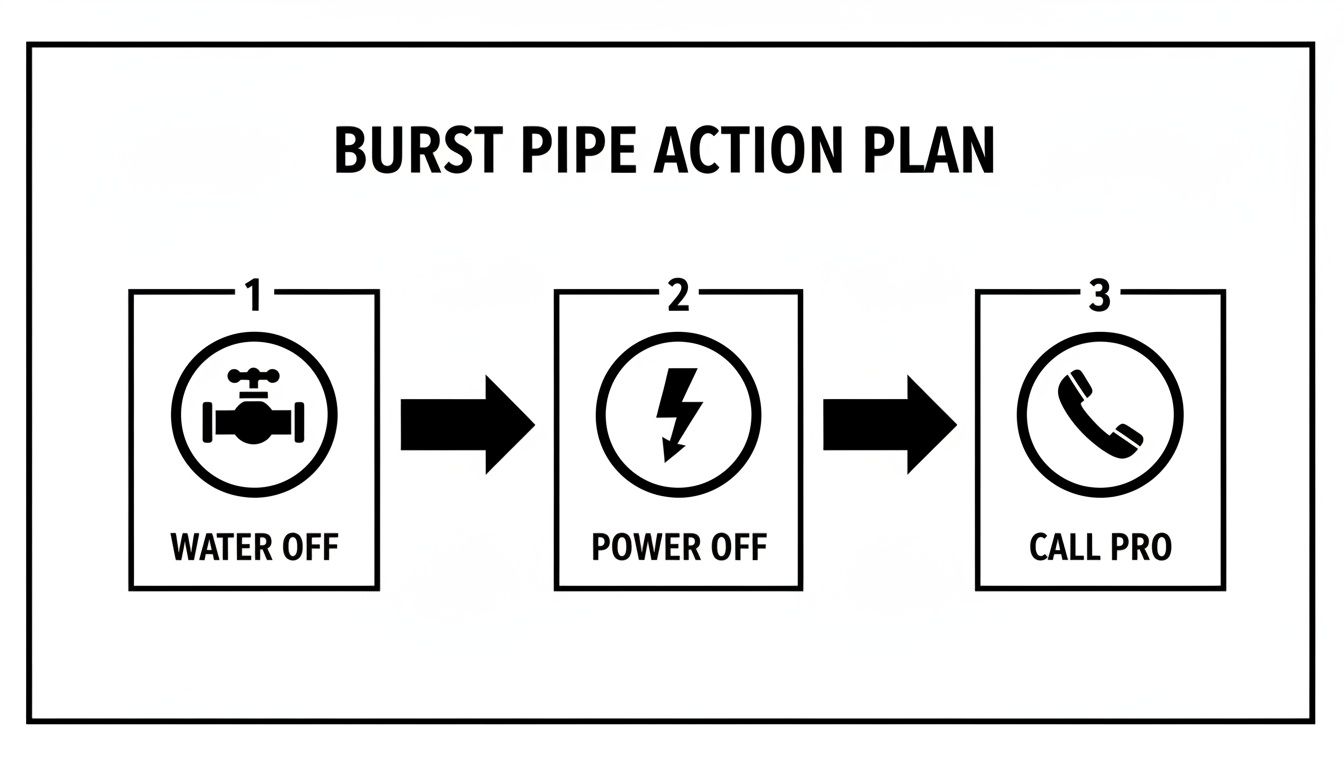
Prioritise Electrical Safety
Water and electricity are a lethal mix. If water is leaking anywhere near light fittings, plug sockets, or appliances, your next step is to kill the power to those areas immediately.
Go to your consumer unit (or fuse box) and switch off the main power. If you know which circuits supply the affected rooms, you can just flip those breakers. Under no circumstances should you touch any wet electrical switches or fittings. Your safety is the absolute priority here, and cutting the power removes the very real risk of electric shock.
Start Damage Control and Call for Help
With the water and electricity safely off, you can shift your focus to managing the mess and preventing further damage.
Move Your Valuables: Get furniture, rugs, electronics, and anything else of value out of the water's path. Move things to a dry room or at least to a higher spot.
Contain the Spread: Grab old towels, buckets, mops—whatever you have—and start soaking up the standing water. The faster you get it up, the less chance it has to seep into floorboards and cause long-term structural issues.
Drain the System: Go around the house and open up all the cold taps. Flush the toilets, too. This helps drain the remaining water from the pipes, relieving pressure and slowing the leak from the burst section.
Now is the time to call in the professionals. You've handled the immediate crisis, but a burst pipe needs a permanent, expert repair. Calling a trusted local team like Harrlie Plumbing and Heating means an expert is on their way to your Eastbourne home to sort the problem properly, letting you focus on the clean-up.
So, Why Do Pipes Actually Burst in UK Homes?
Once you've wrestled the situation under control, the big question looms: why on earth did this happen? Getting to the bottom of what caused your pipe to burst is the single best way to prevent a nightmare sequel. Here in the UK, a few usual suspects are behind most of these messy, stressful, and incredibly destructive plumbing failures.
And it’s a far more common problem than you might think. Insurers deal with thousands of claims every year. In fact, the Association of British Insurers reported that "escape of water" incidents cost a staggering £987 million in 2022. That breaks down to £2.7 million a day in payouts, a figure that really shows how widespread and costly this issue is. You can explore the full analysis on burst pipe costs to see the scale of the problem.
This isn't just a national statistic; it's a real-world headache for homeowners right here in Eastbourne.
The Chilling Effect of Freezing Temperatures
By a long shot, the number one cause of burst pipes in the UK is freezing weather. It's simple physics, really. When water freezes into ice, it expands by about 9%. This expansion puts an incredible amount of pressure on the inside of a pipe—often more than it can handle.
Pipes tucked away in unheated areas are the most vulnerable. We're talking about the copper pipes running through your loft, garage, or even a chilly conservatory. At Harrlie Plumbing and Heating, our phones always start ringing during the first proper cold snap of winter, with calls from Eastbourne residents who've just discovered a leak that started somewhere they rarely look.
A classic local example is the feed pipe to an outside tap. We've seen many cases in homes around Hampden Park where an unlagged outside tap pipe freezes solid on a frosty night. This creates a powerful ice blockage that can split the pipe right open.
When Old Plumbing Gives Up the Ghost
Many of Eastbourne’s properties are full of character, but that charm often comes with plumbing from a different era. While it was built to last, original copper or galvanised steel pipework can't fight off age forever. Over many decades, corrosion slowly but surely thins the pipe walls from the inside out.
This process creates invisible weak spots that are just waiting to fail under everyday water pressure. You often won't see a single sign of trouble until it’s far too late. The first—and most dramatic—clue that a pipe has corroded through is usually the burst itself.
At Harrlie Plumbing and Heating, we frequently work on beautiful period properties around the Meads and Old Town areas of Eastbourne. While the homes are stunning, their ageing pipework often requires careful inspection and proactive replacement to avoid the inevitable failure that comes with time.
The Shock of Sudden Water Pressure Changes
Your home’s plumbing is designed to work within a specific pressure range. But sudden spikes, often called ‘water hammer’, can put an immense strain on pipes and their fittings. This can be caused by something happening in the mains supply or even just by a valve shutting off abruptly, like in a washing machine.
This sudden stop sends a shockwave vibrating back through the pipework. If a joint or a section of pipe is already weak from corrosion, that jolt can be the final straw. You might even hear it as a loud banging or shuddering sound from inside your walls just before a pipe lets go.
An Unfortunate DIY Mishap
The last common cause is simple human error. It’s surprisingly easy to accidentally hit a pipe when you're doing a bit of home improvement. A nail meant for a picture frame, a drill bit that goes a little too deep, or even just shifting floorboards can be enough to puncture a water pipe.
These kinds of accidents often start as a tiny pinhole leak that goes completely unnoticed for days or even weeks. By the time you spot that damp patch spreading across your ceiling or wall, serious water damage may have already taken hold behind the scenes, turning a minor slip-up into a major repair job.
Spotting the Early Warning Signs of a Pipe Problem
A major pipe burst rarely happens out of the blue. Long before the chaos of a full-blown flood, your home’s plumbing system often sends out little distress signals. Learning to recognise these clues is the difference between a simple, proactive fix and a frantic call-out in the middle of the night.
Think of yourself as a detective in your own home. You need to tune into the sights and sounds that are just a bit off—these are almost always the first signs that a pipe is under stress, corroding from the inside out, or has developed a pinhole leak. Ignoring them is a gamble that rarely pays off.
Listen for Unusual Noises
Often, the first sign of a looming pipe problem is something you hear, not see. Have you noticed any odd sounds coming from inside your walls or under the floorboards when you use the water?
Keep an ear out for these auditory red flags:
Hissing or Whistling: A faint, persistent hissing sound after you’ve turned off a tap is a classic sign of a small, high-pressure leak. It’s the sound of water being forced through a tiny crack somewhere you can't see it.
Gurgling or Bubbling: If you hear gurgling from your drains, it could point to a blockage that's causing pressure to build up elsewhere in the system.
It's easy to dismiss these noises as just 'the house settling', but they're your plumbing’s way of crying for help. A quick investigation by an expert from Harrlie Plumbing and Heating can diagnose the issue before that strained joint finally gives way.
Watch for Visual and Physical Clues
Beyond strange sounds, there are several visual signs that point towards a hidden leak or a weakened pipe. Keeping an eye out for these can prevent a small issue from becoming a major structural problem.
A musty, damp smell you can't quite trace? That’s a classic sign of hidden moisture. Look out for sudden patches of mould or mildew on walls, too, especially in corners or near the ceiling—it means there's a consistent water source feeding it.
One of the most definitive checks you can do is with your water meter. Turn off every tap and water-using appliance in the house, then go and look at the meter. If that little dial is still spinning, even slowly, you have a leak somewhere on your property. It’s a sure-fire sign that water is escaping.
A sudden, unexplained drop in water pressure across all your taps is another strong indicator of a significant leak in your supply line. You might also spot discoloured or brownish water, which can mean the inside of your pipes is rusting away—a common issue in older Eastbourne homes. If you need a hand pinpointing the source, our guide on how to find a water leak in your home has some easy DIY tips to get you started.
While a single leak is bad enough, the vulnerability of the wider water network shows just how common pipe failures are. For instance, a single burst main in Oxford recently left 6,000 homes without water and forced schools to close. It’s a stark reminder of the constant pressure our water infrastructure is under, making it even more important to pay attention to the warning signs in your own home. You can read more about the findings on UK water network vulnerability to understand the community-wide impact.
What To Expect When We Arrive To Fix Your Burst Pipe

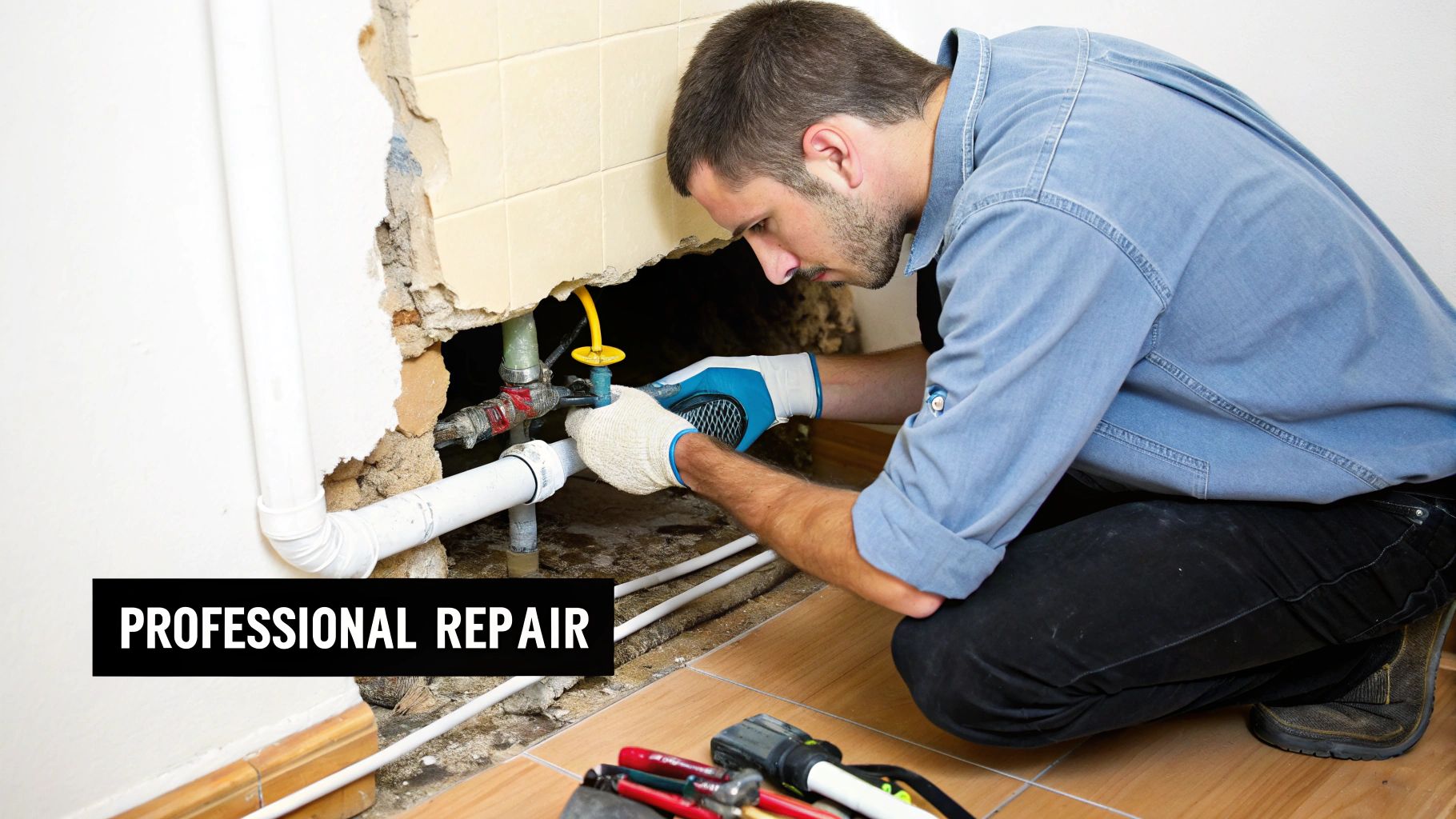
So, the immediate panic of dealing with a burst pipe in house is over. You've shut off the water and done what you can to control the chaos. Now what? The next stage can feel just as stressful, but knowing what our professional repair process involves can help set your mind at ease and give you a clear picture of how we get your home back to normal.
When a Harrlie Plumbing and Heating engineer arrives at your Eastbourne property, we don’t just start cutting into walls. Our first job is always a careful and thorough assessment to get to the root of the problem. We believe in fixing it right the first time.
The Initial Assessment And Diagnosis
Our top priority is to find the exact location and cause of the burst pipe. Sometimes it’s staring you right in the face, but more often than not, the problem is tucked away behind a wall, under floorboards, or in the loft. We use our experience—and sometimes specialist diagnostic tools—to pinpoint the source without causing any unnecessary damage to your home.
This initial check involves a few key steps:
Pinpointing the Failure: We'll trace the pipework to find the precise rupture point. This tells us the extent of the plumbing repair that’s immediately needed.
Finding the Cause: Was it a frozen pipe in an uninsulated loft? A corroded joint in a Victorian terrace in Upperton? Or just accidental damage? Understanding why it happened is vital to prevent it from happening again.
Evaluating Collateral Damage: We’ll also inspect the surrounding areas for signs of water damage, checking how far moisture has seeped into plasterboard, insulation, and timber frames.
This evaluation is absolutely critical. A quick patch-up on a visible leak without understanding the root cause is just asking for more trouble down the line. We’re focused on providing a permanent solution, not a temporary sticking plaster.
Common Pipe Repair Techniques
Once we have a full picture of the problem, the physical repair can begin. The method we use will depend on the type of pipe and the kind of damage it has sustained. Most homes in Eastbourne have a mix of copper and modern plastic (PEX/Push-fit) pipes.
For traditional copper pipes, the standard professional repair involves carefully cutting out the damaged section. We then fit a brand-new piece of copper, creating a watertight seal using either classic soldering techniques or modern press-fit connectors. Both methods create a durable, long-lasting fix that becomes a seamless part of your plumbing system.
With plastic pipes, the process is usually a bit quicker. We remove the compromised section and connect the new pipe using secure push-fit or compression fittings. These create an incredibly reliable seal that’s just as robust as the pipe itself.
No matter the material, our goal is always the same: to replace the failed section with a new, secure component that restores the integrity of your entire plumbing system. We make sure the repair is not just functional but built to last.
Beyond The Pipe: The Restoration Phase
Fixing the pipe is only half the battle. Dealing with the water damage it left behind is just as important—if not more so—for the long-term health of your home.
The most critical step here is professional drying. Just mopping up the puddles you can see isn't enough. Moisture trapped in walls, floors, and cavities can lead to mould growth in as little as 24-48 hours, which can cause health issues and structural rot. We often bring in industrial-grade dehumidifiers and air movers to properly dry out the affected areas.
Once everything is certified as completely dry, the restoration work can get underway. This might involve:
Replacing damaged plasterboard.
Repairing or replacing flooring.
Redecorating and painting affected walls and ceilings.
After the plumbing is sorted, you'll also need to think about any furnishings that got wet. You might find that professional deep rug cleaning services are needed to fully restore carpets and rugs.
Potential Costs Associated With A Burst Pipe
The total cost can vary significantly, as it depends on both the complexity of the plumbing repair and the extent of the water damage. Here’s a table outlining the potential costs you might face.
Service Component | Typical Cost Range (UK) | Key Considerations |
|---|---|---|
Emergency Call-Out Fee | £100 - £250 | This covers the initial visit, often outside of normal hours. |
Plumbing Labour | £50 - £100 per hour | Depends on the complexity and accessibility of the damaged pipe. |
Pipe Materials & Fittings | £20 - £150+ | Cost varies based on pipe material (copper vs. plastic) and length. |
Water Damage Assessment | £150 - £400 | A specialist survey to determine the extent of moisture penetration. |
Drying Equipment Hire | £50 - £150 per day | Industrial dehumidifiers and fans may be needed for several days. |
Structural Repairs | £200 - £2,000+ | Includes replacing plasterboard, flooring, insulation, and joists. |
Redecorating | £150 - £1,000+ | Painting and finishing costs for the restored areas. |
This breakdown provides a general idea, but every situation is unique. A small, accessible leak will be far less costly than a major burst inside a finished wall. To get a more detailed breakdown, our guide offers a comprehensive look at the UK burst pipe repair cost.
How to Navigate Your Home Insurance Claim
Once the immediate chaos of a burst pipe in house is under control, the next hurdle begins: dealing with your home insurance. It’s a process that can feel overwhelming when you’re already stressed out, but tackling it methodically can make a world of difference in getting a fair and speedy settlement.
Before you even think about dialling your insurer, your first job is to document everything. Grab your phone and take plenty of photos and videos of the damage as you found it. Make sure you capture the standing water, soggy ceilings or floors, and any personal belongings that have been ruined. This initial evidence is gold dust—it creates a clear, undeniable record of the immediate impact.
Making First Contact With Your Insurer
With your initial evidence gathered, it's time to contact your insurer's claims department as soon as you can. Have your policy number handy when you call, and be ready to give them a clear, straightforward summary of what's happened.
They will probably ask you for some key details, including:
The date and time you first noticed the leak.
What caused the pipe to burst, if you know (for example, freezing weather).
A brief outline of the damage to your property and possessions.
Any immediate steps you've taken, like calling Harrlie Plumbing and Heating for an emergency fix.
It's a really good idea to keep a dedicated notebook or a digital file just for this claim. Log the date and time of every call, the name of the person you spoke with, and a quick summary of what was discussed. Trust me, this detailed log will become your best friend if any delays or disagreements pop up later on.
Key Takeaway: Your first conversation sets the stage for the entire claim. Be clear, stick to the facts, and stay organised. The goal is to give the insurer everything they need to process your claim smoothly, and that starts with your own meticulous records from day one.
Understanding Your Insurance Policy Lingo
Home insurance policies are often riddled with jargon that can be confusing. After a burst pipe, two of the most important terms you'll come across are 'trace and access' and 'consequential damage'.
Trace and Access cover is there to pay for the cost of actually finding the source of the leak. For instance, if our engineers at Harrlie Plumbing and Heating need to lift floorboards or cut into a wall at your Eastbourne home to get to the burst pipe, this part of your policy should cover that investigative work.
Consequential Damage refers to the damage caused by the escape of water. This is the big one—it covers things like repairing soaked plasterboard, replacing ruined carpets, and restoring damaged furniture. It's important to know that most standard policies cover consequential damage but often will not cover the cost of repairing the pipe itself.
The financial stakes here are pretty high, as the average cost for water damage claims has been climbing. Zurich UK reported that the average cost to fix damage from an escape of water jumped from around £8,663 in 2021 to £12,791 in 2022. It’s a stark reminder of just how vital a well-managed claim is.
Managing the Claims Process Effectively
After that first call, your insurer will likely appoint a loss adjuster to come and assess the damage. This is where your detailed records and photos will be absolutely essential. You'll also want to keep all receipts for any emergency expenses, including the invoice from Harrlie Plumbing and Heating for the initial call-out and repair.
Of course, the claims process doesn't always run like clockwork. For homeowners who run into difficulties with their insurer, knowing how to fight a denied water damage claim can be a game-changer. Staying organised and being persistent are the keys to navigating any disputes and making sure you get the settlement you are entitled to.
Common Questions About Burst Pipes
Even after getting the immediate chaos under control, you're bound to have a few questions swirling around. A burst pipe in house is a deeply stressful event, and we find our customers across Eastbourne often have the same worries. Here are some straightforward answers to the questions we hear the most.
How Can I Prevent My Pipes From Freezing in Winter?
Honestly, prevention is so much easier than the cure. It all comes down to good old-fashioned insulation. Pop your head into the loft, check the garage, or look in any unheated spaces to make sure your pipework is properly lagged with those foam sleeves. It's a cheap and surprisingly effective first line of defence against the cold.
When we get a proper Eastbourne cold snap, especially if you're heading away for a few days, it's a smart move to leave your heating ticking over on a low setting. Something around 13°C is usually enough to keep the warmth circulating and stop the water in the pipes from freezing solid.
Another simple trick is to let the tap furthest from your stopcock drip ever so slightly. That tiny bit of constant movement makes it much harder for ice to get a grip. And most importantly, make sure you know exactly where your main stopcock is. Give it a gentle turn every few months just to check it hasn't seized up—you’ll thank yourself later.
Is Water Damage from a Burst Pipe Covered by My Insurance?
In most cases, the answer is yes. The vast majority of standard UK home insurance policies will include cover for "escape of water." This is designed to pay for the resulting damage to your property—what the insurers call 'consequential damage'. Think ruined carpets, soggy plasterboard that needs replacing, and damaged furniture.
But here’s a crucial point that often catches people out: the policy might not cover the cost of actually repairing the broken pipe itself. We always tell homeowners to dig out their policy documents and have a proper read of the details and exclusions.
Quick action is absolutely vital for a successful insurance claim. Get on the phone to your insurer as soon as you can and give them clear documentation. That means photos of the damage and the invoice from our team at Harrlie Plumbing and Heating. A well-documented claim is a much, much smoother claim.
Can I Do a Temporary Repair Myself?
While any permanent repair absolutely needs to be handled by a qualified professional, a temporary fix can be a real lifesaver. It can massively reduce the damage while you're waiting for an engineer to get to you.
Once the water supply is completely off, you can try an emergency stopgap. The best bet is a specialist pipe repair clamp, which you can pick up from most DIY shops. If you're in a real pinch, a thick piece of rubber (like from an old bike inner tube) held tightly over the split with a C-clamp or some seriously strong tape can also do the trick.
Just remember, this is purely an emergency measure. It is not a safe or long-term solution by any stretch. A professional from Harrlie Plumbing and Heating will need to properly cut out the damaged section and replace it to guarantee the integrity of your plumbing system.
How Long Does It Take to Fix the Damage?
This really is a two-part answer. The plumbing repair itself—the bit where we physically fix the burst pipe—is usually pretty quick. For most situations, our engineers can get that part of the job sorted within a few hours.
The real variable is the drying time. This is the most critical phase of the whole process and it absolutely cannot be rushed. Depending on how much water escaped and where it went, it can take anywhere from a few days to several weeks to get your property fully dry. We often bring in industrial dehumidifiers to speed things up and, more importantly, to prevent mould, which can start to grow within 24-48 hours.
Only when the affected area is confirmed to be bone dry can the final restoration work—like replacing plasterboard, laying new flooring, and redecorating—finally begin.
If you're dealing with the stress of a burst pipe or you want to take action to prevent one, don't wait for the situation to escalate. The team at Harrlie Plumbing and Heating is ready to help homeowners across Eastbourne and the surrounding areas with a fast, professional, and reliable service. For immediate assistance or a free quote, visit our website or give us a call today at https://www.harrlieplumbing.co.uk.

Comments