What is a Condensate Pipe? How It Works and Freezing Risks

Ever spotted that small plastic pipe running from your boiler, usually heading outside? That's the condensate pipe, and it's a small but mighty part of your modern heating system. Think of it as a dedicated drain, safely getting rid of the slightly acidic water your boiler produces while it’s busy being super-efficient.
Your Boiler's Hidden Drain
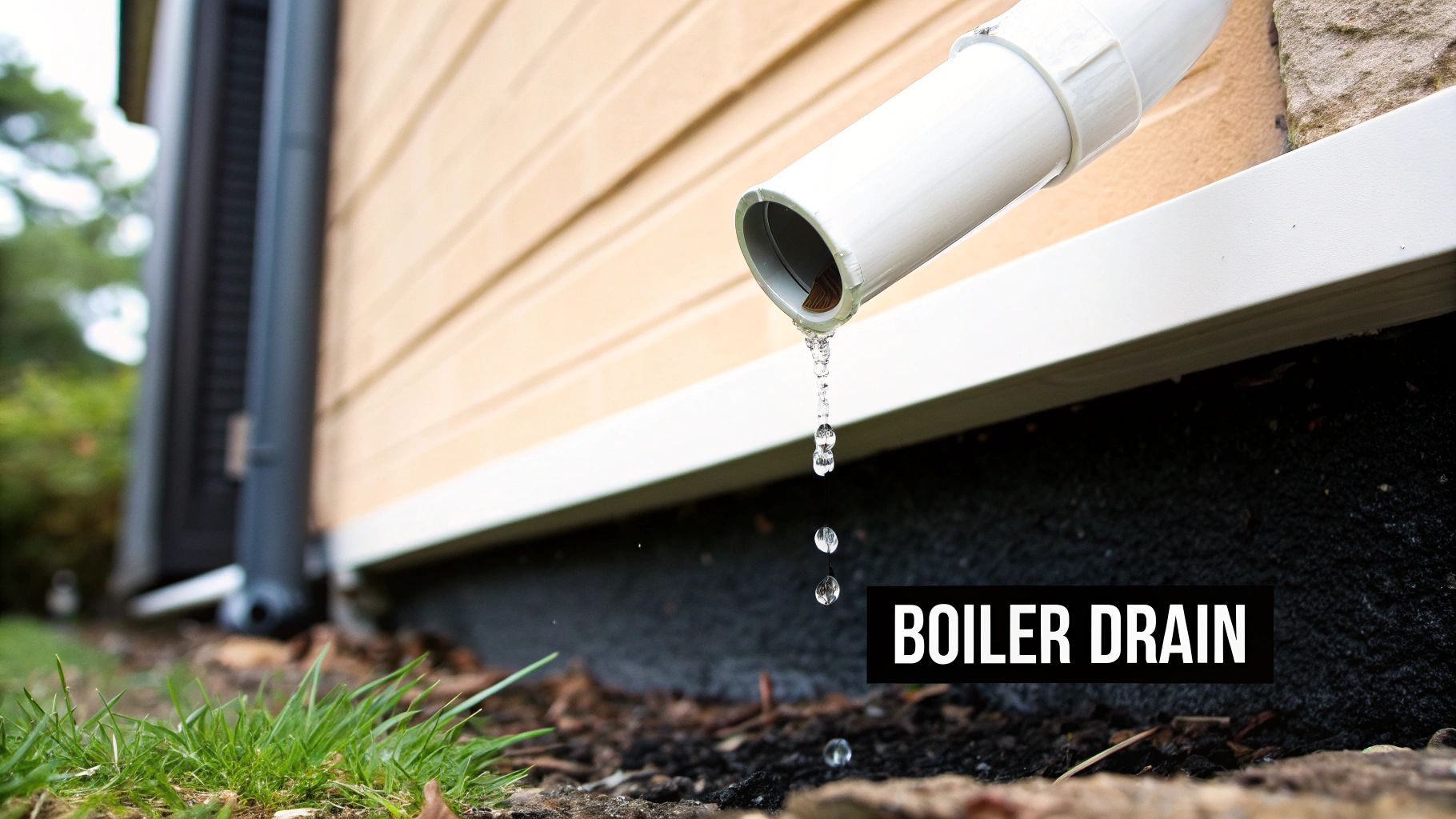
If your boiler was installed any time after 2005, you'll have a condensate pipe. It's not an optional extra—it’s a legal requirement and the secret to your boiler's high efficiency. Modern boilers are called 'condensing' boilers for a reason: they're designed to capture and reuse heat that older models would have just sent straight out the flue.
This heat-recycling process creates a natural byproduct: condensation. It’s pretty much the same thing that happens when your breath fogs up a window on a cold day. Inside the boiler, hot flue gases are passed over a second heat exchanger, which cools them down enough for the water vapour to turn back into liquid.
The Purpose of the Pipe
This liquid, known as condensate, is mildly acidic, so it needs a safe way out of your boiler. That’s where the condensate pipe steps in. Its one vital job is to channel this water away from your heating system and into a suitable drain.
You’ll usually find it's a white or grey plastic pipe, around 21.5mm in diameter (about the size of a ten-pence piece). In many Eastbourne homes we visit, we at Harrlie Plumbing and Heating typically see them running from the boiler, through a wall, and into an external drain.
The condensate pipe is the unsung hero of your central heating. It's what allows your boiler to hit over 90% efficiency, saving you money on your bills while making sure waste is dealt with correctly. Without it, your boiler just wouldn’t work.
Why Every Modern Boiler Has One
Since Building Regulations changed back in April 2005, all new gas and oil boilers fitted in the UK have to be high-efficiency condensing models. It's a massive shift in how we heat our homes, and understanding the different types is key for any homeowner, which is why we put together our guide on condensing boilers vs combi boilers.
This quick comparison shows why your boiler has this pipe while older models didn't, highlighting the leap in efficiency.
Why Your Modern Boiler Needs a Condensate Pipe
Feature | Condensing Boiler (Modern Standard) | Non-Condensing Boiler (Older Type) |
|---|---|---|
Efficiency Level | Over 90% | Typically 55-75% |
How It Works | Recovers waste heat from flue gases, creating condensation. | Wastes a lot of heat straight out of the flue. No condensation. |
Condensate Pipe | Essential. Drains the acidic water created during heat recovery. | Not needed. No condensation is produced. |
Energy Savings | Significantly lower fuel bills due to higher efficiency. | Higher running costs as more energy is wasted. |
Environmental Impact | Lower carbon emissions. | Higher carbon footprint. |
Today, these modern boilers account for over 98% of all domestic boilers installed across the country. The regulations ensure our homes are heated more efficiently, which is great for our wallets and the environment. And the humble condensate pipe is the non-negotiable component that makes it all possible.
How Your Condensate Pipe Works and Where to Find It
So, what’s actually happening inside your boiler to create this condensate? Think of your boiler as a miniature power station for your home. When it burns gas to heat your water, it creates hot waste gases. Instead of just letting all that valuable heat escape up the flue like older boilers did, your high-efficiency condensing boiler is much cleverer.
It sends those hot gases through a second heat exchanger, a neat trick that cools them down so much that the water vapour they contain turns back into liquid. This process releases a surprising amount of extra heat, which your system captures and uses to warm up your radiators. The leftover liquid is the condensate, and it's the condensate pipe's job to get rid of it.
This isn't just plain water, though. It’s slightly acidic, with a pH level similar to tomato juice. That’s why the pipe must be made from plastic, like PVC, because a metal one would simply corrode over time. Getting rid of this liquid safely is a non-negotiable part of any boiler installation and is covered by UK Building Regulations.
Locating Your Condensate Pipe
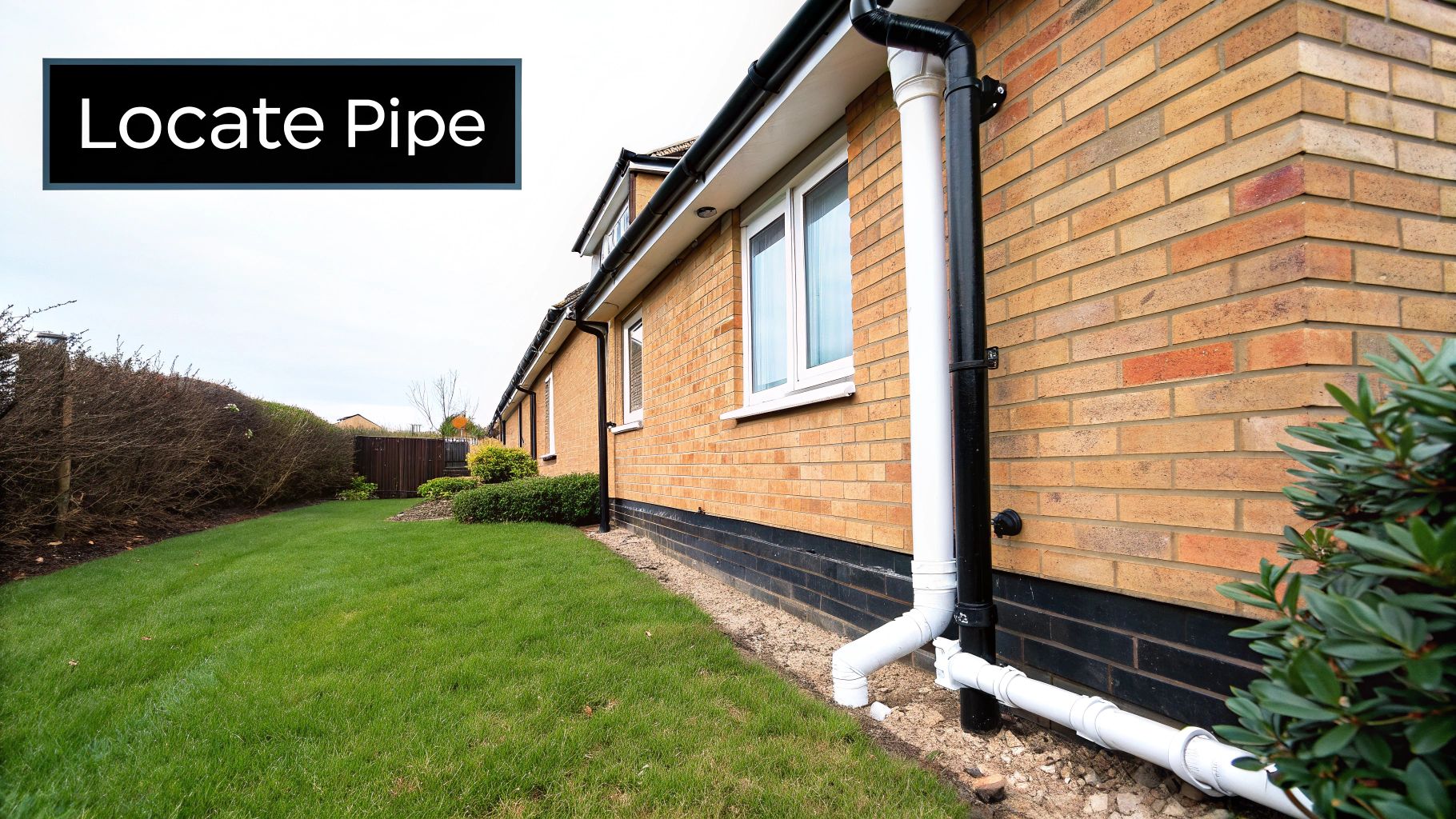
Finding your condensate pipe is usually pretty straightforward once you know what you’re looking for. It’s almost always a plastic pipe, typically white or grey, and it’s noticeably thinner than the other pipes connected to your boiler—usually around 21.5mm in diameter. You’ll always find it coming out from the bottom of the boiler unit.
From there, where it goes depends entirely on your home's layout. Here at Harrlie Plumbing and Heating, we see a few common setups in Eastbourne properties:
External Route: In many older terraced or semi-detached houses in areas like Old Town, Eastbourne, the pipe heads straight through an external wall and down into a drain or soakaway. This is probably the most common arrangement but also the one most likely to freeze in winter.
Internal Route: For newer homes or apartments, perhaps in the Sovereign Harbour development, the pipe is often routed inside. You might find it plumbed into the waste pipe under your kitchen sink or bathroom basin, letting it drain away out of sight.
Combination Route: Sometimes a pipe will run inside for a bit before popping out through a wall to reach a drain outside.
Knowing where your condensate pipe is located is the first step in being able to spot potential problems. A quick look under your boiler and a trace of the thin plastic pipe is all it takes to familiarise yourself with this crucial component of your heating system.
Understanding this journey—from hot gas to acidic water and out to the drain—really shows how important this simple pipe is. A blockage can cause water to back up right into your boiler, triggering a shutdown and potentially causing some real damage. That’s why a professional installation, making sure the pipe has the right amount of fall and terminates correctly, is absolutely vital for a reliable heating system. At Harrlie Plumbing and Heating, we see firsthand how a poorly fitted pipe can lead to needless breakdowns.
Recognising the Warning Signs of a Blocked Pipe
Your boiler is smarter than you might think; it often gives you clear signals when its condensate pipe is struggling. You just need to know what to look for. Think of these signs as your boiler's early warning system, designed to alert you before a small issue becomes a major headache—especially during a chilly Eastbourne winter.
One of the first clues you might hear is a strange noise. If you notice a gurgling or bubbling sound coming from your boiler or the pipes, it often means water isn't flowing away freely. The condensate is backing up and struggling to drain, much like a partially blocked sink.
This isn't just a quirky noise; it's a direct symptom of a blockage forming within the pipe. If you ignore it, you’ll likely find the boiler shuts down entirely.
Interpreting Your Boiler's Display
Modern boilers are designed with built-in diagnostic systems to protect themselves from damage. When the condensate pipe is completely blocked, the backed-up water will trigger a safety sensor. This is a crucial feature that prevents the acidic water from flooding the boiler's internal components, which could cause significant and costly damage.
When this happens, your boiler will stop working, and you'll typically see a specific fault code flash on its digital display. The exact code varies between manufacturers—brands like Worcester Bosch, Vaillant, and Ideal all have their own unique error codes for this issue. A quick search of your boiler’s manual or the manufacturer's website will usually tell you if the code points to a condensate blockage.
A boiler that shuts itself off, especially on a very cold day, is one of the most common signs of a blocked or frozen condensate pipe. It's the boiler’s self-preservation mechanism kicking in, telling you it’s not safe for it to operate until the drain is cleared.
Boiler Symptoms and What They Mean for Your Pipe
These warning signs are particularly common during the cold snaps we often get in Eastbourne, as freezing is the number one cause of blockages. Knowing what you're seeing and hearing can help you figure out when it's time to take action. This table breaks down the common clues.
Symptom You Notice | What It Could Mean for Your Condensate Pipe | Recommended First Step |
|---|---|---|
Gurgling or bubbling noises | A partial blockage is forming, and water is struggling to get past it. | Monitor the situation closely, especially if the temperature is dropping. |
Boiler display shows a fault code | The blockage is now complete, and the boiler's safety switch has been tripped. | Identify the fault code in your manual to confirm a drainage issue. |
Boiler completely shuts down | Water has backed up into the boiler, and it has locked out to prevent damage. | Don't keep resetting the boiler. The blockage needs to be cleared first. |
While it might be tempting to just keep resetting your boiler, this won't fix the underlying problem. The blockage needs to be resolved before the boiler can run safely again. For a definitive diagnosis and a fast, effective solution, your best move is to call a local expert. At Harrlie Plumbing & Heating, we can quickly identify the cause and get your heating back on, ensuring your system is safe and reliable.
The Frozen Condensate Pipe: Your Boiler's Winter Nemesis
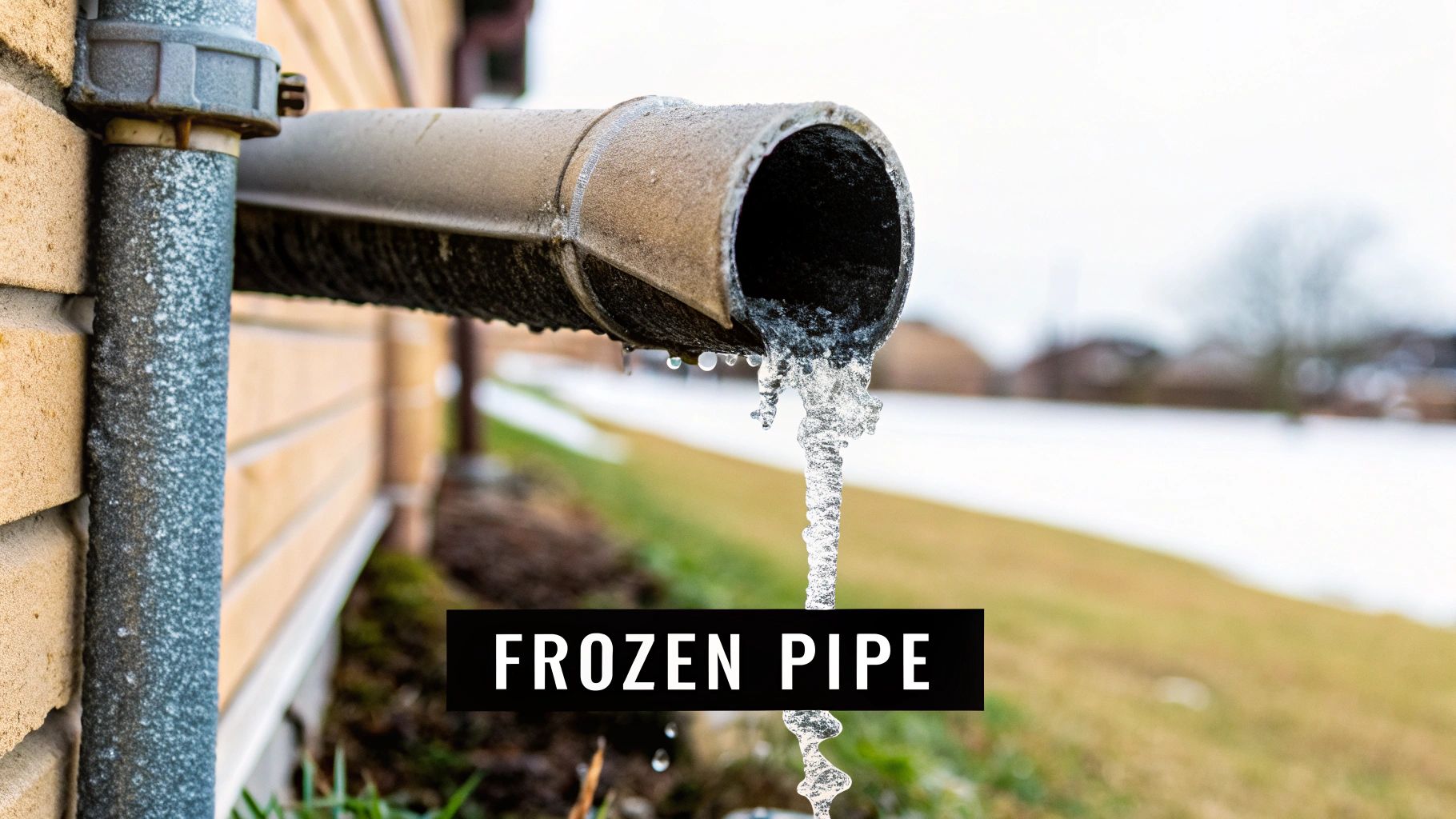
When the cold weather hits, the number one reason we get called out for a boiler breakdown in Eastbourne isn't some complex mechanical fault—it's usually just a frozen condensate pipe. This surprisingly common problem is the arch-nemesis of modern high-efficiency boilers every single winter, leaving countless homeowners suddenly without any heating or hot water.
As soon as the temperature plummets, any part of your condensate pipe that runs outside the house becomes extremely vulnerable. Here in coastal areas like Eastbourne and across East Sussex, that combination of sub-zero temperatures and biting winds can freeze the small, slow trickle of water inside the pipe incredibly fast.
This creates a solid plug of ice, completely blocking the drain. With nowhere else to go, the acidic water backs up straight into your boiler, which then triggers its built-in safety switch and shuts the whole system down. It’s a hugely frustrating issue, but one that is almost always preventable.
A Widespread and Preventable Headache
The vulnerability of these little plastic pipes is a massive challenge right across the UK. It’s estimated that there are over 10 million unprotected external condensate pipes currently installed in homes. During big freezes like the 'Beast from the East' back in 2018, boiler manufacturers and heating engineers saw a colossal spike in emergency calls, all for the same issue.
Worryingly, surveys have shown that around 60% of installers admitted they rarely or never bother to protect these pipes during the initial installation. It's a corner that's too often cut.
This isn't just a boiler problem, either; freezing can affect many different systems in your home. For example, understanding the common causes and fixes for freezing AC coils can give you a good idea of how cold weather impacts other appliances. The principle is exactly the same: exposed components plus cold weather is a recipe for failure.
A frozen condensate pipe isn't just a bit of bad luck; it's often a clear sign of an improper or incomplete installation. A correctly fitted and properly insulated pipe should easily withstand even the coldest British winters without any issues, protecting both your boiler and your comfort.
The Permanent Fix for Eastbourne Homes
Waking up to a freezing cold house because a small pipe has frozen is a miserable experience no one should have to repeat every winter. While temporary fixes like pouring warm water over the pipe can get your boiler fired up again, they don’t actually solve the problem. The ice will just form again the next time the temperature drops.
The only real, permanent solution is professional insulation. At Harrlie Plumbing & Heating, we specialise in fitting robust, weatherproof lagging to condensate pipes across Eastbourne. We use high-grade, durable materials designed specifically to create a thermal barrier that stops the pipe from freezing solid.
This simple and affordable upgrade is the single most effective way to winter-proof your boiler. It ensures you have reliable heating and hot water right when you need it most. Don't wait for the next cold snap to catch you out; let us give you a permanent solution.
How to Prevent Freezing and Future Breakdowns
Being proactive is always cheaper and far less stressful than reacting to an emergency breakdown. When it comes to your boiler's condensate pipe, a few simple preventative steps can save you from a cold house and an unexpected repair bill, especially during those harsh Eastbourne winters.
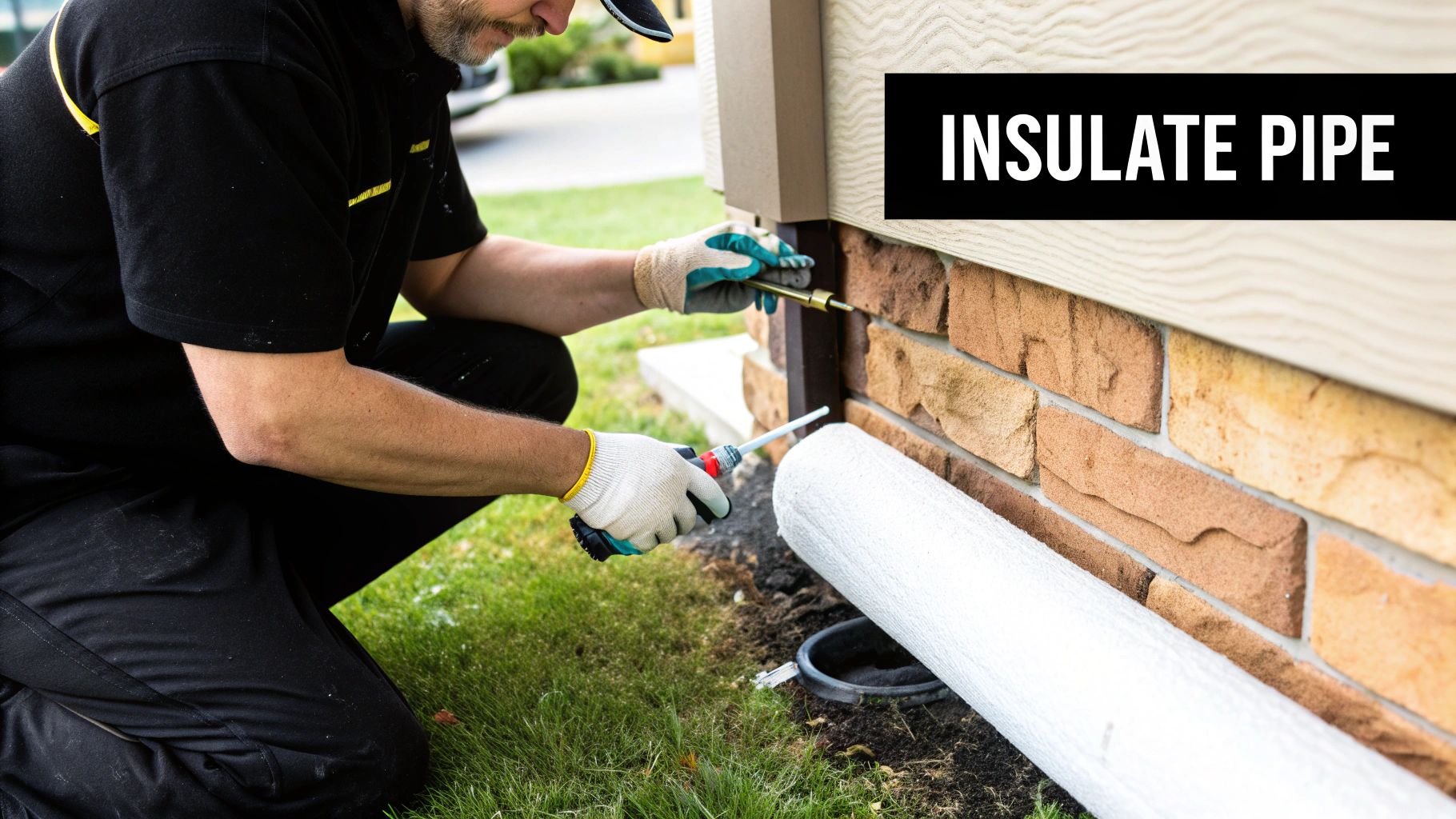
The single most effective defence against a frozen pipe is professional-grade insulation. This isn't just a friendly suggestion; it's a vital part of any correct and robust installation.
Creating a Vital Thermal Barrier
Proper, weatherproof lagging acts like a thermal jacket for the pipe. It keeps the water flowing inside just warm enough to stop it from turning into a solid block of ice, even when the coastal winds are at their worst. For any section of the pipe that runs outside, this insulation is absolutely essential for reliable, year-round operation.
Beyond insulation, a bit of simple maintenance plays a massive part. It’s crucial to keep the pipe’s outlet point completely clear of any blockages.
Remove Garden Debris: Regularly check that leaves, grass clippings, and soil haven't piled up around the drain opening.
Clear Away Snow and Ice: In the winter, make sure snow drifts don't bury the end of the pipe.
Ensure a Clear Path: The condensate needs a clear exit. A blockage right at the very end can cause just as many problems as a freeze-up.
You can find more tips on protecting your home's pipework in our detailed guide on how to prevent pipe freezing in your home.
Proactive maintenance is key to keeping your heating system efficient. The widespread adoption of condensing boilers and proper condensate management has significantly improved home energy efficiency across England. The average energy efficiency rating for dwellings rose from 45 points in 1996 to 67 points in 2023, a change driven by these modern systems.
At Harrlie Plumbing & Heating, we make this a priority for our customers. During every annual boiler service in Eastbourne and Hastings, our Gas Safe engineers carry out a thorough check of the condensate pipe. We inspect the condition of the insulation and ensure the termination point is clear and compliant with regulations. It's a key part of our checklist, designed to keep your heating running smoothly. For a broader view of boiler health, consulting a comprehensive HVAC maintenance checklist can provide valuable insights into maintaining your entire system.
Your Local Eastbourne Experts for All Boiler Solutions
When your heating packs in on a cold day, you need a local team you can count on. Here at Harrlie Plumbing & Heating, we know just how vital a working boiler is for your comfort and peace of mind. As we’ve seen, that little condensate pipe plays a massive role in your system’s reliability, and when it fails—especially from freezing—it can bring your entire Eastbourne home to a grinding halt.
Dealing with a faulty or frozen pipe is more than just a nuisance; it needs a proper, professional fix to stop it from happening again. That’s where we come in. We’re Eastbourne’s go-to experts for sorting out every kind of condensate pipe issue, big or small.
Our Boiler Services
Whether you’re in the middle of an emergency or just want to prevent problems down the line, we’ve got the skills and experience to get the job done right. Our services are designed to give Eastbourne homeowners total confidence in their heating:
Emergency Repairs: We offer a rapid response for frozen or blocked condensate pipes to get your heating and hot water back on as quickly as possible.
Professional Insulation: Our engineers fit high-grade, weatherproof lagging to permanently shield your external pipework from the harsh winter weather.
Compliant Installations: For new boilers or system upgrades, we’ll make sure your condensate pipe is installed perfectly, with the correct diameter and gradient to meet all safety regulations.
Your home’s warmth is our top priority. With our Gas Safe registered engineers, honest pricing, and commitment to the Eastbourne community, you can always rely on Harrlie Plumbing & Heating for straightforward advice and quality workmanship.
Don't wait for a breakdown to leave you shivering. If you're worried about your condensate pipe or need fast, effective boiler repairs in Eastbourne, our team is ready to help keep your home warm, safe, and comfortable.
Your Condensate Pipe Questions Answered
We get a lot of calls from Eastbourne homeowners about condensate pipes, especially during a cold snap. Here are some quick, straightforward answers to the questions we hear most often.
Can I Thaw a Frozen Condensate Pipe Myself?
You can certainly give it a go. Pouring warm water—never boiling—over the frozen section of the pipe outside is a common temporary fix. It can often be just enough to melt the ice blockage and get your boiler to fire up again in a pinch.
But it's important to see this for what it is: a temporary solution. It doesn't fix the root cause, which is almost always poor or non-existent insulation. To stop it from happening again the next time the temperature drops, it’s best to call in a professional. The Harrlie Plumbing & Heating team can fit the right weatherproof lagging to solve the problem for good.
How Much Does It Cost to Fix a Condensate Pipe?
The cost really depends on what the issue is. A simple job like adding proper insulation is a very affordable bit of preventative maintenance. In the long run, it will almost certainly save you the cost of an emergency call-out.
If the problem is more complex, like rerouting a badly installed pipe or fixing a leak that’s hidden away, the price will depend on things like access, the materials needed, and how much time it takes. At Harrlie Plumbing & Heating, we always give you a free, no-obligation quote so you know exactly what to expect before we start any work. No hidden surprises.
It's worth remembering that current regulations generally advise against draining a condensate pipe into a gutter. The water is mildly acidic and can eat away at older cast iron systems. Even worse, in winter, it can freeze into a huge ice block in your downpipe, which could lead to serious water damage to your home.
Is Draining into a Gutter Okay?
As a rule, no, this isn't a good idea. As we just mentioned, the risk of it freezing solid and blocking up your guttering or downpipe is very high, especially with the kind of cold winters we get here in Eastbourne.
On top of that, the slight acidity of the condensate can speed up corrosion in older metal gutters. For a safe, compliant, and reliable setup, we always recommend getting a professional assessment to make sure your pipe terminates correctly and protects your property from easily preventable damage.
For professional advice or a fast, reliable repair for any condensate pipe issue, trust the local experts. Contact Harrlie Plumbing and Heating today for a free quote and ensure your home stays warm all winter long. Learn more at https://www.harrlieplumbing.co.uk.

Comments