Condensing Boiler vs Combi Boiler A Homeowner's Guide

When choosing a new boiler, one of the first hurdles is getting your head around the terminology. Many homeowners in Eastbourne ask us at Harrlie Plumbing and Heating about 'condensing boiler vs combi boiler', but the truth is, it’s not a direct comparison.
Think of it this way: every new boiler installed in the UK since 2005, including combi boilers, must legally be a condensing model. So, the real decision isn’t between condensing and non-condensing. It’s about which type of condensing boiler—like a combi, system, or regular—is the right fit for your home and lifestyle.
Unpacking the Boiler Basics
Navigating the world of home heating can feel a bit technical, but understanding a few key terms is the first step toward making a smart choice. The main thing to grasp is that you're choosing a boiler system that uses condensing technology. For homeowners here in Eastbourne, getting this right is key to a warm home and manageable energy bills.
This modern technology became a legal requirement for good reason. The 2005 regulations were put in place to dramatically boost energy efficiency. Modern boilers now achieve over 90% efficiency, a huge leap from the less-than-70% ratings of older, non-condensing units. It's no surprise that around 80% of boilers sold in the UK each year are combi models, which says a lot about their popularity.
Quick Comparison Key Boiler Concepts
To make things clearer, we've put together a simple table breaking down what these terms actually mean for your property.
Term | What It Means for Your Home | Key Takeaway |
|---|---|---|
Condensing Technology | A process that captures and reuses waste heat from the flue gases. | This is the efficiency feature built into all modern boilers. |
Combi Boiler | A single, compact unit that provides instant heating and hot water. | Perfect for smaller homes with one bathroom and not much space. |
System Boiler | A boiler that works with a separate hot water cylinder for storage. | Suited for larger homes needing to supply multiple bathrooms at once. |
Regular Boiler | Uses both a hot water cylinder and a cold water feed tank. | Typically found in older homes with more traditional plumbing. |
This table should help you quickly see the differences and how they relate to one another.
At Harrlie Plumbing and Heating, we’re always helping Eastbourne residents figure out which system makes the most sense. For example, a combi boiler is a fantastic fit for a modern flat in Sovereign Harbour where space is at a premium. On the other hand, a larger Victorian home in Old Town would almost certainly need a system or regular boiler to keep up with its hot water demands.
If you are in an older property, you might want to look at our guide on what a regular boiler is to see if it matches your current setup. The core principles of heating can vary quite a bit, and if you're curious about different environments, this guide to canal boat central heating systems offers some interesting insights into other heating options.
How Condensing Technology Maximizes Your Home's Efficiency
The real magic behind a modern boiler, and the key difference from older models, is all down to how it handles waste heat. It’s a clever bit of engineering that has a direct impact on your energy bills. So, what exactly makes this technology so good at keeping your home warm for less?
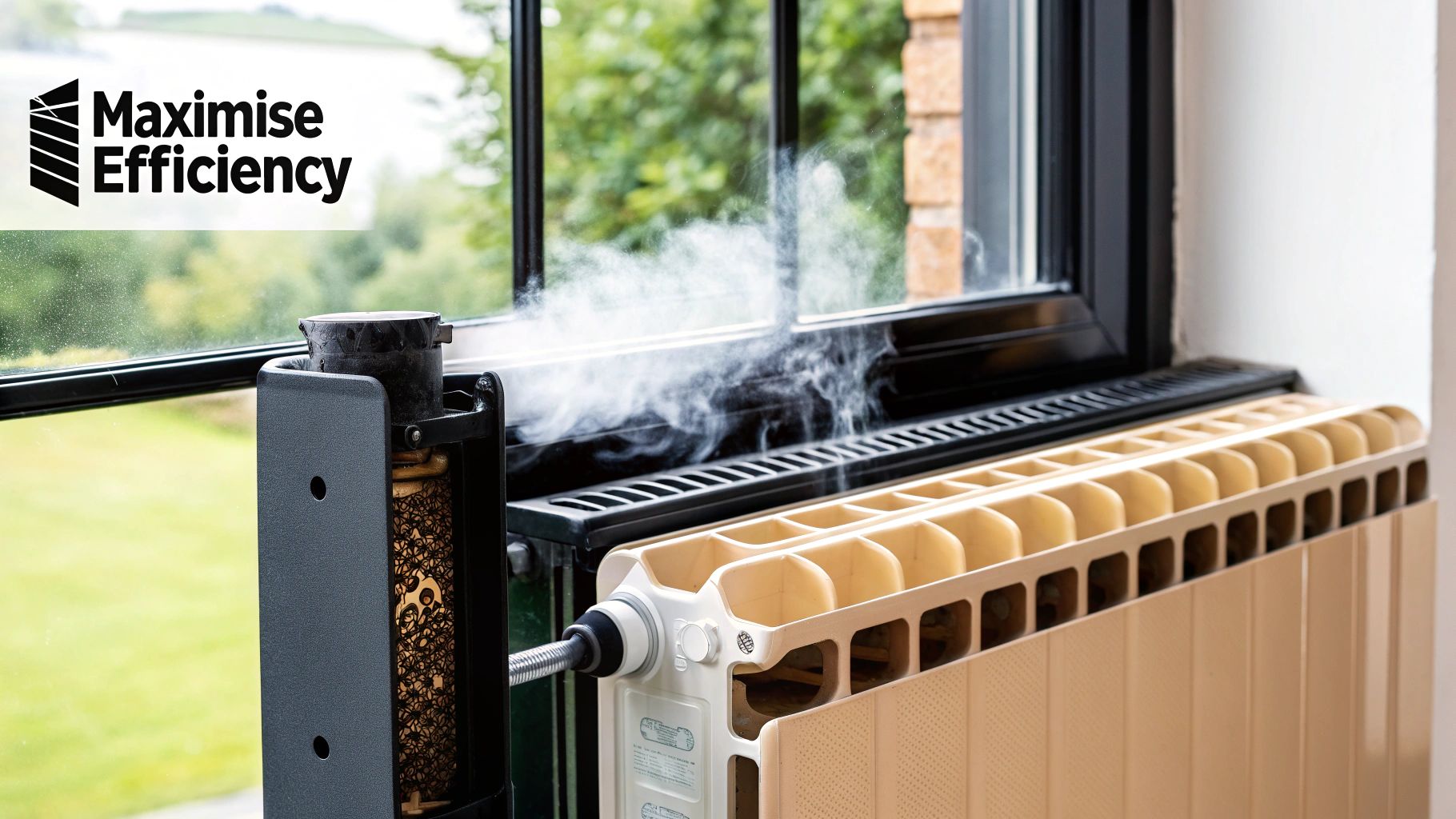
It all boils down to capturing valuable energy that older boilers would simply pump outside. Think of the steam rising from a kettle—that plume is essentially lost energy. Old non-condensing boilers did the same thing, letting hot exhaust gases escape and taking a huge chunk of potential heat with them.
The Science Behind the Savings
A condensing boiler is much smarter. It has a second, much larger heat exchanger designed for one critical job: to cool the hot exhaust gases right down until the water vapour inside them turns back into liquid.
This condensation process releases what’s known as latent heat. Instead of being wasted up the flue, this captured warmth is recycled to pre-heat the cooler water coming back from your radiators. This means the boiler doesn't have to work nearly as hard to get the water back up to temperature, which naturally cuts down on fuel.
For any household here in Eastbourne, this clever heat recycling translates into real, tangible savings. Modern condensing boilers—whether they're combi, system, or regular models—can hit efficiency ratings of over 90%. That’s a massive leap from older systems, which often struggled to get past 70%.
Ever notice that plume of white vapour coming from a modern boiler's flue? That isn't wasted steam. It's actually a sign that the condensing process is working perfectly, capturing and reusing heat to warm your home more efficiently.
What This Efficiency Means for You
The practical impact of this technology is huge, especially when you look at your home's heating as a whole. Here's what that extra efficiency delivers:
Lower Energy Bills: It's simple—using less gas to get the same amount of heat means your monthly bills will drop. An upgrade can save you as much as 30% compared to an old, G-rated boiler.
Reduced Carbon Footprint: Burning less fossil fuel means fewer carbon emissions, making your home a bit kinder to the environment.
Improved Home Comfort: A highly efficient boiler provides consistent, reliable heating and hot water, getting rid of the annoying cold spots that older, struggling systems often create.
The team at Harrlie Plumbing and Heating has seen the difference an upgrade makes time and time again. We recently helped a family in a draughty Victorian terrace in the Old Town area of Eastbourne swap out their dated boiler. The switch to a new condensing system didn't just make their home feel warmer; it made a noticeable dent in their heating costs right from the very first bill.
Of course, the boiler is only part of the puzzle. To really get the most out of your investment, it’s worth looking into general home energy efficiency. Understanding how your new boiler works with your home's insulation and windows helps create a complete strategy for warmth and savings.
So, Which Type of Condensing Boiler is Right for You?
Now we’ve cleared up that all modern boilers are condensing, the real decision isn’t about the technology itself. It’s about the type of system that uses it. The whole "condensing boiler vs combi boiler" debate really comes down to choosing the right kind of condensing boiler for your home and lifestyle. You’ve got three main options, each built for different property sizes and hot water demands.
Getting this choice right is crucial. A system that’s too small will leave you with lukewarm showers, while one that’s oversized will just waste energy and inflate your bills. This is where understanding the key differences between combi, system, and regular boilers becomes essential for any homeowner in Eastbourne.
The Combi Boiler: The Compact All-Rounder
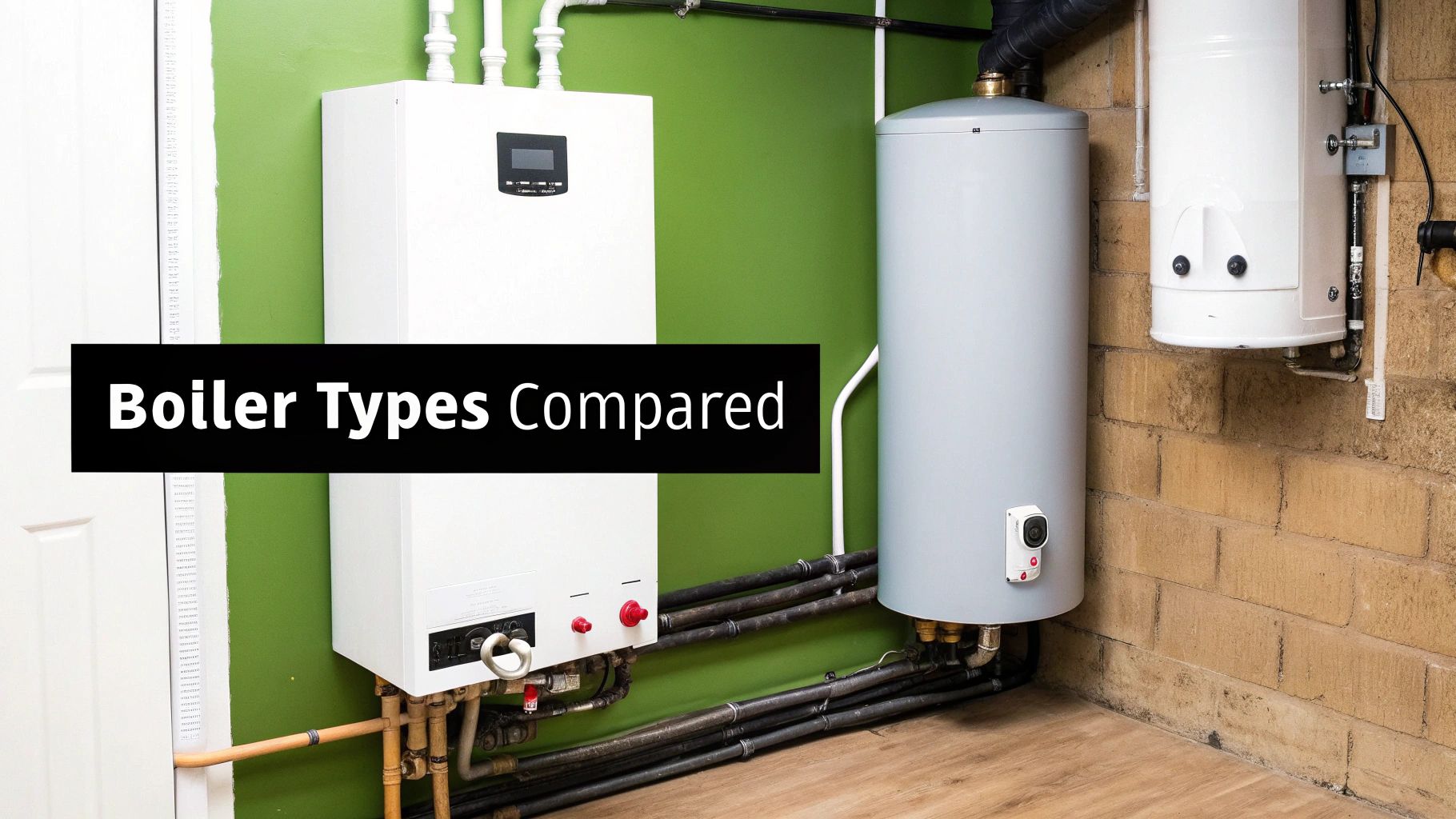
The combi (or combination) boiler is easily the most popular choice here in the UK, especially for new installations. It's a single, compact unit that handles both your central heating and instant hot water, pulling its water supply straight from the mains.
This clever design means you don’t need a bulky hot water cylinder or cold water tanks stashed away in the loft, making it a brilliant space-saver. For many properties in Eastbourne, from modern flats in Sovereign Harbour to smaller terraced houses in Roselands, the combi is the default solution. Its all-in-one nature makes installation and maintenance much simpler.
The catch? A combi’s performance is tied to your mains pressure. If you have a busy household with multiple bathrooms, you might notice a drop in water pressure if someone is showering while another person is running the hot tap in the kitchen.
The System Boiler: Power for Growing Families
A system boiler is the perfect middle-ground, offering a powerful solution for homes where hot water demand is high. Just like a combi, it takes water directly from the mains, so you can forget about needing a cold water tank.
The key difference is that a system boiler stores hot water in a separate, pressurised cylinder, which you'll usually find tucked away in an airing cupboard. This setup means it can deliver a strong, steady supply of hot water to several taps and showers at the same time without any frustrating loss of pressure.
This makes it an ideal choice for a growing family in a three- or four-bedroom house in areas like Langney. At Harrlie Plumbing and Heating, we often recommend system boilers for larger properties that have been extended or have more than one bathroom, as they provide the consistent performance a combi might struggle with.
The Regular Boiler: The Traditional Workhorse
Finally, we have the regular boiler, which you might also hear called a ‘heat-only’ or ‘conventional’ boiler. This is the most traditional setup and is often found in older properties with plumbing systems that can't handle high mains pressure.
A regular boiler needs both a hot water storage cylinder and a separate cold water feed tank, which is typically located in the loft. This gravity-fed system is fantastic for supplying large volumes of hot water but does take up a fair bit of space.
If you live in an older property in Meads or Old Town with its original pipework still in place, you might already have one. While a like-for-like replacement can be the simplest route, many Eastbourne homeowners now choose to upgrade to a more modern system boiler if their plumbing can take it.
Choosing the right boiler type isn't just about your current needs; it's about future-proofing your home. A professional survey from a certified engineer can assess your property's unique requirements, from mains pressure to pipework, ensuring you make a long-lasting and efficient investment.
The rise of the combi boiler, in particular, has been a huge trend in the UK heating market. Looking back, when condensing boilers first appeared in the early 2000s, their market share was less than 1%. Over the next two decades, tightening building regulations and rising energy prices pushed condensing boilers, especially combi models, into the spotlight. By 2019, they accounted for most new installations—a massive jump from just 1.7% of homes in 2003. You can read more about this shift by reviewing the story of the condensing boiler market transformation.
Understanding these core differences is the first step. The next is to apply this knowledge to your own home, which is where a professional assessment from our team at Harrlie Plumbing and Heating proves invaluable in making the perfect choice for your Eastbourne property.
Getting to Grips with Boiler Costs and Savings
When you’re looking at a new boiler, it’s easy to get bogged down in the initial price tag. But to really understand the investment, you need to look at both the upfront installation cost and the long-term running costs. What’s right for your neighbour’s flat might not be the best fit for your family home, especially when you factor in your existing system.
For many Eastbourne homeowners, a simple like-for-like combi boiler swap is the most straightforward and budget-friendly route. If you're just replacing an old combi with a new one, the pipework is already where it needs to be. This makes the job much quicker for a qualified engineer and keeps labour costs down.
It gets a bit more involved if you're switching from an older, conventional setup. If your home has a regular boiler with tanks tucked away in the loft and a hot water cylinder in an airing cupboard, moving to a modern combi boiler requires more work. This means removing the old tanks and cylinder and re-configuring the pipework, which naturally adds to the installation cost.
Comparing Installation Costs
The price of a new boiler isn't just the unit itself; it’s a blend of the boiler's cost and the complexity of the installation. Here at Harrlie Plumbing and Heating, we believe in total transparency, providing clear, itemised quotes so you know exactly where your money is going.
To give you a rough idea, here’s a look at typical costs for different boiler types in the Eastbourne area.
Estimated Costs for Different Condensing Boiler Types
This table breaks down the estimated installed costs and highlights which properties each boiler type is best suited for.
Boiler Type | Typical Installed Cost (Estimate) | Best For... | Long-Term Saving Potential |
|---|---|---|---|
Combi Boiler | £1,800 - £3,500 | Small to medium homes with 1-2 bathrooms and limited space. | Excellent, especially when upgrading from an old, inefficient boiler. |
System Boiler | £2,200 - £4,500 | Larger homes with multiple bathrooms needing simultaneous hot water. | High, with consistent performance for high-demand households. |
Regular Boiler | £2,000 - £4,000 | Older properties with traditional pipework that can't handle high pressure. | Good, particularly as a like-for-like replacement to minimise disruption. |
Remember, these figures are just estimates. The final price can shift depending on the specific boiler model you choose, your home’s layout, and any extra work needed, like a full system power flush to clear out sludge.
The Real Win: Running Costs and Savings
While the installation is a one-off payment, your running costs are where a modern condensing boiler truly shines. The biggest advantage is their incredible energy efficiency.
Upgrading from an old, G-rated boiler (which might only be around 70% efficient) to a new A-rated condensing model (over 90% efficient) can slash your annual gas bills by as much as 30%. For a typical family in Eastbourne, that can mean hundreds of pounds back in your pocket each year. Over its lifespan, the boiler effectively pays for itself.
A new, efficient boiler isn't just an expense; it's an investment in your home's long-term value and comfort. The upfront cost is quickly offset by significant monthly savings on your energy bills.
Even small tweaks can lead to big savings. For instance, research shows that turning down the flow temperature on your combi boiler from the factory setting of 80℃ to 60℃ can cut your gas usage by up to 9%. That simple change could save the average UK household around £112 a year. You can find more insights into the benefits of modern boiler technology on futuremarketinsights.com.
Ultimately, whether you choose a combi, system, or regular boiler, making the switch to a high-efficiency model is a smart financial move. The best way to get a precise picture of the costs and potential savings for your property is to get a professional assessment from our team at Harrlie Plumbing and Heating.
How To Choose The Right Boiler For Your Property
Getting to the bottom of the "condensing boiler vs combi boiler" debate isn't about getting tangled in technical terms. It’s about looking at your home’s unique character and daily demands. Every property in Eastbourne is different—the right boiler for a seafront flat will be completely unsuitable for a large family home further inland.
It all comes down to matching the right type of condensing system to your lifestyle.
There are really just three things to think about: the size of your property, your family’s hot water usage, and how much space you have to spare. Get a clear picture of these, and you'll be well on your way to the most efficient and cost-effective choice for consistent heating and hot water.
Matching The Boiler To Your Eastbourne Home
Let’s turn those technical details into real-world Eastbourne scenarios. This is exactly how we at Harrlie Plumbing and Heating help our clients make the right choice, day in and day out.
Picture a small two-bedroom terraced house in the Roselands area with one bathroom. A condensing combi boiler is almost always the perfect fit here. Its compact, all-in-one design is a real space-saver, as you won't need a separate hot water cylinder or tanks in the loft. You get hot water on demand, which is ideal for smaller households. If you're curious, you can explore our detailed guide on what exactly a combi boiler system is to learn more.
Now, let's switch gears and think about a larger, five-bedroom detached house in the Meads with three bathrooms. In this scenario, a combi boiler would struggle if multiple showers are running at once. That's where a condensing system boiler paired with an unvented hot water cylinder becomes the clear winner. It guarantees a powerful and steady flow of hot water to every tap at the same time, easily meeting the needs of a busy family.
This simple decision tree shows how property size generally points to the best boiler choice.
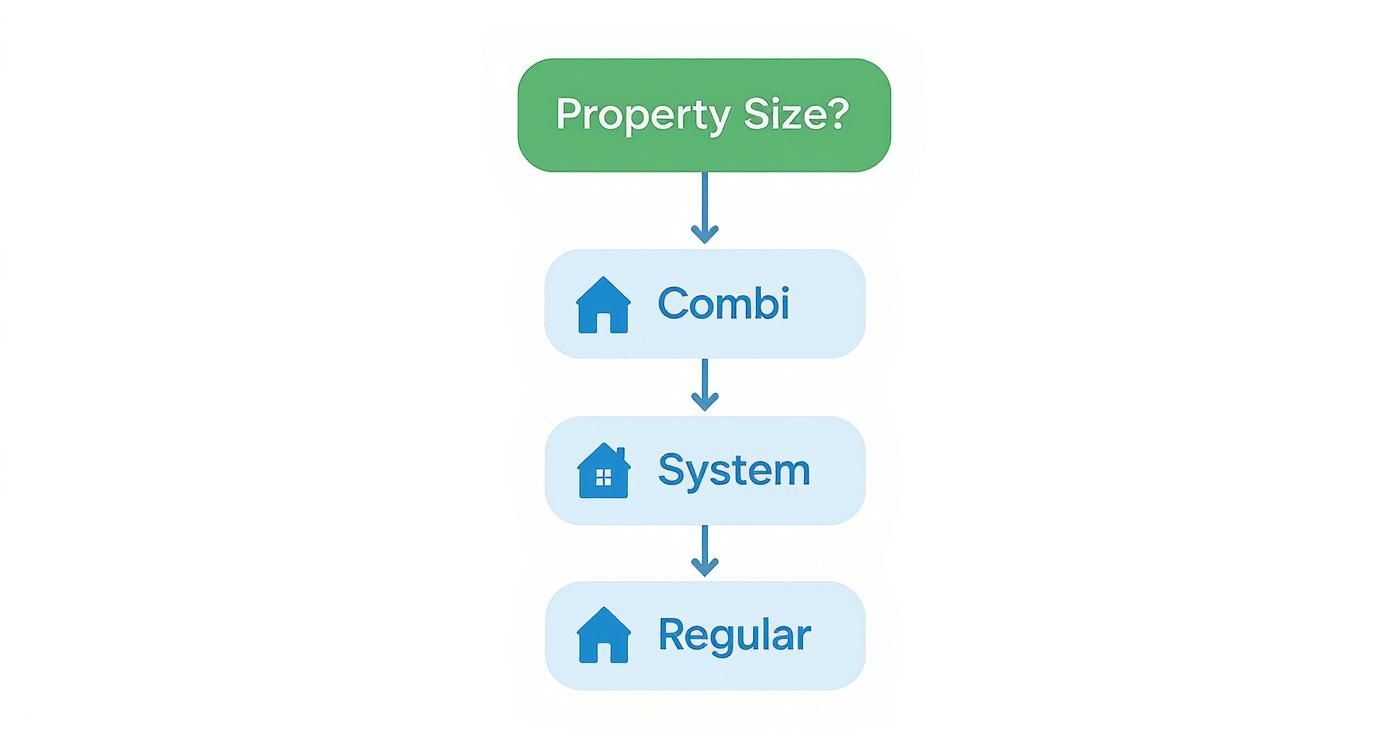
As the flowchart shows, there’s a direct link between the scale of your property and the kind of boiler system needed to keep it running smoothly.
Key Factors To Guide Your Decision
Beyond just the size of your house, a few other crucial details will help you lock in your choice. While only a professional survey can give you a final answer, you can get a head start by thinking about these points:
Your Mains Water Pressure: A combi boiler's performance is tied directly to the strength of your incoming water supply. If you've got low pressure, a system or regular boiler might be a much better fit.
Number of Occupants: The more people living in your home, the higher the demand for hot water will be. A system boiler is built to handle the morning rush hour in a busy family household.
Future Plans: Are you thinking about a loft conversion or an extension that includes another bathroom? It’s crucial to pick a boiler that can grow with your home, not just meet its needs today.
Choosing the right boiler is a balance between your current needs and future plans. A professional on-site assessment is the best way to confirm that your chosen system can handle your home's specific demands, from water pressure to your family's daily routine.
Ultimately, making an informed choice means you can invest wisely in your home’s comfort and efficiency. While these guidelines are a solid starting point, the final step should always be a professional survey. Contacting the team at Harrlie Plumbing and Heating will ensure an expert assesses your Eastbourne property and recommends the perfect, future-proof solution.
Answering Your Common Boiler Questions
Even after weighing up the differences between condensing boilers, it’s natural to have a few practical questions. A new boiler is a big investment in your home, and here at Harrlie Plumbing and Heating, we’ve heard just about every question from homeowners across Eastbourne.
To help clear up any lingering doubts, we’ve put together answers to the queries we hear most often. Our goal is to give you the clarity and confidence to choose the right heating system for your property.
Can I Replace My Old Regular Boiler with a Combi?
Yes, absolutely—and it’s one of the most popular upgrades we carry out. Moving from an old-school regular boiler (the kind with tanks in the loft and an airing cupboard) to a modern condensing combi frees up a surprising amount of space. Many people in Eastbourne use this chance to finally reclaim an airing cupboard for storage or clear out the loft for good.
It's a bit more involved than a simple swap, though. Our Gas Safe registered engineers at Harrlie Plumbing and Heating will need to decommission and remove the old hot water cylinder and cold water tank. Then, we reconfigure all the pipework to create a sealed, pressurised system that works seamlessly with your new combi. While it's a bigger job than a like-for-like replacement, the perks of instant hot water and extra storage space make it a fantastic investment for most homes.
How Long Does a Modern Condensing Boiler Last?
A well-looked-after modern condensing boiler should give you 10 to 15 years of solid service. A few things can affect this, like the quality of the initial installation, how hard your water is (and Eastbourne has notoriously hard water), and, most importantly, how often it’s serviced.
Top manufacturers often back their boilers with warranties of up to 10 years or more, but there’s always a catch: you must have it serviced annually by a certified engineer. Sticking to this schedule is the single best thing you can do to protect your investment. It helps our Harrlie Plumbing and Heating team spot small issues before they become big, expensive problems and keeps your boiler running efficiently for its entire lifespan.
Regular maintenance isn’t just a nice-to-have; it's what unlocks your boiler's full lifespan and peak performance. An annual service guarantees safety, maintains efficiency, and is essential for keeping your manufacturer's warranty valid.
Is a Bigger Boiler Always the Better Choice?
That's a common myth, but the answer is a definite no. A boiler that’s too powerful for your home—what we in the trade call 'oversizing'—is just as bad as one that’s too small. An oversized boiler will constantly fire up and shut down in short bursts, a process known as 'cycling'.
This stop-start action is incredibly inefficient. It puts a lot of unnecessary strain on the boiler’s parts, leading to faster wear and tear and, you guessed it, higher energy bills. It’s like using a sledgehammer to crack a nut—you're just wasting energy.
The right way to do it is to have a professional properly calculate your home’s heating and hot water needs. At Harrlie Plumbing and Heating, we look at your home's size, insulation levels, the number of radiators, and how many bathrooms you have to recommend a boiler with the perfect output (measured in kilowatts, or kW).
What Maintenance Does a Condensing Boiler Need?
To keep your condensing boiler humming along at its peak 90%+ efficiency, an annual service is a must. Unlike older, simpler boilers, these modern systems have sophisticated parts that need a regular once-over. A key task is making sure the condensate trap and pipe are clear, as a simple blockage here can shut the whole system down.
During an annual service, our Harrlie Plumbing and Heating engineers run through a whole list of vital checks, including:
Inspecting the heat exchanger: We make sure it's clean and working properly to get the most heat from the fuel.
Checking the flue and terminals: This ensures there are no blockages and that harmful gases are being vented safely outside.
Testing all safety devices: We verify that every safety cut-out and sensor is working perfectly to protect your home.
Analysing the flue gas: Using a calibrated analyser, we check that the boiler is burning fuel cleanly and efficiently.
This yearly health check doesn’t just keep your boiler safe and efficient; it’s the best way to prevent a costly breakdown in the middle of a cold snap. If you're curious about the full process, have a look at our detailed guide on how to service a boiler for Eastbourne homeowners.
Ready to find the perfect heating solution for your home? The expert team at Harrlie Plumbing and Heating is here to provide a professional, no-obligation survey and quote tailored to your property's specific needs.

Comments