What Causes Carbon Monoxide Alarm to Go Off? A Homeowner's Guide
- Luke Yeates
- Jan 19
- 13 min read

That sudden, piercing shriek from your carbon monoxide (CO) alarm is enough to make anyone’s heart jump. It's designed to grab your attention, and for good reason. When that alarm sounds, it means one of two things: either there’s a genuine, potentially deadly leak of CO gas in your home, or the unit itself is trying to tell you something.
While a real leak from a faulty fuel-burning appliance is the most serious cause, other things like steam, low batteries, or even the alarm reaching its expiry date can also trigger a series of beeps. The trick is knowing how to tell the difference.
Decoding Your Carbon Monoxide Alarm
Think of your CO alarm a bit like a smoke detector. Sometimes it’s a real fire, and other times it’s just burnt toast, but you should always react as if it's the real deal. A continuous, piercing pattern of four loud beeps is the universal signal for an emergency. This means the sensor has detected dangerous levels of carbon monoxide—an invisible, odourless gas produced when appliances in our Eastbourne homes don't burn fuel completely.
On the other hand, your alarm can also communicate about its own health. A single, intermittent chirp, usually spaced about a minute apart, is the most common signal for a non-emergency issue. It's the device's way of saying it needs a bit of attention.
Common Alarm Triggers
Learning to recognise the different sounds is the first step toward taking the right action. The key is to distinguish between a genuine alert that requires immediate evacuation and a simple maintenance warning.
Genuine CO Leak: This is the big one. It's often caused by faulty boilers, blocked flues, or malfunctioning gas fires and will trigger a loud, non-stop alarm pattern.
Low Battery: By far the most frequent cause of that single, periodic chirp.
End-of-Life Warning: Alarms don't last forever. Most have a lifespan of 5-10 years and will start chirping to let you know it's time for a replacement.
Environmental Factors: High humidity from a steamy shower or even steam from cooking can sometimes trick the sensor. Living in the coastal air of Eastbourne can make this a more common culprit for a false alarm.
To help you quickly identify the cause, here’s a simple table breaking down the most common triggers.
Common Reasons Your CO Alarm Is Sounding
Trigger Type | Potential Causes | Next Step |
|---|---|---|
Genuine CO Emergency | Faulty boiler, blocked chimney/flue, broken gas appliance, running car in an attached garage. | Evacuate immediately, call emergency services, then a Gas Safe engineer. |
Low Battery Warning | The battery is running out of power. | Replace the batteries with the type recommended by the manufacturer. |
End-of-Life Signal | The alarm has reached its expiration date (usually 5-10 years). | Replace the entire CO alarm unit immediately. |
False Alarm | Steam from cooking/showers, high humidity, chemical fumes (paint, aerosols), dust buildup. | Ventilate the area, clean the alarm, and reset it. |
This table gives you a quick reference, but remember: if you’re ever in doubt, treat it as a real emergency.
It's crucial to remember that while a genuine CO leak is the most dangerous possibility, it's not the only one. Differentiating between a real emergency and a simple maintenance issue can be challenging, which is why it's also helpful to be aware of the physical signs of a gas leak in your home. This guide will walk you through both scenarios, helping you understand the cause and take the right action.
Identifying a Genuine Carbon Monoxide Leak
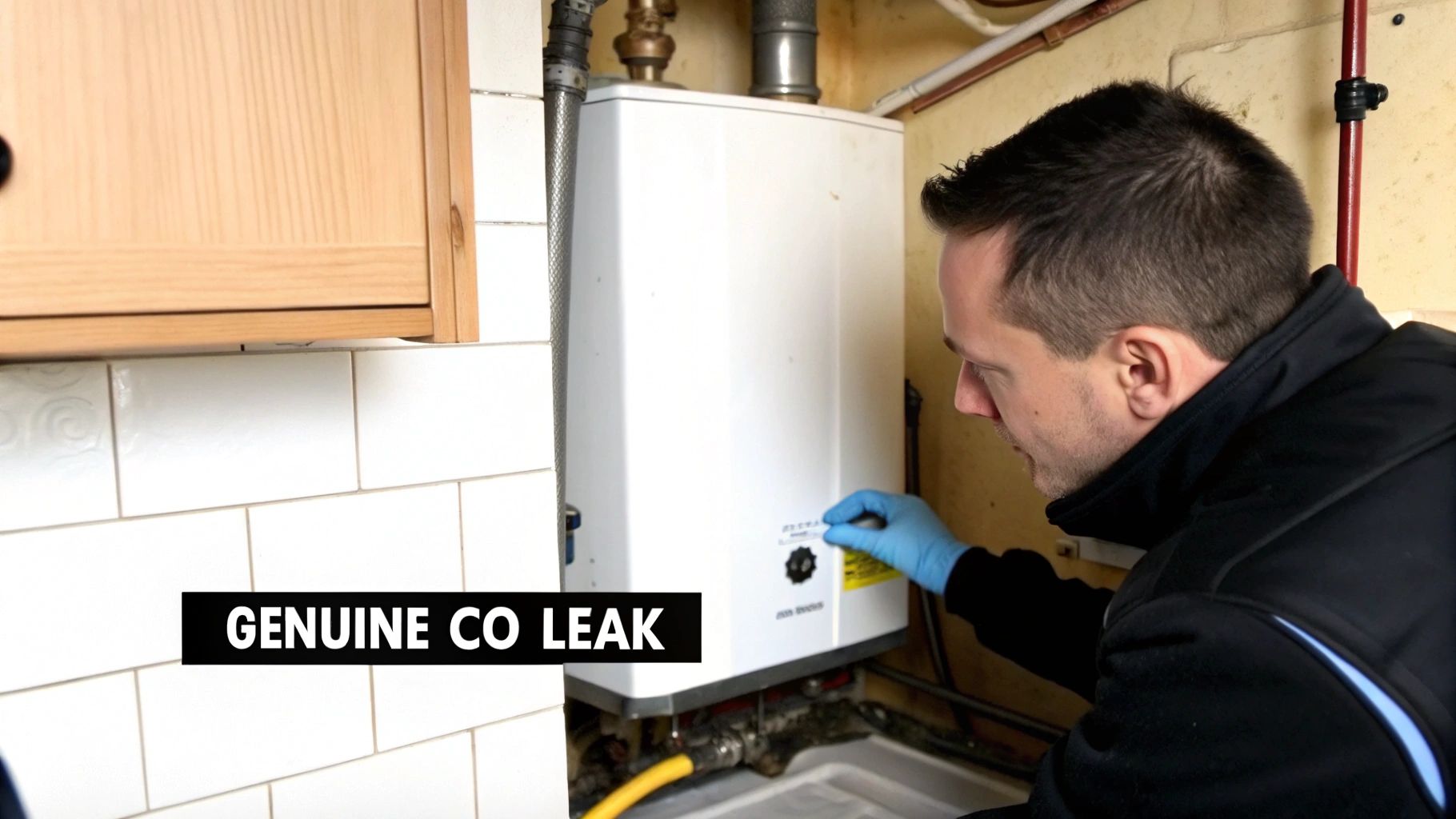
This is the scenario every homeowner dreads, and for good reason. A genuine carbon monoxide leak means an appliance isn't burning its fuel properly, and it’s releasing this silent, invisible, and odourless gas into your home.
Here in Eastbourne, with our wonderful mix of housing stock, a CO leak can come from anywhere. It could be an older boiler struggling in a Victorian terrace in the Meads or a modern gas fire with a blocked flue in a Sovereign Harbour property. No matter the appliance, the root cause is always the same: something is stopping the fuel from burning cleanly and safely.
The team at Harrlie Plumbing and Heating has seen just about every fault that can lead to these dangerous situations across East Sussex. Without proper maintenance, these problems can develop quietly in the background until your alarm finally screams for attention.
Common Sources of Real CO Leaks
So, where do these leaks actually come from? Understanding the mechanical culprits is the first step in protecting your home. While any fuel-burning device is a potential risk, we at Harrlie Plumbing and Heating tend to see the same issues time and again on our callouts in Eastbourne.
Cracked Heat Exchanger: This is a critical part of your boiler. If it cracks, toxic gases like CO can mix with the air that circulates through your home.
Blocked Flue or Chimney: Think of this as your boiler's exhaust pipe. If it gets blocked by debris, birds' nests, or storm damage from the coastal gales we get in Eastbourne, those dangerous gases have nowhere to go but back inside. We cover this in more detail in our guide on what is a boiler flue and why it matters.
Poorly Ventilated Appliances: Gas cookers, water heaters, and even wood-burning stoves need a steady supply of fresh air to work safely. Restrict that airflow, and CO can build up shockingly fast.
Faulty Installation: An appliance that wasn't installed correctly is a ticking time bomb. This is exactly why using a Gas Safe registered engineer isn't just a recommendation—it’s absolutely essential for your safety.
A CO leak isn't just a mechanical failure; it's a serious health emergency. The gas displaces oxygen in your blood, effectively starving your vital organs. Immediate action is critical.
The Dangers and Symptoms of CO Poisoning
There's a reason carbon monoxide is called "the silent killer." The nickname is tragically accurate. The initial symptoms are often mistaken for a simple case of the flu, which is why they are so easily dismissed.
Keep an eye out for these early warning signs:
Dull headaches that won't go away
Dizziness or feeling light-headed
Nausea and vomiting
General weakness and shortness of breath
If exposure continues, things can get much worse, escalating to confusion, blurred vision, and loss of consciousness. In the most severe cases, it can be fatal. The statistics paint a stark picture: across England and Wales, carbon monoxide poisoning is responsible for around 40 deaths and over 4,000 A&E visits annually.
This is precisely why a frantic, non-stop alarm should never, ever be ignored. If that alarm goes off and anyone in your home feels unwell, evacuate immediately and get medical attention. The certified team at Harrlie Plumbing & Heating is trained to pinpoint these dangerous faults during emergency call-outs in Eastbourne, securing your home and keeping your family safe.
So, Is It a False Alarm? Let’s Figure Out What Those Beeps Really Mean
When your carbon monoxide alarm starts beeping but you feel absolutely fine, it’s all too easy to just write it off as a faulty device. Before you reach for the step-ladder to pull it down, though, it’s worth understanding what else could be making it cry wolf. These alarms are incredibly sensitive, and they can sometimes be triggered by things that aren't a genuine CO leak.
Figuring out the difference between a real emergency and a simple nuisance beep is vital. A full-blown emergency alarm isn’t subtle – it’s a continuous, piercing pattern of four beeps that demands you act immediately. On the other hand, different sounds are designed to tell you about other issues, from what's happening in the room to the health of the alarm itself.
Common Triggers for False Alarms
Living in coastal towns like Eastbourne means we get a lot of salty air and high humidity, and believe it or not, that can sometimes be enough to trick a CO sensor. The moisture in the air, especially after a hot shower or when boiling a kettle in a kitchen without great ventilation, can create conditions that the alarm mistakes for danger, causing it to sound off.
A few other common culprits are known to make a carbon monoxide alarm go off when there’s no leak:
Airborne Gunk: A big build-up of dust, particularly if you’re renovating your home in Old Town or having a massive spring clean, can clog the sensor and trigger a false alarm.
Chemical Fumes: Strong smells from cleaning products, fresh paint, solvents, or even aerosol sprays like air freshener can set the device off. If you've just decorated a room, make sure it’s aired out properly.
Being Too Close for Comfort: Placing an alarm right next to a fuel-burning appliance can make it react to the tiny, harmless traces of fumes that get released when it first fires up.
Think of it this way: learning your alarm’s signals is like learning a new language. A frantic, continuous scream means "Get out, now!" while a polite, spaced-out chirp is more of a quiet reminder saying, "Excuse me, I need some attention over here."
Decoding Chirps and Other Noises
Not every sound your alarm makes is a signal of immediate danger. It also uses beeps and chirps to let you know when it needs a bit of TLC. Understanding these different sounds helps you know whether you just need to open a window or if it’s time to call a Gas Safe engineer from a trusted local company like Harrlie Plumbing and Heating.
The most common sound you’ll hear is a single, high-pitched ‘chirp’ every 30-60 seconds. This isn't an emergency. It almost always means one of two things: the batteries are running low and need to be replaced, or the alarm itself has reached the end of its life. Most CO alarms are only designed to last for five to ten years, and this chirping is its way of telling you it’s time to retire. Ignoring this is a huge risk, as it leaves your home unprotected, so make sure you act on it straight away.
Your Immediate Step-By-Step Safety Plan
Hearing that relentless, piercing sound can send a jolt of panic through anyone, but staying calm and having a clear plan is your best defence. The moments that follow are critical, and what you do next could be lifesaving.
This isn’t a time for second-guessing. You must always assume it’s a genuine emergency until a certified professional, like one of our engineers at Harrlie Plumbing and Heating, tells you otherwise. Your absolute priority is to get everyone to safety, which means acting quickly and with purpose.
Your Five-Step Emergency Action Plan
The moment your alarm sounds, follow these steps in order and without hesitation. This simple process is designed to protect you and your loved ones from potential harm.
Never Ignore the Alarm: Treat every single alarm as a real and present danger. Hesitation can have severe consequences, so you need to act immediately.
Ventilate the Property: As you head out, quickly open all doors and windows to let fresh air circulate. This simple action helps to disperse any potential build-up of carbon monoxide gas.
Turn Off Appliances: If it's safe to do so without putting yourself at risk, shut down all fuel-burning appliances. This means your boiler, gas fire, cooker, and any other gas or solid fuel devices.
Evacuate Everyone Immediately: Get every person and all pets out of the house and into the fresh air. Do not go back inside for any reason until an expert has declared it safe.
Call for Professional Help: Once you're safely outside, your next call depends on how everyone is feeling. If anyone is showing symptoms of CO poisoning (like a headache, dizziness, or nausea), call 999 for medical assistance immediately. If nobody feels unwell, your next call should be to a certified Gas Safe engineer for an emergency inspection.
It's also useful to know that your alarm can make different sounds. A full, continuous alarm is an emergency, but it might also make intermittent chirps for a low battery or an expired unit.
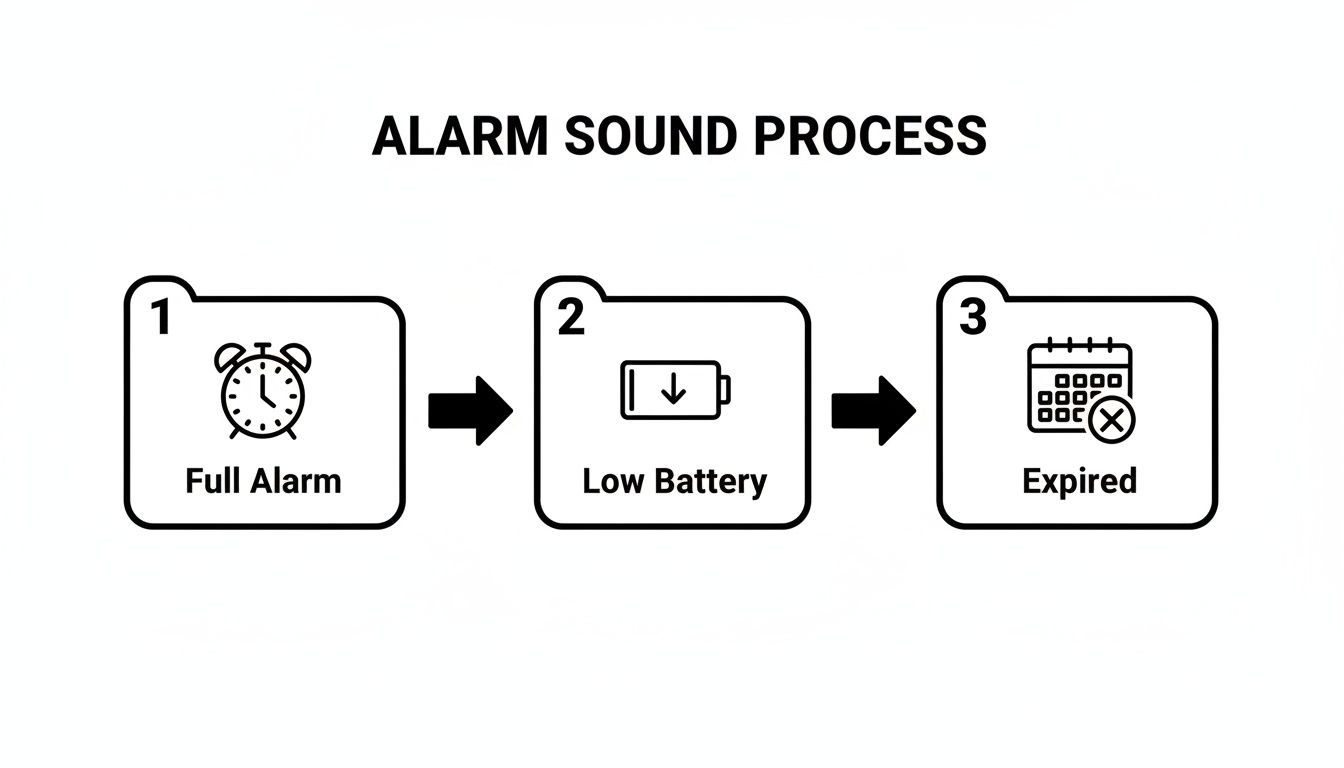
Understanding these different signals helps you respond correctly, but a full alarm always, always means following the emergency plan above.
For quick reference, here’s a checklist you can rely on in a stressful situation.
Emergency CO Alarm Checklist
Follow these steps immediately if your carbon monoxide alarm sounds. Your safety is the top priority.
Step | Action To Take | Important Note |
|---|---|---|
1 | Ventilate | Open all doors and windows on your way out. |
2 | Shut Down | Safely turn off all fuel-burning appliances if possible. |
3 | Evacuate | Get everyone (including pets) out of the house immediately. |
4 | Call 999 | If anyone feels unwell, call for an ambulance straight away. |
5 | Call an Engineer | If no one has symptoms, call a Gas Safe engineer to investigate. |
6 | Stay Out | Do not re-enter the building until a professional says it's safe. |
Never underestimate a CO alarm. Following this checklist ensures you’re taking the right steps to protect yourself and your family.
Getting Expert Help in Eastbourne
Once you are safely outside, it’s time to call in the professionals. A certified engineer has the specialist equipment needed to detect CO and pinpoint the exact cause of the leak, whether it's a faulty boiler in a Roselands home or a blocked flue in Hampden Park.
For residents in Eastbourne and the surrounding areas, the team at Harrlie Plumbing & Heating offers a rapid response for these exact situations. Our Gas Safe registered engineers are on hand to investigate the source, make your home safe, and provide the peace of mind you need when you need it most. Never take chances with your safety.
How to Prevent Carbon Monoxide Dangers
The best way to handle a carbon monoxide emergency is to make sure one never happens in the first place. A proactive approach will always be safer than a reactive one, and it all starts with routine, professional maintenance of any fuel-burning appliances in your home. Preventing a leak is the only guaranteed way to stop your carbon monoxide alarm from sounding for the most dangerous reason.
This is especially true here in Eastbourne, where our wonderfully diverse housing stock means boilers and heating systems can vary massively in age and condition. An annual boiler service isn't just a friendly suggestion; it’s the single most effective step you can take to protect your family from this completely preventable danger.
The Power of Professional Maintenance
During an annual service, a Gas Safe registered engineer does so much more than a quick once-over. The team here at Harrlie Plumbing & Heating carries out a detailed inspection, making sure every component is working both safely and efficiently.
This isn't just a box-ticking exercise. We're looking at things like:
Checking Flues and Ventilation: We make sure the exhaust path for dangerous gases is completely clear. It's not uncommon in Eastbourne homes to find blockages from debris or even birds' nests, which can force CO right back into your living space.
Inspecting for Safe Operation: We test all the safety mechanisms and hunt for any signs of wear and tear, such as tiny cracks in the heat exchanger that could pose a serious risk.
Cleaning Key Components: By cleaning out burners and injectors, we ensure the fuel burns cleanly and completely. This simple step drastically cuts the risk of CO being produced at all.
To be certain your gas appliances aren't silent threats, it's worth scheduling a regular gas heater service. Think of it as an MOT for your heating system—it's crucial for keeping your home safe.
Keeping Your Alarms in Top Condition
Your CO alarm is your electronic watchdog, but it needs a little care to stay on alert. Proper alarm maintenance is just as important as servicing your boiler. It’s a good idea to get into a simple routine to ensure it’s always ready to protect you.
"A CO alarm is a life-saving device, but only if it's working correctly. Simple monthly checks and knowing its replacement date are non-negotiable parts of home safety."
For landlords in the Eastbourne area, staying compliant with The Smoke and Carbon Monoxide Alarm (England) Regulations 2022 isn't optional—it's a legal requirement. This includes making sure alarms are fitted and fully functional. We offer more detailed guidance on this in our essential guide to CP12 Gas Safety Certificates.
Unfortunately, these incidents are on the rise. In London alone, carbon monoxide incidents have more than doubled in recent years, a stark reminder that faulty appliances are a primary trigger for these alarms. The London Fire Brigade suggests the cost-of-living crisis is a key factor, as homeowners in areas like Eastbourne might be skipping vital safety checks to save money, unknowingly increasing the risk of CO buildup.
Common Questions About Carbon Monoxide Alarms
Even with the best safety plan, it's natural to have a few questions about your carbon monoxide alarms. Getting to grips with the details is the best way to feel confident you're keeping your home and family safe. We've pulled together some of the most common queries we hear from homeowners across Eastbourne to give you clear, practical answers.
How Often Should I Replace My Carbon Monoxide Alarm?
Most CO alarms are built to last between five and ten years. You're not expected to guess, though—every single unit has a "replace by" date printed on it, usually on the back or side. It’s absolutely vital you check this date and get a new alarm before the old one expires.
Why the expiry date? Over time, the internal sensor that actually detects the CO gas becomes less effective. An alarm that's on its last legs will often let you know by 'chirping' intermittently. This is a very different sound to the loud, piercing siren of a genuine emergency. Here at Harrlie Plumbing & Heating, we make it a standard part of our annual boiler service to check your alarm's expiry date for you.
Where’s the Best Place to Install a CO Alarm?
For proper protection, you really need at least one CO alarm on each level of your home. It’s particularly important to place them near sleeping areas, so they can wake you if there’s a problem overnight when you're most vulnerable.
A few tips for getting the placement just right:
Near potential sources: Install alarms between one and three metres away from any fuel-burning appliance, like your boiler, gas fire, or water heater.
Avoid kitchens and bathrooms: Don't put them right in the kitchen where cooking fumes can trigger false alarms, or in bathrooms where steam and humidity are always an issue.
Steer clear of draughts: Keep them away from windows, doors, or air vents. A strong draught could blow the CO gas away from the sensor and stop it from registering a problem.
My Alarm Went Off, But an Engineer Found No Leak. What Now?
This can be a really confusing situation, but it’s actually the best possible outcome. If a certified Gas Safe engineer from a trusted local company like Harrlie Plumbing & Heating has given your home the all-clear with professionally calibrated equipment, you can be confident there isn't an active CO leak.
So what set it off? In these cases, the alarm was likely triggered by something else. The most common culprits are high humidity, chemical fumes from cleaning products or paint, or simply a faulty or expired detector.
First things first, get the windows open and air out the room thoroughly. If it happens again, try to think about what was going on at the time. Was someone using an aerosol spray? Had the shower just been running for a long time? And if the alarm is getting on a bit, it might just be time to replace it. Always trust the professional's diagnosis, but stay alert.
Can a Brand-New Boiler Still Cause a CO Leak?
While it’s much, much less likely, the answer is yes, a new boiler can leak carbon monoxide. But the problem is almost never with the boiler itself. It nearly always comes down to an incorrect or unsafe installation.
Things like a poorly sealed flue pipe, not enough ventilation, or incorrect settings can all lead to CO being produced and released, even from a top-of-the-range boiler. This is exactly why it's so critical to only ever use a certified Gas Safe registered engineer for any installation. The team at Harrlie Plumbing & Heating makes sure every single installation we carry out in the Eastbourne area meets the most stringent safety standards, giving you total peace of mind that your new system is running perfectly from day one.
If you're worried about your gas appliances or need a professional to investigate a carbon monoxide alarm, don't wait. Contact Harrlie Plumbing and Heating today for a rapid, reliable service from certified Gas Safe engineers you can trust. Visit our website to book your appointment or call us for an emergency response.

Comments