Repairing Burst Pipes: Quick Guide to Safe Home Fixes
- Luke Yeates
- Dec 27, 2025
- 16 min read

That heart-stopping moment when you hear the gush of water, followed by the sickening sound of it spreading across the floor—it's a scenario every homeowner dreads. In those first few critical minutes, what you do next is everything. The game plan for tackling a burst pipe is simple: stop the water flow, isolate the electrics, and contain the immediate damage before a professional can get there.
Your First 15 Minutes After a Pipe Bursts
Panic can set in fast, but a calm, methodical response can save you thousands in repairs. Picture this: a copper pipe under the kitchen sink has just given way in a classic Victorian terrace in Eastbourne's Meads area. Water is gushing out, threatening those beautiful original floorboards. This isn't the time to think about repairs; it's about crisis control, and it starts now.
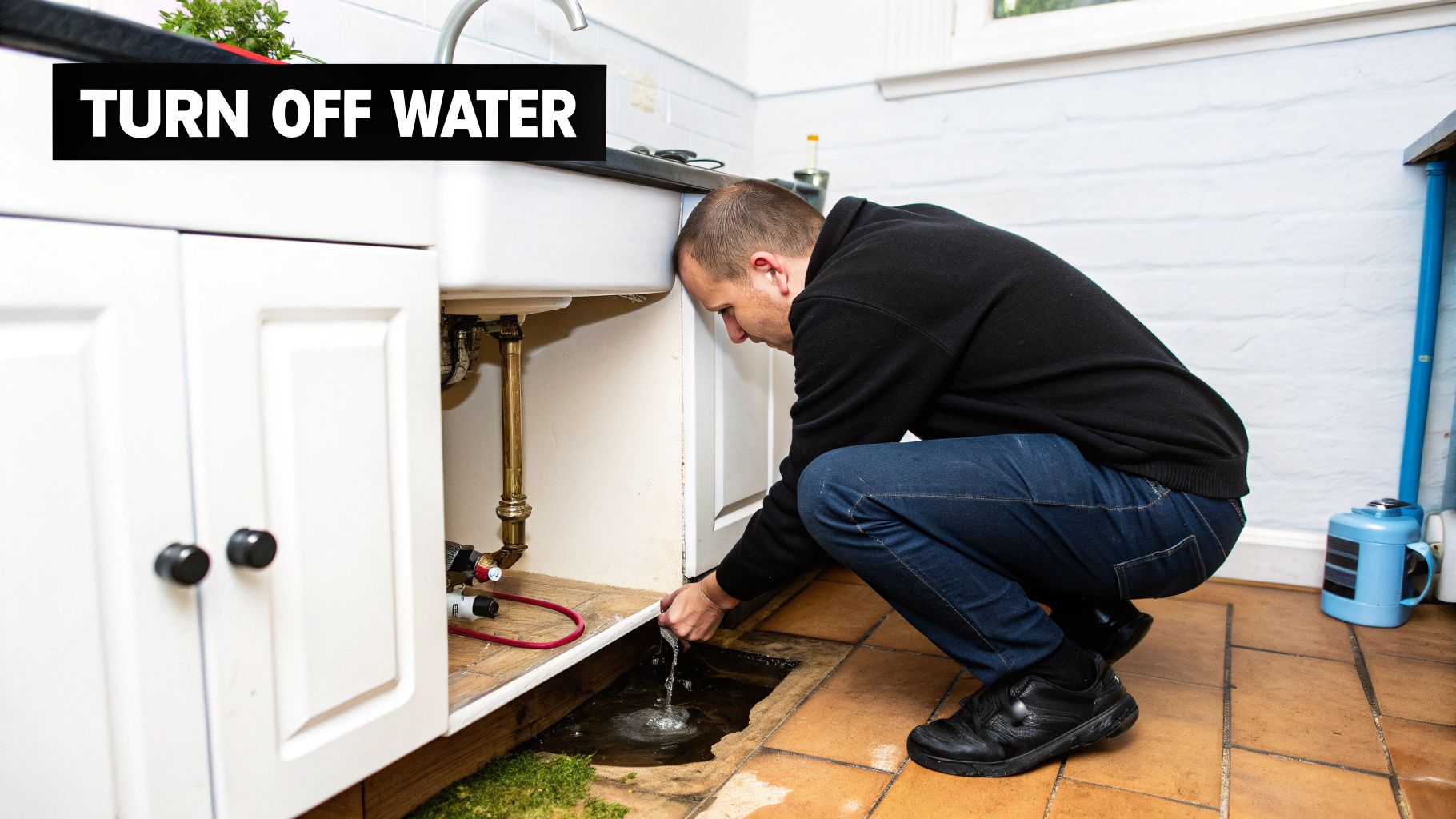
Your very first move is always to shut off the water at the mains. This one action stops the problem from escalating. In many older properties around Old Town, you’ll find the stopcock under the kitchen sink or tucked away in a utility cupboard, though it could also be outside. Knowing where yours is before disaster strikes is a massive advantage. If you're unsure, our guide on how to turn off your water main is an essential read for every homeowner.
Isolate Power and Contain the Mess
With the water flow stopped, your next thought must be safety. Water and electricity are a lethal mix. Get to your fuse box and switch off the main power, especially if the burst pipe is anywhere near wiring, sockets, or appliances. One flip of a switch could prevent a serious electric shock or a dangerous short circuit.
Now you can shift focus to damage limitation. Get that water out as fast as you can.
Move Your Valuables: Get furniture, rugs, and any electrical items out of the water's path immediately.
Grab Buckets and Towels: Place buckets under any drips coming through from the ceiling. Use old towels, blankets—anything absorbent—to soak up the water from the floor. A wet/dry vacuum is a lifesaver here if you have one.
Get Some Air Flowing: If it’s safe, open a few windows. It won't dry everything out, but it's a good first step to get the air circulating and kickstart the drying process.
This quick diagram breaks down those essential emergency steps into a simple, memorable flow.
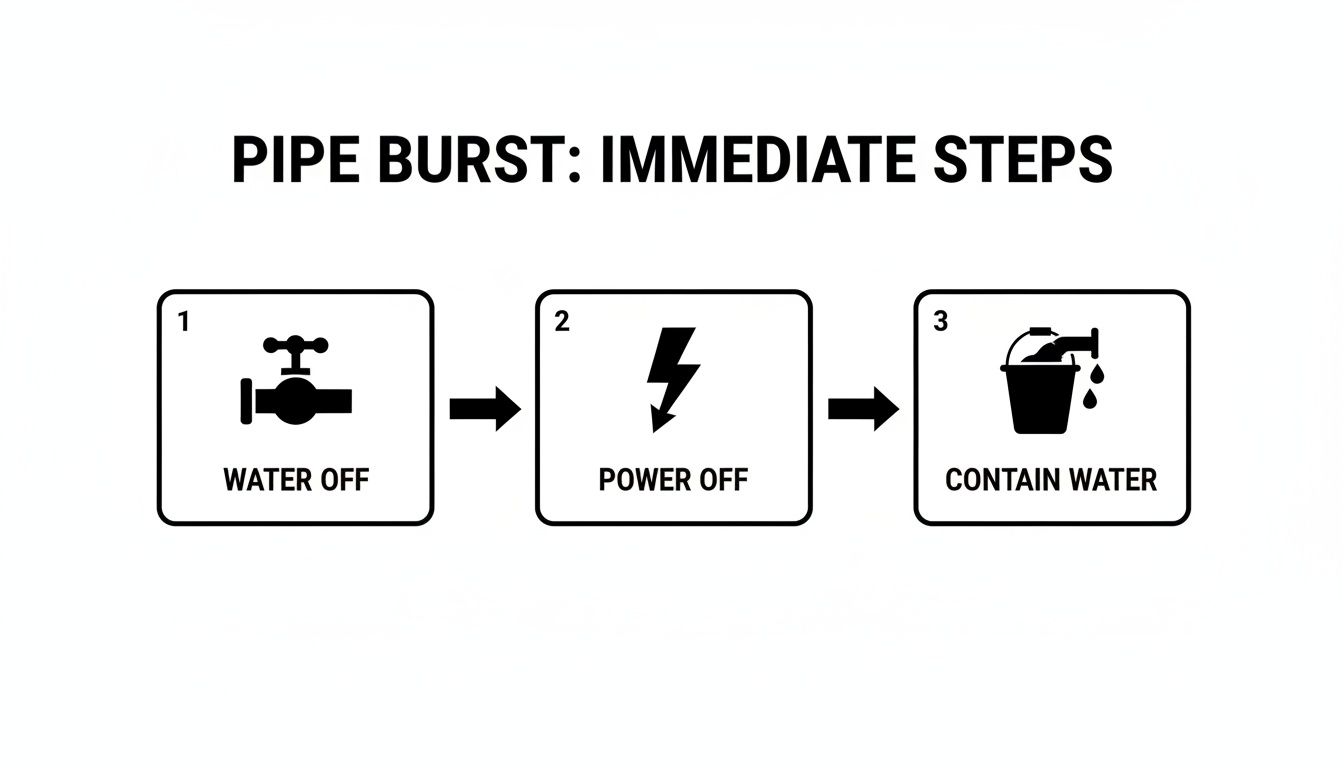
This sequence—Water Off, Power Off, Contain—is your blueprint for minimising the damage in those crucial first minutes.
The Next Steps
Okay, the immediate crisis is under control. Your final actions in these first 15 minutes are all about preparing for what comes next. Pull out your phone and take pictures of the burst pipe and any damage—you’ll need these for your insurance claim. Once the pipe is dealt with, your focus has to be on mitigating the water damage; this includes knowing how to dry carpets quickly to stop mould and rot from setting in.
Once the situation is stable and you've contained the water, it's time to call in the professionals. A fast response is absolutely critical, which is why our team at Harrlie Plumbing and Heating is geared up to reach homes across Eastbourne swiftly to get a proper, permanent fix in place.
What a Burst Pipe Really Costs Homeowners
The moment you discover a burst pipe is just the beginning of a long, often stressful, journey. Your first instinct is to stop the water, but the financial damage can continue to mount long after the leak is fixed. The true cost of repairing burst pipes isn't just the plumber's bill; it’s a whole series of expenses that can easily spiral into thousands of pounds.
Think about it this way: a pipe bursts in the loft of your Bexhill home. That water doesn’t just stay put. It soaks through the insulation, drips through the plasterboard ceiling, and works its way down into your carpets and furniture. Every single one of those problems needs a separate, and often expensive, fix.
Understanding what you might be up against is crucial. It shows just how important it is to act fast, call in the professionals, and take steps to prevent it from happening in the first place.
The Breakdown of Repair Expenses
When we talk about the cost, we’re not looking at one single figure. It's a collection of different jobs, each with its own price tag, that all add up to the final bill. Many homeowners are genuinely surprised by how many different tradespeople they need to get their homes back to normal.
Here’s a look at what’s typically involved:
Emergency Plumber Call-Out: This is your first and most urgent expense. It covers getting a professional out to stop the leak and figure out the extent of the pipe damage. Here at Harrlie Plumbing and Heating, we believe in clear, upfront pricing so you’re not hit with any surprises during an already stressful time.
Pipe Repair or Replacement: This is the core plumbing work. The cost here really depends on where the pipe is. A burst pipe hidden under floorboards is a much bigger job—and more expensive to fix—than one that’s easily accessible under a kitchen sink.
Water Damage Restoration: This is often the biggest ticket item. It involves professionally drying out your property, which can mean having industrial-sized dehumidifiers and fans running for days on end.
Structural Repairs: The water damage has to be put right. This means replacing soggy plasterboard, warped floorboards, and even joists. Then there's the cost of re-decorating to get your rooms looking like new again.
Electrical Safety Checks: Water and electrics are a dangerous mix. If there's any chance water has gotten near your wiring, you’ll need a certified electrician to inspect everything and make sure it’s safe.
On top of all that, you might also have to deal with the challenge of restoring water-damaged wood floors after a flood, which is a common and costly headache after a serious leak.
How External Factors Affect UK Repair Costs
Recent events have put UK homeowners at even greater financial risk. Take the 2022/23 energy crisis, for example. It created the perfect conditions for pipes to freeze and burst. With energy bills soaring, many people understandably turned their heating down, leaving pipes dangerously exposed to the cold.
According to Zurich Insurance, this led to a massive 75% surge in burst pipe claims last winter. A shocking 13 million households had reduced their heating. Consequently, the average repair cost jumped from £8,663 in 2021 to an eye-watering £12,791 in 2022—that’s an increase of over £4,000 in just twelve months.
For anyone living in Eastbourne and the surrounding areas, these national figures should serve as a serious warning. A sudden cold snap along the coast can have devastating consequences if your home isn't prepared.
Having a trusted local expert like Harrlie Plumbing and Heating on your side provides real peace of mind. You know that if the worst happens, experienced professionals can get there quickly to minimise the damage and keep those high costs under control with fast, effective repairs.
Temporary DIY Fixes to Stop the Water Flow
Right, you’ve managed to shut off the water and kill the electrics. The immediate panic is over, but you might still have a persistent drip and a growing sense of dread. What now? This is where a good temporary fix becomes your best friend.
Think of it as plumbing first aid. These aren't permanent solutions by any stretch, but they’ll stop the leak, prevent the damage from spreading, and buy you some precious time while you wait for a professional to arrive. Putting a temporary patch on a burst pipe gives you back a bit of control and can seriously reduce the amount of secondary damage while you wait for one of our Harrlie Plumbing and Heating engineers.
Your Essential DIY Repair Toolkit
You don't need a whole workshop to pull off a temporary fix. Just a few key items in an emergency kit can be the difference between a minor inconvenience and a major disaster. I remember a call-out to a flat near Eastbourne's Grand Parade where a small split in a copper radiator pipe was causing chaos. Having the right gear on hand would have turned that spreading puddle into a completely manageable situation.
Here are the essentials every homeowner should have tucked away somewhere:
Pipe Repair Clamp: An absolute classic for a reason. It’s basically a hinged clamp with a rubber lining. You just tighten it around the damaged bit of pipe, and that rubber creates a surprisingly strong seal over the leak.
Epoxy Putty: This stuff is incredibly versatile. You knead it together to activate it, then mould it over the crack or hole. It hardens into a rock-solid, waterproof seal that’s brilliant for awkward spots where a clamp won't fit.
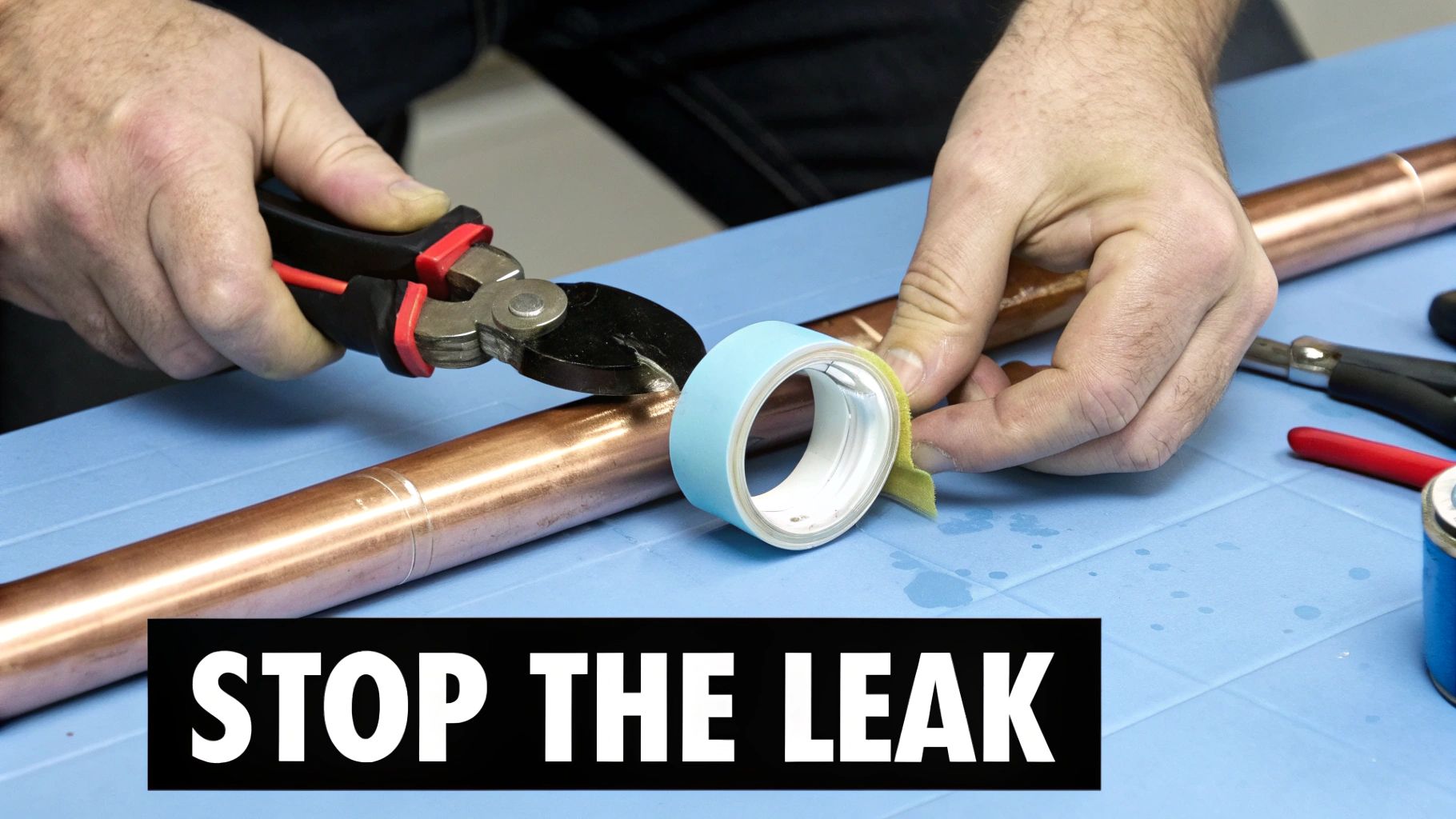
Self-Fusing Silicone Tape: This isn’t your normal sticky tape. It’s a clever silicone that only fuses to itself. You stretch it and wrap it tightly around a pipe, and it creates a seamless, waterproof layer that can even handle a bit of pressure.
These items are your first line of defence. You can grab them from any decent DIY shop, and they’re simple enough for anyone to use.
A Look at Your Temporary Repair Options
To help you decide what’s best for your situation, here’s a quick comparison of the common temporary fixes.
DIY Temporary Pipe Repair Options
Repair Method | Best For | Tools Needed | Pros | Cons |
|---|---|---|---|---|
Pipe Repair Clamp | Small, straight splits in copper or steel pipes | Screwdriver or wrench | Very effective, quick to apply, reusable | Can be bulky, not suitable for joints or bends |
Epoxy Putty | Pinhole leaks, cracks, and awkward shapes | Utility knife to cut the putty | Mouldable, creates a very hard and durable patch, works on wet pipes | Takes time to cure, can be messy, one-time use |
Self-Fusing Silicone Tape | Small leaks on straight pipes and gentle bends | Scissors or a knife | Flexible, waterproof, withstands pressure and temperature changes | Requires tight wrapping and multiple layers, might not hold on larger splits |
Each method has its place, but the key is knowing they are all just buying you time for a proper, professional repair.
Applying a Temporary Fix Like a Pro
Before you even think about patching, get that pipe as dry as you possibly can. Use an old towel and give it a thorough wipe down. Any patch needs a clean, dry surface to get a proper grip and create a seal that will actually hold.
If you're using a pipe clamp, just open it up and make sure the rubber pad is centred directly over the split. Close it and tighten the screws evenly. You want it firm and secure, but don't go crazy and overtighten it, as you could crush the pipe and make things worse.
For epoxy putty, slice off what you need and knead it until the colour is uniform—that’s how you know it's activated. Press it firmly over the leak, making sure to extend it about an inch past the damage on all sides. Smooth the edges down to get a good bond with the pipe. It’ll start to harden up in just a few minutes.
With self-fusing silicone tape, the trick is in the stretch. Start wrapping a couple of inches before the leak, pulling the tape tight as you go. This stretching is what makes it fuse to itself. Overlap each layer by about half and continue wrapping a couple of inches past the leak. A few layers will build up a strong, pressurised seal.
Just remember, these are temporary measures. They’re designed to last for a few hours, maybe a day at most. The constant water pressure will eventually defeat any DIY patch, which is why a permanent, professional repair is absolutely essential.
Knowing the Limits: When to Call Us
While these quick fixes are fantastic, they do have their limits. They’re at their best on small, clean splits or pinhole leaks on a nice straight bit of pipe.
They are not the answer for a leak on a joint, a pipe that's heavily corroded, or a major rupture. In those situations, a DIY fix is unlikely to hold and could even make the problem worse. Your best bet is to focus on damage control with buckets and towels and give a professional a call immediately.
And if you’re dealing with plastic pipes, the approach can be a bit different. Some of these techniques might work, but it's always best to get specific advice. We've got a whole guide where you can learn more about easy DIY fixes for a leaking PVC pipe.
Here at Harrlie Plumbing and Heating, we’ve seen every kind of leak imaginable. Our engineers have the tools and experience to provide a permanent solution that restores your plumbing and gives you proper peace of mind. Your temporary fix is the crucial first aid; it lets our team arrive and perform the necessary surgery.
How Professionals Approach Permanent Pipe Repairs
That temporary patch you’ve put on is a fantastic piece of first aid, but it isn’t a permanent cure. The constant water pressure flowing through your plumbing will always find a way past a DIY fix eventually. This is where professional expertise becomes non-negotiable, ensuring the long-term integrity and safety of your home. Moving from a temporary stopgap to a permanent solution requires precision, the right materials, and proven techniques that stand the test of time.
When our engineers at Harrlie Plumbing and Heating arrive at a property in Eastbourne, our first job is always a thorough assessment. We don't just fix the obvious split; we inspect the surrounding pipework for any signs of corrosion, stress, or other weak points that could cause trouble down the line. A burst pipe is often a symptom of a wider issue, especially in older properties around Hastings with ageing pipework.
It’s this methodical approach that ensures the repair is not just effective but also durable.
Choosing the Right Repair Technique
There isn’t a one-size-fits-all solution for repairing burst pipes. The method a professional plumber uses depends entirely on the pipe's material, its location, and the specific type of damage. Each technique has its own strengths, and a skilled engineer knows precisely which one to deploy for a reliable, leak-proof finish.
Here are some of the primary methods we rely on:
Soldering (Sweating) Copper Pipes: This is the traditional, time-tested method for repairing copper pipes. It involves using a blowtorch to heat the pipe and a new fitting, then applying solder to create an incredibly strong, permanent metal bond. It requires skill and precision but results in a seamless, durable joint that can last for decades.
Compression Fittings: A brilliant, solder-free alternative, compression fittings create a tight mechanical seal. A brass ring (called an 'olive') is compressed between the fitting and the pipe by tightening a nut, forming a watertight connection. This is often ideal for areas where using a flame would be unsafe or impractical.
Push-Fit Connectors: These modern marvels are a fast and reliable way to join pipes, especially in tight spaces. They contain a grip ring and an O-ring that create a secure, waterproof seal the moment the pipe is pushed in. We often use high-quality push-fit connectors for quick and effective repairs in new-build properties across Bexhill.
The decision on which method to use is critical. In a historic listed building, for example, preserving the original pipework where possible is a priority, which might favour a delicate soldering job over cutting out a large section. In every case, our goal at Harrlie Plumbing & Heating is a clean, professional finish that restores your plumbing to perfect working order.
A professional repair is more than just stopping a leak. It's about restoring the structural integrity of your plumbing system to prevent a recurrence, ensuring the safety and efficiency of your home's water supply for years to come.
The Professional Repair Process
Once we’ve settled on the right technique, the process is meticulous. We double-check that the water supply is off and drain any residual water from the system to ensure a clean working area. The damaged section of the pipe is then carefully cut out using a proper pipe cutter, which gives a clean, square edge.
Next, the pipe ends are prepared by cleaning and deburring them. This step is vital—any grit or imperfection can compromise the seal, leading to a frustrating slow leak down the line. Whether we're soldering or using a fitting, a perfectly clean surface is the foundation of a successful repair.
This focus on modern, professional solutions isn't just a best practice for homeowners; it mirrors a nationwide trend. Water mains repairs highlight the UK's ageing infrastructure, and Ofwat's 2024-25 report shows the water sector is averaging 128.9 repairs per 1,000 km of main. To see the bigger picture on these large-scale challenges, you can read the full findings in the Ofwat report. This national context really underscores why using up-to-date, reliable repair methods in our own homes is so important.
Finally, the new section of pipe and fittings are installed, and the system is slowly repressurised. We then conduct a thorough check, not just on our work but on the surrounding area, to confirm there are absolutely no leaks. It’s this attention to detail that separates a quick fix from a true professional solution, a standard you can learn more about by reading our guide to finding trusted plumbers in the Eastbourne area.
After the stress, mess, and expense of dealing with a burst pipe, the last thing you want is a repeat performance. Honestly, the best approach is always prevention. A few smart, proactive steps can save your home from the chaos of a sudden flood, especially during those cold snaps we get here on the coast.
For homeowners in Eastbourne, preventing a burst pipe is all about understanding the unique risks our properties face. From draughty lofts in the older Victorian houses around Old Town to exposed pipework in garages on the newer estates towards Langney, every home has its weak spots. Taking care of them is the key to avoiding that dreaded emergency call-out.
The scale of this problem across the UK is pretty staggering. According to Direct Line, around 2,650 domestic pipes burst every year, causing nearly £50 million in damages. The average cost to fix everything is a jaw-dropping £18,868, with January and February being the worst months. The damage spreads far and wide, with 37% of households suffering ceiling damage and 18% facing serious electrical issues. You can explore the full findings on burst pipe damage from Direct Line to get the complete picture of just how disruptive these incidents are.
Winterising Your Eastbourne Home
When the temperature plummets, your plumbing is put under serious threat. Water expands when it freezes, and that expansion puts immense pressure on pipes until they just give up and split. A bit of simple winterisation can make all the difference.
Insulate Your Exposed Pipes: This is your number one defence, hands down. Get some foam pipe lagging and wrap any pipes exposed to cold air. The most common culprits are in lofts, garages, basements, and any pipes running along external walls. It’s a cheap and easy job that provides massive protection.
Keep a Low, Constant Heat: It's tempting to switch the heating off completely when you leave the house during a cold spell. A better idea is to set your thermostat to a low but constant temperature, somewhere around 12-15°C. This keeps just enough warmth circulating to stop the water in your pipes from turning to ice.
Open the Loft Hatch: On the coldest nights, just cracking open the hatch to your loft can be a lifesaver. It lets warmer air from the house circulate up there, helping to protect any water tanks and pipes you have in the roof space.
The single most powerful thing you can do is find out where your main stopcock is before you have an emergency. Trust me, being able to shut off the water in seconds is the difference between mopping up a puddle and dealing with a flooded ground floor.
Your Seasonal Maintenance Checklist
Good plumbing maintenance isn't just a winter thing; it’s a year-round commitment to keeping your system healthy. Running through a simple checklist can help you stay on top of things and spot a small issue before it blows up into a full-blown crisis.
Autumn Prep (September-November)
Book your annual boiler service with a Gas Safe registered engineer.
Lag any newly spotted exposed pipes before the first frost.
Check for and seal any draughts around windows and doors, especially where pipes run nearby.
Clear out your gutters and drains so water can flow away from your property properly.
Spring Check-Up (March-May)
Do a visual sweep of all the pipework you can see. Look for any new leaks, green corrosion spots, or signs of wear that might have appeared over winter.
Check your outdoor taps for any damage caused by frost.
Give your stopcock a gentle turn to make sure it hasn't seized up over the colder months.
An annual boiler service from a certified professional is the cornerstone of any good prevention strategy. When one of our Harrlie Plumbing & Heating engineers comes to service your boiler, we don’t just look at the boiler itself. We always do a visual check of the surrounding pipework and system. It gives us a chance to spot the early warning signs of corrosion or strain, letting us recommend a fix before it turns into a burst pipe emergency. It’s a simple check that delivers invaluable peace of mind.
Common Questions About Burst Pipe Repairs
When a pipe bursts and water is suddenly everywhere, it’s completely normal for your mind to race with questions. In a high-stress moment like that, you need clear, straightforward answers from people who’ve seen it all before. We’ve put together some of the most common queries our team at Harrlie Plumbing and Heating gets from homeowners across Eastbourne, giving you the information you need, when you need it most.
From spotting the first warning signs to figuring out your insurance, here are the answers you’re looking for.
How Do I Know if a Pipe Is Frozen Before It Bursts?
Catching a frozen pipe early is the best way to prevent a catastrophic burst. The signs can be subtle, so you need to know what to look for. Often, the first clue is a tap that only produces a weak trickle of water, or sometimes no water at all. If you can see the pipe, you might even spot a thin layer of frost on the outside.
If you think a pipe has frozen, there’s one golden rule: never use a direct flame or a blowtorch to thaw it out. That sudden, extreme heat can cause the metal to expand too quickly and crack, turning a frozen pipe into a burst one in an instant.
The safest thing to do is shut off your water at the stopcock to relieve the pressure and then give our team at Harrlie Plumbing and Heating a call. We have the proper gear to thaw pipes safely and check for any stress fractures before turning your water supply back on.
Does Home Insurance Cover Burst Pipe Damage?
This is a big one for most people, and the short answer is usually yes—but there are some important details to understand. Most standard UK home insurance policies cover damage from an "escape of water," which is the official term for a burst pipe. This means they’ll typically pay to repair the ruined ceilings, damaged floors, and soaked furniture.
What they often don't cover, however, is the cost of repairing the pipe itself. The logic here is that fixing the pipe is considered general home maintenance, which is the homeowner's responsibility.
It's crucial to know that insurers expect you to take reasonable care of your property. If a pipe bursts in an uninsulated loft during a predictable cold spell, they might argue you were negligent and could reduce or even deny your claim. Always take photos of the damage before you start the cleanup and get in touch with your insurer as soon as you can.
How Fast Can You Respond to an Emergency in Eastbourne?
We know that when a pipe bursts, every single minute counts. The longer water gushes into your home, the more widespread and costly the damage becomes. That's exactly why our service is built around a rapid emergency response.
For plumbing emergencies across Eastbourne, Hastings, and Bexhill, Harrlie Plumbing and Heating offers a one-hour response time, seven days a week. Our mission is simple: get a qualified engineer to your door as quickly as humanly possible to stop the leak, assess the damage, and secure your property. When you ring us, you're not speaking to a distant call centre; you’re getting a local team that’s ready to jump into action immediately.
What Is the Real Difference Between a Temporary and Permanent Repair?
It's easy to stick a pipe clamp or some epoxy putty on a leak and feel like the problem is solved. While these DIY fixes are fantastic for stopping the immediate flow of water and preventing further damage, they are nothing more than a stopgap. They simply aren't designed to handle the constant high pressure of a home's plumbing system day in, day out—and eventually, they will fail.
A permanent repair, on the other hand, restores the pipe to its original strength and integrity. A professional from Harrlie Plumbing and Heating will physically cut out the damaged section of the pipe. It will then be replaced using durable, industry-standard methods like soldering for a completely seamless bond or fitting high-quality compression couplings for a secure mechanical seal.
A temporary fix buys you time. A permanent repair buys you lasting peace of mind.
When you're facing the stress of a burst pipe, you need a fast, reliable, and professional solution. For emergency repairs, preventative maintenance, or any plumbing and heating needs in Eastbourne, trust the experts.
Contact Harrlie Plumbing and Heating today for a free quote and discover why we're the trusted choice for homeowners across the region. Visit us at https://www.harrlieplumbing.co.uk.

Comments