Pipe Burst Repair Guide for Eastbourne Homes

That gut-wrenching sound of rushing water where it shouldn't be is a moment no homeowner wants to experience. When a pipe bursts, your first instinct might be panic, but what you do in the next few minutes is absolutely critical. The key is to stop the flow of water, make the area electrically safe, and then get a professional on the phone. Acting fast can literally save you thousands of pounds in water damage.
Your First Response to a Burst Pipe Emergency
Okay, take a deep breath. You've found water pouring through a ceiling or spreading across your floor, and the clock is ticking. A calm, methodical approach right now will make a world of difference in protecting your home.
It might feel like you're the unluckiest person in the world, but burst pipes are a shockingly common and expensive problem for UK homeowners. They're responsible for around 2,650 domestic floods and nearly £50 million in damages every single year. It’s a messy business, with over a third of households suffering wrecked ceilings and an equal number dealing with ruined floors and carpets.
Find and Shut Off Your Main Water Supply
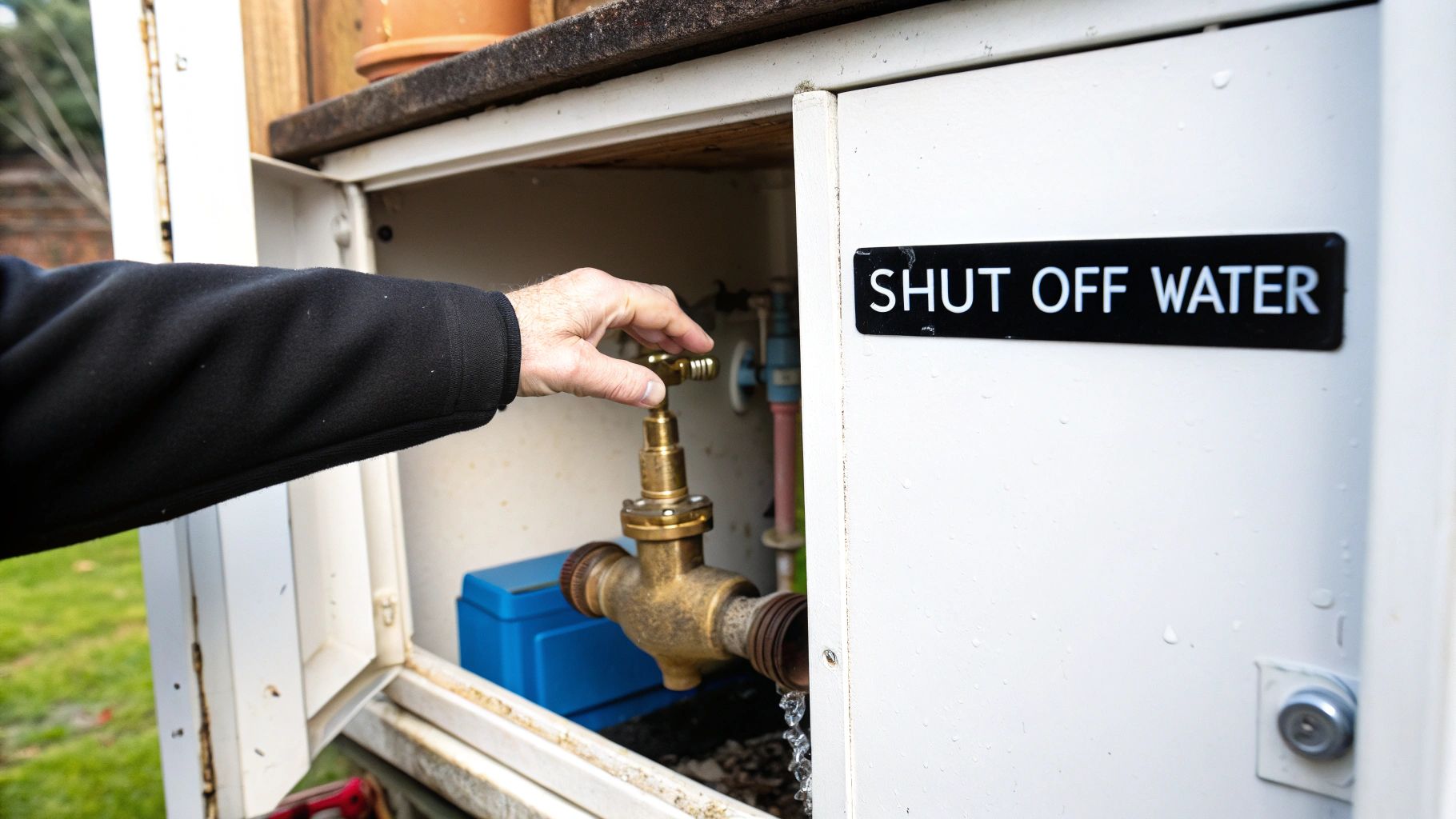
First things first: you have to shut off the main water supply to your house. This is non-negotiable. It stops any more water from feeding the leak and making the damage worse.
Finding the stopcock, especially in some of Eastbourne's lovely older Victorian and Edwardian properties, can be a bit of a treasure hunt. We've seen them under kitchen sinks in homes in Old Town, in downstairs loos in Meads, or tucked away in utility cupboards in Willingdon. If you’ve looked everywhere inside and come up empty, check for an external valve on the pavement outside your house, often under a small metal or plastic cover.
If you’re scrambling to find it, don't worry. We've put together a detailed guide on exactly how to turn off your water main that walks you through the common locations.
For when you're in the middle of the crisis, here's a quick reference table to keep the most important actions front of mind.
Your Emergency Action Checklist for a Burst Pipe
Action Step | Why It's Critical | Eastbourne-Specific Tip |
|---|---|---|
Shut Off Main Water | This immediately stops more water from entering your system, containing the flood. | In older terraced houses in areas like Seaside, the stopcock could be in a cellar or shared utility space. Know its location before you need it. |
Switch Off Electricity | Water and electricity are a lethal mix. This prevents electrocution and electrical fires. | If your fuse box is in a damp area like a garage or basement, approach with extreme caution. Don't stand in water to turn it off. |
Call a Professional | An experienced plumber can quickly assess, isolate, and repair the pipe, preventing further long-term damage. | Our Harrlie Plumbing and Heating team is local to Eastbourne and can typically be on-site within the hour for genuine emergencies. |
This checklist isn't just a guide; it's your blueprint for taking control of a chaotic situation.

These three steps—Water Off, Power Off, Call a Plumber—are the absolute priority. Committing them to memory will help you act decisively when it matters most.
Make Sure the Electrics are Safe
This is the big one for safety. If water is anywhere near light fittings, plug sockets, or appliances, you need to kill the power at the fuse box immediately. Don’t even think about touching a wet light switch or unplugging a damp appliance. Your safety comes first, and it’s far better to sit in the dark for a bit than to risk a serious electrical shock.
Once you’ve contained the immediate danger, your next call is to a trusted local plumber. When the pressure is on, it's interesting to see how homeowners find plumbers via voice search after a pipe burst. For a rapid, expert response right here in the Eastbourne area, the team at Harrlie Plumbing and Heating is on call and ready to handle your emergency.
Assessing the Damage and Making a Temporary Fix
With the water finally off, the frantic rush is over. Now you can take a breath and shift from panic mode to assessment. This is your chance to really understand what you're up against, which is vital for both the repair and any insurance claim you might need to make.
First, get a good look at the pipe itself. Is it a tiny, weeping pinhole leak or a proper split that was gushing water? Look for tell-tale signs of wider problems like corrosion, any bulging on the pipe, or even discolouration around the damaged area. We often see older copper pipes under sinks in areas of Eastbourne like Meads that start with these small pinhole leaks before they finally give way.
Document Everything for Your Records
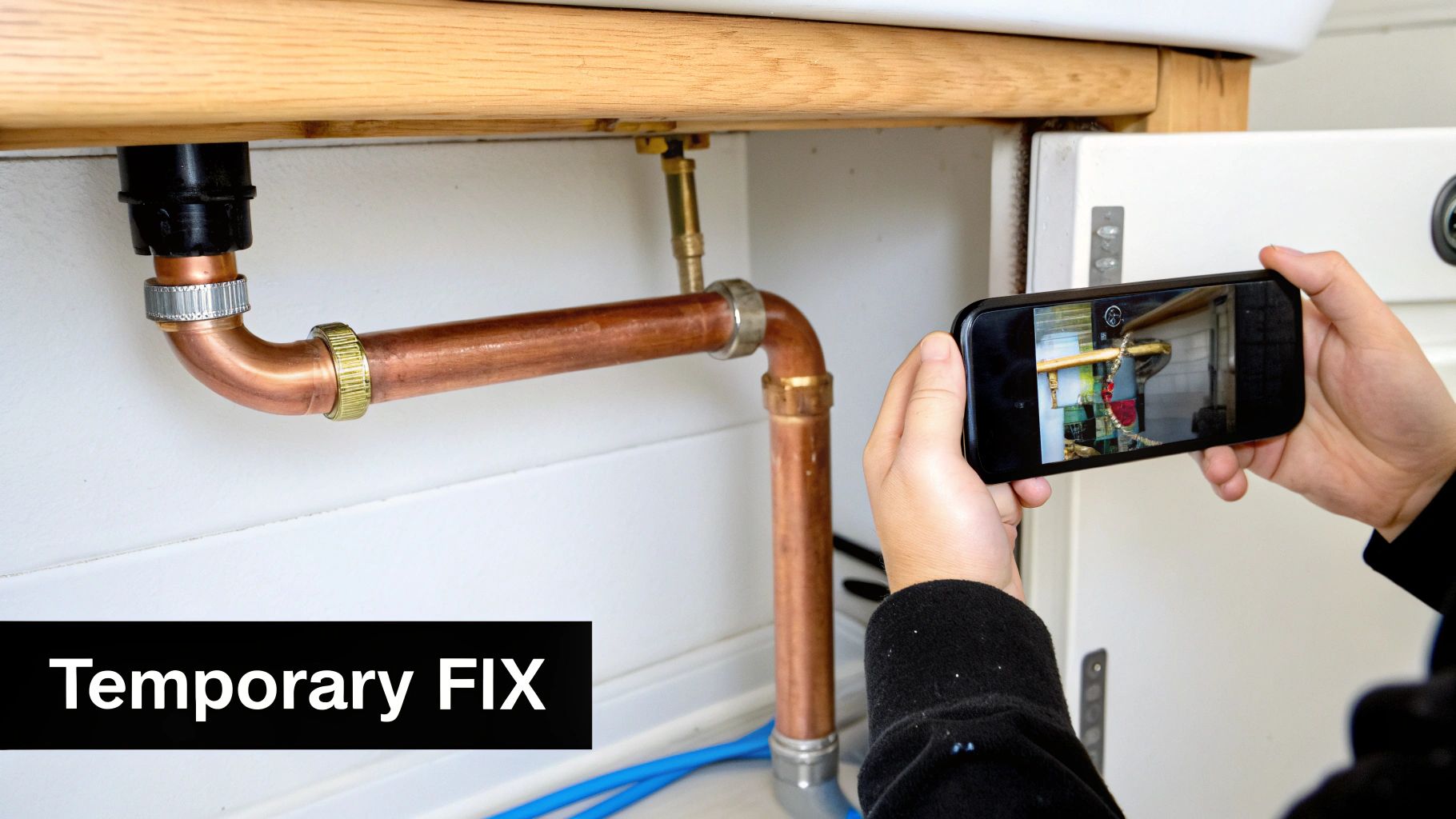
Before you even think about touching anything, grab your phone. Start taking clear photos and videos of the burst pipe and all the resulting water damage—the ceiling, walls, floors, and any of your belongings that got wet. This documentation is absolutely vital for your home insurance claim.
Capture the Source: Get right in there with close-up shots of the actual split or crack in the pipe.
Show the Scope: Step back and take wider shots that show the entire affected area so the insurer can see how far the water has spread.
Record Details: Make a quick note of the date and time you found the leak. A clear timeline makes everything smoother.
Honestly, this simple step can be the difference between a straightforward claims process and a frustrating, drawn-out headache.
Applying a Temporary Fix to Control the Leak
Once you’ve got your evidence, a temporary repair can stop any last drips and prevent more damage while you wait for a professional. It’s important to remember these are just stopgaps, not permanent solutions, but they’re very effective at getting the situation under control. For a confident homeowner, there are a couple of good options.
Important Takeaway: A temporary fix is designed to buy you time and minimise damage. It is not a substitute for a professional, permanent pipe burst repair, which is essential for safety and preventing future leaks.
A pipe clamp is usually the easiest and most reliable temporary fix. It’s a metal sleeve with a rubber lining inside. You just place it over the split and tighten the screws, which creates a really strong seal. You can pick these up at most DIY shops. A simple clamp like this could easily stop a drip from a burst copper pipe under the kitchen sink in a Hampden Park home, saving the cabinet from getting completely waterlogged.
Another solid option is epoxy putty. This is a two-part compound that you knead together and then apply firmly over the crack. It hardens in just a few minutes and forms a waterproof seal. While it works well, it’s best for smaller cracks and you need to get the pipe completely dry before you put it on.
After you've applied a temporary fix, the next step is to get the experts in. A professional plumber from Harrlie Plumbing and Heating can properly assess whether a simple patch-up will do or if a more complex repair is needed, making sure your home’s plumbing is safe and secure for the long haul.
Deciding on a Permanent Pipe Burst Repair
That temporary fix you've put in place? It's a brilliant bit of first aid, but it's important to remember it’s not a cure. For the long-term health and safety of your home's plumbing system, you absolutely need a permanent, professional repair. This is where a qualified plumber comes in to give you a durable solution and proper peace of mind.
When our team at Harrlie Plumbing and Heating gets to a job in Eastbourne, the first thing we do is figure out the best way forward. It's not a one-size-fits-all situation. The right call depends on the pipe's material, its age, where it is, and just how bad the damage is. We'll always talk you through the options so you know exactly what we’re suggesting and, more importantly, why.
Repair or Replace The Damaged Section
More often than not, the most straightforward approach is to cut out the damaged piece of pipe and replace it. This is usually the best bet for localised damage – think a single split from freezing or a small patch of corrosion.
For instance, if a copper pipe under your floorboards has given way in a Sovereign Harbour property, we'd carefully and precisely remove only the compromised section. Then, we’d fit a new piece, ensuring a perfect, watertight seal using either traditional soldering techniques or modern, reliable press-fit connectors.
However, in many older Eastbourne properties, we come across original iron or even lead pipework. When these pipes fail, just patching them up isn't the wisest move. They're often brittle and likely to cause more problems down the line. In these cases, replacing that entire run of pipe is a much more sensible long-term investment.
Modern Pipe Materials: Copper vs PEX
When we do need to replace a section, we've got a couple of excellent modern materials to choose from. The two we use most are traditional copper and the more flexible PEX (cross-linked polyethylene) piping.
Copper Piping: A classic for a reason. It's incredibly durable, lasts for decades, and is naturally resistant to bacteria. The downside? It can be more labour-intensive to install and is still vulnerable to freezing if it isn't properly lagged.
PEX Piping: This flexible plastic tubing has been a real game-changer in the industry. It’s resistant to corrosion and scale, and its flexibility means it can expand slightly if water freezes inside, making it far less likely to burst. It’s also quicker to install, which can help keep labour costs down.
We often recommend PEX for repairs in tight or awkward spots, like boxed-in pipework in older Eastbourne terraced houses. Its flexibility just makes it so much easier to work with than rigid copper. It’s a fantastically reliable and cost-effective choice for many pipe burst scenarios.
It's also interesting to see how the wider UK water industry is tackling leaks. New innovations like self-healing pipe technology can slash repair times by up to 90% without major digging. While this is mainly for big infrastructure projects, that same focus on efficiency and better materials filters down to how we approach residential jobs. You can actually explore how this technology is changing the industry on Water Magazine to see what the future holds.
Ultimately, the right choice really does depend on your specific situation. Having a chat with one of our experts at Harrlie Plumbing and Heating will ensure you get the best permanent fix for your Eastbourne home.
Understanding Repair Costs and Insurance Claims
A burst pipe is stressful enough without the added nightmare of the final bill. Getting a handle on the potential costs and how your home insurance actually works can bring a sense of control back to what feels like a chaotic situation. The final cost isn't just about fixing the pipe; it's a combination of the emergency call-out, the repair itself, and the often-extensive restoration work that follows.
Unfortunately, the financial sting from these incidents has been getting worse. The average cost for repairs and water damage cleanup shot up from £8,663 in 2021 to a staggering £12,791 in 2022. It’s a huge problem, with insurers paying out nearly £1 billion for escape of water claims in a single year. You can see the national picture from Zurich UK's report to understand just how common this is.
Breaking Down the Costs in Eastbourne
Here in the Eastbourne area, a few key things will dictate your final repair bill. It’s one thing to fix a simple, easy-to-reach pipe under the kitchen sink. It's a completely different and more expensive job when the failure is buried inside a wall or under your floorboards, requiring significant work just to get to it.
Here’s a rough idea of what you’re looking at:
Emergency Call-Out Fee: This covers our immediate travel and time, especially if you need us in the middle of the night or on a weekend. At Harrlie Plumbing and Heating, we’re always upfront about this fee when you call.
Labour Costs: This is the hourly rate for the skilled work of finding the leak, accessing it, and performing the repair.
Materials: This covers the cost of new copper or plastic pipe sections, fittings, and any other bits and pieces needed to do the job properly.
Water Damage Restoration: This is often the single biggest expense. It’s usually handled by specialist companies after we've made the plumbing safe and involves drying out walls, replacing plasterboard, fitting new flooring, and redecorating.
For a more detailed look at the numbers, you might find our expert guide on the costs of burst pipe repair in the UK helpful.
Navigating Your Home Insurance Claim
The good news? Most standard UK home insurance policies cover "escape of water." This typically pays for the resulting damage – think of the ruined ceiling in your living room or the warped floorboards in the hall. What’s crucial to understand, however, is that many policies will not cover the cost of repairing the actual pipe that failed.
To give yourself the best chance of a smooth claims process, here’s what we at Harrlie Plumbing and Heating always tell our customers.
First, tell your insurer immediately. As soon as you've got the water off and things are under control, ring their 24-hour claims line. They'll tell you exactly what they need you to do next.
Next, document everything. Remember those photos and videos you took? They are gold. Keep a simple log of every phone call with your insurer and any contractors you speak to.
Finally, use a reputable professional. Insurers need clear, professional, and itemised invoices to process a claim. That’s why using a trusted local company like Harrlie Plumbing and Heating is so important. We provide the detailed reports and proper paperwork that insurers demand, which helps you avoid delays and arguments over your claim.
Crucial Tip: Never, ever authorise expensive restoration work without getting the green light from your insurer first. They’ll likely want to send their own loss adjuster to assess the damage before any major work begins. Jumping the gun could seriously jeopardise your claim.
How to Prevent Future Pipe Bursts
Dealing with the aftermath of a burst pipe is an experience no homeowner wants to go through twice. The best medicine is always prevention, and with a bit of proactive care, you can massively reduce the chances of it ever happening again. It really comes down to understanding your home’s weak spots, especially here in Eastbourne where our coastal winters can spring a sudden, sharp frost on us with little warning.
One of the simplest, most effective things you can do is insulate any exposed pipework. I’m talking about those pipes running through unheated spaces like your loft, garage, or even tucked away in cupboards against external walls. Wrapping them in some cheap foam lagging creates a thermal jacket that stops the water inside from freezing solid and expanding—the number one cause of burst pipes.
So many Eastbourne homes, from the classic Victorian terraces in the town centre to the more modern builds out in Willingdon, have these vulnerable areas. Honestly, we’ve seen countless emergencies at Harrlie Plumbing and Heating that could have been avoided with just a few quid's worth of insulation.
Smart Habits for a Healthy Plumbing System
Beyond just lagging your pipes, a few good habits can make a world of difference. When a cold snap hits, keeping a consistent, low level of heat on throughout your property is vital. If you can keep your thermostat set to at least 13°C, even when you're out for the day, that ambient warmth is often enough to keep the water flowing.
Here are a few other bits of advice we always give our customers in Eastbourne:
Going on Holiday? If you’re heading away in winter, don’t switch the heating off completely. Just turn the thermostat down to a low, constant temperature. For ultimate peace of mind, you can shut off the water at the main stopcock and drain the system by opening all the taps before you leave.
Fix Drips Immediately. That constant drip, drip, drip isn't just annoying; it’s a potential starting point for a frozen pipe. Getting small leaks sorted quickly is a massive part of good preventative maintenance.
Know Your Stopcock. This is a big one. Make sure you and everyone else in the house knows where the main water stopcock is and how to turn it off. Being able to shut the water off in seconds can turn a potential disaster into a minor inconvenience.
Your Seasonal Pipe Maintenance Checklist
Staying on top of your plumbing doesn't have to be a chore. A few simple checks each season can make all the difference, particularly in a place like Eastbourne with its unique coastal climate. We've put together this quick checklist to help you keep things in order all year round.
Season | Key Prevention Task | Why It's Important For Eastbourne Homes |
|---|---|---|
Autumn | Insulate exposed pipes in lofts, garages, and outside. | Our coastal winds can make frosts feel much colder. Getting this done before the first real cold snap is crucial. |
Winter | Keep the thermostat at a constant low (min 13°C). | Prevents water in pipes from freezing during sudden temperature drops, which are common in our seaside climate. |
Spring | Visually inspect pipes for any drips, corrosion, or leaks. | The change in temperature can cause pipes to expand and contract, revealing weak spots that formed over winter. |
Summer | Test your main stopcock to ensure it's not seized. | It can go unused for months. Ensuring it works smoothly means you're prepared for any emergency, any time of year. |
A little bit of planning goes a very long way. By following these simple steps, you're not just maintaining your home; you're buying yourself some valuable peace of mind.
The Value of a Professional Plumbing Inspection
While your own checks are fantastic, nothing really beats having a professional give your system the once-over. An experienced engineer can spot the subtle signs of trouble that are easy for an untrained eye to miss—things like early-stage corrosion, issues with high water pressure, or poorly supported pipework that's under constant strain.
Here at Harrlie Plumbing and Heating, we often find that a single, targeted upgrade—like replacing a small section of ageing iron pipework with modern copper or PEX—can eliminate a major future risk, saving an Eastbourne homeowner significant stress and expense down the line.
Protecting your pipes is simply part of being a responsible homeowner. To get into the nitty-gritty of it, you can read our detailed guide on how to prevent frozen pipes with essential tips for Eastbourne residents. It's also worth thinking about the health of your water system as a whole. For some excellent general water system maintenance advice, external resources like this one can offer a broader perspective on keeping everything in top-notch condition.
Your Pipe Burst Repair Questions Answered
When you’re staring at the aftermath of a burst pipe, with water spreading where it shouldn’t, your mind is probably racing. It's a hugely stressful situation, and finding clear, straightforward answers is the first step towards getting things back under control. We get these calls all the time from homeowners across Eastbourne, so let’s tackle the most common questions we hear.

How Quickly Can You Respond to an Emergency?
At Harrlie Plumbing and Heating, a burst pipe is our top priority. Our aim is to have a certified engineer at your door in Eastbourne as quickly as we possibly can, often within the hour. The faster we get there, the less water damage you have to deal with.
When you call, our team will give you a clear ETA. If you’re struggling to find your stopcock, we can even talk you through shutting off the water supply over the phone.
Is Water Damage Covered By Home Insurance?
This is a big one, and thankfully, the answer is usually yes. Most UK home insurance policies include cover for 'escape of water,' which is exactly what a burst pipe is. This typically covers the cost of repairing the resulting damage—think ruined plasterboard, warped floors, or damaged furniture.
What it often doesn't cover is the cost of repairing the pipe itself. You’ll need to check the small print of your own policy. To make the claims process as smooth as possible, we provide detailed, itemised invoices that you can send straight to your insurer, giving them all the professional documentation they need.
Should I Attempt a Permanent Pipe Repair Myself?
While grabbing a temporary clamp or some putty is a great bit of first aid, we strongly advise against trying a permanent DIY repair on a burst pipe. It’s just not worth the risk. An improper fix can easily fail under normal water pressure, leading to another flood and potentially far more damage than the first time.
A professional repair isn't just about plugging a hole; it's about ensuring the fix is durable, safe, and complies with all UK plumbing regulations. This is also vital for keeping your home insurance valid.
Our plumbers at Harrlie Plumbing and Heating have the right tools, materials, and experience to guarantee the repair is solid, protecting your home for years to come.
What Are The Most Common Causes of Burst Pipes?
Here in the UK, the number one culprit is undoubtedly freezing temperatures. When water turns to ice, it expands with incredible force—more than enough to split a copper or plastic pipe wide open. This is a particular threat in coastal areas like Eastbourne, where a sudden cold snap combined with wind chill can be brutal on any exposed pipework.
Of course, it's not just the cold. Other common causes we see include:
Ageing or Corroded Pipes: Many older homes in Eastbourne still have their original iron or copper pipework, which naturally weakens over decades.
High Water Pressure: If your system's pressure is set too high, it puts constant strain on every pipe and fitting, eventually finding a weak spot.
Accidental Damage: It’s surprisingly easy to drill into or knock a pipe during home renovations. We see this happen all the time.
Good insulation and regular maintenance are your best lines of defence against these common problems.
If you're dealing with a plumbing emergency or just want some expert advice on preventing future issues, don't wait. For a fast, reliable, and professional pipe burst repair service in Eastbourne and the surrounding areas, contact Harrlie Plumbing and Heating today for a free quote and your own peace of mind. Visit us at https://www.harrlieplumbing.co.uk.

Comments