How to Unclog a Toilet Without a Plunger: An Eastbourne Guide
- Luke Yeates
- Feb 15
- 12 min read

We’ve all been there. That heart-stopping moment when you flush the toilet, and the water starts creeping up instead of going down. Before you reach for the phone in a panic, take a breath. You can often clear the blockage yourself, even without a plunger, using things you probably already have, like hot water and dish soap or a bit of baking soda and vinegar.
What's Really Going On With Your Clogged Toilet?
That feeling of dread is a surprisingly common experience here in the UK. In fact, it leads to a massive 259,940 Google searches for ‘clogged loos’ every single year. Most of the time, the problem isn’t a major plumbing catastrophe but something much simpler.
We see it all the time at Harrlie Plumbing and Heating—the usual suspects are non-flushable items. Plumbers consistently find that in 70% of cases, the blockage is caused by things like wet wipes and sanitary products that should never have been flushed in the first place. The rest of the time, it’s usually just a build-up of too much toilet paper or waste.
This is a familiar headache for homeowners all over Eastbourne, from the modern flats near Sovereign Harbour to the lovely old Victorian terraces in Meads. The good news is, the solution is often sitting right in your kitchen cupboards.
The real trick is to pause for a second and think about what might be causing the clog. A simple paper blockage needs a different approach than a solid object, and picking the right method first will save you a world of time and mess.
Before you start pouring things down the loo, it helps to have a basic idea of how your toilet works. A little knowledge about the S-bend trap and the flush mechanism can make your efforts far more effective. If you'd like to get a better handle on the basics, have a look at our practical guide on how to fix a toilet.
The methods we're about to walk through are safe for your pipes and work wonders on the most common types of clogs. They don’t require any special tools and can often get your toilet back in working order in less than an hour, letting you get on with your day without an emergency call-out.
Of course, if you come up against a particularly stubborn blockage, the team at Harrlie Plumbing and Heating is always here to step in and sort it out for our Eastbourne neighbours.
Using Dish Soap and Hot Water to Clear a Blockage
Before you panic or reach for harsh chemicals, your first line of defence against a minor toilet blockage might just be sitting in your kitchen. This gentle but surprisingly effective method uses simple dish soap and hot water to tackle clogs, especially those caused by organic matter or a bit too much toilet paper. It’s often the perfect fix for a sluggish toilet, particularly in a busy household.
Imagine you're in a lovely seaside flat in Eastbourne after having family visit for the weekend, and you notice the water isn't draining as it should. This is precisely the scenario where this technique shines. The washing-up liquid acts as a lubricant, helping the blockage slide more easily down the pipes, while the warm water works to dissolve and break it apart.
The Right Way to Apply Soap and Water
First things first, pour a generous amount of washing-up liquid—about half a cup should do—directly into the toilet bowl. Let it sit for a few minutes. You want to give it time to sink down and coat the inside of the pipe and the clog itself. Think of it as greasing the path for the blockage to travel.
Next, you'll need hot water. Fill a bucket or a large jug from the tap with the hottest water you can get, but do not use boiling water. Pouring boiling water straight from a kettle into the bowl can cause a rapid temperature change, creating a thermal shock that may crack the porcelain. As Eastbourne plumbers, we've seen this happen, and it’s a costly mistake you definitely want to avoid.
Pour the hot water into the bowl from about waist height. The force of the water falling helps to push the blockage through, while the heat gets to work dissolving it. Now, let the mixture sit for 20-30 minutes and let science do its thing.
A key takeaway here is patience. This isn't an instant fix like a plunger might be. You need to give the soap and hot water adequate time to penetrate and break down the clog before you even think about flushing.
Understanding the Clog
Before attempting any fix, it helps to know what you're up against. This flowchart breaks down the most common culprits behind a blocked toilet.
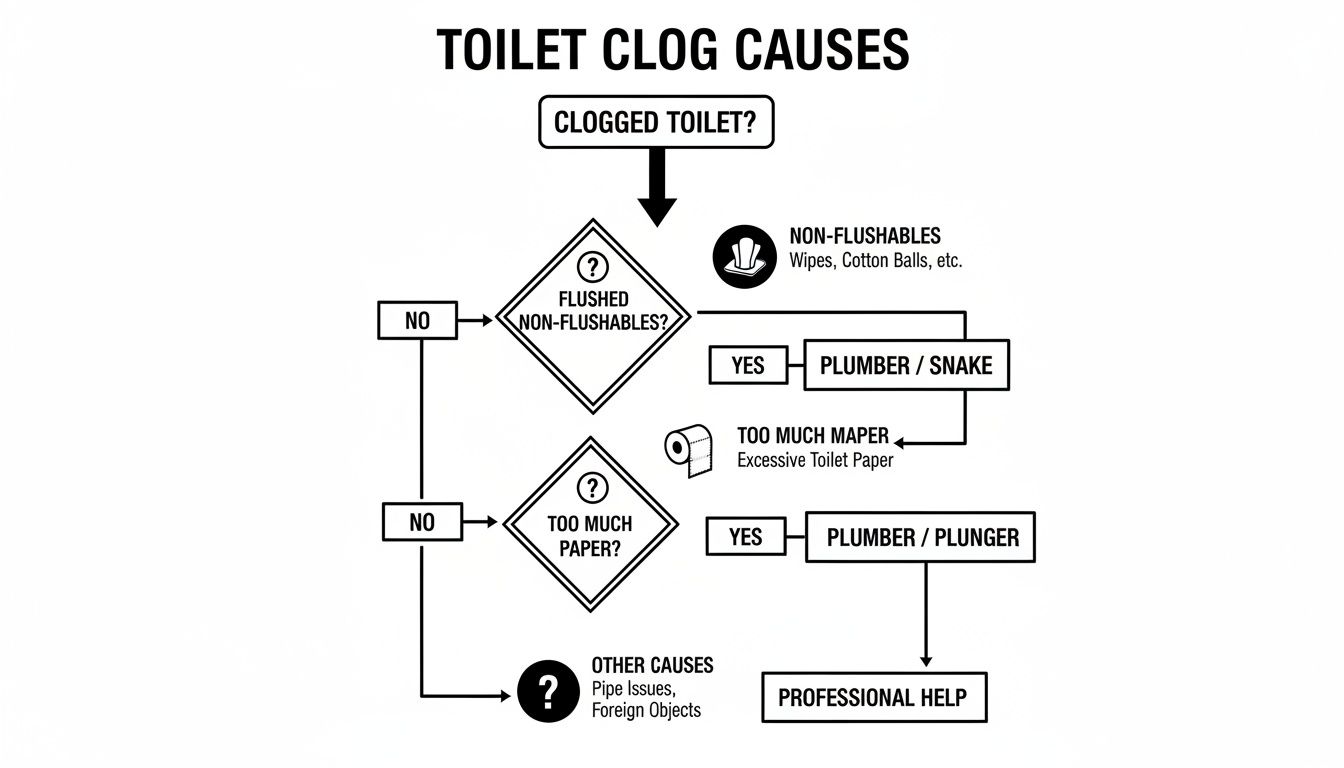
As you can see, the cause of your clog really dictates the best approach. Most of the time, the issue boils down to either flushing something you shouldn't have or simply using too much paper at once.
If after 30 minutes the water level has dropped, that's a brilliant sign the blockage is clearing. Try a gentle test flush. If it works, fantastic—you've just learned how to unclog a toilet without a plunger. If not, you can repeat the process one more time before moving on to another method.
Interestingly, many of the same principles, like using hot water, can be applied to other plumbing blockages. For instance, the techniques for unclogging an RV shower drain are quite similar. Of course, if the problem persists, it may be time to call in the experts at Harrlie Plumbing and Heating.
Try a Bit of Kitchen Chemistry: The Baking Soda and Vinegar Trick
If the hot water and soap method didn't quite shift the problem, it’s time to raid the kitchen cupboards for a classic science experiment. The fizzing reaction between baking soda and white vinegar is surprisingly powerful and can break down stubborn organic clogs without harsh chemicals. It's the perfect next step before you think about getting your hands dirty with more physical methods.
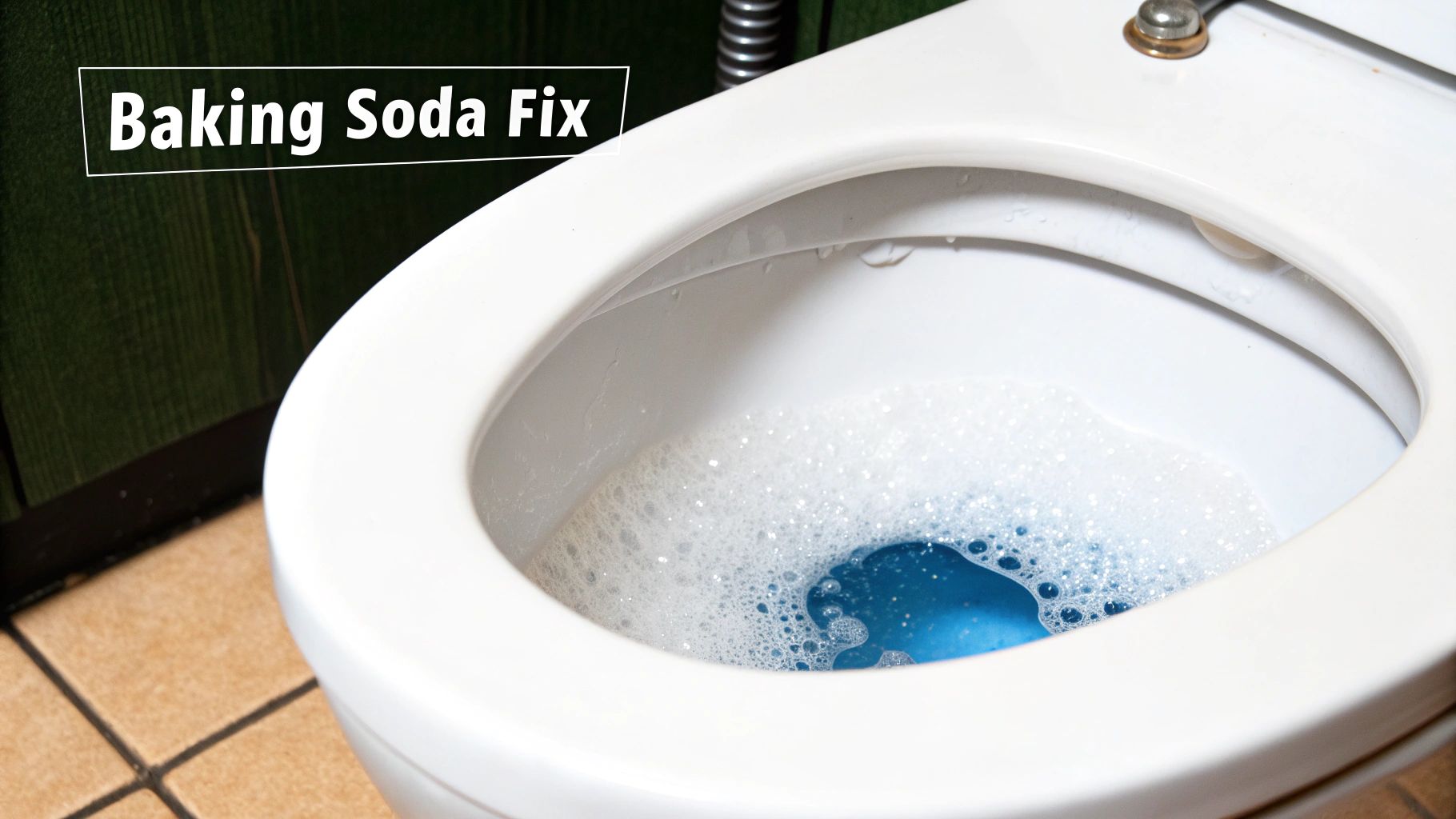
This trick works brilliantly on toilets that have been draining slowly for a few days—a classic issue our team at Harrlie Plumbing and Heating often finds in the older, charming terrace houses in Old Town, Eastbourne. A gradual build-up of waste and paper is exactly what this fizzy duo is made for. It's simple chemistry: the alkaline baking soda reacts with the acidic vinegar, creating carbon dioxide gas. This gas expands rapidly, creating pressure that agitates and helps dislodge the clog.
How to Get the Fizz Working for You
First things first, get the water level in the bowl as low as you can. If it's nearly full, you'll need to bail some out into a bucket. Once that's done, pour about one cup of baking soda straight into the toilet bowl. Try to get it to settle right over the drain opening.
Now, slowly pour in about two cups of white vinegar. And I do mean slowly—if you dump it in all at once, you’ll have a fizzy volcano erupting over your bathroom floor. You should immediately hear a satisfying bubbling as the reaction kicks off. Close the lid to trap the fizz and let it work its magic for at least 30 minutes, though an hour is even better.
The real trick here is containing the pressure. By closing the toilet lid, you force all that expanding gas downwards into the pipe, putting maximum pressure right where it's needed—on the blockage itself.
After you've waited, lift the lid and see what's happened. If the water level has dropped, that's a great sign the clog is breaking up. To finish the job, pour a bucket of hot (but not boiling) water into the bowl from about waist height. The force of the water should be enough to flush the loosened debris away. If the toilet drains completely, congratulations! You've just unclogged your toilet without a plunger.
Knowing When This Trick Won't Work
It's important to be realistic about what this method can and can't do. While it's great for organic matter, it’s completely useless against solid, hard objects.
What it's good for: Blockages from too much toilet paper, human waste build-up, and other soft organic material.
What it won't fix: Children's toys, sanitary products, wet wipes, or any other non-flushable item that's gone for a swim.
If you suspect your toddler's favourite action figure or a bottle cap is the culprit, this fizzing solution simply won't work. In these cases, you’ll need a more direct approach or it might be time to call in the professionals. Trying to force a solid object can wedge it even tighter into your pipework, turning a simple retrieval into a much bigger, more expensive job.
If you're unsure what's causing the issue, a quick call to us at Harrlie Plumbing and Heating can save you a lot of time and potential trouble.
How to Create a Makeshift Drain Snake
If the hot water and soap trick hasn't worked, it’s a good sign you’re not dealing with a simple organic clog. More often than not, something that shouldn’t have been flushed has gone down the loo – think wet wipes, cotton pads, or even a child's toy. For these physical obstructions, you need a tool to physically dislodge or retrieve the item, and a humble wire coat hanger can be your best friend.
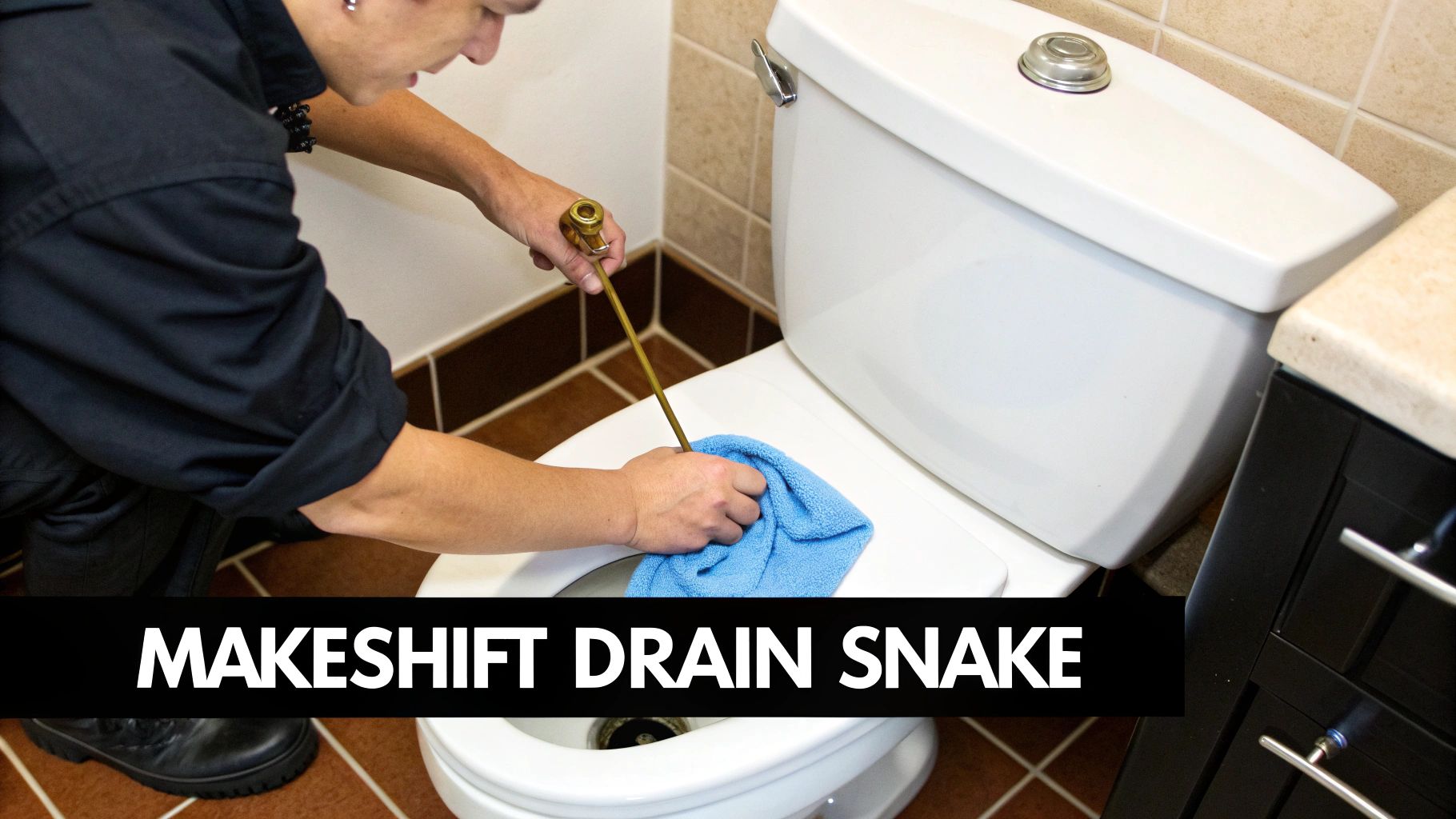
This method is surprisingly effective, especially for items stuck just out of sight in the toilet's S-bend. Our Harrlie Plumbing and Heating team recalls a call-out to a family in the Hampden Park area of Eastbourne where a toddler had flushed a small plastic dinosaur. A makeshift snake was the perfect tool to carefully hook the toy and pull it back out, saving them from a much bigger plumbing job.
Crafting and Using Your Tool Safely
First, find a standard wire coat hanger. Untwist the neck and straighten it out as best you can, but leave the hook at the end intact. That hook is what you’ll use to snag the blockage.
Now for the most important part: protecting your toilet. A raw metal wire will easily scratch and permanently damage the porcelain bowl. To avoid this, wrap the hook end securely with a small cloth or some duct tape. This creates a soft buffer that won’t leave any nasty scrapes behind.
The number one mistake people make here is scratching the porcelain. It’s an expensive and completely avoidable error. Taking just 30 seconds to properly wrap the end of that wire can save you a serious headache and a repair bill.
With your tool ready, gently slide the wrapped end into the toilet drain. You’ll want to probe carefully with a gentle pushing and twisting motion. The goal isn't to force the clog deeper; it's to feel around for the obstruction. When you feel resistance, try to hook onto the object and pull it back toward you. This works especially well for things like flushed wet wipes, which are a notorious cause of stubborn blockages.
Knowing the Limits of This Method
It's vital to realise this technique is only for clogs that are close to the surface, within the S-bend of the toilet. If you can’t feel anything after a minute or two of careful probing, the blockage is probably much further down the pipe.
A few things to keep in mind:
Be Gentle: Aggressively jamming the wire can wedge the object even tighter or, worse, damage the pipe itself.
Assess the Clog: If you suspect it's just a large mass of toilet paper, this method might be enough to break it up and allow it to flush.
Know When to Stop: If you can't retrieve the object or break up the clog after a couple of tries, it’s time to stop. Forcing the issue will only make things worse.
For deeper or more stubborn blockages, you’ll need a more professional approach. You can find more advice in our guide on how to unblock drain pipes with simple DIY fixes. But if you're getting nowhere fast, it’s a clear sign the problem needs an expert eye. Don’t hesitate to call Harrlie Plumbing and Heating for a swift, professional solution.
Knowing When It’s Time to Call a Professional
While sorting out a simple blockage yourself is incredibly satisfying, it's just as important to know when to throw in the towel. Recognising that a clog is more than a simple DIY fix can save you from a much bigger, messier, and more expensive headache down the line.
Some clogs aren't really about the toilet at all; they're symptoms of a more serious issue lurking deeper in your plumbing. Continuing to tinker at this point is like putting a plaster on a broken arm—it simply won’t solve the root cause.
Red Flags You Can't Ignore
So, you’ve tried the hot water, the vinegar, and even had a go with a makeshift snake, but nothing’s shifting. It’s time to pay attention to the other signals your plumbing might be sending. These are the tell-tale signs that the blockage is beyond the reach of home remedies and needs a professional eye.
Recurring Clogs: Does your toilet seem to block up every few weeks, no matter how careful you are? This persistent problem often points to a major obstruction far down the drainpipe that your DIY methods just can't touch.
Water Backing Up Elsewhere: This is a huge warning sign. If flushing the loo causes water to gurgle or appear in your shower drain, you likely have a blockage in your main sewer line. That’s not a toilet problem; it’s a whole-house problem.
Foul, Persistent Odours: A constant sewage smell in your bathroom, even when the toilet isn’t visibly clogged, suggests a problem with your sewer line or vent stack. This needs sorting out immediately.
When you're facing these issues, it's no longer about how to unclog a toilet without a plunger; it's about protecting your home from serious water damage and unsanitary conditions. This is the moment to call in the experts.
Why a Professional Plumber is Your Best Bet
Here in Eastbourne, we’ve seen first-hand what happens when a small clog turns out to be a sign of something much bigger. Our team at Harrlie Plumbing & Heating has professional-grade tools like high-pressure water jetters and CCTV drain cameras that can find and clear deep-seated blockages safely and efficiently.
It’s an interesting fact that spring in the UK is peak season for toilet troubles. Searches for 'ways to unblock a toilet' can soar by over 5,000% leading up to March, a trend we definitely see here in Eastbourne. For families and landlords, this means a higher risk of overflows during busy times.
When you’re in a tight spot, you need someone fast. That’s why we guarantee to be with our Eastbourne customers within one hour, seven days a week, to get your home back to normal. If you want to learn more about what to do in an urgent situation, have a look at our guide on what to do when you need emergency plumbing services.
To broaden your knowledge of different plumbing challenges and fixes, you can also consult this ultimate guide to plumbing tips and services. At the end of the day, calling a professional for a stubborn clog isn't admitting defeat—it's making the smartest choice for your property.
A Few Common Questions About Blocked Loos
Even when you've tried a few tricks, some questions always pop up. Here in Eastbourne, we get asked the same things time and time again by homeowners grappling with a blocked toilet, especially when there's no plunger in sight. Let's run through some of the most common queries we hear at Harrlie Plumbing & Heating.
Can I Just Pour Bleach Down the Toilet to Unclog It?
We hear this one a lot, and our answer is always a firm no. We strongly advise against using bleach to try and clear a blockage. Bleach is a fantastic disinfectant, but it’s not designed to be a clog remover. It will do next to nothing to break down toilet paper, wet wipes, or other common culprits.
More importantly, it’s just plain dangerous. If you mix bleach with other household chemicals, or even with the ammonia naturally present in urine, you can create toxic chloramine gas. It's not worth the risk. For a safer, more effective approach, stick to the methods we've already discussed, like dish soap or baking soda and vinegar. If those don't work, a professional call-out is always your safest bet.
How Can I Stop My Toilet From Blocking Up Again?
When it comes to plumbing, prevention is always better than a cure. The golden rule is incredibly simple: only flush the ‘three Ps’ – pee, poo, and (toilet) paper. Anything else belongs in the bin.
That includes a few items that people mistakenly think are fine to flush:
Wet wipes (even the 'flushable' ones): These are a plumber's nightmare. They don’t break down like toilet paper and are a leading cause of major blockages in Eastbourne's sewer systems.
Sanitary products: Tampons and pads are made to be absorbent. They just expand in water, creating instant clogs.
Cotton buds and pads: These little things clump together in the pipes and easily get snagged, starting a blockage.
Kitchen roll: It's much tougher than toilet paper and simply isn't designed to dissolve quickly.
If you're a landlord in the Eastbourne area, giving your tenants a simple list of non-flushable items can make a huge difference and cut down on those emergency call-outs.
A simple bit of advice we always give at Harrlie Plumbing and Heating is to be mindful of how much toilet paper you use in one go. If you need a lot, consider a 'courtesy flush' partway through. It really helps keep things moving smoothly.
What Does It Mean When My Toilet Gurgles?
That gurgling sound coming from your loo is your plumbing system's way of sending up a flare. It's usually caused by trapped air being forced through water, which tells you there’s a partial blockage or a venting issue somewhere down the line.
The toilet might still flush for now, but that gurgle is a clear sign that a full-blown clog could be just around the corner. Trying a gentle method like the hot water and dish soap trick is a good first step. However, if the noise carries on, or you start noticing slow drains in your sink or shower, it’s time to have a professional take a look. A gurgle can sometimes point to a deeper issue that needs an expert eye from Harrlie Plumbing and Heating to diagnose properly.
If you've tried everything on your list and still can't shift the blockage, or if you're dealing with a recurring problem, don't keep struggling with it. The team at Harrlie Plumbing and Heating is ready to help with a fast, professional, and guaranteed service. Visit us online to book your appointment today!

Comments