How Much Does a Gas Safety Certificate Cost in the UK

If you're a landlord or homeowner in the UK, one of the first questions you'll likely ask is, "how much does a gas safety certificate cost?" It's a fair question. You can generally expect to pay somewhere between £60 and £90 for a standard domestic certificate, with the national average sitting around £80.
Your Guide to Gas Safety Certificate Costs
It helps to think of a Gas Safety Certificate (often called a CP12) as more than just a piece of paper. It's really your property's official health check for its entire gas system. It’s the proof that a Gas Safe registered engineer has given everything a thorough look-over—from appliances and pipework to flues—to confirm it’s all working safely. This guide will unpack what that price tag actually covers, what can push it up or down, and why it’s completely non-negotiable for landlords.
For instance, a landlord renting out a small flat in Eastbourne town centre with just a boiler and a gas hob will probably pay a straightforward fee right at the lower end of the scale. Here at Harrlie Plumbing and Heating, we make sure our quotes for Eastbourne properties are transparent and competitive, so you always know you're getting a fair price for this vital service. At the end of the day, the cost is a tiny investment in safety and legal peace of mind.
In 2024–2025, the typical cost for a domestic Gas Safety Certificate (CP12) in the UK has hovered between £60 and £90 for a standard property. This price usually covers routine annual checks for one or two gas appliances carried out by a registered engineer.
By the time you've finished reading, you'll have a much clearer picture of the value behind the certificate and feel confident about what you’re paying for.
Gas Safety Certificate Cost at a Glance
To give you a clearer picture, here’s a quick breakdown of what you can expect to pay for a domestic Gas Safety Certificate and the factors that come into play.
Service Type | Average Cost Range | Key Influencing Factors |
|---|---|---|
Standard Domestic Certificate (1-2 Appliances) | £60 – £90 | Number of appliances, location, property accessibility |
Certificate with Boiler Service | £90 – £150+ | Combined service discount, boiler age and condition |
Emergency or Same-Day Certificate | £100 – £200+ | Urgency of request, out-of-hours call-out |
Commercial Gas Safety Certificate | £150 – £500+ | Complexity of system, number of appliances, property size |
This table shows how costs can vary, but for most landlords and homeowners, the standard domestic price is the one to focus on.
For landlords, it’s crucial to understand how every property expense, including the gas safety check, fits into the bigger financial picture. Factoring this into your overall profitability analysis, using something like a Landlord's Guide to the UK Rental Yield Calculator, ensures that every outgoing is accounted for in your investment strategy.
What a Gas Safety Check Actually Involves
So, when you're looking at the cost of a gas safety certificate, it's good to know what you're actually paying for. It's not just a quick glance at your boiler. Think of it more like an MOT for your property's entire gas system—a thorough inspection designed to make sure everything is running safely and as it should.
A certified Gas Safe engineer, like the ones on our team at Harrlie Plumbing and Heating, will methodically work through every single gas appliance you have. For a typical rental flat here in Eastbourne, that usually means checking the boiler and the gas hob in the kitchen.
The Engineer's Inspection Checklist
The process is a detailed safety audit, and it's the engineer's time and expertise that the cost covers. This is what buys you that crucial peace of mind. During the check, they will:
Test Gas Tightness: The very first thing they'll do is check the entire pipework system right from the meter to make sure there are no leaks.
Check Standing and Working Pressure: They need to ensure the gas pressure is spot-on, both when your appliances are off and when they're running.
Inspect Burner Pressure and Gas Rate: The engineer confirms that each appliance is burning the right amount of gas—no more, no less.
Examine Safety Devices: They'll test all the critical safety mechanisms to ensure they cut off the gas supply correctly in an emergency.
Inspect Flues and Ventilation: Proper ventilation is checked to prevent any build-up of dangerous gases like carbon monoxide.
This meticulous approach is all about proactive prevention. It’s what protects your property and your tenants from the silent but very serious risks that come with faulty gas appliances.
A gas safety check is not just about ticking a box for legal compliance; it's a vital health assessment for your home's gas infrastructure. The inspection is designed to identify potential hazards before they become life-threatening emergencies, ensuring the wellbeing of everyone in the property.
For example, if an engineer from Harrlie Plumbing and Heating visits a terraced house in the Old Town area of Eastbourne, they would carefully inspect the gas fire in the living room in addition to the boiler. They’d check that the flue isn't blocked and that the flame is burning cleanly, not producing excess carbon monoxide. To get into the nitty-gritty of these inspections, you can read our complete guide on what is checked during a gas safety certificate inspection. This comprehensive process ensures every component of your gas system is secure, compliant, and working exactly as it should be.
What Factors Influence the Final Price?
So, you're wondering, "how much does a gas safety certificate cost?" The short answer is: it depends. The price isn't a simple one-size-fits-all figure, and understanding what makes the quote tick can help you see exactly where your money is going.
The single biggest variable is the number of gas appliances that need checking. It makes sense, doesn't it? A small, one-bedroom flat in Eastbourne's Old Town with just a gas boiler and a hob will be a quicker, more straightforward job than a larger house in the Meads with a gas boiler, a live fuel effect fire, and a gas range cooker. Every additional appliance adds more time and complexity to the engineer's checklist.
Accessibility also plays a subtle but important role. If a boiler is boxed into a tight airing cupboard or is a real pain to get to, the extra time an engineer needs to safely access it for testing can nudge the final quote up. It’s just a practical matter of how long the job will take on-site.
This diagram breaks down the core components an engineer has to inspect during a check.
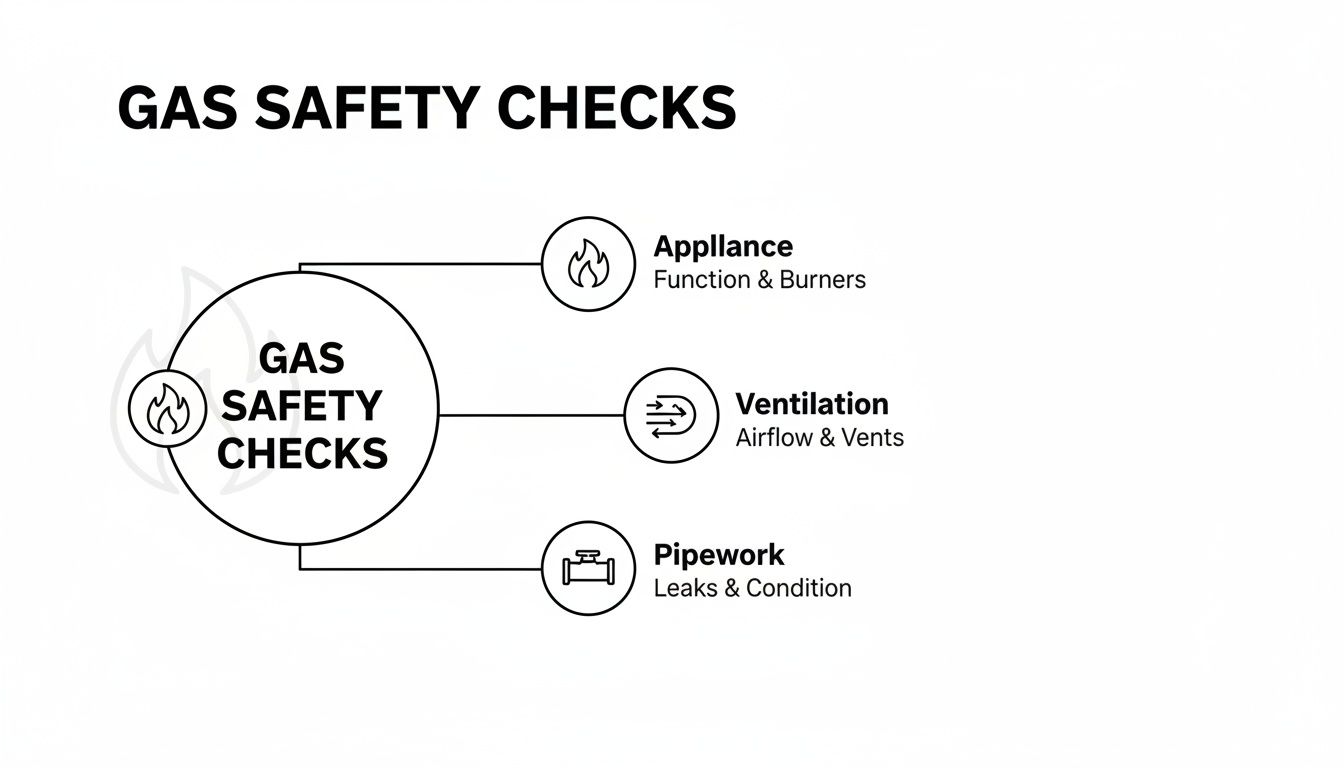
As you can see, a proper check is thorough. It covers every single appliance, makes sure the ventilation is correct, and verifies the integrity of all the pipework. It really highlights why more appliances naturally lead to a higher cost.
Location and Urgency
Your location in the UK can affect the price due to regional differences in labour costs and how far an engineer needs to travel. And, of course, urgency is a major factor. A pre-booked appointment will always be more affordable than a last-minute emergency request. Understandably, urgent call-outs cost a bit more.
It’s also important to distinguish between a standard home and more complex setups. While a simple domestic CP12 for a home with just one appliance often falls in the £60–£90 range, things change for larger properties. Inspections for big houses with multiple appliances or multi-unit buildings will be higher, typically ranging from £80–£150. For commercial gas systems, the cost can run into several hundred pounds, reflecting the extra time and extensive testing needed. You can dig deeper into the pricing for different properties in this comprehensive cost guide for 2025.
Pro Tip: Want the best value for money? Bundle your annual boiler service with your gas safety check. Getting both essential tasks done in a single visit is more efficient for the engineer and much more cost-effective for you.
At Harrlie Plumbing and Heating, we regularly offer this combined service to landlords all over Eastbourne. It helps them save time and money while staying fully compliant. This proactive approach doesn't just keep costs down; it also ensures your boiler is running safely and efficiently all year, preventing much more expensive problems down the line.
Understanding Landlord Legal Requirements
For any landlord in the UK, a gas safety certificate isn’t just a nice-to-have document—it’s a legal necessity, plain and simple. The law on this is spelled out in the Gas Safety (Installation and Use) Regulations 1998, and it leaves no room for interpretation. As a landlord, you are legally required to have every gas appliance, flue, and pipework installation checked once a year.
And this isn't a job for a general handyman. The inspection has to be carried out by a Gas Safe registered engineer. They are the only people legally qualified to do the work and issue the certificate that keeps you on the right side of the law.
Your Duties as a Landlord
Getting the check done is just the first step. The regulations also set out some clear responsibilities for you:
Provide a copy to tenants: Once the inspection is complete, you must give your current tenants a copy of the new gas safety certificate within 28 days.
Inform new tenants: For new tenants moving in, you need to provide them with a copy of the current certificate before they even get the keys.
Keep records: You're required to hold onto your gas safety records for at least two years.
Think about it this way: if you're renting out a flat near Eastbourne Pier, skipping these duties just isn't an option. The consequences are serious. For a closer look at these obligations, check out our Eastbourne guide to essential landlord compliance.
The penalties for failing to comply are genuinely severe. You could be looking at hefty fines of up to £6,000 for each offence, or even face imprisonment. On top of that, not having a valid certificate can void your landlord insurance and stop you from legally evicting a tenant with a Section 21 notice.
This reality makes the annual gas safety check a non-negotiable part of your budget. The cost of the certificate is a fundamental expense for running a rental property safely and legally. When you work with a local expert like Harrlie Plumbing and Heating, you're not just buying a piece of paper; you’re investing in the professional diligence that keeps you compliant and your tenants safe.
To make sure you've got all your bases covered beyond just gas safety, it’s worth looking at resources that make landlord compliance made easy. These duties show why the certificate is more than a document—it’s proof you’re committed to safety and a vital legal shield for your property investment.
Navigating Potential Repairs and Extra Costs

Here’s something that can catch people out: the fee for a Gas Safety Certificate strictly covers the inspection itself, not any repairs that might pop up. You’re paying for the engineer's time and expertise to thoroughly assess your gas system. If they find something wrong, fixing it is a separate job with its own cost.
Let’s paint a picture. Imagine one of our Harrlie Plumbing and Heating engineers is at a rental property in Sovereign Harbour. During the inspection, they spot that the boiler’s flue is partially blocked, and a gas hob is burning with an unstable, yellow flame. Both are clear safety hazards.
In this situation, the engineer has no choice but to fail the appliances. A pass certificate simply cannot be issued until these issues are properly sorted.
Understanding Gas Safety Fault Classifications
When a Gas Safe engineer finds a problem, they don't just give a simple "pass" or "fail." They classify the fault to make the level of risk crystal clear. It's a system designed with one thing in mind: keeping everyone safe.
During an inspection, an engineer might identify a fault and categorise it based on its severity. This transparent process helps you understand exactly what needs to be done to make your property safe again.
The table below breaks down the classifications you're likely to encounter, what they mean in plain English, and what happens next.
Fault Classification | What It Means | Example Scenario | Required Action |
|---|---|---|---|
‘Immediately Dangerous’ (ID) | This is the most serious. It means an appliance is a direct threat to life or property. | A boiler with a badly sealed flue is leaking poisonous carbon monoxide into a room. | The engineer must disconnect the appliance immediately (with your permission) to make it safe. It cannot be used until it's repaired and re-checked. |
‘At Risk’ (AR) | The appliance has a recognised fault that could become dangerous over time if left unchecked. | A gas fire has been installed without the correct ventilation, posing a future risk of carbon monoxide build-up. | The engineer will strongly advise you to stop using it and will disconnect it to prevent future danger. It needs repairing. |
This clear-cut approach prevents dangerous situations from escalating. While the initial cost of a gas safety certificate is just for the check, being aware of potential follow-up repairs gives you a complete picture of your responsibilities.
An unexpected repair can definitely impact the total cost, so being prepared is wise. This proactive mindset not only ensures you stay compliant with the law but, more importantly, guarantees the safety of everyone living in the property.
How to Get a Fair Price from the Right Engineer
Getting a gas safety check done right isn't just about ticking a box; it's about finding a trustworthy and qualified professional to ensure your property is genuinely safe. The very first rule—and the only one that truly matters—is to make absolutely certain any engineer you consider is on the Gas Safe Register. You can easily check this online with their licence number. It takes seconds and gives you immediate peace of mind.
Once you start looking for quotes, you’ll likely see a wide range of prices. Be wary of any that seem too good to be true. An unusually low price might be a red flag for hidden costs down the line or, worse, a sign of a rushed, corner-cutting inspection. The best approach is to always ask for a fixed-price quote that clearly spells out exactly what’s included.
Securing a Transparent Quote
A reliable quote should leave no room for guesswork and prevent any unwelcome surprises on the final bill. Here’s what you should look for:
A clear, fixed price: This is non-negotiable. It avoids ambiguity and protects you from hidden fees.
Number of appliances covered: Make sure the cost reflects the boiler, hob, fire, and any other gas appliances in your property.
VAT inclusion: Always confirm if the price you’ve been given includes VAT.
At Harrlie Plumbing and Heating, we believe in total honesty and exceptional service, which is why we provide clear, upfront pricing for all our clients across Eastbourne. We make sure every detail is outlined so you know exactly what you're paying for from the start.
Choosing a reputable, local company is about more than just getting a certificate. It ensures accountability and helps you build a lasting relationship with an engineer you can trust for future boiler servicing, repairs, and safety checks.
Working with a local Eastbourne engineer means they have a real understanding of the properties in areas like Meads or Hampden Park and can give a much more accurate quote. For more guidance on this, take a look at our essential tips for finding the right plumber or heating engineer in Eastbourne.
Ultimately, getting a fair price for a gas safety certificate is about striking the right balance between cost, quality, and, most importantly, safety. If you need a reliable gas safety check for your property, get in touch today for a no-obligation quote tailored to your specific needs.
Got Questions? We’ve Got Answers.
When it comes to gas safety, there's no such thing as a silly question. Here are a few of the most common ones we get from homeowners and landlords in and around Eastbourne.
I Own My Home, Do I Still Need a Gas Safety Certificate?
Legally? No, you're not required to have one if you live in your own home. But should you get an annual check anyway? Absolutely.
Think of it as a yearly MOT for your boiler and gas appliances. It's the best way to catch small issues before they become big, expensive problems and gives you complete peace of mind that everything is running safely for your family. Plus, many home insurance policies actually require it to keep your cover valid, so it's always worth checking the small print.
How Long Is a Gas Safety Certificate Valid For?
A Gas Safety Certificate, sometimes known by its official name, a CP12, is valid for exactly 12 months.
For landlords, this is a hard deadline, and a new check must be completed before the old one runs out. Thankfully, there’s a bit of flexibility built in. You can get the inspection done up to two months before the expiry date without losing any time on your certificate’s renewal date.
For example, if your certificate for an Eastbourne rental expires on 1st November, you can have the check done anytime from 1st September onwards. The new certificate will still be valid until the following 1st November, making it much easier to stay on top of your legal duties.
What Happens If an Appliance Fails the Check?
Your engineer's top priority is safety. If an appliance is found to be unsafe during the inspection, they'll classify the risk level.
If a fault is labelled 'Immediately Dangerous' (ID) or 'At Risk' (AR), the engineer is legally obliged to make it safe on the spot. This typically means disconnecting the appliance—with your permission, of course—to prevent any immediate danger.
Our engineers at Harrlie Plumbing and Heating will then issue a detailed warning notice explaining the problem. A pass certificate can't be issued until a qualified professional has carried out the necessary repairs. When it comes to gas, your tenants' safety always comes first.
For a transparent, fixed-price quote on your gas safety certificate in the Eastbourne area, trust the certified experts at Harrlie Plumbing & Heating. Contact us today for your free, no-obligation estimate.

Comments