Fix burst pipe: Eastbourne Quick Home Repair Guide
- Luke Yeates
- Jan 2
- 13 min read

When you discover a gush of water where it shouldn't be, that sinking feeling is a nightmare for any homeowner. Whether it's a sudden torrent under the sink in a Victorian terrace in Old Town or a steady drip spreading across the ceiling of a modern Sovereign Harbour home, panic is a natural first reaction.
But take a breath. A calm, methodical response in the first few minutes can save you thousands of pounds in damage.
Your First Moves When a Pipe Bursts
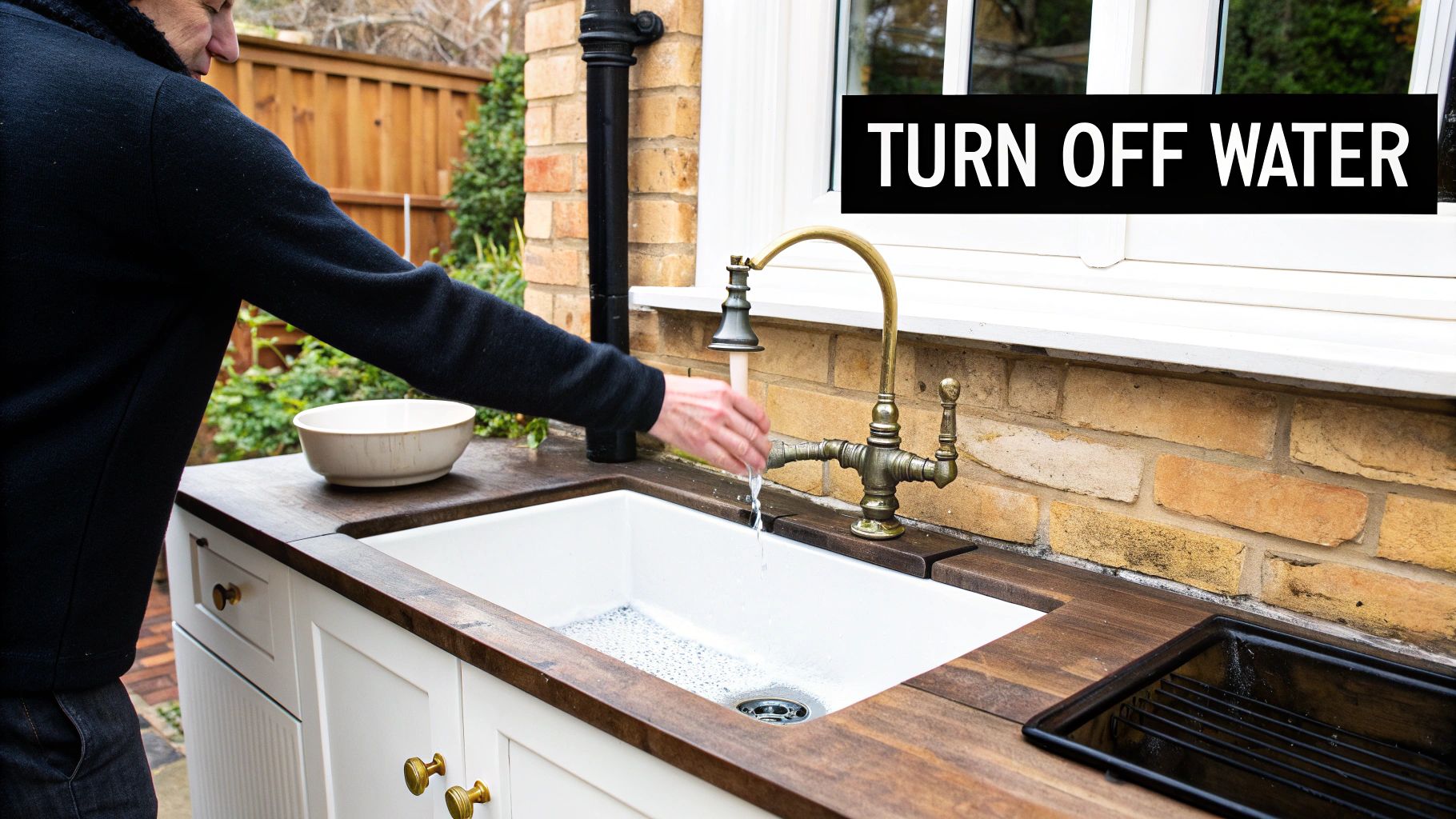
There are three critical actions you must take immediately. Think of them as your first line of defence against catastrophic damage while you wait for a professional from Harrlie Plumbing and Heating to arrive.
Locate and Shut Off the Main Water Supply
First things first: stop the water. Your absolute top priority is to cut the flow of water into your home by closing the main stopcock. This is the control valve for your entire plumbing system.
In most Eastbourne homes, you'll find it under the kitchen sink. Other common spots are a utility room, garage, or downstairs loo. We've seen them in all sorts of places, from airing cupboards in Willingdon to under the stairs in Hampden Park.
Turn the valve clockwise to shut it off completely. If it feels a bit stiff—which older valves often do—apply firm but steady pressure. Don't try to force it too aggressively, as you could end up causing more damage. If you're not sure where yours is, our guide on how to turn off your water main can help you find it before an emergency strikes.
A burst pipe isn't just a messy inconvenience; it's a huge financial threat. Research shows the aftermath often includes ceiling damage (37%), ruined floors (34%), and severe internal flooding (27%). Acting fast is your best defence.
Isolate the Electrics for Safety
Water and electricity are a lethal combination. This isn't a suggestion; it's a non-negotiable safety step.
If water is leaking anywhere near electrical sockets, appliances, or your consumer unit (fuse box), you must switch off the power to the affected areas right away. This simple action can prevent the terrifying risk of electric shock or even a fire.
Drain the System to Relieve Pressure
Even with the main supply off, there’s still water sitting in the pipes. To minimise any more leakage from the burst, you need to get that remaining water out.
Here’s how you do it:
Turn on all the cold taps in your house. It’s best to start with the ones on the upper floors and work your way down.
Flush all your toilets repeatedly until the cisterns are completely empty.
This releases the pressure in the system and reduces how much water can escape from the damaged section. It's a simple step that can significantly contain the mess while you wait for an expert from Harrlie Plumbing and Heating to arrive.
Across the UK, burst pipes cause nearly £50 million in damage every single year. Your quick thinking in these first few minutes really does make all the difference.
Assembling Your Temporary Repair Toolkit
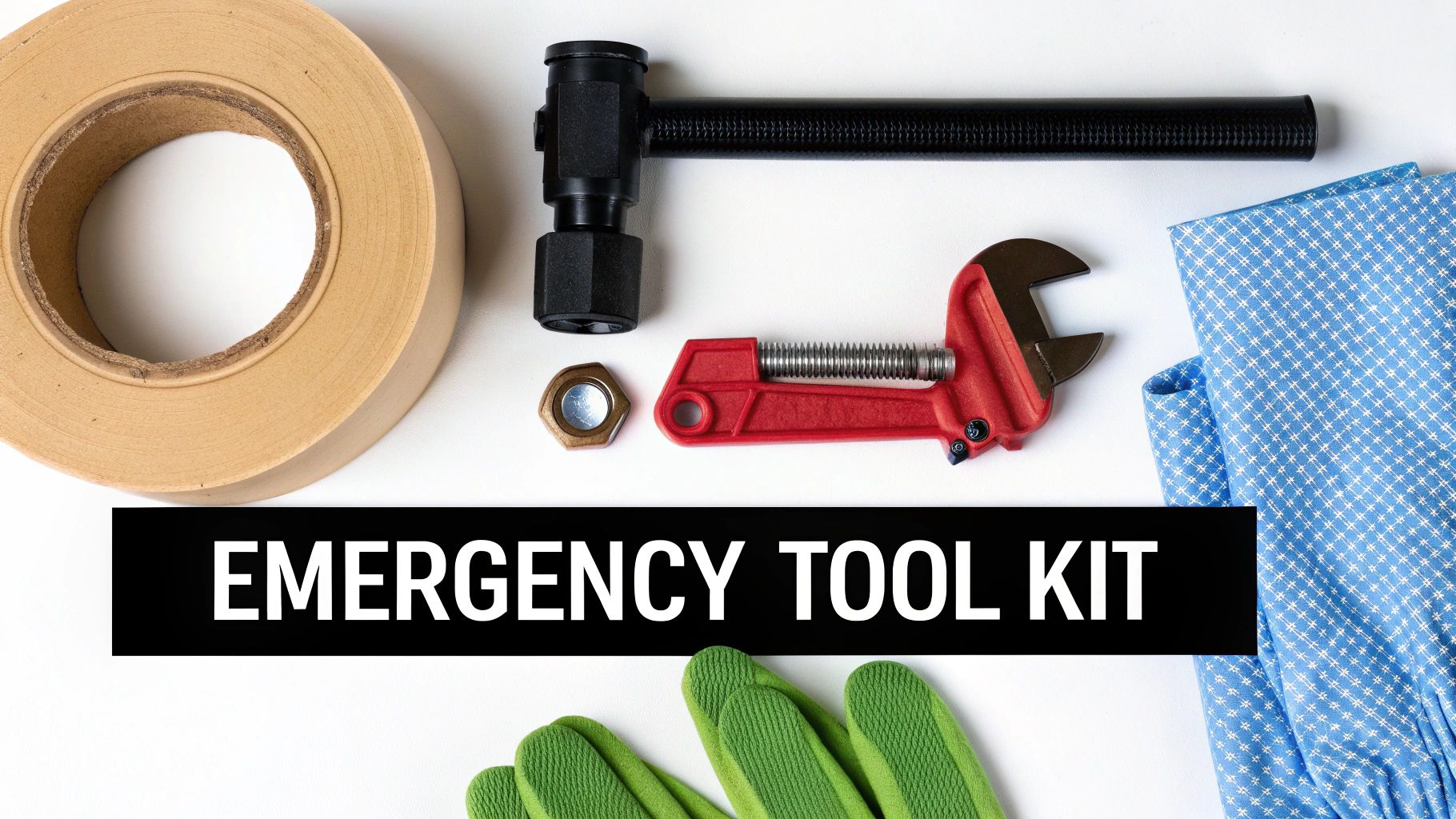
When a pipe bursts, having the right tools ready can turn a full-blown crisis into a manageable problem. This isn't just about owning a random wrench; it’s about having a dedicated first-response kit that lets you control the situation immediately. A solid temporary repair can prevent thousands of pounds in water damage while you wait for a professional to arrive.
Think of this as plumbing first aid. The goal is to create a secure, temporary seal that holds until a permanent fix can be made. Putting this kit together before you need it means you won't be scrambling when every second counts.
Your Must-Have Repair Items
For a clean split, especially on a copper pipe common in many Eastbourne homes, a pipe clamp is your best friend. It’s a simple metal sleeve with a rubber gasket that tightens around the pipe, creating a strong mechanical seal over the crack. Getting the right size is crucial, so it’s wise to measure your common pipe diameters (usually 15mm or 22mm) beforehand and buy clamps to match.
Of course, not all leaks are neat and tidy. You'll want more flexible options for awkward spots or joints.
Self-fusing silicone repair tape: This stuff is incredible. It stretches and bonds to itself, creating a completely watertight seal. It's perfect for wrapping around joints or bends where a rigid clamp just won't fit.
Epoxy putty: A two-part compound you knead together that hardens like steel. It’s ideal for plugging smaller pinhole leaks or sealing cracks at difficult angles.
Before you even think about applying a patch, the pipe surface must be bone dry. Water is the enemy of a good seal. Use an old towel to thoroughly dry the area around the burst so your chosen repair material can adhere properly.
Essential Tools for the Job
Beyond the sealing materials, a few basic tools will make the process much smoother. You don't need a plumber's entire van, just the essentials to manage an emergency fix for a burst pipe.
To make your job easier, I've put together a quick table of the essentials you'll want in your kit.
Emergency Pipe Repair Toolkit
Tool/Material | Primary Use | Eastbourne Pro Tip |
|---|---|---|
Pipe Clamp | Sealing straight splits on copper or plastic pipes. | Measure your pipes first! Most homes here have 15mm & 22mm pipes. Get one of each. |
Silicone Tape | Wrapping around awkward joints, bends, or irregular cracks. | Find it at Wickes on Lottbridge Drove. It’s invaluable for leaks near elbows or tees. |
Epoxy Putty | Plugging pinhole leaks or small, accessible cracks. | Knead it until the colour is uniform, then press it firmly onto the dry pipe. |
Work Gloves | Protecting hands from sharp edges or hot water. | Non-negotiable. Don’t risk a cut or burn when you’re already stressed. |
Bucket | Catching drips before and during the repair. | A simple bucket can save your flooring from absorbing even more water. |
Dry Cloths/Towels | Drying the pipe surface and cleaning up spills. | You can't get a good seal on a wet pipe. Have plenty of old towels ready. |
Putting this simple toolkit together provides incredible peace of mind, especially before a winter cold snap. For Eastbourne residents, a quick trip to a local DIY shop like B&Q on Marshall Road or Wickes can get you sorted.
While these tools allow you to make a strong temporary fix, remember they are just that—temporary. Once the immediate leak is contained, your next call should be to us at Harrlie Plumbing and Heating for a permanent, professional repair.
How to Apply a Temporary Pipe Repair
Right, you've managed to shut off the water and made the area safe. Now it's time to get your hands dirty. Applying a temporary fix is all about buying yourself time, stopping any more water damage while you figure out a permanent solution. Think of it like putting a plaster on a cut – you need the area to be perfectly clean and dry for it to stick.
Let's be clear, this isn't a long-term way to fix a burst pipe. It's an emergency measure, but it's a critical one that can save your floors, ceilings, and furniture from absolute ruin. Whether you're in a flat in Meads or a family home near Hampden Park, taking control of the situation right now is what matters.
Prepare the Pipe Surface Correctly
Before you even think about grabbing your repair kit, the single most important step is preparation. I've seen countless temporary patches fail because this part was rushed. A patch on a wet or dirty pipe is guaranteed to give way, often within minutes of you turning the water pressure back on.
First, grab a rough cloth or even a wire brush and give the area around the burst a good clean. You need to get rid of any dirt, rust, or general grime. Once that’s done, take a dry towel and wipe the pipe until it’s completely dry to the touch. If there's any stubborn moisture, a hairdryer on a low setting works wonders. The surface needs to be bone dry for any adhesive or clamp to do its job properly.
Using a Pipe Clamp for a Secure Seal
In my experience at Harrlie Plumbing and Heating, a pipe clamp is usually the most reliable temporary fix you can get, especially for those clean, straight splits you often see in copper or PVC pipes. It works by creating a strong mechanical seal that can hold up against some serious water pressure.
Here's the right way to apply one:
Position the Rubber Gasket: Start by unscrewing the clamp. Take the rubber insert and place it directly over the split or hole. Make sure it completely covers the damaged spot with a bit of an overlap on all sides.
Attach the Metal Casing: Now, fit the two halves of the metal clamp over the top of the rubber gasket.
Tighten Evenly: Begin tightening the screws, but do it bit by bit, alternating between them. This ensures you get even pressure all the way around. You want it snug enough to stop the leak completely, but do not overtighten. You can easily crush an older copper pipe if you go too far. The goal is a firm, watertight seal, not a flattened pipe.
A temporary repair is just that—temporary. It's your first aid for a plumbing crisis, designed to hold for a few hours or, if you're lucky, a few days. Once the immediate leak is contained, your very next step should always be to call in professionals like us at Harrlie Plumbing and Heating for a durable, guaranteed repair.
Applying Epoxy Putty and Repair Tape
What if you have a pinhole leak or the burst is on an awkward joint where a clamp just won't fit? This is where epoxy putty or self-fusing silicone tape really shine.
For epoxy putty, you'll definitely want to wear gloves. Just cut off a piece, knead it between your fingers until the colour is uniform, and then press it firmly over the clean, dry leak. You’ll want to mould it around the pipe so it extends about an inch beyond the damaged area on all sides to create a really strong patch.
Silicone tape is fantastic for joints and bends. Start wrapping the tape a few inches to one side of the leak, stretching it tightly as you go. Overlap the tape by at least half its width with each pass, and keep going until you're a few inches past the other side of the leak. The magic of this tape is that it fuses to itself, creating a solid, waterproof barrier.
These skills are incredibly useful to have. Beyond burst pipes, knowing the basics of general plumbing repair, like fixing a leaking pipe under your sink, can save you from a world of water damage in other common scenarios.
While these techniques are effective for copper pipes, remember that different materials often require their own specific approaches. If you're dealing with plastic pipes, you can learn more about how to repair a leak in a PVC pipe with our easy DIY fixes.
Knowing When to Call a Professional Plumber
While a temporary fix is a brilliant first-aid measure, it’s absolutely vital to recognise its limitations. A pipe clamp or epoxy putty is just a plaster, not a permanent cure. Knowing when to put down the tools and call in a professional is the key to stopping a manageable issue from spiralling into a costly disaster.
Some situations are immediate red flags that demand an expert eye. If you spot mysterious damp patches appearing on the walls of your older Eastbourne property, that's a tell-tale sign of a slow, hidden leak that could be causing serious structural damage behind the scenes. Leaks in hard-to-reach places—like inside walls, under concrete floors, or in the ceiling—are not jobs for the faint-hearted.
Attempting to fix a burst pipe in these complex scenarios without the right equipment and experience can quickly turn a bad situation into a complete nightmare.
Red Flags That Mean It's Time to Call Us
Think about a leak behind the plasterboard in a terraced house in Seaside; the water damage could easily spread to your neighbour’s property before you even realise the scale of the problem. Or imagine a burst pipe under the foundations in a character home in Old Town. These aren't simple repairs. They require professional diagnostics to pinpoint the source without causing unnecessary destruction to your home.
Any burst that has already caused significant flooding is also an immediate signal to get on the phone to us. At this point, the priority shifts from just fixing the pipe to managing the water damage and ensuring the property is dried out properly to prevent mould growth.
This short visual guide shows the basic steps for a temporary repair to get you through the initial emergency.
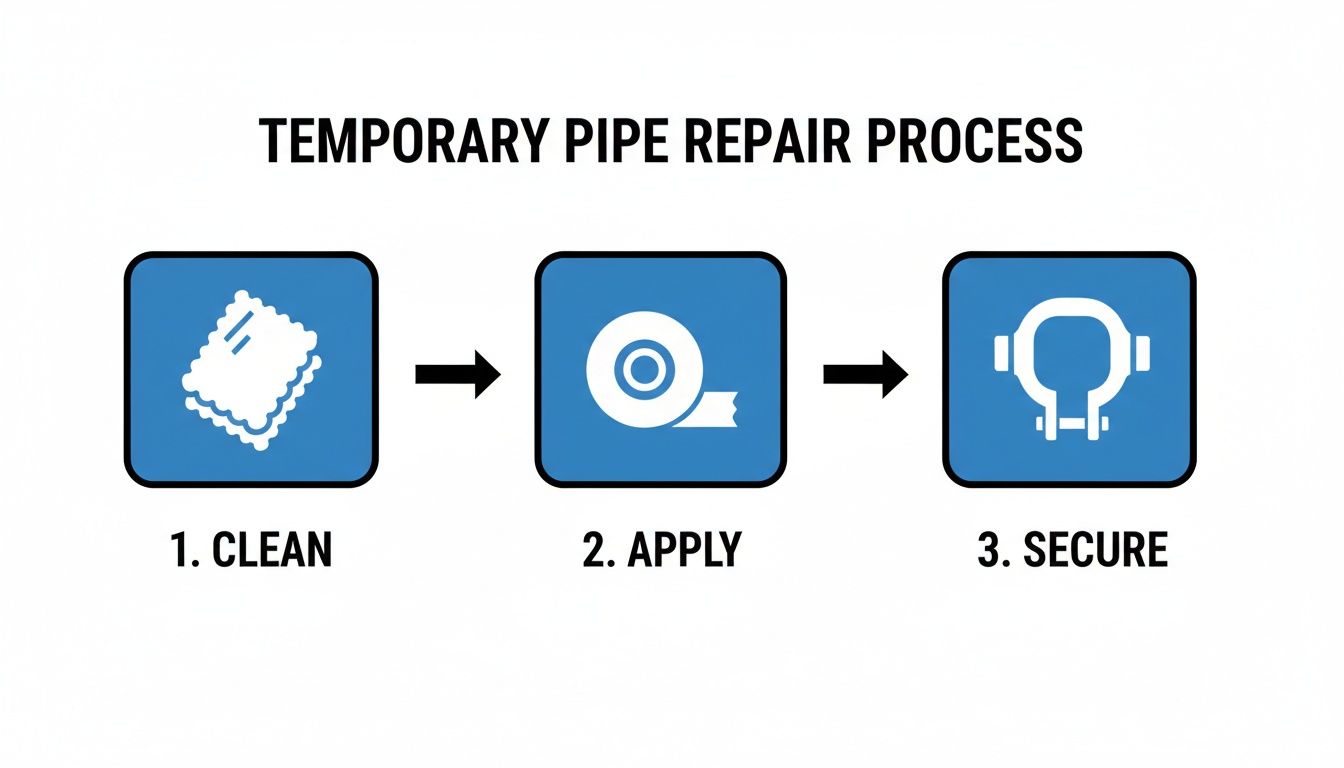
As the diagram shows, a clean surface and a secure application are crucial, but it reinforces that this is a stopgap measure, not a permanent solution.
What to Expect from Harrlie Plumbing and Heating
When you call our team, you're not just getting a plumber; you're getting an emergency response team. We serve clients across Eastbourne and the surrounding areas, and we know that when water is pouring through your ceiling, every second counts. That's why we use professional diagnostic tools, like thermal imaging cameras, to locate leaks accurately before making a single cut.
This professional approach is crucial to avoid the massive financial risks of a failed DIY repair. According to Zurich Insurance, the average UK repair cost for burst pipe damage soared from £8,663 to a staggering £12,791 in just one year. While a tiny, visible leak might only cost £80-£150 to fix, a significant burst requires swift, expert action to prevent costs from escalating into the thousands.
Don't let a temporary patch give you a false sense of security. The real peace of mind comes from a permanent, guaranteed repair performed by a qualified engineer who can ensure your home's plumbing is safe and sound.
Our job is to provide a permanent, guaranteed fix for your burst pipe, protecting your property and giving you that all-important confidence. If you're ever in doubt about the next steps, learning how to find a good plumber in Eastbourne is essential for getting trusted, local expertise when you need it most.
Proactive Steps to Prevent Burst Pipes
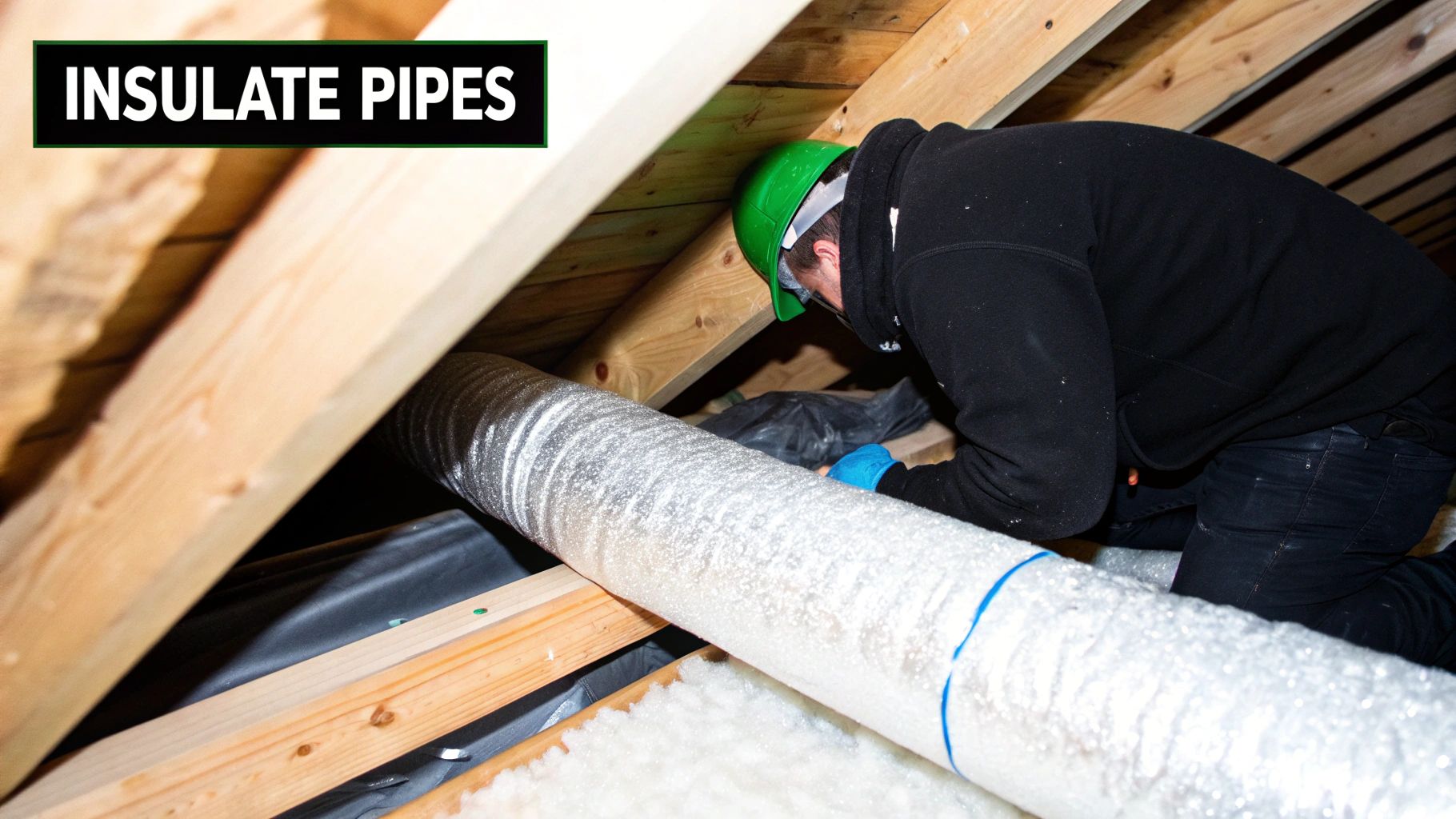
Honestly, the easiest way to fix a burst pipe is to stop it from ever happening in the first place. A few proactive steps, especially with Eastbourne's biting coastal winds, can save you an enormous amount of stress and the expense of an emergency call-out. It all comes down to understanding the risks and taking simple, effective actions before disaster strikes.
The vast majority of burst pipes we at Harrlie Plumbing and Heating see are caused by freezing temperatures. When water freezes, it expands, and that expansion is what splits the metal. This makes your home's coldest, most exposed areas the top priority for protection.
Insulate Your Vulnerable Pipes
Before the winter sea winds really hit, have a walk around your property. Your goal is to spot any exposed pipework tucked away in unheated spaces, as these are prime candidates for freezing.
Take a look at pipes located in:
Lofts and attics
Garages and sheds
Under kitchen sinks, especially those on external walls
Pipe insulation, often called lagging, is your best friend here. It's cheap, incredibly easy to install, and one of the most effective preventative measures you can take. You can pick it up at any local DIY shop. It just slips right over the pipe, creating a thermal barrier that helps stop the water inside from turning to solid ice.
A classic mistake we see at Harrlie Plumbing and Heating is homeowners forgetting the outdoor tap. Simply disconnecting your garden hose and fitting an insulated tap cover before the first frost can save you from a burst pipe right where it connects to your house.
Maintain a Consistent Temperature
If you're heading away from your Eastbourne home during a cold spell, turning the heating off completely to save a few quid can feel tempting. Trust me, it's often a false economy.
Letting your home's internal temperature drop below freezing is practically an open invitation for your pipes to burst. Instead, just set your thermostat to a low but consistent temperature—something around 12-14°C is perfect. This keeps just enough warmth circulating through the property to prevent the water in your plumbing from freezing solid.
Address Small Drips Immediately
That tiny, annoying drip from a tap or under a radiator isn't just a nuisance; it's often an early warning sign of bigger trouble. A persistent drip can point to high water pressure, a corroded joint, or a failing valve—all issues that can eventually snowball into a catastrophic burst.
Fixing small leaks as soon as you spot them is crucial. It doesn't just save water; it gives you a chance to sort out a weakness in your system before it fails completely. For landlords in the Eastbourne area, scheduling regular maintenance checks with a professional service like ours is a fantastic way to catch these little problems early. A routine inspection is a minor expense compared to the cost and chaos of an emergency flood.
Leaky pipes contribute to a staggering amount of waste in the UK. Across England and Wales, 3 billion litres of water are lost daily from leaks, costing customers nearly £400 million each year. For a homeowner, that small drip you ignore is a potential burst pipe just waiting for the temperature to drop. You can discover more insights about water company performance and leakage targets for a bigger picture.
Common Questions About Burst Pipe Repairs
When you’re staring at a sudden leak, the questions and worries can pile up fast. Dealing with a burst pipe is stressful, no doubt about it, but getting clear answers can make all the difference. Here, we tackle the most common concerns we hear from homeowners across Eastbourne, offering straightforward advice to help you get through it.
How Long Will My Temporary Repair Actually Last?
Honestly? Think of a temporary fix with a clamp, tape, or putty as plumbing first aid. Its only job is to stop the immediate flood and prevent more water damage while you get a professional sorted. It might hold for a few hours or, if you're really lucky, a day or two.
But that's all it is—a stopgap. It was never designed to handle the constant pressure and temperature changes running through your plumbing system day in and day out. We always tell our Eastbourne clients to book a permanent fix for their burst pipe with a professional, like us at Harrlie Plumbing and Heating, as soon as the initial crisis is under control.
A DIY patch is a great first response, but it’s a short-term solution to a long-term problem. Relying on it for too long is just asking for a second, often much worse, failure when you least expect it.
Is the Damage From a Burst Pipe Covered by My Home Insurance?
For most homeowners, the answer is usually yes, but there's a critical catch. Standard home insurance policies typically cover the resulting damage from what they call an "escape of water." This means things like soggy carpets, ruined ceilings, and warped floorboards are generally included.
What your policy often won't cover is the cost of actually repairing the pipe itself. The best thing to do is dig out your policy documents and read them carefully, paying close attention to any clauses about property maintenance. At Harrlie Plumbing and Heating, we can provide a detailed, itemised invoice for all our work, which will make your insurance claim process a whole lot smoother.
Can I Save Money by Fixing the Burst Pipe Myself?
A quick DIY temporary patch can absolutely save you from thousands in immediate water damage, so it's a smart first move. But attempting a permanent repair yourself is a different beast entirely. An improperly soldered joint or a poorly fitted pipe section can easily lead to a slow, hidden leak or a catastrophic failure later on.
When you consider that the average cost of water damage repairs can climb past £12,000, the smartest financial move is to invest in a professional repair from a trusted local company like ours. For renters or landlords using a property management service, knowing the right steps is just as important. You might be wondering, for instance, how to get in touch with emergency maintenance for urgent problems like a major leak. Getting the right people on the job quickly is what matters most.
If you're facing a plumbing emergency and need a reliable, permanent solution, don't wait. Contact Harrlie Plumbing and Heating for a fast, professional service backed by our Best Price Guarantee. https://www.harrlieplumbing.co.uk

Comments