Carbon Monoxide Alarm Going Off? Your Eastbourne Safety Guide
- Luke Yeates
- Dec 20, 2025
- 13 min read

That high-pitched, relentless shriek of a carbon monoxide alarm is designed for one thing: to get you moving. It’s not a sound you can ignore, and it’s certainly not the time to start wondering what’s causing it. Your first and only priority is to get everyone out.
Your Immediate Safety Plan When the Alarm Sounds
Think of it as a fire drill for an invisible threat. When that alarm starts wailing, you need a clear, automatic plan of action. Panic doesn’t help, but a swift, rehearsed response could save lives.
Let’s say you’re settled in for the evening in your home in the Meads village area of Eastbourne, and the alarm suddenly cuts through the quiet. The immediate instinct for many is to find the source. You have to fight that urge.
The first move is to get yourself, your family, and any pets outside into the fresh air, right away. On your way out, throw open any windows and doors you can easily reach. This starts the ventilation process, helping to disperse any CO that might be building up inside. Once you’re out, stay out. Don't even think about popping back in until a professional has given the all-clear.
Here's a quick reference for those critical first moments.
Immediate Safety Checklist When Your CO Alarm Sounds
This table breaks down the non-negotiable steps to take the second your carbon monoxide alarm activates.
Action | Why It's Critical | Eastbourne-Specific Tip |
|---|---|---|
Evacuate Immediately | Getting into fresh air is the most important step to prevent poisoning. CO is invisible and odourless. | Don't waste a second. Get everyone out of the house and onto the street or into the garden. |
Ventilate on Your Way Out | Opening windows and doors helps dilute and clear any CO buildup inside the property. | As you leave, open the front door, back door, and any accessible windows to create a through-draught. |
Assess for Symptoms | Symptoms of CO poisoning can mimic the flu. Recognising them is crucial for getting medical help. | Check if anyone feels dizzy, nauseous, or has a headache. These are red flags. |
Call for Help | Knowing who to call—999 for medical emergencies or a Gas Safe engineer for alarm checks—is vital. | If anyone is unwell, call 999. If not, call a local Gas Safe engineer you trust, like our team at Harrlie Plumbing and Heating. |
Do Not Re-enter | The environment could still be dangerous. Only a qualified professional can declare it safe. | Stay outside until an expert has identified and resolved the issue. It's not worth the risk. |
Following these steps ensures you're prioritising safety above all else.
Recognising Symptoms and Making the Right Call
Once you're all safely outside, take a moment to check on everyone. How are they feeling? Carbon monoxide poisoning is sneaky; its symptoms can easily be brushed off as feeling a bit under the weather or coming down with the flu.
Look out for these signs:
A dull, tension-like headache
Dizziness, confusion, or feeling light-headed
Nausea or even vomiting
Shortness of breath and a general feeling of weakness
If anyone is experiencing even one of these symptoms, call 999 immediately. This is a genuine medical emergency, and you need paramedics on the scene fast. Don't second-guess it.
A question we get all the time here at Harrlie Plumbing and Heating is about who to call first. The rule of thumb is simple: if anyone feels unwell, it’s a 999 call, no exceptions. If everyone feels perfectly fine but the alarm is still sounding, that’s when you call a Gas Safe registered engineer.
If no one is showing symptoms, the situation is still urgent, but the response is different. Stay outside. Your next step is to call a qualified professional. You need a certified engineer to get to the bottom of why that alarm went off.
Finding an emergency heating engineer near you in Eastbourne is crucial for getting a fast, reliable assessment of your gas appliances—the most common culprits for CO leaks. Here at Harrlie Plumbing and Heating, our Gas Safe registered team is equipped to handle these exact situations, making sure your home is safe and sound before you and your family step back inside.
Distinguishing a Real Threat From a False Alarm
Once you’re safely outside and have everyone accounted for, your mind will naturally start racing. Is this a real, life-threatening situation, or could it be a false alarm? How you answer that question dictates your next move, but it's a judgement call you need to make from a safe distance. There’s a world of difference between a full-blown siren and the low-battery 'chirp' that drives you mad in the middle of the night.
Understanding what can trigger a false alarm helps put things in perspective. While a continuous, loud wail demands an emergency response, other sounds might point to different issues entirely.
Common Causes of False Alarms
A carbon monoxide alarm going off doesn't automatically mean there's a dangerous leak. A few common culprits can cause an activation, and knowing them can help you troubleshoot—from a safe distance, of course.
Low Batteries: This is by far the most frequent reason for an alarm to act up. A dying battery typically causes a single, intermittent 'chirp' every minute or so, not a full-on emergency siren.
Alarm Age: CO alarms don't last forever; they have a limited lifespan, usually between 5 to 10 years. An expired unit can malfunction and sound an alarm for no reason at all. When it’s safe, check the replacement date printed on the back.
High Humidity or Steam: We've had calls in Eastbourne where an alarm in a flat was triggered by steam from a hot shower. Placing alarms too close to bathrooms or steamy kitchens is a common cause of these false triggers.
Chemical Vapours: Don't forget about fumes from cleaning products, fresh paint, or aerosols. If used near the detector, they can sometimes be enough to set it off.
The golden rule we always stress at Harrlie Plumbing & Heating is this: if you have any doubt whatsoever, or if a single person feels unwell, you must treat it as a genuine emergency. It is always better to be safe than sorry.
Signs of a Genuine CO Leak
Now, contrast those scenarios with a genuine leak. We recently helped a family in Roselands whose alarm only sounded when their old boiler fired up. That’s a textbook sign of a real problem. If the alarm seems to coincide with one of your fuel-burning appliances kicking in, the risk is significantly higher.
This flowchart gives you a simple, clear process to follow when your alarm sounds.
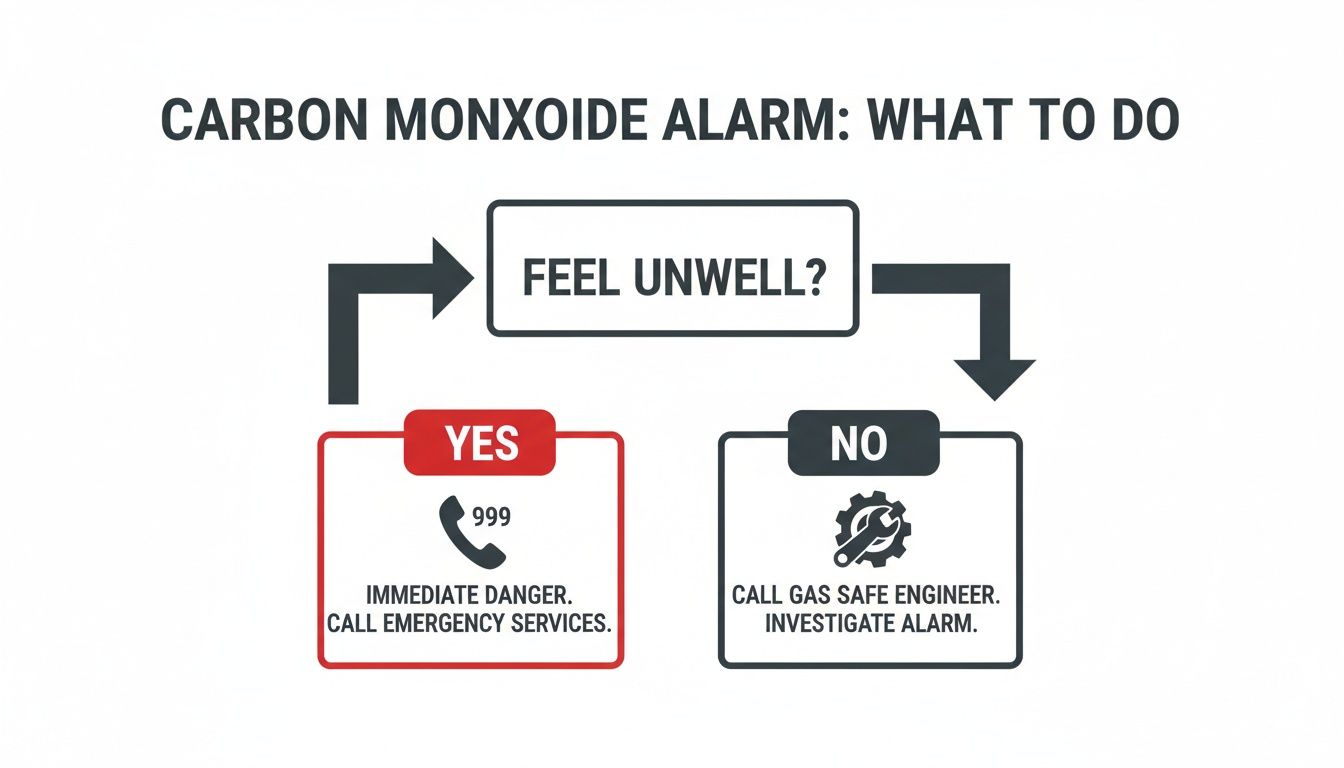
The key takeaway here is simple: your physical well-being is the most reliable indicator. If anyone has symptoms, emergency services are your first call. If not, you need a qualified engineer to investigate the source.
Research backs this up, too. A detailed study in Hackney, England, found that in 26.9% of CO alarm activations, the alarm itself was faulty, often just due to low batteries. What's more, 11.5% of cases involved alarms being placed improperly, like directly over a cooker, which goes against all installation guidelines. This really highlights how vital proper placement and maintenance are for making sure your alarm is a protector you can rely on. You can dive deeper into these findings in the full research about CO alarm activations.
Identifying Common CO Sources in Eastbourne Homes
Once everyone is safely outside, the next logical question is why did the alarm go off in the first place? Carbon monoxide (CO) is a by-product of burning fuels like gas, oil, coal, and wood without enough oxygen. That means any appliance in your home that burns fuel is a potential source if it’s faulty or isn't properly ventilated.
Here in Eastbourne, with our mix of modern flats in the Sovereign Harbour and older Victorian terraced houses in Old Town, we see a whole range of appliances that can pose a risk. It’s often the things we use every day that get overlooked.
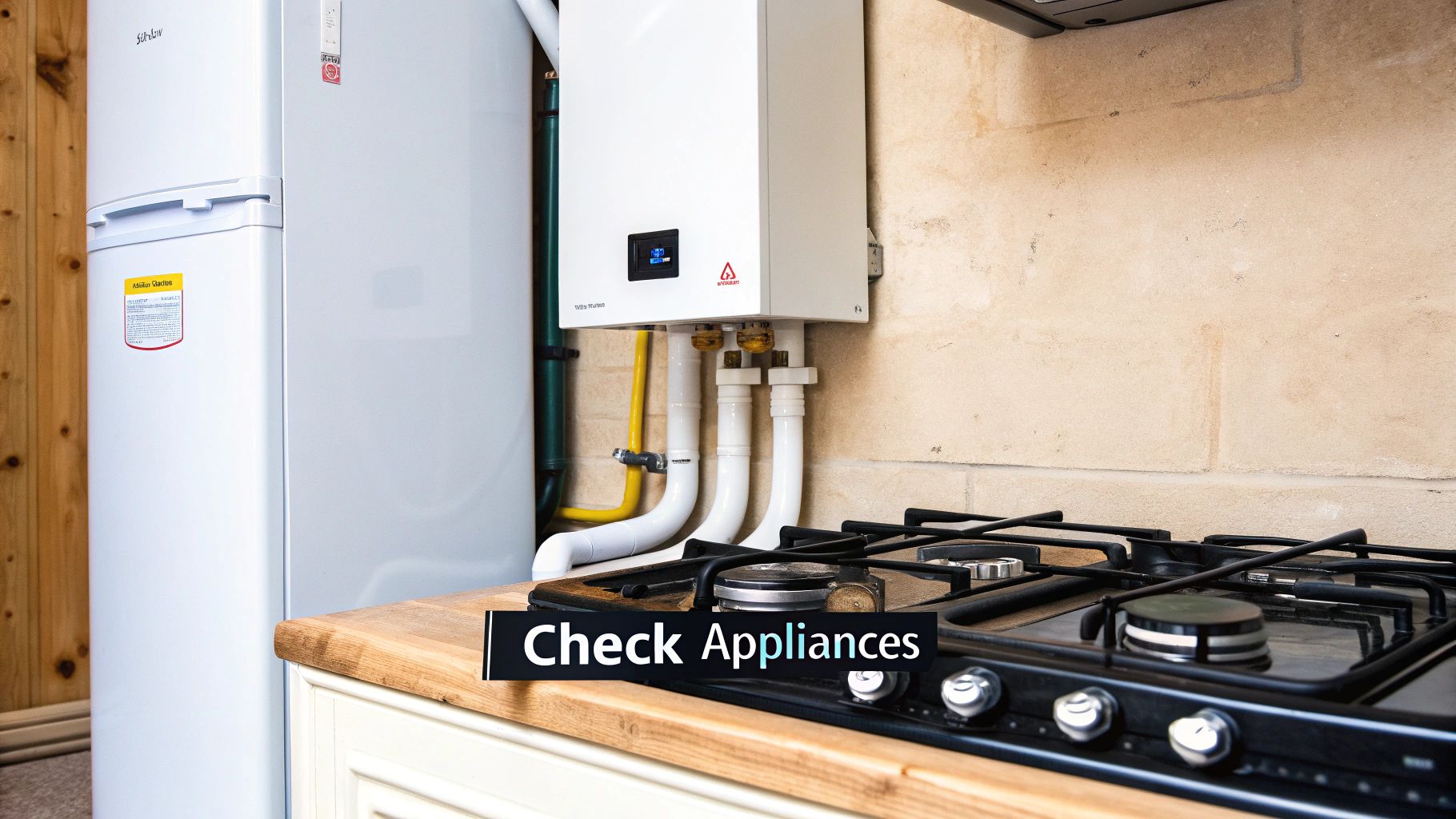
Everyday Appliances That Can Produce CO
It's surprisingly easy to forget that the appliances we depend on for comfort are also potential CO producers. Knowing what to look for is the first step in keeping your home safe.
Gas Boilers and Water Heaters: These are, by far, the most common culprits we encounter at Harrlie Plumbing and Heating. A poorly maintained boiler or a faulty installation can quickly fill a property with carbon monoxide.
Gas Cookers, Hobs, and Ovens: Take a look at the flame on your gas hob. If it's yellow or orange instead of a crisp, steady blue, that's a classic sign of incomplete combustion, which produces CO.
Fireplaces and Wood-Burning Stoves: An open fire is a beautiful feature in any Eastbourne home, but a blocked chimney or flue can be deadly, forcing CO right back into your living room.
Portable Heaters: Those little gas or paraffin heaters can also be a risk, particularly if they’re used in rooms without good ventilation.
The danger isn't limited to old, worn-out appliances. A brand-new boiler can be just as hazardous if it isn't fitted and ventilated by a professional. This is exactly why using a Gas Safe registered engineer for any gas work is absolutely non-negotiable.
We once had an emergency callout to a terraced house in Eastbourne's Old Town. The family's new CO alarm was blaring, but they'd just had their boiler serviced. Our Harrlie Plumbing and Heating engineer found a bird's nest completely blocking the flue, trapping the fumes inside. It’s a stark reminder that even hidden issues can create a serious CO risk.
Hidden Dangers and Subtle Warning Signs
Sometimes, the source of a CO leak isn’t immediately obvious. It might be a tiny crack in a boiler's heat exchanger or a partially blocked vent. Luckily, your home often gives you subtle clues long before an alarm has to sound.
Keep an eye out for these tell-tale signs:
Sooty Stains: Dark staining on or around appliances, fireplaces, or even on the ceiling is a major red flag.
Excess Condensation: Finding unusually heavy condensation on the windows in the same room as an appliance can point to a ventilation issue.
Lazy, Yellow Flames: As we mentioned, gas flames should burn a steady, bright blue. A weak, flickering, or yellow flame needs immediate professional attention.
A Pilot Light That Keeps Going Out: This can signal a problem with the appliance itself or a draught indicating poor ventilation.
Think of these small details as your home’s early warning system. Paying attention to them could stop a carbon monoxide emergency before it even starts. For more safety tips, you can check out our guide on how to detect gas leaks in your home.
Despite these warnings, the national statistics show just how serious the risk is. According to the ONS, there were 86 deaths from accidental CO poisoning in England and Wales in 2022, a sobering reminder of the lethal potential of faulty appliances. You can read more about the UK Government's findings on carbon monoxide incidents.
A Practical Guide to CO Alarm Placement and Maintenance
Preventing a "carbon monoxide alarm going off" scenario starts long before you ever hear a beep. Think of a correctly placed and regularly maintained alarm as your silent guardian, working around the clock to keep your family safe. Honestly, getting this proactive step right is the single most effective thing you can do for your peace of mind.
At Harrlie Plumbing and Heating, our engineers often see incorrectly placed alarms during service visits across Eastbourne. This isn't just a minor oversight; it can render the device completely useless right when you need it most.
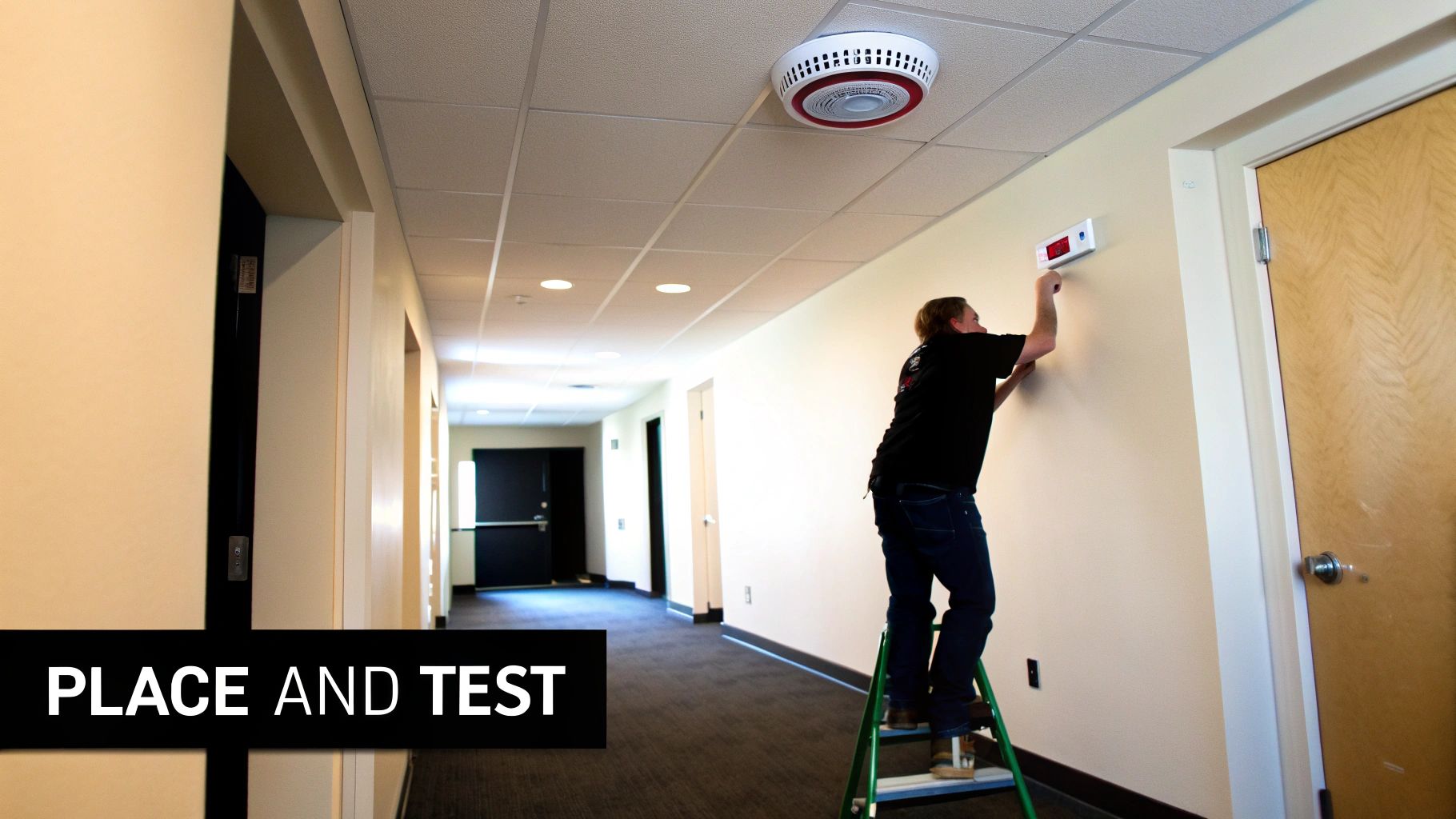
Where Should You Install Your CO Alarms?
Strategic placement is everything. Imagine CO as a slow-moving, invisible cloud. You need detectors positioned where they’ll pick it up quickly, especially when you are most vulnerable—like when you're asleep.
The rules for placement are pretty straightforward:
On Every Floor: You should have at least one CO alarm on each level of your home, particularly on floors with any fuel-burning appliances (boilers, gas fires, etc.).
Near Sleeping Areas: An alarm needs to be within earshot of every bedroom. The ideal spot is usually in the hallway just outside the bedrooms.
At Head Height: Unlike smoke, which rises, CO mixes with the air. Placing the alarm at head height on a wall, or even on a ceiling, is the best way to ensure it detects the gas effectively.
Just as important is knowing where not to put them. Keep your alarms well away from kitchens, garages, and bathrooms. Fumes from cooking, car exhausts, or even high humidity can trigger frustrating false alarms, and the last thing you want is to be tempted to disable a device that could one day save your life.
Creating a Simple Maintenance Routine
An alarm is only useful if it actually works. A few simple checks are all it takes to make sure your detector is always ready to respond. This isn't a complicated job; it’s a quick habit that offers huge safety benefits.
Here’s a simple monthly and yearly checklist to follow:
Monthly Test: Once a month, just press and hold the 'test' button until you hear the alarm sound off. This quick check confirms the battery and the internal circuitry are working as they should.
Annual Battery Change: Even if the batteries seem fine, make a habit of replacing them once a year. A good time to remember is when you change the clocks for daylight saving.
Regular Cleaning: Every few months, gently vacuum the vents of your alarm to remove any dust that could interfere with the sensor.
Don't forget that CO alarms have an expiry date. Most units have a lifespan of 5 to 10 years. Check the back of your alarm for a "replace by" date and pop a reminder in your calendar. An out-of-date alarm simply isn't reliable.
If you're ever unsure about the placement or condition of your alarms, just ask. During any boiler service or call-out in the Eastbourne area, our Harrlie Plumbing and Heating engineers are always happy to offer expert advice to ensure your home is properly protected.
Why Annual Servicing Is Your Best Defence Against CO
While a working CO alarm is a non-negotiable backstop, your absolute best line of defence is proactive, professional maintenance. Let's put it this way: the alarm screams "danger is here," but an annual service from a Gas Safe registered engineer helps stop that danger from ever happening in the first place.
This isn't just about ticking a box for the year. It's about getting an expert pair of eyes on the silent, invisible threats before they spiral into a crisis. At Harrlie Plumbing and Heating, our engineers follow a meticulous process. They're not just giving your boiler a quick once-over; they're checking everything from burner pressure and gas rates to ensuring the flue and ventilation are completely clear and working as they should.
What Our Engineers Look For
The core focus of any boiler service is ensuring safe, efficient operation. We meticulously inspect for complete combustion, which is the key to preventing CO production. We also clean out the gunk from internal components and check every seal and casing to make sure the unit is airtight, stopping dangerous fumes from escaping into your home.
I remember a routine service call we did at a flat in Sovereign Harbour. It's a stark reminder of why this is so important. Our Harrlie Plumbing and Heating engineer found a hairline crack in the boiler's heat exchanger—a tiny fault silently leaking carbon monoxide. Without that annual check, it would have gone completely unnoticed until the alarm, or worse, physical symptoms, alerted the residents.
More Than a Cost—It's Peace of Mind
This real-world example right here in Eastbourne highlights why you can't frame an annual service as just another household expense. It's genuine peace of mind. And the need for this vigilance is growing. In London, for instance, carbon monoxide incidents have more than doubled recently, with the London Fire Brigade attending 1,714 callouts in a single year. This disturbing rise underscores the dangers of ageing appliances and neglected maintenance, reinforcing the Brigade's message that maintained appliances are vital lifesavers. You can learn more about the Brigade's findings on rising CO incidents.
This is why we're so passionate about educating homeowners on the importance of regular checks. It's about shifting from a reactive mindset—waiting for the carbon monoxide alarm going off—to a proactive one. If you're curious about what's involved, you can read our detailed breakdown in this Eastbourne homeowner guide on how to service a boiler.
Ultimately, catching a potential disaster before it happens is the best safety strategy of all.
Your CO Safety Questions Answered
We get a lot of questions about carbon monoxide safety from our clients across Eastbourne. To give you some extra clarity, we’ve put together direct, easy-to-understand answers from our experienced Gas Safe engineers right here at Harrlie Plumbing and Heating. Our goal is to help you feel more confident and prepared for any situation.
What's the Difference Between a 'Beep' and a 'Chirp'?
Understanding what your alarm is trying to tell you is crucial. The sounds are designed to mean very different things, and confusing them can either cause unnecessary panic or a dangerously slow response.
A continuous, loud series of beeps (usually four in a row) is the real deal—an emergency signal. This is your cue to get everyone out immediately and follow the safety steps we've already covered. No hesitation.
A single, intermittent 'chirp' you hear every minute or so is almost always a maintenance alert. It’s not an emergency siren but a low-priority nudge. It typically means one of two things: the batteries are low and need replacing, or the alarm unit itself has hit its end-of-life date and the whole thing needs to be swapped out.
How Long Does a Carbon Monoxide Alarm Last?
This is a question that comes up a lot during our service calls in Eastbourne. Many people assume an alarm will work forever as long as you keep changing the batteries, but that’s not the case. The internal sensors that actually detect CO gas degrade over time and become less reliable.
Most CO alarms have a lifespan of between 5 and 10 years. You can usually find a "replace by" or manufacturing date printed on the back of the unit. If your alarm is past its expiry date, you need to replace it straight away—it can no longer be trusted to protect you and your family.
A chirping alarm that just won't stop, even after you've put in fresh batteries, is the classic sign that the unit has expired. It's the device’s way of telling you its job is done. Don't ignore it—get it replaced.
Can I Just Open a Window and Stay Inside?
Absolutely not. If your carbon monoxide alarm is sounding a full emergency signal, opening a window is a good thing to do on your way out the door, but it is never a substitute for evacuating. You have no way of knowing how high the CO concentration is or if it's still climbing.
Staying inside, even with a window open, exposes you to a potentially lethal gas. The only safe course of action is to get everyone out into the fresh air immediately and then call for professional help. Our engineers at Harrlie Plumbing and Heating have been to homes where CO levels were dangerously high, and evacuating was the only thing that prevented a tragedy. It’s simply not a risk worth taking.
Your family's safety is our top priority. If you're concerned about your gas appliances or need a Gas Safe registered engineer to investigate why your carbon monoxide alarm is going off, don't hesitate. Contact Harrlie Plumbing and Heating for a rapid, expert response across Eastbourne and the surrounding areas. Visit us online to book a service or for emergency support. https://www.harrlieplumbing.co.uk

Comments