Unblock Waste Pipe: Your Guide to a Quick DIY Fix in Eastbourne

That ominous gurgle from the kitchen sink or the frustratingly slow drain in the shower isn't just a minor annoyance. It’s a pretty clear sign your plumbing is trying to tell you something: a blockage is building up. The good news is, the best way to start tackling a blocked waste pipe is often with simple, safe methods you can try yourself, long before you even think about harsh chemicals or picking up the phone to us at Harrlie Plumbing and Heating.
Your First Steps for a Blocked Waste Pipe
A blocked waste pipe is one of the most common headaches for homeowners, but it doesn’t always have to mean an emergency call-out. Often, the cause is surprisingly simple – think of the gradual build-up of grease from a Sunday roast in the kitchen or a stubborn clump of hair and soap scum in the bathroom. We see these issues all over Eastbourne, from the new builds in Sovereign Harbour to the Victorian terraces in the town centre.
Before you get stuck in, the first thing to do is prepare your workspace. The last thing you want is to turn a small clog into a big, messy cleanup job. Grab some old towels or a bucket and place it directly under the U-bend of the sink. This little bit of prep is a lifesaver, especially in the charming but sometimes awkwardly plumbed older properties we see so often around Eastbourne. Being ready for a bit of spillage is the key to a stress-free fix.
Identifying the Culprit
Where the blockage is happening usually gives you a big clue as to what's causing it. A clogged kitchen sink is almost always down to fats, oils, and tiny food particles that have gone down the plughole over time. A bathroom blockage, on the other hand, usually points the finger at hair, soap residue, and sometimes even small things that have been accidentally dropped down the drain.
Here in Eastbourne, our hard water can also play a part. Over time, mineral deposits can build up inside your pipes, narrowing the passage and making them far more likely to get blocked. We at Harrlie Plumbing and Heating often find limescale is a contributing factor in many of the jobs we attend in the area.
Simple and Safe First Attempts
Your first line of attack should always be the gentlest one. Sometimes, simply pouring a full kettle of boiling water straight down the drain can work wonders, especially for greasy clogs where the heat helps to melt the solidified fats.
If that doesn't do the trick, your next best friend is a good old-fashioned plunger. Make sure you get a tight seal over the drain opening and give it a few firm, consistent pumps. You’d be surprised how often this is all it takes to dislodge a common blockage.
For anything more involved, it’s vital to know your way around your home's plumbing. Before you even think about dismantling pipes, you should know the basics. A great place to start is our essential homeowner guide on how to turn off your water main.
A bit of preventative knowledge can save you from a major headache. Understanding where your main water shut-off valve is located is non-negotiable for any homeowner preparing to tackle a plumbing issue.
The reality is, waste pipe blockages are a massive reason for plumbing call-outs right across the UK. In fact, they are a significant driver in the plumbing market's repair and maintenance sector, which has seen substantial growth alongside the construction industry. If these first few simple steps don’t shift the problem, it might be time for something a bit more advanced, but always, always start simple. At Harrlie Plumbing and Heating, we always advise trying these safe methods first before escalating the issue.
Essential Tools For Stubborn Blockages
So, you've tried boiling water and had a go with the plunger, but the water is still refusing to drain. When the simple fixes don't cut it, it’s time to bring out the bigger guns. Stubborn blockages often need a more hands-on approach to unblock a waste pipe properly, but the good news is you don't always need a professional.
Having the right equipment in your homeowner's toolkit can turn what feels like a plumbing nightmare into a perfectly manageable DIY job. The two most effective tools for a homeowner are a plumber's snake (sometimes called a drain auger) and a trusty set of water pump pliers for getting into the U-bend.
Before you grab any advanced tools, it's always best to follow a methodical process. Diagnose, prepare, and then clear.
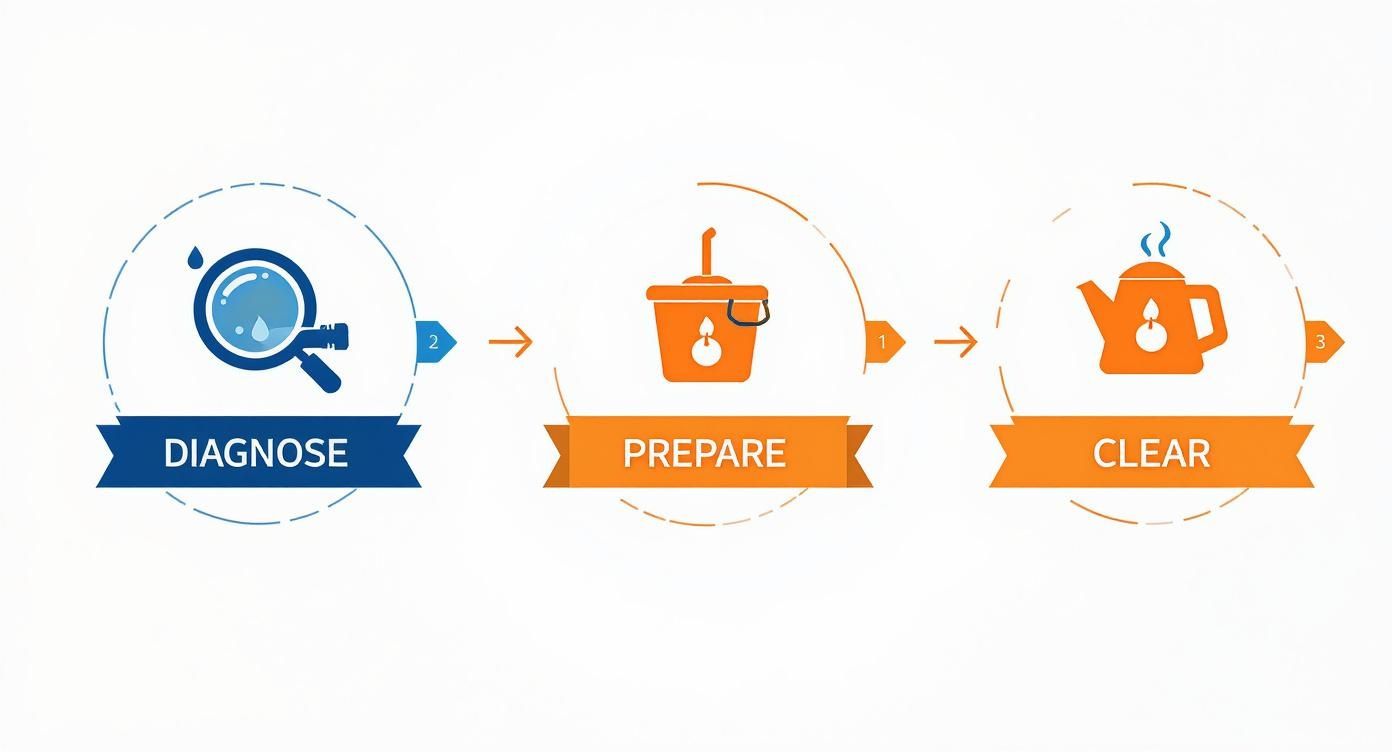
This approach ensures you’ve covered all the basics before getting your hands dirty, which is exactly how our Harrlie Plumbing and Heating engineers would tackle it.
Using a Plumber's Snake Effectively
A plumber's snake is a long, flexible steel cable designed to reach blockages deep inside your pipework. Its whole purpose is to physically break up or snag whatever is causing the clog, pulling it out or pushing it through.
You start by feeding the end of the snake into the plughole. If you've already removed the U-bend, you can feed it directly into the open waste pipe. Gently push it further in until you feel resistance – congratulations, you’ve found the blockage.
Now, you simply turn the handle on the auger. This rotates the corkscrew tip at the end, which will either drill into the clog and break it into smaller, manageable pieces or hook onto it so you can pull the whole mess back out. It might take a few goes, so a bit of patience is your best friend here.
Tackling the U-Bend Under Your Sink
That U-shaped pipe under your sink isn't just for show. It's called a trap, and it holds a small amount of water to stop nasty sewer gases from wafting into your home. Unfortunately, its curved shape also makes it the perfect spot for food waste, grease, hair, and other gunk to build up and cause a blockage.
Cleaning the U-bend is often the quickest way to solve a slow-draining sink. It's ground zero for most blockages, and clearing it out by hand is an immediate and satisfying fix.
Our team at Harrlie Plumbing and Heating knows that in the lovely older properties around Eastbourne—especially in areas like Old Town—the space under the sink can be incredibly tight, making this job feel a bit awkward. Don't let that put you off; with a little preparation, it's a straightforward task.
Here’s how to do it safely:
Prepare for a mess. First things first, place a bucket and some old towels directly underneath the U-bend. Trust me, it’s full of grim water you don't want on your floor.
Loosen the fittings. Using your water pump pliers, carefully loosen the two large plastic nuts (compression fittings) that hold the bend in place. Remember: "righty-tighty, lefty-loosey," so turn them anti-clockwise.
Remove and clean. Once the nuts are loose, the U-bend should pull away easily. Empty the contents into your bucket, and then give the pipe a thorough scrub with a bottle brush and some hot, soapy water.
Reassemble carefully. Pop the U-bend back into place, making sure the little rubber seals are seated correctly. Hand-tighten the fittings first, then give them a final quarter-turn with your pliers. Be careful not to over-tighten, as you can crack the plastic.
For a more detailed walkthrough, check out our guide with more easy DIY tips and tricks for fixing a blocked sink.
If you’ve tried all this and the pipe is still blocked, it’s a strong sign the problem is further down the system. At that point, it’s probably time to give the professionals at Harrlie Plumbing and Heating a call.
Natural vs Chemical Unblocking Solutions
When you’ve got a blocked waste pipe, heading to the supermarket for a quick-fix drain cleaner is a tempting thought. The promise of just pouring a liquid down the plughole and watching the problem disappear is powerful, but those aggressive chemicals aren't always the right answer for your home’s plumbing.
Understanding the difference between a gentle, natural approach and a harsh chemical one could save you from a much bigger—and more expensive—headache later on.
For many everyday clogs, especially the ones caused by a slow build-up of grease and soap scum, a homemade remedy is surprisingly effective. The classic combination of bicarbonate of soda and white vinegar is a firm favourite for a reason. You just pour a cup of bicarb down the drain, follow it with the same amount of vinegar, and let the fizzing chemical reaction get to work breaking down the gunk.
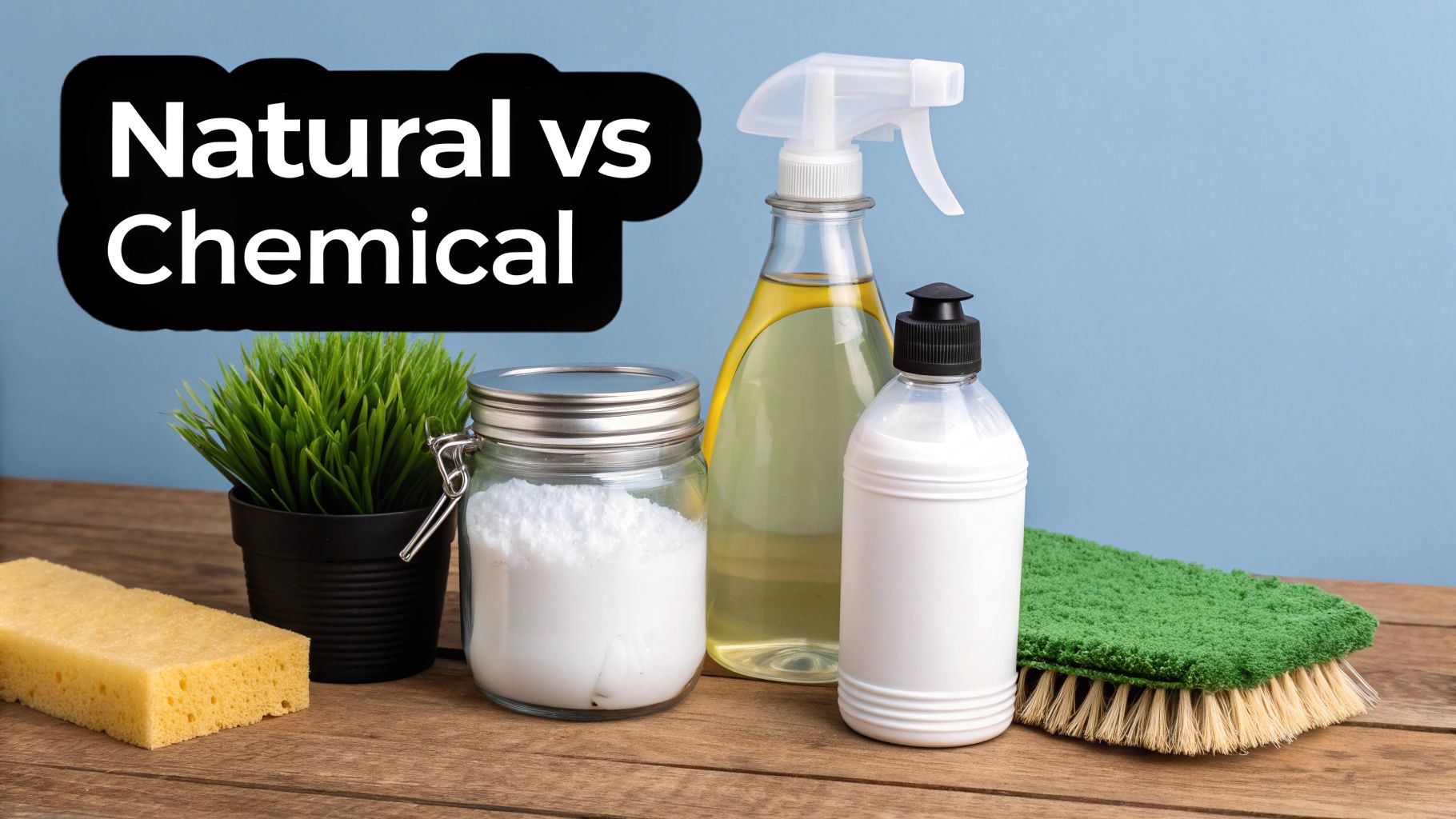
This method is much kinder to your pipework. If you're going to give it a go, getting the proportions right is key. Using the correct baking soda to vinegar ratio for cleaning will give you the best chance of success.
The Risks of Harsh Chemicals
While there's no denying that commercial drain unblockers can work, they come with some serious risks. These products are packed with potent chemicals like sodium hydroxide (caustic soda) or even sulphuric acid, which generate a huge amount of heat to dissolve whatever is causing the blockage.
Here in Eastbourne, many of our beautiful older homes still have original cast iron or even lead pipework. That intense heat can easily cause old, brittle pipes to crack or for joints to fail completely.
At Harrlie Plumbing and Heating, we’ve been called out to plenty of jobs in Eastbourne where a simple blockage turned into a plumbing disaster because a chemical cleaner damaged the pipes. The cost of repairing that damage always far outweighs what it would have cost to have the original clog cleared properly.
Using harsh chemical unblockers is a gamble. They might offer a quick solution, but they pose a real threat to older plumbing systems, potentially turning a minor clog into a major leak.
Making an Informed Choice
Safety is another massive concern. These chemicals can cause severe burns if they splash onto your skin or in your eyes, and the fumes they kick out are dangerous to breathe in. If you absolutely have to use one, please wear protective gloves and goggles and make sure the room is as well-ventilated as possible.
Ultimately, the best choice depends on your specific situation.
For a sink that’s just draining a bit slowly, a natural approach is definitely the best first step. It's gentle and often all you need.
If you have a completely blocked pipe, a chemical cleaner might feel like the only option left, but it could just be a sticking plaster over a more serious issue. Before you reach for that bottle, it's worth weighing up whether the potential risk to your plumbing is worth it, or if it's better to call a professional team like Harrlie Plumbing and Heating.
How to Prevent Future Pipe Clogs
Let’s be honest, the best way to deal with a blocked waste pipe is to never have one in the first place. A few simple, consistent habits can make a world of difference, saving you the headache and expense of a blockage down the line. It all comes down to being mindful of what’s going down your drains each day.
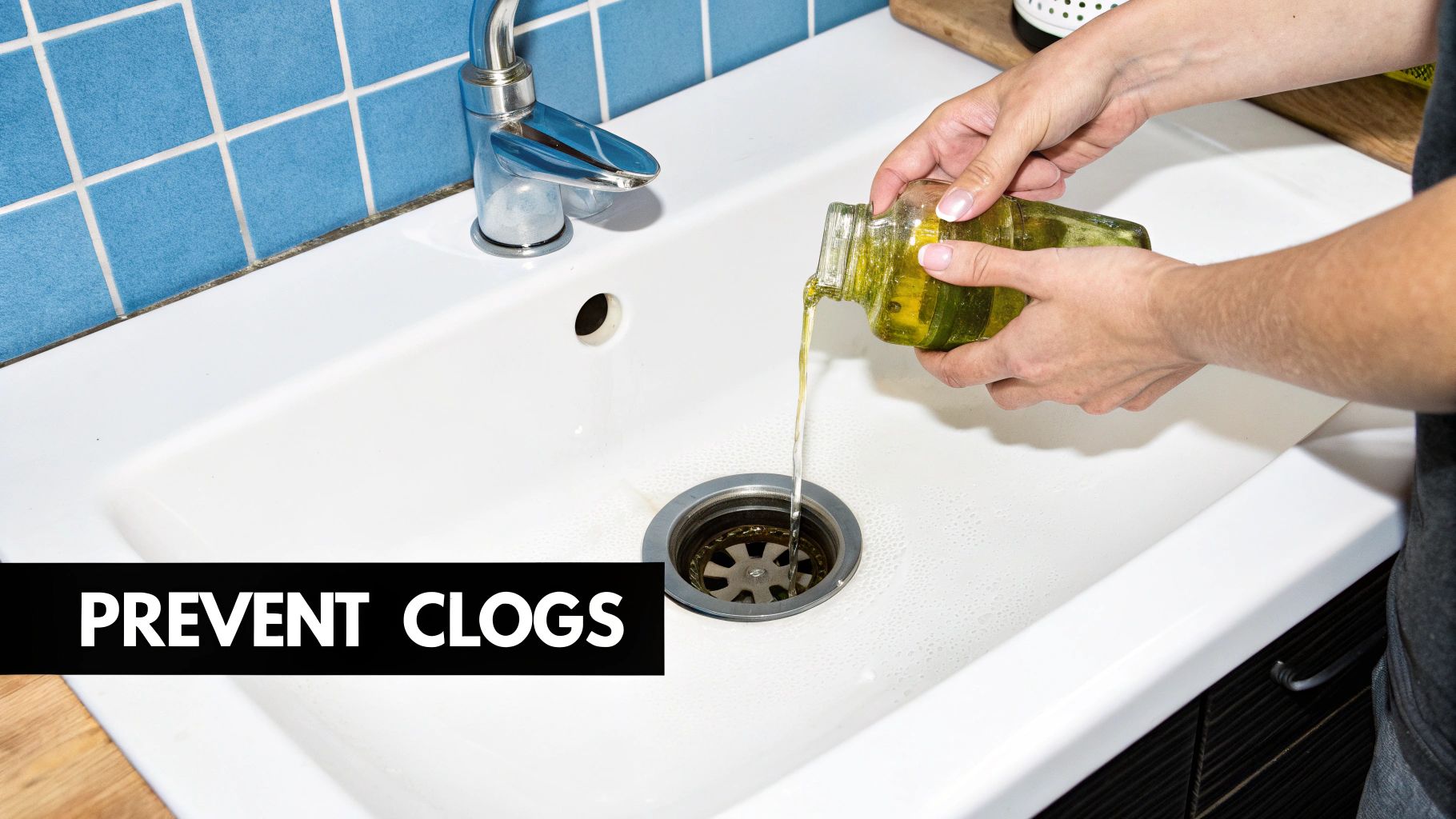
Think about your kitchen sink. The number one enemy of clear pipes is pouring fats, oils, and grease from cooking straight down the drain. That hot liquid might seem harmless as it flows away, but once it hits the cold pipes, it solidifies into a thick, sticky sludge that grabs onto every food particle that follows.
Making one small change—pouring used cooking grease into an old jar to cool before binning it—can single-handedly prevent 90% of kitchen sink blockages. It's that simple.
Developing Good Drain Habits
Beyond managing grease, a few other small actions will collectively protect your plumbing. Turning these into routines is the secret to maintaining clear pipes and avoiding those unwelcome plumbing emergencies.
Install Drain Guards: These cheap and cheerful mesh or silicone strainers fit right over your plugholes. They’re brilliant at catching food scraps, hair, and soap scum before they get a chance to build up in your waste pipes.
Be Mindful of Food Waste: Always scrape plates thoroughly into the food waste bin before rinsing them. Things like coffee grounds and starchy foods (pasta, rice) are particularly bad, as they can swell with water and create stubborn, paste-like clogs.
Give it a Regular Hot Water Flush: Once a week, pour a full kettle of boiling water down each drain. It's a simple trick that helps melt away any new grease that has started to accumulate and flushes out other small bits of debris.
Tackling Eastbourne's Hard Water Problem
Here in Eastbourne, we have another battle to fight: our notoriously hard water. The high mineral content, especially limescale, builds up inside your pipes over time. This not only narrows the passage but also creates a rough surface that snags hair and grease much more easily.
"In hard water areas like Eastbourne, preventative maintenance isn't just a good idea—it's essential. Limescale acts like a magnet for grease and hair, accelerating the formation of blockages. Regular cleaning is your best defence." - A Harrlie Plumbing and Heating Expert Insight
To get ahead of this, a monthly treatment with a natural descaler can be incredibly effective. Just pour a generous amount of white vinegar down the drain and let it sit for a few hours before flushing it through with hot water. This helps dissolve those mineral deposits before they turn into a serious problem.
By building these small habits into your daily and weekly routine, you’ll dramatically reduce the odds of ever needing to unblock a waste pipe again. It’s a small effort for a big, hassle-free reward.
When You Should Call a Professional Plumber
While sorting out a blockage yourself can be incredibly satisfying, some situations are clear signals that it’s time to put down the tools and call in an expert. Honestly, knowing when to stop is just as important as knowing how to start. Pushing a DIY fix too far can quickly turn a simple problem into a serious, expensive repair.
The trick is to recognise the warning signs that your clog is more than just a surface-level issue. Sometimes, that stubborn blockage is just a symptom of a much larger problem hidden deeper within your drainage system.
If you find you’re having to unblock a waste pipe in the same sink or shower every few weeks, that’s a major red flag. This kind of persistence suggests the underlying cause isn't being properly cleared and needs a professional approach to get rid of it for good. We often see this in Eastbourne homes where a deeper issue, like a partially collapsed pipe, is the real culprit.
Warning Signs of a Deeper Problem
Beyond clogs that just keep coming back, there are other tell-tale signs that you’re out of your depth. Keep an eye (and nose) out for these symptoms, as they often point to issues that are well beyond the reach of standard DIY tools.
Persistent Foul Odours: If a nasty smell is wafting up from your drains and doesn’t go away after a good clean, it could be trapped, decaying gunk deep in the pipes. It might even signal a problem with your main sewer line.
Multiple Drains Backing Up: Is the kitchen sink, downstairs loo, and shower all draining slowly at the same time? This is a classic sign of a blockage in the main drain that serves your entire property.
Water Appearing in Unusual Places: If you flush a toilet and see water backing up into the shower, it's a definite sign of a significant blockage. This needs immediate professional attention from a team like ours at Harrlie Plumbing and Heating.
A persistent or widespread drainage issue is your home's way of signalling a major problem. Ignoring these signs can lead to water damage and costly repairs. When in doubt, it's always safer and more cost-effective to get an expert diagnosis.
The Professional Advantage
Calling a professional plumber in Eastbourne means you’re getting more than just an extra pair of hands. We at Harrlie Plumbing and Heating come equipped with advanced diagnostic tools, like CCTV drain cameras, to pinpoint the exact location and cause of the blockage. This guarantees a permanent fix rather than a temporary one.
This level of service is a key reason why the UK plumbing industry remains a vital part of home maintenance. In fact, the market for plumbing and heating installation was recently valued at £24.4 billion and is projected to grow, reflecting the constant demand for expert solutions.
For property owners or those managing rentals, knowing how to handle and outsource these kinds of jobs is crucial. Exploring available comprehensive maintenance and repair services is often a sensible next step.
If you’re not sure who to call, our guide on how to find a good plumber in Eastbourne can help you make an informed choice.
A Few Common Questions About Waste Pipes
Even with a step-by-step guide, it's completely normal to have a few more questions when you're staring down a stubborn blockage. At Harrlie Plumbing and Heating, we get calls from all over Eastbourne asking for a bit more detail on how to best unblock a waste pipe. Here are some quick, straightforward answers to the queries we hear most often.
How Often Should I Be Cleaning My Drains Anyway?
Honestly, a little prevention goes a long way. To keep future blockages at bay, we suggest giving your main drains a preventative flush about once a week. It’s as simple as pouring a full kettle of boiling water down the kitchen and bathroom sinks. This little trick helps dissolve grease and soap scum before they have a chance to build up and solidify.
For a slightly deeper clean, especially with Eastbourne's notoriously hard water, a monthly treatment with white vinegar can work wonders to keep limescale from taking hold.
Can I Just Use a Plunger for Any Clog?
A plunger is a brilliant first port of call, but it does have its limits. It’s most effective on clogs made of soft gunk—think hair, soap scum, and food bits—that have created a blockage but are still letting a bit of water through.
However, your trusty plunger probably won't make a dent against:
Solidified Grease: Once grease hardens into a solid mass, it's often too dense for the pressure from a plunger to break apart.
Hard Objects: If a bottle cap or a small toy has accidentally gone down the drain, a plunger simply won't be able to move it.
Severe Mineral Buildup: In hard water areas like ours, limescale can form a blockage that’s as solid as a rock. This almost always needs to be removed mechanically.
Is It Safe to Mix Different Drain Unblockers?
Absolutely not. This is a big one. Never, ever mix chemical drain cleaners or use one right after another.
Combining different chemicals, like an acid-based cleaner with one that's bleach-based, can trigger a violent reaction. This can produce incredibly toxic gas, which is a serious health hazard and can cause severe damage to your pipework. If one product doesn't do the trick, flush the drain with loads of cold water before you even think about trying another method.
A common mistake we see is homeowners pouring one chemical unblocker after another down the drain, hoping for the best. This is a hazardous gamble that rarely pays off and can quickly turn a simple clog into a genuine emergency.
What’s That Strange Gurgling Noise Coming from My Drains?
That gurgling sound is your plumbing’s way of crying for help. It’s telling you it’s struggling to breathe. It happens when the water trying to drain has to fight its way past a partial blockage, forcing air bubbles back up the pipe.
Think of it as an early warning sign. While it might not be a complete blockage just yet, it’s a clear signal that a clog is forming and needs sorting out before it gets any worse. We often hear this from customers in the Meads and Old Town parts of Eastbourne, where the older pipework can be more prone to these partial blockages. If you hear that gurgle, it's the perfect time to try a hot water flush or a natural cleaning solution.
If you’ve tried all the tricks in the book and you're still stuck, or if you’d just rather leave it to the professionals, Harrlie Plumbing and Heating is here to help. Our expert team serves Eastbourne and the surrounding areas, offering fast, reliable solutions to get your drains flowing freely again. Visit us at https://www.harrlieplumbing.co.uk to book your appointment.

Comments