Unblock the Drain: A Practical Guide for Eastbourne Homes
- Luke Yeates
- Dec 10, 2025
- 13 min read

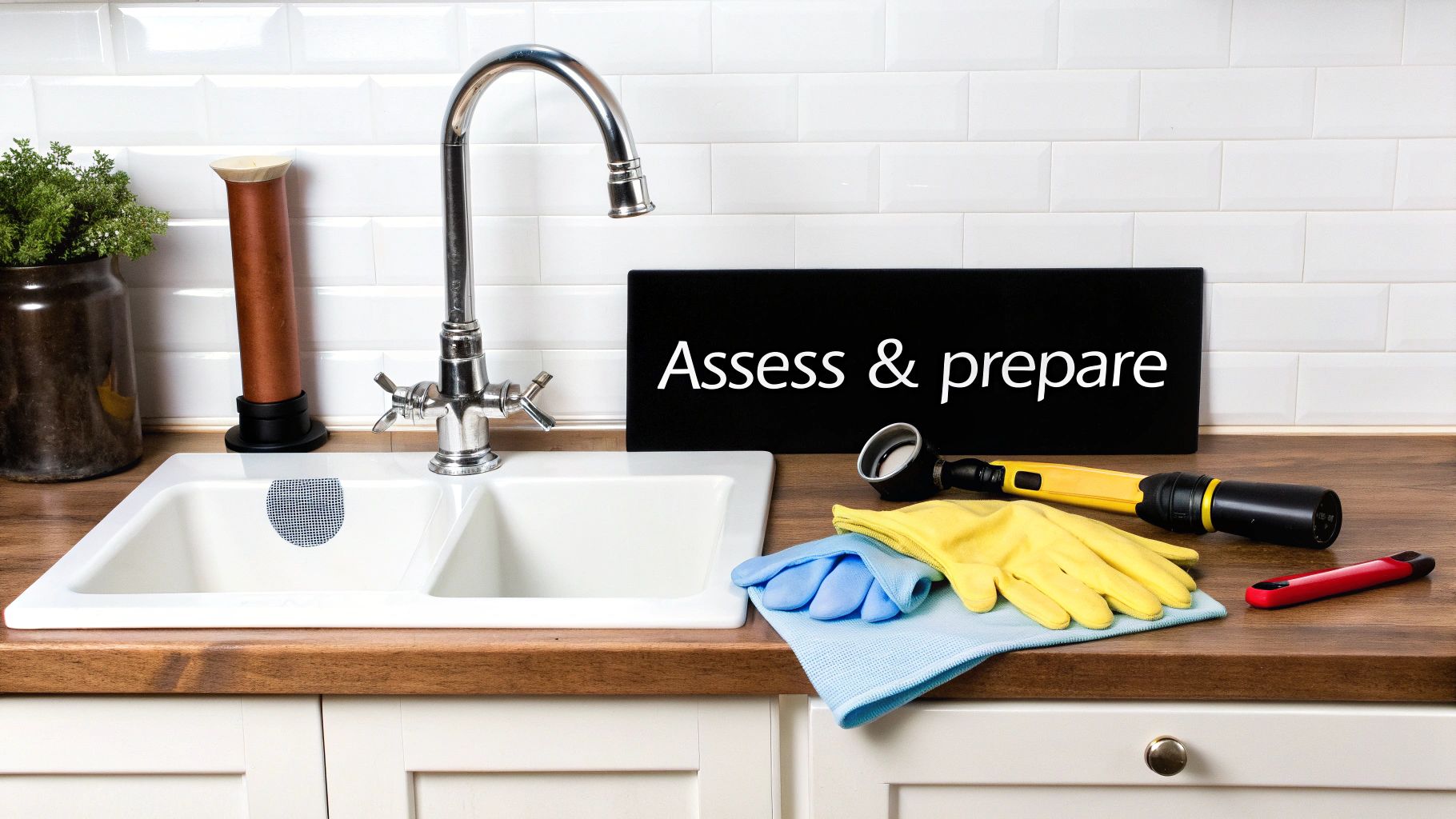
Before you even think about tackling a blocked drain, it pays to do a bit of detective work. The right solution almost always depends on what’s causing the problem in the first place. A slow-draining kitchen sink in your Eastbourne home is usually a tell-tale sign of grease build-up, whereas a blocked shower drain is almost certainly a lovely combination of hair and soap scum. Getting your tools and safety gear ready is the first—and most important—part of the job.
First Steps to Tackle a Blocked Drain
That ominous gurgle from the plughole or the sight of water creeping back up is a frustration every homeowner in Eastbourne knows well. But before you grab the nearest bottle of aggressive chemicals, just taking a moment to figure out what's going on can save you a world of time, money, and potential damage to your pipes.
Here at Harrlie Plumbing and Heating, we see it all the time. Blockages in the beautiful old Victorian properties around the Meads area of Eastbourne often come from decades of grease and food scraps clinging to old cast iron pipes. Head over to a modern flat in Langney, and the culprit is far more likely to be a simple clump of hair and soap residue in the shower. Knowing what you're up against helps you pick the right tool for the job.
Assess the Blockage and Gather Your Gear
So, what are the symptoms? Is water just draining slowly, or has it stopped completely? Is it only happening in one spot, like the bathroom sink, or are multiple drains acting up? If your toilet and shower are both struggling, that could point to a more serious blockage deeper down the line, something we often see in the shared drainage systems of terraced houses in Old Town, Eastbourne.
Once you’ve got a clearer picture, it’s time to gather some basic supplies. You don't need a van full of professional gear for most minor clogs.
Protective Stuff: Don’t even start without a good pair of rubber gloves and some eye protection.
A Bucket & Old Towels: Stick these under the sink's U-bend. Trust me, you’ll be glad you did.
A Plunger: A simple cup plunger works wonders on sinks and showers.
Kitchen Cupboard Heroes: Grab the kettle for boiling water, some bicarbonate of soda, and white vinegar.
To make things a bit easier, here’s a quick rundown of what you might be facing in your Eastbourne home.
Quick Guide to Common Drain Blockages
Drain Location | Common Cause | Essential Tools | Key Safety Tip |
|---|---|---|---|
Kitchen Sink | Grease, fat, and food scraps | Plunger, boiling water, bicarbonate of soda | Avoid pouring harsh chemicals down a greasy drain; they can solidify the blockage. |
Bathroom Sink | Hair, soap scum, toothpaste | Plunger, drain snake, old toothbrush for the plughole | Wear gloves and eye protection, as the gunk can be unpleasant and splashy. |
Shower/Bath | Hair and soap build-up | Plunger, drain snake, drain guard for prevention | Remove any visible hair from the plughole before you start plunging to get a better seal. |
Toilet | Too much paper, wet wipes, foreign objects | Toilet plunger (auger style is best), rubber gloves | Never flush anything other than toilet paper. If it's a solid object, don't keep flushing! |
This table should give you a head start, but remember every blockage is a little different.
Safety First, Always
This is non-negotiable. Many a simple DIY job has turned into a nightmare because basic safety was overlooked. It's the difference between a quick fix and a much bigger, more expensive problem.
Make sure the room is well-ventilated, especially if you end up using any kind of cleaning product. And a golden rule from the pros at Harrlie Plumbing and Heating: never, ever mix different chemical cleaners. Doing so can create seriously toxic fumes.
It’s also a brilliant idea to know where your main water stopcock is. If things go sideways, being able to shut off the water flow in a hurry is a lifesaver. If you’re not sure where to find it, check under your kitchen sink or in the cupboard under the stairs – common spots in many Eastbourne houses.
A simple clog can escalate quickly. By preparing properly—wearing gloves, protecting your floors, and knowing where your water shut-off is—you set yourself up for a successful and safe DIY fix without needing an emergency call-out.
Starting with Gentle DIY Methods for Minor Clogs
Before you start thinking about heavy-duty solutions, it's worth remembering that most common drain blockages can be sorted out with a few simple things you’ve likely got in your kitchen cupboards already. These gentle methods are always your best first line of defence, and they won't risk damaging your plumbing.
Often, the simplest approach is just a kettle full of boiling water. Carefully pouring it straight down the plughole is surprisingly effective at melting away the grease, soap scum, and other gunk that slows your drains down to a crawl. It’s a quick fix we at Harrlie Plumbing and Heating often recommend for minor kitchen sink troubles in Eastbourne.
Just a word of caution, though, especially if you're in one of Eastbourne’s lovely older properties around the Old Town. Many of these beautiful homes still have PVC or older metal pipes that can warp or get damaged by extreme heat. If you're not sure what kind of pipework you have, it's much safer to use very hot tap water instead of boiling.
The Classic Bicarbonate of Soda and Vinegar Trick
This fizzy combination is a tried-and-tested, eco-friendly powerhouse. The science behind it is pretty straightforward: bicarbonate of soda (an alkaline) reacts with white vinegar (an acid) to create a bubbling action that physically breaks down and shifts minor blockages. It works a treat on organic matter and is fantastic for getting rid of nasty drain smells.
To get this to work properly, you need to follow a few simple steps:
First, pour about half a cup of bicarbonate of soda directly into the drain.
Follow it up with the same amount of white vinegar and immediately pop the plug in or cover the plughole. This is key—it traps the fizzing reaction below, forcing it to work on the clog instead of escaping upwards.
Leave it to do its thing for at least 20-30 minutes.
Finally, flush everything through with plenty of hot water from the tap.
When you’re dealing with minor clogs that are mostly grease, these kinds of household remedies are a great place to start. You can learn more about some effective DIY fixes to unclog kitchen sink grease that build on these techniques.
Mastering the Art of the Plunger
The humble plunger is an incredibly effective tool, but only if you use it the right way. The whole point is to create a powerful vacuum seal to generate enough force to dislodge whatever is stuck. A lot of people just end up pushing air around, which does next to nothing.
For sinks and showers, a standard cup plunger is what you need. Start by taking out the drain stopper and pulling out any obvious hair or debris. Now, run a little bit of water into the sink or shower until it covers the rubber rim of the plunger—this is absolutely crucial for creating a proper seal.
Place the plunger firmly over the drain and give it about 20 seconds of vigorous up-and-down pumping. That sudden change in pressure is what will hopefully clear the blockage.
Using a plunger isn't about brute force; it's about technique. A tight seal is everything. If the water starts to drain away after plunging, you’ve succeeded. If not, try again before moving on to other methods.
These simple, gentle approaches can resolve a surprising number of blockages. If you're still stuck, remember our team at Harrlie Plumbing and Heating is always on hand to help Eastbourne residents.
How to Use a Drain Snake on Stubborn Blockages
When you’ve tried boiling water and the plunger just isn't cutting it, it’s time to step things up. A drain snake, which we in the trade often call a plumber's auger, is your best bet for those deeper, more stubborn clogs that simply refuse to budge. It’s a brilliant tool because it physically breaks up or pulls out whatever is causing the blockage.
First things first, you need the right tool for the job. For a typical bathroom sink or shower in an Eastbourne flat, a simple hand-cranked drum auger with a quarter-inch cable is usually all you need. They’re flexible enough to get around the tight pipe bends you often find in smaller bathrooms.
This visual guide shows the gentler, initial steps you should always try first before reaching for a drain snake.
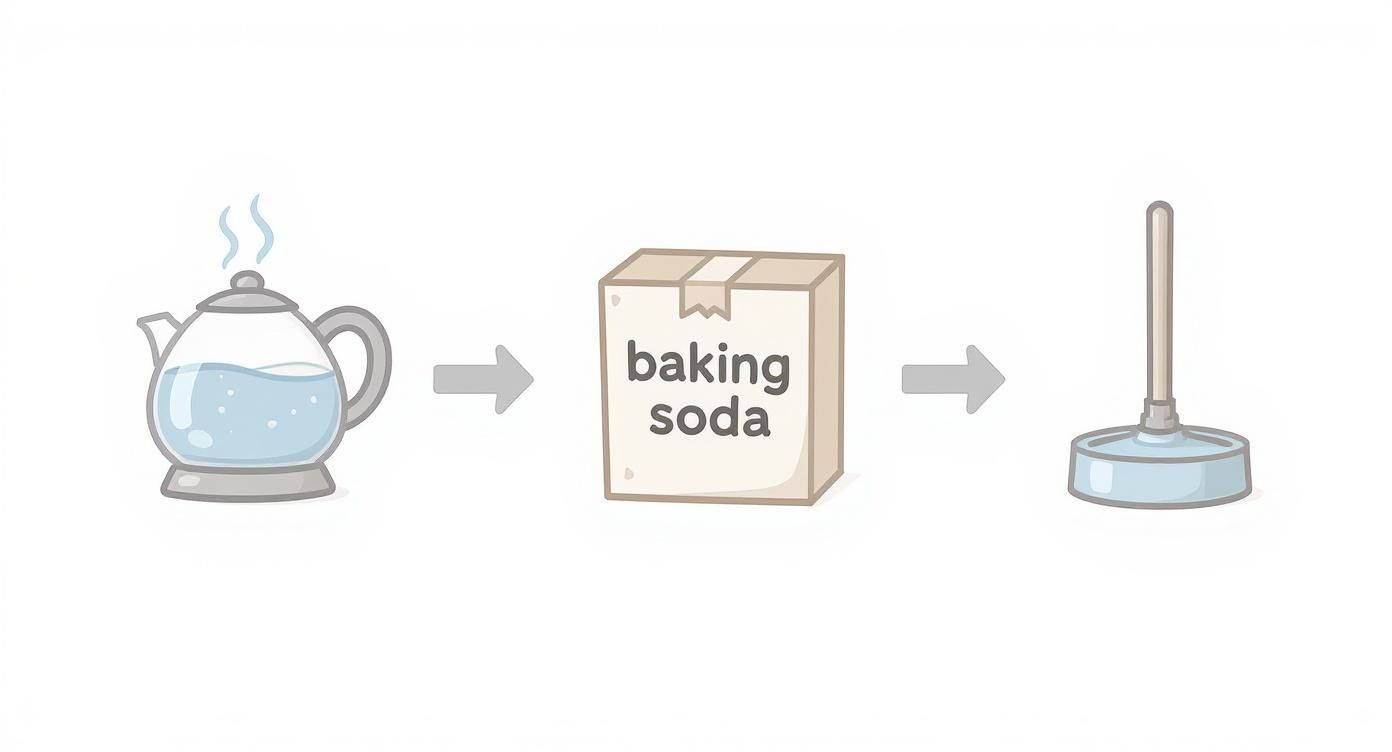
Starting with hot water and then moving on to more physical methods is always the safest way to tackle a blocked drain.
Feeding the Auger into the Pipe
To get started, you’ll need to feed the tip of the snake’s cable directly into the drain opening. With sinks, this might mean removing the pop-up stopper or even taking off the P-trap (that U-shaped pipe under the basin) to get clear access. Always have a bucket handy to catch any trapped water and gunk that will inevitably come out.
Gently and slowly push the cable down the pipe. Whatever you do, don't force it. When you feel it hit a bend, you’ll need to turn the handle on the auger's drum while applying just a little bit of forward pressure. This spinning motion is what helps the snake's head navigate the corner.
Feeling for and Hooking the Clog
As you keep feeding the cable, you'll eventually feel a different kind of resistance—that's the clog. It’ll feel a bit spongier or more solid than a simple pipe bend. Once you’ve hit it, you know you’ve found the source of your problem.
Your goal now is to hook onto the blockage, not just ram it further down the pipe. This is a common mistake we at Harrlie Plumbing and Heating see all the time when called out to fix DIY attempts in Eastbourne homes. A compacted clog is a much bigger headache to sort out.
The real key to using a drain snake is finesse, not force. Gently rotate the handle clockwise to let the auger’s tip work its way into the mass of hair, soap scum, or whatever else is down there.
Once you feel the tip has a solid grip, stop pushing. It’s time to slowly pull the cable back, rotating the handle as you go. You might need to work it back and forth a little to break the clog free. Pull the entire blockage out of the drain, get rid of it, and then give the pipe a good flush with hot water to clear out any leftover debris.
Why Chemical Drain Cleaners Are a Risky Quick Fix
When you’re staring at a sink full of murky water, grabbing a bottle of chemical cleaner off the supermarket shelf feels like an easy win. The labels make big promises—dissolving everything in sight to get your water flowing in minutes. And while they might seem to work at first, these aggressive chemicals often cause more problems than they solve.
The powerful acids in these products are designed to be corrosive, but they can't tell the difference between a clump of hair and your actual pipes. This is something we see all the time at Harrlie Plumbing and Heating, especially in the beautiful period properties scattered across Eastbourne, from Sovereign Harbour to the Old Town. Older homes often have metal pipes—think cast iron or copper—which are particularly vulnerable to this kind of chemical attack.
What starts as a quick fix can quietly turn into a very expensive problem. Each time you use them, you could be thinning the pipe walls, creating weak spots that eventually lead to cracks and disastrous leaks behind walls or under your floorboards.
The Hidden Dangers to Your Home and Health
It's not just the pipes you need to worry about. The fumes from chemical drain cleaners can be seriously toxic, filling your kitchen or bathroom with hazardous vapours that can cause respiratory irritation or worse. In the heat of the moment, it's easy to forget about proper ventilation, but the risk is real.
Then there’s the environmental side of things. Everything you pour down your drain eventually ends up in our local water systems. Here in Eastbourne, with our beautiful coastline, it's particularly important to consider the impact. These harsh chemicals can harm wildlife and upset the delicate balance of the ecosystem right here on our doorstep.
Pouring aggressive chemicals down the drain is a gamble. You might clear the blockage for a day or two, but you could also be causing silent, cumulative damage to your plumbing that only shows itself when a pipe bursts.
When a "Quick Fix" Becomes a Major Repair
One of the biggest headaches we at Harrlie Plumbing and Heating face is when a chemical cleaner doesn't work. If the product fails to dissolve the clog, it can sometimes react with the blockage, turning a soft mass of gunk into a dense, solid plug that’s far harder to remove.
Even worse, you’re now left with a pipe full of caustic liquid, making it dangerous for anyone—including a professional plumber—to tackle the job safely. It’s far better to avoid the risk altogether. A simple call-out to get the job done right is always cheaper and safer than an emergency pipe replacement down the line.
Simple Habits to Prevent Future Drain Blockages
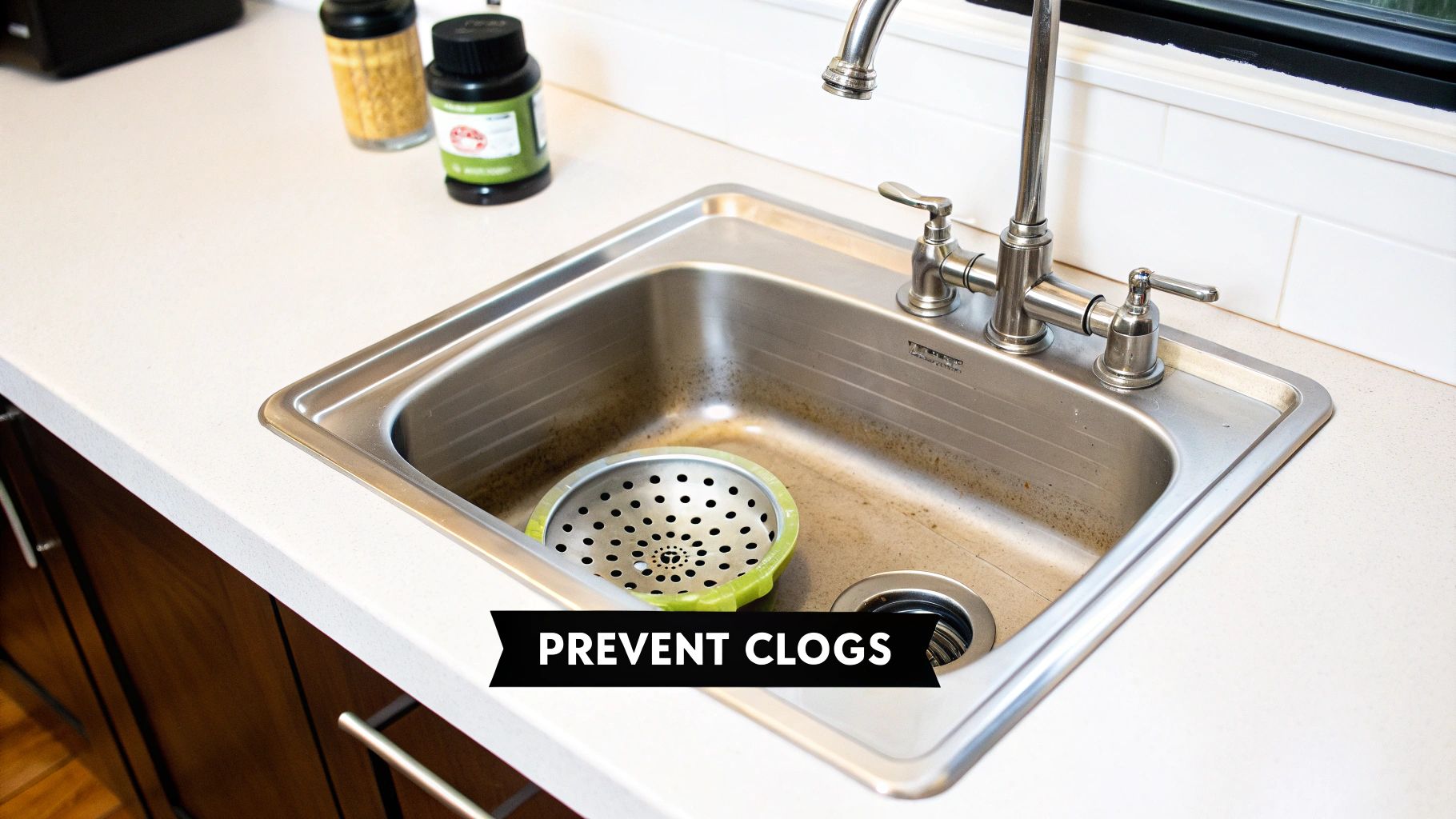
Successfully clearing a stubborn blockage feels great, but the real victory is making sure you don't have to do it again anytime soon. Let’s be honest, the best way to deal with a clogged drain is to stop it from happening in the first place. Adopting a few simple, proactive habits can keep your pipes clear and save you the stress of an emergency call-out.
Prevention is far less hassle than a cure, especially with plumbing. It really just comes down to being mindful of what goes down your plugholes day-to-day. The market for plumbing drain cleaning is growing, and there's a good reason for it: homeowners are realising that a little effort now saves a lot of trouble later. This shift, highlighted in market trend reports like this one from Future Market Insights, shows people are getting smarter about proactive care.
Smarter Habits in the Kitchen
The kitchen sink is almost always the number one offender for preventable clogs, mostly thanks to fats, oils, and grease (FOG). When you pour hot grease from a roasting tin down the drain, it quickly cools and solidifies inside your pipes, creating a sticky trap for every other bit of food that follows.
Never Pour Fats Down the Drain: This is the golden rule of kitchen plumbing. Instead, let fats cool in an old jar or tin and pop it in the general waste bin.
Scrape Plates Thoroughly: Get rid of leftover food scraps before you even think about rinsing the plates. Little bits of rice, pasta, and coffee grounds all contribute to a nasty build-up.
Use a Drain Strainer: A simple mesh strainer in your plughole is an incredibly effective and cheap way to catch debris before it vanishes into your plumbing.
This is especially important here in Eastbourne, where many of us love a traditional Sunday roast. All that delicious leftover fat can cause serious issues if it gets into the local drainage system.
Keeping Bathroom Drains Clear
In the bathroom, the main culprits are completely different. Here, it’s all about hair and soap scum, which bind together to form dense, stubborn blockages in showers, baths, and sinks.
A simple hair catcher in your shower or bath plughole can prevent around 90% of hair-related blockages. It's a tiny investment that pays for itself by saving you from having to snake the drain every few months.
Another critical point is what gets flushed down the loo. The only things that should ever be flushed are human waste and toilet paper. Anything else—wet wipes (even the "flushable" ones), cotton buds, and sanitary products—simply doesn't break down and is a primary cause of major sewer blockages. At Harrlie Plumbing and Heating, we’ve seen countless call-outs in Eastbourne caused by exactly this issue.
Simple Monthly Maintenance Routines
A little regular maintenance goes a surprisingly long way. You don’t need to spend hours on it; just a few minutes each month can make a huge difference in stopping that gradual, unseen build-up.
Once a month, just pour a full kettle of boiling water down your kitchen and bathroom sink drains. This simple trick helps to melt away any grease or soap scum that has started to accumulate. If you follow this up with the bicarbonate of soda and vinegar method, you'll also help deodorise your drains and keep them flowing freely. These small, consistent actions are the real key to avoiding the headache of a blocked drain.
Knowing When to Call a Professional Plumber
There’s a real sense of achievement in fixing a blockage yourself, but it’s just as important to recognise when a problem is beyond a DIY fix. Pushing a simple tool too far or ignoring a persistent issue can quickly turn a minor inconvenience into a major, expensive disaster.
Knowing the warning signs is key to protecting your property.
Sometimes, the clues are subtle but significant. If you’ve tried all the usual DIY methods and the clog stubbornly remains, it’s time to stop. Forcing the issue with a drain snake or trying different solutions over and over can seriously damage your pipework, especially in the older, more delicate plumbing systems common in many Eastbourne homes.
Signs That Point to a Deeper Problem
There are several red flags that suggest the blockage isn't just a simple clump of hair or grease near the plughole. These symptoms often point to a more serious issue lurking deeper within your main drainage system.
If you notice any of these, it's a clear signal to put down the tools and pick up the phone:
Recurring Clogs: You clear a blockage, only for it to return a week or so later. This is a classic sign that the initial problem was never fully removed, or it's just a symptom of a much larger issue downstream.
Multiple Drains are Slow: Is your shower, toilet, and sink all draining sluggishly at the same time? The problem isn't in one specific trap. It’s almost certainly located in your main sewer line.
Foul, Persistent Odours: A lingering smell of sewage that you can't get rid of, even after cleaning, often indicates trapped, decaying waste in the main drain or a problem with your vent stack.
When you're facing multiple slow drains or a clog that just won't quit, it's no longer a simple DIY job. These are classic signs of a main line blockage that requires professional diagnostic tools and expertise to resolve safely and effectively.
The Professional Advantage: Technology and Expertise
At Harrlie Plumbing and Heating, we often find that what seems like a simple blockage is actually caused by things like tree root intrusion or a partially collapsed pipe—issues you could never diagnose on your own. We use specialist equipment, such as high-definition CCTV drain cameras, to see exactly what’s happening deep inside your pipes without any guesswork.
This allows us to pinpoint the precise location and cause of the problem, ensuring we apply the right solution the first time. The UK's sewer network is vast, handling over 11 billion litres of wastewater daily across nearly 347,000 kilometres of pipes, making expert maintenance essential for public health and environmental safety. For more details on this, you can discover insights into the UK's drainage infrastructure management.
For residents across Eastbourne and the surrounding areas, our 24/7 emergency service provides real peace of mind. Instead of struggling with a persistent blockage, a quick call can bring an expert to your door, ready to provide a permanent fix. To better understand what to look for, check out our post on finding a reliable plumber in Eastbourne.
Facing a stubborn drain that won’t clear, or worried about a deeper plumbing issue? Don’t let a small problem become a major headache. Contact Harrlie Plumbing and Heating today for a fast, reliable, and professional solution. Visit us online or call us for a free quote and rapid emergency service.

Comments