The Best Way to Unblock a Drain A UK Guide

Before you reach for any tools, the first job is to play detective. Figuring out why your drain is blocked is the most important step. A greasy kitchen clog needs a totally different approach to a shower drain packed with hair, so getting the diagnosis right from the start saves you time and hassle.
Diagnosing Your Blocked Drain Problem
Telltale signs like slow-draining water, strange gurgling noises from the plughole, or nasty smells are all clues that a blockage is forming. Where these symptoms are happening and what they’re like will point you to the root of the problem.
Every drain in your house has its own unique weak spot. Once you’ve identified the likely culprit, you can pick a method that will actually work. After all, pouring boiling water down a drain blocked by a child's toy won't get you very far, but it works wonders on built-up grease from last night's fish and chips.
Common Culprits in UK Homes
Most of the time, blockages are caused by a familiar cast of characters. It’s usually a process of elimination based on which drain is giving you grief.
Kitchen Sinks: The number one offender here is a gradual build-up of fats, oils, and grease (what we call FOG). When you pour them down the sink, they cool and solidify inside the pipes, creating a sticky trap that catches every food scrap that follows.
Bathroom Sinks & Showers: Hair is the main enemy in the bathroom. It tangles up with soap scum and creates dense, stubborn plugs that are really tough to dissolve with chemicals alone.
Toilets: Problems here almost always come from flushing things that shouldn't be flushed. Wet wipes (even the 'flushable' ones), cotton buds, and sanitary products are the usual suspects.
Here at Harrlie Plumbing and Heating, we see firsthand how local conditions in Eastbourne make things worse. The 'hard' water in our area makes soap scum and mineral deposits build up much faster, leaving drains prone to blockages. It’s a simple fact that if you live in Eastbourne, you'll probably have to deal with clogged drains more often than someone in a soft water area. We've seen this in properties all over Eastbourne, from Meads to Langney.
A common mistake is thinking that a tiny bit of grease here or a few wet wipes there won't do any harm. But over time, it's exactly these little habits that lead to a full-blown plumbing emergency. The best prevention is understanding what you’re sending down the drain.
This isn’t just a local problem; it's a massive issue across the country. A 2019 survey on the UK's drainage habits showed that even with more awareness, lots of us still pour fats down the sink and flush the wrong things. It just goes to show that figuring out the 'why' behind the clog is half the battle won.
Your Essential Drain Unblocking Toolkit
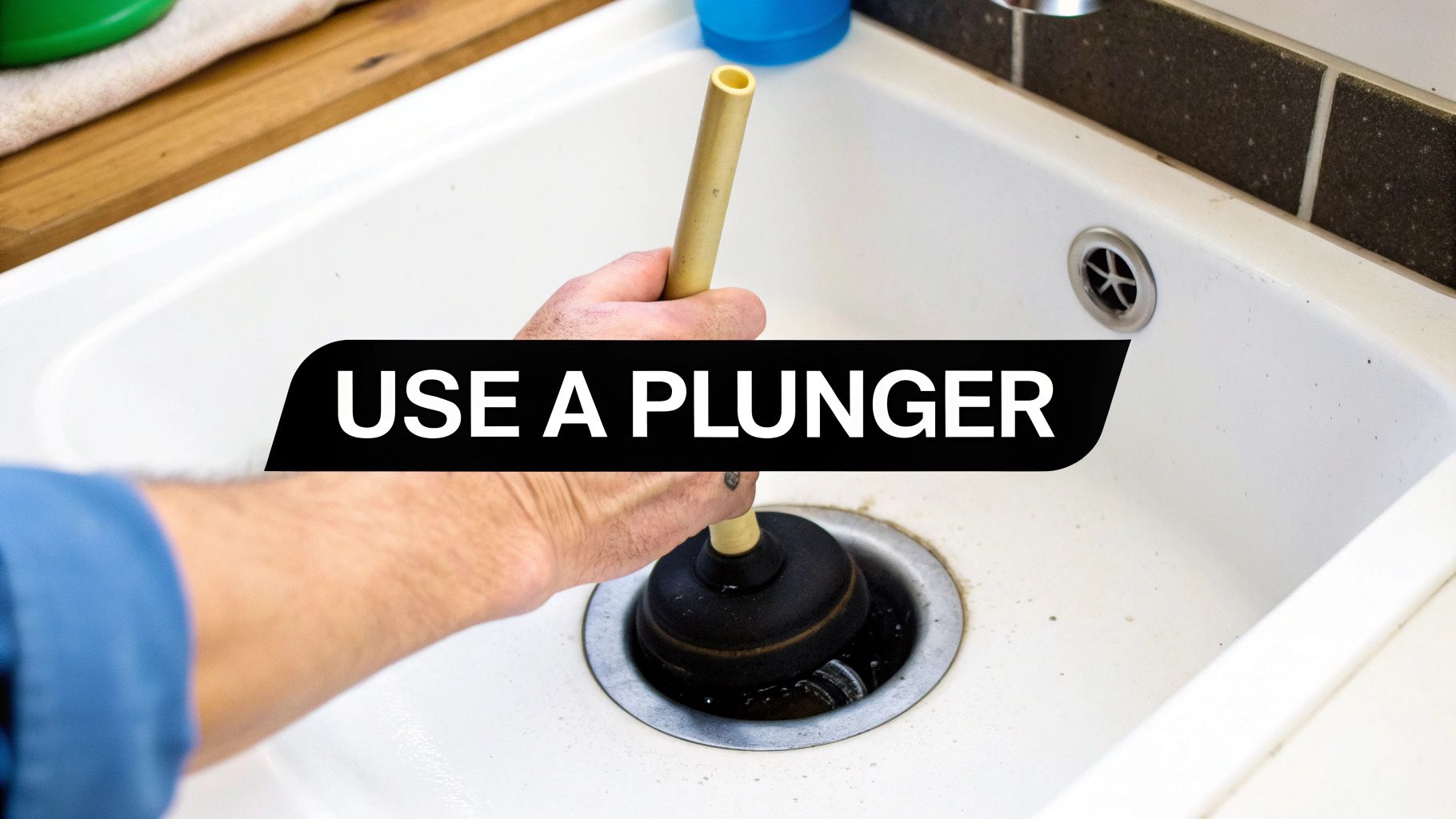
Jumping into a drain unblocking job without the right gear can quickly turn a small hassle into a huge, messy headache. Before you even think about tackling that clog, gathering a few key items will make the process safer, cleaner, and far more effective. At Harrlie Plumbing and Heating, we always tell our Eastbourne clients that good preparation is half the battle won.
The right toolkit doesn’t need to be complicated or expensive. In fact, you probably have some of the most useful items kicking around in your cupboards already. Having everything within arm's reach means you can sort the problem out efficiently without having to stop and search for things mid-job.
Your Basic DIY Unblocking Kit
For most minor clogs, a simple set of tools is all you need. Think of this as your first line of defence against that frustratingly slow-draining water.
Protective Gear: This one’s non-negotiable. Always wear sturdy rubber gloves to protect your hands from grime and bacteria. Safety goggles are also a smart move to shield your eyes from any unexpected splashes.
A Good Plunger: A simple cup plunger is perfect for creating a tight seal over sink and shower drains. Just make sure it has a solid handle, as you’ll need to apply some firm pressure.
Baking Soda & White Vinegar: This classic duo is a safe and surprisingly effective starting point for dissolving grease and soap scum. It's much gentler on your pipes than those harsh chemical cleaners you find in the shops.
A Bucket or Old Towels: Do yourself a favour and place these under the sink's U-bend before you start. This simple step will catch any water spillage and save you a big clean-up job later.
Before reaching for any store-bought chemical solution, always make sure the room is well-ventilated by opening a window. The fumes can be surprisingly strong, and your safety should always be the top priority.
Tools for More Stubborn Clogs
If the simple methods don’t cut it, you might need to bring in something with a bit more power to physically break up or retrieve the blockage.
A drain snake, sometimes called an auger, is an invaluable tool for reaching deeper clogs caused by hair or other trapped debris. You can pick up affordable manual versions from most DIY shops. Having one of these on hand means you’re prepared for those tougher blockages that a plunger just can’t shift.
With this kit ready to go, you're all set to tackle the most common drain problems head-on.
Simple Fixes for Common Drain Clogs
Before you reach for harsh chemicals, it’s always best to start with gentle, yet surprisingly powerful, home remedies. For most minor blockages caused by everyday grease or soap, these simple fixes are often the most effective way to unblock a drain without risking damage. Here at Harrlie Plumbing and Heating, these are the first methods we recommend to our Eastbourne clients because they’re safe for your pipes and much kinder to the environment.
Tackling a clog often feels more complicated than it really is. Many homeowners are surprised to learn that the best solutions are probably already sitting in their kitchen cupboards. The secret is knowing how to apply them correctly to get the results you need.
Harnessing Simple Kitchen Staples
One of the easiest and most effective methods involves nothing more than boiling water, especially for kitchen sinks. Greasy build-ups, a very common headache in Eastbourne homes, can often be dissolved by carefully pouring a full kettle of boiling water straight down the plughole. The trick is to do this slowly, in two or three stages, which gives the intense heat time to work on the solidified fats.
For a bit more oomph, the classic combination of baking soda and white vinegar is a fantastic choice. This natural reaction creates an impressive fizz that expands inside the pipe, helping to dislodge and break down stubborn grime and soap scum without corroding your pipework.
This simple graphic shows you just how easy it is.
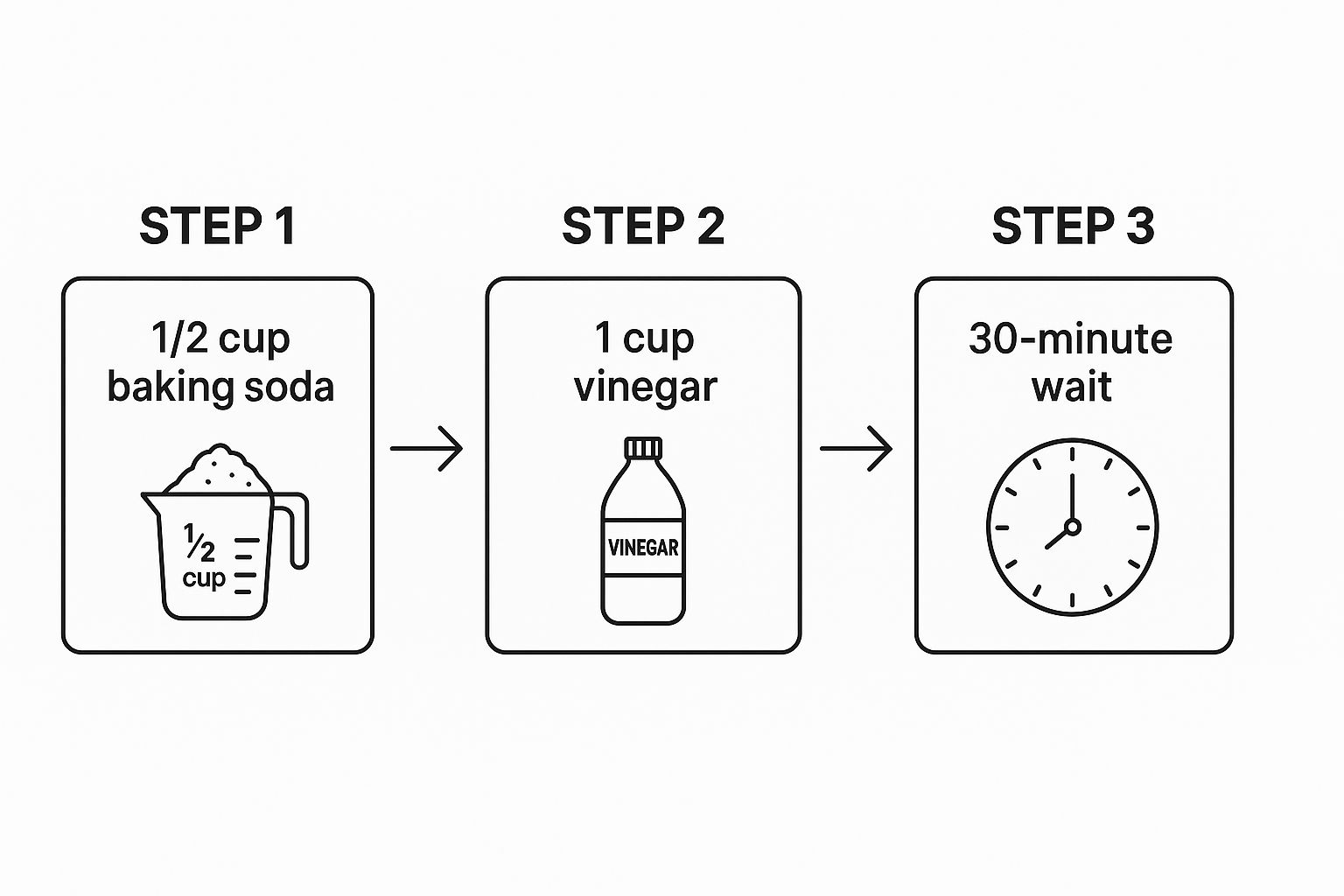
This visual guide breaks down the straightforward, three-part process that uses common household items to create a powerful, pipe-safe cleaning reaction. Once the fizzing has died down, just flush the drain with hot water to wash away all the loosened debris. For more in-depth advice, you can explore our **easy DIY tips for fixing a blocked sink**.
To help you decide which method to try first, here’s a quick rundown of the most common DIY approaches we recommend.
DIY Drain Unblocking Methods at a Glance
This table gives you a quick comparison of DIY methods, evaluating their effectiveness on common clogs, their cost, and how safe they are for your home's pipes.
Method | Best For | Cost | Pipe Safety | Harrlie's Tip |
|---|---|---|---|---|
Boiling Water | Kitchen sinks with grease & fat build-up. | Minimal (cost of boiling water). | Generally safe for metal pipes; use caution with PVC. | Pour slowly in stages to allow heat to penetrate the clog effectively. |
Baking Soda & Vinegar | Bathroom drains with soap scum, hair, and grime. | Very low (common household items). | Excellent. Safe for all pipe types. | Pack the baking soda down the drain first, then add the vinegar for a more powerful fizz. |
Plunger | Solid obstructions in sinks, toilets, and showers. | Low (one-time tool purchase). | Safe for all pipe types when used correctly. | Always ensure there's enough water to cover the plunger's cup for a proper seal. |
Choosing the right tool for the job makes all the difference. While boiling water is great for grease, it won’t do much against a physical blockage, which is where a plunger really shines.
Mastering the Art of the Plunger
When you’re faced with a more physical obstruction that the above methods can't shift, it's time to reach for the plunger. A good plunger is an essential tool in any home, but its effectiveness is all down to your technique. The goal isn't just to push, but to create a powerful vacuum seal that forces water against the clog.
To get that perfect seal, follow these simple guidelines:
Cover overflow holes: Use a damp cloth to block any overflow outlets in the sink or bath. This simple step stops air from escaping and makes sure all the pressure is directed where you need it—on the blockage.
Add some water: Make sure there's enough water in the basin to completely cover the rubber cup of the plunger. Water can't be compressed, so it transfers force much more effectively than air alone.
Use the right motion: Start with a gentle push to force the air out from under the cup. Then, pull back sharply to create suction, followed by several firm, rapid plunges.
A common mistake is trying to use a plunger on a dry sink. Without water to create hydraulic pressure, you're just pushing air around, which does very little to move a stubborn clog. Always ensure the plunger cup is submerged.
These straightforward, manual methods are surprisingly powerful and should always be your first port of call. They resolve the vast majority of common household clogs without needing specialist tools or an expensive call-out, keeping your drains flowing freely and your pipes in good health.
Using a Drain Snake for Stubborn Blockages
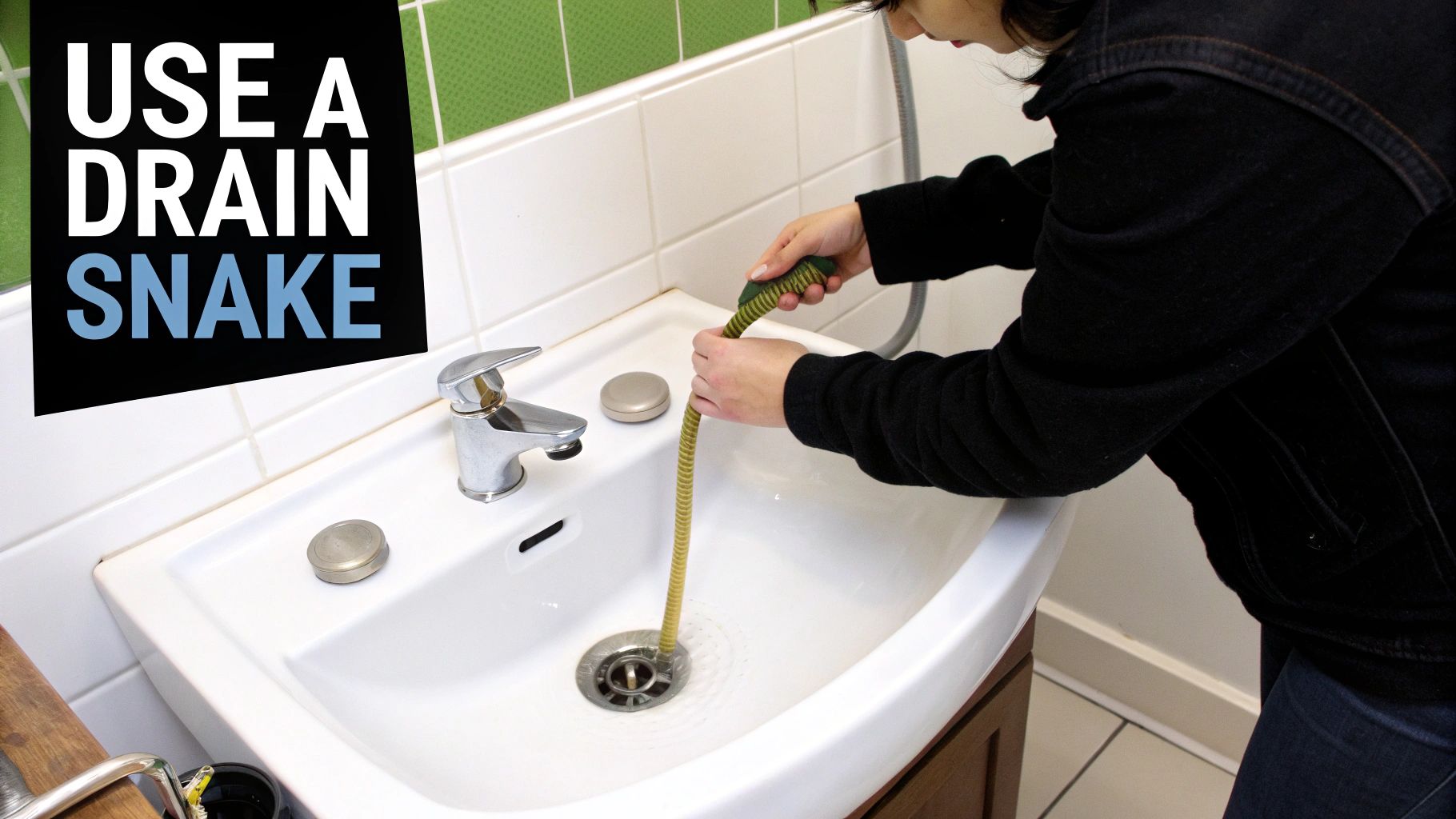
When you've tried boiling water and the plunger hasn't shifted a thing, it’s a pretty clear sign you’re up against a more solid, stubborn blockage. This is exactly when a drain snake, sometimes called an auger, becomes your best friend. It’s designed to get right in there and physically break apart or pull out dense clumps of matted hair and other gunk that chemical drain cleaners just can’t dissolve.
Knowing how to use one properly is the best way to tackle a drain that’s putting up a real fight. Honestly, getting the hang of this tool can empower you to sort out more serious plumbing headaches yourself, saving you the cost of a call-out. It’s a bit of kit we at Harrlie Plumbing and Heating often reach for when dealing with certain types of blockages around Eastbourne.
Preparing to Use the Drain Snake
Before you even think about starting, a little prep work will save you a lot of mess. Lay down some old towels or pop a bucket under the U-bend – that’s the curved bit of pipe under your sink. This will catch any grotty water that spills out when you take it apart.
The easiest way to get at the main pipe is usually by removing this U-bend. Most modern plastic ones can be unscrewed by hand, but if you’re dealing with older metal pipes, like those in some of Eastbourne's lovely Victorian houses, you might need a wrench. This gives you a straight shot into the pipe heading into the wall, which is typically where the most stubborn clogs like to hide.
Navigating the Pipework
Right, now you can start feeding the flexible metal cable of the drain snake into the open pipe. Just push it in gently until you feel it stop. That resistance? That's your blockage.
Once you’ve hit the clog, it’s time to start turning the handle on the snake. This rotates the corkscrew head on the other end, letting it either drill into the blockage to break it up or hook onto it so you can pull it out.
Go slowly and feel the feedback: Whatever you do, don't try to force it. If it feels completely stuck, you’ve probably just hit a bend in the pipe. Pull it back a touch, then push forward again while cranking the handle to help it wiggle around the corner.
Alternate your motions: The most effective technique is often a combination of pushing, pulling, and rotating. This helps the auger's head work its way right through whatever compacted gunk is in there.
Pro Tip from Harrlie Plumbing and Heating: While you're working the snake, try running a small but steady stream of cold water down the drain. This can really help flush away the debris as you break it loose, making the whole process quicker and more effective.
Retrieving and Clearing the Blockage
When you feel the resistance suddenly give way, you've likely punched through the clog. To make sure, carefully pull the snake back out, continuing to turn the handle as you go. You'll probably retrieve a pretty grim-looking clump of hair and gunk – but it’s a very satisfying sign of a job well done!
With the snake removed, put the U-bend back together and make sure all the connections are nice and tight. The final step is to run hot water down the drain for a good few minutes. This will flush out any leftover bits and prove that the pipe is running clear again. For many of the deeper clogs we find in Eastbourne’s older properties, mastering the drain snake is a real game-changer for homeowners.
When to Call in the Professionals
There's a real satisfaction in sorting out a minor blockage yourself, isn't there? But knowing when to hang up the plunger and pick up the phone is crucial. It’s the difference between a quick fix and a full-blown, expensive disaster. Some problems are simply signs of deeper trouble in your plumbing, and trying to force a DIY solution can often make things a whole lot worse.
At Harrlie Plumbing and Heating, we've seen it all. We always tell our Eastbourne clients that there are certain red flags you just can't afford to ignore. For example, a customer in the Old Town area of Eastbourne recently had recurring sink blockages which turned out to be a tree root issue in their main drain—something a plunger could never fix.
Tell-Tale Signs You Need an Expert
If any of these sound familiar, it’s time to step back and let a qualified plumber take a look. These aren't just small annoyances; they're your plumbing system's way of telling you something is seriously wrong.
The Clog That Keeps Coming Back: If you’re clearing the same drain every few weeks, there’s an underlying issue that a bottle of drain cleaner or a snake just won't reach. It’s a classic sign of a more stubborn obstruction further down the line.
Multiple Blockages at Once: Is your shower, loo, and sink all draining like they’re stuck in treacle? This is a massive clue pointing to a blockage in your main sewer line. That’s a job for specialist diagnostic kit, not guesswork.
A Foul Smell You Just Can't Shift: When a nasty sewage odour hangs in the air no matter how much you clean, it usually means waste is trapped and decaying somewhere in the pipes. It could also point to a problem with your sewer vent system.
Water Backing Up in a Different Place: This is the big one. If flushing the toilet causes water to gurgle up in the shower drain, you've got a significant blockage in the main drain that’s forcing water back up the path of least resistance.
Trying to tackle a main sewer line blockage with standard DIY tools is a recipe for disaster. It’s not just ineffective; you can easily cause serious, costly damage to your pipes. This is a situation that absolutely demands a professional.
The cost of getting a pro in can vary, but it's a small price to pay compared to fixing major water damage. For a simple, straightforward clog, you might be looking at around £50 to £70. More complex jobs that need high-pressure drain jetting could fall in the £70 to £175 range. You can get a better idea by reviewing typical UK drain unblocking costs.
If you're in Eastbourne and facing a stubborn drain that’s causing you grief, it's always safer to get an expert opinion. For a fast, reliable assessment and a professional solution, have a look at our **professional Eastbourne drainage services** to see how we can help get things flowing again.
Preventing Future Clogs with Simple Habits
Let's be honest, the best way to unblock a drain is to stop it from getting clogged in the first place. Once you’ve gone through the hassle of clearing a blockage, a few simple, proactive habits can save you a world of future trouble and expense. It really just comes down to being a bit more mindful of what you let go down your plugholes.
Here at Harrlie Plumbing and Heating, we see this all the time, especially in the older, charming properties around Eastbourne. A little bit of consistent preventative care makes a massive difference. Small, regular actions are far more effective than waiting for a major problem to build up. It’s the difference between a free-flowing home and a proper plumbing headache.
Your Proactive Drain Care Checklist
Making these small habits part of your weekly routine will dramatically reduce the chances of another blockage.
Install Drain Guards: A simple mesh or silicone guard popped over your shower, bath, and kitchen sink plugholes is your best line of defence. These inexpensive little gadgets are brilliant at catching hair and large food scraps before they can cause trouble.
Be Smart with Fats and Oils: Whatever you do, don't pour cooking fats, oils, or grease straight down the sink. A much better way is to let them cool and solidify in an old jar or container, then just toss them in your general waste bin.
Run a Regular Hot Water Flush: Once a week, carefully pour a full kettle of boiling water down your kitchen sink. This simple step is great for dissolving any grease that's started to build up inside the pipes, helping to keep everything clear.
Adopting these small routines is the most powerful tool you have. A few seconds of prevention each day is infinitely better than spending hours trying to fix a stubborn clog that could have been avoided.
This proactive mindset isn't just for homeowners; it's a principle we see applied on a much larger scale to protect public infrastructure. For example, a major £2.6 million initiative in Oxfordshire was launched to clean nearly 145,000 roadside drains, showing just how crucial regular maintenance is for preventing flooding. You can read more about this large-scale preventative drainage project. The exact same logic applies to the drains inside your home.
Preventative care extends to your appliances, too. A slow-draining dishwasher, for example, is often a tell-tale sign of a blockage forming from food particles. For some guidance on keeping its pipes clear, have a look at our guide on fixing a clogged dishwasher drain fast. These simple habits keep your entire system healthy and happy.
Frequently Asked Drain Unblocking Questions
Even with the best guide in hand, a few questions always seem to pop up when you're staring down a stubborn blockage. Here are some quick, straightforward answers to the queries we hear most often from our customers in and around Eastbourne.
Are Chemical Drain Cleaners a Good Idea?
Honestly, we at Harrlie Plumbing and Heating strongly advise against using harsh chemical drain cleaners. They can be incredibly corrosive, which is a real problem for the pipework in many of Eastbourne’s older properties. We've seen them eat through old metal pipes in homes near the seafront, causing far more damage than the original blockage.
Beyond the damage to your pipes, the fumes can pose a genuine safety risk, especially in bathrooms or kitchens with poor ventilation. The natural and manual methods we've outlined are far safer for both you and your plumbing system.
How Often Should I Clean My Drains?
When it comes to drains, prevention is always better than the cure. A little regular maintenance stops clogs from ever forming in the first place.
For your kitchen sink, simply pouring a kettle of boiling water down it once a week works wonders against grease build-up. In the bathroom, make a habit of clearing hair from the drain guard after every shower. A monthly flush with baking soda and vinegar will then help keep everything flowing smoothly.
A common misconception is that all plungers are the same, but using the wrong one is often why people struggle to clear a blockage. A simple cup plunger is designed for flat surfaces like a sink, while a toilet requires a flange plunger to create an effective seal.
Using the right tool for the job makes all the difference.
For any blockage that feels too big to handle, or for expert advice you can trust, don't hesitate to reach out to Harrlie Plumbing and Heating. Visit us online at https://www.harrlieplumbing.co.uk to schedule a fast, professional service.

Comments