Power Showers and Combi Boilers The Ultimate UK Homeowner's Guide
- Luke Yeates
- Dec 13, 2025
- 13 min read

Let’s get one of the biggest plumbing myths cleared up straight away: can you actually use a power shower with a combi boiler? The short answer is a definite no, at least not directly. This guide will walk you through exactly why this common pairing just doesn’t work and, more importantly, how you can still get that fantastic shower pressure you’re after without risking your entire system.
The Myth About Power Showers and Combi Boilers
Everyone dreams of a powerful, invigorating shower, but there’s a lot of confusion when it comes to matching the right shower to the right heating system. A common belief is that a power shower is the ultimate upgrade for any home, but the truth is a bit more complicated, especially if you have a modern combi boiler.
The key is understanding how each system works. Think of it like this: a combi boiler is already a high-pressure system. It takes water straight from the mains and heats it on demand, designed from the ground up to deliver strong water flow all by itself. A power shower, on the other hand, has an internal pump built for one specific job: boosting weak water flow from a low-pressure, gravity-fed system (the classic setup with a hot water cylinder and a cold water tank in the loft).
The core problem is simple: a power shower is designed to fix a low-pressure issue, but a combi boiler system doesn't have that problem. Trying to connect the two creates a dangerous mismatch.
For homeowners in Eastbourne, where properties range from old Victorian terraces to modern flats near the Sovereign Harbour, this is a question we get asked all the time. Here at Harrlie Plumbing and Heating, we’ve seen countless incorrect installations where people have tried to force these two systems to work together, often leading to some very expensive problems.
There are a couple of major reasons they just don’t mix:
Over-pressurisation: When you connect a power shower's pump to an already high-pressure combi system, it can completely overwhelm and damage the pump. This often leads to leaks and will almost certainly void your warranty.
Flow Rate Conflict: The shower’s pump will try to pull water through faster than the combi boiler can possibly heat it. The result? A frustratingly lukewarm shower that pulses between hot and cold.
Ultimately, trying to combine a power shower and a combi boiler isn't just ineffective; it’s unsafe. But don't worry—getting that perfect shower experience with your combi boiler is absolutely achievable. You just need the right, compatible equipment.
Identifying Your Home's Water System
Before you start dreaming about a powerful new shower, there's a crucial first step: figuring out what kind of water system you have at home. Most UK properties rely on one of three main setups, and knowing which one is yours is essential when you're looking at options like power showers and combi boilers. Getting this right from the start saves you from costly and potentially damaging mistakes down the line.
Think of it like putting fuel in a car—you wouldn't put diesel in a petrol engine. The same logic applies here. Your home’s plumbing setup dictates which showers will work. A classic Victorian terrace in Eastbourne's Old Town, for example, will likely have an older gravity-fed system. In contrast, a modern flat near the Sovereign Harbour is far more likely to have a combi boiler.
The Three Main UK Water Systems
So, how can you tell which one you have? It’s usually pretty straightforward once you know what to look for.
Here’s a quick checklist to help you get to the bottom of it:
Gravity-Fed System: Do you have a big cold water storage tank tucked away in the loft? And a separate hot water cylinder, usually in an airing cupboard? If that sounds familiar, you've got a gravity-fed system. This setup naturally creates low water pressure, making it the perfect match for a traditional power shower.
Unvented System: Can you spot a large, pressurised hot water cylinder but there’s no cold water tank in the loft? That’s an unvented system. It delivers high-pressure hot water straight from the mains, but just like a combi, it’s not designed to work with a standard power shower.
Combi Boiler System: Is there a single boiler unit mounted on a wall—often in the kitchen—with no hot water cylinder or loft tanks in sight? This means you have a combi boiler, which heats water on demand directly from the mains. Here at Harrlie Plumbing and Heating, we install and service these systems across Eastbourne every day.
This simple process of elimination helps to show why the relationship between power showers and combi boilers is so important to understand.
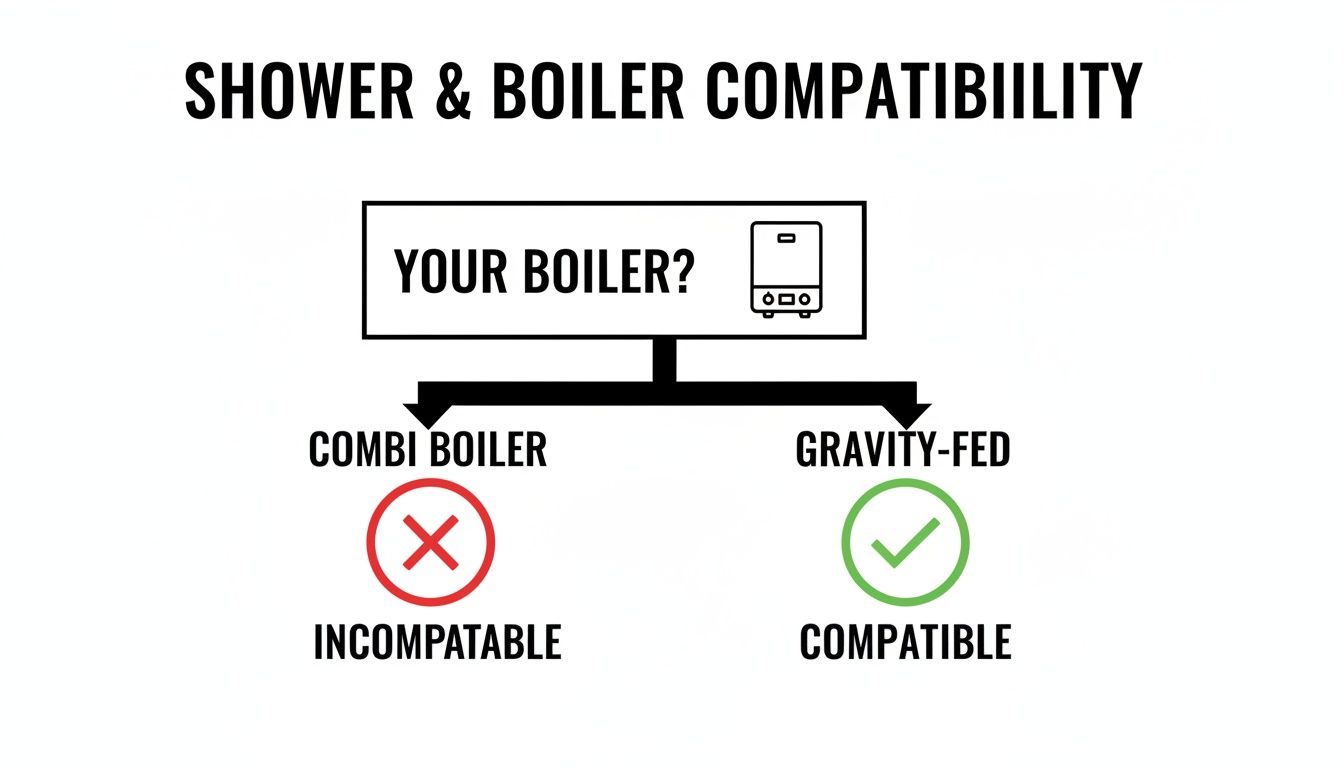
As you can see, a combi boiler and a power shower just don't mix. A gravity-fed system, on the other hand, is the ideal partner.
Knowing your system isn't just a technicality—it's the foundation of any successful bathroom upgrade. Pairing the wrong shower with your boiler can lead to terrible performance, damaged equipment, and even leaks.
Once you’ve confidently figured out your system, you can start looking at the right solutions. If you have a gravity-fed system, a power shower is a fantastic choice. But if you have a combi boiler, don't lose hope. As we'll get into next, there are some brilliant alternatives to get that invigorating spray you're after.
And if you’re ever unsure, the team at Harrlie Plumbing and Heating can pop over and assess your Eastbourne home's setup in no time.
Why Direct Connection Is a Dangerous Mismatch
Trying to connect a power shower directly to a combi boiler is a classic, but surprisingly common, plumbing mistake. It all comes down to a basic misunderstanding of what each piece of kit is actually designed for.
A power shower has one job and one job only: to boost weak water pressure from a gravity-fed system using its own little internal pump. It’s a brilliant fix for a problem that combi boilers just don't have.
On the other hand, a combi boiler operates under high pressure by its very nature, as it takes its water feed directly from the mains. When you try to force these two systems together, you're essentially slapping a booster pump onto an already pressurised water line.
Think of it like trying to inflate a bicycle tyre with a massive industrial air compressor—the tyre just isn't built to handle that kind of force. The result is almost always a failure, and in plumbing terms, that means leaks, wrecked equipment, and potentially thousands of pounds worth of water damage.
The Technical Breakdown of the Conflict
The incompatibility between power showers and combi boilers creates a couple of major technical headaches. First off, the shower's internal pump is forced to fight against the high pressure coming from the boiler, a strain it was never built to withstand. This can quickly burn out the pump's motor, leading to the complete failure of your shower unit.
Secondly, the pump will try to pull through water much faster than the combi boiler can possibly heat it. A typical combi can heat around 12-15 litres of water per minute. A power shower's pump can easily demand more than this, creating a flow rate battle that leaves you with a pulsating, lukewarm, and utterly miserable shower.
An Engineer's View from Eastbourne
We see the fallout from this mismatch all the time in homes across Eastbourne. One of our engineers at Harrlie Plumbing and Heating was recently called out to a property in Meads where a homeowner had attempted a DIY installation.
"The client had hooked up a power shower to their new combi boiler, and within weeks, the pump's seals had completely failed under the pressure. It caused a huge leak behind their brand-new tiles, leading to costly water damage repairs that were way more expensive than just buying the right type of shower in the first place. It’s a textbook example of why getting professional advice is so important."
This whole messy situation is completely avoidable with the right knowledge. Even though mains pressure systems are pretty standard now, power showers still hold a significant 20-25% of the market, mainly for sorting out low-pressure problems in older houses. You can explore more about UK shower market trends and see how different systems are used across the country.
Ultimately, this setup voids the warranties on both the shower and, potentially, the boiler, leaving you to foot the bill for any and all repairs. It's a high-risk gamble with no reward—and something any professional plumber will tell you to avoid at all costs.
How to Get Great Shower Pressure with a Combi Boiler
The good news is that getting that powerful, satisfying shower you dream of is absolutely possible with a combi boiler. While you can't just hook up a traditional power shower to a combi boiler, there are some brilliant modern solutions that deliver fantastic results without putting your system at risk. Let's walk through three of the most effective options.
Solution 1: High-Performance Mixer and Digital Showers
Often, the simplest and most effective solution is to install a shower that’s specifically designed to work with high-pressure systems like your combi boiler. Thermostatic mixer showers and digital showers are engineered to work in perfect harmony with the mains pressure your combi provides.
These modern showers don't contain their own pump. Instead, they expertly mix the hot and cold water feeds directly from your boiler, giving you a strong, consistent flow at a perfectly stable temperature. That means no more sudden icy blasts or scalding surges when someone turns on a tap elsewhere in the house—a common headache in busy Eastbourne family homes. At Harrlie Plumbing and Heating, we often recommend this as the first port of call for our clients.
Thermostatic Mixer Showers: A reliable and budget-friendly choice that uses a special valve for precise temperature control.
Digital Showers: For a more high-tech feel, digital showers offer pinpoint temperature accuracy, remote controls, and even programmable settings for different family members.
Solution 2: Installing a Mains Booster Pump
Sometimes, the weak shower isn't the fault of the boiler or the shower head at all. The real culprit is the low incoming water pressure to your entire property. It's a situation we sometimes come across in older parts of Eastbourne, and it means even the best combi boiler will struggle to deliver a powerful flow.
In this scenario, a mains booster pump is the perfect fix. Unlike a power shower pump that sits by the shower, this device is fitted to the mains water pipe before it even reaches your combi boiler. It boosts the water pressure for your entire home, not just one shower. This ensures your boiler gets the water pressure it needs to perform at its peak, giving you a much more forceful flow at all your taps.
A mains booster pump is a whole-house solution. It tackles the root cause of low pressure, benefiting your kitchen tap, washing machine, and shower equally.
Solution 3: Upgrading Your Combi Boiler
If you have an older, smaller combi boiler, it might simply lack the oomph to meet your household's demands, especially if you have more than one bathroom. An older boiler often has a low flow rate, meaning it can only heat a certain amount of water per minute, and that's that.
Upgrading to a new, more powerful combi boiler with a higher flow rate can be a total game-changer. Modern boilers are far more efficient and capable of supplying hot water to multiple outlets at the same time without that dreaded drop in pressure. At Harrlie Plumbing and Heating, we often recommend this for larger properties in Eastbourne or for families who find their current system just can't keep up.
Choosing the right path depends on your specific situation, from your existing mains pressure to your budget. Here's a quick comparison to help you weigh up the options.
Shower Pressure Solutions for Combi Boiler Systems
This table breaks down the most common solutions for improving shower performance with a combi boiler, helping you understand the effectiveness, cost, and complexity of each method.
Solution | How It Works | Typical Cost (UK) | Best For |
|---|---|---|---|
High-Performance Shower | Uses existing mains pressure from the combi boiler efficiently. | £200 - £700 | Homes with good mains pressure that just need a compatible shower. |
Mains Booster Pump | Increases the pressure of all water entering the home. | £400 - £900 | Homes with low incoming mains pressure affecting the whole property. |
New Combi Boiler | A modern unit with a higher flow rate heats more water, faster. | £1,800 - £3,500+ | Homes with an old, underpowered boiler struggling to meet demand. |
Ultimately, whether you need a simple shower upgrade, a whole-house pressure boost, or a brand-new boiler, there's a reliable way to get the invigorating shower experience you're looking for.
Upgrading to a Combi Boiler with an Existing Power Shower
What happens when you love the blast from your power shower but want the efficiency of a new combi boiler? It's a common dilemma we see all the time, especially during renovations in older Eastbourne properties. Homes in areas like Old Town have relied on traditional gravity-fed systems for decades, so this kind of upgrade is a frequent topic of conversation.
Unfortunately, the switch to a combi boiler means your old power shower will have to be retired. The entire system is changing, and your power shower simply won't work with the new setup. But this isn't a step back—it’s actually a brilliant opportunity. Moving to a combi system lets you install a modern thermostatic mixer or even a fancy digital shower, both of which work perfectly with the mains pressure. The result is a more reliable, efficient, and consistently powerful shower every single time.
The Upgrade Process Explained
The first thing our Harrlie Plumbing and Heating team does is decommission all the old, bulky parts of your gravity-fed system. This means safely removing the hot water cylinder from the airing cupboard and taking out the cold water storage tanks that are usually hidden away in the loft.
This process does more than just modernise your heating and hot water; it gives you back a surprising amount of space. We’ve had clients in Eastbourne turn their old airing cupboards into handy storage closets or even a small wardrobe!
With the old system out of the way, we can install your new combi boiler and connect it directly to the mains water supply. The final piece of the puzzle is fitting a new, high-performance shower designed to make the most of the excellent pressure your combi provides. We explore this in more detail in our guide on choosing the best shower for a combi boiler.
Benefits of Making the Switch
While it means saying goodbye to your old power shower, making the upgrade comes with some significant advantages that make it a worthwhile investment.
Improved Efficiency: Modern combi boilers heat water on demand. This means you stop paying to keep a huge tank of water hot, slashing energy waste.
Better Performance: You get strong, reliable mains pressure water flow that isn’t at the mercy of a separate, often noisy, pump.
More Space: Getting rid of the cylinder and loft tanks frees up valuable storage space.
When planning a combi boiler upgrade, it's also a great time to look at broader strategies to reduce heating costs to get the most out of your new, efficient system. Ultimately, this change creates a much more streamlined and powerful setup, perfectly suited for modern living and delivering that invigorating shower you've been looking for.
Know When to Call a Professional Plumber
While it’s great to understand how your plumbing works, there are times when you absolutely need to put down the wrench and pick up the phone. When it comes to your combi boiler, any work involving this gas appliance is not a DIY job—it’s a legal requirement that it must be handled by a Gas Safe registered engineer. This isn’t just a recommendation; it's a crucial regulation designed to keep you and your family safe.
Beyond the legal side of things, some problems are more than just minor quirks. They’re red flags, signalling that something more serious is brewing deep within your system.
Red Flags Demanding an Expert Eye
Keep an eye out for persistent issues that just won't go away. These are the kinds of problems that homeowners in Eastbourne often call us at Harrlie Plumbing and Heating about:
Fluctuating Water Temperatures: Is your shower jumping from scorching hot to freezing cold without warning? This could point to a fault with the boiler’s internal components.
Loud or Noisy Pipes: Strange banging, whistling, or gurgling sounds can mean anything from trapped air to dangerously high water pressure that needs immediate attention.
Constant Boiler Pressure Loss: If you’re constantly having to top up your boiler’s pressure, there’s a very high chance you have a leak somewhere in the system.
These symptoms aren't just annoyances; they're signs of underlying issues that a DIY fix won’t solve safely or effectively. Over the last 25 years, the preference for showers over baths has soared, and today, an estimated 60-70% of UK homes have mains pressure systems. This evolution in our homes has changed plumbing dynamics, making a professional diagnosis more critical than ever. You can read more about how UK showering habits have evolved alongside plumbing systems.
For homeowners in Eastbourne and the surrounding areas, this is where having a trusted, local expert makes all the difference. An incorrect diagnosis can lead to unnecessary expense and unresolved problems.
At Harrlie Plumbing and Heating, we offer no-obligation consultations to get to the bottom of what’s really going on. We’ll give you a proper assessment and recommend the safest, most efficient way to get that powerful shower you’re after, ensuring it works perfectly with your combi boiler. We’re here to be your partner in creating a home that just works.
Frequently Asked Questions
Got a few lingering questions about power showers and combi boilers? You’re definitely not alone. It’s a topic that comes up a lot, so here are some quick, clear answers to the queries we hear most from homeowners around Eastbourne.
Can I Use Any Shower Pump with a Combi Boiler?
In a word, no. You should never, ever connect a standard shower pump—like the kind you’d find inside a power shower—directly to a combi boiler. A combi works at mains pressure, which is far too powerful for a regular pump. It will wreck the pump’s seals and motor, leading to leaks and a very short lifespan for your equipment.
The right way to get more oomph is to either fit a high-pressure shower designed for combi systems or install a mains booster pump before the boiler, where it can safely increase the pressure for the whole house. At Harrlie Plumbing and Heating, we can advise on the best solution for your specific property in Eastbourne.
My Mains Pressure Is Low. Will a Combi Boiler Still Work?
A combi boiler will still technically work with low mains pressure, but the reality is you’ll probably be disappointed with the flow. Weak, trickling showers are no fun for anyone. This is a common headache in some of Eastbourne's older properties where the incoming supply just isn't that strong.
In these situations, our team at Harrlie Plumbing and Heating almost always recommends fitting a mains booster pump. This handy device gives the incoming water supply a serious lift, ensuring your combi has enough pressure to deliver a strong, satisfying flow to every tap and shower in your home.
How Much Does It Cost to Replace My Power Shower?
The final bill will depend on what kind of new shower you choose and how much work is involved in the swap. A good quality thermostatic mixer shower, for example, typically costs between £150 and £400 for the unit itself.
On top of that, you’ll have the professional installation from a qualified plumber, which usually ranges from £200 to £500. Remember, this is separate from the cost of a new combi boiler, so it’s always best to get a detailed quote that breaks down every part of the job from a trusted local company like Harrlie Plumbing and Heating.
If you're still weighing up your options and want to know the best way to get fantastic shower pressure with your combi boiler, the expert team at Harrlie Plumbing and Heating is here to help. Get in touch with us for a no-obligation quote and some friendly, professional advice tailored to your home in Eastbourne.

Comments