Minimum Bathroom Size UK A Practical Guide for Homeowners

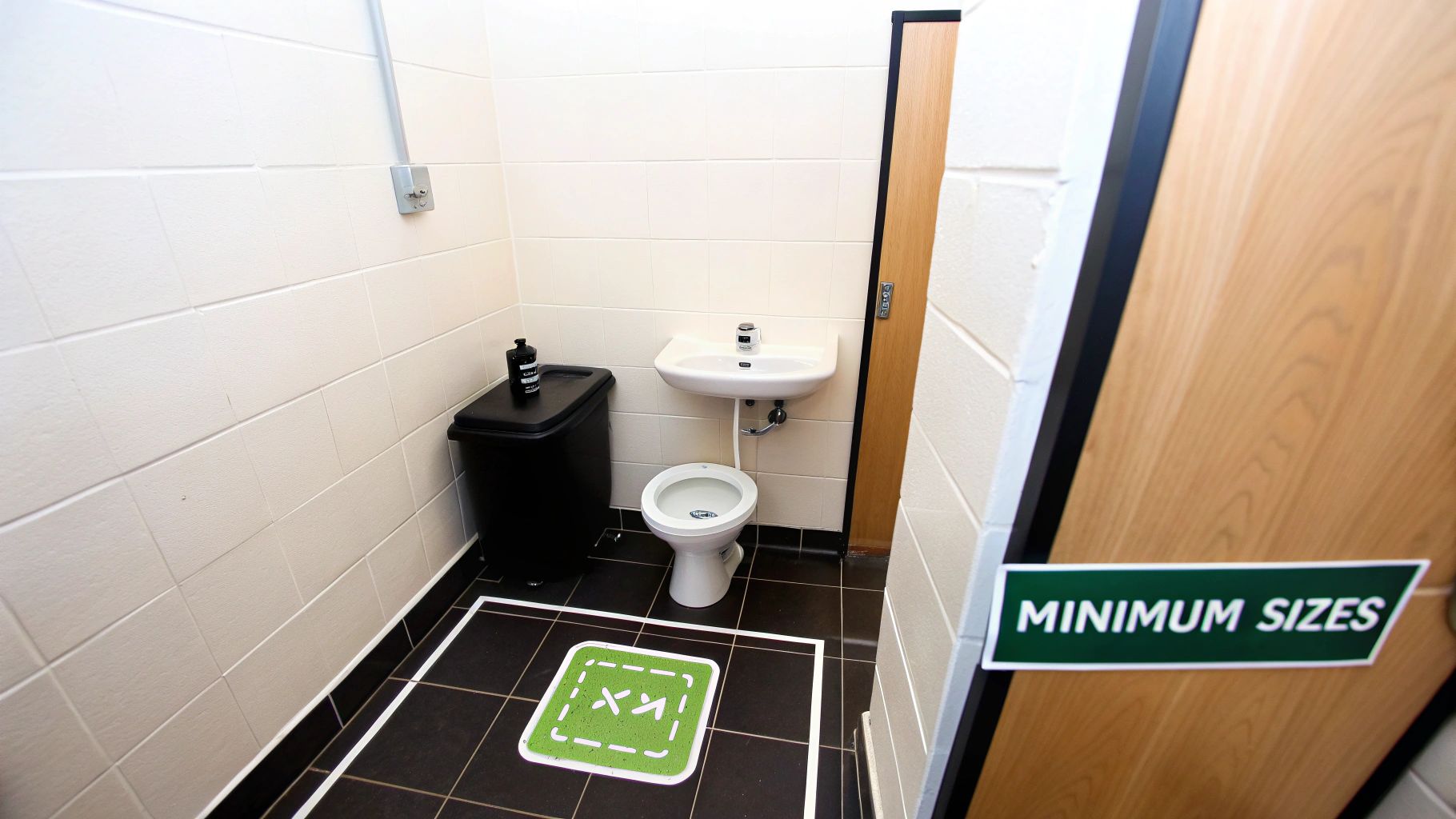
When people ask about the legal minimum bathroom size in the UK, they're often surprised to learn there isn't just one magic number. It all comes down to what you’re putting inside. For a simple cloakroom with just a toilet, regulations state you need a space that's at least 700mm wide by 1300mm long. That’s enough to get the job done, but making it feel comfortable is a whole different challenge.
Decoding UK Bathroom Size Requirements
Planning a new bathroom or cloakroom is one of the most exciting home improvement projects you can take on. But before you get lost in tile samples and tap designs, it’s vital to get your head around the rules of the game. These aren't just friendly suggestions; they are legal requirements designed to make sure every bathroom is safe, accessible, and fundamentally usable. Get it wrong, and you could face a failed inspection and a costly do-over.
This is especially true for homeowners here in Eastbourne. Many of our beautiful Victorian and Edwardian houses, from Old Town to Meads, are full of character, but that often means quirky layouts and tight spaces. Whether you’re trying to tuck a loo under the stairs or convert a tiny box room into an ensuite, you have to do it by the book. This is where getting some professional advice from a local team like Harrlie Plumbing and Heating can make all the difference.
UK Minimum Bathroom Dimensions at a Glance
To make things a bit clearer, here's a quick summary of the essential minimum sizes and clearances you'll need to consider for different bathroom types, all based on UK regulations.
Room Type | Minimum Floor Area | Minimum Dimensions (W x L) | Key Clearance |
|---|---|---|---|
Cloakroom (Toilet Only) | 0.91 m² | 700mm x 1300mm | 600mm in front of the toilet |
Cloakroom (Toilet & Sink) | 1.12 m² | 800mm x 1400mm | 200mm space on either side of sink |
Small Bathroom (Full Suite) | 2.88 m² | 1200mm x 2400mm | 760mm x 760mm shower/bath area |
Accessible WC (Part M) | 3.3 m² | 1500mm x 2200mm | 1500mm turning circle for wheelchairs |
Remember, these figures are the absolute bare minimum. A comfortable and functional bathroom often needs a bit more breathing room than the regulations demand.
Understanding the Core Numbers
At the heart of all these regulations are specific measurements that ensure you can actually use each fixture without bumping your elbows or knees. It’s not about whether you can physically squeeze a toilet into a cupboard; it's about giving you enough space around it to be practical.
According to UK housing space standards, even the smallest toilet room needs at least 600mm of clear space in front of the toilet bowl. This is non-negotiable, as it allows someone to sit down and stand up without feeling trapped. You can dig into the finer details in the official government guidance on UK housing space standards.
"The difference between a compliant bathroom and a non-compliant one can be a matter of centimetres. It's not just about the footprint of the room itself, but the 'breathing space' around each sink, toilet, and shower."
This idea of clearance space is the golden rule for a successful bathroom layout. As a local Eastbourne company, we at Harrlie Plumbing and Heating spend our days helping clients work through these tricky measurements. We make sure every plan, from a compact cloakroom in a Willingdon home to a sprawling family bathroom near the seafront, is not just beautiful but fully compliant with UK Building Regulations. You can find out more in our essential guide to building regulations for a downstairs toilet.
Why Do Bathroom Space Regulations Actually Matter?
UK Building Regulations can feel like just another layer of red tape when you’re planning a renovation, but they’re far more than just arbitrary rules. Think of them as the essential MOT for your home’s plumbing and layout—a system designed to guarantee safety, promote accessibility, and ensure a basic level of comfort for everyone. Getting the minimum bathroom size in the UK right from the start is the first step to a successful project.
These regulations are what make a bathroom a genuinely functional space, not just a room with fixtures crammed into it. They cover crucial elements like proper ventilation to stop mould from taking hold, safe electrical work, and drainage that actually works. For anyone renovating a property, especially the older terraced houses and charming seaside cottages we often work on here in Eastbourne, understanding these rules is non-negotiable.
Part M and Part G: What You Need to Know
Two key documents shape most bathroom designs: Part G (which deals with Sanitation, Hot Water Safety and Water Efficiency) and Part M (all about Access to and use of buildings). While Part G covers the basics of providing hygienic facilities, Part M is focused on making spaces usable for everyone, including those with mobility challenges.
This is where you’ll come across terms like 'manoeuvring space'. It’s not just about being able to squeeze a toilet and sink into a room; it’s about leaving enough clear floor area for someone to move around comfortably and safely. This is especially vital when designing accessible bathrooms, where a wheelchair user might need a 1500mm turning circle.
"These regulations are born from over a century of learning what makes a home liveable. They prevent us from creating spaces that are technically bathrooms but are practically unusable, ensuring every home meets a baseline standard of dignity and comfort."
Sticking to these standards isn't just about ticking a box for building control; it's about future-proofing your home and boosting its value. A well-designed, regulation-compliant bathroom is a major asset, whereas one that cuts corners can quickly become a problem you have to fix later.
A Long History of Improving UK Homes
The push for decent living space isn't some new-fangled idea. The history of UK housing standards goes back over a century, with key moments shaping the homes we live in today. The Tudor Walters Report of 1918 was a landmark moment that really kicked off the conversation about minimum space standards.
Fast forward to today, and the Nationally Described Space Standards (2015) now mandate a minimum of 37m² for a new one-bedroom flat—a direct response to the tiny "rabbit hutch" conversions that rightly drew heavy criticism. These modern standards even state that a standalone toilet must have a floor area of at least 700mm x 1300mm (0.91m²). If you're interested, you can dig deeper into how these standards have evolved by exploring the history of UK housing developments.
This long-term view shows that regulations aren't set in stone; they evolve to protect homeowners and make sure our living conditions keep getting better.
Why Professional Guidance Is Essential
Let's be honest, trying to navigate the dense language of Building Regulations can be a real headache. A simple misinterpretation of the rules for fixture clearances or ventilation can lead to costly mistakes—mistakes that building control will insist you rectify before signing off the project. This is where getting a professional involved becomes invaluable.
At Harrlie Plumbing and Heating, we see our role as more than just installers. We’re your compliance partners, making sure every part of your new bathroom, from the pipework to the final layout, meets (and often exceeds) the required standards. For our clients in Eastbourne and the surrounding areas, this gives them complete peace of mind, knowing their beautiful new bathroom is also safe, legal, and built to last.
Moving from Minimum Requirements to Maximum Comfort
Meeting the legal minimum bathroom size in the UK is one thing, but it’s really just the starting point. Think of it like a car passing its MOT – it’s roadworthy, but that doesn't mean it's a pleasure to drive. A compliant bathroom works, but a truly well-designed one makes your daily routine feel effortless.
The real goal is to create a space that feels generous and functions smoothly, even if you’re working with a modest floor plan. An extra 100mm of width or a slightly deeper room can be the difference between a cramped ensuite where you’re constantly knocking your elbows and a relaxing little retreat. It’s about turning a purely functional room into one you genuinely enjoy spending time in.
For homeowners all over Eastbourne, from the charming old cottages in Old Town to the modern flats near the Sovereign Harbour, this shift in thinking is crucial. It’s about looking beyond what’s merely required and aiming for what’s truly recommended for comfortable, everyday living.
The Small Changes That Make a Big Difference
Picture a standard family bathroom. The regulations might allow for a layout where the toilet is squeezed right next to the basin, and the bath runs wall-to-wall. Sure, it ticks all the boxes on paper, but using it feels awkward and constricted.
Now, imagine adding just a little more space. That bit of breathing room allows for a wider basin, a small vanity for storage, or even just enough floor to dry off without performing a balancing act. This is where smart planning, handled by professionals like us at Harrlie Plumbing and Heating, can elevate a project from just okay to outstanding.
You can see how the standards for what makes a home comfortable and liveable have evolved over the last century.
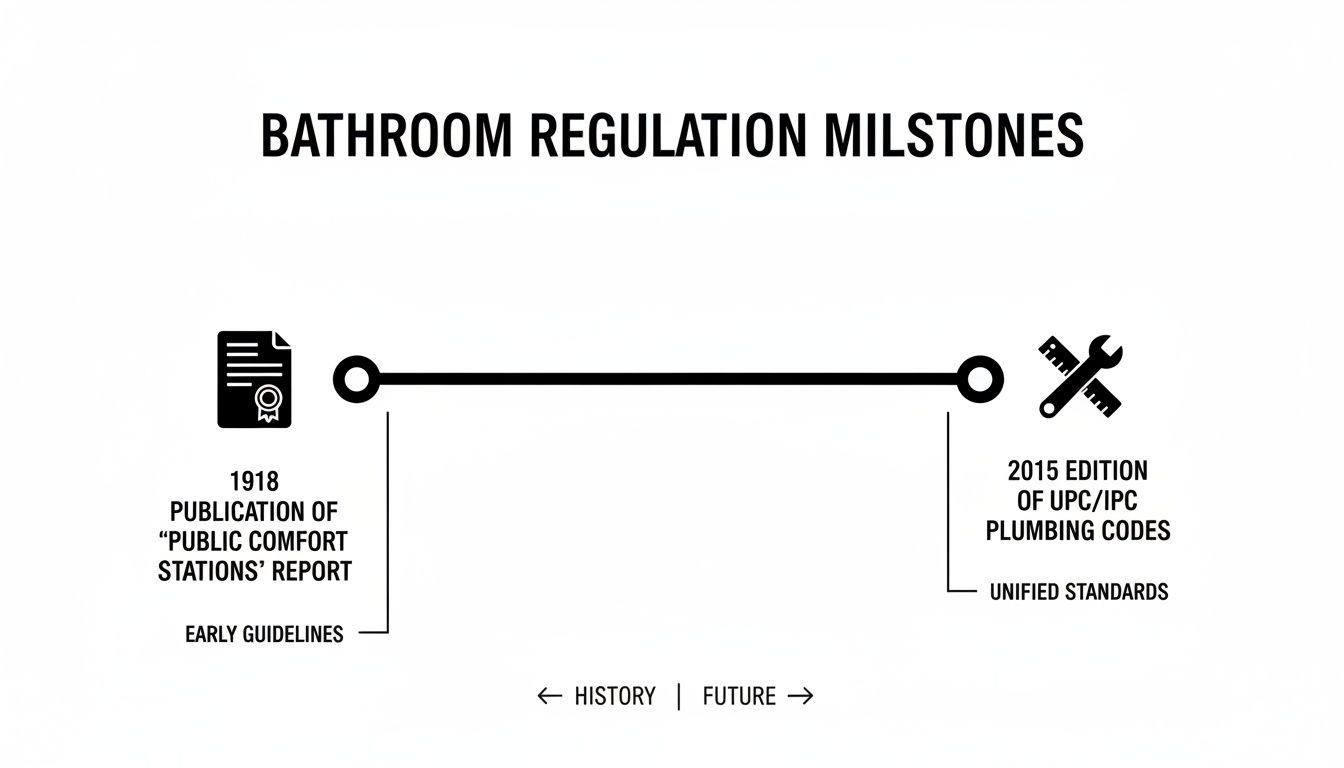
This timeline really highlights how regulations have improved over time, shifting from basic sanitation to a focus on creating well-planned, comfortable living spaces for a better quality of life.
From Legal Minimums to Recommended Comfort
So, how do the bare minimums actually stack up against sizes that offer genuine comfort? The difference can be pretty stark. A legally compliant bathroom simply means the fixtures are technically usable. A comfortably sized one, however, allows for better flow, more storage, and a far less cluttered feel.
Not long ago, we worked on a Victorian terrace in the Meads area of Eastbourne where the owner wanted to add an ensuite in a small alcove. The absolute minimum dimensions would have just worked, but by reconfiguring a stud wall to gain an extra 200mm, our team at Harrlie Plumbing and Heating created a space that felt much more usable and even a bit luxurious.
"A well-planned bathroom isn't just about the dimensions of the room; it's about the space between the fixtures. That unseen area is what defines comfort and usability."
Let's look at the practical differences. The following table compares the legal minimums with more realistic, recommended sizes that put comfort and function first. It really helps to visualise how a small increase in the footprint can dramatically improve the experience.
Minimum vs. Recommended Bathroom Layouts
This table breaks down how a little extra space transforms a bathroom from simply functional to genuinely comfortable.
Bathroom Type | Legal Minimum Size (Approx.) | Comfortable Recommended Size (Approx.) | Key Benefits of Extra Space |
|---|---|---|---|
Ensuite (Shower, Toilet, Basin) | 1.4m x 1.4m (1.96 m²) | 1.8m x 1.8m (3.24 m²) | Allows for a larger shower, proper door swing, and a small vanity unit instead of just a pedestal basin. |
Family Bathroom (Full Suite) | 1.7m x 2m (3.4 m²) | 2.4m x 2.5m (6 m²) | Provides ample room for a full-sized bath, separate shower enclosure, and crucial storage for towels. |
Downstairs Cloakroom (Toilet & Basin) | 0.8m x 1.4m (1.12 m²) | 1.0m x 1.8m (1.8 m²) | Creates a less cramped feel, offers space for coat hooks, and prevents guests from feeling boxed in. |
Ultimately, while regulations provide a vital safety net, they should be treated as the starting block, not the finish line. A successful bathroom renovation lies in creating a space that seamlessly blends compliance with comfort, turning a basic necessity into a valuable asset for your home.
Smart Layouts for Small UK Bathrooms
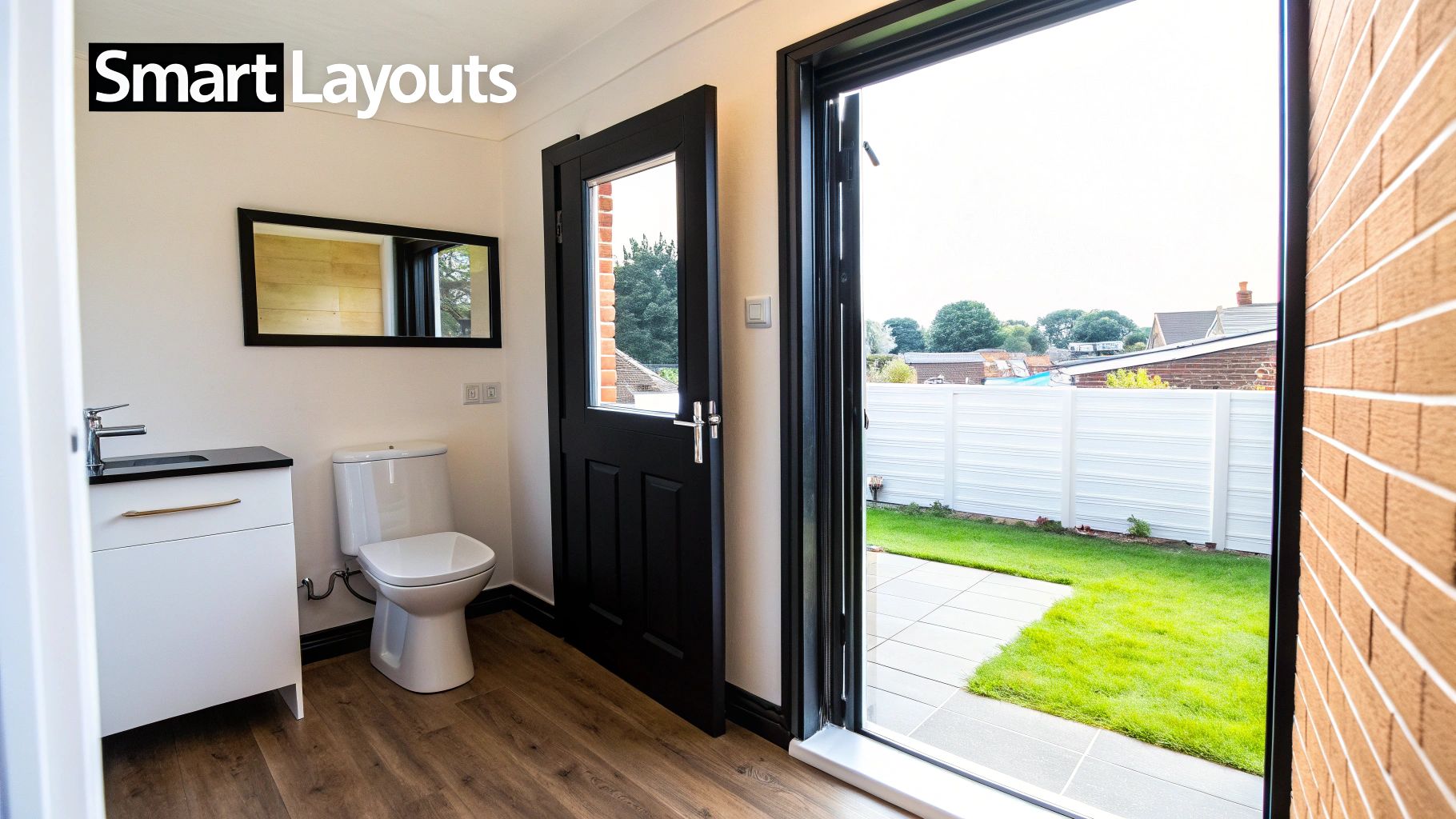
Knowing the rules is one thing, but cleverly putting them into practice is how a small bathroom really comes to life. Many UK homes, especially the beautiful period properties we often work on around Eastbourne, come with unique challenges—think narrow ensuites or awkward under-stairs cloakrooms. The goal isn't just about meeting the minimum bathroom size uk regulations; it's about making every single square centimetre work harder for you.
With the right layout and fixtures, even the most compact space can feel surprisingly open and functional. It all starts with a shift in perspective. You have to stop thinking about a simple floor plan and start seeing it as a three-dimensional puzzle where walls, corners, and even light become your allies. This is where a bit of professional experience from a team like Harrlie Plumbing and Heating can unlock potential you never knew existed.
Space-Saving Fixtures That Make a Real Difference
One of the most powerful strategies is to pick fixtures designed specifically for tight spots. Modern bathroom design has come up with some incredibly smart products that shrink the footprint without sacrificing an ounce of comfort or style.
At Harrlie Plumbing and Heating, we frequently recommend these kinds of solutions for projects across Eastbourne, from modern flats to traditional terraced houses.
Wall-Hung Toilets: By lifting the cistern off the floor and hiding it in the wall, you instantly get back precious floor space. Not only does this make cleaning a breeze, but it also creates an unbroken floor line, tricking the eye into seeing a larger room.
Short-Projection Basins: These basins have a shallower depth than standard models, so they don't stick out as far into the room. They're perfect for narrow bathrooms or cloakrooms where every inch is vital.
Corner Fixtures: Don't let your corners go to waste! A corner basin or even a corner toilet can be a brilliant way to use an otherwise awkward area, freeing up the main wall space for a shower or some much-needed storage.
Proven Layouts for Common UK Scenarios
Certain small bathroom layouts pop up time and again across the UK. For example, the long, narrow "gallery" style ensuite is a common feature in home extensions, while the classic under-the-stairs cloakroom is a staple in many family homes.
For a skinny ensuite, a tried-and-tested layout is to place the shower at the far end, with the toilet and basin lined up along one of the long walls. This creates a clear walkway and stops the room from feeling like an obstacle course. We recently fitted a bathroom just like this in a home near Meads, using a wall-hung vanity and toilet to really maximise the feeling of width.
"The most successful small bathroom layouts guide movement naturally. You shouldn't have to shuffle sideways or squeeze past fixtures. The layout should feel intuitive, even in the smallest of spaces."
The Power of Visual Tricks
Beyond the physical layout, you can use clever design techniques to trick the eye into seeing more space. These visual strategies can have a dramatic impact on how a room feels.
Think about how space has been viewed in UK homes over the decades. The Parker Morris Report of 1961 was a landmark study that shifted focus from just counting rooms to establishing minimum floor areas and efficient layouts based on how families actually lived. Yet even today, many new builds fall short of recommended standards, making smart design more crucial than ever.
Here are a few visual tricks we often use:
Large Mirrors: A big, unframed mirror can visually double the size of the room by reflecting light and space.
Strategic Lighting: Good lighting is non-negotiable. A mix of ceiling lights, wall sconces, and even LED strips can banish shadows, making the space feel brighter and more open.
Pocket or Sliding Doors: A traditional hinged door eats into valuable floor space as it swings open. A pocket door that slides neatly into the wall is an absolute game-changer for tiny bathrooms.
Beyond just meeting the minimums, the real art is in learning how to maximize small spaces with smart design. For more specific inspiration, take a look at our guide on 8 brilliant bathroom design ideas for small spaces in 2025. By combining space-saving fixtures with thoughtful visual techniques, any small bathroom can become a stylish and highly efficient room.
Tackling Tricky Bathroom Layouts
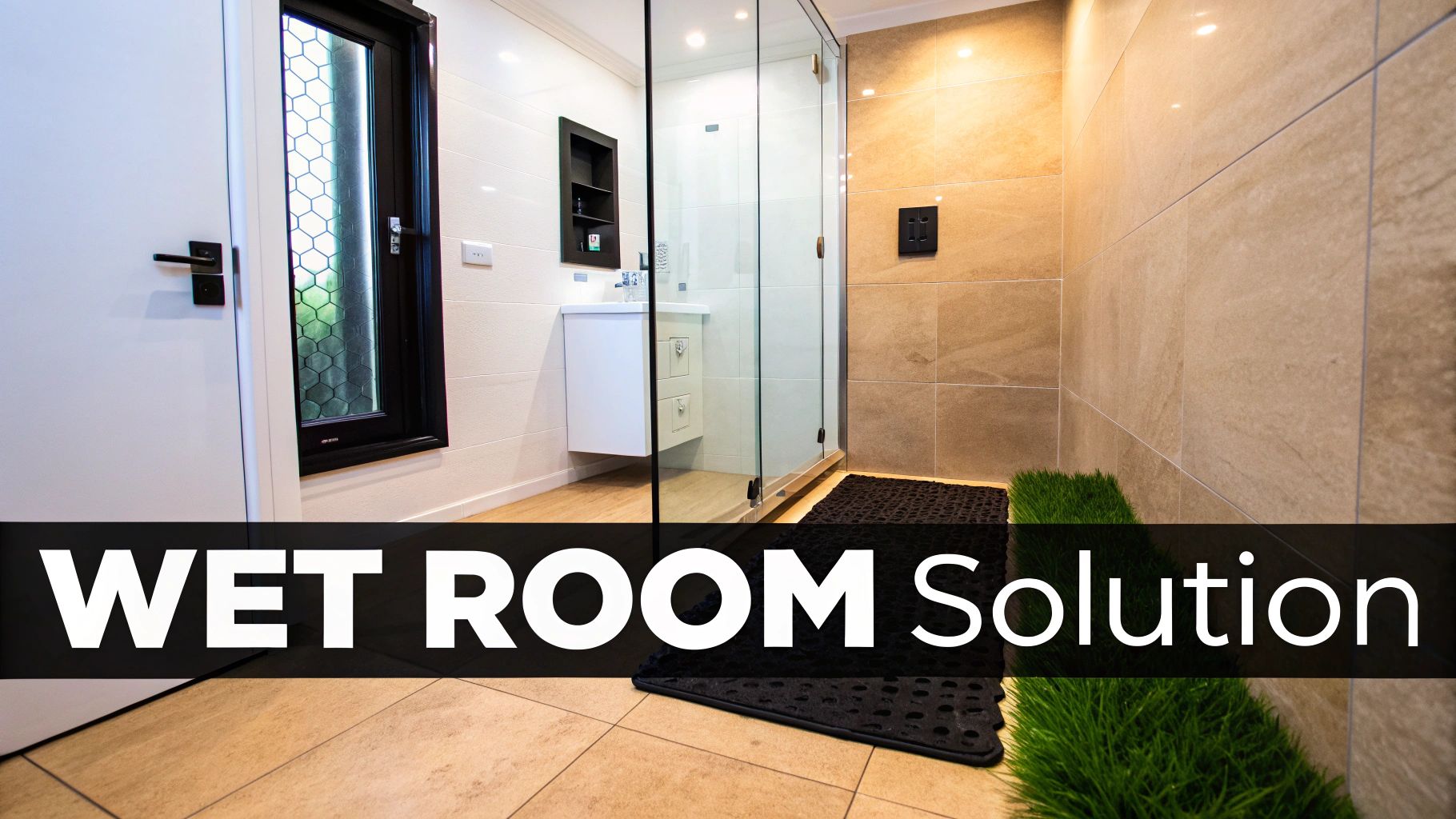
Sometimes, even the smartest layouts and space-saving fixtures just aren't enough to solve a tricky bathroom puzzle. What happens when your dream ensuite is in a loft conversion with no soil pipe nearby? Or when the only available space is too small for even a compact shower enclosure?
This is where you move beyond standard plumbing and into specialised solutions that can turn an impossible project into a stunning reality. For homeowners in Eastbourne, this is often the point where a simple refresh becomes a complex challenge. Thankfully, modern plumbing has some incredible answers for even the most difficult spaces.
At Harrlie Plumbing and Heating, we get called in for these advanced installations all the time. From creating seamless wet rooms in tight spots to fitting toilets in basements, we help clients unlock their home's full potential, ensuring every solution is robust, compliant, and built to last.
Creating an Illusion of Space with a Wet Room
A wet room is one of the best ways to maximise a small bathroom. By fully waterproofing—or 'tanking'—the entire room and installing a floor-level drain, you get rid of the bulky shower tray and enclosure. This creates a single, open space that makes even the tiniest room feel much bigger.
This approach is a game-changer in period properties, like the many Victorian terraces in Eastbourne, where bathrooms are often squeezed into odd-shaped rooms. A wet room design flows around awkward corners and alcoves, turning architectural quirks into unique features.
A professionally installed wet room does more than just save space; it provides an accessible, easy-to-clean, and highly stylish solution that adds significant value to your home. It’s the ultimate expression of minimalist design meeting maximum functionality.
Beyond the aesthetics, wet rooms are a brilliant solution for accessibility. The barrier-free shower access is ideal for elderly individuals or those with mobility issues, providing a safe bathing experience without the trip hazard of a shower tray.
Installing a Toilet Almost Anywhere with Saniflo
Ever dreamt of adding a cloakroom under the stairs or an ensuite in the attic, only to be told it's impossible because there’s no gravity-fed drain? This is a common hurdle, but one that a Saniflo system can easily clear.
A Saniflo is a macerator pump that sits discreetly behind the toilet. It uses powerful blades to break down waste and paper into a slurry, which is then pumped away through tiny pipework—typically just 22mm in diameter. This means you can install a toilet, basin, or even a shower in places far from the main soil stack.
Here's how it solves common problems:
Loft Conversions: No need for major structural work to run large drain pipes.
Basement Bathrooms: The system can pump waste upwards to the main sewer line.
Listed Buildings: The minimally invasive pipework helps preserve the building's historic fabric.
We recently fitted a Saniflo for a client in a Sovereign Harbour apartment who wanted to add a small utility WC. The location was metres from the soil pipe, but the macerator pump made the installation straightforward and effective. These systems need an expert touch to ensure they run quietly and reliably, which is why professional fitting is a must.
Revisiting Accessibility for All Users
Designing a bathroom that is safe, comfortable, and accessible for everyone requires careful planning. We've touched on Part M of the Building Regulations, but putting it into practice involves more than just hitting minimum dimensions. It's about creating a space that genuinely supports independent living.
This means thinking about:
Grab Rails: Strategically placed rails near the toilet and in the shower provide crucial support.
Comfort Height Toilets: These are slightly taller than standard models, making them easier to use for people with knee or back issues.
Lever Taps: Much easier to operate than traditional screw-down taps for anyone with limited hand strength.
Slip-Resistant Flooring: An absolute essential for reducing the risk of falls, especially in wet rooms.
Creating a truly accessible bathroom is a specialist job. It involves a deep understanding of user needs and the relevant regulations. For homeowners in Eastbourne looking to future-proof their homes, partnering with an experienced team like Harrlie Plumbing and Heating ensures the final result isn't just compliant, but genuinely life-enhancing.
Why a Professional Installer Is Non-Negotiable
A bathroom renovation might look straightforward on the surface, but don’t be fooled. Beneath those shiny new tiles and fixtures lies a complex network of plumbing, electrical wiring, and strict UK Building Regulations. It can be tempting to go the DIY route to save a few quid, but the risks often eclipse any initial savings.
One small mistake—a poorly sealed pipe or an incorrectly placed socket—can lead to disastrous leaks, serious safety hazards, and a finished bathroom that simply isn't compliant. Knowing the theory behind the minimum bathroom size uk is one thing, but putting it into practice is a different ball game entirely. It’s not just about getting the measurements right; it's about the delicate interplay of drainage gradients, ventilation requirements, and safe electrical zones. Getting these wrong could mean a failed building control inspection, forcing you to rip out expensive work and start again.
Peace of Mind from Start to Finish
Honestly, the best way to protect your investment and ensure the whole project is stress-free is to partner with a certified professional. A reputable company will handle every last detail, guaranteeing your new bathroom is not only beautiful but also fully compliant and built to last. It’s the difference between crossing your fingers and hoping for the best versus knowing you’re in safe hands.
Here at Harrlie Plumbing and Heating, we offer an end-to-end service for homeowners across Eastbourne, Hastings, and Bexhill. Our process kicks off with a detailed design chat, where we listen to what you need and help you map out a layout that makes the most of your space. From there, we manage the entire project, from supplying quality fixtures to carrying out the certified installation with our skilled team.
Our commitment is to make the entire process straightforward and transparent. We believe a professional service should eliminate stress, not add to it, which is why clear communication and reliable workmanship are at the heart of everything we do.
This all-in-one approach means you have a single point of contact responsible for the whole job. No more juggling different tradespeople or worrying about who’s showing up when. We handle it all, ensuring a seamless and efficient renovation from start to finish.
The Harrlie Plumbing and Heating Promise
We know that trust is earned. For our clients in Eastbourne, that trust is built on a foundation of reliability, transparent pricing, and a proven track record of five-star reviews. We’re not just installers; we’re your local plumbing and heating partners, dedicated to delivering the highest standards of quality.
When you work with us, you can expect:
Rapid Response: We’re available seven days a week to fit around your schedule.
Transparent Pricing: You’ll receive a clear, honest quote with no hidden costs.
Certified Expertise: Our Gas Safe registered engineers ensure all work is completed safely and to regulation.
Local Reputation: We are proud of our five-star reviews and our strong reputation in the local community.
Choosing the right installer is probably the most critical decision you'll make for your bathroom renovation. To help you feel confident in your choice, our guide on how to find a good plumber in Eastbourne offers some practical tips.
Ultimately, a professional doesn't just fit a bathroom; they deliver a fully functional, safe, and beautiful space that adds lasting value to your home.
Common Questions About Bathroom Renovations
When you start thinking about a bathroom renovation, a lot of questions pop up. It's completely normal. Understanding the rules around planning permission, how much space you really need, and where things can go is crucial for a project that runs smoothly.
Here are a few of the most common queries we hear from our clients in the Eastbourne area.
Do I Need Planning Permission for a New Bathroom?
Usually, if you're adding or redoing a bathroom within the existing walls of your house, it falls under 'permitted development'. This means you probably won't need to go through the whole planning permission process.
However, there are exceptions. If you live in one of Eastbourne's conservation areas, like Meads or Old Town, or if your property is a listed building, you will almost certainly need consent before you start knocking down walls. This is something our team at Harrlie Plumbing and Heating is very familiar with and can advise you on.
What's non-negotiable, though, is that all the work must comply with UK Building Regulations. This covers everything from drainage and ventilation to electrical safety. It’s not just a guideline; it’s a legal requirement.
What Is the Smallest Possible Shower Room?
You can technically squeeze a shower, toilet, and basin into a footprint of around 1.4m x 1.4m. But let’s be honest, a space that tight will feel incredibly cramped. It’s doable, but not exactly comfortable.
For a layout that you won't dread using every day, we always recommend aiming for at least 1.2m x 1.8m. That little bit of extra room makes a world of difference for clearance and just feeling less claustrophobic.
For really compact spaces, a professionally installed wet room is often a much better solution. By getting rid of the bulky shower tray and door, you create a far more open and accessible feel.
Can a Toilet Be Installed Next to a Kitchen?
This is a classic point of confusion, and for good reason! Old regulations used to forbid a toilet from opening directly into a kitchen, which meant you needed a 'two-door' system with a small lobby in between.
Thankfully, the rules have been updated. Current UK Building Regulations now permit this, with one important condition: the room with the toilet must also have its own washbasin with hot and cold running water. This simple change has made adding a handy downstairs cloakroom much more straightforward.
If you're mapping out your project, a complete bathroom renovation guide can be a fantastic resource to help get your plans in order.
Navigating all these regulations and design puzzles is what we do day in, day out. For expert advice and a professional installation that guarantees quality and full compliance, you can trust Harrlie Plumbing and Heating. Visit us at https://www.harrlieplumbing.co.uk to get your free, no-obligation quote today.

Comments