Install Downstairs Toilet: How to install downstairs toilet in Eastbourne
- Luke Yeates
- Dec 22, 2025
- 16 min read

Adding a downstairs toilet is one of those home improvements that genuinely makes life easier. It's a hugely popular project, and for good reason—it adds masses of convenience and can give your property’s value a welcome boost. The job itself involves finding the right spot, tapping into your existing plumbing and waste systems, and making sure it's all properly ventilated. It's a fantastic upgrade for daily living and a smart move for future resale.
The Real Value of Adding a Downstairs Toilet
Fitting a downstairs loo is more than just a nice-to-have; it's a smart investment that improves your home life and makes your property more attractive, especially in a competitive market like Eastbourne. This upgrade has become a must-have for many, offering easy access for guests, saving young children from rushing upstairs, and providing a practical solution for older family members.
This simple addition also helps future-proof your home. As mobility needs change over the years, having a ground-floor facility can become essential, allowing you or your loved ones to stay comfortably in your own home for longer.
Boosting Your Property's Appeal
The financial return on this kind of project can be surprisingly good. Research often shows that adding a downstairs WC can increase a UK property's value by up to 5%. For an average home in Eastbourne, that can mean a serious financial uplift, often paying for the installation cost several times over. We dive a bit deeper into how bathroom upgrades add value in our dedicated article here: https://www.harrlieplumbing.co.uk/post/maximizing-your-home-value-in-eastbourne-with-kitchen-and-bathroom-upgrades.
This upgrade also gives your property a real edge when it's time to sell. A recent survey revealed that 25% of homebuyers actively look for a ground-floor toilet, making it a powerful feature that can help your home stand out from the crowd.
At Harrlie Plumbing & Heating, we've seen firsthand how installing a downstairs toilet transforms a home. It's often the small, practical changes that make the biggest difference to daily life and buyer appeal.
A Practical Upgrade for Any Eastbourne Home
From the classic Victorian terraces in Old Town to the modern builds out in Sovereign Harbour, we’ve helped countless Eastbourne homeowners find the perfect nook for a new cloakroom. Whether it’s a clever conversion of an under-stairs cupboard or partitioning off part of a larger room, the benefits are felt straight away.
Enhanced Functionality: It puts an end to the morning queues for the main bathroom.
Guest Convenience: Visitors don't need to go upstairs, which helps keep the private areas of your home separate.
Accessibility: It offers vital facilities for anyone with mobility challenges.
Ultimately, deciding to install a downstairs toilet is a sensible and practical move. It improves how your home works day-to-day while adding real, tangible value. At Harrlie Plumbing & Heating, we're here to make that happen for you.
Planning Your Cloakroom Installation

Before a single tool is lifted, proper planning is hands down the most crucial part of any cloakroom project. Get this stage right, and you're on track for a smooth installation that stays on budget and gives you a functional, fully compliant space.
The first big decision is always where to put it. Many Eastbourne homes, especially older ones, have that classic under-the-stairs cupboard which is often the perfect candidate. But don't feel limited – you could also section off part of a large utility room, a garage, or even a spacious hallway to create your new loo.
Finding Your Soil Stack
The heart of any toilet installation is the soil stack – that big vertical pipe carrying all the wastewater down to the underground drains. Locating this is your first plumbing mission.
Ideally, your new toilet will sit against a wall that backs onto, or is very close to, the existing stack. This allows for a straightforward, gravity-fed connection. In the Victorian and Edwardian properties around the Meads area of Eastbourne, we often find the soil stack on an external back wall, making a cloakroom at the rear of the house a natural fit.
But what if your ideal spot is nowhere near it? Don't despair. This is where modern plumbing really shines.
A Flexible Alternative: The Macerator
A macerator system, often known by the popular brand name Saniflo, is a genuine game-changer for tricky installations. This clever bit of kit uses a powerful pump and blades to break down waste, which means it can be pumped away through much smaller pipework – typically just 22mm in diameter.
This opens up a world of possibilities. You can install a toilet almost anywhere on the ground floor, even if it’s metres away from the main soil stack. We recently completed a project in a newer Langney property where the homeowner wanted a cloakroom in a converted garage, far from the main plumbing. A macerator was the perfect, cost-effective solution, avoiding hugely disruptive groundwork.
To help you decide, here’s a quick comparison of the two main approaches.
Soil Pipe vs Macerator System: Which is Right for Your Home?
Deciding between a traditional connection and a macerator really comes down to your property’s layout, your budget, and your desired location for the new toilet.
Factor | Traditional Soil Pipe | Macerator System (e.g., Saniflo) |
|---|---|---|
Location Flexibility | Limited. Must be close to the existing soil stack. | Highly flexible. Can be installed almost anywhere on the ground floor. |
Installation Cost | Generally lower if the location is ideal and accessible. | Higher unit cost, but can save money by avoiding major building work. |
Disruption | Potentially high if floors need to be lifted or walls chased out. | Minimal. Uses small-bore pipework that is easy to conceal. |
Maintenance | Very low. Relies on gravity, with few moving parts. | Requires periodic cleaning and is more complex if repairs are needed. |
Noise Level | Silent operation. | The pump makes a noticeable noise when flushing. |
For many homeowners, the flexibility of a macerator outweighs the extra cost and noise, especially when retrofitting a cloakroom into an existing space. But if you can get a direct, gravity-fed connection, it's usually the simplest and most reliable option.
Understanding Building Regulations
Any new toilet installation must comply with UK Building Regulations to ensure it’s safe, sanitary, and usable. The main documents to be aware of are Part G (Sanitation, Hot Water Safety and Water Efficiency) and Part P (Electrical Safety).
These regulations cover a few key areas you need to know about:
Minimum Space: While there's no strict legal minimum size, the room must be big enough for someone to use the facilities comfortably. As a rule of thumb, we aim for at least 80cm x 140cm.
Ventilation: A new cloakroom must have adequate ventilation. If there's no opening window, a mechanical extractor fan is mandatory to prevent damp, mould, and lingering odours.
Hand Washing: You must provide a basin with hot and cold water. This has to be in the same room as the toilet or in an adjacent room that doesn't require you to pass through another living space.
Navigating the rules can feel a bit daunting, but getting it right is crucial. For a more detailed look, you can check out our guide on building regulations for a downstairs toilet. Better yet, our team at Harrlie Plumbing & Heating handles all of this for you, ensuring every part of your installation is fully compliant.
Budgeting and Timelines for Your Project
So, you're thinking about adding a downstairs loo. It’s a great move for convenience and can add real value to your home. But before you start picking out tiles, there are two questions that always come up first: "How much is this going to cost?" and "How long will it take?"
Getting a clear handle on these two things right from the start is key. It helps you plan, takes the stress out of the project, and makes sure the final result is exactly what you hoped for.
Here at Harrlie Plumbing & Heating, we believe in being upfront and honest. We’ve fitted countless cloakrooms across Eastbourne, from clever under-stair conversions in Upperton to creating brand-new spaces in homes around Roselands. That experience gives us a solid, real-world understanding of the costs and timelines involved.
Breaking Down the Costs of a New Cloakroom
The final bill for a new downstairs toilet isn’t just about the cost of the loo and the sink. The complexity of the plumbing, the labour involved, and all the finishing touches are what really shape the budget. As a rule of thumb, labour often makes up around 60% of the total project cost, which is why having an efficient, professional team on the job is so important.
Figures from across the industry show that the average cost to install a downstairs toilet in the UK typically lands somewhere between £2,500 and £4,000. This ballpark figure usually covers all the essential plumbing, basic electrical work, and finishing for a standard-sized space.
So, what does that money actually pay for?
Labour: This is the time for our plumbers, plus any electricians, plasterers, and tilers needed. A more complex job, like one needing a macerator or new stud walls, will naturally require more skilled hours.
Materials: This includes the toilet suite itself, the basin, taps, and all the necessary pipework and fittings. You can find everything from budget-friendly options to high-end designer fixtures.
Finishing: This is what makes the room. Tiling, flooring, painting, and installing essentials like lighting and an extractor fan all contribute to the final cost.
Waste Removal: You’ve got to account for getting rid of old materials and any rubble from the installation.
A word of advice: the cheapest quote is rarely the best value. A professional installation from a certified team like ours ensures all the work meets building regulations. This peace of mind prevents expensive problems from cropping up later on.
If you're trying to get a feel for how plumbing projects are priced, looking at guides on the costs associated with moving a boiler can be surprisingly helpful. They often give a good breakdown of how labour and material costs are calculated, which can give you a broader sense of the expenses.
Mapping Out a Realistic Project Timeline
Knowing how much it’ll cost is one thing, but knowing how long your home will be a building site is just as crucial. While every job is a little different, a standard cloakroom installation tends to follow a fairly predictable pattern. For most projects we handle in the Eastbourne area, you can expect the work to take between 7 to 10 working days.
Here’s how a typical week or two might look:
Days 1-2: Prep and First Fix This is where we get everything ready. We’ll clear the space, put up any new stud walls, and get the initial 'first-fix' plumbing and electrical wiring in place.
Days 3-5: The Core Plumbing Work Now for the main event. We’ll connect the hot and cold water supplies, install the waste pipes (whether that’s to the main soil stack or a new macerator unit), and get the toilet and basin physically fitted.
Days 6-8: Bringing the Room to Life With the plumbing sorted, the room really starts to take shape. This stage is all about plastering the walls, getting the tiling done, and laying the new floor.
Days 9-10: The Finishing Touches Nearly there! We’ll do the 'second-fix' electrics, which means fitting the light and fan. Then it’s time for painting, sealing everything up, and a proper clean down, leaving you with a ready-to-use new room.
Of course, this timeline can shrink if the space is already prepped or if we can easily tap into existing pipework. On the other hand, it might stretch out a bit if we uncover any surprises – which can sometimes happen in the beautiful older properties you find in areas like Old Town.
Ultimately, good planning is your best friend. By getting a detailed quote from a trusted local company like Harrlie Plumbing & Heating, you’ll go into the project with a clear budget and schedule, setting yourself up for a smooth and successful installation.
What to Expect During the Installation
Once you've got the plans sorted and the budget agreed, it's time for the exciting bit: getting the work started. This isn't a DIY manual, but more of an inside look at how we, the professionals at Harrlie Plumbing & Heating, get the job done right. Understanding the key stages helps you know exactly what’s happening in your home and why some things just can't be rushed.
Putting in a downstairs loo is a carefully coordinated dance of specialist skills. From the first bit of structural work to the final flick of the light switch, each phase builds on the last to give you a high-quality, long-lasting, and fully compliant result.
Preparing the Space and Initial Framing
The first thing we always do is prepare the area. This means clearing the space, protecting your nearby floors and furniture, and then marking out the footprint of the new room. If we're carving your new cloakroom out of a larger space, this is when we build the stud walls that will form the new room.
This is also the point where any necessary demolition or alterations happen. It’s vital to get waste disposal right from the get-go; you've got to follow the UK rules on what can't go in a skip to avoid any surprise charges or delays. Getting this bit right saves a lot of headaches later on.
The Critical Plumbing Phase
With the basic structure in place, our plumbers get stuck into the core of the installation. This is probably the most critical part of the whole job, and precision is everything. We'll run new hot and cold water supply lines to where the basin and toilet cistern will be.
At the same time, we sort out the waste system. This either means connecting a new 110mm soil pipe to your existing external stack or installing the small-bore pipework for a macerator system like a Saniflo. The approach really depends on the property. For example, connecting to the old cast-iron pipework common in Willingdon's period properties needs completely different techniques than the modern plastic systems you'd find in a new build in Eastbourne.
This is where professional expertise really makes a difference. Getting the correct 'fall' or gradient on the waste pipes is non-negotiable—even a tiny miscalculation can lead to blockages and serious problems down the line.
The image below gives a simple breakdown of the costs, showing how things are split between materials and labour.
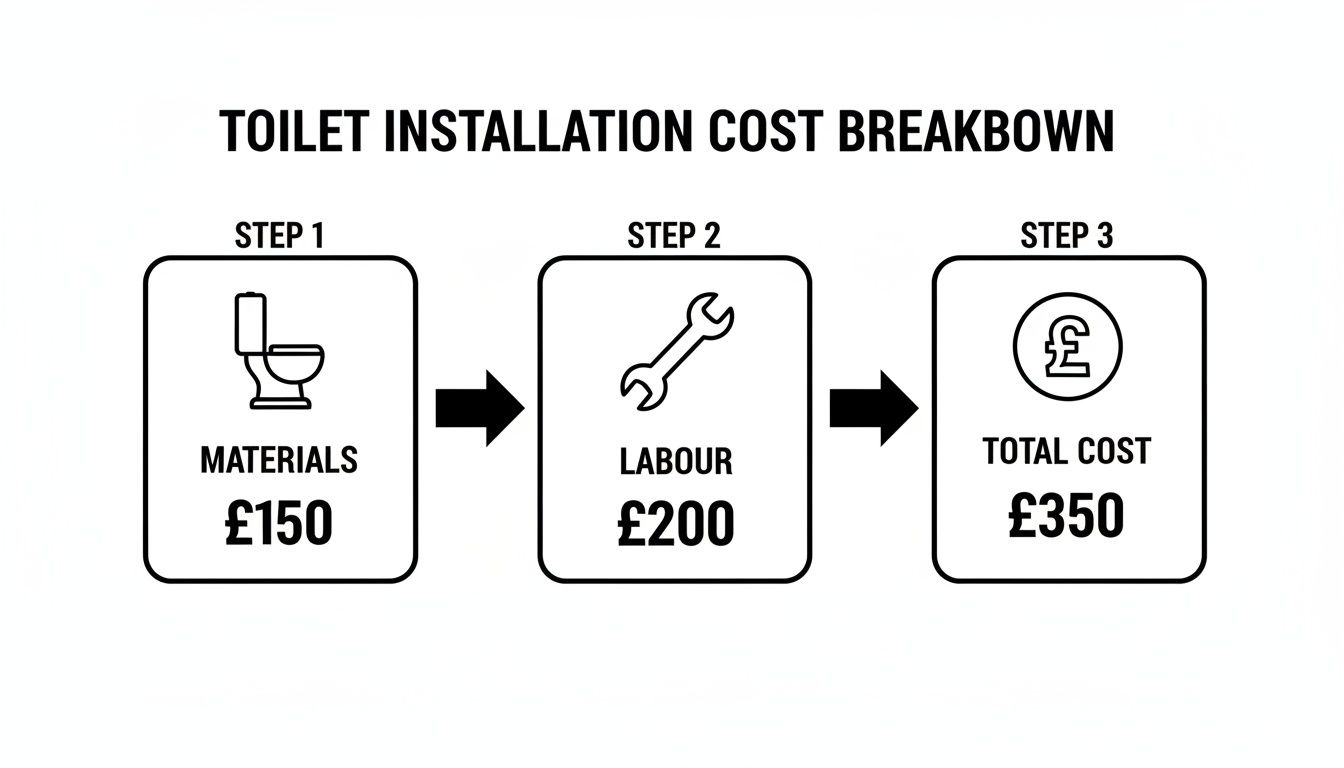
As you can see, labour is a big chunk of the overall investment, which just goes to show how important it is to have skilled tradespeople on the job.
Fixture Installation and Electrical Work
Once the 'first fix' plumbing is done and we've pressure-tested everything for leaks, we can start installing the toilet and basin. The toilet gets securely fixed to the floor and the cistern is connected to the water supply. Then, we mount the basin, fitting the taps and waste trap before plumbing it all in.
Around the same time, a qualified electrician will run the wiring for the lighting and, just as importantly, the extractor fan. UK Building Regulations state that any new bathroom or cloakroom without an opening window must have mechanical ventilation. The fan is usually wired to the light switch, often with a timer so it keeps running for a few minutes after the light is switched off, making sure all moisture is properly extracted.
For a deeper look into the specifics of the job, have a read of our complete UK guide to downstairs toilet installation.
Finishing Touches: Tiling, Flooring and Decorating
With the main fixtures and services in place, the room starts to feel less like a building site. This is when the plastering gets done, followed by the wall and floor tiling. Tiling isn't a quick job; it takes a few days because the adhesive needs to cure properly before we can even think about grouting.
Here’s what you can expect during this final phase:
Tiling: We often tile walls to half-height or fully tile the splash-prone areas around the basin. The floor gets tiled for a tough, water-resistant finish.
Flooring: If you're not having tiles, we'll lay other waterproof options like luxury vinyl tile (LVT).
Decorating: The final coats of paint go on the walls and ceiling, usually a special moisture-resistant bathroom paint.
Final Fix: The electrician comes back to fit the light fixture and the extractor fan cover. We then fit skirting boards, architrave, and hang the door.
A standard downstairs toilet installation in the UK usually takes between 7 to 10 days from start to finish. This gives us enough time for each stage, like the 2-3 days needed for tiling and another 2 days for flooring, to be completed properly without cutting corners. Although some things can speed it up, around 80% of projects finish on schedule when they're planned well.
By the end, our team at Harrlie Plumbing & Heating makes sure every single detail is perfect. From the silicone seals around the basin to a final, thorough clean-up, we leave you with a beautiful and fully functional new cloakroom.
Of course. Here is the rewritten section, crafted to sound like an experienced human expert while adhering to all your requirements.
Common Challenges and Professional Solutions
Even the most meticulously planned project can hit a snag. When it comes to something as complex as fitting a new downstairs loo, that's where years of on-the-job experience really count, turning a potential disaster into a minor detour.
In many Eastbourne properties, especially the older ones, you never quite know what’s hiding behind the plasterboard. It’s not uncommon to cut into a wall and find hidden water pipes, electrical cables, or even structural joists right where your new waste pipe needs to go. A DIY approach at this point often involves risky guesswork, which can easily lead to a burst pipe or, worse, compromising your home's structure.
A professional sees this differently. At Harrlie Plumbing & Heating, we use specialised detection tools to map out what's in the wall before a single cut is made. If we do find an obstacle, we’ve got the know-how to safely re-route the services or design an alternative, fully compliant solution. No risks, no damage.
The Problem of Low Water Pressure
Another classic issue, particularly in older parts of Eastbourne, is low water pressure. You might not notice it much in your day-to-day life, but it can be too weak to fill a new toilet cistern efficiently or give you a decent flow from the basin tap. The result? A feeble flush and a frustrating trickle of water.
Just ploughing ahead and installing the new suite without checking the pressure first is a recipe for disappointment. Our team always tests your water pressure at the very start. If it's too low, we can recommend and install practical solutions, like a booster pump, to make sure your new cloakroom works perfectly from day one.
The single most critical—and most frequently botched—part of any toilet installation is getting the 'fall' on the waste pipe spot on. If the gradient is wrong, it simply won't drain properly. That means constant blockages and nasty smells. It’s a messy and expensive mistake to put right later on.
Precision Where It Matters Most
Getting waste to drain away effectively is a science. Building Regulations are very specific about the minimum gradient for waste pipes to let gravity do its job. For a standard 110mm soil pipe, you’re looking for a fall between 1 in 40 and 1 in 80. Nailing this angle, especially over a longer run or around corners, demands absolute precision.
This is where professional tools and knowledge are non-negotiable. For instance, when we need to run a new waste pipe through an external wall, we use a technique called core drilling. This creates a perfectly clean, neat hole through the brickwork without causing any cracks or structural damage—a world away from the mess a hammer and chisel would make.
Facing these hurdles without the right tools and experience can be a real headache. The table below shows just how different the outcomes can be between a DIY attempt and calling in the pros.
DIY Risks vs Professional Solutions
Common Challenge | Potential DIY Mistake | Harrlie Plumbing & Heating Professional Solution |
|---|---|---|
Hidden Pipes or Beams | Accidentally cutting through a live wire or a crucial water pipe, causing flooding or a power outage. | Using detection tools to scan walls first. Safely re-routing existing services or adapting the plan without compromising safety. |
Incorrect Waste Pipe Fall | Guessing the angle, leading to a pipe that doesn't drain properly and causes recurring, foul-smelling blockages. | Using laser levels to calculate and set the precise gradient required by Building Regulations for flawless, long-term drainage. |
Connecting to Old Pipework | Using the wrong fittings to connect modern plastic pipes to older cast iron systems, resulting in leaks. | Employing specialist flexible adaptors and couplings designed to create a watertight, durable seal between different pipe materials. |
Running Pipe Through Walls | Damaging brickwork or weakening the wall structure by using inappropriate tools like a sledgehammer. | Using professional core drilling equipment to create a clean, precise opening that maintains the wall's structural integrity. |
Trying to install a downstairs toilet on your own can quickly turn a smart home improvement into a costly repair job. If you run into any of these issues, or if you just want the peace of mind that comes with a job done right the first time, don't hesitate. Contact the Harrlie Plumbing & Heating team for a consultation and let our expertise protect your home and your investment.
Your Downstairs Toilet Questions Answered
Adding a downstairs loo is one of the most practical home improvements you can make. It adds convenience, boosts property value, and is often more straightforward than people think. We get asked about these jobs all the time, so here are the answers to the most common questions we hear from homeowners across Eastbourne.
Do I Need Planning Permission for a Downstairs Toilet?
Good news – in most situations, you don't. Fitting a new toilet or cloakroom is usually considered 'permitted development' because all the work happens inside your home's existing footprint. This means you can get started without wading through a full planning application.
There are a couple of important exceptions, though. If you live in a listed building or a designated conservation area—like the beautiful parts of Meads or the Old Town in Eastbourne—you absolutely must speak to the local council first. Rules are much stricter in these areas.
Even without planning permission, all plumbing and electrical work has to meet UK Building Regulations. This covers everything from drainage and ventilation to electrical safety. When you work with us, you don't have to worry about the red tape; we make sure every installation is fully compliant, safe, and signed off correctly.
What Is the Minimum Space Needed for a Cloakroom?
While there's no strict legal minimum, a good rule of thumb is a floor space of at least 80cm wide by 140cm long. This gives you just enough room for a standard toilet and a small hand basin without feeling like you're in a shoebox.
Don't forget to think about the door! An inward-swinging door can steal a surprising amount of usable space, making a small room feel even tighter.
One of the best space-saving tricks we use is to fit an outward-opening door or, even better, a sliding pocket door. It's a simple change that can completely transform how a small cloakroom feels and functions.
We’ve tucked neat, stylish cloakrooms into all sorts of tight spots, especially under stairs in Eastbourne homes. We can pop round and quickly tell you what’s possible in your space.
Can a Toilet Be Installed Anywhere?
In the old days, a toilet had to be right next to the main soil stack so gravity could do its job. That's still the most direct and reliable option if your layout allows it.
But modern technology has opened up a world of possibilities. Macerator pumps, like those from Saniflo, have been a real game-changer. These clever units use blades to liquefy waste, which can then be pumped out through very narrow pipework. This means you can now install a downstairs toilet in a basement, a garage conversion, or any corner of your house far from the main drain. As certified installers for the big macerator brands, we can help you figure out the perfect setup for your home.
How Is a Small Windowless Space Ventilated?
Proper ventilation isn't just a nice-to-have; it's a legal requirement under Building Regulations. It's absolutely crucial for stopping damp, preventing mould, and getting rid of unpleasant odours.
For a cloakroom without a window, a powerful mechanical extractor fan is the only way to go. We always fit high-quality, quiet fans ducted straight through an outside wall to pull all the moist air out. We typically wire them to come on with the light switch and add a run-on timer, so the fan keeps going for a few minutes after you've switched the light off. It’s a simple feature that makes a huge difference in keeping the air fresh.
Ready to add that extra convenience and value to your home with a new downstairs toilet? The team at Harrlie Plumbing and Heating is here to help. Contact us today for a free, no-obligation quote and expert advice tailored to your Eastbourne property. Visit us at harrlieplumbing.co.uk to get started.

Comments