How to Find Water Leak Underground: A Practical Eastbourne Guide

Finding a water leak underground is all about spotting the clues your property is giving you. Before you even think about digging, the first step is recognising the early warning signs. This could be anything from unexplained damp patches in your garden, a sudden and shocking spike in your water bill, or a noticeable drop in water pressure. We at Harrlie Plumbing and Heating have seen this countless times in properties across Eastbourne, from Willingdon to Meads.
Recognising the Hidden Signs of an Underground Leak
An underground water leak can feel like an invisible problem, but it almost always leaves subtle clues on the surface. Unlike a dripping tap, these signs aren't always glaringly obvious, which is why they often go unnoticed until you're dealing with serious damage or a sky-high water bill. Paying close attention to small changes around your property is the key to catching a leak early.
For many Eastbourne homeowners, the first hint comes from their garden or lawn. Is there a patch of grass that's suddenly much greener and healthier than everything around it? That can be a dead giveaway. The leaking pipe is essentially giving that one spot a constant, personal watering session.
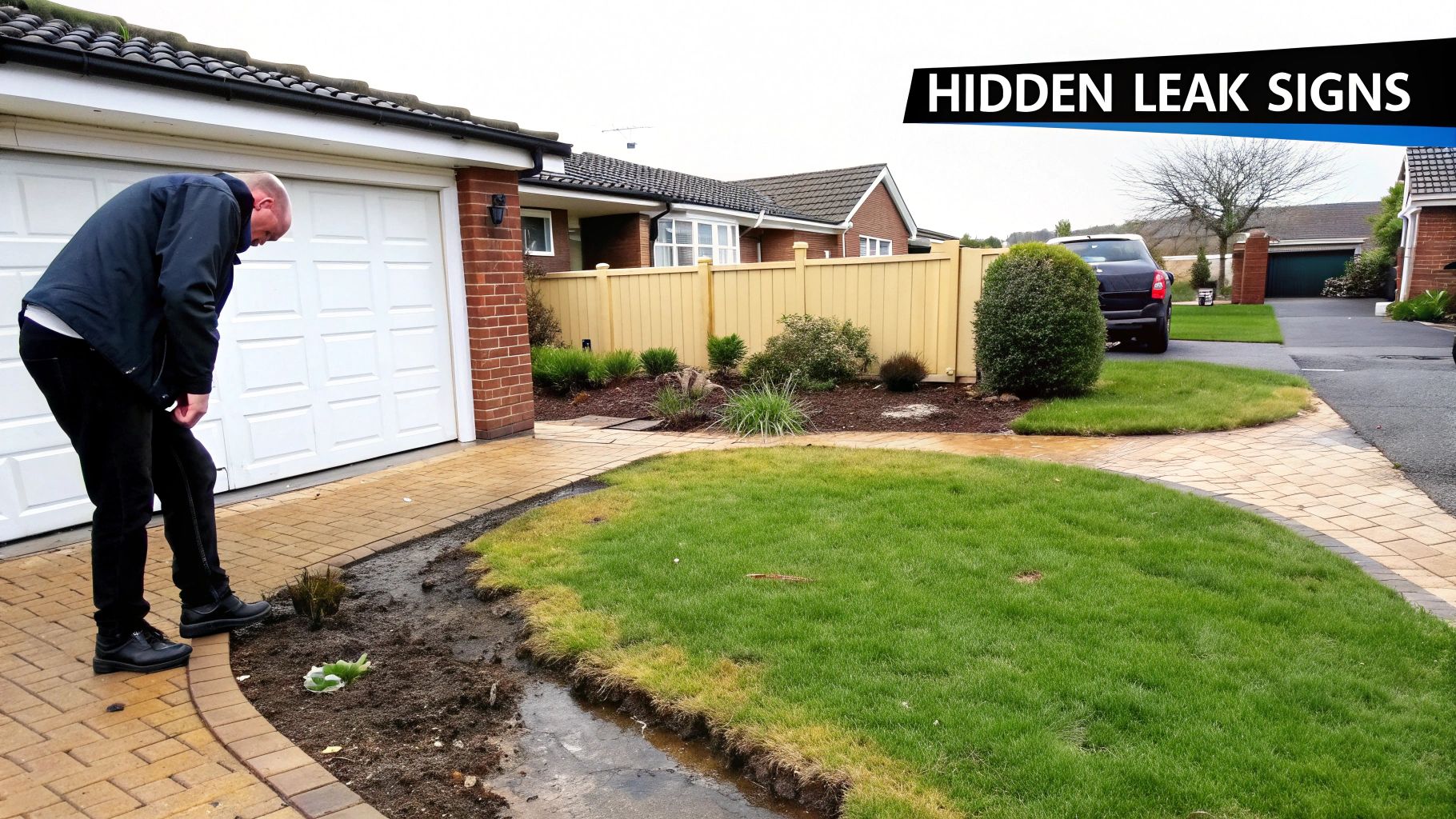
Visual and Auditory Clues to Watch For
Beyond a suspiciously lush lawn, there are other indicators you should be aware of. Keep an eye (and an ear) out for these signals, as they often point to a hidden issue:
Persistent Damp Spots: Are there puddles, soggy ground, or patches of moisture on your paving or driveway that never seem to dry out, even on a sunny Eastbourne day?
Low Water Pressure: If your showers feel weak or the taps aren't flowing with their usual force, it could be because water is escaping the system before it even reaches your house.
Strange Noises: This one requires a bit of detective work. When all your taps and water-using appliances are off, listen carefully. A faint hissing, humming, or whooshing sound coming from the ground or your internal pipes can be the noise of water being forced through a crack.
A client of ours in the Meads area of Eastbourne recently had this exact experience. They noticed a persistent dampness near their driveway that just wouldn't disappear. The team at Harrlie Plumbing and Heating traced it back to a slow but steady leak in their main supply pipe—a problem they wouldn't have found without spotting that initial, seemingly minor, clue.
A Problem Bigger Than You Think
This isn't just a localised issue; it's a huge problem across the country. In England and Wales alone, daily water losses from leaks reach an astounding 3 billion litres. The challenge is often made worse by modern plastic pipes, which can muffle the sound of a leak and make traditional detection methods much less effective. With many water companies struggling to meet their own leakage reduction targets, it really falls to homeowners to be the first line of defence against water waste and property damage.
To help you get ahead of the game, it's essential to be aware of the subtle, yet often overlooked, critical signs of water damage homeowners miss. An underground leak often creates these secondary problems inside and outside your property. Catching them early can save you from far more extensive and costly repairs down the line.
Quick Guide to Underground Leak Symptoms
Spotting the signs early is your best defence. This table breaks down common symptoms to help you quickly identify what might be happening on your property.
Symptom | What It Looks Like | Potential Cause |
|---|---|---|
Spike in Water Bill | A sudden, unexplained increase in your monthly or quarterly bill without a change in usage. | Water is constantly running from a leak somewhere in the underground supply pipe. |
Soggy Patches on Lawn | Areas of your garden, lawn, or flowerbeds are consistently wet, muddy, or have standing water. | A cracked or broken pipe is saturating the ground from below. |
Unusually Green Grass | A specific patch of grass is noticeably greener and grows faster than the surrounding areas. | The leaking pipe is acting as a constant source of "fertiliser" and water for that spot. |
Drop in Water Pressure | Taps, showers, and toilets feel weaker and less forceful than usual. | A significant amount of water is escaping the pipe, reducing the pressure to your home. |
Cracks in Paving/Walls | New cracks appearing in driveways, pathways, or even the foundation of your house. | The leaking water is eroding the soil beneath, causing the ground to shift and sink. |
Hissing or Running Sounds | A faint but constant hissing, humming, or whooshing sound when all water is turned off. | The sound of pressurised water escaping through a small hole or crack in the pipe. |
Remember, these are just indicators. If you notice any of these signs, it's a clear signal to investigate further before the problem gets any worse.
Simple DIY Checks to Confirm a Water Leak
So, you've spotted some of the classic warning signs and suspect a leak is hiding somewhere underground. Before you start digging or even pick up the phone, there are a couple of straightforward checks you can do yourself in minutes.
These are the exact first steps we at Harrlie Plumbing & Heating recommend to homeowners across Eastbourne. They’re surprisingly effective and can tell you for certain if you’ve got a leak on your hands.
The most definitive DIY method is the water meter test. It’s simple, quick, and the best way to know if water is flowing when it shouldn’t be.
Performing the Water Meter Test
First, you need to find your water meter. It's usually located at the boundary of your property, often under a small metal or plastic cover set into the pavement or your front garden. Here in Eastbourne, South East Water typically manages these.
Once you’ve found it, here’s what to do:
Turn Off All Water: And I mean all of it. Make sure every tap is off, and appliances like your washing machine and dishwasher are not running. Nothing on your property should be using water. If you need a hand with this, check out our guide on how to turn off your water main.
Check the Meter: Carefully lift the cover. Most meters have a small triangular or circular dial, often red, that spins when water is flowing. If that little dial is moving, even just a tiny bit, you almost certainly have a leak somewhere between the meter and your house.
Wait and Watch: If your meter doesn’t have an obvious spinning dial, just take a photo of the numbers or write them down. Leave all the water turned off for at least 30-60 minutes, then check again. Have the numbers ticked over? That confirms you have a constant leak.
We had a customer in Old Town, Eastbourne, who did this exact thing after noticing a perpetually soggy patch on their lawn. They shut everything off, watched the meter, and saw that little red dial still spinning away slowly but surely. It gave them the proof they needed before calling us in at Harrlie Plumbing and Heating to pinpoint the source.
Listening and Looking for Clues
While the meter test is your most reliable tool, a couple of other checks can add more weight to your suspicions. A bit of looking and listening can help you narrow things down.
Start with the meter box itself. Is there any standing water or obvious dampness inside? A leak very close to the meter can sometimes cause the box to fill up.
Next, head inside and find where your main water supply pipe enters your home—often under the kitchen sink, in a utility room, or a downstairs cupboard. With all the water still turned off, put your ear close to the pipe and listen. A faint but constant hissing or humming sound is a dead giveaway. That's the sound of pressurised water escaping through a crack or a bad joint, and it’s a clear sign you’re on the right track.
Advanced Leak Detection for Difficult Problems
So, you've done your own checks, the water meter is definitely spinning, but there's still no obvious sign of where the water is coming from. This is usually the point where it’s time to call in the professionals. The last thing you want to do is start digging up your garden or driveway on a hunch—that’s a surefire way to cause a lot of damage, rack up costs, and probably not even find the leak.
At Harrlie Plumbing and Heating, we use specialised, non-invasive equipment to pinpoint the exact location of a leak. Think of it as surgical precision for your pipework. This approach avoids turning your property into a construction site just to find a small break in a pipe.
This is especially critical for many properties across Eastbourne. Imagine, for example, the disruption of digging up a shared driveway for a terraced house in Sovereign Harbour. With advanced detection, we can find the problem without all that expensive and stressful upheaval.
This flowchart gives you a quick rundown of the initial steps a homeowner should take.
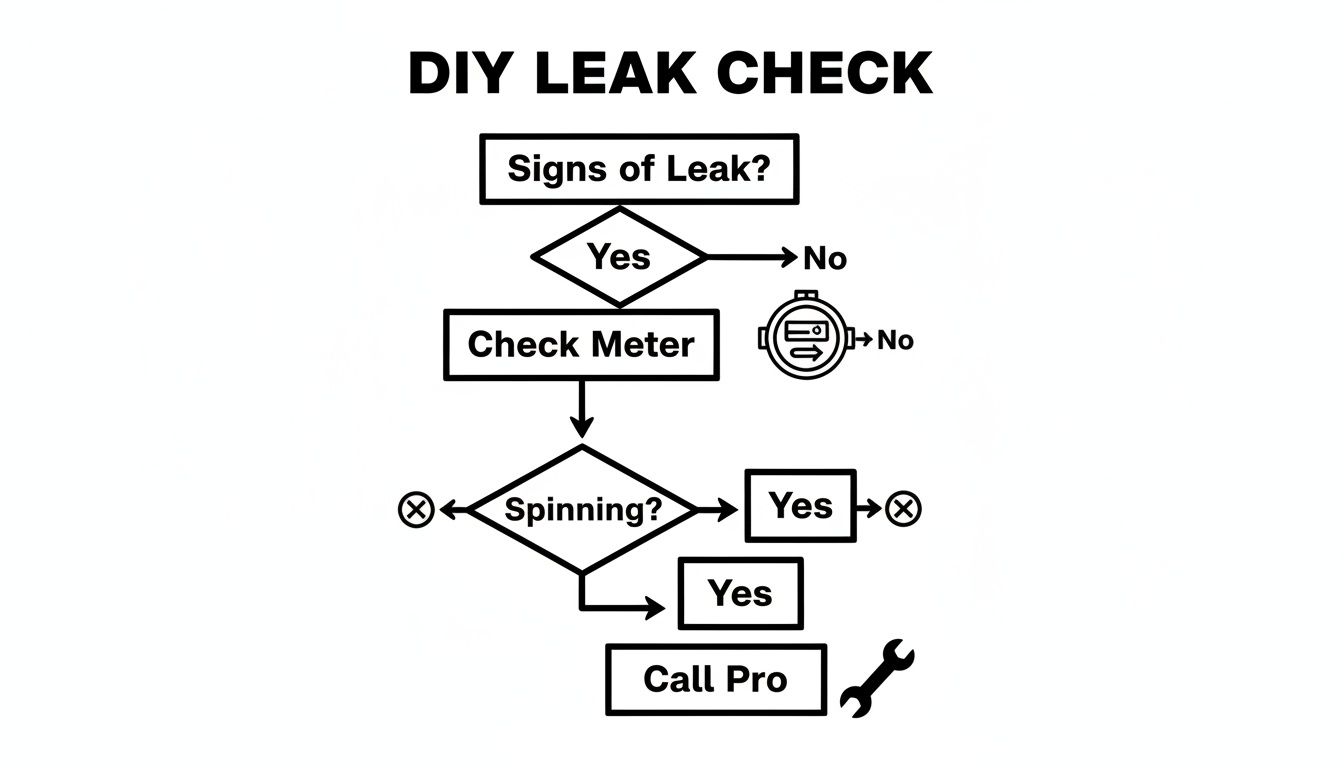
As you can see, once you’ve spotted the signs, that water meter check is your go-to diagnostic. If it’s moving when it shouldn’t be, that’s your cue to get an expert on the phone.
Acoustic Leak Detection: Hearing the Unseen
One of the most effective tools in our arsenal is acoustic leak detection. It’s essentially a set of super-powered electronic ears. We use highly sensitive ground microphones to listen for the distinct sound frequency that pressurised water makes when it escapes from a pipe.
Our engineers will methodically move along the suspected route of the pipe, listening carefully for that tell-tale hissing or whooshing noise. The sound gets louder the closer we get to the source, allowing us to mark the exact spot on the ground for excavation. It's an incredibly accurate method for most common types of pipework.
This isn't just a niche tool; its effectiveness is well-proven on a massive scale. UK water companies have hit historic lows in leakage rates by deploying advanced acoustic sensors across their networks. For instance, Anglian Water rolled out 3,500 acoustic loggers and found 1,325 leaks with an 83% success rate, catching problems that traditional methods completely missed. This shift from old-school listening sticks to data-driven acoustics has truly changed the game, and you can learn more about these water-saving findings to see how technology is transforming the industry.
Tracer Gas and Thermal Imaging
Of course, sometimes acoustic methods aren't the best fit. This can happen with very small leaks that don't make much noise, or on plastic pipes where the sound doesn't travel as well. In these tricky scenarios, we at Harrlie Plumbing and Heating have other advanced techniques up our sleeve.
Tracer Gas Detection: This process involves safely draining the water from the pipe and filling it with a harmless, non-toxic gas mixture (usually hydrogen and nitrogen). The gas is much lighter than air, so it escapes through the crack in the pipe and rises directly to the surface. We then use a sensitive gas "sniffer" to detect exactly where it's emerging from the ground.
Thermal Imaging: A water leak, even underground, can cause subtle changes in the ground temperature. A thermal imaging camera can spot these tiny differences, often revealing the path of the leaking water as it soaks into the surrounding soil. This is particularly handy for finding leaks under solid surfaces like concrete patios or block-paved driveways.
By combining these different technologies, we can build a complete picture of what’s happening beneath the surface. This multi-tool approach means we can confidently find any underground water leak, no matter the property type or the complexity of the problem, saving you a huge amount of time, money, and stress.
What to Expect During a Leak Repair
Finding the leak is a massive step forward, but what happens next? Knowing what to expect during the repair helps Eastbourne homeowners feel confident and prepared. Once we've pinpointed the exact location, the focus shifts to fixing the pipe cleanly, safely, and with as little disruption to your property as possible.
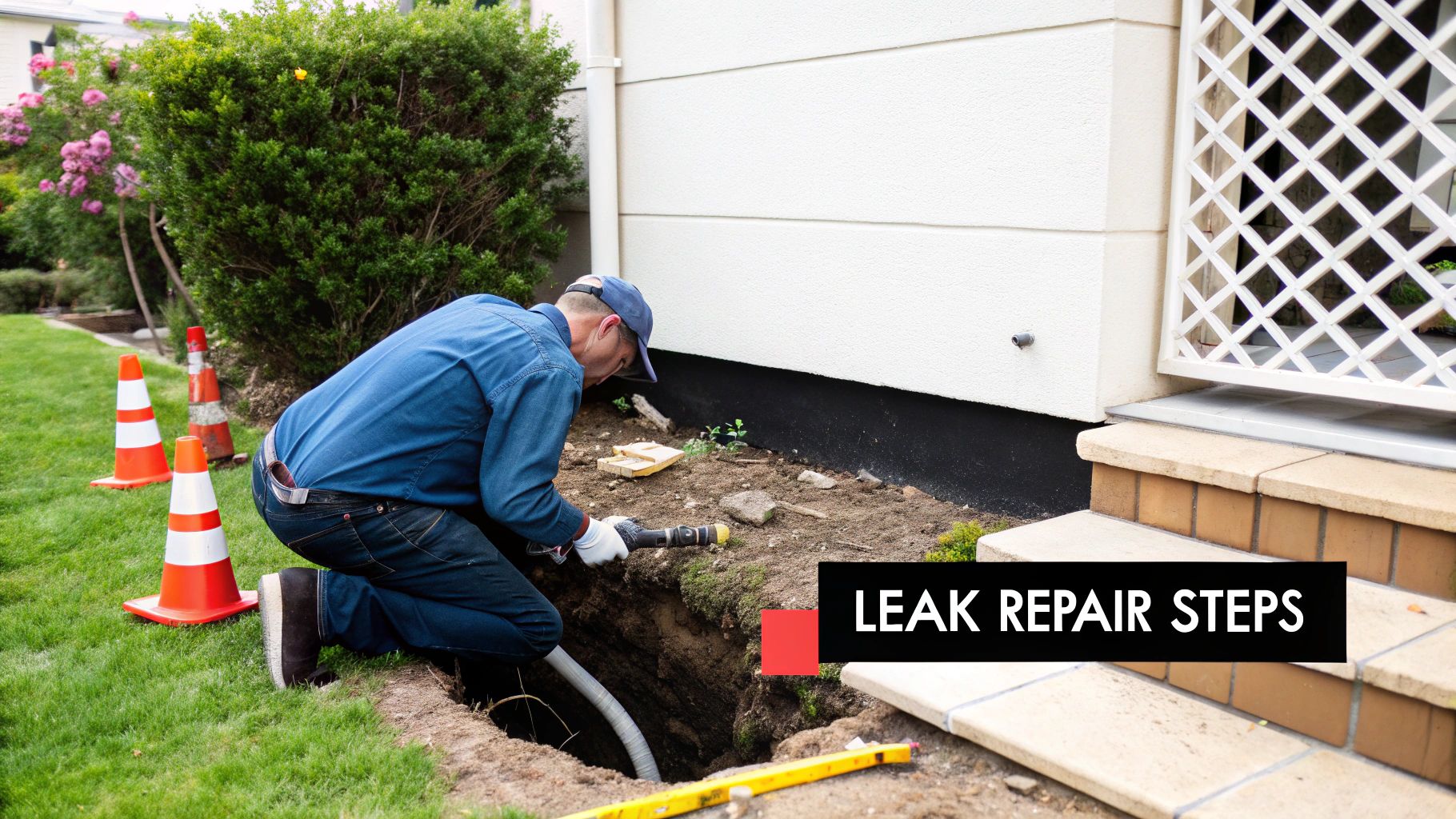
Before a single shovel hits the ground, safety is the absolute priority. The very first thing a professional team like Harrlie Plumbing and Heating will do is a thorough utility scan of the area. We need to locate any buried gas, electric, or telecommunication lines to make sure the excavation is done safely.
From Excavation to Repair
Once the area is confirmed to be clear, we can begin the excavation. Our goal is always to make the smallest opening we can to get to the damaged pipe. Just recently, while working at a property near Hampden Park, our team carefully excavated a small, precise patch in the client's garden, managing to avoid their established flowerbeds completely.
Sometimes, especially when working near existing utility lines, techniques like Non-Destructive Digging (NDD) are invaluable for minimising risk. It’s all about a careful, considered approach that solves one problem without creating another.
With the pipe exposed, we can properly assess the damage and decide on the best way forward. The repair itself can take a few different forms:
Spot Repair: For a small crack or an isolated hole, we can often just cut out the damaged section. We'll then replace it with a new piece of pipe, secured with high-quality compression fittings.
Pipe Relining: In some situations, it's possible to insert a new lining inside the existing pipe. This seals the leak from within and often means we don't need a full replacement.
Full Replacement: If the pipe is old, heavily corroded, or has multiple weak points, replacing a larger section is the most reliable long-term solution.
Restoring Your Property
After the repair is complete and we've thoroughly tested it for integrity, the final step is restoration. We carefully backfill the excavated area, compacting the soil in layers to stop it from sinking over time. We then restore the surface to how we found it, whether that means re-laying turf, replacing paving slabs, or patching up concrete.
Understanding this methodical process—from safety checks to meticulous restoration—gives you peace of mind. You know the job won't just be fixed by us at Harrlie Plumbing and Heating, but will be handled cleanly and professionally from start to finish.
A burst pipe is often the culprit behind a significant underground leak. For a closer look at that specific issue, check out our essential Eastbourne guide to burst pipe repair. It covers what to do in an emergency and what the repair process involves.
Why Choose a Local Eastbourne Plumbing Professional
While the DIY checks we've covered are a brilliant starting point, trying to fix an underground leak yourself can get messy, fast. What starts as a manageable problem can quickly spiral into a major headache. A misplaced shovel could easily damage other utility lines or, even worse, turn a small pipe fracture into a full-blown burst.
This is exactly where the value of a trusted, local professional becomes obvious. Hiring an expert isn’t just about getting someone to do the digging; it’s about bringing in specialised knowledge that protects your property. Here at Harrlie Plumbing and Heating, our deep understanding of Eastbourne’s unique ground conditions—from the chalky soil of the South Downs to the heavy clay in other parts of town—guides every decision we make.
We're familiar with the types of pipes used in local homes, whether it's older cast iron mains or modern plastic supply lines, and we always arrive with the right tools for that specific job.
The Advantage of Precision and Peace of Mind
Let's be honest, the biggest benefit of calling in a pro is avoiding destructive, speculative digging all over your garden. Using advanced acoustic sensors and tracer gas technology, we can pinpoint a leak with surgical accuracy. This means we only need to excavate a small, targeted area for the repair, saving your garden, your driveway, and your wallet from unnecessary chaos.
Just recently, we had a job in Roselands where a leak was hiding right under a brand-new patio. The homeowner was, understandably, gutted at the thought of it all being ripped up. By using our diagnostic gear at Harrlie Plumbing and Heating, we located the exact point of failure and only had to lift two slabs to get the repair done. Their beautiful patio was left perfectly intact.
Choosing a qualified, insured company like Harrlie Plumbing and Heating means you get a guaranteed, high-quality repair. It’s not just about fixing a leak—it’s about safeguarding your property's value and ensuring the long-term integrity of your home's water system.
Making the Right Choice for Your Home
Investing in a professional service is the best way to ensure the problem is solved correctly the first time. It gives you the peace of mind that the repair is sound, the area is restored properly, and your water system is secure for the years ahead. But making sure you find the right expert is crucial.
For a bit more guidance, have a read of our article on how to find a good plumber in Eastbourne, which is packed with practical tips for vetting local tradespeople.
Ultimately, when you're faced with the complexities of how to find a water leak underground, partnering with a local specialist turns a stressful situation into a straightforward solution.
Answering Your Underground Leak Questions
When you’re staring at a soggy patch of lawn or a water bill that’s gone through the roof, it’s only natural to have a lot of questions. We get calls from worried homeowners across Eastbourne every day, so we’ve put together straightforward answers to the most common queries we hear.
How Much Does It Cost to Find and Fix a Leak in Eastbourne?
This is usually the first question on everyone's mind, and the honest answer is: it really depends. The final cost is tied directly to how complex the job is.
For a relatively straightforward job—say, a leak that’s fairly easy to access and needs a simple spot repair—you might be looking at a cost between £300 and £600. But if the pipe is buried deep under your concrete driveway or the situation calls for a lot of digging and pipe replacement, the cost will naturally go up.
Here at Harrlie Plumbing and Heating, we’re big believers in transparency. We’ll give you a clear, itemised quote after our initial assessment. No hidden fees, no nasty surprises. Just remember, investing in a proper fix now is far cheaper than dealing with the massive costs of subsidence or structural damage later on.
Is the Underground Pipe My Responsibility?
Knowing who is responsible for which bit of pipework is a big deal. In almost every case, the homeowner is responsible for the water supply pipe running from the boundary of your property right up to your house.
So, where is that boundary? It’s usually marked by your external stop tap or the water meter itself. You'll often find it under a small plastic or metal cover on the pavement or in your front garden.
The big water mains running under the street and the pipework leading up to your meter are the responsibility of the local water authority. For us here in Eastbourne, that’s South East Water. If you’re ever unsure where your responsibility ends and theirs begins, we at Harrlie Plumbing and Heating can help you figure it out quickly.
Can a Small Underground Leak Cause Real Damage?
In a word, yes. It's so easy to underestimate what a seemingly tiny drip can do, but over time, the cumulative effect can be absolutely devastating.
A slow, steady leak will saturate the ground around your home’s foundations, week after week. This constant wetness can wash away the soil and lead to subsidence, which is when the ground beneath your house starts to sink. The result? Significant structural cracks in your walls and floors.
On top of the structural risk, it’s a constant drain on your wallet through wasted water and ever-increasing bills. Catching and fixing small leaks as soon as you spot them is one of the single most important bits of preventative maintenance you can do for your home.
How Long Does an Underground Leak Repair Take?
We get it—you want your home and garden back to normal as fast as possible. The good news is that most straightforward leak repairs, where the pipe isn't too difficult to get to, can be sorted from start to finish within a single day.
If the job is more involved and requires a lot of excavation or replacing a long section of pipe, it might take a bit longer. We at Harrlie Plumbing and Heating always work as efficiently as we can to keep disruption to a minimum and will give you a clear, realistic timeline before we even pick up a shovel.
If you’re dealing with any of these issues or just need some expert advice, please don't wait for it to get worse. Harrlie Plumbing and Heating is here to provide fast, reliable, and professional leak detection and repair across Eastbourne. Visit us at https://www.harrlieplumbing.co.uk to book an appointment.

Comments