Electric Shower vs Mixer Shower a Complete Guide for UK Homes
- Luke Yeates
- Jan 15
- 16 min read

When you’re weighing up an electric shower vs a mixer shower, the choice really boils down to a single, fundamental difference: how each one heats the water.
An electric shower is a self-contained unit. It takes cold water directly from the mains and heats it on the spot using a powerful internal heating element, a bit like a kettle. This makes it completely independent of your home's boiler. A mixer shower, on the other hand, does exactly what its name suggests—it takes the hot water already supplied by your boiler or hot water cylinder and blends it with the cold supply to get you to that perfect temperature.
Choosing Your Ideal Shower: A Quick Comparison
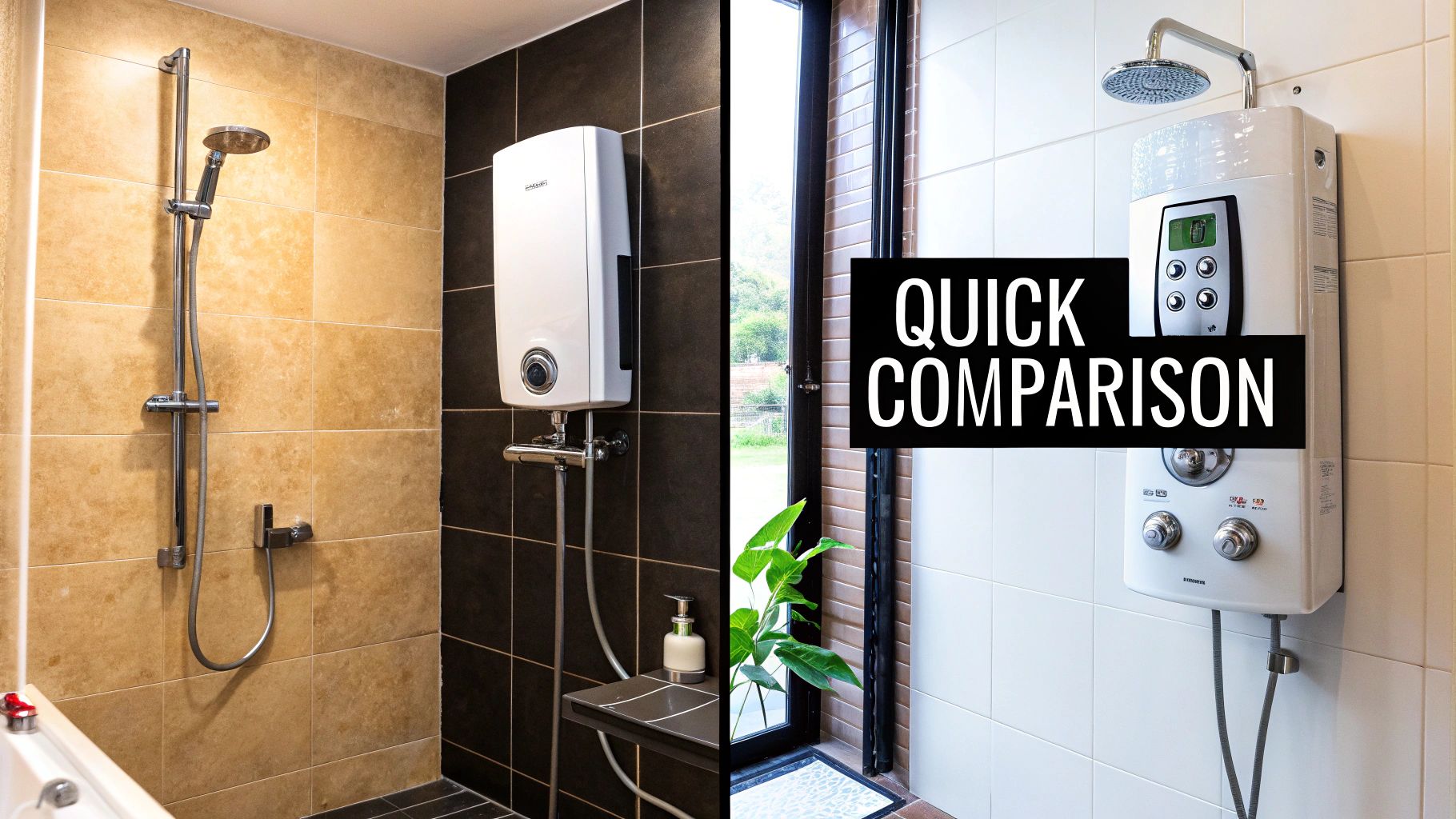
This one distinction creates a massive ripple effect, influencing everything from the complexity of the installation and your running costs to the kind of water pressure you can expect. Getting it right means matching the shower type to your property's plumbing system and your family’s daily routine.
Here in Eastbourne, for example, we at Harrlie Plumbing and Heating often find ourselves recommending electric showers for older properties with traditional gravity-fed systems, or for busy households where the combi boiler is in high demand. Pop an electric shower in the ensuite, and you've guaranteed a hot shower is always available, even if someone is running a bath or doing the washing-up in the main bathroom.
Conversely, for a modern home with a high-pressure system, a good thermostatic mixer shower often delivers a far more powerful and luxurious experience. Understanding these initial differences is the first step in choosing a system that will give you reliable comfort for years to come. If you want to explore the wider world of options, you might find our expert tips on different shower types helpful.
At-a-Glance Comparison: Electric vs Mixer Shower
This quick table cuts straight to the chase, breaking down the most critical factors. Think of it as a starting point to see which option lines up best with your home's setup before we get into the finer details.
Decision Factor | Electric Shower | Mixer Shower |
|---|---|---|
Hot Water Source | Heats cold water instantly with an internal element. | Blends existing hot and cold water from your boiler/cylinder. |
Boiler Dependency | Independent – works even if your boiler is off. | Dependent – requires a functioning hot water supply. |
Water Pressure Needs | Works well with both low and high-pressure systems. | Performance depends heavily on your home's water pressure. |
Typical Installation | Requires a dedicated high-amperage electrical circuit. | Primarily a plumbing job, connecting to existing pipes. |
Energy Source | Electricity (generally more expensive per unit). | Your central heating fuel (usually gas, which is cheaper). |
Flow Rate | Generally provides a more modest, consistent flow. | Can deliver a much more powerful flow rate if pressure is good. |
This overview should give you a solid foundation for the electric shower vs mixer shower debate. As you can see, each system has clear strengths depending on the context of your home, and we'll explore these nuances in the sections that follow.
How Each Shower System Delivers Hot Water
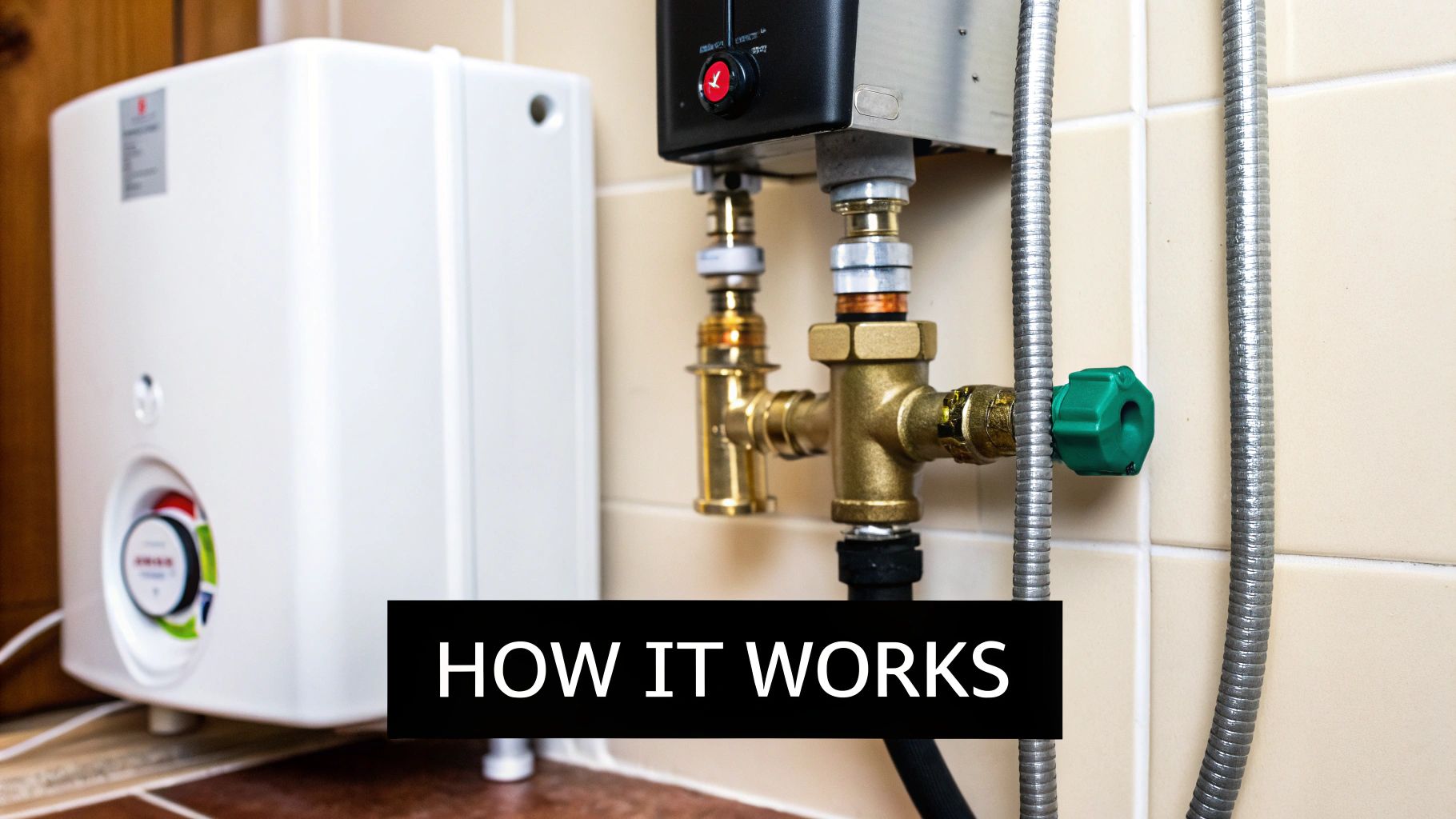
When you're choosing between an electric and a mixer shower, the most important thing to get your head around is how they actually work. Their methods for heating water are worlds apart, and this single difference impacts everything from suitability for your home and running costs to your daily shower experience. Let's break down the mechanics behind these two popular options.
The Electric Shower: An Instant, Independent Heater
Think of an electric shower as a powerful, on-demand kettle for your bathroom. It takes a single cold water feed straight from your mains supply and zaps it with heat as it flows through an internal heating element. This means it’s completely self-sufficient; it doesn't need your home's boiler or hot water cylinder at all.
This independence is a massive advantage. If your boiler packs in, you can still have a hot shower. It also means you only heat the precise amount of water you need, right when you need it, which can be a very efficient way to manage your hot water use.
A great example is a job we at Harrlie Plumbing and Heating often see in the older, larger properties around Eastbourne. A family might have a main bathroom with a mixer shower running off their combi boiler. When they add a new ensuite or a loft conversion, fitting an electric shower is a brilliant solution. It guarantees someone can have a hot wash without draining the hot water needed for the kitchen or the main bathroom, stopping those classic morning arguments in their tracks.
The Mixer Shower: Blending for the Perfect Temperature
A mixer shower works very differently. It takes hot water that's already been heated by your boiler or hot water tank and blends it with a cold supply to get the temperature just right. You control this blend with a single valve, adjusting the mix of hot and cold water that heads to the showerhead.
Because it relies on your central heating system, a mixer shower's performance is tied directly to your home's plumbing setup. If you've got a modern, high-pressure system like a combi boiler or an unvented cylinder, a mixer can deliver a far more powerful and invigorating spray than most electric models. But, it's only as good as the hot water supply it has available.
Key Takeaway: An electric shower creates its own hot water on demand, making it independent of your boiler. A mixer shower uses the pre-heated water from your boiler, blending it with cold water for the perfect temperature.
Manual vs Thermostatic Mixers: A Crucial Distinction
In the world of mixer showers, there’s a vital difference between manual and thermostatic models. Understanding this is absolutely key for both safety and comfort.
Manual Mixer Showers: These are the more basic of the two. You physically turn a lever or knob to adjust the mix of hot and cold water. They work, but they can't react to changes in water pressure. This means a toilet flush elsewhere in the house could cause a sudden, nasty spike in temperature.
Thermostatic Mixer Showers: These are much smarter. They have a special internal valve that automatically keeps your chosen temperature stable, usually within a single degree. It constantly tweaks the water mix to compensate for any pressure drops in your system. This technology is a critical safety feature, as it prevents scalding, which is why it's the only type our team at Harrlie Plumbing and Heating will recommend for family bathrooms in Eastbourne.
The peace of mind a thermostatic valve offers is priceless. You can find out more about how this tech works in our UK homeowner guide on what is a thermostatic mixer shower. Ultimately, getting to grips with these core functions is the first real step in the electric shower vs mixer shower decision.
Water Pressure and Flow Rate Performance
Let’s be honest, when it comes to a satisfying shower, it’s all about the water pressure. A weak, dribbling flow is one of life’s little frustrations, whereas a powerful spray feels like pure luxury. In the electric shower vs mixer shower debate, the way each one handles your home's water pressure is probably the biggest deal-breaker.
A mixer shower’s performance is completely tied to your home’s plumbing system. It works by taking the existing pressure from your hot and cold water supplies and mixing them, so if your system is strong, your shower will be too. Got a modern combi boiler or an unvented cylinder? A mixer shower will deliver a fantastic, high-volume drenching.
An electric shower, on the other hand, is the great equaliser. It only needs a cold mains feed and handles the flow and heating all by itself, which means its performance is much less dependent on your home's pressure. This makes it an incredibly reliable choice for properties where water pressure is a known problem.
Performance in Low-Pressure Homes
Many of Eastbourne's charming older properties, especially the Victorian and Edwardian terraces in areas like Old Town, still run on a traditional gravity-fed system. You’ll know the one: a cold water tank up in the loft and a hot water cylinder tucked away in an airing cupboard. This setup is notorious for delivering low water pressure.
In a home like this, a standard mixer shower would almost certainly disappoint, producing a flow that’s underwhelming at best. An electric shower, however, will perform consistently, giving you a perfectly decent hot shower regardless of the weak gravitational pull. It’s why we at Harrlie Plumbing & Heating often suggest electric showers for adding a second bathroom or ensuite in these characterful Eastbourne homes.
Expert Insight: If you live in an older property with a gravity-fed system, an electric shower provides a guaranteed hot, consistent shower without needing to upgrade your entire plumbing system. It’s a practical and cost-effective solution for improving your daily routine.
But that doesn't mean you have to give up on the dream of a powerful mixer shower. The perfect fix for a low-pressure system is to install a shower pump. This device connects to your pipework and actively boosts the flow to your mixer, turning a weak trickle into an invigorating spray. It’s a specialised job, but one our engineers at Harrlie Plumbing and Heating can handle efficiently to give you the best of both worlds.
Performance in High-Pressure Homes
Now, let’s flip the scenario and think about a modern flat down at Sovereign Harbour or a house with an upgraded unvented cylinder. These properties enjoy high-pressure water systems fed directly from the mains.
Here, the tables turn completely. A mixer shower is without a doubt the champion, capable of delivering a flow rate that an electric shower just can't compete with. You can fit those huge, rainfall-style showerheads and enjoy a truly luxurious experience.
An electric shower will still work absolutely fine in a high-pressure home, but its internal heater will always limit the flow rate to what it can heat up instantly. The result is a shower that feels noticeably less powerful than what a mixer could achieve with the same water supply. If you're not sure what kind of system you have, a great first step is to learn how to test water pressure in your home, which will give you a clear idea of what will work best.
Ultimately, your home's plumbing is the deciding factor.
For consistent performance in low-pressure environments, an electric shower is the most straightforward and reliable choice.
For achieving maximum power in high-pressure homes, a thermostatic mixer shower is the clear winner.
For upgrading a low-pressure system to handle a mixer shower, a professionally installed shower pump is the ideal solution.
Getting this right ensures you pick a shower that doesn’t just look good in your bathroom but also delivers the performance you want, every single day.
Digging into Installation Costs and Requirements
Beyond how they perform day-to-day, the real-world practicalities of installation—both cost and complexity—are a massive factor in the electric shower vs mixer shower debate. The two jobs are worlds apart, and getting your head around what’s involved is the key to setting a realistic budget and making sure your new shower is safe and up to code.
An electric shower installation is a specialist job, pure and simple. It’s a blend of plumbing and high-amperage electrical work, which means it is absolutely not a DIY project. By law, a Part P certified electrician must run a dedicated, heavy-duty cable straight from your consumer unit (or fuse box) to the shower. This isn’t just red tape; it’s a critical safety measure because the shower's powerful heating element pulls a serious amount of current.
On the flip side, swapping out an old mixer shower for a new one can be a much more straightforward plumbing task. If the pipework is already there and in good shape, it can be a relatively quick fix. But things can get complicated—and more expensive—if you're upgrading to a concealed or digital mixer, as this might mean chasing pipes into the wall and then re-tiling.
Breaking Down the Costs for Electric Showers
Putting in an electric shower from scratch is definitely the more involved of the two. The final bill is mostly driven by the need for that certified electrician to safely install a brand-new circuit.
Labour: For a completely new installation here in Eastbourne, you should budget anywhere from £300 to £500 or more for labour. This figure covers both the plumbing connections and, crucially, the electrical side of things.
Materials: This includes the shower unit itself, a new RCD-protected circuit at your consumer unit, and the correctly rated armoured cabling to handle the load.
Certification: A non-negotiable part of the cost is the Part P electrical safety certificate. This is your proof that the work meets all legal standards. Without it, your installation is non-compliant and potentially unsafe.
The team at Harrlie Plumbing & Heating includes fully certified professionals who can handle both the plumbing and electrical work, giving our Eastbourne clients a seamless, fully compliant installation from a single point of contact.
Crucial Safety Warning: Trying to install an electric shower yourself is not only extremely dangerous but also illegal if you’re not a Part P certified professional. The mix of water and high-amperage electricity creates a severe risk of electric shock or fire.
Mixer Shower Installation Costs
The cost of fitting a mixer shower can swing quite a bit depending on what’s involved. A simple swap is always going to be cheaper than starting from scratch.
Like-for-Like Replacement: If you're just replacing an old, exposed mixer shower with a new one in the same spot, the job is purely about plumbing. Labour costs are often in the £150 to £250 range, plus the price of the shower unit.
New or Concealed Installation: Now we’re talking about a more involved process. If we need to run new hot and cold pipes, or chase the valve and pipework into a solid wall, the job becomes much more intensive. This can bring plastering and tiling into the mix, pushing the total installation cost closer to that of a new electric shower—think £400 to £600+, depending on your bathroom's construction.
For homes in areas like the Meads in Eastbourne, which often have solid brick walls, fitting a concealed mixer needs careful planning and skilled hands to get that perfect, clean finish. Our team at Harrlie Plumbing and Heating has the experience to handle these challenging installations cleanly and efficiently.
Why Professional Installation Is Non-Negotiable
Whichever shower you land on, getting it fitted professionally is essential. Using a certified team like Harrlie Plumbing & Heating is your guarantee that all work meets UK Water Regulations and Electrical Safety Standards. This doesn't just protect your family; it also validates your manufacturer's warranty. A botched installation can void your warranty in a heartbeat, leaving you on the hook for any future repair bills.
Running Costs: Gas vs Electric
When you're weighing up an electric shower vs a mixer shower, the long-term running cost is often the deal-breaker. How much your daily shower adds to the bills comes down to one simple thing: how it heats the water and what that energy source costs you. This is where the two systems really part ways, presenting a clear financial choice.
An electric shower is a marvel of on-demand efficiency. It heats only the water you need, right as you need it, so virtually no energy is wasted keeping a big tank hot. The catch? It runs on electricity, which, for most UK households, is the priciest way to heat anything.
A mixer shower, on the other hand, pulls hot water straight from your central heating boiler. For the vast majority of homes in Eastbourne, that means it's running on gas. Since gas is significantly cheaper per kilowatt-hour (kWh) than electricity, the energy needed for each shower costs a lot less.
Calculating the Cost Per Shower
Let's put some real-world numbers to this. A fairly standard 10-minute shower with a 9.5kW electric unit will use about 1.58 kWh of electricity. With electricity hovering around 25p per kWh, that single shower sets you back about 40p.
Now, let's look at the mixer shower. Heating that same amount of water with a modern, A-rated gas boiler is a different story. With gas prices closer to 6p per kWh, a 10-minute mixer shower costs roughly 15p in energy.
Key Financial Insight: Over a year, a family of four taking daily showers could save over £350 by using a mixer shower powered by an efficient gas boiler compared to an electric shower. The long-term savings are substantial.
While electric showers have long been a UK favourite for their sheer convenience, we're seeing a definite shift in the market. Mixer showers are gaining ground, especially in new builds where energy efficiency is a top priority. This is partly thanks to regulations like the Future Homes Standard, which pushes for big cuts in carbon emissions.
Factors Influencing Your Actual Costs
Of course, these numbers are just a guide. The efficiency of your boiler is a massive factor. An old, G-rated boiler will guzzle gas, shrinking the cost gap between a mixer and an electric shower. If your boiler has seen better days, our team at Harrlie Plumbing & Heating can pop over to your Eastbourne home, assess its performance, and let you know if an upgrade would unlock those savings.
Your property type matters, too. If you're a landlord in Eastbourne with a small flat that has no gas supply, an electric shower is the only sensible choice. But for a family in a larger home with a modern combi boiler, a mixer shower is the undisputed financial winner for the main bathroom.
For those with electric showers, taking some practical steps to lower your electric bill can make a real difference to your monthly outgoings. Small tweaks to your habits can add up.
Ultimately, while the point-of-use efficiency of electric showers is brilliant, the steep cost of electricity makes them more expensive to run day-to-day. For most households with a mains gas supply and a decent boiler, a mixer shower will be much kinder to your wallet.
Making the Right Choice for Your Home
So, how do you pull all these technical details together and make a final decision? When it comes to the electric shower vs mixer shower debate, the best choice is always the one that fits your home's plumbing, your family's routine, and your budget like a glove.
Let’s think about a common scenario we see in Eastbourne. If you have a combi boiler and more than one bathroom, adding an electric shower to the secondary bathroom is a brilliant move. It guarantees hot water is always on tap, even if someone’s using the main bathroom or the boiler is working hard on the central heating.
On the other hand, if you’re in a family home with a big hot water cylinder and you’re chasing that powerful, hotel-like shower experience, a thermostatic mixer is the only way to go. Its impressive flow rate delivers a premium feel that most electric showers just can't compete with.
Tailoring the Choice to Your Lifestyle
Every homeowner has different priorities. A landlord managing a rental property in the Langney area of Eastbourne, for instance, will likely want a reliable, low-maintenance solution. An electric shower is often perfect here—it’s totally independent of the boiler and dead simple for tenants to operate. Harrlie Plumbing and Heating often fits these for local landlords.
For a family with young children, though, safety and consistent temperature are non-negotiable. In this case, a thermostatic mixer shower is the only sensible recommendation. Its anti-scald technology provides that crucial peace of mind when kids are in the bathroom.
If you're in an older property with some plumbing quirks, the decision gets a bit more complex. The existing system might push you down one path over the other, which is where getting some professional advice is invaluable. And while you're sorting out the shower, you might want to explore some budget-smart bathroom tile cover up ideas to give the space a lift without a full demolition, which can really affect your overall cost and timeline.
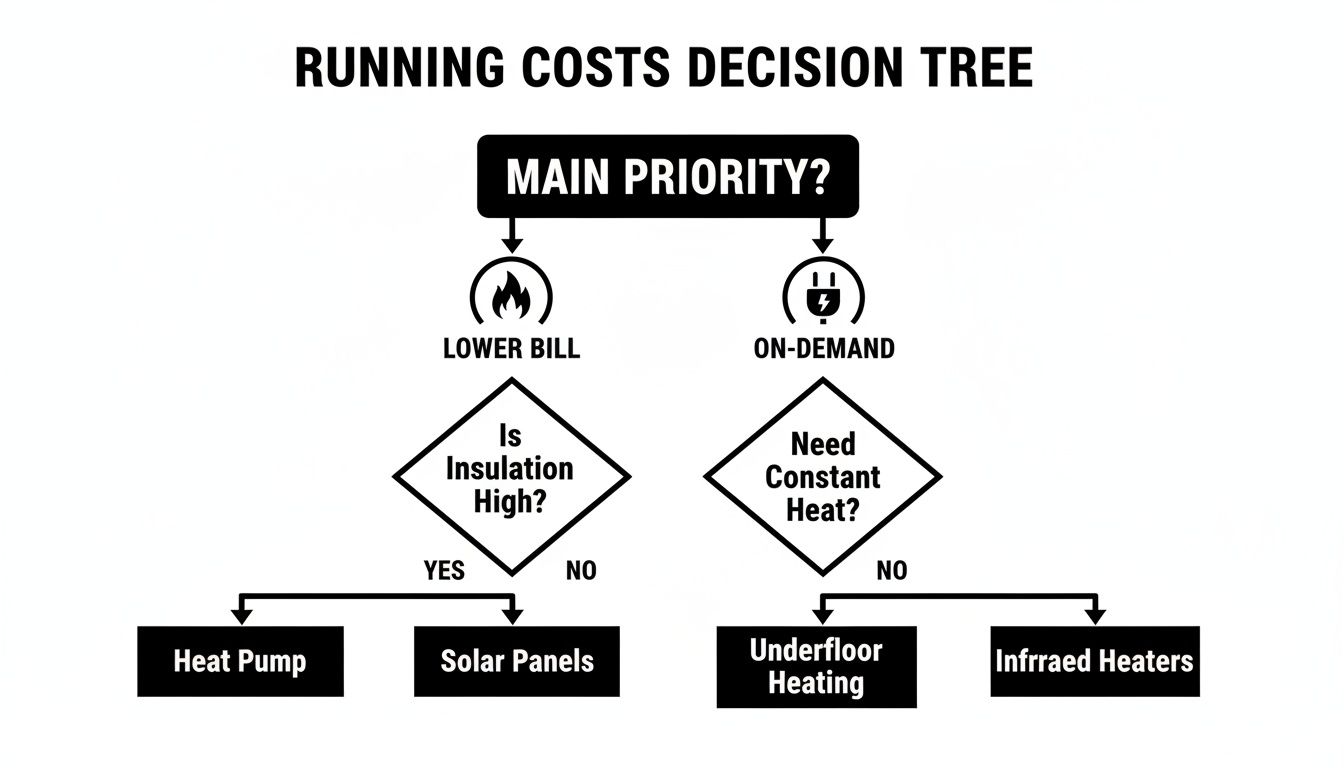
This decision tree helps picture the choice if running costs are your top concern.
As you can see, mixer showers powered by cheaper gas are the winner for keeping bills low, whereas electric showers are unbeatable for that guarantee of instant hot water.
A Professional Assessment Guarantees the Best Fit
Market trends seem to back this up. While electric showers have been a UK staple for years, recent data shows mixer showers are gaining ground, especially in new builds. The total UK shower market is expected to see a £60 million sales boost by 2028, and mixers are a big part of that growth.
Our Expert Recommendation: Don't guess. The best investment you can make is one based on a proper understanding of your property. A quick on-site assessment can uncover issues or opportunities you might not have thought of, from hidden water pressure limits to tricky installation challenges.
At Harrlie Plumbing & Heating, that’s exactly what we do. Our experts can pop over to your Eastbourne property, take a look at your plumbing and electrics, and give you a clear, no-obligation recommendation. We’ll make sure you get the perfect shower for your home, installed safely, professionally, and in line with all UK regulations.
Frequently Asked Questions
When it comes to choosing a new shower, it’s natural to have questions. To help you get a clearer picture, our experts at Harrlie Plumbing & Heating have put together straightforward answers to the queries we hear most often from homeowners across Eastbourne.
Can I Replace an Electric Shower with a Mixer Shower?
Yes, absolutely. This is a common upgrade that many homeowners opt for, but it's important to know it isn't a direct swap. The job starts with safely decommissioning the old high-amperage electrical circuit, which is strictly a task for a qualified professional.
From there, we at Harrlie Plumbing and Heating need to run new hot and cold water pipes to the shower unit. How complex this is really depends on your home’s layout, what the walls are made of, and how easy it is to access the existing pipework. It's a project that needs a blend of certified plumbing and electrical skills to meet UK safety standards.
What Is a Thermostatic Mixer Shower?
A thermostatic mixer shower has a smart internal valve that constantly maintains your chosen water temperature. It works by automatically adjusting the blend of hot and cold water to counteract any pressure changes elsewhere in your house—like when someone flushes a toilet or turns on a kitchen tap.
This clever feature prevents those sudden, nasty shocks of scalding hot or icy cold water. We at Harrlie Plumbing and Heating always recommend thermostatic models as a key safety feature, especially for bathrooms used by children or older family members in Eastbourne.
What Are the Best Shower Options for Low Water Pressure?
If your home suffers from low water pressure, which is quite common in older gravity-fed systems found in many Eastbourne properties, an electric shower is often the most straightforward and dependable fix. Its performance isn’t really affected by your home’s system pressure.
However, if you've got your heart set on that powerful, drenching flow you get from a mixer shower, all is not lost. Our engineers at Harrlie Plumbing and Heating can fit a shower pump. This device gives the water flow a serious boost, turning what was a disappointing trickle into an invigorating spray. We can pop round, test your pressure, and let you know the best way forward.
How Long Does a Typical Shower Installation Take?
The time it takes really hinges on the complexity of the job. A simple like-for-like replacement, where we're just swapping an old shower for a new one of the same type, can usually be done in just a few hours.
Fitting a shower from scratch or changing types is a bit more involved. Installing a new electric shower, which includes running the dedicated electrical circuit, will typically take up a full day. Switching from an electric to a mixer shower often requires new pipework and maybe some re-tiling, so that could take one to two days. We at Harrlie Plumbing and Heating always give you a clear, honest timeline with our quote so you know exactly what to expect.
Still weighing up the electric shower vs mixer shower decision? The best way to get a clear answer for your home is to have a professional take a look. Harrlie Plumbing and Heating provides expert advice and installations to make sure you get the perfect shower for your needs. Contact us today for a free, no-obligation quote and let's get it sorted.

Comments