A Homeowner’s Guide to Installing a Downstairs Toilet
- Luke Yeates
- Jan 14
- 17 min read

Adding a downstairs toilet is one of the most practical upgrades you can make to your home. It’s a game-changer for family convenience, a huge help for guests, and can even boost your property’s value by up to 5%. The key to getting it right is all in the planning – choosing the perfect spot, getting your head around UK Building Regulations, and picking the right plumbing system. For homeowners here in Eastbourne, with our mix of property styles from modern builds in Sovereign Harbour to Victorian terraces in Meads, it’s a project that delivers a fantastic return on investment.
Why a Downstairs Toilet is Such a Smart Home Upgrade
Putting in a ground-floor loo is about more than just convenience; it’s a genuinely strategic move that improves your home’s day-to-day functionality and its appeal on the market. In so many Eastbourne homes, from the classic Victorian terraces in the town centre to the newer family houses out in Willingdon, the lack of a downstairs toilet is a real pain. You really notice it when you have people over, or for any family members who find stairs a bit of a challenge.
This one improvement ticks a lot of boxes:
Better Accessibility: It provides essential facilities for elderly relatives, young children, and anyone with mobility issues, making your home more welcoming for everyone.
Increased Property Value: Ask any Eastbourne estate agent – a downstairs toilet is a major selling point for buyers, making your home stand out in a competitive market.
Everyday Convenience: It stops guests from having to troop upstairs, offering them a bit of privacy and keeping the main family bathrooms separate. And for a busy household, that extra toilet can be a lifesaver during the morning rush.
The whole process, from that first lightbulb moment to enjoying the finished room, is actually quite straightforward when you break it down.
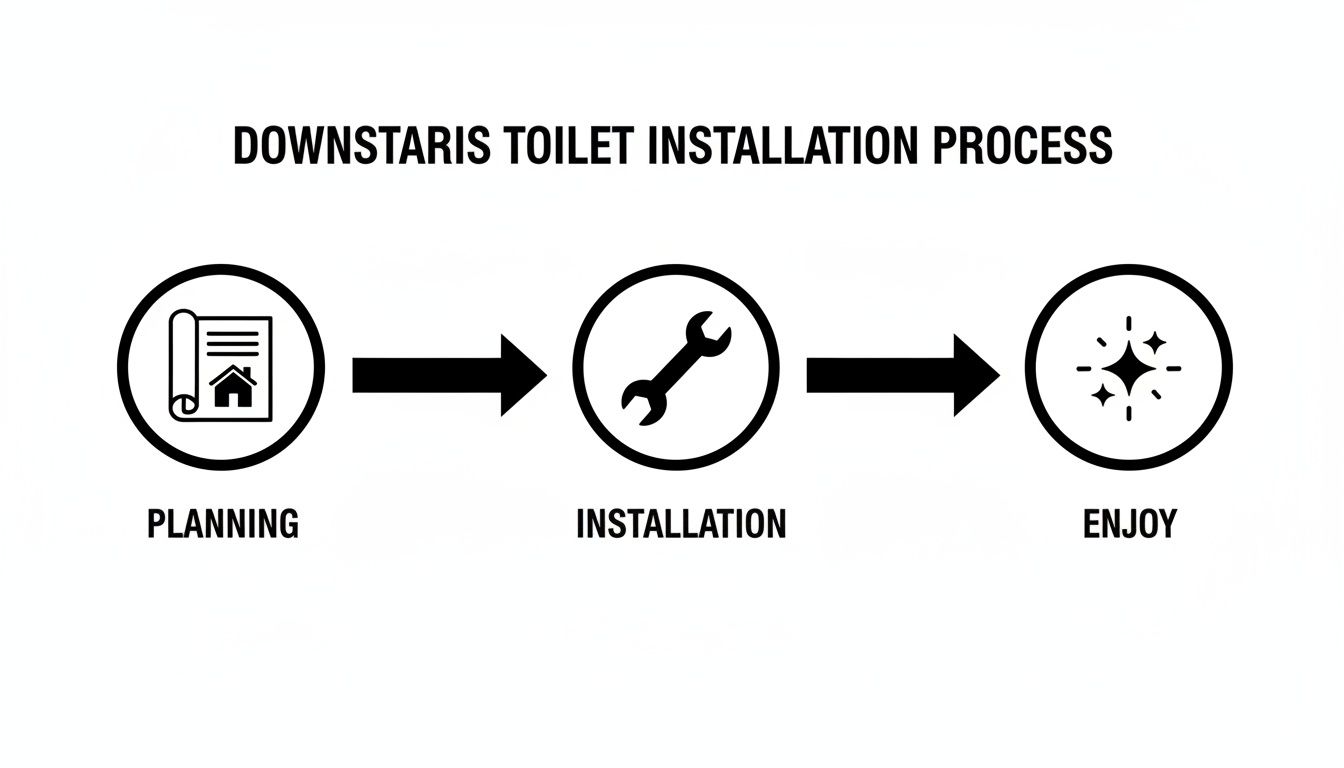
As you can see, the journey is broken into clear stages. With the right guidance, it's a very manageable project with significant rewards.
Turning Unused Space into a Valuable Asset
One of the best things about adding a downstairs loo is how it can make use of those awkward, forgotten spaces. The classic spot is, of course, the cupboard under the stairs. But don't forget other potential locations like a corner of a utility room, a slice of a large hallway, or even a small, partitioned-off area of the garage. Here at Harrlie Plumbing and Heating, we’ve helped countless Eastbourne homeowners turn these neglected corners into stylish, functional cloakrooms.
If you're looking for more hands-on ideas for adding a bathroom to a lower level, this Practical Step-by-Step Guide to Adding a Bathroom in Your Basement is a great resource for inspiration.
A well-planned downstairs toilet doesn't just add a facility; it reclaims unused space and adds a new layer of practicality to your home's layout. It's an investment in your daily life and your property's future worth.
Whether you’re aiming to make your home more family-friendly or give its resale value a healthy boost, this guide will give you the insights you need for a successful project.
Getting the Planning and Regulations Right
Before you even think about picking up a hammer or browsing for taps, it's all about the groundwork. A solid plan is the absolute foundation of a successful downstairs toilet installation. Getting this first stage right isn't just about how the finished room will look; it's about making sure your new loo is practical, safe, and doesn't land you in hot water with the council. If you rush this part, you're setting yourself up for costly mistakes and headaches later on.
The first big decision? Location, location, location. The cupboard under the stairs is the classic go-to, and for good reason, but don't rule out other spots. We've seen homeowners in Eastbourne cleverly carve out space from a utility room, a wide hallway, or even a section of an attached garage. The trick is to find a spot that’s not just big enough but is also as close as possible to your existing soil stack and water pipes.
In Eastbourne, we work on a lot of beautiful Victorian and Edwardian homes where the plumbing can be a real maze. Trying to install a toilet on the opposite side of the house from the main soil pipe will send the complexity—and the cost—of the job through the roof. At Harrlie Plumbing & Heating, the very first thing we do is map out your property's unique layout to find the path of least resistance. It’s a simple step that saves our clients time and money.
Getting to Grips with the Key Regulations
Once you’ve scouted out a potential location, you need to think about the rules. You can't just stick a toilet anywhere; it has to comply with UK Building Regulations to ensure it’s hygienic and safe. Trust me, ignoring these is not an option—it will almost certainly cause problems when you decide to sell your home.
Here are the main regulations you'll need to know about:
Part G (Sanitation, Hot Water Safety and Water Efficiency): This is the big one. It states that any room with a new toilet must also have a basin with hot and cold water for handwashing. It also covers the nitty-gritty of drainage to stop foul air from getting back into your home.
Part F (Ventilation): A downstairs loo is considered a 'wet room', so it needs proper ventilation. If you don't have a window that opens, you absolutely must install a mechanical extractor fan. This is non-negotiable for controlling moisture and odours and preventing damp and mould from taking hold.
Part P (Electrical Safety): If your project needs any new electrical circuits—for the lights or that new extractor fan—the work has to be done by a qualified electrician. They’ll need to certify it to show it complies with Part P.
Part M (Access to and Use of Buildings): While this is mainly aimed at new builds, it’s worth paying attention to. Following its guidelines on door widths and layout can make the space far more practical for everyone, including family members or guests with mobility issues.
The regulations can feel a bit full-on, but they're there for a reason. For a more detailed look, we’ve put together an essential guide to building regulations for downstairs toilets that breaks down exactly what Eastbourne homeowners need to know.
Will You Need Planning Permission?
Now for some good news. For most internal projects like adding a downstairs toilet, you probably won't need planning permission. This kind of work usually falls under what's known as 'permitted development rights'.
But—and it's a big but—there are a few key exceptions where you will need to get the local council involved.
If your property is in one of Eastbourne's designated conservation areas, like Meads or the town centre, or if you live in a listed building, you will almost certainly need to get permission before you start. This is to protect the unique character and history of our town's beautiful properties.
Pushing ahead without the right consent can lead to enforcement action, which could mean being forced to rip out all your hard work at your own expense. It’s a painful mistake that's easily avoided. The team at Harrlie Plumbing & Heating has worked on countless period properties across Eastbourne, so we can help guide you on whether a chat with the planning department is needed for your project. Getting this right from the start ensures your new loo adds real value, rather than becoming a future liability.
Budgeting for Your New Downstairs Toilet

Let's talk numbers. Knowing what to expect financially is the first step to a stress-free project. While a downstairs toilet is a fantastic addition to any home, getting a clear picture of the costs from the start helps you plan properly and avoid any nasty surprises. Here, we'll break down the expected expenses for homeowners in Eastbourne, giving you a realistic budget to work with.
The final bill is always a mix of materials, labour, and the job's complexity. Every home is different, especially the beautiful but often quirky period properties we see around areas like Old Town and Meads. The fixtures and fittings you choose will also play a huge part in the overall cost.
Breaking Down the Core Costs
So, what actually makes up the total price? It really boils down to two main things: the products you buy and the skilled hands needed to fit them correctly. Thinking about these separately helps clarify where your money is going.
Materials and Fixtures: This is the obvious stuff—the toilet pan and cistern, a basin, and taps. You might also need a small vanity unit. Don’t forget the less exciting but essential items like pipework, waste connections, tiles, and flooring.
Labour: This covers the time for a certified plumber to run new water feeds, connect everything up to your soil stack, and install the fixtures. It also includes the work of other tradespeople you might need, like tilers, electricians for lighting or a fan, and plasterers.
At Harrlie Plumbing and Heating, we believe in being completely upfront. That’s why we offer a Best Price Guarantee and provide detailed, no-obligation quotes that list every single cost. You'll know exactly what to expect before we even pick up a tool.
The single biggest variable in the cost of installing a downstairs toilet is its location relative to your existing soil stack. A straightforward connection can save you hundreds, even thousands, in labour and materials compared to a more complex installation requiring extensive new pipework.
How Your Choices Impact the Budget
The choices you make will directly influence your final spend. A basic, functional cloakroom will cost significantly less than a high-end, designer space. It's all about finding that sweet spot between your vision and your budget.
For instance, a standard close-coupled toilet might cost between £150 and £300. Fancy a stylish wall-hung model with a concealed cistern? You could be looking at upwards of £500. The same logic applies to basins, taps, and flooring. While luxury vinyl tile (LVT) is a popular and durable choice, it will naturally cost more than simple sheet vinyl.
It’s no surprise this is such a popular upgrade. A recent study on UK renovation trends revealed that 14.3% of homeowners were planning to add a new downstairs toilet, making it one of the most desired home improvements. This just highlights the value people place on having that ground-floor convenience for family and guests. You can read more about these home improvement statistics from Hillarys.
A key decision comes down to the type of toilet system. If your chosen spot is a long way from the main soil pipe—a common problem in terraced houses in areas like Roselands or Hampden Park—a macerator system (like a Saniflo) can be a brilliant solution. Just be aware that it will add to the initial material cost compared to a traditional gravity-fed toilet.
A Realistic Price Range for Eastbourne Homeowners
So, what should you realistically budget for? Based on UK averages and our own experience right here in the Eastbourne area, a complete installation can range from £2,500 to over £5,000.
To help you visualise this, we've put together a typical cost breakdown for a project in Eastbourne.
Typical Cost Breakdown for a Downstairs Toilet Installation in Eastbourne
Item / Service | Average Low-End Cost | Average High-End Cost | Notes |
|---|---|---|---|
Plumbing Labour | £800 | £1,500+ | Varies based on complexity (e.g., macerator vs. gravity). |
Toilet & Basin Suite | £250 | £800 | Basic ceramic suites are cheaper; designer or wall-hung units cost more. |
Taps & Wastes | £50 | £200 | A wide range of styles and finishes are available. |
Tiling (Labour & Materials) | £400 | £900 | Depends on the area to be tiled and the type of tile chosen. |
Flooring | £150 | £400 | Sheet vinyl is most affordable; LVT or tiles are at the higher end. |
Electrics (Fan/Lighting) | £200 | £450 | If new wiring is needed for an extractor fan or lighting. |
Plastering & Decorating | £300 | £600 | Making good the walls and ceiling, plus painting. |
Skip Hire / Waste Removal | £150 | £250 | Essential for disposing of old materials and rubble. |
This table gives you a good starting point. A straightforward project with basic fixtures, close to existing plumbing, will sit at the lower end of that scale. On the other hand, a more complex installation involving a macerator, significant new pipework, high-end fixtures, and extensive finishing work will push the cost towards the upper end.
At Harrlie Plumbing and Heating, we work with you to find a solution that fits your budget. Our free quotes are designed to give you a clear and accurate cost projection specific to your property, so you can plan your project with complete confidence.
Choosing the Right Toilet System
Once you’ve settled on a location for your new cloakroom, the next big decision is about the heart of the system—the toilet itself. This single choice will have the biggest impact on the complexity and cost of your entire project.
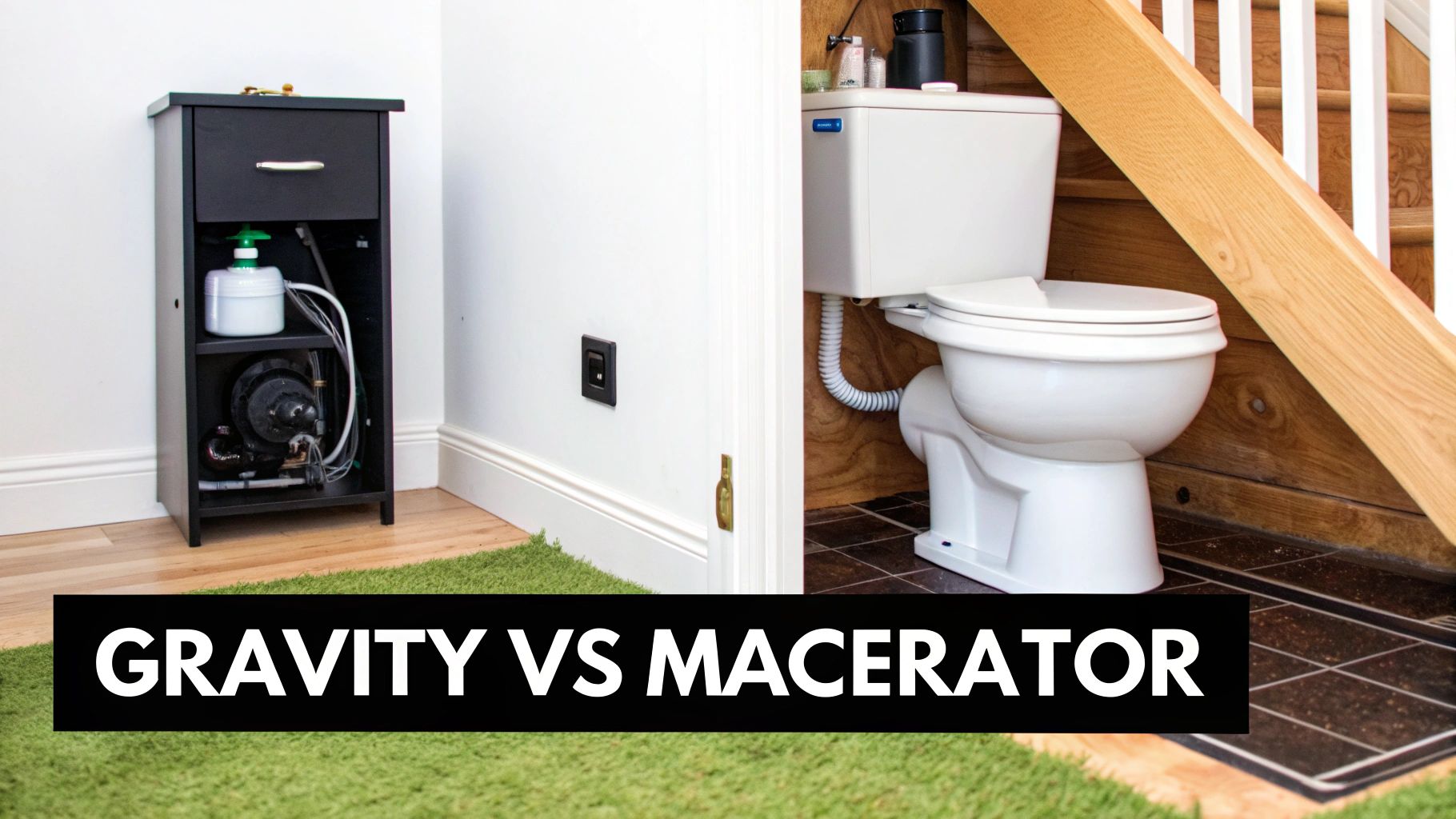
When it comes to installing a downstairs toilet, you’re essentially looking at two main options: the traditional, gravity-fed system or a modern macerator pump.
Each has its place, and the right one for you depends entirely on your home’s layout. Many of the beautiful Victorian and Edwardian properties we work on in Eastbourne present unique plumbing puzzles. What works for a new build in Sovereign Harbour might not be the best solution for a terraced house in Old Town, and that's where a bit of expert knowledge from a team like ours at Harrlie Plumbing and Heating comes in handy.
The Traditional Gravity-Fed Toilet
This is the system we all know. It works on a simple, timeless principle: gravity. When you flush, water from the cistern pushes waste down a large, downward-sloping pipe (the soil pipe) and into your home's main vertical soil stack, which then connects to the underground sewer. It’s plumbing at its most fundamental.
If your chosen spot for the new loo is right next to the existing soil stack, this is almost always the best way to go. It’s reliable, quiet, and doesn't need any electricity to function.
Pros: Highly reliable, virtually silent operation, and requires minimal maintenance.
Cons: The installation is entirely dependent on having a direct, downward-sloping path to the main soil stack, which can be very restrictive.
Here at Harrlie Plumbing and Heating, we often find homeowners underestimate the importance of the pipe’s gradient. A pipe that isn't sloped correctly is a guaranteed recipe for future blockages—something we’re called out to fix all too often in the Eastbourne area.
The Problem-Solving Macerator System
So, what happens if your ideal spot is nowhere near the main soil stack? This is a very common scenario in Eastbourne, especially for under-the-stairs conversions. This is where a macerator toilet, often known by the brand name Saniflo, becomes a game-changer.
A macerator is a powerful pump with rotating blades that sits behind the toilet. When you flush, it grinds the waste into a fine slurry and then pumps it away through a small-diameter pipe. Because it actively pumps the waste, it doesn’t need gravity. This means it can push waste uphill, horizontally, and over much longer distances than a standard toilet could ever manage.
A macerator system gives you the freedom to install a toilet almost anywhere in your home, from a basement to a loft conversion, without needing major, disruptive drainage work. It’s the key to unlocking those previously unusable spaces.
This technology can dramatically cut the cost and mess of a difficult installation. Analysis of UK projects shows that understairs Saniflo systems can slash drainage costs by 30-50% by completely bypassing the need for extensive new groundwork to reach the main sewer line.
Making the Right Choice for Your Home
So, which is it to be? The table below gives you a straightforward comparison to help you weigh the options for your property.
Feature | Gravity-Fed System | Macerator (Saniflo) System |
|---|---|---|
Best For | Locations with direct, easy access to the main soil stack. | Tricky spaces far from existing plumbing, like under stairs or in basements. |
Installation | Simpler if the connection is close, but complex if new drainage is needed. | More flexible, using small-bore pipework that's easier to conceal. Requires an electrical supply. |
Noise Level | Virtually silent flush. | The pump makes a noticeable grinding noise for a few seconds when it operates. |
Maintenance | Very low maintenance. | Requires periodic descaling and care to prevent blockages from improper use. |
Overall Cost | Lower material cost, but potentially higher labour cost if major drainage work is needed. | Higher initial unit cost, but often a lower overall project cost for difficult locations. |
Here at Harrlie Plumbing and Heating, we’ve installed countless systems of both types across Eastbourne and the surrounding areas. We can pop round, assess your home's layout, and give you honest, practical advice on which system will be the most reliable and cost-effective for you in the long run.
If you're curious about how these clever bits of kit work, we’ve put together a quick guide that explains what a Saniflo system is and how it can solve home plumbing challenges.
Deciding Between DIY and a Professional Plumber
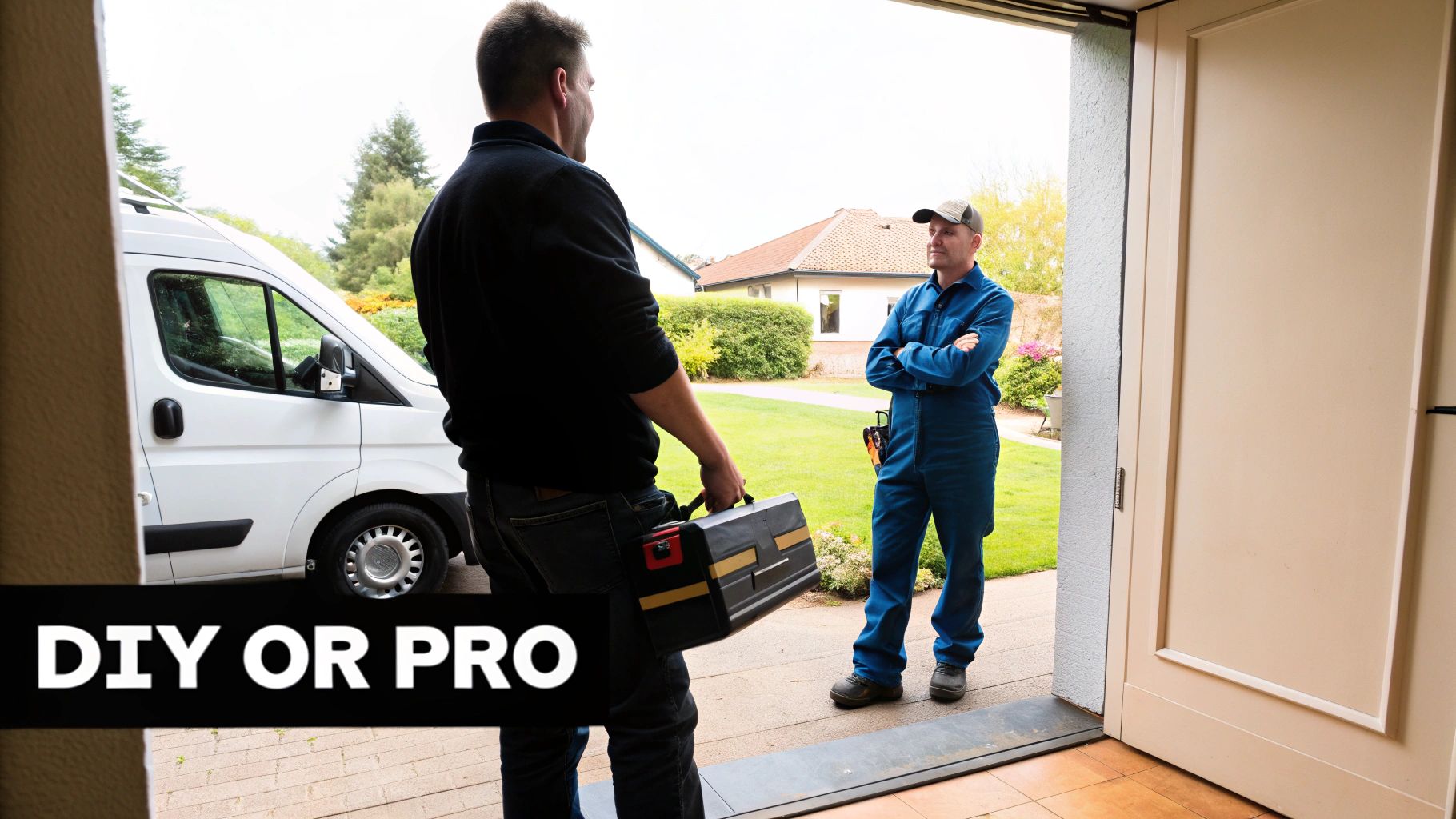
It’s the classic question every homeowner asks at some point: can I tackle this myself? While a confident DIYer can certainly handle painting, tiling, or fitting a basin, the core plumbing for a new toilet is a completely different ball game. Making the right choice here isn't just about saving a few quid; it's about safeguarding your home from costly, long-term damage.
While it's tempting to save on labour costs, the plumbing and waste connections are where a small mistake can lead to a huge headache. A tiny, slow leak behind a wall can go unnoticed for months, causing hidden damp and rot that can compromise your home's structure. Get the pipe gradient wrong by just a few degrees, and you’re signing up for years of frustrating, recurring blockages.
The Real Risks of a DIY Plumbing Project
Here at Harrlie Plumbing and Heating, we've been called out to plenty of Eastbourne homes to fix DIY installations that have gone wrong. A common issue we see is with waste pipe connections. We recently visited a property in the Langney area where a homeowner had done a fantastic job on the decorating, but the waste pipe didn't have the correct fall. The result was constant gurgling noises and blockages that needed a pro to sort out.
Another time, in a lovely Victorian terrace near Gildredge Park, a DIY-installed toilet had a minuscule leak at the pan connector. It was so small it didn't create a puddle, but over six months it saturated the floorboards and joists beneath. This led to a much more expensive repair job than the initial installation would have ever cost.
These scenarios highlight the crucial difference between the cosmetic finishing touches and the technical side of plumbing. If you decide to bring in the experts for the tricky bits, understanding the services offered by professional plumbing companies is key to making sure you get a certified and insured expert for the job.
When to Call in the Experts
Making an informed decision is vital. Certain parts of the project are low-risk for a skilled DIYer, while others should be left to certified professionals without a second thought.
To help you weigh it up, we've put together a straightforward comparison. This table breaks down which tasks you might handle yourself and when it's really time to call a plumber like us at Harrlie Plumbing and Heating.
DIY vs. Professional Installation Comparison
Task | Suitable for DIY? | Why Call a Professional? |
|---|---|---|
Connecting to the Soil Stack | No | This is the most critical connection. An incorrect seal can lead to foul odours, dangerous sewer gas leaks, and won't comply with Building Regulations. |
Installing Water Feed Pipes | Maybe | A confident DIYer might handle this, but a poor joint can cause major water damage. A pro ensures all connections are secure and pressure-tested. |
Fitting the Toilet and Cistern | Yes | Bolting the pan to the floor and attaching the cistern is a manageable task for most, provided the plumbing is already correctly in place. |
Tiling and Flooring | Yes | If you have the skills and patience, finishing the room is a great way to save money on labour costs. |
Electrical Work (Fan/Lights) | No | Any new electrical circuit must be installed and certified by a qualified electrician under Part P of the Building Regulations. This is a legal requirement. |
Ultimately, a professionally installed toilet gives you something priceless: peace of mind.
The peace of mind that comes with a professionally installed, fully guaranteed downstairs toilet is invaluable. It’s not just about the work being done; it's about knowing it’s done right, safely, and in full compliance with UK regulations.
The Smart Investment in Your Home
Hiring a certified plumber isn't an expense; it's an investment in your property's value and your own peace of mind. A professional brings years of experience, the right tools, and crucial knowledge of local building codes. They can spot potential issues you might miss and ensure the entire system works flawlessly from day one. In the UK, professional installation costs for a project like this typically fall between £1,000 and £2,500, depending on the complexity of the job.
At Harrlie Plumbing and Heating, we stand by our work, providing solid guarantees that protect your investment. Choosing a trusted local plumber is the surest way to get a result you can rely on for years to come. If you're weighing your options, our guide on finding a reliable plumber in Eastbourne can help you make the right choice for your project.
Common Questions About Downstairs Toilets
Starting any new home improvement project is bound to bring up a few questions. When it comes to fitting a downstairs toilet, we've pretty much heard them all from homeowners across Eastbourne. We’ve pulled together the most common queries to give you clear, straightforward answers so you can move forward with confidence.
These are the practical bits that can make or break a project. From how much room you need to whether it'll actually bump up your property value, getting these details right helps ensure your new cloakroom is a complete success.
How Much Space Do I Actually Need?
This is usually the first thing people ask, especially in Eastbourne with its lovely but often compact Victorian terraces. You might be surprised by just how little space you need for a functional and comfortable downstairs loo.
UK Building Regulations state a minimum room size of 80cm wide by 140cm long. This gives you enough clearance for the door to swing open and for someone to actually use the facilities without feeling boxed in. We always say, though, try to think beyond the absolute minimum. If you can find a bit more space, it’ll stop the room from feeling cramped.
The real secret to making a small space work isn’t just the room’s dimensions; it’s about picking the right fixtures. Compact, short-projection toilets and slimline or corner basins are brilliant for maximising every last inch of floor space without sacrificing usability.
Here at Harrlie Plumbing and Heating, we specialise in finding clever solutions for tight spots. We can help you pick out space-saving fixtures that make even the smallest under-stairs cupboard feel surprisingly roomy.
Will It Really Increase My Property Value?
Without a doubt. Adding a downstairs loo is one of the most reliable ways to boost your home’s market appeal. Estate agents will tell you time and again that it's a huge plus for buyers, and it can add up to 5% to your property’s overall worth.
In a competitive market like Eastbourne, having a toilet on the ground floor gives you a significant edge. It opens up your home to a much wider range of buyers, including:
Families with young children who need a loo that's easy to get to in a hurry.
Older buyers or those with mobility issues who might find stairs a challenge.
Anyone who loves having guests over and appreciates the convenience and privacy it offers.
Try to think of it not just as a cost, but as a smart investment in your property. It’s a practical upgrade that pays you back in both daily convenience and eventual resale value.
What Is the Biggest Mistake People Make?
From all the installations we've been called out to fix across East Sussex, the single most common and damaging mistake is poor ventilation. It’s an easy detail to overlook when you’re excited about the planning, but the consequences can be serious.
A downstairs toilet is basically a "wet room," and if you don’t have a proper way to get rid of moist air, you’re creating the perfect environment for damp, mildew, and nasty smells. This can quickly lead to peeling paint, damaged plaster, and an unhealthy room.
Under UK Building Regulations, if your new loo doesn't have a window you can open, you must install a mechanical extractor fan. This isn't just a friendly suggestion; it’s a legal requirement to protect your home and your family’s health. At Harrlie Plumbing and Heating, it’s a non-negotiable for us – we make sure the ventilation is correctly sized and fitted, every single time.
Can I Put a Toilet Anywhere with a Saniflo?
Macerator systems like Saniflo are fantastic bits of kit. They offer incredible flexibility, letting you install a toilet in a basement, a loft, or a room that's miles away from the main soil stack—a common hurdle in older Eastbourne properties.
But they aren't a magic wand for every single situation. They still have their own requirements, like a dedicated electrical supply to power the pump. It's also vital that only human waste and toilet paper go down a macerator, as anything else can wreck the blades.
While they open up a world of possibilities, you really need a professional assessment first. Our team at Harrlie Plumbing and Heating can take a look at your chosen spot, explain the maintenance involved, and tell you honestly if a macerator is the most reliable and cost-effective choice for your home.
Ready to turn that unused space into a valuable and convenient new cloakroom? The team at Harrlie Plumbing and Heating has the local expertise to handle every aspect of your project, from planning and compliance to a flawless finish. Get in touch with us today for a free, no-obligation quote and let's get started.

Comments