A Homeowner's Guide to Boiler Safety Checks in Eastbourne

A boiler safety check is one of those crucial yearly tasks for your home, carried out by a Gas Safe registered engineer to make sure your boiler is running safely and efficiently. It’s a non-negotiable step that protects your home and family from silent dangers like carbon monoxide poisoning. At Harrlie Plumbing and Heating, we perform these essential checks across Eastbourne daily, ensuring local homes are safe.
Why Boiler Safety Checks Are Non-Negotiable
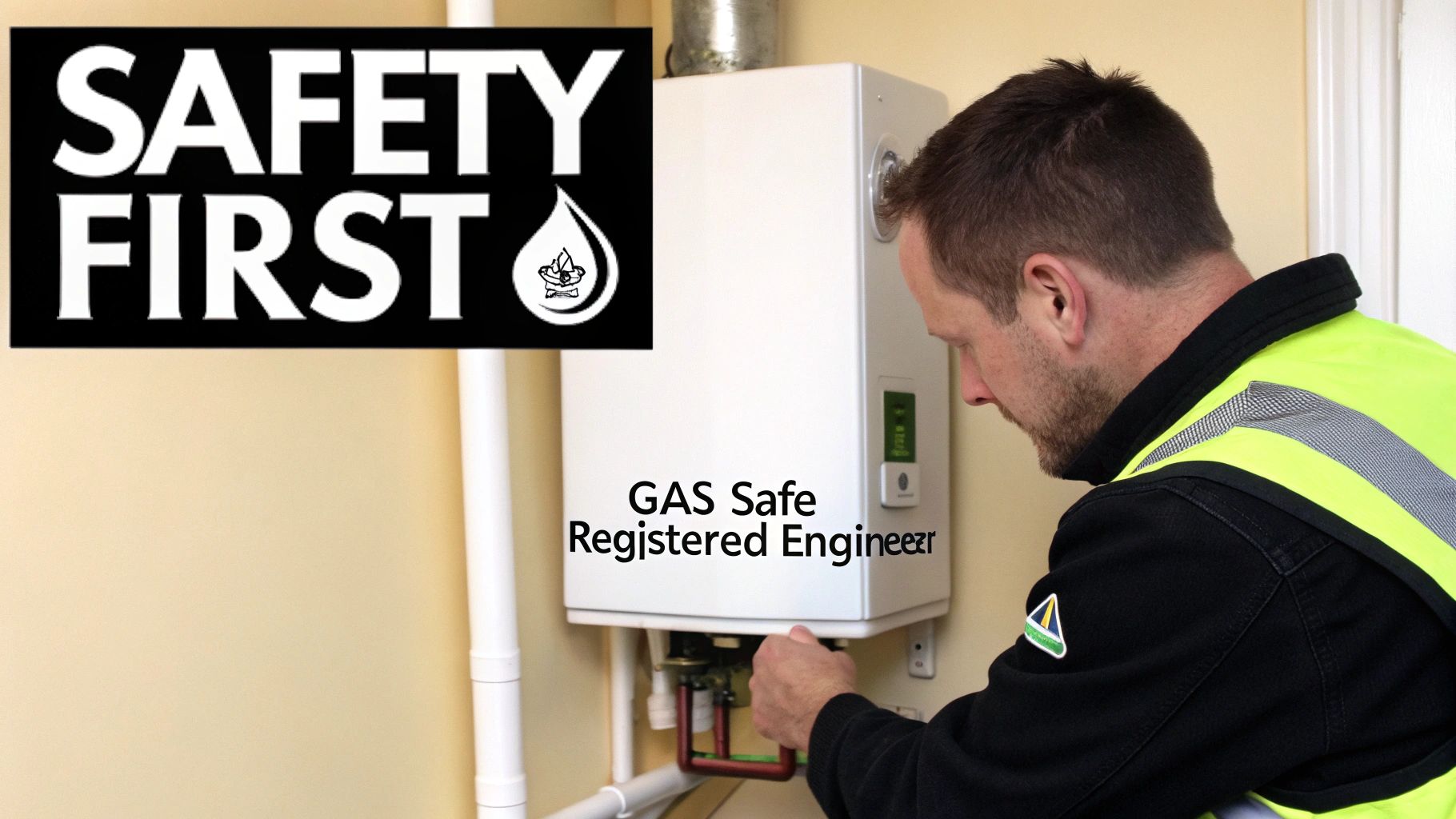
Think of your boiler as the heart of your home’s central heating system. It works quietly in the background, providing all the warmth and hot water you need. But just like any hard-working piece of machinery, it needs a professional eye on it now and then to keep it functioning correctly and, most importantly, safely. A formal boiler safety check isn't just about ticking a box; it's about preventing a potential catastrophe.
The MOT for Your Home
The best way to think about it is like a car's MOT. You wouldn't dream of driving your car for years without a professional confirming it's roadworthy, and the exact same logic applies to the gas appliance humming away in your home. This check is an essential inspection that verifies everything is running as it should, catching minor issues before they spiral into hazardous or expensive problems.
For homeowners and landlords across Eastbourne, from the seaside properties in Meads to family homes in Old Town, this annual check provides indispensable peace of mind. At Harrlie Plumbing and Heating, we see ourselves as more than just engineers; we're your local partners, dedicated to safeguarding the wellbeing of our community. For instance, we recently helped a family in Willingdon who were unaware their boiler flue was partially blocked – a simple check averted a serious risk.
The risks that come with a faulty gas appliance are severe and often silent. National safety statistics paint a clear picture of why these checks are so important.
Around seven people per year die in the UK from accidental carbon monoxide poisoning caused by gas appliances, and the number of gas-related incidents, including explosions and fires, saw an increase in recent years. You can learn more about the importance of these safety checks.
This sobering reality really drives home why a professional inspection is absolutely vital.
What This Guide Covers
In this guide, we’ll break down everything you need to know about boiler safety checks. We’ll cover the specific legal duties for landlords, what our Gas Safe registered engineers look for during an inspection, common faults we find in Eastbourne properties, and the clear warning signs of an unsafe boiler. Our goal is to give you the knowledge to act confidently, ensuring your home remains a safe and comfortable sanctuary.
A Landlord's Duties for Gas Safety
If you're a landlord in Eastbourne's busy rental market, staying on top of your legal duties isn't just good business—it's absolutely critical. When it comes to gas safety, your responsibilities are clear, specific, and non-negotiable. They're there to protect your tenants, your property, and you.
These rules aren't just suggestions; they're the law. The Gas Safety (Installation and Use) Regulations 1998 lay out exactly what every landlord in the UK must do. Think of them as the legal foundation for tenant safety, ensuring a high standard of care in every rental property, from a modern flat in the Sovereign Harbour to a classic Victorian terrace in Old Town. At Harrlie Plumbing and Heating, we work with many Eastbourne landlords, helping them navigate these regulations seamlessly.
At its heart, the legislation requires landlords to make sure all gas appliances, flues, and pipework are kept in safe working order. This isn't a one-and-done job; it's an ongoing commitment that demands professional, certified attention.
The Annual Gas Safety Check Requirement
The most important part of a landlord's duty is the annual boiler safety check. This is a mandatory inspection of every gas appliance and flue in your rental property, making sure everything is working correctly and safely. Legally, UK landlords must have this check done once every 12 months by a Gas Safe registered engineer.
Once the check is complete, the engineer will issue a Gas Safety Record, sometimes known as a CP12 certificate. This document is your official proof that you've done your bit, detailing the checks performed and confirming everything is safe.
A Gas Safety Record is more than just a piece of paper. It’s your legal shield, proving you've fulfilled your duty of care to your tenants and taken the right steps to prevent any gas-related incidents.
Forgetting this annual check can lead to serious trouble, including hefty fines or even prison time if an accident happens. At Harrlie Plumbing and Heating, we help Eastbourne landlords stay compliant with friendly reminders so that crucial deadline never gets missed.
Your Core Duties as a Landlord
On top of arranging the annual check, you have a few specific tasks related to paperwork and communication. These duties ensure your tenants are kept in the loop and that you have a clear, up-to-date record of safety.
Here are the three essential things you must do:
Provide the Gas Safety Record: You have to give a copy of the new Gas Safety Record to your current tenants within 28 days of the check being completed.
Inform New Tenants: For anyone moving in, you must provide them with a copy of the valid Gas Safety Record before they get the keys.
Keep Records: You are legally required to hold on to your copies of the Gas Safety Record for at least two years.
Juggling these deadlines, especially if you have more than one property, can feel like a real headache. To make life easier, many landlords now lean on technology. Some of the best property management apps can help you track certificate renewal dates and store your important documents securely.
Our team at Harrlie Plumbing and Heating also provides digital copies of all Gas Safety Records, which makes it simple for Eastbourne landlords to file them away or forward them to tenants. We get the pressures landlords are under, and our goal is to make the whole process as painless as possible. If you want to dig deeper into the specifics, take a look at our dedicated guide: A Landlord’s Guide to Annual Gas Safety Checks in Eastbourne.
What to Expect During Your Boiler Inspection
Wondering what a gas engineer actually does during a boiler safety check? It can feel a bit like a mystery, but it's a methodical process with one single goal: keeping your home and family safe. When a Harrlie Plumbing and Heating engineer visits your Eastbourne home, they're not just giving it a quick once-over. They’re performing a complete health assessment on the heart of your heating system.
Understanding what's involved helps demystify the process and highlights the value packed into every inspection. Our engineers aren't just ticking off boxes on a form; they’re actively searching for invisible dangers to make sure your system is efficient, reliable, and, above all, completely safe. Here’s a walkthrough of what happens from the moment we step through your door.
The Initial Visual Assessment
First things first, our engineer will carry out a thorough visual inspection of the boiler and its surroundings. This is far more than a casual glance; it's a trained eye looking for tell-tale signs of trouble. We'll check the boiler casing for any hints of damage, scorching, or black soot marks. These can indicate incomplete combustion—a massive red flag for potential carbon monoxide production.
We also take a close look at the flue, which is the pipe responsible for carrying exhaust gases safely outside. In many Eastbourne properties, from terraced houses in Roselands to coastal homes near the seafront, we make sure the flue is securely fitted, completely unobstructed, and showing no signs of corrosion. Proper ventilation is absolutely critical, so we’ll confirm the boiler has enough air to operate correctly, preventing it from being starved of oxygen and becoming dangerous.
Gas Tightness Test: A Hunt for Invisible Leaks
One of the most crucial parts of any boiler safety check is the gas tightness test. This is designed to find gas leaks anywhere in your property's pipework, even microscopic ones that you can't smell. A gas leak is an immediate and serious hazard, so this test is non-negotiable and performed with absolute precision.
Our engineer will turn off all your gas appliances and connect a special pressure gauge to your gas meter. They then watch the gauge closely to see if the pressure drops. Even the slightest dip means gas is escaping somewhere. If we do detect a leak at an Eastbourne property, our Harrlie Plumbing and Heating engineer will immediately trace its source and advise on the necessary repairs before your gas supply can be safely switched back on.
This infographic outlines the straightforward process landlords must follow for gas safety compliance, from the initial inspection to sharing the final certificate.
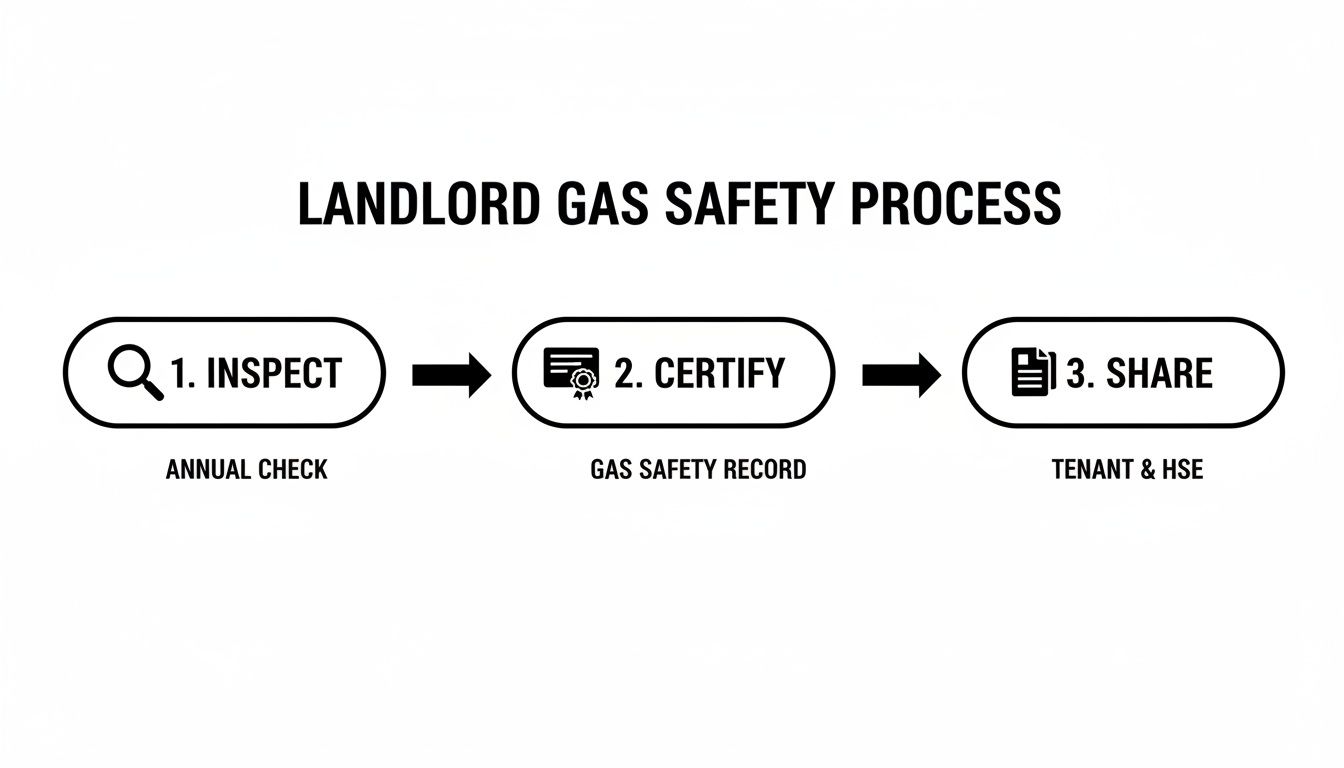
This visual guide simplifies the key legal duties, highlighting how a professional inspection is the first and most critical step in protecting both tenants and properties.
Analysing the Boiler's Health
With the external checks done, it’s time to look inside the boiler. Think of this as a diagnostic health check for your heating system's engine. We fire up the boiler to see how it operates, checking that the pilot light (if you have one) is a crisp, blue colour—a lazy, yellow flame is a sure sign of a problem.
Next, we use a device called a flue gas analyser to test the exhaust gases coming from your boiler. This clever bit of kit tells us exactly how efficiently and safely your boiler is burning fuel.
The flue gas analyser measures the ratio of gas to air, ensuring complete combustion. High levels of carbon monoxide in the flue gas are a clear indicator that the boiler is not working correctly and needs immediate attention. This test is one of the most definitive ways to confirm your boiler is safe.
This data-driven approach allows us to make precise adjustments or spot faulty components that a simple visual check could easily miss. It’s this level of detail that elevates a standard check into a potentially life-saving procedure. By the time we leave, you’ll have a complete picture of your boiler’s health and total peace of mind that it’s running safely for another year.
Common Boiler Problems We Find in Eastbourne
Every home in Eastbourne has its own character, and unfortunately, its own potential for boiler trouble. With years of hands-on experience, our engineers at Harrlie Plumbing and Heating have seen it all, from pilot lights playing up in old Victorian terraces to tricky system faults in brand-new builds. This is why a regular boiler safety check is so vital—it’s your early warning system, catching common issues before they spiral into costly and dangerous emergencies.
Our work takes us all over Eastbourne and the surrounding areas, and we’ve definitely noticed a few problems that crop up time and time again. These aren't just minor glitches; they often point to underlying safety risks that many homeowners simply aren’t aware of. Finding and fixing them is a core part of our job, making sure your heating system is safe and sound for the year ahead.
Low Boiler Pressure: The Usual Suspect
One of the most frequent faults we come across is low boiler pressure. You can think of boiler pressure as the heartbeat of your heating system; if it’s too low, your heating and hot water just won't work properly. That little pressure gauge on your boiler should ideally sit somewhere between 1 and 1.5 bar. If it drops below this, the system will often shut itself down as a safety measure.
A tiny drop over a long period can be normal, but a sudden or repeated loss of pressure is almost always a sign that something’s wrong. The most common culprit is a leak somewhere in the system—it could be a weeping radiator valve you haven't noticed or a pinhole leak in a pipe tucked away under the floorboards. While it might seem like a simple performance issue, an undiscovered leak can cause water damage and put unnecessary strain on the boiler itself.
Blocked Condensate Pipes: A Winter Headache
Another classic, especially during Eastbourne’s colder spells, is a blocked condensate pipe. Modern condensing boilers produce a small amount of acidic wastewater (condensate) that drains away outside. The problem is, in winter, this external pipe can freeze solid, creating a blockage.
When that happens, the water backs up into the boiler, and a built-in sensor will shut the system down to stop it from flooding. You might even hear a gurgling sound coming from your boiler just before it cuts out—a tell-tale sign of a frozen pipe. While it’s mainly a nuisance, an incorrectly fitted pipe can cause more serious problems down the line.
A crucial part of a boiler safety check is inspecting how the condensate pipe was installed. We make sure it has the right downward slope so water can drain away freely, which dramatically reduces the risk of it freezing up and leaving you without heating when you need it most.
It’s shocking how common these issues are. In fact, data from the Gas Safe Register has shown some pretty big differences in appliance safety from region to region. Here in the South East, they found that roughly 1 in 4 homes had unsafe gas appliances. You can read more about these local safety findings on boxt.co.uk. That statistic alone really drives home why a professional, annual check is so important for local homeowners.
Corrosion: The Coastal Challenge
Living in a beautiful seaside town like Eastbourne has its perks, but the salty air can be tough on metal—and that includes your boiler’s pipework and flue. We often see accelerated corrosion on the external parts of heating systems, especially in properties closer to the coast, from Meads all the way to the Sovereign Harbour.
A corroded flue is a particularly serious danger. The flue is your boiler’s exhaust pipe, designed to safely get rid of harmful gases like carbon monoxide (CO). If corrosion creates a hole or a crack, those poisonous gases can leak back into your home. Since CO is odourless and invisible, a faulty flue is a silent but deadly threat. During every safety check, we meticulously examine the entire flue system for any sign of damage, ensuring this critical safety barrier is completely intact.
The table below highlights some of the common faults we find during our inspections and, more importantly, the risks they pose.
Common Boiler Faults and Their Associated Risks
Common Fault | Potential Risk | Typical Sign |
|---|---|---|
Low Boiler Pressure | System shutdown, potential water damage from hidden leaks. | The pressure gauge reads below 1 bar; radiators not heating up. |
Corroded Flue | Carbon monoxide (CO) poisoning, a silent and deadly threat. | Visible rust or holes on the external flue pipe; dark staining around the boiler. |
Blocked Condensate Pipe | Boiler lockout in winter, potential water damage inside the unit. | Gurgling noises from the boiler before it shuts down; a fault code on the display. |
Faulty Gas Valve | Gas leaks, leading to a risk of fire or explosion. | A faint smell of gas near the boiler; the pilot light keeps going out. |
Ignition Failure | Boiler fails to light, leaving you with no heat or hot water. | Clicking noises from the boiler, but the flame doesn't ignite. |
Understanding what these signs mean can help you spot a problem early. A quick call to a Gas Safe engineer is always the right move if you suspect something isn't right.
How to Recognise an Unsafe Boiler
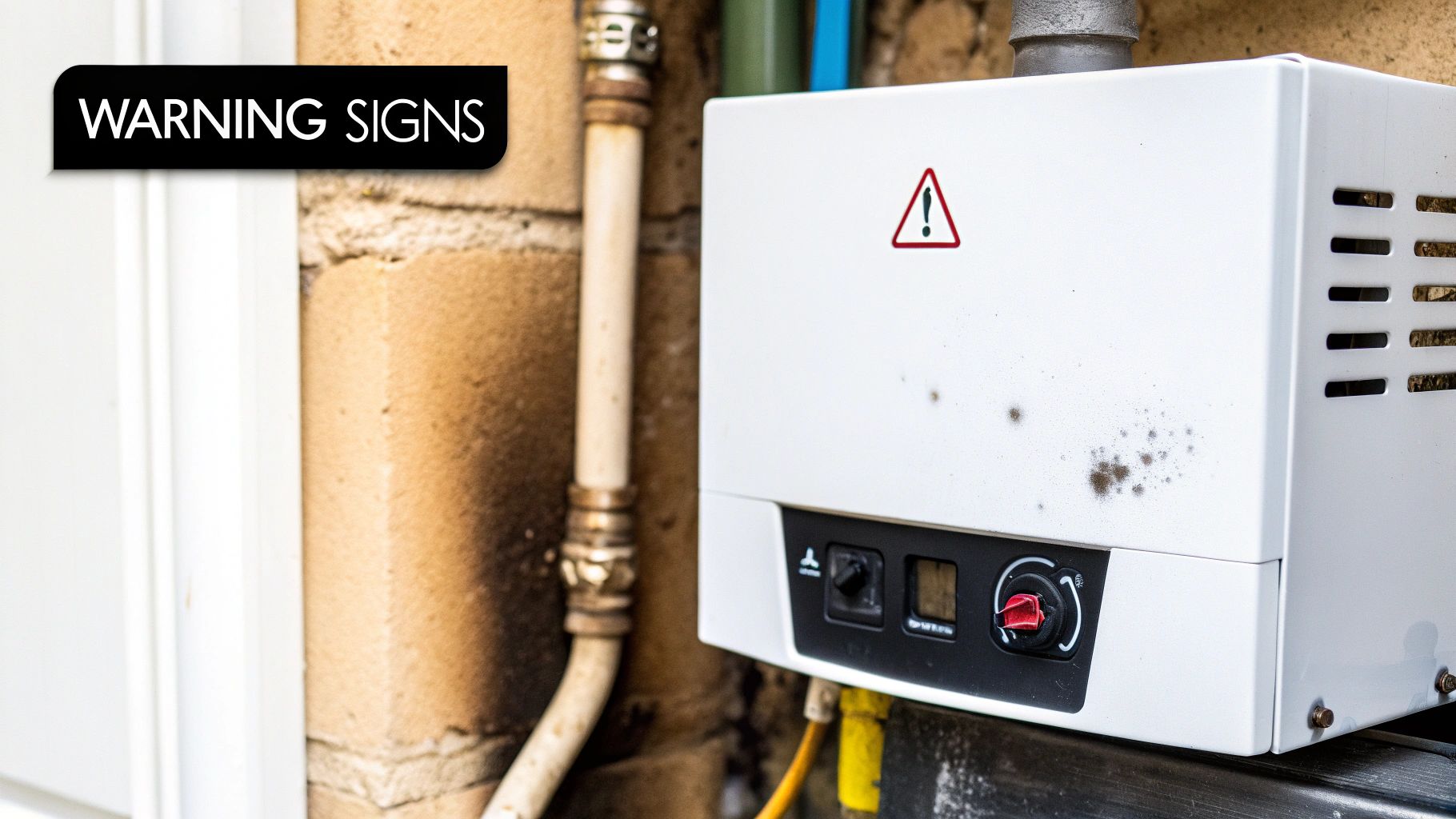
While having a professional carry out an annual boiler safety check is non-negotiable, a boiler can develop a dangerous fault at any time of the year. Knowing how to spot the early warning signs of trouble empowers you to protect your family between inspections.
Think of these red flags as your home’s way of shouting for help. Ignoring them isn't an option, as they often point to the risk of carbon monoxide (CO) poisoning—a silent, odourless, and deadly threat. Learning to recognise these signs makes you the first line of defence for your household.
Visual and Audible Warning Signs
Your own senses are surprisingly powerful tools for spotting boiler trouble. It’s a good habit to keep an eye, and an ear, out for any changes in how your boiler looks or sounds.
The Pilot Light Flame: A healthy pilot light should burn with a crisp, strong blue flame. If you peek inside and see a lazy, flickering yellow or orange flame, that’s a dead giveaway of incomplete combustion, which can produce carbon monoxide.
Soot Stains: Look for any new black, sooty marks on or around your boiler's casing. This is another major red flag. It’s a classic symptom of a dangerous fault, showing that the fuel isn't burning cleanly.
Excess Condensation: Are your windows suddenly streaming with condensation, even when it’s not particularly cold outside? A faulty boiler can release too much moisture into the air, leading to unusual dampness around the house.
Strange Smells or Noises: You can't smell carbon monoxide itself, but you might notice a faint, acrid smell from a boiler that isn’t working correctly. On top of that, listen out for any new clunking, whirring, or banging sounds it’s not meant to be making.
These visual clues are often the first and most obvious signs that your boiler needs an emergency inspection.
Physical Symptoms of Carbon Monoxide Poisoning
The most terrifying danger of an unsafe boiler is, without a doubt, carbon monoxide poisoning. What makes it so insidious is that the symptoms are often mistaken for common illnesses like the flu.
Carbon monoxide poisoning is a medical emergency. If anyone in your household suddenly develops flu-like symptoms—such as headaches, dizziness, nausea, breathlessness, or loss of consciousness—and you suspect your boiler is faulty, you must act immediately.
The key giveaway is that the symptoms tend to get better when you leave the house and feel worse when you come back. If multiple people (and even pets) in your home all feel unwell at the same time, treat it as a critical warning sign. For more information, you can read our comprehensive guide on how to detect gas leaks.
What to Do in an Emergency
If you spot any of these warning signs, your response has to be swift and decisive. Don't ever try to fix the boiler yourself or hope the problem will simply go away.
Follow these steps without delay:
Turn Off the Boiler: Go straight to the main control panel and switch it off.
Ventilate Your Home: Open all the windows and doors you can to let fresh air circulate.
Call an Expert: Contact a Gas Safe registered engineer immediately.
For residents in Eastbourne and the surrounding areas, Harrlie Plumbing and Heating offers an emergency response service. Call us, and we will get a certified engineer to your property to make the situation safe. Your safety is our absolute priority.
How to Prepare for Your Engineer's Visit
When our engineer is due for your annual boiler safety check, a little prep work can make a world of difference. Taking just a few minutes before our visit helps the whole process run smoothly and efficiently. Think of it as clearing the way so our expert can get straight to the important stuff – ensuring your boiler is safe and sound.
A few simple actions from you allow our engineer to focus entirely on the technical inspection. It means they can work safely and without interruption, saving you time and giving you total peace of mind.
Your Simple Preparation Checklist
Before one of our Harrlie Plumbing & Heating engineers arrives at your Eastbourne home, here are a few quick things you can do to help us out.
Clear the Area: We need easy access to your boiler and gas meter. If your boiler is in a tight airing cupboard, as many are in Eastbourne's terraced homes, please make sure the space around it is completely clear of any boxes, laundry, or furniture. A clutter-free space is a safe workspace for our team.
Keep Pets Secure: We love pets, but for their safety and our engineer’s, please keep any dogs or other animals in a separate room while the check is underway.
Have Records Ready: If you have your boiler's manual or any previous service records, it's always useful to have them to hand. For homeowners, setting up an effective warranty tracking system is also a great idea, as it keeps all your important maintenance and warranty details in one place for our engineer to review.
For landlords in Eastbourne, it's essential to confirm the appointment time with your tenants in advance to guarantee our engineer can gain access. Clear communication prevents wasted trips and keeps your safety schedule on track.
These small preparations are incredibly helpful and allow our engineer to get the job done properly, respecting your time and your home. For a deeper dive into what a full boiler service entails, you can read our Eastbourne homeowner guide to boiler servicing.
Boiler Safety FAQs
We get it—boiler safety can seem complicated, and you’ve probably got questions. To help clear things up, we've put together answers to some of the most common queries we hear from folks across Eastbourne, whether they’re homeowners in Hampden Park or landlords with properties near the town centre.
How Much Will a Boiler Safety Check Cost in Eastbourne?
The final price tag can shift a bit depending on your boiler's age and type, but at Harrlie Plumbing and Heating, we're all about clear, upfront pricing. Our standard boiler safety check is a fixed-price job, and we'll always give you a straightforward, no-obligation quote before we even think about picking up our tools.
Honestly, it's better to see this as a vital investment rather than an expense. For homeowners, it's about your family's safety; for landlords, it’s about meeting your legal duties. The small yearly cost is nothing compared to a hefty emergency repair bill or the priceless feeling of knowing everyone is safe. Just give our Eastbourne office a call for an exact quote for your home.
Is a Boiler Service the Same Thing as a Gas Safety Check?
This is a really common point of confusion, and it’s a great question. They're related, but they are definitely not the same thing.
A Gas Safety Check is the legal one for landlords. It results in a CP12 certificate and its main job is to confirm that all your gas appliances are working safely and meet the required legal standards. Safety is its sole focus.
A Full Boiler Service goes much deeper. It includes every part of the safety check, but our engineer will also clean out internal parts, look for any wear and tear, and make small adjustments to boost your boiler's efficiency and help it last longer.
Think of it this way: a safety check makes sure your boiler isn't dangerous right now. A full service makes sure it's safe, efficient, and in the best possible shape for the year ahead. At Harrlie Plumbing and Heating, we usually suggest doing both in one visit to cover all your bases.
How Do I Know if an Engineer Is Gas Safe Registered?
This is the most important question you can ask. Checking an engineer's credentials is easy to do and absolutely essential. Every single engineer who is legally allowed to work on gas appliances in the UK must carry a Gas Safe ID card.
This card is your proof. It will have their photo, a registration number, and—this is the crucial bit—a list on the back of the specific types of gas work they are qualified to do. Always, always ask to see this card before you let anyone start work. All our engineers at Harrlie Plumbing and Heating are fully certified and will happily show you their ID when they arrive at your home in Eastbourne. You can also verify their details in seconds on the official Gas Safe Register website.
I’m a Homeowner, Do I Legally Need a Safety Check?
While the legal requirement for an annual check is aimed squarely at landlords, every boiler manufacturer and safety expert out there strongly recommends homeowners get an annual service and check. So, while it's not legally mandatory for you, it is absolutely essential for your safety.
Just think of it like your car’s MOT. A yearly inspection is the best way to catch problems before they become dangerous, keep your manufacturer's warranty valid, and make sure your boiler is running as efficiently as possible. A well-maintained boiler can knock a surprising amount off your energy bills over the year.
Your safety is our priority. For a professional, certified boiler safety check in Eastbourne, trust the local experts. The team at Harrlie Plumbing and Heating is ready to provide you with fast, reliable, and transparent service to ensure your home is safe and warm.

Comments