A Homeowner's Guide to a Burst Water Pipe in Eastbourne
- Luke Yeates
- Jan 6
- 14 min read

That sudden, sickening sound of rushing water, or the first glimpse of a damp patch spreading across your ceiling—it's a moment of pure panic for any homeowner.
But what you do in the next fifteen minutes is absolutely critical.
Knowing the right steps can be the difference between a manageable cleanup and tens of thousands of pounds in damage. Imagine a classic terraced house in Eastbourne’s Old Town. An old copper pipe under the sink finally gives way, and water is suddenly pouring everywhere, threatening the floorboards and creeping towards the electrics. It’s a scenario we've seen countless times at Harrlie Plumbing and Heating, and it’s why we want to give you the knowledge to take back control.
Your Immediate Burst Pipe Action Plan
When the worst happens, you need a clear, simple plan. Don't overthink it. Just focus on these three critical actions.
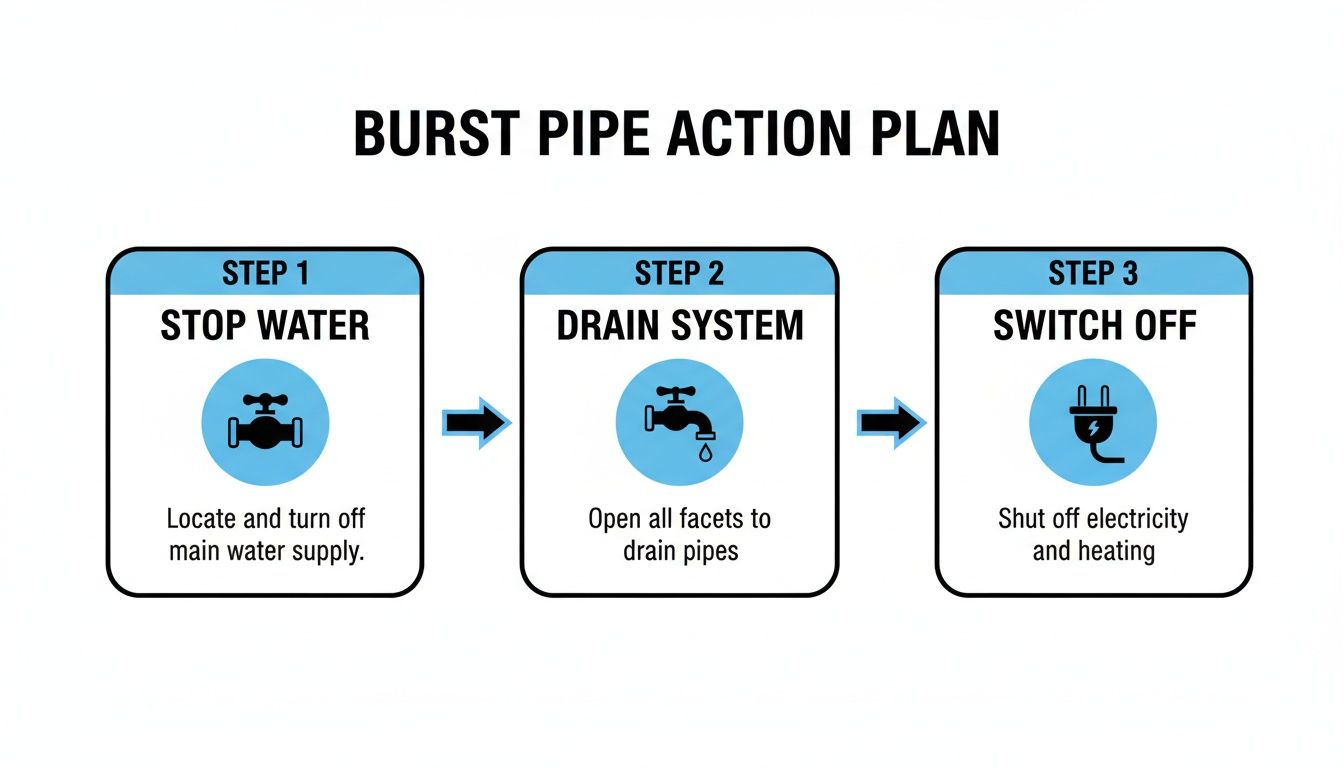
This little guide cuts through the noise. It’s the correct sequence every single time: stop the water, drain what’s left, and kill the power. Everything else can wait.
To make it even clearer, here’s a quick-reference checklist you can use in the heat of the moment.
Emergency Checklist: What To Do Immediately
This table breaks down the essentials for when you're standing in front of a plumbing disaster and need to act fast.
Action | Why It's Critical | Harrlie's Pro Tip |
|---|---|---|
Turn Off the Main Stopcock | This is the source. Shutting it off stops any more water from entering your home and making the problem worse. | Find it before you need it. It’s often under the kitchen sink or in a utility cupboard. Give it a gentle turn once a year to stop it seizing up. |
Drain the System | Turning off the stopcock doesn't empty the pipes. Opening cold taps releases the remaining water and pressure. | Start with the taps highest up in your house and work your way down. Don’t forget to flush all the loos until the cisterns are empty. |
Switch Off Electrics | Water and electricity are a lethal mix. This step is non-negotiable for your safety, especially if water is near sockets. | If in doubt, shut off the power at your main consumer unit (fuse box). It’s better to be in the dark and safe than risk a serious accident. |
Turn Off Heating | Your central heating and immersion heater can be seriously damaged if they run dry. | Switch off your boiler and any other water heating systems. This prevents them from firing up without water, which can cause a costly burnout. |
Follow these steps, and you’ll have done everything you can to minimise the damage while you wait for a professional to arrive.
Finding and Using Your Stopcock: The First Priority
Let’s be clear: the very first thing you need to do in a burst pipe emergency is shut off the water. Your main weapon here is the internal stopcock (also called a stop tap).
You’ll usually find it under the kitchen sink, in a downstairs cloakroom, or maybe tucked away in a utility cupboard. If you’re not sure where yours is or how to use it, our guide on how to turn off your water mains is a great place to start. Once you’ve located it, turn the tap clockwise until you can’t turn it anymore. If it’s stuck or you just can't find it, you might have to resort to the external stopcock, but the one inside is always your fastest bet. For more general advice, you can also check out this guide on how to turn off your water mains.
Harrlie's Pro Tip: Every single homeowner should know where their stopcock is before an emergency strikes. Seriously. Go and find it now. Once a year, give it a full turn off and on again. It’s amazing how many call-outs we get in Eastbourne where the homeowner couldn’t turn the water off because the tap had seized solid from years of neglect.
Draining Down and Making Things Safe
Okay, the main water supply is off. Good. But you’re not done yet.
There's still a surprising amount of water left in your pipework. To get rid of it, you need to open all the cold taps in your house. Start with the ones on the top floor and work your way down to the lowest point. While you're at it, flush all your toilets until the cisterns are completely empty. This relieves the pressure and drains the system as much as possible.
Next, head to your boiler or heating controls. Switch off the central heating, the immersion heater, and any other water heating systems you have. Letting them run without water is a recipe for disaster and could lead to some very expensive repairs.
Finally—and this is the most important step for your safety—go to your fuse box and switch off the mains electricity. If water is anywhere near sockets, switches, or appliances, this is not optional. Water conducts electricity, and the risk just isn't worth it.
By following these steps, you've taken control of a bad situation and put yourself in the best possible position while you wait for a professional plumber to arrive.
Why Pipes Burst in Eastbourne and How to Prevent It
A burst water pipe is rarely just a stroke of bad luck. It's usually the culmination of specific pressures and conditions that have been building up in your home's plumbing. Here in Eastbourne, with our mix of charming older properties and exposure to sudden coastal cold snaps, understanding what causes these failures is the first step in preventing them.
Knowing why pipes give way can help you stop a disaster before it starts.
The number one culprit, especially during a sharp Sussex winter, is freezing temperatures. When water trapped inside a pipe freezes, it expands by about 9%. That expansion puts an incredible amount of force on the pipe walls, which can easily lead to a split or a complete rupture.
This isn't just a hypothetical problem; it became a huge issue recently. Last winter, claims for burst water pipes in the UK shot up by a staggering 75%. A big reason for this was the high cost of energy, which led millions of households to keep their heating off.
This left pipes completely vulnerable, contributing to a massive £987 million in 'escape of water' claims in 2022 alone. You can read more about these findings and see just how much heating habits can impact your pipe safety.
The Impact of Cold Weather
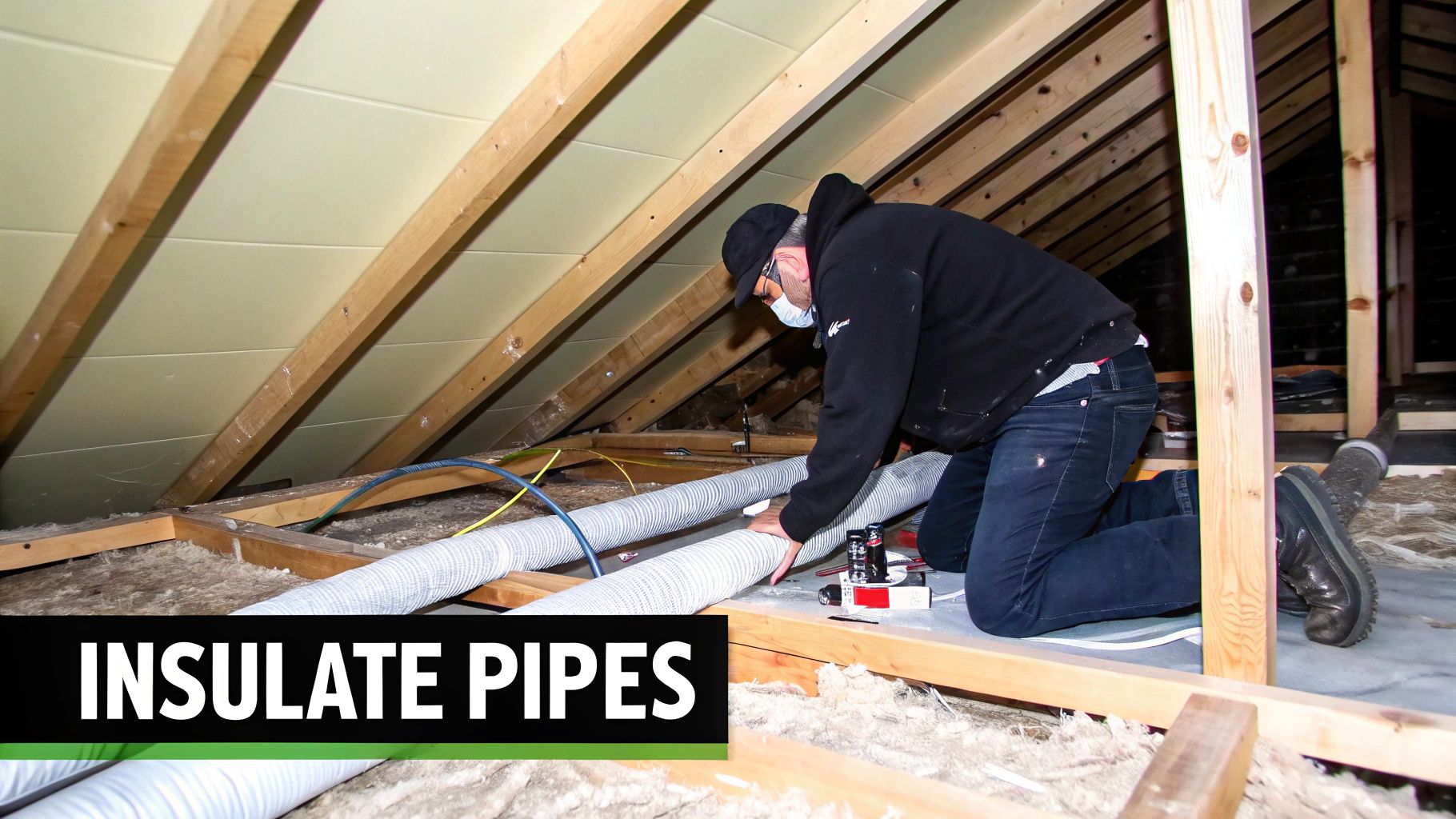
Pipes in unheated or poorly insulated areas are always the most at risk. Think about the plumbing running through your loft, garage, or along external walls—these are the first places to feel the chill. A sudden temperature drop, which we see all the time along the coast, can easily catch homeowners off guard.
A classic Eastbourne scenario we see is in a semi-detached house in the Langney area with pipes running through the loft. If that loft space isn't properly insulated, those pipes are sitting ducks. One really cold night is all it takes for the water inside to freeze, expand, and crack the copper, leading to a serious leak the moment it starts to thaw.
Other Common Causes of a Burst Water Pipe
While freezing is a major factor, it’s not the only reason pipes burst. Ageing and pressure also play a huge role in pipe failures.
Ageing Pipework: Many of the beautiful period properties in areas like Meads or Old Town still have their original iron or copper pipes. After decades of use, these pipes start to corrode from the inside out. They become thin and weak, making them far more likely to fail under pressure.
High Water Pressure: We all like a powerful shower, but excessively high water pressure puts a constant strain on your entire plumbing system. Over time, that force can weaken joints and fittings, eventually causing a blowout.
Accidental Damage: It happens more often than you'd think. A misplaced nail during a DIY project or accidentally drilling into a wall can easily puncture a water pipe, causing immediate and severe flooding.
A simple, proactive check can save you thousands. At Harrlie Plumbing and Heating, we often recommend an annual plumbing inspection. We can assess the condition of your pipes, check your water pressure, and identify vulnerable areas before they become a crisis.
Practical Steps for Prevention
The good news is that preventing a burst pipe is often straightforward. A few simple measures can dramatically lower your risk.
A great place to start is insulating any exposed pipework you can get to. Grab some inexpensive foam lagging from a local DIY store and wrap any pipes in your loft, basement, or garage.
During a proper cold spell, it’s best to keep your heating on a low, constant setting (around 12-15°C is fine). The small extra cost is nothing compared to the expense and headache of a major water damage repair. It’s also a good idea to let a tap far from the stopcock drip very slowly overnight. This keeps the water moving, making it much harder for it to freeze solid. Taking these small steps will help protect your Eastbourne home from a very costly and stressful experience.
When You Need an Emergency Plumber
So, you’ve managed to shut off the water and kill the power. That’s a brilliant first response and essential for damage control. But let’s be clear: a burst water pipe isn’t a weekend DIY project. It’s a serious plumbing emergency, and fixing it properly needs a professional eye to diagnose and repair it safely. Knowing when to pick up the phone is just as critical as knowing where your stopcock is.
Some situations are obvious emergencies. If you've twisted that stopcock as far clockwise as it will go but water is still gushing, you need help, and you need it fast. This could mean the stopcock itself has failed or the leak is on the mains side of the valve—an issue we sometimes see in older Eastbourne properties.
Another urgent red flag is visible structural damage. Are you seeing bulging ceilings, sagging floors, or new cracks spidering across your plasterboard? That’s a sign that a serious amount of water has escaped and is compromising the very materials your home is built from. Don’t wait.
What to Expect When You Call for Help
When you’re in the middle of a crisis, you want a clear, dependable plan of action. The moment you call an emergency plumber, a clock starts ticking. Here at Harrlie Plumbing and Heating, for instance, we’re on the road with a one-hour rapid response promise across Eastbourne and the surrounding towns because we know every single minute counts.
When we arrive, our first job is to make sure the scene is safe and confirm the water and electrics are completely isolated. From there, our certified engineers get to work, tracing the pipework to find the exact location and cause of the burst. This isn't just guesswork; it often involves using specialist kit to pinpoint leaks hidden away inside walls or beneath floorboards.
When our engineer gets a call-out to a home in Willingdon or Hampden Park, they're not just there to patch the immediate leak. They’re assessing the state of the nearby pipework to figure out if this was a one-off failure or a symptom of a bigger problem, like widespread corrosion.
Temporary Fixes vs. Permanent Repairs
Once we’ve identified the problem, we’ll walk you through the options. Sometimes, a temporary repair is the best first step to get your water back on quickly while we plan a permanent solution. This might involve clamping the pipe or isolating a small section of your plumbing.
But a temporary fix is exactly what it sounds like—temporary. For a proper, lasting solution, the damaged section of the pipe needs to be professionally cut out and replaced. We’ll always explain the benefits of using modern, durable materials to stop it from happening again. This is the perfect time to ask questions so you understand exactly what we’re doing and why.
For a deeper dive into the process, you might find our guide on what to expect when you call an emergency plumber in Eastbourne helpful.
A professional repair gives you peace of mind that the problem is truly solved and won't make an unwelcome return in a few weeks, ensuring the integrity of your entire plumbing system.
What to Do About Insurance Claims and Water Damage Restoration
Once you’ve managed to stop the immediate flood from a burst water pipe, you'll step into the next phase: the slow, and often confusing, process of recovery. This is where you'll be dealing with your insurance company and starting the critical work of water damage restoration. Nailing this part is absolutely essential to getting your Eastbourne home back to normal and avoiding much bigger headaches later on.

Don't underestimate the financial fallout. Insurers like Allianz UK paid out a staggering £20 million for 345 burst pipe claims between early 2023 and September 2025. One of those claims hit an unbelievable £566,000 after a pipe let go while the homeowners were on holiday. It just goes to show how destructive water can be. It’s no surprise that January is the peak month for these kinds of costly disasters.
Start Documenting Everything—Immediately
Before you even think about moving a single soggy item, get your phone out and start documenting the damage. This evidence is the bedrock of your insurance claim. Your insurer needs to see exactly what happened and how bad it is, so now is the time to be meticulous.
Here’s what you need to capture:
Photos and Videos: Start with wide shots of every affected room to show the overall scene. Then, get in close. Take pictures of damaged furniture, soaked carpets, warped floorboards, and the water lines on the walls. A video walkthrough where you talk through what you’re seeing is even better.
A Detailed Inventory: Make a list of every single thing that’s been damaged or completely ruined. For each item, note what it is, the brand, roughly how old it is, and what you think it would cost to replace.
Keep All Your Receipts: Hang onto the invoice for any emergency help you called in, like the initial visit from us at Harrlie Plumbing & Heating. You’ll also want to keep receipts for any temporary accommodation or emergency supplies you had to purchase.
We’ve seen countless insurance claims in Eastbourne get delayed or disputed simply because of poor documentation. The more thorough you are right at the beginning, the smoother the whole process will be. Think of it like building a case for yourself—because, in a way, you are.
Getting in Touch with Your Insurer and Understanding Your Policy
As soon as you can, call your insurance company. They’ll assign a claims handler or a loss adjuster to your case, and they will walk you through the next steps. Most home insurance policies cover this under a section called "escape of water."
This typically covers the consequential damage—that’s the cost of repairing walls, ceilings, floors, and replacing your ruined belongings. One thing to be aware of, though, is that many policies don't cover the cost of repairing the actual pipe that burst. They often see that as part of general home maintenance.
The Make-or-Break Role of Professional Restoration
Getting the standing water out is just the first step. Proper, professional drying is completely non-negotiable if you want to prevent long-term problems like mould growth and structural rot. Just opening a few windows and hoping for the best won't cut it, especially with our damp coastal climate here in East Sussex.
Professional restoration firms bring in the heavy-duty gear—industrial-strength dehumidifiers and high-powered air movers—to pull all that hidden moisture out of plaster, timber, and subflooring. While your home is being restored, you might need to move possessions into temporary storage. It’s worth looking into storage unit contents insurance to make sure your belongings are fully protected.
Here at Harrlie Plumbing & Heating, we can provide your insurer with a detailed report explaining what caused the pipe to burst and our initial assessment of the damage. This kind of professional documentation adds serious weight to your claim, helping you get the settlement you deserve to put everything right again.
Understanding the Cost to Fix a Burst Pipe
When you’re standing in a puddle in your own home thanks to a burst water pipe, the last thing you want to think about is the bill. But let's be honest, it’s a major worry for any homeowner. The final price tag isn't just a number pulled out of thin air; it’s shaped by a few key things that can differ wildly from one Eastbourne home to the next.
The biggest factor? Accessibility. A straightforward fix on an exposed copper pipe under your kitchen sink is a relatively quick job for us. It's a completely different story when that burst pipe is hiding behind a freshly tiled bathroom wall or tucked away under solid oak floorboards in a Meads property. That becomes a much more involved and, naturally, more expensive repair.
Key Factors Influencing Repair Costs
The cost isn't just about our time. The materials we need and the scale of the damage play a huge role in what the final invoice looks like.
Location of the Burst: A pipe that’s easy to get to in a garage will always cost less to fix than one that forces us to start cutting into plasterboard or lifting up your flooring.
Pipe Material: The price can change depending on whether we're replacing old copper pipework or putting in modern, durable plastic alternatives, which can sometimes be quicker to install.
Extent of Damage: A small, clean split is one thing. A major rupture that has soaked surrounding joists and gotten near the electrics is a whole other level of work.
At Harrlie Plumbing & Heating, we believe in being completely upfront. We’ll always give you a clear, itemised quote before we pick up a single tool, so you know exactly where you stand. No hidden fees, no nasty surprises—just honest pricing for a professional job.
Why You Need a Professional Assessment
Trying to give a flat "average cost" is nearly impossible because every single burst pipe situation is unique. Fixing the pipe itself is often just the beginning. The real financial hit often comes from the water damage restoration that follows, which can be substantial.
Recent figures from the Association of British Insurers really drive this point home. They settled around 12,000 weather-related burst pipe claims in 2023, with the average payout being a staggering £17,000 each. These incidents, usually triggered by a cold snap, show how quickly a small plumbing problem can escalate into a massive expense. You can read more about the soaring costs of burst pipe claims and see why getting a proper assessment is so important.
For a more detailed breakdown written for UK homeowners, have a look at our expert guide on the cost to repair a burst pipe. It gives you deeper insights to help you budget for the unexpected.
Common Questions About Burst Water Pipes
Even after you've managed the initial chaos of a burst pipe, it's completely normal to have a dozen questions racing through your mind. It’s a stressful situation, but getting clear answers from someone in the trade can help you figure out what to do next with a bit more confidence. We’ve pulled together a few of the most common queries we hear from homeowners around Eastbourne.
Where Is My Main Water Stopcock?
Knowing where your stopcock is and being able to get to it quickly is absolutely vital in an emergency. It’s almost always located where the main water pipe enters your house.
The usual suspects are under the kitchen sink, in a downstairs cloakroom, or tucked away in a utility cupboard. If you’re in one of Eastbourne’s lovely older properties, you might need to hunt a bit further—it could be in a cellar or even outside under a small metal cover on the pavement. Once you find it, give it a firm turn fully clockwise to shut off the water.
Harrlie's Pro Tip: Take it from us, the best time to find your stopcock is before you need it in a panic. If you’re not sure where it is, just ask us to locate and test it next time we’re out for a routine visit. We'll make sure it hasn't seized up, so it'll work when it counts.
Is My House Safe After a Pipe Bursts?
This really comes down to the scale of the leak. If you’ve caught a small, contained burst and you've managed to kill the water and the electricity to the affected area, you’re likely safe to stay put.
However, your safety is the absolute priority. If you're dealing with serious flooding, especially if water is anywhere near electrical sockets or your fuse box, you need to get everyone out of the property immediately and call for professional help. Water and electricity are a lethal mix, and it's a risk you should never, ever take.
Does Home Insurance Cover All Burst Pipe Damage?
Most standard home insurance policies in the UK include cover for "escape of water." This is designed to pay for the damage the water causes—think ruined carpets, soggy plasterboard, and wrecked furniture.
What it often won’t cover is the cost of repairing the specific piece of pipe that failed. Insurers tend to view this as a maintenance issue or general wear and tear. It’s so important to dig out your policy documents and read the fine print to see exactly what you’re covered for. At Harrlie Plumbing & Heating, we provide a detailed invoice and a professional report explaining why the pipe failed, which can be a huge help when you’re making a claim.
If you're facing a plumbing emergency or just want the peace of mind that comes with a professional pipework check, don't hesitate to get in touch. The expert team at Harrlie Plumbing and Heating is ready to help homeowners across Eastbourne and the surrounding areas. Visit us online or give us a call to book a visit at https://www.harrlieplumbing.co.uk.

Comments